Is Bali Safe to Travel Tips for Tourists
Bali is generally safe if you use common sense: stay aware of traffic, watch for strong surf and seasonal floods, secure your passport and valuables, and get basic vaccinations plus travel insurance. Expect friendly locals and reliable tourist services, but beware pickpockets, bag‑snatching and taxi or rental scooter scams—always wear a helmet and avoid night riding after drinking. Keep a local SIM, know emergency numbers, and follow cultural etiquette; keep going and you’ll find detailed tips and resources.
Is Bali Safe to Travel? Quick Verdict and Key Risks
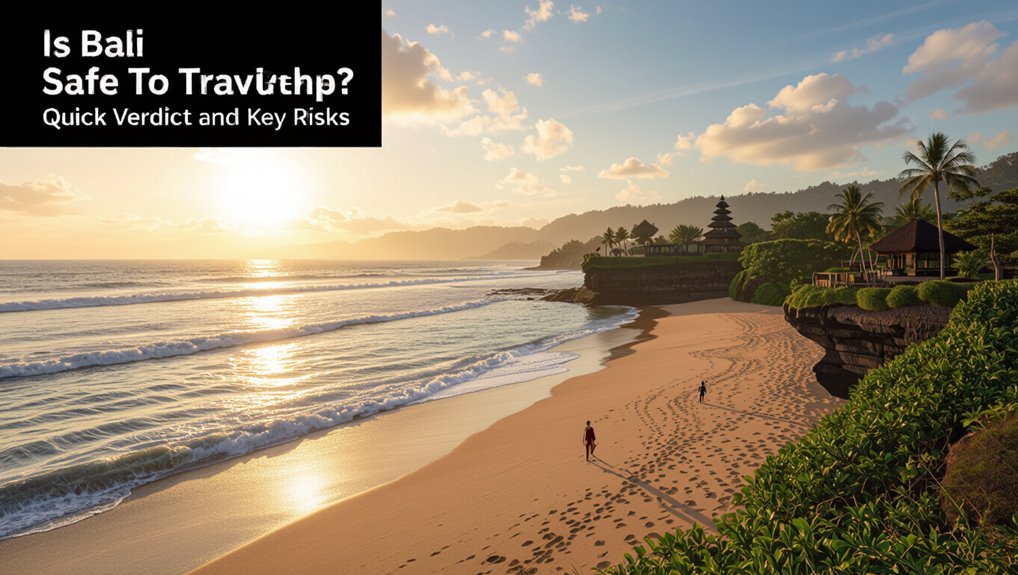
While no destination is risk-free, Bali is generally safe for travelers who stay aware and take basic precautions.
No place is without risk, but Bali is broadly safe if you stay aware and take simple precautions.
You’ll enjoy friendly locals, reliable tourism services, and well-traveled areas.
Stay cautious around traffic, natural hazards like strong currents and volcanic activity, and health risks such as foodborne illness and dengue.
Keep documents secure, get vaccinations, and buy travel insurance before you go.
Petty Crime: Pickpockets, Bag‑Snatching and Common Scams
Alongside traffic and natural hazards, petty crime is the most common nuisance travelers face in Bali.
Stay alert in crowded markets, beaches and transport hubs; keep valuables out of sight and use money belts or anti‑theft bags.
Beware distraction scams, fake officials and inflated taxi fares.
If targeted, move to busy areas, refuse aggressive sellers, and report incidents to police and your embassy.
Bali Roads: Scooters, Taxis and Traffic Safety Tips
You’ll likely spend time on a scooter in Bali, so learn basic riding skills, wear a helmet, and choose a reliable rental.
Watch for chaotic traffic, frequent motorbike clusters, and uneven road surfaces, and keep an eye on local driving behavior.
When in doubt, use licensed taxis or ride-hailing apps to stay safer and avoid risky situations.
Scooter Riding Tips
Because scooters dominate Bali’s roads, learning a few practical riding rules will make your trip safer and less stressful.
Always wear a helmet and sturdy shoes, check brakes and lights before riding, keep luggage balanced, and avoid nighttime or rainy rides when visibility drops.
Stay predictable: signal early, maintain a safe speed, and park considerately to respect locals and avoid fines.
Navigating Traffic Safely
How should you approach Bali’s busy streets to stay safe and stress-free?
Ride defensively, keep speeds low, and use headlights day and night.
Wear a full helmet, secure belongings, and avoid night riding after drinking.
Use official taxis or ride-hailing apps if unsure.
Walk carefully on narrow sidewalks, cross at visible points, and stay alert for scooters weaving through traffic.
Weather & Water Risks: Rainy Season, Surf and Flooding
You should plan around Bali’s rainy season (roughly November to March) because heavy downpours can change travel plans quickly.
Respect posted warnings and local advice about dangerous surf and strong rip currents, especially on open beaches.
Be aware that poor drainage and sudden floods can affect low-lying areas and roads, so check conditions before heading out.
Rainy Season Timing
Bali’s rainy season runs roughly from November through March, bringing frequent downpours, higher humidity, and choppier seas that can affect beach safety and travel plans.
- Check forecasts before booking activities.
- Pack quick-dry clothing and waterproof gear.
- Expect occasional road flooding and delays.
- Plan indoor alternatives like temples, museums, or spas during heavy rains.
Dangerous Surf Conditions
When should you skip the beach? If local forecasts or lifeguards warn of strong rip currents, large shore break, or gale-force winds, stay off the water.
Don’t surf alone during storm swell or at unfamiliar breaks. Choose patrolled beaches, heed warning flags, and hire a local guide if conditions look marginal.
Prioritize caution—waves can turn dangerous fast.
Flooding And Drainage
If heavy rains hit, streets can flood quickly and drainage systems may get overwhelmed, so plan extra travel time and avoid low-lying roads.
You should monitor forecasts, keep valuables elevated, and follow locals’ advice. Quick actions reduce risk:
- Check weather alerts frequently.
- Park on higher ground.
- Avoid walking through floodwater.
- Carry a waterproof bag and torch.
Bali Health Precautions: Vaccines, Food Safety and Mosquitoes
Before you go, make sure you’re up to date on routine vaccines and consider travel-specific shots like hepatitis A, typhoid, and, depending on where you’ll go and what you’ll do, rabies; check with a travel clinic 4–6 weeks before departure.
Drink bottled water, avoid raw street food, peel fruit, and use hand sanitizer.
Use DEET, wear long sleeves at dawn/dusk, and sleep under nets.
Respect Local Customs (To Avoid Conflicts and Fines)
When you visit temples, dress modestly—cover shoulders and knees—to show respect and avoid fines.
Watch where you step and don’t touch offerings or interrupt rituals, since these acts are sacred.
Speak calmly and use polite gestures so you won’t cause offense or unnecessary conflict.
Dress Modestly At Temples
A visit to Bali’s temples calls for modest dress—cover your shoulders and knees, and wear a sarong and sash where required—so you respect local customs and avoid fines or being denied entry.
- Bring a lightweight sarong and sash.
- Wear tops that cover shoulders.
- Choose knee-length or longer bottoms.
- Avoid revealing or transparent fabrics.
Observe Offerings And Rituals
If you want to show respect and avoid upsetting locals or risking fines, watch where you step and don’t touch the small woven offerings (canang) placed on sidewalks, temple grounds, or doorways.
Step around them, avoid standing on raised temple thresholds, and follow photographers’ cues.
During ceremonies, keep distance, silence cameras if asked, and let locals lead any interaction with sacred items or altars.
Speak And Act Respectfully
Because Bali’s customs and social cues matter to locals, speaking and acting respectfully will help you avoid conflicts, fines, and awkward confrontations.
- Cover shoulders and knees at temples.
- Speak softly; avoid shouting or public displays of anger.
- Ask before photographing people or ceremonies.
- Use your right hand for exchanges and accept gifts politely.
Choosing Where to Stay: Neighborhood Safety and Accommodation Tips
Wondering which part of Bali fits your comfort and safety needs? Choose neighborhoods that match your vibe: Seminyak and Ubud for calmer, tourist-friendly areas; Kuta if you want nightlife but stay on busier streets.
Pick accommodations with good reviews, secure locks, 24/7 reception, and located near transport.
Inspect lighting, exits, and ask hosts about neighborhood safety before booking.
Money and ATMs: Secure Payments, Cards and Cash Handling
Once you’ve picked a safe neighborhood and secure lodging, get smart about money and ATMs to avoid scams and theft.
- Use ATMs inside banks or malls, shield PIN entry.
- Carry a mix of cash and contactless cards; notify your bank.
- Keep cards separate from bulk cash; use a money belt or locked bag.
- Check receipts and refuse card-skimming offers or unsolicited help.
Solo & Women’s Travel: Practical Safety Strategies and Resources
Many solo travelers—especially women—find Bali welcoming, but staying safe means planning ahead and trusting your instincts. Use well-reviewed homestays, share your itinerary, avoid isolated areas at night, dress respectfully, and keep valuables concealed.
| Tip | Action |
|---|---|
| Accommodation | Choose reviews, female hosts |
| Transport | Book reputable drivers |
| Night safety | Stick to busy streets |
| Local help | Save contacts |
| Money | Carry minimal cash |
Emergencies in Bali: Police, Medical Help and Embassy Contacts
Alongside everyday precautions, you should know how to get help quickly if something goes wrong. Keep local emergency numbers handy and note embassy contacts.
Keep local emergency numbers and embassy contacts handy so you can get help quickly if something goes wrong.
Follow these steps:
- Call 112 or 110 for police assistance.
- Dial 118 or 119 for ambulance and urgent medical help.
- Visit nearest hospital—public and private options exist in Denpasar and Kuta.
- Contact your embassy for consular support and lost passports.
Plan Ahead: Travel Insurance, Local SIMs and Safety Apps
Before you go, make sure you’ve sorted travel insurance, a local SIM or eSIM, and a few safety apps so you can handle emergencies, navigation, and communications without scrambling.
Choose insurance covering medical evacuation and adventure activities.
Buy a prepaid SIM at the airport or online eSIM for data.
Install offline maps, translator, emergency contact, and ride-hailing apps.
Keep digital and printed copies of policies.
Frequently Asked Questions
Do I Need a Visa on Arrival for Bali?
Yes — you can get a Visa on Arrival if your nationality’s eligible; it’s valid for 30 days and extendable once. You’ll pay the fee on arrival, show passport with six months’ validity, and return ticket.
Are Credit Cards Widely Accepted in Smaller Shops?
Yes — larger shops and restaurants accept cards, but smaller shops often don’t, so carry cash. You’ll find ATMs readily, but they charge fees; always check card acceptance signs and have backup cash for markets, scooters, and tips.
Can I Drink Tap Water in Bali?
You shouldn’t drink Bali’s tap water; it’s often untreated and can upset your stomach. Instead, buy sealed bottled water or use a reliable filter or UV purifier for brushing, drinking, and ice to stay safe and healthy.
Is It Safe to Hike Volcanoes Independently?
You shouldn’t hike Bali’s volcanoes independently; they’re risky and conditions change fast. You’ll be safer hiring a licensed guide, checking permits, monitoring volcanic alerts, and bringing proper gear, water, communication, and local knowledge.
Are Drone Flights Permitted for Tourists?
Yes — you can fly drones in Bali, but you’ll need to follow regulations: register with authorities, avoid restricted zones (temples, airports, military sites), respect privacy, keep visual line-of-sight, and expect fines if you don’t comply.
Conclusion
Bali’s generally safe if you stay aware and prepared. Use common sense: secure belongings, avoid risky night walks, and wear a helmet on scooters. Watch weather forecasts, follow lifeguard advice, and avoid drinking tap water. Get recommended vaccines, carry basic meds, and use registered taxis or ride apps. Keep copies of important documents, buy travel insurance, and save emergency contacts. With sensible precautions, you’ll enjoy Bali’s beauty confidently and comfortably.