
How to Reduce Weight in Luggage for Flights
Check your airline’s size and weight limits, weigh your empty suitcase, and plan to wear bulky items like coats and boots. Pare down to versatile clothes, use packing cubes, and stash shoes/toiletries in checked bags. Swap heavy luggage for a lightweight soft-sided case, bring multipurpose toiletries and tech, and carry valuables in your personal item. Keep a portable scale to avoid surprises at the gate — keep going and you’ll find step-by-step tactics and gear tips to save more.
Check Airline Baggage Rules and Weight Limits
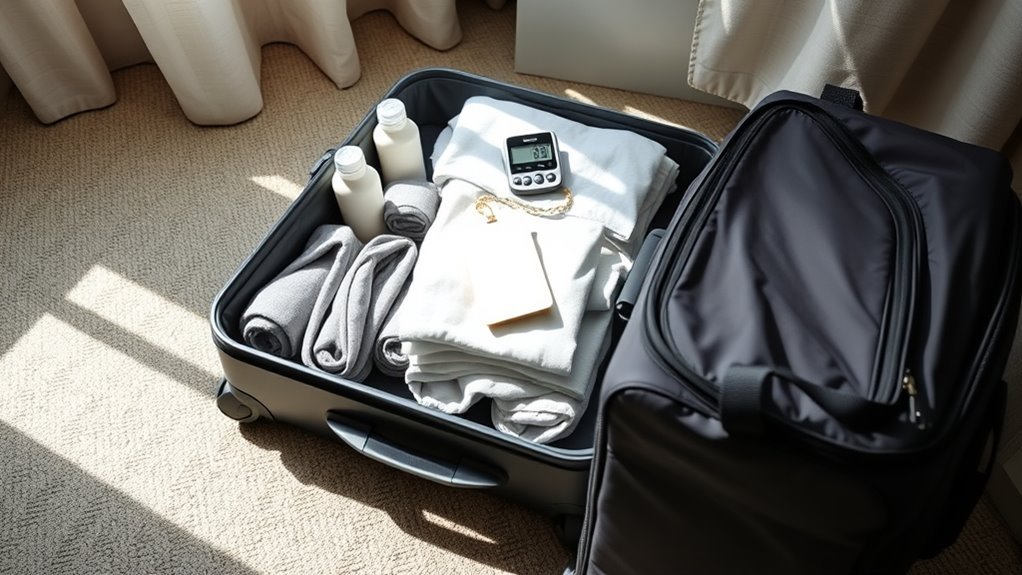
Before you start packing, check your airline’s baggage rules and weight limits so you don’t pay unexpected fees or have to repack at the gate. You’ll confirm carry-on dimensions, checked-bag weight allowances, and fees for overweight pieces.
Note differences for basic economy, international, and codeshare flights. Weigh your empty suitcase to know its tare weight, then compare that to the allowed limit to plan your packing.
Record specific limits per segment when you have connecting flights with different carriers. Knowing rules up front lets you choose lighter luggage, redistribute items, or prepay a second bag affordably.
Quick Steps to Reduce Luggage Weight
Now that you know the airline limits, take a few quick, practical actions to shave pounds off your bags. You’ll streamline packing without sacrificing essentials. Focus on removing duplicates, swapping heavy items for lighter versions, and trimming extras you won’t use.
Now that you know the limits, shave pounds off your bags—ditch duplicates, swap heavy items, and pack smarter.
- Purge: lay out items and remove anything nonessential; wear bulky layers on the plane.
- Replace: swap heavy toiletries for travel-size or solid bars, and choose versatile clothing pieces.
- Redistribute: move dense items to carry-on if allowed, and weigh bags as you pack to adjust contents.
These steps cut weight fast and keep you within limits.
Choose a Lightweight Suitcase or Backpack
Want to shave pounds without cutting your wardrobe? Pick a lightweight suitcase or backpack that maximizes capacity while minimizing empty weight. You’ll want durable materials, ergonomic straps, and smart compartments to avoid overpacking. Test weight empty before buying and aim for under airline allowances.
| Feature | Benefit | Tip |
|---|---|---|
| Material | Lighter carry | Compare weights |
| Frame | Support | Prefer minimal frames |
| Wheels/straps | Mobility | Try rolling/carrying |
| Compartments | Organization | Prevent excess items |
| Warranty | Longevity | Check repairs |
Choose what feels balanced; a light bag makes packing choices easier and fees less likely.
Swap Hard-Shell Luggage for Lighter Options
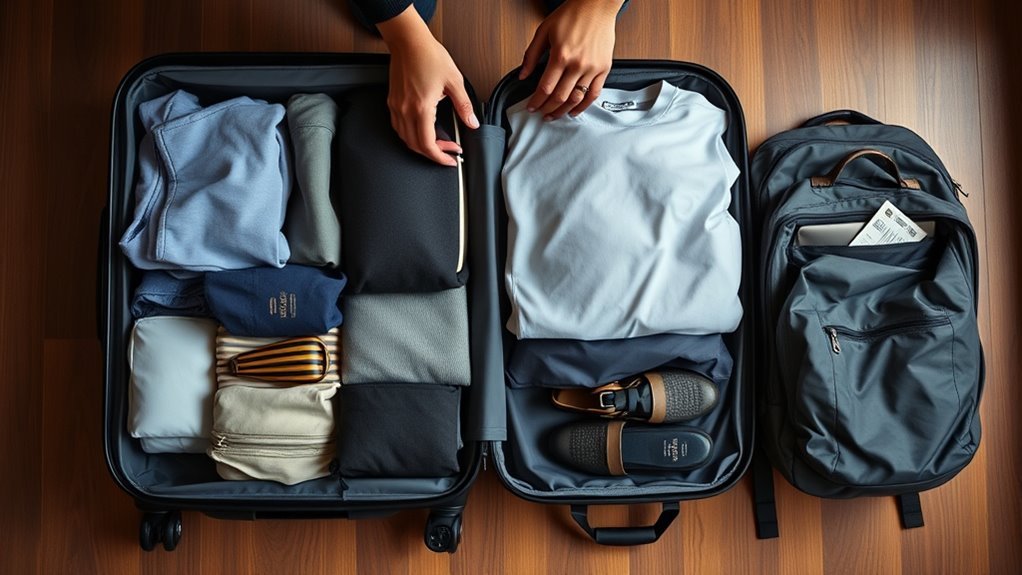
If you’ve chosen a lightweight suitcase or backpack, consider swapping bulky hard-shell luggage for softer, lighter alternatives to trim more pounds. You’ll gain flexibility, compressibility, and easier storage while keeping essentials accessible.
Fabric bags absorb less impact weight and often include external pockets so you avoid overpacking the main compartment.
- Choose soft-sided bags with reinforced bottoms to balance weight and durability.
- Try roll-top or duffel designs that compress when not full to save space.
- Prefer backpacks with slim frames and removable straps for multi-use convenience and lower carry weight.
Choose Lightweight Materials and Frames
When you pick luggage, prioritize lightweight materials and slim frames to shave pounds without sacrificing strength. Choose polycarbonate or ballistic nylon shells and aluminum or reinforced polymer frames that resist dents yet stay light.
Look for hollow-core handles, minimalist hardware, and low-profile wheels; each component adds weight. Test a bag empty to feel its baseline mass, then compare capacities.
Prioritize structure that protects contents without bulky padding you won’t need. If you carry fragile items, add compact protective sleeves instead of heavy cases.
Investing in quality lightweight construction cuts pounds and prevents overpacking at the source.
Build a Travel Capsule Wardrobe
Lightweight luggage helps, but your biggest weight savings come from what you pack: build a compact travel capsule wardrobe that lets you mix-and-match a few versatile pieces into multiple outfits. Choose neutral colors, prioritize wrinkle-resistant fabrics, and pick items that layer without bulk.
Limit shoes and accessories; each extra pair adds pounds fast. Focus on multifunctional pieces that adapt between day and night.
- Pack three tops that pair with everything.
- Include two bottoms: one casual, one dressier.
- Bring one lightweight jacket, one versatile dress or jumpsuit, and two pairs of shoes max.
Plan Outfits to Mix and Match
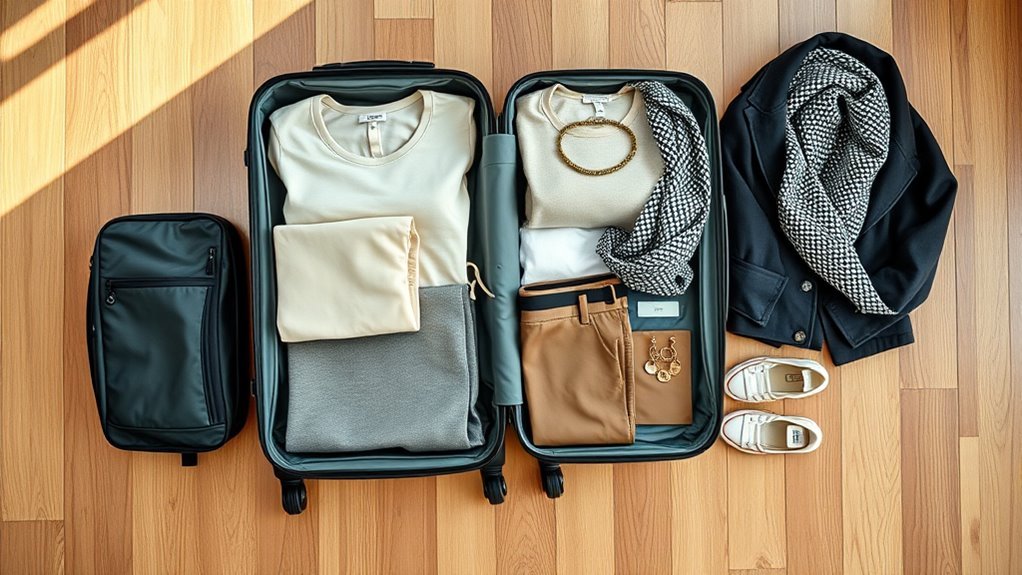
Because you’ll be wearing the same core pieces multiple days, plan outfits that reuse items in different combinations so nothing feels repetitive. Pick neutral bottoms and versatile tops, then layer with a statement piece like a scarf, jacket, or accessory to change the look.
Limit shoes to two styles that suit multiple activities. Photograph each planned outfit or note combinations to avoid overpacking.
Choose fabrics that dry quickly and resist wrinkles so they stay fresh between wears. Aim for three to five complete looks from seven to nine garments, maximizing options while keeping your carry weight low.
Wear Your Bulkiest Items on the Plane
Pick multipurpose, lightweight fabrics that look good in transit and pack small if you need to stow them.
Layer Up Strategically
When you layer up strategically, you can free significant space and weight in your checked and carry-on bags by wearing your heaviest items on the plane. Put on bulky coats, boots, and thick sweaters before you leave so they don’t count toward baggage limits and you stay warm during transit.
You’ll balance comfort and mobility by distributing bulk across layers and pockets. Choose a lightweight outer shell over insulating mid-layers, and secure items with zippers or belts to avoid shifting.
Keep essentials accessible to breeze through security.
- Wear heavy footwear
- Use zippered pockets
- Add a compressible mid-layer
Choose Multipurpose Pieces
If you plan ahead, choosing multipurpose pieces lets you carry less luggage by wearing the bulkiest, most versatile items on the plane—think a heavy coat that doubles as a travel blanket, hiking boots that handle city streets, and a scarf that converts to a pillow.
Wear sturdy shoes and your warmest jacket to free suitcase space. Pick clothing with pockets to stash travel essentials and reduce accessory count.
Choose items that adapt between activities so you don’t pack duplicates. Compress remaining garments into cubes.
When you board, layer as needed; you’ll arrive ready without hauling extra weight through airports.
Opt For Lightweight Fabrics
Because air travel adds strict weight and space limits, pick lightweight fabrics that pack small and dry fast so you can carry less and still stay comfortable. You’ll save room by wearing bulky items like coats and boots on the plane; choose shell jackets, merino layers, and compressible down to stay warm without heavy bags.
Quick-dry synthetics let you wash and reuse clothing, reducing the number you pack. Prioritize breathable, wrinkle-resistant pieces that serve multiple climates.
- Choose merino or synthetic base layers.
- Bring a compressible down or shell jacket.
- Pack convertible or quick-dry pants.
Limit Shoes to Two Versatile Pairs
Stick to two pairs of shoes: one comfortable pair for daytime walking and a smarter, lighter pair for evenings.
Pick styles in lightweight materials like mesh, canvas, or flexible leather to save weight.
You’ll stay prepared without overpacking.
One Pair For Daywear
When you pick just one pair for daywear, you’ll save space and avoid lugging extra weight through airports and city streets. Choose comfortable, broken-in shoes that match most outfits and handle walking, sightseeing, and casual dining. Prioritize cushioning, breathable materials, and neutral color.
- Comfort: test arch support and sole flexibility for full-day wear.
- Versatility: pick a style that pairs with jeans, chinos, and casual skirts.
- Weather-ready: select water-resistant finishes or bring lightweight waterproof covers.
Carry only this pair in checked or cabin luggage; pack socks and insoles to adjust fit and extend wear.
One Pair For Evenings
Although you’ll only bring one extra pair for evenings, choose shoes that lift outfits without adding bulk—think sleek loafers, low-heel ankle boots, or versatile dressy flats that work with dresses and tailored pants. You’ll pick one adaptable evening pair to complement your daytime shoe, keeping silhouettes simple and colors neutral so you can mix-and-match. Slip them on for dinners, shows, or a night walk. Pack them in a shoe bag and stuff toes with socks to save space. Rotate wear during travel days to avoid carrying both.
| Occasion | Best choice |
|---|---|
| Dinner | Low-heel boots |
| Theater | Dressy flats |
| Date | Sleek loafers |
| Evening walk | Comfortable flats |
| Formal | Simple pumps |
Choose Lightweight Materials
Because every ounce adds up, pick shoes made from light materials so you can stick to two versatile pairs without sacrificing comfort or style. Choose breathable sneakers and a dressy-but-minimal pair that both compress easily and support long days. You’ll save space and avoid checked-bag fees.
- Opt for mesh or knit uppers—they’re light and packable.
- Prefer EVA or foam soles over heavy rubber for cushioning without weight.
- Pick neutral colors that match multiple outfits to limit options.
Rotate pairs during travel, air them overnight, and wear the bulkiest on travel days to maximize carry-on efficiency.
Minimize Toiletries With Travel Essentials
If you want to cut luggage weight without giving up essentials, strip your toiletry kit to versatile, travel-sized items that do double duty and meet airline liquid rules.
Pick multifunctional products—moisturizer with SPF, shampoo-conditioner combos, and a tinted balm that hydrates and covers.
Transfer small amounts into leakproof 100 ml bottles or use single-use packets for short trips.
Pack a compact toothbrush, foldable brush, and solid deodorant (if allowed) to save space.
Skip full-size containers and bulky cases; use a lightweight, transparent pouch so security checks are quick and you’ll only carry what’s necessary.
Switch Liquids to Solids and Concentrates
When you swap liquid products for solid or concentrated versions, you’ll cut weight and avoid bulky bottles while keeping the same functionality. You’ll streamline packing, save space, and comply with carry-on liquid limits.
Choose shampoo bars, concentrated laundry soap, and solid sunscreen to replace heavy containers. Pack small tins or resealable pouches to protect solids and prevent leaks.
Swap bulky bottles for shampoo bars, concentrated laundry soap, and solid sunscreen; use tins or resealable pouches to protect them.
Test products at home to verify they suit your skin and hair. Note airline rules for aerosols and gels; concentrates often bypass strict limits.
This approach trims ounces across items, making your luggage lighter without sacrificing hygiene or convenience.
Pack Multi-Use Items to Avoid Duplicates
Although you might be tempted to pack a separate set of toiletries, gadgets, and shoes for every activity, choose versatile items that serve multiple purposes to cut weight and save space. Pick clothing that layers and converts—a dress that works day-to-night, a jacket that doubles as a pillow, neutral pieces that mix and match.
Bring multifunctional tools: a compact scarf that’s a blanket or sun shield, a travel towel that’s also a wrap. Opt for shoes suitable for walking and a smart outing.
Evaluate each item’s use; if it doesn’t serve at least two purposes, leave it behind.
Consolidate Tech: One Device and Compact Chargers
Choose one multi-purpose device—like a tablet with a keyboard or a phone with a good camera—to replace separate gadgets.
Pack only lightweight charging essentials, such as a compact USB-C charger and a small power bank.
You’ll cut weight and simplify charging so you can move through airports faster.
One Multi-Purpose Device
If you pick a single multi-purpose device—like a tablet that doubles as an e-reader, media player, and lightweight laptop with a detachable keyboard—you’ll cut weight and simplify charging.
Choose one device that handles your main tasks: reading, streaming, light productivity, and photo backup.
Pack only necessary accessories and use cloud storage to avoid extra drives.
Prioritize battery life and durable cases so you won’t carry spares.
When deciding, test performance for your typical use to guarantee it replaces separate gadgets.
- Replace: phone + e-reader + small laptop
- Minimize: chargers and cables
- Optimize: storage and apps
Lightweight Charging Essentials
When you consolidate devices, pack a single compact charging kit that covers everything—one multiport USB-C charger, a short braided cable, and a slim power bank—so you avoid hauling multiple bulky chargers and spare cords.
Choose a charger with at least 65W and two ports so you can top up a laptop and phone simultaneously.
Prefer USB-C cables that support fast charging and data, and carry one universal adapter for outlets.
Pick a power bank under airline limits (usually 100Wh).
Stow items in a small pouch to keep them organized, accessible, and easy to remove for security checks.
Use Lightweight Chargers and Compact Adapters
Since every ounce adds up, swap bulky brick chargers and oversized travel adapters for compact, lightweight options that still power your devices. You’ll free space and avoid checked-bag fees by choosing multiport USB-C chargers, foldable plugs, and slim power banks that meet airline limits.
Swap bulky bricks for compact GaN chargers, foldable adapters, and slim power banks to save space and avoid fees.
Prioritize chargers with GaN technology for smaller size and faster charging, and pick universal adapters with integrated plugs rather than separate dongles.
Keep cables minimal: one short USB-C and one Lightning/USB-A as needed. Test everything before you go, and pack chargers in an easy-access pocket so you won’t rummage through your luggage.
- Multiport GaN charger
- Foldable plug adapter
- Slim power bank
Reduce Paperwork: Use Digital Copies
Skip bulky paper and carry digital boarding passes on your phone to save space and hassle.
Scan IDs and passports and keep them encrypted on your device so you can access them if needed.
Sync all itinerary PDFs and travel documents to a cloud folder for easy retrieval across devices.
Carry Digital Boarding Passes
If you want to shave pounds from your carry-on, swap paper boarding passes for digital copies on your phone or smartwatch; they take up zero physical space and cut down on clipped tickets and receipts. You’ll streamline security and gate entry, reduce clutter, and avoid rifling through pockets or folders.
Keep your device charged and download passes ahead of time in case of weak service. Use airline apps or wallet features, enable notifications for updates, and screenshot the pass as a backup.
- Download passes to your device in advance.
- Screenshot or save offline copies.
- Keep device charged and accessible.
Store Scanned IDs Securely
Along with digital boarding passes, keeping photocopies of your passport and ID on your device saves space and speeds up airport procedures.
Store encrypted PDFs or photos in a dedicated folder, and label files clearly so you can grab them fast.
Protect files with strong device passcodes and enable biometrics for quick access.
Use an on-device encrypted container or password manager that supports secure notes—don’t rely on accessible image galleries.
Keep one unencrypted screenshot for emergencies only if you must, but remove it after use.
Regularly update and test access before travel so you won’t get stuck at checkpoints.
Use Cloud Travel Documents
When you store passports, visas, boarding passes, and reservation confirmations in a secure cloud folder, you cut down on bulky paper and make documents accessible from any device. You’ll reduce weight and hassle by relying on encrypted storage and offline-synced copies.
Before travel, confirm files open on your phone and print one emergency sheet if needed. Keep filenames clear and use two-factor authentication.
- Sync key documents for offline access.
- Encrypt files and enable two-factor authentication.
- Share emergency view-only links with a trusted contact.
This approach trims physical clutter while keeping essential paperwork ready.
Cull Nonessential Extras Before Packing
Before you even touch your suitcase, take a quick inventory of what you think you need and toss anything that doesn’t serve a clear purpose—duplicate chargers, specialty shoes you won’t wear, freebie toiletries, and souvenirs you can buy there.
Do a quick pre-pack sweep: ditch duplicates and nonessentials so your bag holds only what truly matters.
Decide what items truly support your itinerary and ditch extras: bulky books (use an e-reader), seldom-worn clothes, redundant electronics, and single-use gadgets.
Limit multiples—one versatile pair of shoes, one jacket, one toiletry kit.
Pack smaller refillable containers and plan to buy consumables at your destination if cheaper.
A disciplined pre-pack sweep trims weight and stress before you zip up.
Use Packing Cubes to Lighten and Compress Luggage
Though small, packing cubes can make a big difference in how much you fit and how organized your bag stays. You’ll compress clothing, limit wasted space, and separate items so you don’t overpack. Choose lightweight, breathable cubes and avoid oversized sets that invite extras. Use color-coding for quick access and re-evaluate contents before zipping.
When you pack, prioritize dense items in one cube and lighter pieces in another to balance weight.
- Select slim, durable cubes to reduce bulk.
- Limit cubes to only what fits your bag’s capacity.
- Flatten air pockets before closing zippers.
Roll, Fold, and Bundle Clothes Efficiently
Curious how small changes in folding can free up space and shave ounces off your bag? Roll soft items tight to save volume and prevent creases, then tuck socks into shoes.
Curious how small folding tweaks can free space and shave ounces—roll soft items tight, tuck socks into shoes.
Fold structured pieces flat to maintain shape and stack them at the suitcase base.
Use bundle wrapping for outfits: lay larger items flat, place smaller ones inside, then wrap to minimize gaps. Alternate directions when stacking to avoid bulges.
Compress delicate fabrics with tissue or plastic to reduce friction and wrinkles.
Reassess outfits—pack versatile pieces you can mix, matching quantity to planned activities to avoid excess.
Distribute Weight Between Carry-On and Checked Bags
Keep essentials like documents, medication, a change of clothes, and valuables in your carry-on so you’re prepared if your checked bag is delayed.
Put heavier or bulkier items—shoes, extra toiletries, and spare outfits—in your checked luggage to save carry-on weight and meet airline size limits.
Balancing items this way helps you travel lighter and avoid excess baggage fees.
Pack Essentials In Carry-On
When you split essentials between your carry-on and checked bag, you lower the risk of being stranded without valuables and can keep checked luggage lighter for fees and easier handling. Pack passports, boarding passes, medications, chargers, a change of clothes, and a lightweight toiletry kit in your carry-on so delays or lost bags don’t derail plans.
Keep fragile or valuable items with you, and use compression cubes to organize without overpacking. Prioritize items you’ll need within 24 hours and avoid duplicating bulk.
Follow TSA rules for liquids and batteries to prevent confiscations.
- Travel documents
- Medications & chargers
- One-day clothing kit
Shift Bulk To Checked
If you want to save space and avoid overweight fees, move heavy, infrequently used items into your checked bag and keep lighter, essential things in your carry-on.
Decide what you’ll need mid-flight or at arrival, and limit carry-on to valuables, medications, a change of clothes, and electronics.
Put shoes, toiletries you won’t need, extra jackets, and bulkier souvenirs in checked luggage.
Balance weight so neither bag exceeds the airline limit—use a portable scale.
Roll or compress items in checked bags to maximize space.
Label and secure checked items, but avoid packing anything you can’t afford to lose.
Use Your Personal Item Allowance Strategically
Although airlines limit checked bags, you can use your personal item allowance to carry heavier or bulkier essentials—think a small backpack or tote filled with a change of clothes, electronics, chargers, toiletries in travel sizes, and any valuable items—so you don’t have to cram them into your suitcase or risk paying overweight fees.
Pack strategically: place fragile gear near your back, use compression pouches, and keep items you’ll need during travel within easy reach.
Check dimensions before you fly and prioritize must-haves.
- Electronics and chargers
- One outfit and toiletries
- Valuables and documents
Know Carry-On Security Rules Before You Fly
Packing your personal item wisely helps keep bulky, valuable things out of checked bags, and knowing carry-on security rules will keep that gear moving smoothly through the checkpoint.
Check size and weight limits for your airline, and pack liquids in a clear quart-sized bag with containers 100ml/3.4oz or smaller.
Keep laptops and large electronics accessible for removal, and stow batteries and power banks in your carry-on, not checked luggage.
Place toiletries and medications where staff can see them quickly.
Remove shoes, belts, and items that trigger scanners if required.
Review destination-specific restrictions to avoid surprises.
Buy Bulky Items at Your Destination
Skip packing heavy toiletries or beach towels and plan to buy those necessities locally to save weight. Check local prices and stores ahead of time so you don’t pay more on impulse.
You’ll travel lighter and still have what you need when you arrive.
Buy Necessities Locally
Why haul a bulky beach towel or a full-size bottle of sunscreen when you can pick them up at your destination? You’ll save weight and stress by buying toiletries, snacks, or a light rain jacket locally. Look for compact, travel-sized versions or durable items you can leave behind.
Pick necessities up near arrival—airports, convenience stores,, or markets—so you’re not overpacking for uncertain weather or activities. Plan what you’ll definitely need and buy the rest on site.
- Travel toiletries (small, sealed)
- Snacks and water
- Seasonal wear (umbrella, jacket)
Compare Prices First
Wondering whether to bring that bulky beach umbrella or rent one when you arrive? Compare prices first: check rental rates, local store costs, and airport shop markups. Use apps and local forums to see typical prices and seasonal demand.
Factor in taxi or shipping fees if you plan to buy on arrival, and consider return policies for unused items. If renting or buying there saves money and spares weight, do it.
For expensive gear, weigh replacement cost against baggage fees. Make a quick spreadsheet or note on your phone so you decide confidently before packing.
Weigh Your Bag at Home and at the Gate
Before you leave for the airport, weigh your packed bag at home so you won’t be surprised by an overweight charge at the gate; then double-check on the airport scale after any last-minute items. You’ll spot excess weight early, remove or redistribute items, and avoid fees.
Keep a compact luggage scale in your carry-on and use a digital bathroom scale for accuracy.
At the gate, if you’re close to the limit, shift heavy items into your personal item or wear bulky layers. Stay calm, quick, and decisive to prevent delays and extra costs.
- Use a portable scale.
- Redistribute weight.
- Repack decisively.
Shop Smart: Choose Lighter Replacement Gear
When you’re replacing gear, pick the lightest option that still meets your needs—think titanium cookware, inflatable pillows, and trail-running shoes instead of heavy boots—and check weight specs before you buy.
You’ll prioritize multipurpose items: a jacket that layers, a towel that doubles as a wrap, or a charger that handles multiple devices. Compare materials and trade durability for weight where acceptable.
Try items in store to confirm fit and comfort; online reviews often list actual weights. Keep receipts and tags until you travel, so you can return gear that didn’t save weight or perform as promised.
Quick Packing Checklist to Stay Under the Limit
Now that you’ve swapped heavy items for lighter alternatives and confirmed actual weights, use a compact checklist to make sure your packed bag stays under the airline limit.
Start by weighing the bag on a reliable scale and removing anything nonessential.
Prioritize versatile clothing and tuck denser items near the center to balance weight.
Keep toiletries minimal and in travel sizes, and wear your bulkiest layers to reduce carry-on mass.
Before leaving, do a final quick scan for duplicates and freebies that snuck in.
- Weigh, remove nonessentials
- Pack versatile, balanced items
- Minimize toiletries and duplicates
Frequently Asked Questions
Can I Ship Items Ahead Instead of Checking Extra Baggage?
Yes — you can ship items ahead instead of checking extra baggage, and it often saves fees and hassle; you’ll arrange courier or postal delivery, track shipments, account for customs/time, and pack valuables securely to avoid damage or loss.
Are There Weight Tricks for Souvenirs Coming Back?
Yes — you can pack light, wear bulky items, use compressible bags, split souvenirs among companions, buy collapsible or flat keepsakes, ship heavier purchases home, and prioritize small, meaningful items to avoid overweight fees.
How Do Airline Alliances Handle Combined Baggage Allowances?
When you fly on partner itineraries, airlines usually apply the most generous baggage allowance among carriers or the governing carrier’s rules; you’ll need to follow checked weight/size limits, count pieces, and pay any extra fees at check‑in.
Can Compression Straps on Suitcases Cause Overweight Fees?
Yes — compression straps won’t hide weight; they’ll just compress volume. If the scale shows your suitcase exceeds the airline’s allowance, you’ll pay overweight fees. You’ll need to redistribute, remove items, or pay the extra.
Do Clothing Materials’ Care Needs Affect Packing Choices?
Yes, they do: you’ll choose wrinkle-resistant, quick-dry fabrics to avoid bulky irons or frequent laundering, pack versatile pieces you can hand-wash, and skip heavy-care items that need dry cleaning or special storage while traveling.
Conclusion
You’ve got this—follow airline rules, pick a lighter bag, and ditch or buy bulky items at your destination to avoid fees. Weigh your bag at home, swap heavy gear for lightweight alternatives, and use smart packing tricks like rolling clothes and layering. Check limits before you leave, and keep a quick checklist handy so you’re not repacking at the gate. Travel lighter, save money, and breeze through airports with less stress.
