Can I Take Hair Clippers in Hand Luggage
Yes — you can usually bring hair clippers in your hand luggage, but you’ll need to secure blades, cover removable parts, and follow battery rules. Corded models are fine if packed neatly; battery-powered trimmers are allowed with installed batteries, while spare lithium cells must go in carry-on with insulated terminals. Expect extra screening and possible airline-specific limits or confiscation if they seem unsafe. Pack them accessible and protected, and keep going to learn practical packing and battery tips.
Can I Bring Hair Clippers in My Carry-On?
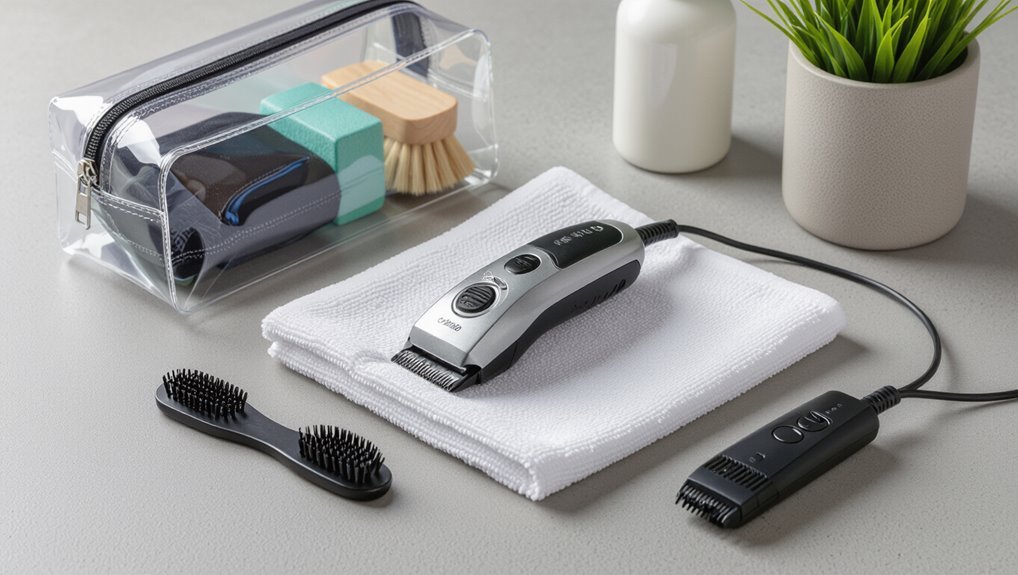
Curious whether you can pack hair clippers in your carry-on? You can usually bring electric clippers in hand luggage, provided blades are secured and they meet airline rules.
Battery-powered clippers are allowed, but spare lithium batteries may have restrictions.
Always check your airline and country regulations before travel to avoid confiscation or delays at security checkpoints.
Quick Checklist: Bring or Check Hair Clippers?
If your clippers are battery-powered and cordless, you can usually pack them in carry-on but check battery rules and spare cells.
Corded models are fine in either bag, though they take up more space and may be safer checked.
Metal-bladed or heavy-duty clippers can trigger extra screening, so consider checking them if you want to avoid delays.
Battery-Powered Clippers
Remove batteries if airline rules or security request it, and carry spare lithium batteries in carry-on with terminals insulated or in original packaging.
Keep the device accessible for inspection, and verify airline or country restrictions on battery capacity (Wh) to avoid surprises at the gate.
Corded Or Metal-Bladed
Because corded clippers and metal-bladed models can be treated like sharp or electrical items, you’ll usually need to check airline and TSA rules before packing them in carry-on.
If the blade is exposed or large, you’ll likely have to place them in checked baggage.
Secure cords, cover blades with guards or a sheath, and pack in durable cases to prevent damage and avoid delays.
How Do Airport Security and Airlines Treat Grooming Tools Like Clippers?
Wondering how airports treat grooming tools like clippers? You’ll face security screening and airline policies: TSA and similar agencies inspect clippers in carry-on; removable blades or sharp components may prompt restrictions.
Airlines may have tighter rules, so check before flying. Pack clippers in an accessible spot, declare if asked, and expect possible confiscation if security deems them unsafe for the cabin.
Which Types of Hair Clippers Are Allowed in Carry-On?
You can usually bring battery-powered clippers in your carry-on, especially if the batteries are installed and meet airline rules.
Corded electric clippers are often allowed too, but bring them with their cords neatly packed and expect extra screening.
Travel-size trimmers are the easiest option since they’re compact and designed to meet carry-on limits.
Battery-Powered Clippers
Most battery-powered clippers are allowed in carry-on bags, but whether yours can fly depends on the battery type and how it’s installed.
You should check battery chemistry, capacity limits, and if the cell is removable. Pack terminals protected and bring spare batteries in carry-on only.
- compact trimmer with built-in battery
- spare lithium pack in plastic case
- clipped protective cap
- foam-wrapped charger
- device switched off
Corded Electric Clippers
If your clippers need to plug into an outlet, they’re usually allowed in carry-on but must meet a few common-sense rules:
Keep cords tidy and blades covered, pack them securely to avoid damage, and guarantee they don’t resemble prohibited tools.
Remove detachable batteries (if any) and declare unfamiliar devices if asked.
Check airline rules; some carriers may have specific restrictions.
Travel-Size Trimmers
When traveling with compact trimmers, pick devices designed for carry-on use—battery-powered, blade-guarded models with nonremovable blades or clear blade covers are easiest to pass through security and less likely to be mistaken for a weapon.
You should choose lightweight, TSA-friendly trimmers, pack batteries separately if removable, and use protective caps.
- Small foil trimmer
- Plastic guard fitted
- USB-charged unit
- Travel case zipped
- Spare AAA batteries
Are Corded Clippers Treated Differently From Cordless Clippers?
Curious whether corded and cordless clippers get different treatment at airport security? You’ll find security focuses on shape and potential risk, not power source.
Curious if corded or cordless clippers face different security checks? Officials focus on shape and risk, not power source.
Corded units are inspected like other electrical devices; cordless units without removable batteries follow the same screening.
If a cordless clipper has a removable battery, check airline rules.
Always pack blades safely and be ready for additional screening.
Can Rechargeable Batteries in Cordless Hair Clippers Cause Problems?
If your cordless clippers have rechargeable batteries, you need to check the battery type since airlines often restrict lithium-ion cells by capacity.
Pack the clippers in your carry-on, keep spare batteries in their original packaging or insulated terminals, and carry any required documentation if the battery capacity is high.
Following these carry-on safety tips will help you avoid delays or confiscation at security.
Battery Type Restrictions
Which batteries you have in your cordless clippers matters: most airlines and security agencies restrict lithium-ion cells because they can overheat and catch fire, so you should check battery type and capacity before packing.
Know cell chemistry, watt-hours, and removable status.
Visualize risks and compliance:
- A loose lithium-ion battery on a tray
- A sealed clipper battery inside bag
- A damaged battery with scorch marks
- A labeled battery pack
- Airline staff inspecting electronics
Carry-On Safety Tips
Because rechargeable batteries can overheat or short-circuit, you should treat cordless hair clippers in carry-on luggage with extra care to avoid delays or safety risks. Turn clippers off, protect contacts, and carry them in your cabin. Inform security if asked and pack spare batteries in carry-on only.
| Tip | Action |
|---|---|
| Power off | Switch off device |
| Cover | Protect terminals |
| Spares | Carry in cabin |
| Declare | Tell security |
| Inspect | Check for damage |
What If My Clipper Has a Removable Lithium Battery?
Wondering about a clipper with a removable lithium battery?
You should remove the battery, keep terminals protected, and carry the clipped unit in cabin luggage where possible. Follow airline rules and declare if asked.
- Battery tucked in a plastic case
- Clipper blade capped
- Battery terminals taped
- Battery in carry-on pocket
- Clipper in clear pouch
Are Spare Batteries Allowed in Carry-On With Hair Clippers?
If you’re carrying spare batteries for your clippers, check what type they are—airlines and TSA usually allow alkaline or NiMH spares but restrict lithium cells by watt-hour or cell count.
Pack spares in your carry-on with terminals protected (original packaging, tape, or individual pouches) to prevent short circuits.
Always confirm your airline and TSA rules before flying since limits and packaging requirements can vary.
Battery Types Allowed
What kind of batteries are in your clippers matters for carry-on rules: airlines and regulators generally allow installed lithium-ion or alkaline batteries in devices, but they restrict spare lithium cells and batteries because of fire risk.
You should check capacity (Wh) and airline limits, keep batteries in device when possible, and declare unusual packs.
- single lithium-ion cell
- removable AA alkalines
- built-in rechargeable pack
- spare battery pack
- travel power bank
Spare Battery Packaging
Most airlines let you carry spare batteries for hair clippers in your hand luggage, but you’ve got to package them correctly:
Place each spare battery in its original retail packaging or individually insulated terminals (tape terminals or use plastic caps), and put them in your carry-on, not checked baggage.
Limit quantity per airline rules and keep batteries protected from metal objects to prevent short circuits.
Airline And TSA Rules
Many airlines and the TSA allow spare batteries for hair clippers in carry-on bags, but they enforce strict limits and packaging rules you must follow—remove batteries from devices when required, keep them insulated (taped terminals or in original packaging), and check the airline’s watt-hour or cell count limits before you fly.
- Wrapped batteries tucked in a pouch
- Taped terminals glinting under light
- Original boxes stacked neatly
- A tiny watt-hour label visible
- Airline agent inspecting calmly
How to Pack Cordless Clippers With Non-Removable Batteries for Screening?
If your cordless clippers have a non-removable battery, you’ll still be able to bring them in carry-on, but you should prepare them for screening by protecting the blades, turning the device off, and having it easily accessible for inspection.
Place clippers in a protective case or wrap blades with a guard and tape, power off, remove loose attachments, and pack them near the top of your carry-on.
How Do TSA Rules Apply to Hair Clippers in the United States?
Those packing tips help when you get to the checkpoint, but it’s also important to know how TSA rules specifically treat hair clippers in the United States.
You can carry clippers in carry-on or checked baggage, removable batteries are safer, and expect screening. Be prepared to remove items for X-ray or additional inspection.
- Clipper in carry-on
- Battery removed
- Plastic guard on blades
- Travel case zipped
- Inspection request
How Do UK and EU Security Rules Treat Hair Clippers?
In the UK and EU you’ll generally be allowed to carry hair clippers in hand luggage, but rules about batteries and power sources vary.
Check airline and airport guidelines for battery type and watt-hour limits for lithium-ion packs.
If you pack clippers in checked baggage, secure batteries and follow any specific airline restrictions.
Carry-On Rules Overview
When you pack hair clippers in carry-on luggage, UK and EU security treat them differently depending on design and blade type: battery-powered clippers without exposed blades are generally allowed, while models with removable or exposed cutting blades can be restricted or need to go in checked baggage.
- Compact cordless trimmer
- Exposed metal blade set
- Detachable clipper head
- Travel razor-style blade
- Protective blade guard
Battery And Power Limits
How much battery power your clippers have matters: UK and EU security focus on battery type and watt‑hour rating, not the styling device itself.
You can usually carry clippers with non‑removable batteries if they’re within permitted watt‑hours (typically under 100 Wh).
Removable lithium batteries must be in carry‑on, spare cells protected against short circuit.
Check airline limits and label ratings before travel.
Checked Baggage Considerations
Because checked baggage generally faces fewer restrictions on battery-powered items than carry-on, you can usually pack hair clippers in hold luggage—provided you follow a few rules.
You should remove loose batteries if required, insulate terminals, secure the device, declare if asked, and check airline-specific rules.
- Clipper in protective case
- Spare batteries taped
- Foam around blades
- Device switched off
- Receipt or manual in bag
How Do Australian and Canadian Rules Compare for Hair Clippers?
If you’re flying between Australia and Canada, know that both countries generally allow electric hair clippers in carry-on bags but differ on battery and blade rules; you’ll find Australia focuses on battery safety—spare lithium batteries must be in carry-on and terminals protected—while Canada emphasizes blade condition and transport.
Check airline policies, pack batteries safely, and confirm blades are covered to avoid delays.
Which Countries Have Stricter Restrictions on Hair Clippers?
If you’re flying to or through parts of the Middle East, expect tighter rules on battery-operated or cordless clippers and sometimes strict carry-on screening.
In several Asian and Pacific countries, authorities may require blades to be sheathed or packed in checked luggage, especially for professional-grade devices.
Check each country’s aviation authority before you pack so you don’t get stopped at security.
Middle Eastern Regulations
When you travel through the Middle East, note that some countries impose tighter restrictions on hair clippers—especially models with exposed blades, lithium batteries, or high-powered motors—so you should check local rules before packing them in carry-on luggage.
You’ll find regulations vary by security policy and airline; always declare batteries and pack blades safely.
- TSA-like checkpoints
- Battery terminals taped
- Blades sheathed
- Airline-specific bans
- Local security advisories
Asian And Pacific Restrictions
Although rules differ across Asia and the Pacific, several countries enforce stricter checks on hair clippers—particularly models with exposed blades, removable lithium batteries, or high-powered motors—so you should verify regulations before packing them in carry-on luggage.
Japan, Singapore, Australia and New Zealand often restrict battery types and blade exposure; Indonesia and the Philippines may require declaration or screening.
Contact airlines and local aviation authorities.
What Airline-Specific Policies Might Affect My Hair Clippers?
Because airlines set their own rules, you’ll need to check each carrier’s policy before packing your clippers in carry-on luggage.
Some carriers restrict battery types, others limit blade sizes, and fee-based carry-on rules or international routes can change allowances.
Always review airline FAQs and contact customer service if unsure.
Always check airline FAQs and call customer service if you have any doubts before packing.
- Compact trimmer in a toiletry bag
- Lithium battery label
- Folded blades covered
- Checked vs carry-on sign
- Gate agent inspection
Are Clipper Blades Considered Sharp Objects by Security?
Really—yes and no: security treats clipper blades based on how exposed and sharp they are, so removable or uncovered blades usually count as sharp objects, while clippers with fixed, guarded, or covered blades often pass without issue.
You should expect screening officers to inspect exposed blades, possibly ask questions, and decide allowance case by case, so pack thoughtfully and know local rules.
Should I Remove Blades or Guards Before Screening?
Since security treats exposed and removable blades differently, you’ll want to decide whether to take them off before screening.
If blades are removable, remove and pack them safely; keep guards attached if they clearly cover cutting edges.
Label parts, place in a clear pouch, and expect an officer to inspect.
- Loose metal blade
- Plastic guard clipped on
- Small screwdriver nearby
- Clear resealable pouch
- Officer examining parts
How to Prepare Metal Clipper Parts for X-Ray Inspection?
When you’re preparing metal clipper parts for X‑ray inspection, separate and secure each piece so officers can quickly identify them.
Place blades, screws, guards and detachable metal components in a clear, sealed pouch or small box to prevent shifting.
Lay items flat and avoid overlapping.
Label the container “clipper parts” if possible, and keep it accessible for screening staff to inspect without unpacking your entire bag.
How to Present Hair Clippers During a Security Inspection to Avoid Delays?
If you want to speed up screening, pull your clippers out of your bag and place them on top of your carry-on or in a separate bin so officers can see them immediately; detach any removable metal parts and keep them in a clear pouch for quick inspection.
Lay items neatly, stay calm, answer questions briefly, and follow staff directions.
Lay items neatly, stay calm, answer briefly, and follow staff directions for a smoother, quicker screening experience.
- Clippers in a clear pouch
- Removable blades aligned
- Battery pack beside tools
- Zip pouch open
- Carry-on lid unzipped
What to Expect During a Manual Inspection of Hair Clippers?
Because manual checks are hands-on, expect an officer to pick up your clippers, inspect blades and housing closely, and ask you to demonstrate that removable parts and batteries come off easily. You’ll answer brief questions, follow instructions, and may be asked to show power or safety covers. Stay calm and cooperative.
| Step | Action | Tip |
|---|---|---|
| 1 | Hand over clippers | Remove case |
| 2 | Show parts | Detach battery |
| 3 | Demonstrate | Power on |
How to Declare Hair Clippers at Security Checkpoints?
After the officer finishes the manual check, let them know you’re carrying hair clippers and any spare batteries or attachments.
Speak clearly, show packaging, and follow instructions. Be ready to remove items for inspection and accept officer guidance.
- Compact clippers in a pouch
- Spare batteries in original wrap
- Small scissors or combs visible
- Charger cords coiled neatly
- Clear travel case displayed
How to Handle a Request to Check Hair Clippers at the Gate?
If a gate agent asks you to check your hair clippers, follow their instructions calmly and hand the item over to be placed in the hold.
You can ask for a receipt or tag to track the item and confirm where it’ll be stowed.
For next time, consider packing clippers in checked baggage or using a travel-friendly model that meets carry-on rules to avoid gate checks.
Gate Agent Instructions
When a passenger asks to check hair clippers at the gate, stay calm and follow your airline’s policy: confirm the item type and whether it’s battery-powered or has exposed blades.
Explain whether you can accept it for gate-checked baggage or need to redirect them to ticket counter/past-security options.
Clearly tell them any steps they must take (removing batteries, sheathing blades) before you take possession.
- Metal clipper with cord
- Cordless unit and spare batteries
- Exposed cutting blades
- Plastic sheath or case
- Passenger holding boarding pass
Packing Alternatives
Although gate agents can sometimes accept hair clippers, you should offer clear packing alternatives so passengers know their options and avoid delays.
Tell them to place clippers in checked baggage when possible, remove batteries and pack separately, or use a protective case to prevent accidental activation.
If checking at the gate is necessary, document acceptance and follow airline procedures to confirm liability and timing.
When Are Hair Clippers Likely to Be Banned From the Cabin?
Because security aims to prevent anything that can be used as a weapon, hair clippers are more likely to be banned from the cabin when their blades are exposed, removable, or sharp enough to cause harm, when airline or national regulations explicitly list them as prohibited items, or when a specific flight has heightened security alerts that tighten carry-on rules.
- exposed metal blades
- loose blade attachments
- visible cutting tools
- strict national bans
- alerted security checkpoints
What Are Alternatives If You Can’t Bring Your Preferred Hair Clippers?
If you can’t bring your preferred clippers, look for compact, non-metal alternatives and services that get the job done without triggering security rules.
If your clippers aren’t allowed, opt for compact, non-metal options or local grooming services that won’t trip security.
Use disposable razors, battery-powered plastic trimmers, or electric shavers with enclosed blades.
Book a hotel barber, salon, or airport grooming service.
Pack styling products and a comb to freshen your look.
Check local shops at your destination.
Best Travel-Friendly Hair Clippers for Flights
When choosing travel-friendly clippers for flights, look for compact, lightweight models that won’t take up much space in your bag.
You’ll want battery-powered options so you can use them without worrying about outlets or voltage adapters.
Also check that the blades are TSA-compliant—usually rounded or plastic guards—to avoid issues at security.
Compact and Lightweight Design
Although space is limited in your carry-on, compact and lightweight hair clippers make it easy to maintain your look without adding bulk or weight to your bag.
You’ll appreciate slim bodies, ergonomic grips, and protective travel guards that slip into tight compartments.
- Slim metal chassis fitting a toiletry pouch
- Foldable handle tucking into pockets
- Lightweight plastic with rubber grip
- Low-profile blade guard
- Small zip case for cords
Battery-Powered Options
Compact, lightweight clippers are great for packing, but battery-powered models take travel convenience a step further by cutting cords and reducing the need to hunt for outlets.
You’ll want long battery life, fast USB-C charging, and a clear battery indicator. Choose models with secure blade guards and a travel lock, and pack chargers in hand luggage to keep them usable on trips without checking bags.
TSA-Compliant Blade Types
If you want clippers that won’t slow you down at security, pick models with TSA-compliant blade types like rounded-tip, ceramic, or guarded stainless-steel blades that prevent accidental cuts and are usually permitted in carry-on bags.
These designs meet safety expectations, reduce injury risk during inspections, and make passing through checkpoints smoother.
- Rounded-tip guards gliding over skin
- Ceramic blades staying cool
- Guarded stainless edges
- Detachable safety combs
- Low-profile travel guards
How to Choose Cordless Hair Clippers for Travel Safety
When you’re picking cordless hair clippers for travel safety, prioritize battery life, blade security, and a lockable power switch so they won’t start in transit.
Choose models with removable, covered blades, durable housing, and a gig-safe battery indicator.
Prefer USB charging, TSA-friendly wattage, and compact designs that fit your carry-on.
Pack blades and guards in a protective case to prevent damage.
How to Choose Corded Hair Clippers If You Must Check Them
Since you’ll be checking corded clippers, focus on durable construction, a firmly attached cord, and a rugged travel case that keeps blades and guards secure; these reduce damage and prevent loose parts from getting lost in transit.
- Heavy-duty metal housing that won’t dent
- Thick, reinforced power cord with strain relief
- Locking blade guard to prevent nicks
- Foam-padded travel case with compartments
- Spare screws and compact tool kit stored separately
Maintenance Tips to Keep Travel Clippers TSA-Friendly
Although you’ll be handling them frequently, keep travel clippers TSA-friendly by cleaning, securing, and documenting them before every trip.
Wipe blades, remove hair, oil moving parts, and let components dry. Store detachable blades in labeled cases and keep chargers separate.
Note model and serial numbers in your phone photos in case of inspection. Carry receipts or warranty info for provenance.
How to Secure Hair Clippers in Your Carry-On to Prevent Damage
Protect the blade with its guard or a blade cover so it doesn’t nick other items or dull in transit.
If your clippers use removable batteries, pack them separately in a plastic bag or case to prevent shorting and accidental activation.
Stow the clippers in a padded section of your carry-on or wrap them in clothing for extra cushioning.
Secure Blade Protection
When you pack clippers in your carry-on, secure blade protection prevents nicks to the blades and punctures to your bag; start by snapping on the manufacturer’s guard or covering the blades with a rigid case.
Then cushion and lock the unit so it won’t shift.
- plastic guard snapped tight
- hard-shell travel case
- foam padding around clipper
- zippered compartment restraint
- velcro strap holding snug
Pack Batteried Separately
After you’ve secured the blades, handle the power source next by packing batteries separately to prevent shorting, damage, or accidental activation. Remove batteries, cover terminals with tape, and place them in a small pouch inside your carry-on. This keeps clips safe and compliant.
| Battery Type | Protection | Location |
|---|---|---|
| AA | Tape terminals | Pouch |
| Li-ion | Plastic case | Main compartment |
Packing Checklist for Hair Clippers and Accessories
Checklist items keep you organized and speed up security screening, so start by gathering your clippers, charger, detachable blades or guards, a travel adapter if needed, a small cleaning brush, and any spare batteries or battery case.
Pack them in a hard pouch, keep blades sheathed, batteries isolated, and charger accessible.
- Compact clippers in case
- Plastic blade guard
- Folded charger and cable
- Small brush and cloth
- Stowed battery pack
Can Lubricants and Clipper Oils Fly in Carry-On?
Wondering whether you can bring clipper lubricants and oils in your carry-on? You can, but they must follow liquid rules: containers 100 ml (3.4 oz) or less and fit inside a single clear quart‑sized bag.
Label bottles and secure caps to prevent leaks. Larger bottles should go in checked baggage or be mailed.
Check airline and departure country limits before you travel.
Can I Bring Clipper Attachments and Combs in Hand Luggage?
Can you pack clipper attachments and combs in your carry-on? Yes—plastic guards and combs are allowed, but keep them accessible for security.
Pack them neatly to avoid damage and check airline rules if metal clips are present.
- clear plastic combs stacked together
- numbered clipper guards in a pouch
- spare comb with rounded teeth
- metal clips separated and visible
- compact organizer case
How to Pack Cleaning Brushes and Small Clipper Accessories
When packing cleaning brushes and small clipper accessories, group like items together in a small, zippered pouch or hard-sided case so they stay organized and won’t rattle loose during screening. Place blades in blade guards, loose screws in a tiny container, and brushes flat.
| Item | Storage |
|---|---|
| Brushes | Zippered pouch |
| Blades | Hard case |
| Screws | Small container |
| Combs | Elastic band |
Are Homemade or Modified Clippers Illegal to Bring?
If you’ve modified or built your own clippers, check legal and airline rules before packing them.
Airlines and TSA may treat nonstandard or homemade devices as security risks or prohibited items, and you could face denied boarding or confiscation.
You’re also taking on liability if a modified device causes damage, injury, or fails to meet safety standards.
Legality Of Modifications
Although airport security focuses on safety rather than the device’s origin, homemade or heavily modified clippers can raise red flags and may be treated more strictly than store-bought models.
You should expect extra screening, questioning, or confiscation if parts look improvised or dangerous.
- exposed wiring
- sharp homemade blades
- welded metal housings
- unusual power sources
- loose heavy components
Airline And TSA Rules
Because TSA and most airlines base their rules on safety, not on whether a device is homemade, you can still bring modified clippers—but expect closer scrutiny and a higher chance of confiscation if they look unsafe or improvised.
| What to expect | Action |
|---|---|
| Inspection | Pack plainly |
| Confiscation risk | Carry receipt |
| Questions | Be cooperative |
Risk And Liability Issues
When you’re dealing with homemade or heavily modified clippers, legal risk usually comes down to how they look and function rather than who made them.
So you should expect scrutiny and potential seizure at checkpoints. You’ll face liability for damage or injury, and airlines or TSA can refuse transport.
- Exposed wiring sparking
- Unshielded blades
- Makeshift battery packs
- Altered housings with sharp edges
- Unlabeled power sources
How to Document Your Clipper’s Battery Specs for Security Staff?
Need a quick, clear way to show your clipper’s battery info to security staff?
Print or save a concise spec sheet showing battery type (Li-ion/NiMH), voltage (V), watt-hours (Wh) or mAh, and model number.
Include purchase receipt or manufacturer page screenshot.
Keep it accessible on your phone and a paper copy in your hand luggage to speed checks and answer questions confidently.
How to Handle Connecting Flights With Different Security Rules?
If your itinerary includes a connection in a country with stricter or different security rules, plan ahead so you won’t be caught off guard: check the transit and destination airport websites for rules on batteries, tools, and grooming devices; confirm whether you’ll pass through security during transit; and carry documentation (battery specs, receipts) and accessible storage so you can quickly comply or dispose if necessary.
- Transparent pouch with battery specs
- Detachable blade case
- Labelled rechargeable battery
- Printed purchase receipt
- Small lockable toiletry bag
Family Travel: Bringing Hair Clippers for Kids and Infants
When you’re traveling with kids, check your airline’s rules for clippers first so you don’t get stopped at the gate.
Pack clippers safely—use a padded case, remove blades if removable, and cover any sharp edges.
Plan to keep kids comfortable by timing trims around naps, bringing distractions, and explaining the process calmly.
Airline Rules For Clippers
Because airlines treat blades and electrical grooming tools differently, you’ll want to check rules before packing clippers for kids or infants.
You should verify whether blades must be removed, if battery-powered units are allowed, and any carry-on size limits.
Contact your carrier if unsure.
Visualize these scenarios:
- clipped blades wrapped in cloth
- cordless clipper with battery pack
- charged charger tucked away
- toddler distracted by toy
- gate agent inspection
Packing Clippers Safely
Now that you’ve checked airline rules and visualized common scenarios, pack clippers so they’re safe, accessible, and compliant.
Remove batteries if required, secure blades with a guard or cloth, and place clippers in a hard-sided pouch to prevent damage.
Keep spare parts and a small tool kit in a clear bag for screening.
Label electronics and keep them reachable for inspection.
Keeping Kids Comfortable
If you’re traveling with kids or infants and plan to bring clippers, prioritize comfort and quick, calm touch-ups rather than full cuts.
Use quiet clippers, familiar toys, and soft lighting to soothe them. Keep sessions short, explain steps simply, and have wipes and a small towel handy.
- gentle hum of the clipper
- favorite stuffed animal
- dim bedside lamp
- quick, practiced motions
- warm, damp towel
Business Travel: Carrying Professional Barber Clippers
Heading to a client appointment or conference and wondering whether you can bring your professional barber clippers in carry-on? You can, but pack them securely, remove blades or cover them, and carry proof they’re for work. Check airline and TSA rules beforehand.
| Item | Tip |
|---|---|
| Clippers | Secure case |
| Blades | Cover/remove |
| Batteries | Comply with rules |
| Proof | Business card |
| Arrival | Allow extra time |
What to Do If Security Confiscates Your Hair Clippers?
If security takes your clippers, ask why they were confiscated so you understand the rule or concern.
Request alternatives like checking them in, mailing them home, or swapping to a disposable set.
If retrieval isn’t possible, arrange to replace them locally or on arrival.
Ask Why It’s Taken
Wondering why security took your hair clippers? Ask calmly, request the specific reason, and note the officer’s name or badge.
You’ll understand whether it’s a rule, safety concern, or policy.
- Officer explaining rules at a table
- Clipper inspected under bright light
- Paper slip stating confiscation
- Your ID exchanged briefly
- A small sealed evidence bag
Request Alternative Options
After you’ve calmly asked why the clippers were taken and noted the officer’s details, ask about alternatives so you’re not stuck without grooming tools. Politely request loaner kits, screened storage, or permission to buy replacements airside. Keep receipts and contact info for follow-up.
| Option | Benefit |
|---|---|
| Loaner kit | Immediate use |
| Buy airside | Quick replacement |
| Screened storage | Item kept safe |
| Contact info | Follow-up actions |
Retrieve Or Replace Items
Because security can sometimes confiscate clippers on the spot, act quickly to either retrieve them or arrange a replacement:
check the confiscation receipt, ask about appeal or storage locations, request contact info, photograph the item and tag, and consider buying a travel replacement nearby.
- receipt with stamp
- uniformed officer handing a tag
- locked storage room
- your clipped photo evidence
- cheap travel trimmer box
Checked Baggage Rules for Clippers and Batteries
When you pack clippers in checked baggage, you’ll need to follow airline and aviation authority rules for both the device and its batteries.
Check if batteries must be installed, removed, or carried in cabin; many airlines forbid spare lithium batteries in checked bags.
Protect terminals, tape contacts, and insulate against short circuits.
Declare oversized batteries and follow watt-hour or cell limits to avoid delays.
Shipping Hair Clippers Ahead When Flying Restrictions Apply
If airline rules or battery restrictions mean you can’t bring your clippers onboard, ship them ahead to your destination using a reputable courier or the airline’s baggage shipping service so you won’t be stuck without them.
Pack in a hard case, remove batteries, label fragile, insure for value, and track the parcel so you get them when you arrive.
- hard case
- removed batteries
- fragile label
- insurance
- tracking number
Real Traveler Examples: What Triggered Checks or Confiscations?
Shipping can save you from airport headaches, but travelers still report checks and confiscations that you should know about.
Officers flagged clippers with exposed blades, non-detachable blades, or unclear power sources. Metal guards left loose raised alarms.
Packed in checked baggage, some were fine; in carry-on, sharp parts or unfamiliar battery packs prompted screening, questioning, and occasional confiscation—especially on stricter international routes.
Common Misconceptions About Hair Clippers and Airport Security
Wondering what actually gets you in trouble at airport security? You might believe clippers are banned, but rules hinge on blades, attachments, and appearances.
You should follow guidance, pack smart, and expect inspections. Common myths can cause needless worry—know the facts and stay calm.
Follow rules, pack wisely, and expect checks—don’t sweat myths; know the facts and stay calm.
- Loose sharp blades
- Metal guards glinting
- Unfamiliar bulky gadgets
- Batteries swelling
- Unlabeled tools
Quick Decision Guide: Carry-On or Check Your Hair Clippers?
How do you decide whether to carry your clippers onboard or check them?
Consider blade guards, battery type, and airline rules. If blades are covered, batteries removable or allowed, and you need them during travel, pack in carry-on.
If batteries are non-removable, blades exposed, or airline restricts tools, place them in checked luggage.
Always secure guards and stow accessories separately for inspection.
Printable Carry-On Checklist for Hair Clippers and Accessories
Need a simple checklist you can print and tuck into your carry-on?
Keep this one-page list handy so you don’t forget essentials and stay compliant.
- Cord neatly coiled and secured
- Guard combs in labeled pouch
- Small screwdriver and spare screws
- Blade cover or travel guard
- Battery pack in carry case
Check items before boarding and pack smart.
How to Avoid Delays: Last-Minute Security Prep for Clippers
If you want to breeze through security with your clippers, do a quick pre-screen: remove spare batteries and loose blades, stow blade guards and guard combs in a clear pouch, and place the device and any tools near the top of your carry-on for easy access.
Keep receipts or manuals handy for uncommon models, declare items if asked, and follow officer instructions promptly to speed inspection.
Key Takeaways for Traveling With Hair Clippers
Pulling together those prep tips makes packing and screening your clippers straightforward: keep batteries and loose blades separate, stow guards and combs in a clear pouch, and position the device near the top of your carry-on for easy access.
You’ll breeze through security if you follow rules and declare items when asked.
- clipped guards lined up
- spare batteries boxed
- blades wrapped safely
- clear pouch visible
- clippers reachable
Frequently Asked Questions
Can I Use My Clippers Onboard During a Flight?
You can’t use your clippers onboard; airlines prohibit personal grooming that disturbs others and safety rules bar running electrical devices in cabins. You’ll need to wait until after landing or use them in airport lounges where permitted.
Do Rental Cars Allow Transported Hair Clippers in Baggage?
Yes — rental cars generally allow you to transport hair clippers in baggage, but you should pack them securely, check for local laws or airline restrictions if flying to/from your rental, and confirm no damage or liability clauses in the rental agreement.
Will Insurance Cover Clippers Lost or Confiscated by Security?
Possibly, but it depends on your policy and coverage specifics; you’ll need to check your travel insurance or homeowners’ policy terms, file a claim with documentation, and expect exclusions for confiscation or prohibited items.
Are Hotel Rooms Required to Provide Voltage Converters for Clippers?
No, hotels aren’t required to provide voltage converters for clippers; you’ll usually need to bring your own or buy one. Some upscale hotels may offer adapters or converters on request, but it’s not guaranteed.
Can I Bring a Travel Case With Built-In Power Bank for Clippers?
Yes — you can usually bring a travel case with a built-in power bank in your hand luggage, but you’ll need to confirm the battery capacity meets airline limits (typically under 100Wh) and follow airline and TSA rules.
Conclusion
You can bring most hair clippers in your carry-on, but check airline rules and TSA/CAA guidelines first. Cordless electric clippers and replacement blades are usually allowed; bulky metal guards, razor-style clippers, and powered trimmers with exposed long blades may be restricted or need to be checked. Pack batteries and chargers in carry-on, stow sharp accessories in checked luggage if unsure, and remove items for inspection to avoid delays. When in doubt, contact your airline.