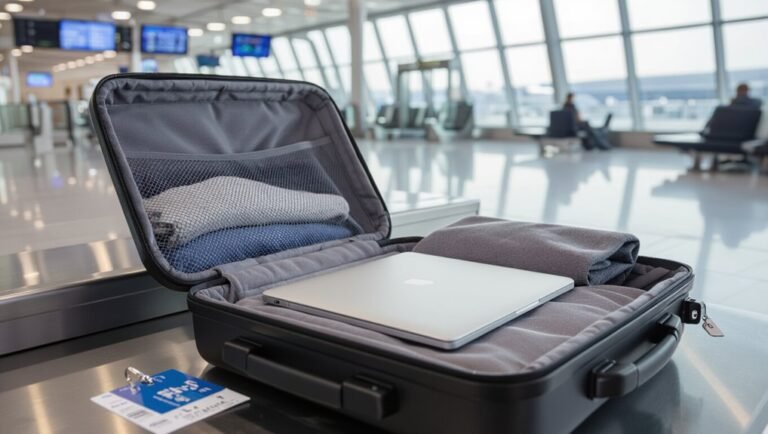
How Many Liters for Carry on Luggage Size Guide for Travelers
You should pick a carry-on by usable liters: 20–30 L for under‑seat bags, 30–40 L for standard overhead carry‑ons, and up to ~45 L if you need maximum overhead capacity. Check interior shape, wheels, handles and compression to judge real usable volume, not just external numbers. Convert cm dimensions to liters (L = cm³/1000) for a fast estimate, and pack smart with rolls and cubes to squeeze more in — keep going to learn practical packing lists and measurement tips.
Quick Rule: How to Compare Carry-Ons by Liters
When you compare carry-ons by liters, focus on usable volume rather than advertised dimensions—liters tell you how much you can actually pack.
Check interior shape, pocket space, and compression features; these affect capacity more than outer shell measurements.
Look at interior layout, pockets, and compression—these determine usable capacity more than external dimensions.
Measure by filling bags or using manufacturer liters plus estimated dead space.
Pick a bag that fits your typical load, not the biggest number.
Why Airlines List Dimensions Instead of Liters
You’ve seen why liters give a truer sense of usable space, so now consider why airlines stick to linear measurements instead.
They use length×width×height because dimensions’re simple to enforce at gates, match cabin and overhead limits, and avoid inconsistent packing shapes.
Surface measurements let staff quickly check compliance with templates and sizers, keeping boarding efficient and reducing disputes over varied internal volumes.
Convert Dimensions to Liters (Fast Method)
If you want a quick way to compare airline size limits to bag volumes, multiply the external length × width × height in centimeters and divide by 1,000 to get liters; this gives a fast, consistent estimate you can use for most carry-on checks. Use the result to judge fit and pack efficiently.
| Length (cm) | Width (cm) | Height (cm) |
|---|---|---|
| 55 | 35 | 25 |
Measure Oddly Shaped Bags for Accurate Liters
The quick length×width×height trick works for boxy carry-ons, but oddly shaped bags need a different approach to get an accurate liter estimate.
Measure maximum length, width, and height, then divide the bag into simple shapes—cylinders, cones, or rectangles.
Calculate each volume, sum them, and convert cubic centimeters to liters (1,000 cm³ = 1 L). This gives a realistic capacity.
How Wheels, Handles, and Frames Reduce Usable Liters
Remember that the advertised liters are for the shell, not what you can actually pack.
Wheels eat into floor space, handles carve out room at the top or side, and internal frames or reinforcements can block corners and reduce usable volume.
Check interior dimensions and factor in those components before you assume full capacity.
Wheels Take Space
One important thing to factor in is that wheels, handles, and internal frames cut into a bag’s advertised liters, so you’ll get less usable space than the specs suggest.
Wheels occupy corner and lower-volume pockets, reduce depth for packing, and force rigid floor structures.
When choosing, check interior measurements and account for lost liters around wheel housings to avoid overpacking.
Handles Reduce Capacity
Because handles, telescoping rods, and internal frames sit inside the shell, they cut into the volume you can actually pack and often create awkward voids you can’t use.
When you measure advertised liters, subtract space occupied by handles and rods; soft linings and zipper channels also reduce usable capacity.
Pack around the hardware, use compression packing cubes, and test with a full load before travel.
Frames Limit Interior
Wheels, handles, and internal frames eat into the interior space of your carry-on, so the advertised liters rarely match what you can actually pack.
You’ll lose usable volume to molded wheel housings, telescoping handle channels, and structural frames that keep the bag rigid.
Factor those losses when choosing size, prioritize internal layout, and test-pack to verify essentials fit within real usable liters.
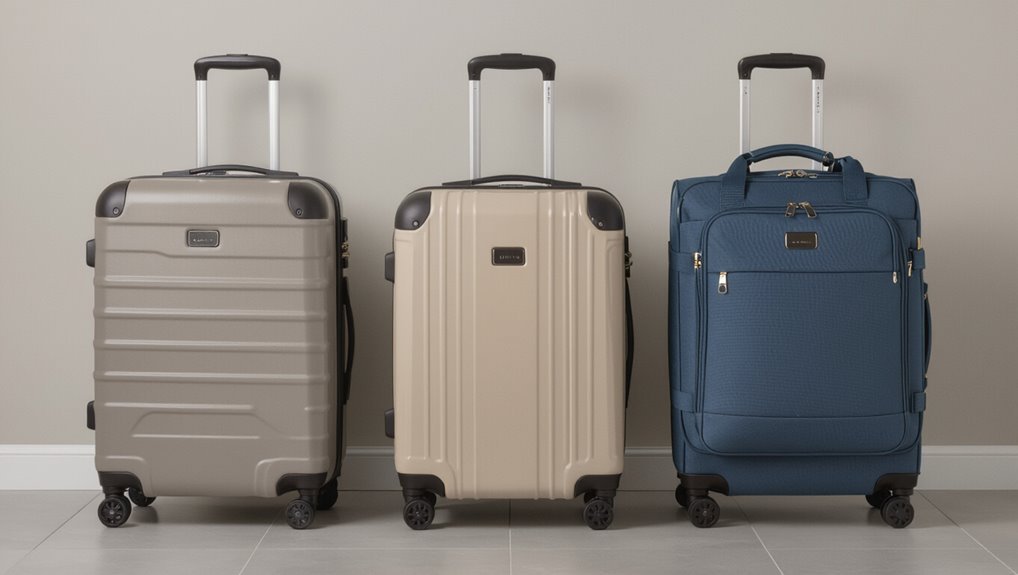
Soft-Sided vs Hard-Shell: True Capacity Differences
When you compare soft-sided and hard-shell carry-ons, focus on actual packable volume rather than the advertised liters.
Soft cases can bulge and give you a bit more usable space, while rigid shells keep shape but limit expansion and internal layout.
Consider how shell rigidity affects what you can fit and how you’ll pack for different trips.
Actual Packable Volume
One key factor people miss is that a bag’s listed dimensions don’t tell the whole story about how much you can actually pack: soft-sided carry-ons let you squeeze more into tight spaces and expand slightly, while hard-shell cases keep their shape and often lose usable internal volume to curved walls and reinforcement.
- Soft sides compress into overhead bins
- Expandable panels add liters
- Inner pockets affect layout
- Shell curvature reduces flat space
Shell Rigidity Effects
Because shell rigidity determines how that stated size translates to real-world packing, you’ll notice soft-sided bags often give you usable inches hard shells don’t.
You’ll fit oddly shaped items, compress clothing, and squeeze in souvenirs.
Hard-shell cases protect fragile gear and keep shape but lose marginal volume to curved walls and internal liners.
Choose based on protection versus flexible packing needs.
Typical Personal-Item Volumes (5–20 L)
Think of personal items in the 5–20 L range as compact companions that hold your essentials—wallet, phone, passport, a small tablet or book, and maybe a water bottle—without bulking up your carry-on.
You’ll pick sizes based on purpose, security, and comfort; choose lightweight, organized designs that fit under the seat.
- Slim crossbody or small backpack
- Tech pouch or tablet sleeve
- Lightweight tote with pockets
- Compact toiletry kit
Small Under-Seat Carry-Ons (20–30 L)
You’ll use a 20–30 L under-seat carry-on to prioritize essentials—think documents, a light change of clothes, electronics, and toiletries.
Focus on items you’ll need during the flight or immediately on arrival, and pack them in accessible compartments.
With thoughtful packing you’ll fit more than you expect while still keeping the bag slim enough to slide under the seat.
Packing Priorities
When space is tight, a 20–30 L under-seat carry-on becomes your go-to for essentials and items you need during the flight; prioritize things you’ll reach for frequently—passport, phone, headphones, a small water bottle, medications, and a compact toiletry kit—and pack heavier items closest to the bag’s back to keep it stable under the seat.
- Passport and documents
- Devices and chargers
- Medications and hygiene basics
- Lightweight layers and snacks
What Fits Inside
A 20–30 L under-seat bag holds the essentials you’ll need during a flight without weighing you down: a slim toiletry kit, passport and documents, a compact camera or tablet, your phone and chargers, noise-cancelling headphones, any required medications, a light sweater, and a small water bottle or snack—pack heavier items against the back panel to keep the bag stable under the seat.
Use compartments to separate valuables, cables, and snacks so you can reach items quickly.
Compress soft items to maximize space while keeping fragile gear protected.
Medium Overhead Carry-Ons (30–40 L)
- Fits 2–4 outfits neatly
- Padded laptop compartment
- Toiletry pouch space
- Lightweight, easy maneuvering
Large Carry-Ons That Still Fit Most Overhead Bins (40–45 L)
If you want max capacity without checking a bag, a 40–45 L carry-on usually fits most overhead bins while giving you room for extra outfits and souvenirs.
Use packing tricks like compression cubes, rolling, and stuffing shoes to squeeze more in without bulking out the case.
Also check specific airline size limits before you fly, since allowances and tolerances can vary.
Fit For Overhead Bins
Three main things make 40–45 L carry-ons a smart choice: they give you near-checked-bag capacity, still fit most overhead bins, and keep you moving through security and boarding faster.
You’ll want a slim-profile case, compliant wheels, and soft-sided flexibility to slide into varied bins without struggle.
- Measure exterior dimensions before buying
- Choose durable zippers and handles
- Prefer lightweight frames
- Test wheel maneuverability
Packing Capacity Tricks
Maximize a 40–45 L carry-on by packing smart: roll clothes to save space, use compression cubes to flatten bulkier items, and reserve the main compartment for outfits while stashing shoes and toiletries in side pockets.
Pack versatile layers, limit duplicates, and tuck fragile items between clothing. Use a slim toiletry kit, place heavy items low and centered, and keep essentials in an accessible exterior pocket.
Airline Size Variations
Because airlines set different size limits, a 40–45 L carry-on can vary in actual dimensions and still clear most overhead bins—so you’ll want to check both volume and exterior measurements before you buy or pack.
Pick a bag with flexible fabric or compression straps, verify airline specs, and test fit if possible.
- Measure height, width, depth
- Note wheel and handle protrusions
- Choose expandable panels
- Prioritize lightweight shells
Budget Airlines: Common Carry-On Liter Limits (Examples)
Budget carriers often set strict carry-on volume limits, so you’ll want to know typical liter allowances before you pack.
Low-cost airlines frequently cap cabin bags around 10–20 liters for personal items and 30–40 liters for standard carry-ons.
Examples: Ryanair and Wizz often enforce smaller personal items, easyJet allows about 45 liters with size limits, and Spirit/Frontier restrict bulkier bags strictly.
International vs Domestic Carry-On Limits (Liters Explained)
International and domestic flights often treat carry-on volume differently, so you’ll want to check both the liter allowance and the size dimensions before you pack.
You’ll find international limits often stricter or variable by carrier, while domestic flights commonly allow slightly larger liters.
Consider these points:
- Measure actual interior liters, not just advertised capacity
- Check airline and route rules
- Account for packed shape and pockets
- Weigh carry-on if required
How to Read Product Listings to Confirm True Liters
Start by looking for three key specs on the product page: external dimensions, internal dimensions (if listed), and stated liter capacity — these let you verify the claimed liters against what’ll actually fit.
Convert dimensions to centimeters, calculate volume (L = cm³/1000), subtract space lost to liners, wheels, and pockets, and compare to the stated capacity.
How to Check Your Bag Against Airline Liter Rules at the Gate
When you get to the gate, don’t assume the airline’s stated liter limit will go unchecked—inspect and test your carry-on quickly so you won’t be surprised.
At the gate, quickly inspect and test your carry-on—don’t assume the airline’s size limit won’t be enforced.
Check dimensions with a tape, compress soft items, remove bulky outer layers, and keep heavier items low. Use a gate sizer if offered; be ready to rearrange or slim down on the spot to meet limits.
- Measure width, height, depth
- Compress clothing
- Remove jackets/boots
- Use gate sizer
When to Choose Checked Luggage Instead of Bigger Carry-Ons
If your trip is long or requires bulky items, you’ll often be better off checking a bag instead of forcing a larger carry-on.
Check the airline’s size and weight rules—what fits in your closet at home might get gate‑checked or fined.
Weigh the extra cost against the convenience of not hauling heavy luggage through airports.
Trip Length And Needs
Although a roomy carry-on can handle a weekend or business trip, you’ll want checked luggage for longer vacations or trips that require bulky items like winter coats, sports gear, or multiple outfit changes.
Choose checked bags when you need more space, convenience, or specialist storage.
Consider these scenarios:
- Extended stays over a week
- Skiing, diving, or biking trips
- Formal events needing many outfits
- Shopping-heavy vacations
Airline Size Restrictions
Because airlines set strict size and weight rules, you’ll want to check a bag instead of forcing an oversized carry-on onto the plane.
If your gear exceeds dimensions or weight limits, gate agents may gate-check it or charge fees.
Choose checked luggage when you need more space, have heavy items, or face strict regional carriers.
Verify limits before packing to avoid delays and surprises.
Cost Versus Convenience
When you weigh the cost versus convenience, think about how often you travel, what you pack, and how much time you value.
Checked bags save you from lugging oversized carry-ons but add fees, wait times at baggage claim, and a small risk of loss or delay.
You’ll choose checked luggage when convenience, bulky items, or long trips outweigh cost and potential delays.
- bulky gear or souvenirs
- lengthy stays
- tight security rules
- avoiding gate-check hassles
Choosing Liters for Weekend Trips (2–3 Days)
If you’re packing for a 2–3 day weekend, aim for a bag between 20 and 35 liters — compact enough to stay lightweight and fit overhead, but roomy enough for a couple outfits, toiletries, and a small pair of shoes.
Choose 20–25L for minimalist light travel, 25–30L for layering or extras, and 30–35L if you need bulkier items or a camera kit.
Choosing Liters for Weeklong Travel (4–7 Days)
For a 4–7 day trip you’ll need more room, so think regarding liters that cover essentials packing volume without overstuffing.
Plan a clothing rotation (mix-and-match tops, one or two bottoms, and layered outerwear) to keep your bag compact.
Also set clear tech and toiletry limits—prioritize multipurpose items and travel-size containers to stay within carry-on sizes.
Essentials Packing Volume
Packing for a 4–7 day trip usually needs 25–40 liters of carry-on space, depending on your outfits and gear choices.
You’ll prioritize essentials: toiletries, one pair of shoes, chargers, and a lightweight outer layer.
Pack efficiently to stay within that range and avoid extras that add weight.
- Toiletry kit (travel sizes)
- Electronics and chargers
- One extra shoes
- Lightweight jacket
Clothing Rotation Strategies
Now that you’ve settled on a 25–40 L baseline for your essentials, plan clothing around simple rotation rules so you’ll hit a week of wear without bulky excess.
Pick a 3-top, 2-bottom, 1-light jacket formula, add underwear and socks for each day, and layer for changing weather.
Rewear items deliberately, choose quick-dry fabrics, and limit shoes to two pairs.
Tech And Toiletry Limits
Because tech and toiletries can eat space fast, set firm liter budgets so you don’t overshoot your 25–40 L baseline for a 4–7 day trip.
Decide core items, prioritize multipurpose toiletries, and limit chargers. Pack only essentials in protective cases and ration bulky bottles into travel sizes to keep volume predictable.
- Laptop/tablet: 2–6 L
- Chargers/cables: 0.5–1 L
- Toiletries bag: 1–3 L
- Extras (power bank/headphones): 0.5–2 L
Business Travel: Liters for Suits and Electronics
For business trips, you’ll want carry-on luggage that balances space and structure so suits stay crisp and electronics are protected; aim for bags in the 30–40 liter range for a single-suit short trip and 40–50 liters if you need extra shirts, shoes, or a laptop plus chargers and a tablet.
Choose a structured garment compartment, padded laptop sleeve, and organized pockets to minimize creases and protect gear.
Family Travel: Picking Carry-Ons by Role and Liter Need
Business trips often center on one traveler packing suits and gadgets, but family travel asks you to outfit multiple roles at once — parents, toddlers, school-age kids, even grandparents.
Family trips mean packing for many roles at once—parents, toddlers, kids, grandparents—each with different essentials.
You choose carry-ons by who needs what: diapers, meds, devices, extra layers. Match liters to role and trip length so everyone’s essentials fit without juggling.
- Parent: 30–45 L
- Toddler: 10–15 L
- School-age: 20–30 L
- Grandparent: 25–35 L
Packing Strategies to Maximize a Set Liter Capacity
Anyone can get more into a fixed-liter carry-on by packing with purpose: prioritize multi-use items, compress soft goods, and organize by frequency of use so you don’t waste space digging.
Roll clothes, fill shoes with socks or chargers, use slim packing cubes, limit duplicates, and choose travel-sized toiletries.
Weigh and adjust to stay within limits, and keep essentials accessible to avoid unpacking.
What Fits in a 30-Liter Carry-On (Real Packing List)
Packing a 30‑liter carry-on means you can bring a compact, practical wardrobe plus essentials without overstuffing—think 2–3 tops, 2 bottoms (or 1 pair and a skirt), a light jacket, underwear and socks for a week, one pair of shoes, toiletries in travel sizes, electronics with chargers, and small extras like a book or foldable daypack.
Pack smart: a 30‑liter carry‑on fits a week’s essentials—2–3 tops, 2 bottoms, jacket, toiletries, one pair of shoes.
- Roll clothes to save space
- Use packing cubes
- Wear bulkiest shoes
- Limit liquids to TSA sizes
What Fits in a 40-Liter Carry-On (Real Packing List)
If a 30‑liter bag handled a minimalist week, a 40‑liter carry‑on lets you stretch that comfort—think 3–5 tops, 2–3 bottoms, a light sweater or jacket, two pairs of shoes (one bulkier), underwear and socks for 7–10 days, a toiletry kit with TSA‑compliant liquids, a laptop or tablet plus chargers, and room for a compact camera or small souvenir.
Pack versatile layers, roll clothes, use packing cubes, place shoes at the base, keep electronics accessible, and limit duplicates. You’ll cover business or leisure trips without checked luggage.
Smart Carry-On Buys: Pick by Liters and Travel Style
When you choose a carry-on, match the liter capacity to your trip and travel habits so you don’t pay for space you won’t use or end up cramming a too-small bag.
A 20–25L sling or compact backpack suits city daytrippers and weekenders.
30–40L works for most business travelers and minimalist weeklong leisure trips.
45–55L gives adventure travelers or those who layer for varied climates the extra room without checking a bag.
- 20–25L: light, hands-free
- 30–40L: organized compartments
- 45–55L: rugged, expandable
- Features: weight, wheels, laptop sleeve
Frequently Asked Questions
Can Liters Affect Airline Weight Limits for Carry-Ons?
Yes — liters themselves don’t set weight, but bigger-capacity bags let you pack more, so you’ll likely hit airline weight limits faster; you should check both volume and the carrier’s specific weight rules to avoid fees.
How Do Expandable Bags Change Advertised Liter Capacity?
Expandable bags increase advertised liters by showing both compressed and expanded volumes; you’ll get extra capacity when unzipping the expansion, but airlines may still enforce size limits, so you’ll need to measure packed dimensions.
Can Compression Packing Cubes Increase Usable Liters?
Yes — compression packing cubes can increase usable liters by reducing air gaps and flattening clothing, so you’ll fit more in the same bag; they’ll compress soft items but might not help with rigid or oddly shaped gear.
Do Liquids and Electronics Count Differently Toward Liter Capacity?
Yes — liquids and electronics count the same toward total liter capacity, since volume measures space occupied. You’ll need to pack carefully: liquids may require separate bags for security, and electronics need padding and accessibility.
Are Liter Measurements Standardized Across Manufacturers?
No, liter measurements aren’t fully standardized across manufacturers; you’ll find variations in how they measure volume, include pockets or wheels, and round figures, so always check actual dimensions and internal capacity details before buying.
Conclusion
Now you know how to think in liters, measure smartly, and squeeze the most from your carry-on without oversizing it. Use the quick conversion tips, account for wheels and frames, and pick a bag that matches the liters you actually get to use. Pack intentionally—roll clothes, use cubes, and prioritize versatile pieces. Whether you choose 30 or 40 liters, choose function over looks and travel lighter, smarter, and less stressed.