Which Luggage Material Is the Most Durable
If you want luggage that stands up to years of rough handling, pick aluminum or high-grade polycarbonate. You’ll get superior impact resistance, with aluminum offering crush strength and polycarbonate flexing to absorb shocks without cracking. Ballistic or Cordura nylon work well for frequent travelers who need abrasion resistance and lighter weight. ABS and cheap polyester wear out faster. Check reinforced corners, sturdy handles, and quality wheels — keep going to learn which choice fits your trips best.
Quick Answer: Most Durable Luggage Materials
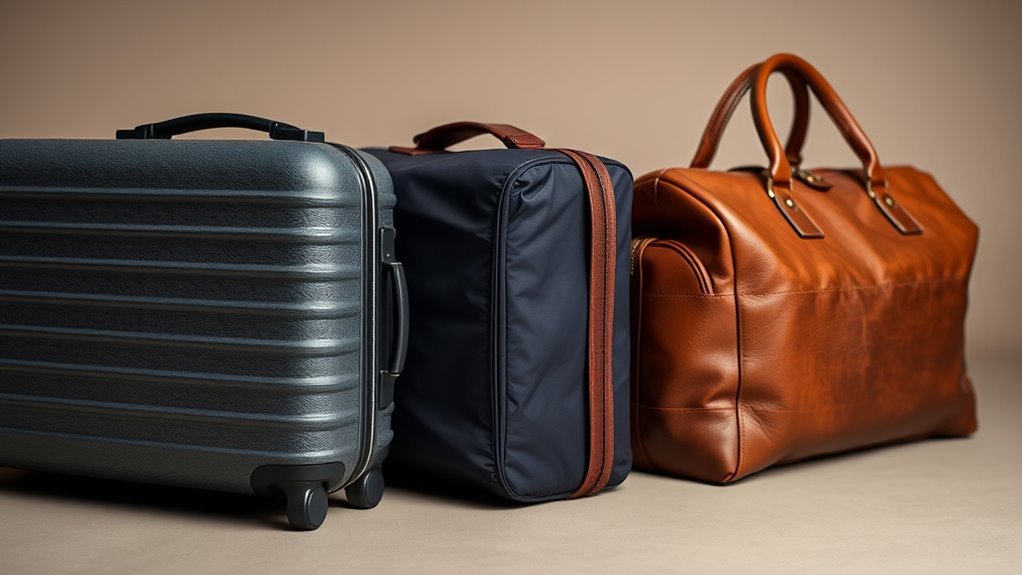
If you want luggage that withstands rough travel, choose hard-shell polycarbonate or aluminum for maximum impact resistance. Ballistic nylon is also a good option for abrasion and tear resistance.
For rough travel, pick hard-shell polycarbonate or aluminum for impact resistance; ballistic nylon resists abrasion and tearing.
You’ll favor polycarbonate for lightweight toughness and aluminum for extreme protection and a premium feel.
Ballistic nylon suits frequent flyers who need flexible, scuff-resistant bags that still flex for tight spaces.
Look for high-denier ratings and welded seams to reduce water intrusion.
YKK or brass hardware lasts longer than cheap alloys.
Prioritize materials and components that match your travel style rather than fashion trends.
How This Guide Helps You Choose Durable Luggage
Because choosing durable luggage saves you time, money, and hassle, this guide breaks down the materials, construction features, and hardware that actually matter so you can match a bag to your travel habits. You’ll get clear comparisons, practical pros and cons, and scenarios that show which materials thrive under different stresses.
Use the checklist below to focus your decision and skip marketing fluff:
- Weight vs. toughness — balance mobility with resistance.
- Seams, zippers, and handles — weak points to inspect.
- Intended use — business, adventure, or occasional travel.
Follow these steps and you’ll pick luggage that lasts.
How We Define “Durable” for Luggage Materials
When you judge a material’s durability, you’re looking at tensile strength and wear to see how it stands up to stretching and abrasion.
You’ll also consider water resistance and seam construction so moisture and stitching failures don’t ruin the bag.
Finally, you’ll test impact resistance and overall structure to guarantee the case holds its shape and protects contents.
Tensile Strength And Wear
Though it’s easy to focus on zippers and wheels, tensile strength and abrasion resistance are the core measures that tell you how a fabric will actually hold up. They quantify how much force a material can withstand before tearing and how well it resists surface wear from rubbing, dragging, and repeated packing.
You’ll look for high denier counts and tested tear strength values when choosing materials. Consider practical tradeoffs so you pick luggage that matches your trips.
- Tensile strength: peak force before failure.
- Abrasion resistance: cycles before visible wear.
- Flex fatigue: repeated bending durability.
Water Resistance And Seams
If you want luggage that keeps your gear dry and lasts through rainy, snowy, or spill-prone trips, you need to look beyond just the outer fabric to how water interacts with seams, zippers, and coatings.
You’ll check taped or welded seams, because stitched seams let water wick through needle holes. Look for sealed zipper flaps or water-resistant zippers; standard zippers are weak points.
Durable coatings like DWR help beads roll off, but they wear, so consider laminated fabrics that fuse waterproof layers.
Interior liners and drainage features matter too. Together, these elements determine whether your bag truly resists moisture over time.
Impact Resistance And Structure
Waterproof seams and zippers only protect your contents from moisture; they don’t stop a hard knock or crushing force from damaging what’s inside. You judge durability by how materials absorb and distribute impact, resist punctures, and retain shape.
Hard-shell polycarbonate flexes to absorb blows; aluminum disperses force but dents; ballistic nylon resists tearing but compresses.
- Energy absorption: how material bends or fractures under sudden load.
- Structural integrity: how frame, panels, and reinforcements prevent collapse.
- Long-term resilience: how repeated impacts degrade protection.
Use these criteria to pick luggage that keeps your gear intact.
Decision Framework: Scratch, Impact, Water, Wear

When you evaluate luggage materials, focus on four practical tests—scratch resistance, impact absorption, water handling, and long-term wear—to decide which compromises you’re willing to make.
Test scratch by rubbing rough surfaces and noting visible marks; harder shells resist abrasion but can show scuffs.
Rub rough surfaces to spot visible marks; hard shells resist abrasion but often display scuffs.
Assess impact by dropping filled bags from cabin-height; flexible fabrics may dent less catastrophically.
Check water by simulating rain and zipper exposure; coated textiles shed moisture differently than molded plastics.
For wear, simulate repeated handling: wheel, fold, and tug seams.
Weigh how each result matches your travel habits, repair willingness, and appearance tolerance.
Why Durability Matters by Trip Type
Because different trips put distinct stresses on your luggage, choosing durable materials means matching performance to purpose. You’ll pick different fabrics and shells depending on travel style: business trips demand sleek, scratch-resistant cases; adventure travel needs impact-absorbing, water-shedding gear; long-haul and family travel benefit from wear-resistant, roomy suitcases.
Consider how often you’ll handle rough surfaces, check bags, or carry gear. Prioritize materials that reduce repair, replacement, and stress during transit. Evaluate weight versus protection trade-offs so your bag doesn’t hamper the trip.
- Business: low-scratch, lightweight
- Adventure: impact, water resistance
- Family/long trips: wear, capacity
How to Test Scratch Resistance in Real Travel
If you want to judge a bag’s real-world scratch resistance, test it under conditions that mimic how you actually travel. Pack to typical weight, toss it onto a rough surface, and drag it across simulated conveyor or pavement. Note visible marks, material recovery, and whether coatings chip.
| Test action | Expected observation | Notes |
|---|---|---|
| Drop from waist height | Scuffs on edges | Repeat three times |
| Slide on concrete | Surface abrasion | Use same force each run |
| Contact with zippers | Localized scratches | Check coating integrity |
Record results, compare materials, and choose what holds up to your routine.
Polycarbonate Shells: Impact Resistance and Cracking
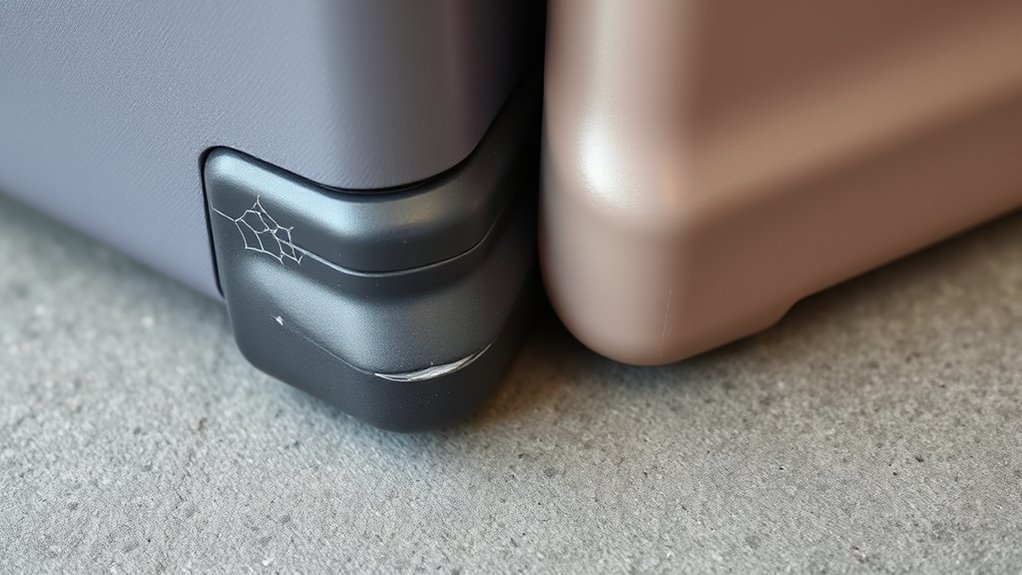
Though polycarbonate’s lightweight, glossy shells look sturdy, you’ll want to focus on how they absorb shocks and whether they crack under repeated stress. You’ll find polycarbonate flexes, disperses impact energy, and often bounces back instead of shattering.
Though glossy and lightweight, polycarbonate shells flex and disperse impact—check for cracks from repeated stress.
Still, deep gouges or focused hits can create stress risers that grow into cracks over time. Inspect seams and corners, where failures begin. Consider repairability and heat exposure, which can worsen microfractures.
Use this checklist to evaluate real-world performance:
- Impact dispersion: does the shell flex rather than fracture?
- Crack initiation: are small fractures present?
- Repair options: can damage be fixed or reinforced?
ABS Plastic: Affordability Versus Long-Term Wear
If you’re on a budget, ABS gives you a cost-effective entry option that keeps prices low without feeling flimsy. You should expect decent scratch and impact resistance for everyday travel.
Though it won’t stand up to heavy abuse the way tougher plastics do, consider the trade-off between longevity and flexibility—ABS is stiffer and may crack over time. However, it’s easy to replace at a lower cost.
Cost-Effective Entry Option
Looking for an affordable hard-shell suitcase that won’t break the bank? You’ll find ABS delivers upfront savings, light weight, and easy handling—ideal if you travel occasionally or want a spare.
It won’t offer premium longevity, but it keeps costs low and gets you where you’re going. Evaluate trade-offs by considering use frequency, storage, and brand warranty.
Think of ABS as an entry point into hard-shell luggage rather than a forever choice.
- Price: lowest barrier to entry
- Weight: lighter for budget designs
- Maintenance: simple cleaning, cheaper repairs
Scratch And Impact Resistance
Moving from price and weight to how a case actually holds up, ABS plastic gives you affordability at the cost of long-term surface and impact resilience.
You’ll notice scuffs and shallow scratches sooner than with polycarbonate; glossy finishes betray wear quickly, while textured ABS hides marks a bit.
Against drops, ABS absorbs shock but can crack under sharp impact rather than flex and return.
Repair options are limited; cosmetic damage often stays.
If you prioritize low upfront cost and light travel, ABS works, but expect visible wear over time and plan for replacement sooner than with tougher shells.
Longevity Versus Flexibility
When you choose ABS for its low price and light feel, you trade some long-term durability for flexibility that’s limited—ABS can flex enough to shrug off minor knocks, but repeated stress and temperature changes make it brittle over time, so panels are likelier to crack or craze than to slowly deform like polycarbonate.
You’ll enjoy lower costs and lighter carry, but expect shorter service life if you travel often. Consider what matters most: upfront savings or resilience.
- Lifespan: shorter with frequent rough handling.
- Repairability: cracks are harder to fix than dents.
- Cost: cheap replacement beats longevity.
Polypropylene Shells: Flexible Shock Absorption
Because polypropylene bends under impact instead of cracking, it gives you a lightweight shell that absorbs shocks and springbacks into shape, protecting contents without adding bulk. You’ll notice dents flex instead of splitting, reducing repair needs and sudden failures. That flexibility spreads force across the shell, so fragile items fare better during drops and rough handling.
Polypropylene resists moisture and many chemicals, so it won’t swell or weaken on damp trips. It’s affordable and keeps luggage light for easier lifting. Expect cosmetic scuffs, which don’t compromise integrity, and choose thicker gauges for heavier loads and longer service life.
Aluminum Shells: Crush Strength and Scratches
You’ll notice aluminum shells stand up to crushing forces better than most plastics, but they can dent under extreme impact. Scratches show up more on polished or darker finishes, and factors like anodizing or brushed textures affect how visible they are.
You can often repair dents and refinish scratched surfaces, so consider how easily a model can be serviced when choosing one.
Crush Resistance Compared
Although aluminum shells are prized for their sleek look and rigid structure, they don’t all resist crushing the same way—manufacturers vary the alloy, thickness, and internal frame design, and those choices determine how well a case survives heavy pressure. You should compare models by construction and testing results, not marketing claims.
Consider load distribution, corner reinforcement, and seam strength when judging crush resistance. Think about repairability after deformation and whether the design prevents contents from being compromised.
- Alloy grade: higher-grade alloys bend less.
- Wall thickness: thicker walls absorb more impact.
- Frame layout: internal ribs disperse force.
Scratch Visibility Factors
When you inspect aluminum shells for scratch visibility, focus on finish type, color, and surface texture, since those factors determine how noticeable nicks and abrasions will be. You’ll find brushed or textured finishes hide light scratches better than polished surfaces, which reveal every mark.
Darker colors and matte coatings tend to disguise tiny abrasions, while light or high-gloss finishes show contrasting scratches. Thicker anodized layers resist deeper gouges and alter how light reflects off damage, making scratches less obvious.
Consider panel contours: flat areas display scratches clearly, whereas patterned or ribbed panels break up and mask surface defects.
Repair And Refinishing
If you need to repair or refinish an aluminum luggage shell, start by evaluating whether dents affect structural integrity or are cosmetic only. You’ll decide if straightening, filling, or replacement is needed.
Small creases can weaken crush resistance, so prioritize repairs that restore rigidity. For scratches, assess depth: surface marks polish out; deep gouges need filler and sealing to prevent corrosion.
Choose matching finishes and durable clear coats to preserve appearance and strength. Consider professional work for major damage to maintain warranty and crush specs.
Follow this checklist:
- Inspect integrity vs. cosmetic
- Select method (polish, fill, replace)
- Protect with finish
Magnesium & Composite Frames: Light Strength Trade‑Offs
Because you want luggage that’s light without sacrificing resilience, magnesium and composite frames deserve a close look. You’ll notice magnesium alloys cut weight considerably versus aluminum while keeping stiffness; they resist dents better and dampen vibration, so handles and zippers stay aligned.
Composites—carbon fiber blends or polymer-matrix frames—offer tailored strength where you need it and excellent fatigue resistance, reducing long-term deformation.
Trade-offs include higher cost, less straightforward field repairs, and variable impact resistance depending on layup.
You should prioritize design quality and tested impact ratings rather than material buzzwords when choosing lightweight, durable luggage.
Ballistic Nylon: Tear Resistance and Abrasion
Although it looks simple, ballistic nylon gives you a reliable balance of tear resistance and abrasion protection for everyday travel gear. You’ll notice its dense weave resists punctures and tears better than many fabrics, and heavy-duty finishes fend off scuffs from conveyor belts and rough handling.
Although unassuming, ballistic nylon’s dense weave and heavy finishes deliver reliable tear, puncture, and abrasion protection for travel gear
It’s low-stretch, so seams hold under load, and coatings add water and stain resistance without bulk. Consider these practical takeaways:
- Tough weave: resists tearing from sharp edges.
- Abrasion defense: survives rubbing and scuffing on trips.
- Structural support: maintains shape and protects contents.
Cordura Nylon: Lightweight Durability Balance
When you need luggage that stays light without giving up toughness, Cordura nylon delivers a smart balance of durability and weight savings. You’ll appreciate its high-tenacity nylon fibers that resist abrasions, punctures, and scuffs while keeping pack weight low.
Cordura’s weave and denier options let you choose heavier panels where gear faces stress and lighter fabric elsewhere to trim pounds. It handles daily bumps, straps, and zippers without the rigidity of hardshells, so you get flexible protection and easier carrying.
For frequent travelers who value performance over shine, Cordura offers a practical, long-lasting compromise.
Polyester Blends: Cost, Fading, and Wear Patterns
If Cordura gives you high-tenacity strength where weight matters, polyester blends offer a different set of trade-offs that often appeal to budget-minded travelers. You’ll pay less up front, but expect faster color fading and abrasion in high-friction zones. You can extend life with careful packing and spot cleaning, yet seams and zippers often dictate replacement more than fabric strength.
Polyester blends: budget-friendly and lightweight, but expect faster fading and surface wear—seams and zippers often limit lifespan.
- Cost: affordable, good for occasional use.
- Fading: UV and repeated wash accelerate color loss.
- Wear patterns: pilling and surface abrasion appear before structural failure.
Choose polyester blends when value and light duty fit your needs.
Leather Finishes: Patina, Maintenance, Longevity
Because leather develops a patina over time, you’ll see its character improve with regular use rather than just wear out; oils, sunlight, and handling darken and soften the surface, giving each piece a unique look. You’ll maintain it by cleaning gently, conditioning sparingly, and avoiding prolonged water exposure. Full-grain lasts longest but shows scratches; top-grain balances appearance and durability; corrected grain hides flaws but wears faster. Expect repairs and edge reinforcement over decades. Choose construction and hardware quality as much as hide grade. Table helps compare types and care.
| Type | Durability | Care |
|---|---|---|
| Full-grain | High | Light conditioning |
| Top-grain | Medium-high | Regular cleaning |
| Corrected | Medium | More frequent care |
Vegan Leather and PU Coatings: Water and Wear Trade‑Offs
Leather’s natural patina appeals to many, but you may prefer vegan leather or PU-coated fabrics if you want easier water resistance and lower maintenance. You’ll get lightweight, consistent texture and easier cleaning, though abrasion and heat can crack coatings over time. Choose based on how you travel and care for bags.
Prefer vegan or PU-coated fabrics for lightweight, low-maintenance, water-resistant bags—though coatings can crack with abrasion or heat.
- Durability: PU offers decent tear resistance but less long-term repairability than genuine leather.
- Water resistance: Coatings repel moisture immediately, protecting contents in light rain.
- Aging: Vegan finishes resist stains but don’t develop patina; damage is more visible and often permanent.
Hybrid Designs: Hard Shells With Soft Panels
You’ll find hybrid luggage blends a rigid frame with softer panels to balance structural integrity and targeted flexibility. That mix keeps corners and faces protected while letting pockets and handles flex where you need movement.
Consider how much weight you’ll accept for added rigidity versus how much give you want for packing and handling.
Structural Integrity Balance
How do hybrid luggage designs balance the rigidity of hard shells with the flexibility of soft panels to protect your gear without adding unnecessary weight? You get structured protection where impact-prone zones use molded shells and peripheral areas use fabric to absorb shocks and allow compression.
Designers place reinforcements at corners, frames, and wheel housings while soft panels handle abrasion and expandability. You benefit from predictable load paths and localized stiffness that prevent shell buckling.
- Targeted reinforcement: protects high-impact points.
- Graduated stiffness: channels forces away from contents.
- Serviceability: replace panels without swapping the shell.
Weight And Flexibility
Having targeted reinforcements and graded stiffness keeps your gear safe, but weight and flexibility determine how practical a hybrid bag actually feels on the road. You want a shell that resists impacts without adding bulk; lightweight polycarbonate or ABS blends work well.
Soft panels bring give for overstuffing, external pockets, and seam-mounted handles, but they must use ripstop nylon or ballistic fabrics to avoid sagging. Check zipper quality and compression features—these control flex and prevent deformation.
Balance matters: too rigid and the case is heavy, too soft and protection drops. Choose hybrids that prioritize minimal weight with strategic stiffness.
Handles, Zippers, and Wheels: Common Failure Points
Because handles, zippers, and wheels take the most abuse during travel, they’re the parts that fail first if the luggage isn’t well made. You’ll notice weak handles wobble, zippers jam, and wheels wobble or lock.
Inspect construction: reinforced handle mounts, two-way metal zippers, and sealed-bearing wheels last longer. Prioritize repairability and tested components.
- Handles: check rivets, telescoping mechanism, and load rating.
- Zippers: prefer coil or metal with strong sliders and zipper tape.
- Wheels: look for double wheels, ball bearings, and shock-absorbing housings.
Routine maintenance prevents failures and extends usable life.
Frame Types Compared: Hardside vs Softside Durability
After checking handles, zippers, and wheels, you’ll want to decide whether a hardside or softside frame will actually stand up to your travel habits.
Hardside shells, often polycarbonate or ABS, resist impact, scratches less if textured, and keep shape under stacking—good if you pack fragile items.
Softside luggage, typically nylon or polyester over an internal frame, flexes to absorb knocks and fits odd spaces. It can take abrasion better and offers external pockets for organization.
Choose hardside for rigid protection and moisture resistance; pick softside for flexibility, lighter weight, and easier gate-check handling when you need give.
Construction Quality: Seams, Reinforcements, and Hardware
While frame type sets the baseline, seams, reinforcements, and hardware determine how long your bag actually lasts under real-world stress. You should inspect stitch density, taped seams, and bonded joints; higher stitch counts and sealed seams resist splitting.
Frame type sets the baseline, but seams, reinforcements, and hardware determine how a bag endures real-world stress.
Reinforcements at corners and load points spread force, so choose riveted or double-layered areas over single-stitched fabric.
Hardware quality—zippers, handles, wheels—controls everyday reliability; metal zippers and sealed bearings outlast cheap plastics. Consider serviceability: replaceable wheels and modular handles extend lifespan.
Prioritize construction that matches intended use: frequent flyers need beefier builds than occasional travelers.
- Stitching
- Reinforcements
- Hardware
Weather Exposure: Rain, Salt, and Sun Effects
If you travel through coastal regions or leave luggage in hot cars, expect moisture, salt, and UV to accelerate wear and weaken materials. You’ll want materials that resist corrosion, repel water, and block UV: polycarbonate and coated nylons do well; untreated leather and some metals suffer. Rinse salt off quickly, dry thoroughly, and store away from direct sun. Use UV protectant sprays and corrosion-resistant hardware when possible. Check seals and zippers after exposure. Choose finishes that shed water and resist fading to extend service life.
| Exposure | Effect | Mitigation |
|---|---|---|
| Rain | Moisture ingress | Waterproof coatings |
| Salt | Corrosion | Rinse promptly |
| Sun | Fading, embrittle | UV protectant |
Scratch Resistance: Durable Luggage Ranking
You’ll want to start by comparing hard-shell scratch resistance across common materials like polycarbonate, ABS, and aluminum.
Consider how different coatings and finishes—textured surfaces, matte layers, or clear protective films—change scratch visibility and repairability.
That comparison will help you rank which luggage stays looking new longest under typical travel wear.
Hard-Shell Scratch Resistance
Because hard-shell luggage takes the brunt of bumps, its scratch resistance tells you how well a case will keep looking new over time. You’ll prefer shells that resist visible gouges and scuffs, since those marks accumulate quickly during transit.
Choose materials and construction that minimize cosmetic wear so your bag stays presentable.
- Polycarbonate — balances flexibility and surface resilience; resists deep scratches.
- ABS — cheaper, shows scuffs more readily; good for light use.
- Aluminum — dents instead of scratching; can be polished but shows impact marks.
Inspect panels and edges; that keeps your choice practical.
Coating And Finish
When choosing luggage, pay close attention to the coating and finish since they determine how visible and lasting surface damage will be. Hard clear coats, textured finishes, and anti-scratch treatments all help hide scuffs and prevent thin scratches from becoming deep gouges.
You want finishes that resist abrasion and reduce friction during handling. Matte or textured surfaces disguise wear better than glossy shells, while ceramic or polyurethane coatings add toughness.
Look for advertised scratch-resistant treatments and test by lightly rubbing inconspicuous areas. Remember that coatings can chip; choose materials whose base resists cracking so minor finish wear won’t expose weak structure.
Impact and Crush Resistance Ranking
Start by picturing how your bag will handle a shove from airport staff or a full overhead-bin pile—impact and crush resistance tell you whether it bounces back, dents, or shatters. You want materials that absorb shock, resist permanent deformation, and protect contents.
Hard-shell polycarbonate flexes and springs back; ABS is cheaper but dents more; soft fabrics rely on padding. Consider weight trade-offs and repairability when ranking options.
Think about corner reinforcement and internal frame structure as force distributors. Numeric ranking helps prioritize choices:
- Polycarbonate — best rebound and dent resistance.
- Aluminum — excellent strength, shows dents.
- ABS/fabric — least crush resilience.
Water Resistance and Sealing: What Keeps Contents Dry
If you expect your luggage to face rain, spills, or the occasional baggage-sprinkling, you’ll want materials and construction that actually keep water out. You’ll prefer coated fabrics, welded seams, and tight zipper flaps; hard shells shed water but need sealed seams to stop spray through vents. Look for water-resistant ratings and taped seams for real protection. Test zippers and interior linings yourself—wet gear ruins electronics. Consider a rain cover for long exposure.
| Material | Water-handling image |
|---|---|
| Coated nylon | Beaded droplets |
| Polycarbonate | Sheeting runoff |
Long-Term Wear and Repairability by Material
When you pick luggage, think about how materials age under real use—abrasion, UV, and zipper strain all shape long-term durability.
You’ll want fabrics and shells that resist wear and let you replace or repair parts like handles, wheels, and seams.
Regular maintenance and knowing which materials take simple fixes will keep bags serviceable for years.
Long-Term Durability Factors
Although aesthetics and weight matter, long-term durability hinges on how materials handle repeated stress, exposure, and repairs. You’ll want materials that resist abrasion, UV breakdown, and moisture while keeping structural integrity after bumps. Consider how seams, zippers, and shell flexibility age under constant use.
- Polycarbonate: resists cracks and maintains shape, but can show scratches that don’t affect function.
- Ballistic nylon: withstands abrasion and punctures; stitching quality determines lifespan.
- ABS and lesser plastics: cheap and light, prone to cracking where impacts concentrate.
Choose based on your travel style and expected abuse.
Repair And Maintenance
How will you keep your luggage serviceable over years of travel? Inspect seams, zippers, wheels, and handles after trips.
For fabric bags, reapply water-repellent spray and stitch small tears promptly to prevent spreading.
Hard-shell polycarbonate resists cracking but you’ll want to buff scuffs and replace broken handles or fitted liners.
Aluminum needs dent management and hinge lubrication; seek professional repair for structural damage.
Replace worn wheels and zippers regardless of shell type—those parts determine usability.
Keep repair kits and spare parts accessible, and choose materials with available manufacturer support.
Regular maintenance saves money and extends functional life across materials.
Weight Versus Durability: Balancing Limits and Toughness
Because you want luggage that’s easy to lift and maneuver, you’ll need to weigh how much protection you’re willing to trade for lower weight. You’ll choose materials based on trip type: hard shells resist impacts but add heft; fabric bags shave pounds but can abrade.
Consider how often you lift, check baggage limits, and whether surface dents or punctures matter. Prioritize according to travel habits and allowed load.
- Frequent flyers: prioritize lightness to avoid fees and strain.
- Adventure travelers: favor toughness to survive rough handling.
- Occasional users: balance both for versatility and comfort.
Maintenance Tips to Extend Luggage Life
To keep your luggage lasting longer, clean the zippers regularly to prevent grit and rust from jamming them.
After trips, wipe down surfaces and store your bags in cool, dry places to avoid mold and material breakdown.
Small, consistent care like this will save you repair costs and extend service life.
Clean Zippers Regularly
Ever wondered why a stubborn zipper can ruin a trip before it starts? You can prevent jams and corrosion by cleaning zippers regularly. Use a soft brush to remove dirt, a damp cloth for sticky residue, then dry thoroughly.
Lubricate metal zippers sparingly with a wax pencil or silicone; for plastic teeth, use a mild soap solution.
- Inspect: check teeth and slider for damage.
- Clean: remove grit, wipe, and dry.
- Lubricate: apply appropriate lubricant, work the slider.
Do this after dusty, salty, or wet trips to keep closures smooth and extend your luggage’s life.
Store In Cool, Dry Places
When you store luggage in a cool, dry place, you cut down on mold, fabric breakdown, and hardware corrosion that quietly shorten its life.
Keep bags away from basements, attics, and direct sunlight; those spots trap moisture or heat.
Use breathable covers or fabric bags—avoid plastic, which seals humidity.
Elevate suitcases off concrete with shelves or pallets to prevent damp transfer.
Air them before storing, and remove batteries and loose items.
Check periodically for pests or moisture and address issues immediately.
With these habits, your luggage materials—polyester, nylon, leather, or polycarbonate—remain functional and look better longer.
Cost-Per-Year: Value Comparison by Material
Although price tags matter, you’re really buying years of use, so cost-per-year gives a clearer way to compare materials. Calculate purchase price divided by expected lifespan in years to see true value.
Hard-shell polycarbonate can cost more upfront but lasts long; fabric bags may be cheaper but wear sooner.
- Polycarbonate: higher initial cost, long lifespan — lower cost-per-year for frequent travelers.
- Aluminum: premium price, exceptional durability — excellent cost-per-year if you keep it long.
- Ballistic nylon/cordura: low-to-mid price, moderate lifespan — good short-term value, higher cost-per-year over time.
Best Luggage Materials by Traveler Type
Because your travel needs and habits shape the best choice, matching luggage material to traveler type cuts confusion and wasted money.
If you fly frequently for work, pick polycarbonate hard shells: they resist impact, stay lightweight, and protect electronics.
Adventure travelers who rough it will want ballistic nylon or Cordura for abrasion and water resistance.
Weekenders and minimalists benefit from lightweight polyester or ripstop fabrics that keep weight down and fold for storage.
Photographers and gear haulers should choose aluminum or reinforced shells for maximum crush protection.
Families with kids need durable plastics or thick fabric that tolerate spills and frequent handling.
Buying Checklist: Inspect These Features Before Purchase
Now that you’ve matched materials to your travel style, inspect specific features before you buy to make sure the bag will perform in real use. Check build quality up close: seams, material thickness, and protective corners tell you how it’ll handle rough handling.
Test functionality: wheels should roll smoothly, handles lock securely, and zippers glide without snagging.
Confirm security and warranties: integrated locks, tamper-resistant zippers, and a clear warranty give peace of mind.
- Look for reinforced stress points.
- Prefer multi-directional wheels and sturdy telescoping handles.
- Choose dependable zippers and a solid warranty.
Frequently Asked Questions
How Do Luggage Materials Affect Airline Baggage Handling Rules?
They affect size, weight, and fragility assessments: airlines set limits and handling guidelines, so you’ll pick lighter, compliant materials to avoid overweight fees and fragile-designs that prompt special handling or damage claims during loading and screening.
Can Material Influence Odor Retention or Mold Growth Inside Luggage?
Yes — material affects odor retention and mold growth: breathable fabrics wick moisture and dry faster, reducing mold, while dense synthetics and leather can trap moisture and odors, so you should air, clean, and use desiccants regularly.
Do Different Materials Interfere With Airline Security Scanners?
Generally, no — most luggage materials won’t interfere with airline scanners, but metal frames, heavy hardware, or embedded electronics can cause alarms. You’ll want to remove dense metal objects or declare batteries to avoid delays.
Which Materials Are Easiest to Recycle or Dispose of Sustainably?
Recycled polyester, cotton canvas, and natural leather scraps are easiest to recycle or compost; you’ll choose recycled polyester for curbside programs, return canvas to textile recyclers, and compost untreated natural fibers or use leather upcycling.
How Do Materials Perform Under Extreme Temperatures (Hot/Cold)?
Hard shells generally hold up better: polycarbonate resists heat, ABS softens; aluminum stays stable but can dent; fabrics like ballistic nylon tolerate cold but can stiffen or delaminate in extreme heat, so choose based on conditions.
Conclusion
Now you know which luggage materials hold up best and why durability matters for your trips. Use the scratch, impact, water, and wear framework when comparing options, factor maintenance into lifespan, and weigh cost-per-year to get the best value. Match material strengths to your travel style, inspect zippers, wheels, handles, and seams before buying, and follow simple care tips to extend life—so you’ll confidently pick luggage that lasts.