Why Cant You Bring Water Through Tsa
You can’t bring a full bottle of water through TSA because carry-on liquids are limited to 3.4 oz (100 ml) per container to reduce the risk of concealed liquid explosives and speed up screening; larger containers are flagged, emptied, or discarded at checkpoints. Medications, breast milk, and duty‑free purchases have exceptions if declared and documented, and you can refill an empty bottle after security — keep going to learn practical packing and exception tips.
Can I Bring Water Through TSA?
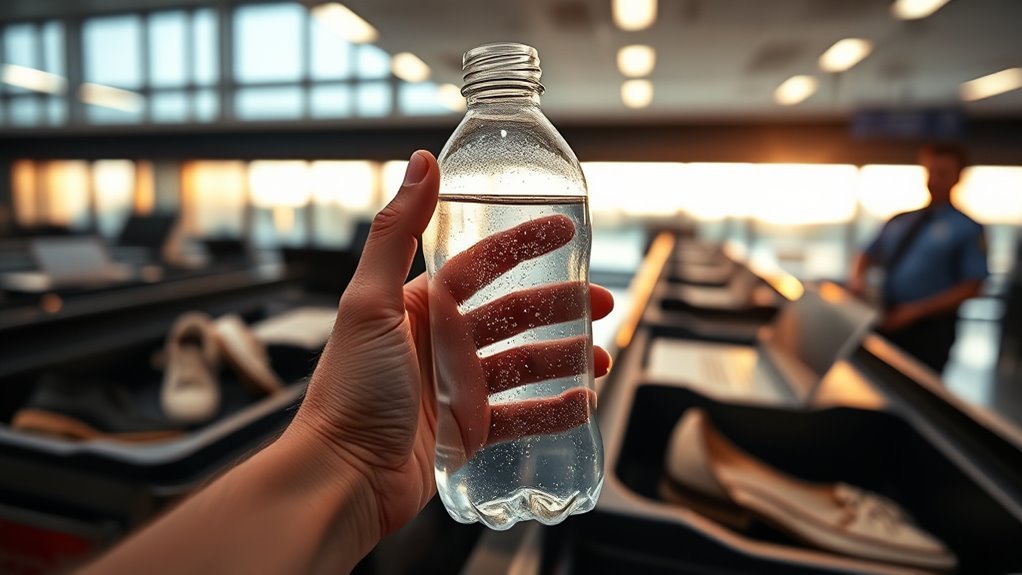
Can you bring water through TSA? You can carry empty reusable bottles through security and fill them afterward, and small sealed containers bought past the checkpoint are fine.
You can’t bring large open liquids through screening because of safety restrictions on volumes; agents enforce limits at carry-on checkpoints.
If you need medical or infant liquids, declare them to officers—you’re allowed reasonable amounts but they may undergo additional inspection.
Consider packing collapsible bottles in checked luggage for larger quantities.
Always check your airline and airport rules before travel; policies can vary and updates may change what’s permitted.
The 3-1-1 Rule, Explained Simply
When you fly, the 3-1-1 rule tells you how much liquid you can carry on and what size containers are allowed.
You’re limited to one quart‑size bag with containers of 3.4 ounces (100 milliliters) or less, so pack bottles accordingly and consolidate toiletries.
Keep that clear bag accessible in security to speed screening and avoid having items tossed.
Carry-On Liquid Limits
Why do airports limit the liquids you carry on? You face the 3-1-1 rule for safety and screening efficiency: one quart-sized bag, one clear plastic bag, and containers of 3.4 ounces (100 milliliters) or less each. That standard helps TSA quickly identify items and reduces risk from liquid explosives by limiting total volume you can bring through security.
You can pack multiple small containers in the single bag, but you’ll need to remove it for X-ray screening. If you need more, place liquids in checked baggage or buy them after screening — it’s simpler and complies with security protocols.
Container Size Rules
You’ve seen the 3-1-1 rule mentioned, but here’s what it actually means in practice: each liquid container you carry on must be 3.4 ounces (100 milliliters) or smaller. All containers must fit inside one clear, quart-sized plastic bag, and each passenger is limited to one such bag for screening.
You’ll need to check larger bottles or full water containers into checked luggage or finish them before security. Medications, baby formula and breast milk get exceptions but should be declared at screening.
Keep containers easy to remove so screening goes smoothly and you avoid delays or having items confiscated.
Packing Tips For Security
Because airport security moves faster when you’re organized, packing with the 3-1-1 rule in mind saves time and hassle at the checkpoint. You’ll place liquids in 3.4 oz (100 ml) containers, fit them into one clear quart bag, and limit yourself to one bag per passenger. Lay that bag where TSA can see it, and zip it closed. Know exceptions like medicines and baby formula. Keep the bag accessible so you don’t dig through luggage. Use travel-size bottles and consolidate products. Practice packing once before a trip to make screening smooth and stress-free.
| Item | Size | Tip |
|---|---|---|
| Bottles | 3.4 oz | Use leak-proof |
| Bag | 1 quart | Clear, resealable |
| Limit | 1 per person | Accessible during screening |
Why Container Size Is Limited to 3.4 Oz (100 Ml)
When regulators set the 3.4 oz (100 ml) limit they were balancing the need to let travelers carry toiletries with the imperative to stop someone from bringing a concealed liquid explosive on board.
You benefit because small containers reduce the amount of reactive material someone could combine mid-flight. The cap keeps individual volumes low enough for testing and detection, simplifying X-ray and chemical screening.
You’ll pack essentials in travel-size bottles that inspectors can quickly assess without delaying passengers. The rule focuses on single-container risk, so manufacturers and travelers stick to predictable sizes that streamline security while preserving basic convenience.
How Total Liquid Volume Rules Affect Your Carry-On
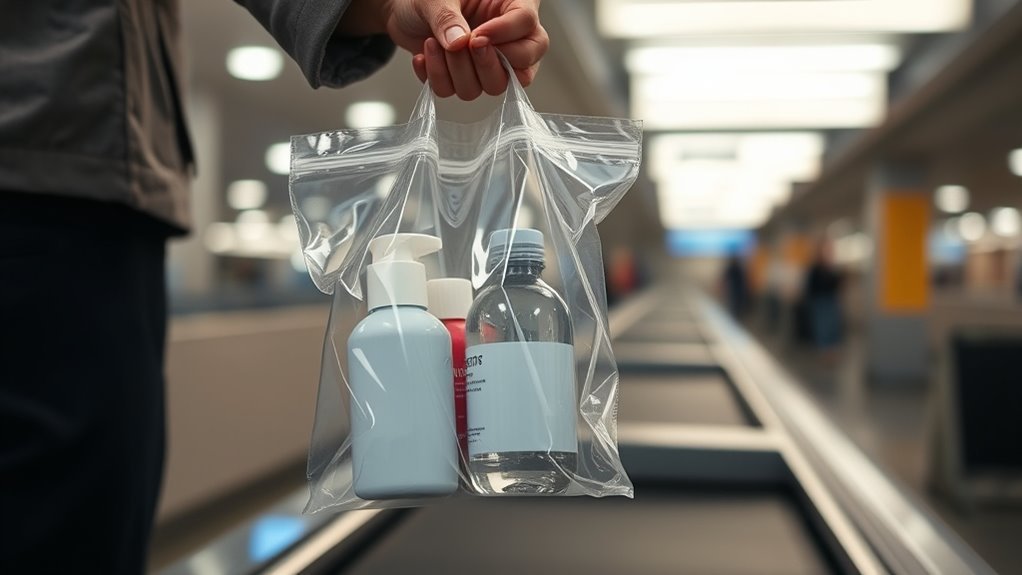
Limiting individual bottles to 3.4 oz helps keep dangerous quantities down, but TSA also controls how much total liquid you can bring in your carry-on.
You’ll place all small containers in a single, clear quart-sized bag, and that bag’s capacity effectively caps the total volume you transport through security.
Packing efficiently matters: prioritize essentials and consolidate where possible.
At screening, agents may ask to remove the bag for inspection, so keep it accessible.
- Count containers before you leave.
- Use travel-size bottles only.
- Fill gaps with non-liquid items.
- Be ready to discard excess liquids.
What Types of Water and Liquids Are Treated the Same
You’ll find that TSA treats bottled and packaged drinks similarly to other carry-on liquids, so the same 3-1-1 limits usually apply.
Gel-like substances (like drinkable gels) and aerosol liquids are also grouped with liquids for screening purposes.
Knowing these categories helps you pack smarter and avoid surprises at security.
Bottled And Packaged Drinks
Curious which bottled or packaged drinks are treated the same by TSA? You’ll find most sealed, factory-packed drinks follow the same rules as other liquids: they’re limited in carry-on unless purchased past security.
You can bring commercially sealed bottled water, juice boxes, shelf-stable milk, and canned beverages through checked bags without the 3.4-ounce restriction.
In carry-ons, only containers 3.4 ounces or less fit the quart-sized bag rule unless bought after screening.
Remember, unopened duty-free drinks bought after security are allowed onboard. Check airline rules for additional limits.
- Sealed bottled water
- Canned drinks
- Juice boxes/cartons
- Shelf-stable milk
Gel-Like And Aerosol Liquids
Those bottled and canned options are straightforward, but TSA treats gel-like and aerosolized liquids differently, so you’ll want to know which items count the same as water. You can’t bring gels, pastes, lotions, or aerosols over 3.4 ounces (100 mL) through security in carry-on. That includes gel packs, shampoo, sunscreen, and spray deodorant. Pack larger items in checked baggage or buy after screening. Medical and baby necessities get exceptions with documentation and reasonable quantities. Use clear bags and declare meds if needed to speed inspection.
| Item | Form | Rule |
|---|---|---|
| Gel pack | Gel | 3.4 oz limit |
| Sunscreen | Cream/gel | 3.4 oz limit |
| Aerosol spray | Aerosol | 3.4 oz limit |
| Medical gel | Gel | Exception with proof |
Exceptions: Baby Formula, Medication, and Special Diets
Although the 3-1-1 liquid rule bars most beverages, TSA makes clear exceptions for baby formula, medications, and special-diet liquids so you can bring what you need without hassle. You’ll need to declare these items at screening; officers may inspect but won’t enforce size limits.
Pack formula, breast milk, baby food, insulin, or other essential liquids accessibly. Keep medication labeled and separate to speed checks. For special diets, bring clearly labeled nutrition shakes or meal supplements.
- Baby formula and breast milk
- Prescription and over-the-counter meds in liquid form
- Nutritional supplements for dietary needs
- Ready-to-use infant food
Medical Exemptions and What Documentation to Bring
If you need to bring medical liquids through TSA, you should be prepared with documentation showing they’re medically necessary. Carry a clear doctor’s note or copy of your prescription that names the medication and dosage.
TSA officers may ask to inspect the items, so keep them accessible in your carry-on.
Allowed Medical Liquids Documentation
When you need to bring medically necessary liquids through TSA screening, you can usually carry them in quantities greater than the 3.4-ounce rule, but you should be ready to present documentation and declare them at the checkpoint. You’ll want clear proof and organized packaging to speed screening.
Keep originals or copies easily accessible, label containers, and separate items for inspection.
- Medication list with dosages and administration schedule.
- Manufacturer labels or pharmacy dispensing labels on bottles.
- Written statement from your healthcare provider outlining the need (brief).
- TSA/contact numbers or prior approval emails if applicable.
Doctor’s Note And Prescriptions
Because TSA allows medically necessary liquids beyond the 3.4-ounce limit, bring a concise doctor’s note and any prescriptions to speed screening and avoid confusion.
Include diagnosis, medication name, dosage, necessity for travel, and clinician contact info. Print originals and carry digital copies on your phone.
Label containers clearly and pack them separately for inspection. Declare items at the security checkpoint and answer questions calmly.
If you use refrigerated or pressurized supplies, mention handling needs.
For international travel, check destination rules and airline policies ahead of time.
Proper documentation reduces delays and helps agents verify legitimate medical needs quickly.
How TSA Screening Technology Detects Liquids
Airport security uses a combination of X-ray scanners, millimeter-wave machines, and explosive-detection algorithms to spot liquids that could be hazardous. You’ll see containers screened for density, shape, and chemical signatures; tech flags anomalies for secondary inspection. Algorithms compare pixel patterns to known threat templates, while operators confirm results. Liquids that absorb or scatter waves oddly get attention.
- X-ray density mapping reveals contents’ mass and attenuation.
- Millimeter-wave imaging detects concealed containers on bodies.
- Chemical detectors sample vapors for explosive compounds.
- Manual testing isolates suspicious liquids for field analysis.
Why Screening Speed Matters for Airport Safety
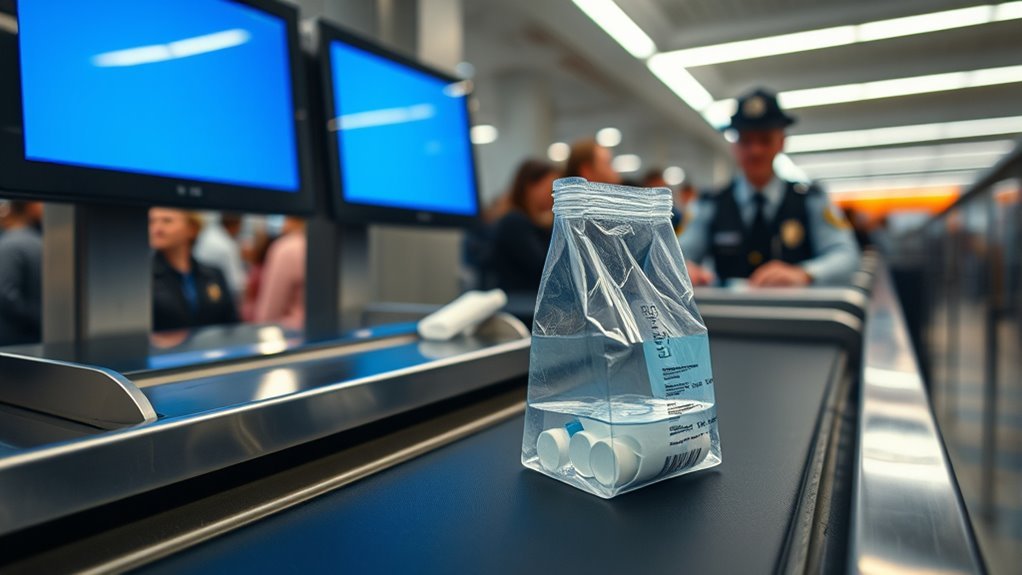
When screening moves faster, you spot threats sooner and stop them before they escalate.
You also cut down on bottlenecks, so lines keep flowing and stress stays low.
And if something does happen, quicker screening helps responders get where they need to be faster.
Faster Threat Detection
If security screenings moved slower, you’d face longer lines and greater risk that a dangerous item slips through amid the crowd. Faster threat detection speeds up passenger flow while improving the chance of spotting threats before they reach secure areas. You rely on tech and trained officers to quickly identify anomalies in bags, on bodies, and in behavior.
Faster detection narrows windows when threats can go unnoticed and gives staff time to respond calmly. It also reduces random checks that slow everyone down.
- Advanced imaging pinpoints concealed items.
- Automated alerts highlight anomalies.
- Behavioral analysis flags suspicious actions.
- Rapid secondary screening isolates risks.
Reduced Passenger Bottlenecks
Although faster screening keeps lines moving, reducing bottlenecks does more than save time: it lowers crowding that can hide threats, reduce staff oversight, and increase passenger stress that leads to mistakes.
You benefit when queues flow smoothly because officers can maintain better sightlines and focus on unusual behavior instead of managing backups. You’re less likely to drop items, fumble documentation, or become distracted—errors that complicate screening.
Shorter lines let staff rotate and rest, preserving alertness. Overall, speeding routine processing without cutting corners improves detection, compliance, and the orderly movement that keeps everyone safer.
Quicker Emergency Response
How fast could a few extra seconds save lives during an airport emergency? You rely on swift screening so responders can access threats, guide evacuations, and treat injured passengers. Faster throughput reduces confusion and keeps exits clear.
- Shorter queues let security redirect staff to incidents immediately.
- Rapid checks speed first responder arrival to aircraft or terminal zones.
- Clear, moving crowds lower trampling and panic risks.
- Efficient screening preserves communication channels for coordinated rescue.
You experience safer travel when checkpoints run smoothly—every second shaved off screening can mean quicker, more effective emergency response.
How History of Liquid Attacks Shaped Current Rules
Because attackers adapted explosives into liquid form in the late 1990s and early 2000s, airports and governments had to rethink what you could carry onto a plane. You saw new screening procedures, limits on container size, and requirements to separate liquids into clear bags so staff could inspect items quickly.
Those changes aimed to reduce risk without halting travel, balancing safety and practicality. You now face standardized rules worldwide, clearer signage, and staff trained to spot suspicious behavior related to liquids.
That history explains why seemingly simple items like water get restricted: they became a potential vehicle for hidden threats.
How Liquid Explosives and Precursors Informed Policy
Those changes grew out of specific threats: terrorists learned to hide explosive power in everyday liquids and the chemicals that make them. You need to know how that shaped policy: regulators limited volumes, required clear containers, and prioritized detection tech. You’ll see measures aimed at reducing assembly risk and improving screening speed.
Terrorist use of everyday liquids spurred rules: volume limits, clear containers, and faster detection technology.
- Restricted quantities to prevent sufficient explosive mixtures.
- Banned certain precursor chemicals or required declaration.
- Invested in chemical sensors and X-ray algorithms.
- Standardized container visibility and separations for faster inspection.
These steps balance safety and travel flow, focusing on prevention, detection, and rapid response.
Rules for Carrying Bottled Water After Security
If you clear security and still want to carry bottled water, you can bring sealed drinks bought after the checkpoint onto the plane or refill an empty bottle at airport fountains and kiosks.
You should keep receipts if airlines require proof of purchase for duty-free items.
Follow airline carry-on size limits and stow bottles under seats or in overhead bins per crew instructions.
Be mindful of international rules: some countries restrict liquids on arrival.
Avoid opening sealed drinks until onboard if instructed.
If you have medical needs, declare them to security beforehand and carry supporting documentation to smooth inspection.
How to Bring and Pack a Reusable Water Bottle
Once you’ve passed security or picked up a sealed drink, plan how you’ll carry a reusable bottle so it stays accessible and spill-free during your trip. Choose a leakproof bottle with a secure lid and test it before packing.
Keep it upright in a side pocket or dedicated sleeve to avoid crushing. Empty or seal it if you’ll gate-check a bag.
Clean it beforehand and pack a small towel or silicone sleeve to absorb condensation. Consider a collapsible bottle for tight spaces.
Label it with your name if it’ll be stowed. Refill from approved sources once past checkpoints.
- Pick leakproof design
- Stow upright
- Protect from impacts
- Clean and label
How to Pass Security With a Filled Water Bottle
Wondering whether you can bring a filled bottle through security? You usually can’t carry liquids over 3.4 ounces in your carry-on, but you can bring an empty reusable bottle and refill past screening. To pass with a filled bottle, arrive prepared: know rules, be polite, and accept inspection. If an officer permits a small amount, they’ll check it. Don’t argue; cooperate.
| Bottle type | Screening result |
|---|---|
| Empty plastic | Quick pass |
| Small sealed (<3.4 oz) | Allowed in quart bag |
| Filled reusable | Likely denied or inspected |
What Happens If You Try to Bring Large Amounts of Water
If you try to bring more water than the TSA’s 3.4-ounce rule allows, you’ll have it confiscated at the checkpoint.
You could also face delays or missed connections if agents need to inspect your bags further.
Consider packing empty bottles, buying water past security, or using approved collapsible containers to avoid problems.
TSA Liquid Limitations Explained
Although you can buy drinks past the checkpoint, you can’t take large containers of water through TSA because of security rules and practical screening limits. You’ll face the 3-1-1 rule: liquids must be in containers 3.4 ounces (100 ml) or less, all fitting a quart bag.
Large volumes can’t be efficiently X-rayed or may mimic prohibited substances, so agents will ask you to dispose of them or surrender them. Follow clear, consistent rules to speed screening and reduce risk.
- Screening capacity limits
- 3-1-1 volume restriction
- Detection reliability
- Operational consistency
Consequences Of Excess Water
Because TSA enforces strict limits, trying to bring large amounts of water through security will get you stopped: agents will flag the bottle, ask you to empty it or toss it, and may refuse it at the checkpoint. You’ll lose time, risk missing flights, and create lines as officers inspect and explain rules.
If you argue, you could face fines or additional screening. Large containers might be discarded without refund, and packed luggage delays can ripple through your plans.
Repeated noncompliance can trigger more scrutiny on future trips. Ultimately, carrying excess water costs you convenience, money, and peace of mind.
How To Transport Alternatives
You’ll want a plan for staying hydrated without hauling large bottles through security. If you try bringing gallons, TSA will confiscate them, delay you, or cause missed flights.
Instead, opt for smart alternatives that keep you hydrated and compliant.
- Empty reusable bottle: Bring it through and refill after security at a water fountain or café.
- Collapsible bottle: Pack it empty, then expand post-screening.
- Disposable bottled water: Buy past security to avoid issues.
- Hydration packs with removable reservoirs: Confirm they’re empty through screening, then refill once cleared.
Duty-Free Liquids and the Sealed-Bag Exception
Wondering whether that bottle of perfume you bought at the airport can come on board? If you buy liquids in duty-free shops after clearing security, they’ll usually be sealed in a tamper-evident bag with a receipt.
You can carry them through the gate even if they exceed the 3.4-ounce rule, provided the bag remains sealed and you keep the receipt accessible for inspection.
Rules vary by carrier and connecting airports, so check policies before travel.
If the seal’s broken or you leave the secure area, the exception won’t apply, and security may confiscate the item.
Always confirm specifics with TSA and airlines.
How Pre-Security Airport Shop Purchases Work With Liquids
What happens if you buy a bottle of wine or a travel-size lotion before you pass through the security checkpoint? You’ll likely have to either finish or discard liquids exceeding 3.4 ounces before screening unless the shop seals purchases in a tamper-evident bag with the receipt.
Follow the merchant’s packing rules so TSA treats it like an allowed duty-free item. Keep receipt visible and sealed. If it’s not sealed, don’t assume it’s permitted.
- Ask the clerk about airport security rules.
- Request a tamper-evident bag for larger liquids.
- Keep receipts handy for TSA inspection.
- Plan purchases after screening when possible.
State, Airline, and Airport Variations to Know
You’ll want to check local state liquid restrictions because some places ban certain chemicals or limit alcohol content.
Airlines also set their own carry-on rules that can be stricter than TSA’s, so confirm bottle size and packaging before you pack.
Finally, individual airports may have unique security procedures or signage that affect how and when you can bring liquids through screening.
State Liquid Restrictions
While federal TSA rules set the baseline for carry-on liquids, states, airlines, and individual airports can add their own restrictions or guidance you should know before flying. You should check state and local rules that may limit liquids for public health, wildfire zones, or local security concerns.
Airports near borders or with special events sometimes impose temporary bans. Know that enforcement can vary, so arrive early and confirm policies.
- Check state public health advisories affecting bottled water.
- Review local airport notices for temporary liquid limits.
- Expect stricter rules near military or sensitive facilities.
- Contact airport customer service before travel.
Airline Carry-On Rules
Because airlines set their own carry-on limits in addition to TSA rules, you should check both the carrier’s policies and any airport advisories before packing liquids like water.
Each airline may limit bag size, weight, and number of personal items, and some low-cost carriers charge for carry-ons or forbid large bottles.
International flights can have stricter rules tied to destination countries.
Gate agents and airline apps often note specific prohibitions or allowances.
If you need more water, consider buying sealed bottles post-security or requesting water from cabin crew.
Confirm allowances ahead to avoid fees or discarded items.
Airport Security Procedures
Although TSA sets baseline screening rules, airport security procedures can vary widely by state, airline, and even individual airports, so you should check local guidance before travel. You’ll find differences in permitted container sizes, gate screening policies, and enforcement flexibility.
Expect variations during busy periods or special events, and know that airline staff may enforce boarding rules stricter than checkpoints. Confirm policies online or call ahead to avoid surprises.
- Local regulations that affect what you can carry.
- Airline-specific carry-on enforcement at boarding.
- Airport-level procedures for re-screening and inspections.
- Temporary changes for weather, events, or threats.
International Rules: EU, UK, Canada, and Others
If you’re flying outside the U.S., don’t assume liquid rules are the same everywhere; most countries follow similar 100 ml/1 L bag limits but the specifics—allowed container sizes, exceptions for duty-free purchases, and enforcement—vary between the EU, UK, Canada, and other jurisdictions.
You should check rules before travel: the EU and UK apply the 100 ml rule for hand luggage, usually allowing duty-free liquids if sealed and accompanied by receipts.
Canada matches this limit but may enforce more strictly.
Other countries can differ—some permit slightly larger volumes or stricter screening—so verify local guidance to avoid confiscation.
Medical and Disability Accommodations at TSA Checkpoints
If you need water or other liquids for medical reasons, TSA makes exceptions and you can bring amounts greater than the usual 3.4 ounces, but you should declare them at the checkpoint and be prepared for additional screening.
Carry documentation like a doctor’s note or prescription can speed the process, and officers will offer accessible screening procedures if you have a disability.
Ask for a private screening or a passenger support specialist if you need one.
Medical Liquids Exception
When you need liquids for a medical condition or disability, TSA makes an exception to the 3.4-ounce rule so you can bring necessary medications, breast milk, formula, and sterile water in quantities greater than the standard limit.
You should declare these items at the checkpoint and separate them from your carry-on for inspection. TSA officers will screen the liquids, which may include testing or opening containers. Be prepared to answer questions about their use.
The process is focused on safety while accommodating needs.
- Declare items
- Separate for screening
- Expect testing
- Answer brief questions
Documentation And Screening
Need proof? You’ll show documentation for medical liquids or disability aids when TSA asks. Bring a note from your medical provider, prescription label, or a card from your clinic—TSA accepts various verification forms but doesn’t require a specific template.
At the checkpoint, present documents and declare items clearly to the officer. You’ll be screened; officers may inspect containers, test liquids, or use additional imaging.
Keep identification ready and be prepared to answer brief questions. If you can’t provide documentation, officers still accommodate where possible, balancing security protocols with genuine medical and disability needs.
Accessible Screening Procedures
Although checkpoint procedures prioritize safety, TSA provides accessible screening options so travelers with medical conditions or disabilities can pass through with dignity and minimal disruption.
You can request a private screening, explain medical devices, and get help from officers trained in accommodations. Carry documentation if it helps, but oral explanations often suffice.
Notify your airline or TSA Cares ahead for assistance.
- Request private screening when needed.
- Declare liquids, medications, and medical devices.
- Use mobility aids; they may be inspected, not x-rayed.
- Contact TSA Cares in advance for special arrangements.
How to Request Screening Accommodations Politely
If you require special screening, ask TSA officers calmly and directly before the checkpoint so they can explain options and arrange accommodations. State your needs briefly—medical devices, mobility aids, or liquids—and show documentation if you have it.
Use polite language: “Could I request an alternative screening for medical reasons?” Listen to instructions, ask clarifying questions, and confirm any steps.
If you need privacy, request a private screening before the process begins. Keep gestures minimal and cooperate with officers.
If something’s unclear or you feel uncomfortable, ask to speak to a supervisor to resolve the issue respectfully and efficiently.
Common Myths About Bringing Water Through TSA
You might think any sealed bottle counts as an allowed carry-on liquid, but TSA’s 3.4-ounce rule still applies to most containers in your bag.
Don’t assume bottle-filling stations let you bring large containers through security—exceptions usually only apply after you pass the checkpoint or for medical/infant needs with proper documentation.
Knowing the real limits and when fillings are permitted will save you time and headaches at screening.
Carry-On Liquid Limits
When you’re packing a carry-on, remember the TSA’s 3-1-1 liquid rule limits containers to 3.4 ounces (100 milliliters) or less in a single quart-sized, clear bag—so an open bottle of water won’t make it through security.
You can still carry small liquids if they fit the rule. Know that exceptions (like medications) exist but aren’t for general water. Pack wisely and avoid surprises at the checkpoint.
- Measure containers before you fly.
- Use resealable quart bags to organize liquids.
- Declare medically necessary items to agents.
- Buy sealed drinks after screening to stay hydrated.
Bottle Filling Exceptions
After you’ve sorted liquids into a quart bag and handled exceptions like meds, people often ask about filling an empty bottle at airport water fountains or passing through with a reusable bottle. You can bring an empty bottle through security; the rule bars filled containers over 3.4 ounces (100 ml). After screening, you may refill at approved fountains or concession areas. Don’t assume prefilled purchases past security are allowed to travel beyond; follow gate rules. Here’s a quick reference:
| Situation | Allowed? |
|---|---|
| Empty reusable bottle through security | Yes |
| Filled bottle from concourse shop | Yes |
| Fountain refill after screening | Yes |
| Filled before security | No |
Real Examples: Why Passengers Have Been Stopped
Because liquid limits are one of the most misunderstood rules, travelers often get stopped for simple mistakes like carrying a water bottle that exceeds the 3.4-ounce (100 ml) limit, failing to remove liquids from carry-on bags for inspection, or having gel-like items—such as sunscreen, hand sanitizer, or yogurt—packed where officers can’t easily screen them.
You might be stopped when you:
- Try to board with a full reusable bottle bought post-security.
- Pack toiletries in opaque bags that hide quantities.
- Carry medication without clear labeling or documentation.
- Transport food items that look like gels or pastes and prompt further inspection.
Tips to Avoid Confiscation at the Checkpoint
If you want to breeze through security, organize your liquids before you reach the checkpoint and make them easy for TSA officers to inspect. Pack all containers in a single, clear quart-sized bag, limit each to 3.4 ounces (100 milliliters) or less, and remove the bag from your carry-on for screening.
Drink up or discard larger bottles before you enter, or buy sealed beverages past the security line.
Label medications and baby food, and carry necessary documentation. Follow officer instructions, answer questions briefly, and avoid surprises that could trigger additional inspection or confiscation.
Smart Packing: Minimize Liquids in Carry-On
When you pack with intention, you’ll cut down on the liquids you need to carry and speed up security checks. Prioritize solids, travel-size essentials, and items you can buy after screening. Consolidate toiletries into multi-use products and keep medications and baby needs accessible. Stash liquids in checked baggage when possible.
- Swap full bottles for bars and powders.
- Use refillable containers under 3.4 oz for essentials.
- Limit cosmetics to multipurpose sticks or creams.
- Plan purchases at your destination to avoid carrying extras.
These steps reduce hassle, lower confiscation risk, and make checkpoint lines smoother.
How to Use Clear Quart Bags Effectively
Though the TSA limits liquids, you can breeze through security by packing all your travel-size toiletries in a single clear quart bag—lay out items flat, zip it closed, and keep it near the top of your carry-on so you can pull it out quickly for screening.
Use one bag per person to avoid fumbling. Group similar items—skincare, oral care, hair products—to find what you need fast.
Choose a sturdy, resealable bag that stays upright to prevent spills. Remove bulky caps or transfer contents into compliant containers.
Replace the bag after heavy use and stash a spare at home for faster packing next time.
What TSA Agents Inspect When They Check Liquids
Because liquids pose potential threats and often hide prohibited items, TSA agents focus on a few key things when they inspect your quart bag: container size and volume, whether bottles are sealed or appear tampered with, the clarity of the bag so agents can visually identify contents, and any substances that look suspicious or are unlabeled.
You should present items neatly and answer questions directly. Agents also note packaging, labeling, and consistency of liquids to spot anomalies. Follow instructions, avoid arguing, and be ready to remove items if asked.
- Bottle size and volume
- Seals and tamper evidence
- Bag clarity and visibility
- Unlabeled or odd substances
How to Handle Secondary Screening Efficiently
If you’re pulled for secondary screening, expect a bit more time and a brief interview.
Have your ID and any receipts or documents ready so you can show them quickly.
Stay calm, answer questions directly, and cooperate to speed the process.
Expect Additional Screening
Wondering what happens when you’re pulled aside for a secondary screening? You’ll stay calm, follow instructions, and expect extra checks of your belongings and person. Agents will explain steps; cooperate and answer briefly. Keep boarding pass and ID handy but don’t start rummaging—wait for direction.
- Stay calm and polite; anger slows the process.
- Remove electronics and liquids only when asked.
- Show tags or receipts for unfamiliar items if available.
- Ask concise questions if you’re unsure about a procedure.
Following these tips speeds up screening, reduces stress, and helps you get back to your trip quickly.
Prepare Documents Ahead
When you know a secondary screening is possible, gather your ID, boarding pass, and any supporting documents—like prescription labels, receipts for new electronics, or medical letters—so you can hand them over quickly and clearly explain their relevance. Lay documents flat in an easy-to-reach folder and label anything unusual. Know item details—purchase date, owner, or prescription dosage—and summarize them aloud to speed verification. If you have digital copies, make them accessible on your phone. Use concise answers when asked and only offer what’s requested to avoid delays.
| Document Type | Example | Tip |
|---|---|---|
| ID | Driver’s license | Keep visible |
| Medical | Prescription note | Highlight name |
| Purchase | Receipts | Show date and store |
| Boarding | Boarding pass | Print + digital |
Stay Calm And Cooperative
You’ve gathered your documents and made them easy to hand over—now keep your composure and work with TSA agents to move the screening along smoothly. Stay calm, speak clearly, and follow instructions promptly so the process stays brief. Don’t argue; ask questions politely if something’s unclear. Offer your ID and boarding pass without fuss and remove items only when requested. Keep explanations short and factual if asked about liquids or unusual items.
- Keep a neutral tone and avoid sudden movements.
- Answer questions directly; don’t volunteer extra details.
- Comply with requests for searches or swabs.
- Ask for clarification respectfully.
Best Reusable Bottles That Pass TSA Screening
Looking for a reusable bottle that sails through TSA screening? Choose clear, empty plastic or metal bottles under carry-on size limits; TSA allows empty containers through security.
Pick wide-mouth stainless steel or BPA-free Tritan bottles—durable, leak-resistant, and easy to empty during checks. Collapsible silicone bottles work if fully flattened and dry.
Avoid bottles with opaque reservoirs filled with liquid or built-in filtration that can appear suspicious.
Labeling helps: remove contents and stow a travel tag noting “empty.” You’ll breeze past checkpoints by presenting an empty bottle, packed accessibly for quick inspection, and following officer instructions.
Alternatives to Carrying Water (Refill Stations & Filters)
If you’d rather skip hauling a full bottle through security, airport refill stations and portable filters give reliable options for staying hydrated on the go. You can top up at water bottle stations after security, use filtered fountains in terminals, or buy sealed bottles and refill them later.
Portable filters and UV purifiers let you safely treat tap water when traveling, saving money and plastic. Plan short refills between connections and carry a small funnel or collapsible bottle for convenience.
Portable filters and UV purifiers make tap water safe on the go, saving money, plastic, and hassle.
- Use official airport refill stations
- Seek filtered water fountains
- Carry a compact filter or purifier
- Buy sealed water, refill later
How the 3-1-1 Rule Affects Trip Planning and Hydration
Because the TSA limits carry-on liquids to 3.4 ounces in a single quart bag, you’ll need to plan when and how you hydrate during travel so you don’t get caught thirsty at the checkpoint. Bring empty bottles for refills, sip before security, and time hydration around long lines or delays. Pack minimal liquids for medications or baby formula within rules. Use airport water fountains or refill stations after screening. Monitor caffeine and alcohol intake to avoid dehydration. Balance intake to prevent restroom issues during long flights.
| Action | When | Tip |
|---|---|---|
| Empty bottle | Before screening | Foldable saves space |
| Small meds | Carry-on | Keep accessible |
| Refill | Post-security | Locate stations ahead |
How to Buy Water After Security Without Surprises
Once you clear security, you’ll find multiple options for buying water—vending machines, convenience stores, and sit-down eateries—so compare prices and sizes before you grab the first bottle you see.
Once past security, compare vending, store, and eatery prices and sizes before grabbing the first bottle you see.
You’ll likely pay a premium near gates; consider buying a larger bottle from a shop instead of multiple small ones.
Look for refill stations to save money and plastic.
Check expiration dates and whether chilled bottles are available.
Carry a reusable bottle if you plan to refill frequently.
- Compare per-ounce price
- Seek refill stations
- Buy larger bottles for flights
- Inspect seals and temps
Recent TSA Updates and Possible Future Changes
While rules about bringing liquids haven’t changed dramatically, TSA has rolled out finer tweaks and pilot programs you should know about—like expanded use of automated screening lanes, more PreCheck lanes at major hubs, and experimental tech that may let you keep liquids or laptops in bags at selected checkpoints. You’ll see trials for computed tomography scanners, updated signage, and targeted exemptions for certain medical liquids. These shifts aim to speed screening and reduce bins. Expect phased rollouts; your experience may vary by airport and terminal as TSA balances security, throughput, and traveler convenience.
| Change | Impact |
|---|---|
| Automated lanes | Faster processing |
| CT scanners | Less unpacking |
| More PreCheck | Shorter lines |
| Medical liquid rules | More clarity |
| Pilot sites | Variable availability |
How to Stay Updated on TSA Liquid Policies Before Travel
Want to avoid last-minute surprises at the checkpoint? Check TSA.gov before you leave, since it posts current liquid rules and exceptions. Sign up for TSA email alerts or follow their official social accounts for real-time notices. Confirm airline and airport pages too, because local procedures and international flights can differ.
Download a reputable travel app that aggregates TSA updates and airport advisories, and enable notifications.
- Visit TSA.gov
- Subscribe to TSA alerts
- Check your airline/airport site
- Use a travel app
These steps keep you informed, help you pack correctly, and reduce stress at security.
Quick Checklist: Pack, Buy, and What to Expect at Security
Before you leave for the airport, make a quick plan: pack carry-on liquids in a clear quart bag, buy travel-sized toiletries if needed, and have your ID and boarding pass handy so security moves faster. Pack meds and baby formula separate, label them, and expect officers to inspect anything over 3.4 ounces. Buy sealed water after screening. Remove laptops and large electronics from bags, empty pockets, and wear slip-on shoes to speed the process. Stay calm, answer questions briefly, and accept inspections.
| Item | Action |
|---|---|
| Liquids | Quart bag, 3.4 oz limit |
| Electronics | Remove for screening |
| Shoes/ID | Slip-on, ready to show |
Frequently Asked Questions
Can I Bring Ice Packs or Gel Coolers Through TSA Security?
Yes — you can bring ice packs or gel coolers through TSA security, but if they’re partially melted or liquid-like and exceed 3.4 ounces (100 mL), TSA may consider them liquids and reject them; frozen solid items generally pass.
Are Flavored Water Powders or Electrolyte Mixes Allowed in Carry-On?
Yes — you can bring powdered flavored water or electrolyte mixes in your carry-on; they’re allowed, but if loose powders exceed 12 ounces TSA may ask for additional screening, so keep amounts reasonable and sealed when possible.
Do TSA Liquid Rules Apply to Passenger Medical Oxygen Canisters?
Yes — TSA liquid rules don’t apply to passenger medical oxygen canisters; you’ll follow specific airline and TSA medical device procedures, notify the airline in advance, bring prescriptions, and guarantee canisters meet safety and documentation requirements.
Can I Bring Alcoholic Mixers or Spirits Under the 3-1-1 Rule?
Yes — you can bring alcoholic mixers and spirits in carry-on if each container is 3.4 ounces (100 mL) or less and fits the single quart bag; larger bottles must go in checked baggage due to federal limits.
What Happens to Water Purchased on Connecting Flights During Layovers?
If you buy water during a layover, you can carry it through the next security checkpoint only if it was purchased airside; otherwise, it’ll be confiscated at security unless you finish it before re-screening or keep it in a secure, sealed store bag.
Conclusion
You can’t bring full-size bottled water through TSA checkpoints because of the 3-1-1 liquids rule, but you can carry empty bottles or small containers (3.4 oz/100 ml) and buy water after security. The limit’s about screening efficiency and safety, not hydration. Stay updated on TSA guidance, pack smart, and expect officers to inspect liquids. Bring an empty reusable bottle to refill post-screening, and you’ll breeze through security without getting unexpectedly thirsty.