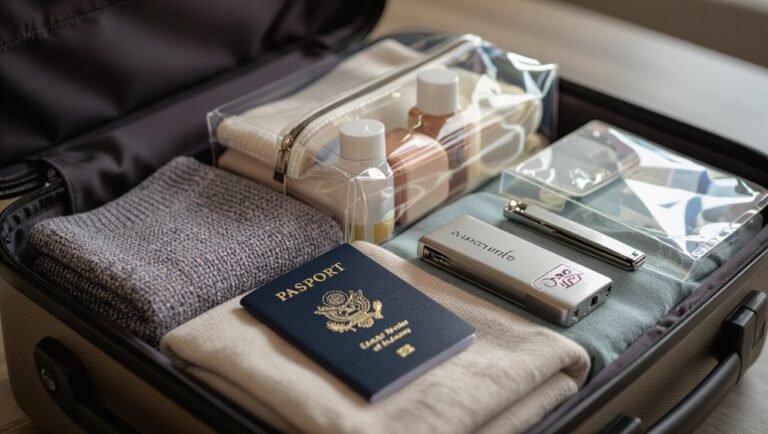
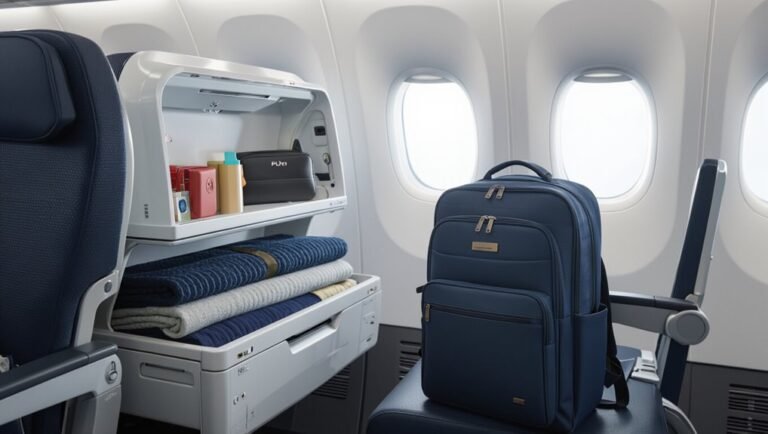
Why Is Lithium Not Allowed on Airplanes Safety Reasons
You shouldn’t put most lithium batteries in checked baggage because they can ignite and are hard to extinguish in flight, risking rapid thermal runaway, toxic smoke, and structural damage. Spare cells shorting or getting crushed can trigger fires that spread quickly and overwhelm crew response. Carriage limits, protected terminals, and cabin storage rules exist to reduce these hazards. Follow airline rules and pack carefully, and you’ll learn practical steps to stay compliant and safer on your trip.
Quick Answer: Why Lithium Batteries Are Restricted on Airplanes
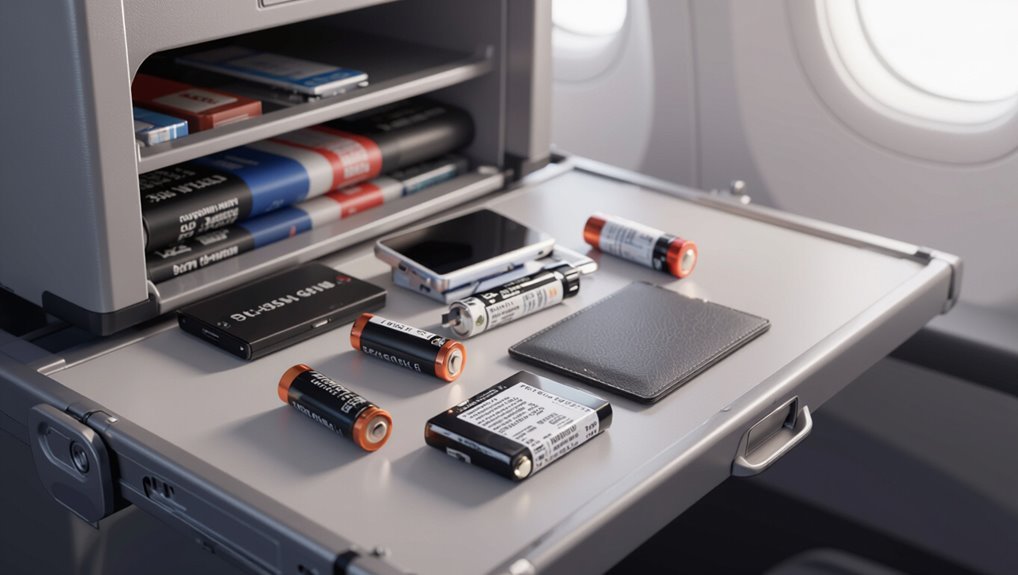
Because lithium batteries can catch fire and are hard to put out in flight, airlines and regulators limit how you carry them.
You must treat them as potential fire sources: restrict quantity, use carry-on not checked baggage for spare cells, protect terminals, and follow watt-hour and airline-specific limits.
These rules reduce risk, let crews respond faster, and minimize damage if a battery fails.
How to Use This Guide
Wondering how to get the most from this guide? Use it as a practical checklist: scan sections for quick rules, note examples and exceptions, and follow links to regulations.
Refer back before packing devices, preparing batteries, or contacting your airline. Keep an eye on updates and airport-specific guidance.
Apply the advice directly to your travel plans to reduce surprises and delays.
Carry‑On vs Checked: Allowed Lithium Batteries
When you pack lithium batteries, put most of them in your carry‑on rather than checked luggage.
You’ll keep devices and installed batteries accessible for inspection and immediate response if a fault occurs. Airlines generally allow installed batteries and small spares in carry‑on, while larger or bulk shipments may require airline approval and special handling.
Always check airline and country rules before travel.
Spare Lithium Batteries: Rules for Packing and Transport
If you’re carrying spare lithium batteries, pack them in your carry‑on and keep them protected against short circuits and damage.
Wrap terminals with tape, use original packaging or individual plastic cases, and separate batteries to prevent contact.
Check airline and country limits for capacity and quantity, declare extras at check‑in if required, and never stow spares in checked baggage.
Battery Basics: Types of Lithium Batteries Passengers Encounter
You’ll most often run into two categories: rechargeable lithium-ion cells used in phones and laptops, and non-rechargeable lithium metal batteries found in some cameras and small electronics.
Know that different rules apply depending on which type you’re carrying.
Next, we’ll cover common consumer battery formats and how airlines treat each.
Lithium-Ion vs. Lithium Metal
Although both types store energy chemically, lithium-ion and lithium metal batteries work differently and have distinct safety and carriage rules you should know.
You’ll find lithium-ion batteries are rechargeable, use intercalation electrodes, and pose thermal runaway risks if damaged or overcharged.
Lithium metal cells are primary (often non-rechargeable), contain reactive metallic lithium, and present higher fire risk if shorted or crushed during transport.
Common Consumer Battery Types
When you fly, you’ll likely carry several common lithium battery types—lithium-ion cells in phones, laptops, and e-cigarettes; lithium polymer packs in tablets and drones; and lithium metal button cells in watches and some medical devices.
You should know capacity limits, packing rules, and that damaged or recalled cells are restricted.
Keep spares in cabin baggage, terminals insulated, and devices powered off.
How Energy Density and Lithium Chemistry Affect Fire Risk
Because lithium cells pack high energy into compact packages, their chemistry and energy density directly shape how fires start and spread. You should know that higher energy per gram raises the stakes if containment fails.
Consider these factors:
- Cell chemistry dictates oxygen availability and flammability.
- Energy density affects heat release rate.
- Construction influences venting and short-circuit likelihood.
Thermal Runaway: Causes and Risks
Those factors set the stage for thermal runaway, a rapid, uncontrolled release of heat and gas that can turn a single failing cell into a propagating fire.
You should know it starts when internal temperatures rise past safe limits, triggering exothermic reactions.
You must recognize risks: venting, smoke, flaming debris, and rapid spread between cells.
Prevention focuses on design, monitoring, and containment.
How Battery Damage Triggers Fires and Explosions
When a cell is damaged you can get internal short circuits that spark and heat the chemistry. That heat can start thermal runaway and spread to neighboring cells, turning one failure into a cascade.
Crushing or other mechanical damage makes all this far more likely by breaching separators and deforming electrodes.
Internal Short Circuits
If a lithium cell gets crushed, pierced, or otherwise damaged, its internal layers can deform and metal particles may bridge the separator, creating an internal short that lets current surge uncontrolled through the cell.
You’ll see rapid heating, venting, and sparks as energy dumps.
Consider causes and signs:
- Mechanical damage
- Manufacturing defects
- External abuse or impact
Thermal Runaway Propagation
Although a single internal short can spark a fire, thermal runaway propagation is what lets that fire spread between cells and turn an incident into an explosion.
You’ll see heat, vented gases, and flaming debris from one cell ignite neighbors; pressure and rupture accelerate reactions.
Once propagation starts, containment fails quickly, making fires intense, fast, and hard to extinguish—especially in confined aircraft spaces.
Mechanical Crush Damage
One severe way batteries ignite is through mechanical crush damage: crushing deforms electrodes and separators, creates internal shorts, and can pierce cells so you get sudden heat, sparks, and venting.
You must handle devices carefully; crushed cells can escalate rapidly:
- Internal short causes rapid heating.
- Electrolyte vaporizes and vents.
- Thermal runaway spreads to adjacent cells.
How Short Circuits and Manufacturing Defects Cause Failures
When thin separators tear or internal leads touch, cells can short and heat up rapidly. That heat can puncture nearby layers or ignite electrolyte, causing a cascade you can’t easily stop.
You should know tiny manufacturing flaws, metal burrs, or misplaced welds create internal shorts. Once initiated, thermal runaway spreads between cells, overwhelming safety vents and separators, forcing rapid failure and potential fire.
Why Transport Conditions (Pressure and Temperature) Increase Risk
When you fly with lithium cells, changing cabin pressure can mechanically stress cells and worsen existing defects.
Higher or fluctuating temperatures accelerate chemical breakdown inside the cell, increasing the chance of thermal runaway.
If decomposition or venting occurs, rapid gas expansion can rupture packaging and spread fire, so you need to manage both pressure and temperature carefully.
Pressure-Induced Cell Stress
Because battery cells contain fluids and gas-filled voids, changes in ambient pressure and temperature during flight put mechanical and chemical stress directly on their internal components.
You should know pressure shifts can deform casings, force electrolyte movement, and rupture separators:
- Casing deformation increases shorting risk.
- Electrolyte displacement alters conductivity.
- Separator rupture exposes electrodes, raising failure likelihood.
Temperature-Driven Decomposition
Although cabin and cargo temperatures might seem stable, the combined effects of pressure and temperature changes during transport can accelerate chemical breakdown inside lithium cells.
You should know that modest heating speeds electrolyte decomposition and destabilizes electrode surfaces, raising internal pressure and promoting thermal runaway initiation.
Monitor temperature exposure, avoid hot-storage, and limit charge levels to reduce the likelihood of heat-driven failure during flight.
Rapid Gas Expansion
Heat-driven decomposition not only generates reactive species but also produces gases that can expand rapidly as pressure drops during flight. You must understand this raises rupture and venting risks, accelerating reactions and spreading heat.
Consider consequences:
- Volume increase: cell swelling and seal failure.
- Pressure spikes: casing rupture.
- Rapid outgassing: flame propagation and smoke spread.
Why Lithium Battery Fires Are Hard to Put Out at Altitude
When a lithium battery vents or ignites in flight, you’ll quickly find conventional firefighting methods aren’t enough: the cells can undergo thermal runaway, releasing oxygen-rich gases and molten material that keep feeding the fire even as cabin oxygen is reduced and water or typical extinguishers fail to cool inner cell layers.
You’ll face intense heat, rapid re-ignition, toxic smoke, and limited suppression options at altitude.
ICAO & IATA Rules for Lithium Batteries
You need to know the ICAO and IATA standards that airlines and regulators use to control lithium batteries.
They’ll set capacity and packaging limits you’ll have to follow, and they’ll require specific declaration and documentation for shipments.
Understanding those rules helps you avoid penalties and keeps flights safer.
Airline And Regulator Standards
Because lithium batteries can pose fire and thermal-runaway risks in flight, ICAO and IATA have established strict packaging, labeling, and carriage rules that airlines and shippers must follow.
You must comply with operator policies, training, and reporting requirements.
Follow these core obligations:
- Training and documentation
- Approved acceptance checks
- Incident reporting and coordination
Capacity And Packaging Limits
Although regulators set strict rules, you’ll find the core ICAO and IATA limits focus on cell and battery capacity (measured in Wh), state of charge, and approved packaging standards.
You must keep cells under specified Wh thresholds, cap batteries’ state of charge (often 30–100% depending on allowance), use UN-approved inner packaging, and protect against short circuits and damage to meet carry‑on or checked baggage rules.
Declaration And Documentation Rules
When you’re shipping or carrying lithium cells and batteries, you’ll need to declare them correctly and keep the right documents on hand: regulators require specific air waybill entries, dangerous goods declarations, and battery information like watt‑hour ratings, state of charge, and UN numbers so carriers and safety personnel can assess risk quickly.
- Provide accurate UN numbers and class.
- List watt‑hour and state‑of‑charge.
- Attach required DG paperwork and emergency contact.
U.S. and EU Passenger Rules for Lithium Batteries
As a passenger, you’ll find that both the U.S. and EU set clear, actionable rules for carrying lithium batteries on flights: spare lithium-ion cells and batteries must be carried in carry-on baggage with terminals protected.
Batteries above certain watt-hour (Wh) limits need airline approval, and loose or damaged batteries are restricted or forbidden.
You should notify airlines when required, follow packaging guidance, and keep devices powered off.
Limits on Watt‑Hours, Cell Count, and Spare Battery Rules
If you’re carrying lithium batteries, know the watt-hour limits, cell counts, and spare-battery rules up front so you can pack legally and avoid delays:
- Normal cells/devices ≤100 Wh travel in carry‑on; airlines usually allow several.
- 100–160 Wh require airline approval and often a limit per passenger.
- Spare batteries must be in carry‑on, terminals protected, and counts may be capped.
How Airlines Classify Batteries and Devices for Transport
You need to know how airlines classify batteries and the devices that contain them before you pack.
Carriers sort batteries by chemistry, watt‑hour rating, and whether they’re installed in equipment or carried spare. Those classifications determine specific device capacity limits and the handling rules you’ll follow.
Battery Classification Rules
When airlines classify batteries and devices for transport, they look at chemistry, capacity, and whether the battery is installed in or carried with the device.
You’ll need to know these factors because they determine packaging, labeling, and whether the battery can go in checked baggage, carry-on, or must be shipped as cargo.
You should follow rules:
- Identify chemistry.
- Declare device configuration.
- Apply packaging/labeling.
Device Capacity Limits
Most airlines set clear capacity limits for lithium batteries measured in watt-hours (Wh) for rechargeable cells and lithium content (g) for non-rechargeables, and you’ll need to check those numbers against each device.
You should know typical cutoffs (e.g., 100 Wh standard, 100–160 Wh airline approval) and whether spares must be in carry-on, limited in quantity, or require airline notification.
Packing Lithium Batteries: How to Prepare Device Batteries for Travel
Preparing device batteries for travel starts with knowing their type, capacity, and condition so you can pack them safely and comply with airline rules.
Preparing batteries for travel begins with identifying type, capacity, and condition to pack safely and follow airline rules.
You’ll inspect for damage, carry devices powered off, and separate spares.
Follow these steps:
- Check battery ratings and airline limits.
- Tape exposed terminals and use original packaging.
- Keep batteries accessible and declare if required.
Proper Packing for Spare Lithium Batteries in Carry‑On
When you pack spare lithium batteries in your carry-on, make sure each terminal is protected with tape, a plastic cap, or original packaging to prevent short circuits.
Check airline and TSA rules for how many spare batteries you can bring and any watt‑hour limits that apply.
Keep them in your carry-on rather than checked baggage so you can respond quickly if an issue arises.
Battery Terminals Protection
If you’re carrying spare lithium batteries in your carry‑on, protect their terminals to prevent short circuits and fire risks.
You should insulate contacts, separate cells, and store them where they can’t move.
Follow these steps:
- Cover terminals with tape or original caps.
- Place each battery in individual plastic pouches.
- Keep batteries in a rigid container within your carry‑on.
Carry‑On Quantity Limits
Most airlines let you carry a limited number of spare lithium batteries in your carry‑on, so check airline and country rules before packing.
You should pack only the allowed quantity, usually a few batteries per person, and keep them in your carry‑on not checked baggage.
Protect terminals, use original packaging or insulating caps, and declare high‑capacity cells to crew when required.
What to Do If Your Packed Battery Shows Damage or Swelling
Should you spot swelling or visible damage on a packed lithium battery, don’t try to use, charge, or move it without precautions; instead, stop handling it and isolate it from other items.
- Notify airline or airport staff immediately and follow their instructions.
- Place the battery in a non‑combustible container, away from flammable materials.
- Arrange for proper disposal or transport by trained personnel; don’t attempt repairs.
Traveling With Large Batteries (E‑bikes and Scooters) Legally
If you’re planning to travel with an e-bike or scooter, check the battery size limits—many airlines restrict watt-hour ratings and may ban oversized packs.
You’ll usually need airline approval well before your flight, so contact them and get written confirmation if possible.
Follow their instructions for battery removal, packaging, and carriage to avoid delays or confiscation.
Battery Size Limits
When you’re flying with an e‑bike or scooter, airlines and aviation authorities set strict watt‑hour (Wh) limits for lithium batteries that determine whether you can bring them on board, must check them, or can’t transport them at all.
You should:
- Know batteries under 100 Wh are usually allowed in carry‑on.
- Expect 100–160 Wh to need airline approval.
- Recognize over 160 Wh is typically prohibited.
Airline Advance Approval
Knowing the Wh thresholds is only the start; for batteries between 100–160 Wh—or for some airlines’ stricter rules—you’ll usually need formal airline approval before you can board. Contact the airline early, provide battery specs, and get written confirmation. Failure can mean denied boarding or confiscation.
| Action | Tip |
|---|---|
| Contact airline | Do it weeks ahead |
| Provide specs | Wh, voltage, cell type |
| Get written OK | Email or PDF |
| Carry proof | Printed confirmation |
Shipping Lithium Batteries: Courier Rules Versus Passenger Carriage
Although both couriers and airlines handle lithium batteries, their rules differ in scope and enforcement, and you need to know which set applies before you ship or fly.
You should verify classifications, packaging, and declarations; carriers vary. Consider:
- Watt-hour limits and allowed quantities.
- Packaging, labeling, and inner packaging standards.
- Documentation, dangerous-goods training, and carrier-specific prohibitions.
Special Rules for Medical Devices and Mobility Aids
If you rely on battery-powered medical devices or mobility aids, airlines give them special consideration but expect you to follow specific rules and provide documentation.
You’ll need advance notice, medical forms or prescriptions, and batteries protected against short circuits.
Spare lithium batteries often must be carried in cabin with terminals taped or in original packaging.
Check airline policies and notify staff during booking.
How Airlines and Crew Respond to Onboard Battery Fires
When a lithium battery overheats or ignites, flight attendants act quickly to isolate the hazard, alert the cockpit, and follow established fire-response procedures.
You’ll see trained crew use containment tools, firefighting gear, and communication protocols to protect everyone.
Typical steps include:
- Move and isolate the device.
- Extinguish and cool the battery.
- Prepare for possible diversion and emergency services on landing.
Real Incident Examples That Shaped Current Aviation Rules
Because a handful of high-profile onboard battery fires exposed real risks, regulators and airlines tightened rules and crew training around lithium devices.
You’ll learn about specific cases—smoldering e-cigarettes, cargo pallet blazes, and overheated spare batteries—that prompted baggage restrictions, stricter labeling, and mandatory fire-containment kits.
Those incidents forced clearer carriage limits and inspection protocols so you and crew face fewer surprises and greater safety.
Common Passenger Mistakes That Lead to Confiscation or Fines
Though most travelers mean well, a few common mistakes still get lithium batteries seized or earn hefty fines. You should avoid packing spare batteries loose, carrying damaged cells, or misdeclaring high-capacity units.
Follow these pitfalls to prevent trouble:
- Loose spares in checked luggage.
- Damaged or swollen batteries.
- Undeclared high-capacity or commercial packs.
Practical Safety Checklist Before Your Next Flight
Before you pack, run a quick checklist to keep lithium batteries compliant and safe: inspect each cell for swelling or damage, separate and tape exposed terminals, note capacity ratings, and decide which batteries will go in carry-on versus checked baggage.
Pack batteries in original packaging or insulated pouches, protect devices from accidental activation, carry documentation for high-capacity cells, and follow airline regulations to avoid delays.
How to Choose Safer Batteries and Devices for Travel
When you’re picking batteries and devices for travel, prioritize chemistry, capacity, and build quality: choose lithium-ion cells from reputable manufacturers, prefer lower-capacity packs when practical (under 100 Wh for carry-on simplicity), and look for devices with integrated protection circuits and sturdy housings.
Prioritize lithium-ion chemistry, reputable makers, protection circuitry, and lower-capacity (under 100 Wh) sturdy packs for safer travel.
- Verify manufacturer reputation.
- Choose devices with protection circuitry.
- Favor lower-capacity, well-built packs for reduced risk.
Tips for Battery Storage and Transport During Long Trips
If you’re taking batteries on a long trip, pack them to minimize short circuits, physical damage, and exposure to extreme temperatures: keep spare cells in their original packaging or individual protective cases, tape exposed terminals on loose batteries, and store power banks in your carry-on where cabin pressure and temperature are more stable.
Check device manuals for transport limits, avoid full charge for storage, and insulate against crushing.
When to Consult the Airline or Manufacturer Before Flying
Storing batteries properly helps, but you should still check with your airline or the battery maker in certain situations: contact them if your batteries are high-capacity (usually over 100–160 Wh), installed in unusual or custom devices, damaged or recalled, or if you’re carrying large quantities or prototype cells for work.
Always check airlines or manufacturers for high-capacity, custom, damaged, recalled, prototype, or bulk batteries before travel.
- Ask about packing and carry-on limits.
- Verify documentation and labeling.
- Get written approval for exceptions.
Frequently Asked Questions
Can Lithium Metal Batteries Be Mailed Internationally Instead of Flown?
Yes — you can often mail lithium metal batteries internationally, but you’ll need to follow carrier rules, packaging, labeling, quantity limits, and dangerous-goods declarations; check destination regulations and carrier policies so you don’t face fines or shipment rejection.
Do Airport Security Scanners Detect Swollen or Damaged Batteries?
Yes — security scanners can spot swollen or damaged batteries; screening officers will flag irregular shapes, signs of heat damage, or leaking. You’ll be asked to declare, remove, or surrender unsafe batteries for safety and inspection.
Are Lithium Batteries Allowed in Checked Baggage for International Cargo Flights?
Generally, you can’t pack most lithium batteries in checked baggage for international cargo flights; airlines and regulators require them in carry-on, limit capacity and quantity, and may require terminals taped or batteries installed in devices to reduce short-circuit risk.
Can I Use External Battery Packs to Charge Devices During Takeoff?
Yes — you can use external battery packs to charge devices during takeoff if the airline allows portable chargers onboard and you keep them in carry‑on, follow voltage/Wh limits, and switch them off if crew asks.
Do Duty‑Free Stores Sell Batteries Approved for Air Travel?
Yes — duty‑free shops often sell airline‑approved batteries like AA, AAA, and permitted portable power banks within airline/ICAO limits; check capacity labels and airline rules, and don’t pack prohibited lithium items in checked baggage.
Conclusion
Lithium batteries are restricted because they can overheat, short-circuit, and catch fire—risks amplified at altitude and hard to fight in flight. You should pack most batteries in carry‑on, protect terminals, and keep spares out of checked luggage unless allowed. Before you fly, check airline and manufacturer rules, carry tools and tape for terminals, and choose devices with newer battery standards. When in doubt, ask the airline so you avoid delays and stay safe.