Why Did Mary and Joseph Travel to Bethlehem Explained
You went to find why Mary and Joseph traveled to Bethlehem? Luke says they went because a Roman census forced people to register in their ancestral town, linking Joseph to David’s line, but historians note practical family obligations, local kinship ties, and theological motives—like fulfilling Micah’s prophecy—also shaped the story. Travel was costly and slow, so the trip mattered practically and symbolically. Keep going and you’ll uncover the debates, sources, and how this reshapes the Christmas narrative.
How Historians Answer Why Mary and Joseph Went to Bethlehem
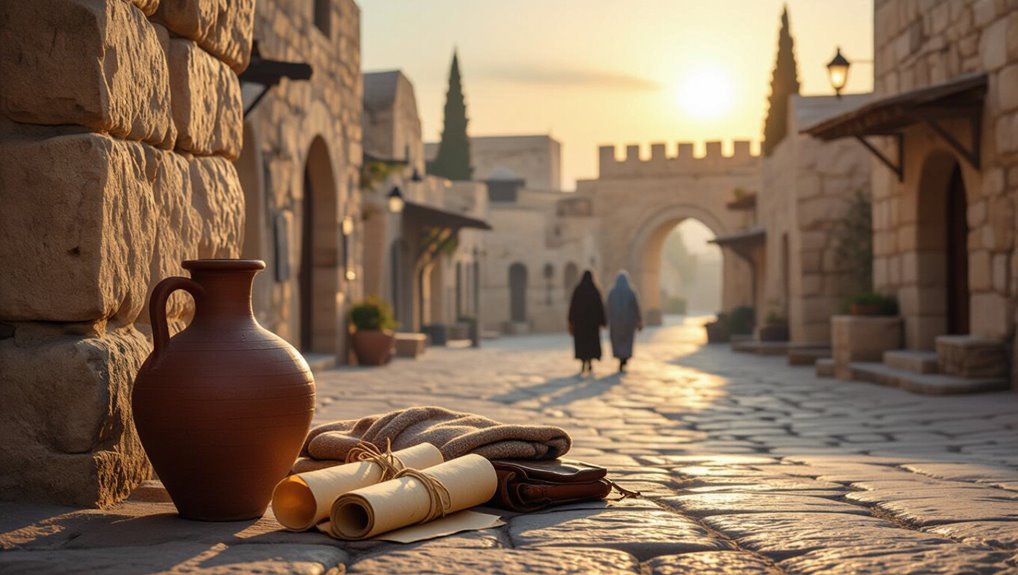
Although the Gospel of Luke says Mary and Joseph went to Bethlehem for a Roman census, historians look beyond that single explanation: they weigh archaeological evidence, Roman administrative practices, and early Christian motives to assess whether a census-based journey was plausible or whether theological, genealogical, or local factors played a larger role.
You’ll evaluate sources, compare probable travel routes, and consider how community memory shaped the narrative.
Quick Answer: Why Mary and Joseph Traveled to Bethlehem
Because the Gospel of Luke links their trip to a Roman census, the quickest answer is that Mary and Joseph went to Bethlehem to comply with that registration—though historians debate whether that alone explains the journey.
You should understand this as Luke’s explanation: a legal, administrative motive that fits his narrative and theological aims, but one historians scrutinize alongside other social, familial, and textual factors.
Which Ancient Sources Mention the Bethlehem Journey?
To move from Luke’s census explanation to the ancient evidence, look at the texts that actually mention or suggest the Bethlehem journey.
You’ll find Luke’s Gospel as primary, plus Matthew’s infancy narrative referencing Bethlehem prophecy.
Extra-biblical sources are sparse: some early Christian writers (e.g., Justin, Irenaeus) cite Gospel traditions, while Jewish and Roman records remain silent on this specific trip.
The Roman Census: What It Was and Why It Mattered
You should know the Roman census was a formal registration meant to record population and property for tax and military purposes.
That requirement meant families had to travel to their ancestral towns to be counted, which could force long journeys like Mary and Joseph’s.
Understanding that administrative motive helps explain why they went to Bethlehem when they did.
Roman Registration Purpose
When Rome ordered a registration, officials weren’t just ticking names off a list; they were asserting control—tracking populations, property, and taxes so provincial authorities could govern and extract revenue efficiently.
You’d see audits to allocate land, levy dues, and conscript manpower. The registry standardized obligations, confirmed legal status, and fed imperial records that made administration predictable and fiscal extraction systematic across diverse provinces.
Impact On Travel
Although the Roman census aimed at record-keeping and revenue, it directly reshaped movement across the provinces: people had to travel to their ancestral or registered towns to be counted, gather documents, and settle obligations, so routine rhythms of life—market days, festivals, and family visits—were rearranged around official timetables.
| Effect | Result |
|---|---|
| Forced travel | Increased crowds |
| Delays | Missed events |
| Documentation | Administrative burden |
How Luke Frames the Census Requirement
You’ll notice Luke sets the census within a Roman administrative framework, which helps explain why Joseph had to travel to Bethlehem.
He also shapes the episode to serve a theological purpose, linking Jesus’ birth to Davidic lineage and prophetic fulfillment.
Keep these dual aims in mind as you read Luke’s account.
Roman Census Context
Because Luke frames the census as the direct cause of Mary and Joseph’s journey, he links imperial administration to the fulfillment of prophecy and to ordinary people’s lives.
You should note that Luke portrays a sweeping, compulsory enrollment requiring travel to ancestral towns. This emphasizes Roman bureaucratic reach, local compliance pressures, and how imperial policies reshaped household movements and demographic records impacting everyday families.
Luke’s Narrative Purpose
When Luke presents the census as the immediate reason Mary and Joseph travel to Bethlehem, he’s doing more than reporting an administrative detail: he’s shaping readers’ understanding of how imperial policy intersects with divine purpose and ordinary lives.
You see the census as both plot device and theological claim, showing how God’s plan uses mundane structures; you’re invited to read history and salvation together.
Scholar Debates About the Historicity of the Census
While some scholars defend Luke’s mention of a census as historically plausible, many historians have raised sharp doubts about its accuracy and timing.
You’ll find debates over source reliability, chronological mismatches with known Roman records, and lack of corroborating Judean evidence.
You should weigh theological motive, editorial shaping, and limited external data when evaluating whether a census driven recruitment explains Mary and Joseph’s travel.
Roman Administrative Practices Around Censuses and Taxation
You should look at how Roman census procedures were designed to register people and property for taxation and military planning.
These counts reinforced provincial control by creating records that local administrators and Rome could use to assess and collect taxes.
Understanding those mechanisms helps explain why a census could require residents like Mary and Joseph to travel for registration.
Roman Census Procedures
Although the Roman state aimed to count and categorize every household, its census procedures balanced fiscal needs with local customs and political control. You’d register status, property, and family heads, obeying local officials who eased reporting. Records informed movement rules and legal identity.
| Item | Purpose |
|---|---|
| Registration | Population data |
| Records | Legal identity |
| Officials | Local mediation |
Taxation And Provincial Control
Because Rome tied censuses to revenue and control, taxation shaped provincial life and prompted the journeys, registrations, and legal adjustments you read about earlier.
You’d feel tax burdens shaping migration, property records, and local governance. Officials enforced levies, registered households, and adjusted boundaries to maximize income.
Families complied to avoid penalties, making movement to ancestral towns a practical, fiscal response rather than merely religious obligation.
Why the Roman Census Could Send Families to Bethlehem
If the Roman census required people to register in their ancestral towns, families like Joseph and Mary would’ve been obliged to travel to Bethlehem to record their names and property.
Roman administrative practice often tied taxation and legal status to local registrations, not just current residence. You’d expect officials to insist on birthplace-based enrollment, prompting temporary relocation so households complied with fiscal and legal demands.
Jewish Legal and Cultural Ties to Ancestral Homes
When Jews tied legal rights, inheritance, and religious duties to one’s ancestral town, people often felt compelled to return there for official matters; that cultural expectation helps explain why families like Joseph’s would travel to Bethlehem to affirm lineage, property claims, and communal belonging.
Tied to ancestral towns, families returned to affirm lineage, secure inheritance, and maintain communal and legal obligations.
You’d recognize practical reasons:
- Registering family status
- Claiming inherited land
- Fulfilling communal obligations
- Preserving legal records
Joseph’s Davidic Lineage and Its Narrative Purpose
Lineage matters: Joseph’s descent from David anchors the nativity within Jewish expectations and gives the narrative political and theological weight. You see how claiming Davidic roots frames Jesus as rightful heir, fulfills prophetic motifs, and persuades Jewish audiences of messianic legitimacy.
| David | Heir | Expectation |
|---|---|---|
| Prophecy | Kingship | Promise |
| Lineage | Legitimacy | Fulfillment |
Genealogies in Matthew and Luke: Key Differences
Although both Gospels trace Jesus’ ancestry to David, Matthew and Luke organize and present their genealogies very differently:
- Matthew follows Joseph’s line, emphasizing legal royal descent.
- Luke traces through Mary (traditionally), highlighting biological lineage.
- Matthew groups generations symbolically.
- Luke lists more names and goes back to Adam.
You’ll notice each serves distinct theological aims without identical sequencing.
How Genealogies Shaped Where Jesus Was Born
Because the genealogies in Matthew and Luke tie Jesus to David and Bethlehem, they steer the narrative toward that town and shape how readers understand his birthplace. You see lineage as a legal and theological claim, so traveling to David’s city validates messianic expectations and fulfills prophecy.
| Genealogy Focus | Narrative Effect |
|---|---|
| Matthew | Royal legitimacy |
| Luke | Davidic connection |
Bethlehem’s Religious Significance in Jewish Tradition
Tying Jesus to David and Bethlehem didn’t just make a legal or prophetic point; it also plugged him into a long-standing web of religious meanings that Bethlehem carried for Jews.
Tying Jesus to David and Bethlehem bound him to a rich tapestry of Jewish memory, honor, and ritual.
You’ll see local memory, ancestral honor, and cultic association reinforcing significance:
- Davidic legacy
- Ancestral burial links
- Ritual geography
- Communal identity reinforcement
The Prophecy of Micah and Its Influence on the Story
When you read Matthew’s birth narrative, Micah’s prophecy about a ruler from Bethlehem quietly frames the whole scene: the evangelist isn’t just reporting geography, he’s signaling that Jesus fulfills an expected, divinely sanctioned origin.
You see Matthew shaping details—names, travel, timing—to connect Jesus to Micah’s promise, so readers perceive the birth as fulfillment rather than coincidence or mere local happenstance.
How Early Christians Used Bethlehem to Claim Messiahship
You’ll notice early Christians pointed to Jesus’ Bethlehem birth to tie him to David through genealogies presented in the Gospels.
They also argued that being born in Bethlehem fulfilled Micah’s prophecy, reinforcing his claim to messiahship.
Together those genealogical links and prophetic fulfillment claims made a concise case for Jesus’ royal and prophetic credentials.
Genealogical Proofs Tied To David
Because Bethlehem was David’s hometown, early Christians seized its significance to argue that Jesus fulfilled messianic prophecy: they traced his lineage back to David in Matthew and Luke, highlighted prophetic texts like Micah 5:2, and presented the Bethlehem birth as a legal and theological link proving Jesus’ rightful claim to David’s throne.
- Genealogies in Matthew
- Luke’s lineage
- Legal inheritance claims
- Davidic hometown symbolism
Prophetic Fulfillment Claims
Though Bethlehem’s mention could’ve been dismissed as a minor detail, early Christians loudly framed it as a decisive fulfillment of prophecy: they pointed to Micah 5:2 and related texts, tied Jesus’ birth there to messianic expectation, and argued that the town’s Davidic associations confirmed his right to David’s throne.
You then see them use scripture, sermon, and tradition to legitimize Jesus as Israel’s promised ruler.
How Travel Worked in the Ancient Near East
If you’ve ever wondered what travel looked like in the ancient Near East, picture slow, deliberate journeys shaped by terrain, seasons, and the limits of animals and people: roads were rough, distances were measured in days, and planning—food, water, shelter—made or broke a trip.
You’d rely on:
- caravans for safety
- pack animals for cargo
- inns and villages for rest
- seasonal timing to avoid hazards
Distance and Routes From Nazareth to Bethlehem
It’s about 70–90 miles (110–145 km) from Nazareth to Bethlehem depending on the route you took, a journey that would take most travelers several days on foot or a couple of days with animals.
You’d pick coastal, inland, or ridge roads, balancing terrain, water sources, and safety.
Pilgrims often followed established caravan tracks linking villages and market towns.
Typical Travel Times and Modes for a Rural Couple
You’d expect the journey from Nazareth to Bethlehem to take several days on foot, with typical travel durations ranging from two to five days depending on pace and stops.
Most rural couples would travel by walking, sometimes joining caravans or hiring a donkey for part of the route to ease the load.
We’ll now consider how terrain, weather, and customs would shape those choices.
Likely Travel Duration
While sources vary, a realistic estimate is that a rural couple like Mary and Joseph traveling on foot and with a donkey could cover about 15–25 miles a day under good conditions.
This makes the roughly 70–90 mile journey from Nazareth to Bethlehem take around 3–6 days. Factors such as terrain, weather, the health of the animals, and need for rest would push many travelers toward the longer end of that range.
- Terrain
- Weather
- Animal health
- Rest stops
Common Travel Methods
Most couples traveling from Nazareth to Bethlehem went on foot, sometimes leading a donkey for loads or for a pregnant woman to ride.
They’d plan for several days on the road depending on pace and conditions. You’d walk steady 10–20 miles daily, rest at villages or caravanserais, and use donkeys for luggage or comfort.
Weather, terrain, and safety shaped your pace.
Accommodation Options in Small Towns Like Bethlehem
When visiting a small town like Bethlehem, you’ll find lodging choices that blend modesty with local character: family-run guesthouses, modest inns near the market, and a few boutique hotels clustered by the historic center.
In small-town Bethlehem, lodging ranges from family-run guesthouses and market inns to cozy boutique hotels near the historic center.
You’ll choose based on budget, proximity, atmosphere, and local hospitality.
Consider:
- Guesthouses
- Market inns
- Boutique hotels
- Short-term rentals
What “No Room at the Inn” Likely Meant
You won’t find evidence that every Bethlehem house turned away travelers; instead, “no room at the inn” likely means there was no separate guestroom available.
Households often used their main living space for family and animals, so visiting relatives might sleep in the courtyard or stable area.
Understanding local hospitality customs helps explain why Mary and Joseph ended up in an unusual corner of the home.
No Guestroom Available
Although the familiar phrase “no room at the inn” paints a single dramatic image, the original Greek and first-century context suggest a more mundane shortage of guest quarters — likely an overflowed house where Joseph and Mary were offered the lower, more sanitary space reserved for animals.
You’ll see practical reasons:
- Limited guest rooms
- Family housing norms
- Seasonal influx
- Priority for elders and relatives
Household Space Used
1 household often filled Bethlehem homes to capacity during a census, and that helps explain what the Gospel writers meant by “no room at the inn.”
You should picture families and relatives packed into one dwelling; available rooms were already claimed for kin.
You’d likely be offered a stable or lower-level space where births commonly occurred, not a separate guestroom.
Cultural Hospitality Norms
Packed homes help explain the literal lack of guestrooms, but the phrase “no room at the inn” also reflects local hospitality customs that shaped where strangers were received.
You’ll see how hosts prioritized kin, religious obligations, and purity rules, so travelers often ended up in courtyards or stables.
Consider these factors:
- Kin first
- Ritual purity
- Host reputation
- Limited resources
Social Status of Joseph and Mary and Its Travel Implications
Because Joseph and Mary belonged to an ordinary working family rather than the elite, their standing shaped what the trip to Bethlehem actually looked like: they traveled without fanfare, relied on communal ties and local accommodations, and faced legal and logistical pressures that wealthier travelers could usually avoid.
You imagine them moving modestly, carrying essentials, seeking help from kin, accepting rough lodgings, and managing limited resources.
Census Obligation vs. Voluntary Pilgrimage
Knowing they weren’t wealthy helps explain not just how they traveled but why they went when and where they did:
the Gospel accounts frame the journey as prompted by a Roman census that required Joseph to register in his ancestral town.
But scholars and tradition have long debated whether the trip was a legal obligation, a voluntary pilgrimage tied to Jewish practice, or some mix of both.
- Legal census duty
- Religious pilgrimage
- Familial obligation
- Hybrid motive
How Pregnancy Timing Aligns With the Journey
If Mary was only a few weeks pregnant when Joseph set out, the trip to Bethlehem would have been manageable on foot; if she was farther along, the same journey becomes harder to reconcile with the Gospel timeline and their likely impoverished status. You weigh distance, posture, and stamina against timing.
| Factor | Implication |
|---|---|
| Weeks pregnant | Travel ease |
| Distance | Fatigue risk |
| Support | Need for help |
| Timing | Birth proximity |
| Resources | Travel method |
Seasonal Factors That Would Affect Travel to Bethlehem
When you factor in the season, travel to Bethlehem would change in concrete ways: winter rains could turn dirt roads to mud and slow foot travel, summer heat would sap energy and increase thirst, and harvest time would raise both the volume of travelers and the availability of food and lodging.
When seasons shift, travel to Bethlehem changes: muddy winter roads, blistering summer heat, crowded harvest inns.
- Rain: muddy roads
- Heat: dehydration risk
- Harvest: crowded inns
- Cold: harder nights
Security and Safety Concerns on the Road to Bethlehem
Seasonal conditions shaped not just comfort but vulnerability on the road to Bethlehem: muddy tracks and nighttime cold made travelers slower and easier to target. You’d watch for bandits, avoid isolated stretches, and travel with companions when possible. Guards were scarce; local knowledge mattered.
| Threat | Time | Precaution |
|---|---|---|
| Bandits | Night | Travel groups |
| Exposure | Winter | Layered clothing |
| Wild animals | Dawn | Fires, noise |
Economic Costs of the Journey and Its Burdens
Because travel meant real expense—paid fares, food, and occasional bribes—you’d quickly feel the journey’s strain on a household already stretched thin.
Because travel demanded real expense—fares, food, even bribes—the journey quickly strained an already stretched household budget.
You’d tally costs, ration supplies, and skip comforts to reach Bethlehem.
Consider immediate burdens:
- Fare for animals or cart
- Food and water purchases
- Loss of work income
- Emergency payments or lodging
Family Networks and Hospitality Practices in Judea
You’ll see that kinship obligations shaped travel choices, as families were expected to support relatives on the road.
Hospitality customs meant hosts provided food, shelter, and protection to travelers, often as a social duty.
These reciprocal aid networks made moving between towns more feasible and tied journeys like Mary and Joseph’s to communal expectations.
Kinship Obligations
Although kinship ties bound Judean families tightly, they also created clear obligations that shaped travel, lodging, and hospitality; you’d expect relatives to host kin, care for their needs, and settle disputes when people moved between villages.
You rely on family for support, so remember core duties:
- Provide shelter
- Share food
- Offer labor
- Mediate conflicts
Guest-Hosting Customs
When relatives or neighbors arrived, hosts treated them as obligations and honors: they offered food, a place to sleep, and the standing of family rather than strangers.
You’d welcome guests into your courtyard, share bread and oil, and provide a mat or corner for sleep.
Hospitality affirmed social bonds, protected travelers, and reinforced your household’s reputation and moral duty within the community.
Reciprocal Aid Networks
Guest-hosting customs flowed from and reinforced wider networks of reciprocal aid, so hospitality wasn’t just about a single meal or a spare mat but about long-standing obligations between kin and neighbors.
You relied on kin, patrons, and village ties when traveling.
Consider key elements:
- kinship support
- mutual labor exchange
- resource sharing
- ritual hospitality obligations
Local Reactions in Bethlehem to Arriving Relatives
Because Bethlehem was small and word traveled fast, neighbors and relatives who’d stayed behind stirred with a mix of curiosity, hospitality, and practical concern when they heard that Mary and Joseph had come into town.
You’d see offers of shelter, questions about their journey, and discreet preparations for the newborn. Guests balanced celebration with scarce resources, sharing food, space, and local knowledge to help them settle.
How Roman Law Intersected With Jewish Registration Customs
Although Roman authorities imposed census procedures for taxation and control, they often adapted enforcement to local practices, so Jewish registration customs could continue under imperial oversight.
You navigate overlapping systems: Roman census, local tax collection, tribal or family registers, and temple records.
Consider how each authority recorded identity, residence, obligations, and exemptions.
- Roman census
- Local officials
- Family rolls
- Temple records
Alternative Explanations Historians Propose for the Trip
You can consider two main alternatives historians offer: a political-census theory that frames the trip as part of Rome’s administrative registration and a familial-relocation theory that sees the move as returning to ancestral property in Bethlehem.
Each explanation highlights different motives and evidence—legal records, gospel wording, and local ties.
As you read on, weigh which explanation fits the sources and context most plausibly.
Political Census Theory
When scholars talk about the “political census” theory, they suggest Roman administrative motives — not a Bethlehem birth decree — drove Joseph and Mary to travel, arguing the census served taxation and control objectives across Judea.
You’d view their journey as bureaucratic compliance, enforced movement, and census registration.
- Taxation
- Population control
- Legal residence
- Military oversight
Familial Relocation Theory
If family ties pulled Joseph and Mary toward Bethlehem, historians suggest motives rooted in kinship obligations and household continuity rather than imperial edict.
You’d see moves to join relatives, secure inheritance or property, and maintain communal support for a growing household.
This view treats their journey as pragmatic: a return to family networks and resources that sustained lineage, labor, and social standing in a precarious setting.
Why Matthew Emphasizes Herod and Bethlehem’s Politics
Though Matthew’s infancy narrative centers on divine signs and fulfillment of prophecy, he deliberately foregrounds Herod’s violent politics and Bethlehem’s civic status to show that Jesus’ birth provoked imperial anxiety and fulfilled royal expectations.
You see political stakes: the magi threaten Herod, local identity matters, and Rome’s order is challenged.
- Threat to Herod
- Bethlehem’s royal link
- Civic identity
- Imperial anxiety
Differences in Audience and Purpose Between Matthew and Luke
Because Matthew writes for a community steeped in Jewish Scripture and concerned with Messiahship, he frames events to show Jesus as the fulfillment of Israel’s hopes.
In contrast, Luke, addressing a broader, more Hellenistic audience, highlights social inclusion and universal salvation—so you read two distinct theological agendas reflected in which details each evangelist selects and emphasizes.
You’ll notice Matthew cites prophecy and lineage; Luke emphasizes birth narratives and marginalized witnesses.
How the Birth Narrative Served Early Christian Apologetics
When early Christians argued for Jesus’ identity and mission, they leaned on the birth narratives as strategic proof points that addressed both Jewish and Gentile skeptics; you use those stories to show fulfillment, divine signs, and universal relevance.
They serve apologetics by:
- Claiming prophetic fulfillment
- Displaying divine intervention
- Framing moral authority
- Inviting Gentile inclusion
Archaeological Evidence for Bethlehem in the First Century
Having used the birth narratives to argue Jesus’ significance, scholars and skeptics next look to material remains to ask whether Bethlehem in the first century fits those accounts.
You examine excavation reports, ancient inscriptions, and settlement surveys showing a small Judean village near Jerusalem.
Evidence is limited but consistent: modest habitation, tombs, and agricultural terraces support the plausibility of a tiny hometown referenced in texts.
What Archaeological Finds Tell Us About Living Conditions
You’ll see that cave dwellings and simple shelters shaped how families lived and moved around Bethlehem.
Pottery shards and everyday tools reveal what people cooked, stored, and traded.
Traces of water systems and storage jars show how they managed scarce water and planned for seasons.
Cave Dwellings And Shelters
Archaeologists have uncovered dozens of cave dwellings and simple shelters around Bethlehem that reveal how families lived, sheltered livestock, and stored food.
You can imagine narrow rooms carved into rock, shared spaces for people and animals, and built lean-tos. These finds show practical adaptations:
- Multi-use rooms
- Stone benches and niches
- Fenced animal areas
- Elevated storage platforms
Pottery And Everyday Tools
Pottery and simple tools tell you more about daily life in Bethlehem than grand monuments do: You handle coarse bowls, cooking pots, oil lamps and spindle whorls in your imagination; they show household routines, diet, and craft skills.
Iron chisels, sickle fragments and leather-working awls reveal occupations and resourcefulness.
These finds let you reconstruct modest, hardworking lives without relying on elite architecture.
Water Systems And Storage
Those bowls and oil lamps point to daily routines, but water shaped how those routines happened. You see cisterns carved into rock, ceramic jars for storage, and channels for collection.
Archaeology shows you relied on stored rainwater. Consider essentials:
- Cisterns
- Jars
- Channels
- Wells
These finds tell you water dictated household layout, work, and survival.
How Census Practices Changed in Later Roman Provinces
As Roman administration extended into diverse provinces, census procedures adapted to local realities and imperial priorities.
You’ll see shifts: registration cycles varied, local elites collected data under imperial oversight, and tax assessments combined imperial aims with customary exemptions.
Mobility, war, and urbanization forced pragmatic record adjustments.
These changes made censuses more flexible, often relying on provincial practices while preserving central fiscal and military control.
Roman Record‑Keeping and the Bethlehem Claim
Because Roman record‑keeping aimed to serve taxation, conscription, and legal order, you’ll want to scrutinize which documents could support a Bethlehem registration claim and which couldn’t.
You should weigh surviving inscriptions, provincial tax rolls, military lists, local civic records, and gaps in the archives.
Consider reliability, intent, and preservation.
- Inscriptions
- Tax rolls
- Military lists
- Civic records
How Modern Historians Estimate Population Movements Then
To estimate how people moved in and around Judea, you look at archaeological evidence trends like settlement patterns and road usage.
You also compare what ancient census methods actually recorded with the demographic claims later writers made.
Finally, you use migration modeling techniques to test which scenarios fit the physical and textual data.
Archaeological Evidence Trends
When archaeologists map pottery shards, building remains, and road networks across Judea, they piece together how people moved for work, worship, and taxation.
You’ll use material traces, settlement density, and travel routes to infer movements.
Key indicators:
- Pottery distribution
- Road and caravan markers
- Urban-rural site counts
- Seasonal occupation layers
Ancient Census Methods
Although ancient rulers rarely kept records like modern censuses, historians have developed methods to estimate how populations moved and registered for taxes or levy.
You can trace those movements through indirect evidence. You analyze tax lists, land surveys, tithe receipts, settlement sizes, burial counts, and legal documents, then cross-check archaeological layers and literary references to infer registration patterns and travel motivations.
Migration Modeling Techniques
Because direct counts are rare, modern historians build migration models by combining fragments of evidence and testing hypotheses against archaeological and documentary data.
You’ll weigh travel costs, seasonal constraints, kin networks, and political pressures to simulate movement.
Use models to compare scenarios and refine parameters with new finds.
- travel cost
- seasonality
- kinship links
- state policy
Common Myths and Misconceptions About the Bethlehem Journey
How much of what you’ve heard about Mary and Joseph’s trip to Bethlehem comes from tradition rather than the historical and textual evidence?
You should question claims: that they traveled willingly for romance, that angels orchestrated logistics, or that every detail in later lore reflects eyewitness fact.
Check sources, distinguish legend from probable circumstance, and avoid treating devotional storytelling as strict history.
Likely Theological Additions Versus Verifiable Historical Details
When you separate the Gospel narratives’ theological aims from their historical claims, a clearer picture emerges: details like the census fulfilling prophecy or the virginal birth’s theological framing served doctrinal purposes, while basic facts—Mary and Joseph’s residence in Nazareth, their documented lineage and legal status, and the Roman practice of censuses—offer firmer historical footing.
- Prophetic framing
- Theological motifs
- Administrative records
- Social context
How the Journey Shaped Later Christian Liturgy and Tradition
As you consider the trip to Bethlehem, notice how it helped fix key dates on the liturgical calendar like Advent and Christmas.
You can also trace how the story inspired early pilgrimage routes and commemorative practices at holy sites.
These liturgical and devotional echoes show how a brief journey became a lasting rhythm in Christian worship.
Liturgical Calendar Influence
Because the journey to Bethlehem became the hinge for Christian seasonal observance, it shaped how the Church marks time and tells the Nativity story each year.
You see Advent, Christmas, Epiphany rhythms tied to that trip, and liturgies reinforce its meaning through readings, hymns, and feasts.
- Advent anticipation
- Christmas celebration
- Feast of the Nativity
- Epiphany revelation
Pilgrimage Practices Origins
The liturgical rhythms rooted in Mary and Joseph’s trip also gave rise to concrete pilgrimage practices that shaped how Christians moved through sacred time and space.
You follow processions, shrine visits, and commemorative routes that echo that journey. By reenacting travel, you embody salvation history, mark holy seasons, and join communal memory.
These practices codified liturgy, pilgrimage routes, and devotional genres across centuries.
Pilgrimage Traditions Linking Nazareth, Bethlehem, and Jerusalem
When you follow the routes that linked Nazareth, Bethlehem, and Jerusalem, you’ll see how centuries of pilgrimage shaped both landscape and faith; narrow roads, hilltop chapels, and waystations traced journeys of devotion that connected daily life to sacred memory.
Following ancient routes between Nazareth, Bethlehem, and Jerusalem, pilgrimage carved roads, chapels, and memory into the land.
You’re drawn to relic shrines and seasonal processions that renew communal identity:
- Waystations marking stops
- Chapel-built vistas
- Processional calendars
- Relic veneration rituals
How Artists and Storytellers Have Filled Gaps in the Narrative
You’ve probably noticed how artists have added details to the bare Gospel accounts, changing costumes, settings, and emotions over centuries.
Those visual choices shaped nativity scenes and theatrical pageants that make the journey feel tangible.
Songs and hymns then filled narrative gaps further, giving voice and backstory to figures who barely speak in the texts.
Artistic Embellishments Over Time
Though the gospel account is sparse, artists and storytellers have long stepped into its silences, inventing scenes and details that make the journey vivid for audiences—mangers, guiding stars, crowded inns, and tired donkeys all fill gaps the texts leave open.
You’ll notice evolving emphases:
- pastoral calm
- royal symbolism
- domestic intimacy
- dramatic hardship
These choices shape how you imagine their pilgrimage.
Nativity Scene Innovations
The scenes artists and storytellers invented to fill the gospel’s silences didn’t stop at broad themes like pastoral calm or royal symbolism; they also shaped the very objects and arrangements we now call nativity scenes.
You trace creative choices—who appears, which animals, stable design, gifts’ placement—and see how craftsmen, theater makers, and folk traditions standardized gestures and props that guide viewers’ understanding and devotion.
Narrative Filling Through Music
Music has long stepped into the gospel’s silences, shaping scenes and motives when words fall short; when composers and carolers set the journey to melody, they supply missing emotions, timelines, and character detail that listeners accept as part of the story.
You hear and imagine details added by song:
- urgency
- tenderness
- travel scenes
- divine reassurance
Practical Takeaways for Readers Curious About Historical Context
If you’re curious about the historical context, start by separating what sources can reliably tell us from later theological interpretation. Focus on primary texts, archaeological findings, and Roman administrative records. Cross-check translations and avoid assuming later traditions reflect first-century realities.
| Source type | Usefulness | Caveat |
|---|---|---|
| Gospels | Moderate | Theological aims |
| Inscriptions | High | Sparse |
| Archaeology | High | Interpretive |
| Rome records | Moderate | Incomplete |
Questions Historians Still Can’t Agree On About the Trip
Why do scholars still argue about Mary and Joseph’s trip to Bethlehem? You’ll find debates over timing, census motive, route taken, and historicity.
Consider four unresolved issues that shape interpretations:
Consider four unresolved issues that shape interpretations of Mary and Joseph’s Bethlehem journey.
- Exact dating of the event.
- Purpose and scope of the census.
- Whether they traveled from Nazareth or nearby.
- Reliability of gospel accounts versus external records.
Suggested Further Reading for Deeper Historical Study
To dig deeper into the historical debates around Mary and Joseph’s trip to Bethlehem, consult a mix of primary sources, scholarly monographs, and critical commentaries that address dating, Roman administrative practices, and Gospel historiography.
Start with Luke and Josephus, then read modern works by E. P. Sanders, Richard A. Burridge, and John P. Meier.
Use journal articles for focused debates and bibliographies to expand.
How This Explanation Changes the Traditional Christmas Story
Although this historical explanation doesn’t aim to erase the familiar Nativity narrative, it does ask you to see Mary and Joseph’s journey less as a divinely orchestrated pilgrimage and more as a product of Roman administration, local demographics, and social realities; that shift reframes the story’s emphasis from miraculous timing to the everyday pressures that shaped their choices and the context in which Jesus was born.
- Human agency
- Political context
- Economic forces
- Communal networks
Ways to Explore the Bethlehem Story Today (Sites and Resources)
If you want to explore the Bethlehem story today, you can do it several ways—visiting archaeological sites and churches, consulting accessible scholarly work, and engaging with local guides and community traditions that keep the history alive. You can tour the Church of the Nativity, visit Herodian ruins, read concise guides, join walking tours, and speak with local historians.
| Site/Resource | What to expect |
|---|---|
| Church of the Nativity | Historic shrine |
| Archaeological sites | Ruins, artifacts |
| Local guides | Context and stories |
| Museums | Exhibits, panels |
| Scholarly guides | Accessible analysis |
Frequently Asked Questions
Did Mary and Joseph Travel Together or Separately to Bethlehem?
They traveled together to Bethlehem, with Joseph leading and Mary accompanying, though Luke emphasizes Mary’s presence while riding and Joseph walking beside her; you’ll picture them making the journey as a united couple despite the hardship.
Where Did Mary Give Birth En Route Versus Upon Arrival in Bethlehem?
You’d find most traditions say Mary gave birth upon arrival in Bethlehem, in a stable or manger; some apocryphal accounts claim she delivered en route, but canonical Gospel narratives place the birth after they reached the town.
Were Midwives or Local Women Present at Jesus’ Birth?
Yes, you’ll find tradition saying local women or midwives helped; the Gospels don’t name them, but apocryphal accounts and later Christian tradition depict midwives assisting Mary during Jesus’ birth, supporting a communal birth scene.
How Soon After Jesus’ Birth Did the Family Leave Bethlehem?
They left within about two months to forty days, depending on the Gospel and tradition; you’ll see Luke’s forty-day purification timing and Matthew’s later flight to Egypt, so sources give slightly different intervals.
Did Joseph Register Both His Wife and Unborn Child for the Census?
No, you shouldn’t assume Joseph registered both; Roman census practices typically required the household head to register. He’d likely register his household, which would include Mary, but unborn children weren’t separately listed as individuals.
Conclusion
In short, you’ll find that historians sift sources, Roman records, and Luke’s storytelling to explain why Mary and Joseph went to Bethlehem, but they don’t all agree. You can accept the census explanation, see it as theological framing, or hold a mix of both. Keep exploring primary texts and archaeological studies to form your own view. Whatever you conclude, the Bethlehem journey still shapes how people today remember and reimagine the Christmas story.