Which Airline Allows the Largest Carry on Comparison Guide
You’ll usually find the largest carry‑on allowances on international premium carriers like Emirates, Qatar and some Asia‑Pacific airlines, which often allow bigger dimensions and higher weight than U.S. or low‑cost carriers. Typical economy cabin limits hover around 55 x 40 x 20 cm and 8–12 kg, while premium cabins and elite flyers get more. Enforcement varies by airline and flight, so check specific policies to avoid gate surprises — keep going and you’ll get the full comparison and packing tips.
Quick Answer : Biggest Carry-On Allowances
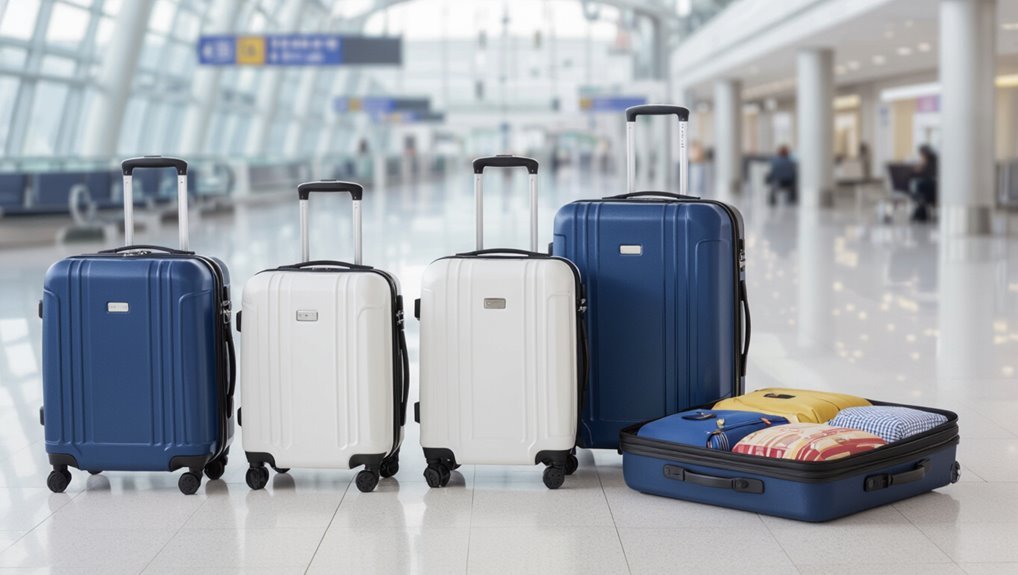
If you want the biggest carry-on allowance, look to international and premium carriers: airlines like Emirates, Qatar Airways, Singapore Airlines and many European flag carriers let you bring larger or heavier bags—often around 55 x 40 x 20 cm and up to 8–12 kg for economy, with higher limits in premium cabins or elite status.
You’ll often get extra weight or an additional personal item; always verify your ticket.
How to Compare Carry-Ons: Dimensions vs. Volume
Wondering whether dimensions or volume matter more when choosing a carry-on? You should check dimensions first—airlines gate-check by length, width, and height.
But consider volume for packing efficiency: two bags with the same external size can hold different amounts due to shape and internal pockets.
Measure external dimensions against airline limits, then compare liters to know how much you’ll actually fit.
How Rules Differ: U.S., Europe, and Asia
When you compare carry-on rules across the U.S., Europe, and Asia, you’ll see different size and weight limits that can catch you off guard.
U.S. carriers often focus on dimensions while many Asian airlines enforce strict weight caps, and European rules can sit somewhere in between.
Check each airline’s regional policy before you pack so you’re not surprised at the gate.
Size And Weight Limits
Airlines across the U.S., Europe, and Asia set very different carry-on size and weight rules, so you’ll want to check each carrier before packing.
You’ll find variable limits, enforcement, and fees that affect your choices:
- U.S.: larger dimensions common, weight often unregulated on main cabins.
- Europe: stricter dimensions, frequent weight caps.
- Asia: mixed rules, some strict weight enforcement on low-cost carriers.
Regional Policy Differences
Now that you know how size and weight limits vary, look at how regional policies shape those rules: carriers in the U.S., Europe, and Asia each take different approaches to dimensions, weight enforcement, and fees.
Top 10 Airlines: Biggest Carry-On Sizes
Picking the right carrier can make or break your packing plan, so here’s a quick look at the ten major airlines that allow the largest carry-on dimensions—handy if you want to maximize what you bring onboard without checking a bag.
You’ll prioritize space, weight, and fit; compare top carriers to suit your needs.
- Maximize volume
- Avoid fees
- Streamline boarding
U.S. Carriers: Exact Carry-On Limits
You’ll want to check each U.S. carrier’s exact size allowances to make sure your bag meets their requirements.
Also note weight limits and how many personal items or bags each airline lets you bring.
I’ll compare the specific dimensions, weight caps, and item rules so you can pack confidently.
Exact Size Allowances
Some travelers assume all U.S. airlines follow the same carry-on dimensions, but each carrier sets its own exact limits and enforces them at the gate.
You should measure and confirm dimensions before travel to avoid gate checks. Check official airline pages, note differences for international connections, and pack to the smallest common denominator.
- Measure your bag precisely
- Verify airline policy before booking
- Pack collapsible items where possible
Weight And Item Limits
Unlike size rules, carry-on weight limits vary widely across U.S. carriers—and they can determine whether your bag flies with you or gets gate-checked.
You should check each airline: some set specific pound/kilogram caps, others have no official weight limit but expect you to lift bags into overhead bins unassisted.
Also note permitted personal items, item counts, and enforcement policies per carrier.
Major European Airlines: Carry-On Rules
Across major European airlines, carry-on allowances and rules vary enough that planning ahead saves time and stress. Most carriers let you bring one cabin bag plus a smaller personal item, but size, weight limits, and gate-check policies differ by airline and fare class. You should check specifics before travel.
- Confirm size and weight caps.
- Note fare-class exemptions.
- Expect stricter low-cost rules.
Asia-Pacific Carriers: Carry-On Allowances
When you fly Asia-Pacific carriers, you’ll notice they often allow some of the largest carry-on dimensions among major airlines.
Watch for wide variation in weight limits—some airlines emphasize size while others cap by kilograms.
Compare both measurements before you pack so you won’t be surprised at the gate.
Largest Size Allowances
If you’re packing for a trip in the Asia-Pacific region, knowing each carrier’s maximum carry-on dimensions saves time and surprises at the gate; some airlines allow slightly larger bags, while budget and regional carriers often enforce stricter limits.
You should:
- Compare linear dimensions to guarantee overhead-fit.
- Prioritize expandable bags if allowed.
- Check airline policies before booking to avoid gate fees.
Weight Limits Variance
Because carriers in the Asia-Pacific region set widely different carry-on weight limits, you should verify each airline’s allowance before packing to avoid last-minute repacking or fees.
Airlines may cap carry-on weight from 7kg to 15kg, or combine size and weight rules. Check your ticket and airline website, weigh your bag, and redistribute items to stay compliant and avoid extra charges.
Budget Carriers: Tight Carry-Ons & Hidden Fees
Although budget airlines promise low fares, you’ll quickly notice they squeeze carry-on dimensions and tack on fees that make packing—and paying—tricky.
You’ll need strategy: choose items, measure precisely, and expect surprises.
Consider these tips:
- Pack versatile clothing to reduce volume
- Use a soft-sided bag to compress into overhead limits
- Prepay baggage online to avoid higher airport charges
How Strictly Gates Enforce Carry-Ons
You’ll notice gate agents vary a lot in how strictly they check carry-ons—some measure every bag while others only act when overhead bins fill.
Policies differ by airline and even by route, so what’s allowed on one carrier might get tagged at another.
Keep copies of size rules handy and be ready to gate-check if needed.
Gate Agents’ Enforcement Practices
When you approach the gate, agents decide quickly how strictly to enforce carry-on rules based on aircraft size, load factor, and airline policy, so expect variability from one flight to the next.
You’ll notice patterns and can adjust accordingly:
- Firm checks when overhead bins are scarce
- Leniency on less crowded flights
- Quick decisions during tight boarding windows
Airline Policy Variations
Patterns at the gate give you clues, but the formal rules behind those actions vary widely by airline.
You’ll find strict carriers that measure and gate-check bags routinely, flexible ones that mostly warn, and spot-checkers who enforce randomly.
Loyalty status, aircraft type, and load factor change outcomes.
Always check your carrier’s published dimensions and verbal policies before you pack to avoid surprises.
Cabin Bag Weight Limits and Practical Impact
Most airlines set cabin bag weight limits between 7 kg and 10 kg, and those numbers can materially change how you pack and what you bring onboard.
You’ll need to prioritize essentials, weigh strategically, and avoid surprises at the gate.
- Choose lightweight fabrics and versatile items.
- Use a compact digital scale before leaving.
- Pack heavier items in checked bags when possible.
Exceptions: Personal Items, Family Boarding & Premium Cabins
Weight rules aren’t the whole story: airlines often make exceptions for a personal item, family boarding, or passengers in premium cabins.
Those allowances can give you useful packing flexibility. Check each carrier’s definition of “personal item” and whether families board early.
If you fly premium, you’ll usually get larger or additional bags. Always confirm policies before packing to avoid surprises at the gate.
Measuring vs. Eyeballing Carry-On Enforcement: Traveler Reports
When you board, you’ll notice enforcement varies wildly—some gate agents pull out a tape measure while others just eyeball bags and make snap calls, and travelers’ reports show that your chance of being flagged often depends more on the agent and airport than the published dimensions.
You’ll want to:
- always test-fit luggage before arrival
- pack to discreetly compress expandable pockets
- expect inconsistency and plan backup options
Best Practical Carry-Ons for the Largest Allowances
If you want the biggest carry-on allowance without sacrificing practicality, pick bags that hit the maximums airlines list while staying sturdy, lightweight, and easy to stow.
Choose rigid or semi-rigid shells with reinforced corners, smooth spinner wheels, and telescoping handles.
Look for external pockets for quick access, compression-friendly interiors, and clear size specs so you won’t risk gate check surprises.
Packing Hacks to Maximize Allowable Space
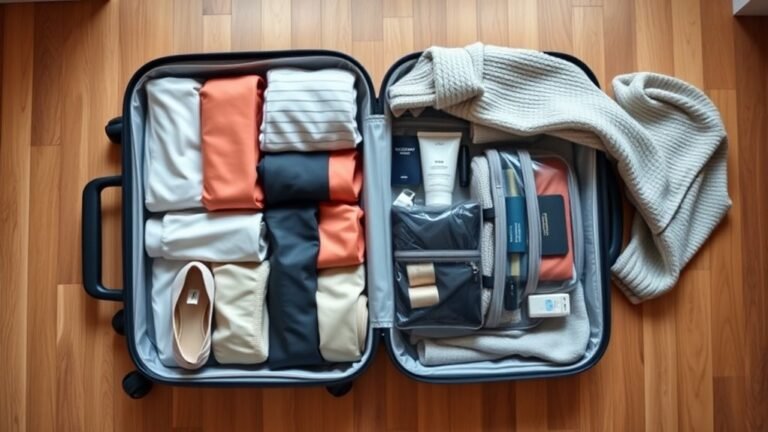
While you might think stuffing every nook will maximize space, smart packing is about structure and strategy—use packing cubes to compress clothes, roll softer items to save volume, and place heavier pieces along the suitcase spine to stabilize weight.
Smart packing beats stuffing—use cubes, roll soft items, and place heavy pieces along the suitcase spine.
You’ll fit more and stay organized.
- Prioritize versatile pieces
- Fill gaps with socks/chargers
- Keep toiletries minimal and leak-proof
Quick Checklist: Choose Airline & Bag for Stress-Free Boarding
Want a smoother boarding experience? Pick an airline with generous carry-on size and clear gate policies, then choose a bag that meets dimensions, fits under a seat, and has organized compartments.
Weigh it and test-fit pockets for essentials. Pack light, keep liquids accessible, and use a luggage tag.
Arrive early to avoid gate conflicts and board calmly.
Frequently Asked Questions
Can Carry-On Policies Change Mid-Booking or After Purchase?
Yes — airlines can change carry-on policies during booking or after purchase; you’ll usually be bound by the policy in effect when you fly, but fare rules, notifications, or refunds might apply if changes occur.
Do International Partner Flights Follow the Operating Carrier’s Carry-On Rules?
Yes — you’ll follow the operating carrier’s carry-on rules on partner flights, since the airline operating the flight sets size, weight, and allowance. Check both carriers’ policies before travel to avoid surprises at boarding.
How Do Carry-On Rules Apply to Code-Share Flight Segments?
You follow the operating carrier’s carry-on rules for code-share segments, so check the airline actually operating each flight; if you booked through a partner, your ticketing carrier’s policies won’t override the operator’s baggage limits.
Are Medical Devices and Supplies Exempt From Carry-On Size Limits?
Yes — you’re generally exempt: airlines and TSA let essential medical devices and supplies go beyond carry-on size limits, but you’ll need to screen them, declare items at security, and follow airline-specific rules and documentation requests.
Will Oversized Personal Items Be Gate-Checked for Free or Charged?
It depends on the airline and ticket type, but generally you’ll be charged for oversized personal items unless the carrier or gate agent offers complimentary gate-checking; elite status, disability, or family boarding can sometimes avoid fees.
Conclusion
Want the biggest carry-on? Pick airlines that list generous linear or volume limits—often U.S. budget and some international carriers—and choose soft-sided bags that squeeze into sizers. Measure carefully, know regional rule differences, and read enforcement reports before you fly. Use packing cubes, roll clothes, and stash bulky items on board. With the right airline, bag, and prep, you’ll breeze through boarding and avoid checked-bag fees and last-minute gate battles.