
What to Pack in Carry on Luggage
Pack essentials you’ll need if luggage is delayed or during the flight: ID, passport, boarding pass, prescriptions, a change of clothes, phone and chargers, power bank, headphones, snacks, refillable water bottle, hygiene items, and a small first-aid kit. Bring valuables, travel documents, and temperature‑sensitive meds in your carry‑on, plus a sleep kit and entertainment. Pack smart with compression cubes and accessible pouches so security and layovers stay simple — keep going to learn practical packing tips.
How to Pack Smarter for Carry‑On Trips
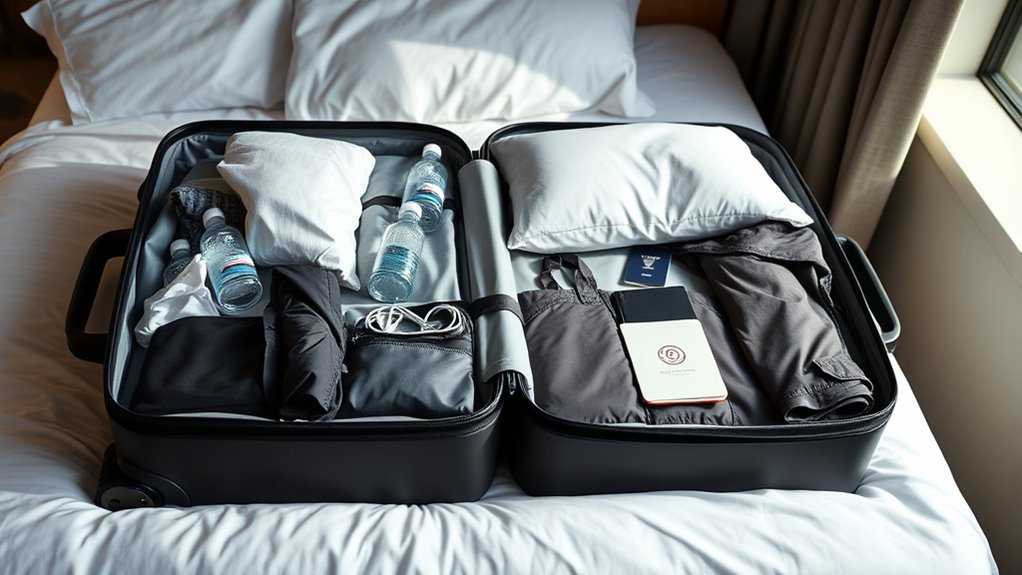
When you’re limited to a carry-on, every inch and ounce counts, so prioritize versatile pieces, travel-sized essentials, and items that serve more than one purpose. Choose neutral clothing you can layer and mix, pick fabrics that resist wrinkles, and limit shoes to two pairs: one wearable, one compact.
When limited to a carry-on, pack versatile, neutral layers and wrinkle-resistant pieces—keep shoes minimal and multifunctional
Use packing cubes to compress and organize, roll soft items, and tuck socks into shoes.
Keep toiletries in clear, compliant containers and pack a small laundry kit for quick refreshes.
Place essentials—documents, medications, electronics—in an accessible compartment so you can retrieve them without unpacking. Additionally, being aware of airline carry-on size limits helps ensure your bag meets requirements and avoids unexpected fees.
Quick Carry‑On Packing Checklist You Can Use Today
Start with the essentials and documents—passport, boarding pass, wallet, and any prescriptions—so you’re ready for security and arrival. Then add comfort and entertainment items like a neck pillow, headphones, and a charged device with downloaded content. If you’re bringing alcohol, ensure it complies with customs limits to avoid potential fines or confiscation. Use this simple checklist to pack quickly and avoid last-minute scrambling.
Essentials And Documents
Because you’ll need quick access to important items, pack your passport, boarding pass, wallet, phone, chargers, and any required medication in your carry‑on; keep them organized in an easy‑to‑reach pocket or travel organizer so security checks and in‑flight needs stay stress‑free.
You’ll also want photocopies of documents, emergency contacts, and travel insurance info. Keep originals and copies separated. Use a slim zip pouch for receipts and itineraries.
Check entry requirements before you leave and store any visas or health certificates where you can grab them fast.
- Passport photocopy and ID
- Travel insurance details
- Emergency contact list
- Medication prescriptions
Comfort And Entertainment
If you’ll be sitting through long lines or a lengthy flight, pack a small kit that keeps you comfortable and entertained without weighing you down: a lightweight travel pillow or inflatable neck rest, noise‑canceling or snug earbuds, a compact blanket or large scarf, an eye mask, and a refillable water bottle you can fill after security.
Add a fully charged phone, a power bank, and a universal adapter if needed. Download movies, books, podcasts, and playlists for offline use.
Toss in lightweight snacks, lip balm, hand sanitizer, and headache tablets. Keep everything in an easy‑access pouch so you can grab it quickly.
Airline Carry‑On Rules You Must Know First
While rules vary by carrier and destination, you should know the key carry‑on limits—size, weight, and number of bags—before you pack so you don’t face gate checks or extra fees. Check your airline’s website and confirm dimensions and weight allowances; low-cost carriers are strict.
Know permitted liquids (containers ≤100 ml in a clear quart bag) and declared medical or baby items. Pack valuables and essentials in your carry‑on. Expect variations for international flights and connections.
- Measure your bag and weigh it at home.
- Keep liquids accessible in a clear pouch.
- Verify personal item policies.
- Note boarding group carry privileges.
- Be aware that size limits are strictly enforced to avoid issues at the gate.
Choose the Right Carry‑On Bag for Your Trip
Pick a carry‑on that meets the airline’s size and weight limits so you won’t be stuck gate‑checking at the last minute.
Balance style with functionality by choosing a bag that’s durable, easy to carry, and has compartments for your essentials.
Think about how you’ll use it day to day on the trip and pick the design that fits that plan. Additionally, consider selecting luggage with recognizable designer labels to enhance its resale value if you decide to part with it later.
Bag Size And Airline Limits
Because airlines set different size and weight limits, choosing the right carry-on means matching your bag to the rules for your trip. Check the carrier’s dimensions and weight allowance before packing, including personal item policies. Measure your bag with wheels and handles extended, and weigh it at home to avoid airport surprises.
Consider regional and international differences; budget airlines often enforce stricter limits.
- Verify overhead bin and under-seat rules for your airline and fare class.
- Know TSA and security size constraints for personal items like laptop sleeves.
- Account for souvenirs or duty-free additions.
- Recheck limits after any itinerary change.
Style Versus Functionality
Now that you’ve matched bag size to airline rules, think about how style and functionality will affect your travel experience. Choose a bag that fits your routines: a sleek roller if you stride through terminals, a durable backpack if you climb stairs or hop trains, or a tote for quick, light trips.
Prioritize comfortable handles, easy-access pockets, and a dedicated laptop sleeve if you work on the go. Pick materials that resist wear and weather.
Match color and silhouette to your wardrobe so you’ll feel confident. When style complements function, packing becomes effortless and travel less stressful.
Carry‑On Size & Weight Limits by Airline Type
Although airlines all call it a “carry-on,” size and weight rules vary widely, so you should check limits before you pack. You’ll find three common types: legacy carriers with generous dimensions, budget airlines that often limit both size and weight, and regional or low-cost subsidiaries with strict small-bag policies. Measure your bag and weigh it packed to avoid gate surprises. Consider lightweight materials and collapsible items to maximize allowance.
- Legacy/full-service: larger size, higher weight limits, often one free bag
- Low-cost: tight dimensions, strict weight caps, fees common
- Regional: very small allowances
- International: varied rules by route
Additionally, remember that customs clearance can affect how you pack, especially if you’re carrying items that may need declaration.
Pack Versatile Clothing Layers for Any Climate
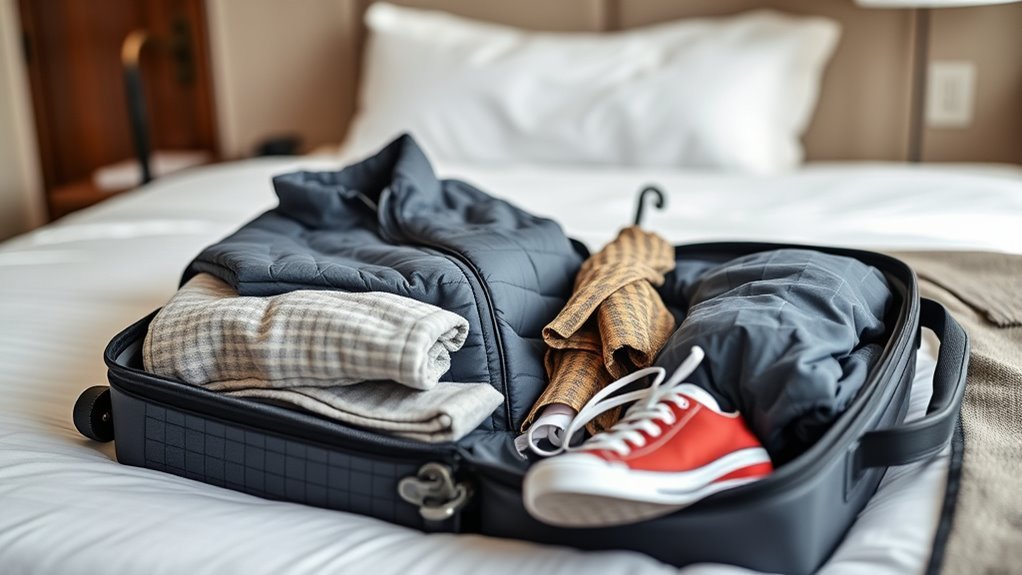
When you layer smartly, a handful of lightweight pieces will handle hot days, chilly nights, and sudden rain without weighing you down. Pack a breathable base, a thin insulating midlayer, and a compact waterproof shell. Choose neutral colors to mix and match, quick‑dry fabrics, and pieces that double as sleepwear or activewear. Roll items to save space and keep bulk to a minimum. Limit bulky sweaters; pick packable alternatives. Plan outfits around one versatile jacket and a scarf that adds warmth or style.
| Item | Purpose |
|---|---|
| Base layer | Moisture control |
| Midlayer | Warmth |
| Shell | Weather protection |
| Scarf | Versatility |
| Hat | Sun/wind shield |
Which Shoes to Pack and How to Stow Them
After you’ve pared down layers to versatile pieces, pick shoes that cover your planned activities without taking up cabin space. Limit yourself to two pairs: the ones you’ll wear and one compact backup. Choose neutral, multi‑use styles—sneakers that dress down or up, foldable flats, or lightweight hiking shoes.
Pick two neutral, versatile shoes—wear the bulkiest, carry a compact backup to save cabin space and stay ready.
Stow shoes smartly: stuff socks or small items inside to save room and maintain shape, place them in a washable bag to protect clothing, and position them along the suitcase edges to balance weight.
- Wear your bulkiest pair on the plane
- Use packing cubes for organization
- Keep a shoe bag handy
- Protect delicate soles
TSA‑Friendly Toiletries and Travel‑Size Limits
Because TSA limits liquids, gels, and aerosols in carry‑on luggage, you’ll want to pack toiletries that meet the 3-1-1 rule and are easy to access at security checkpoints. Stick to containers of 3.4 oz (100 ml) or less, place them in a single clear quart‑size bag, and keep that bag at the top of your carry‑on for quick removal. Consider solid alternatives (bar soap, solid deodorant) to save space and avoid spills. Below is a quick reference for common items and suggestions.
| Item | Max Size | Tip |
|---|---|---|
| Shampoo | 3.4 oz | Travel bottle |
| Lotion | 3.4 oz | Pump minimized |
| Toothpaste | 3.4 oz | Travel tube |
| Sunscreen | 3.4 oz | Use stick |
Toiletries to Always Keep in Your Carry‑On
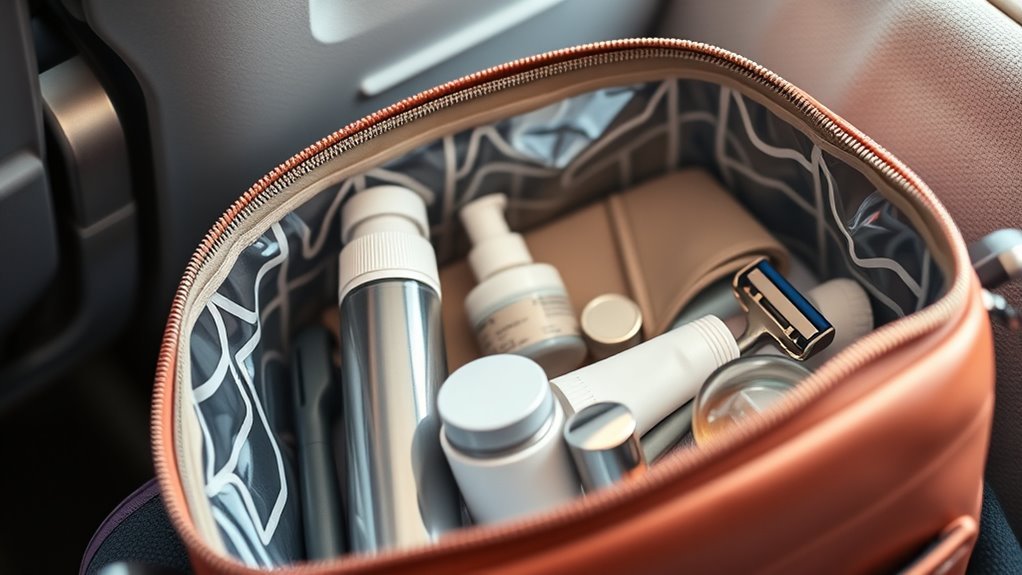
Although you’ll probably check a bag for longer trips, keep a small kit of essentials in your carry‑on so you can freshen up, handle delays, and meet security rules. Pack items that solve immediate comfort and hygiene needs without excess weight. Choose spill‑proof containers and resealable bags, and keep things accessible for security checks or sudden delays. Avoid bulky bottles; consolidate where possible.
Consider items that help you look and feel ready on arrival, and prioritize multiuse products to save space.
- Toothbrush and travel‑size toothpaste
- Facial wipes and moisturizer
- Deodorant (solid or small spray)
- Lip balm and hand sanitizer
Pack Medicines and Medical Supplies Safely
Pack prescriptions in their original labeled containers so you can prove they’re yours and avoid hassles at security. Bring a doctor’s note or copy of the prescription for controlled medications or if you need needles or syringes.
If any meds need refrigeration or temperature control, use an insulated bag and check airline rules before you fly.
Pack Prescriptions In Original
If you rely on prescription meds, keep them in their original containers with labels intact so airport security and medical staff can quickly verify what they’re and who prescribed them. You’ll avoid confusion at checkpoints and guarantee first responders can act fast if needed.
Keep doses organized, separate daytime and nighttime meds, and pack a small pill organizer for travel only if labels remain with the bottles. Carry enough for the trip plus extra in case of delays, and keep meds in your carry-on to control temperature and access.
- Store originals with pharmacy labels visible
- Pack a duplicate list of meds and dosages
- Separate liquids per TSA rules
- Shield fragile supplies in padded cases
Bring Doctor’s Note
When you travel with prescriptions, get a brief doctor’s note that lists your diagnoses, medications, dosages, and any medical devices you’re carrying so security and medical personnel can verify them quickly. Carry the original note and a digital photo, and keep them with your meds. Ask the doctor to include contact info, treatment duration, and any special handling needs. Present the note at checkpoints if questioned. Store copies separately in case of loss.
| Item | Purpose | Tip |
|---|---|---|
| Note | Verification | Originals + photo |
| Meds | Treatment | Label clearly |
| Contact | Confirmation | Clinic phone |
| Device | Security | Documentation |
| Copy | Backup | Cloud storage |
Secure Temperature-Sensitive Items
Because many medicines and medical supplies lose potency or get damaged in extreme temps, you should plan to keep them within recommended temperature ranges throughout your trip. Pack medications in your carry-on, use insulated pouches or reusable gel packs, and check airline and TSA rules.
Label prescriptions, bring copies of dosing instructions, and notify security if you need syringes or needles. If refrigeration’s required, arrange portable coolers or hotel fridge access and monitor temps with a small thermometer.
Keep spare doses for delays and ask your pharmacist about stability during brief temperature excursions.
- Insulated pouch or cooler
- Gel ice packs (non-liquid)
- Digital thermometer
- Prescription labels and notes
Essential Documents and IDs to Carry Onboard
Although screens and snacks get most of the attention, you should treat certain documents and IDs as indispensable carry-on items. Keep your passport, driver’s license, and any required visas on you.
Carry boarding passes, travel insurance info, and emergency contact details.
Bring copies of prescriptions and vaccination records if needed.
If you’re traveling for work, pack business credentials or letters of authorization.
Store credit cards and a small amount of local currency in your carry-on.
Keep all items in a secure, easily reachable pocket or pouch so you can present identification quickly during security checks or unexpected requests.
Organize Travel Documents for Quick Access
If you want to breeze through security and boarding, arrange your travel documents so they’re visible and reachable without rifling through your bag. Keep passports, boarding passes, vaccination cards, and visas in a slim, dedicated travel wallet near the top of your carry-on or in an outer pocket. Use clear sleeves or color-code sections for quick grabs.
Check that everything’s current before you leave and stash photocopies separately.
- Passport and boarding pass in one sleeve
- Emergency contacts and printed itinerary
- Visa and entry forms clearly labeled
- Copies of IDs stored separately and waterproofed
Electronics to Carry and Battery Rules
When packing electronics, prioritize devices you’ll need inflight and at your destination—phone, laptop or tablet, noise-canceling headphones, and any camera gear—and keep them accessible for security checks and quick use. Bring only essentials, stow fragile items in padded cases, and use a TSA-friendly laptop sleeve. Know battery rules: spare lithium batteries must go in carry-on, terminals taped or in original packaging, and devices should be powered off if requested. Below is a quick reference table to help.
| Item | Rule |
|---|---|
| Spare batteries | Carry-on only, terminals protected |
| Installed batteries | Device allowed |
| Power banks | Carry-on, capacity limits apply |
| Loose cells | Pack in protective case |
Don’t Forget Chargers, Adapters, and Power Banks
Because outlets, plugs, and in-seat power vary by airline and country, pack the chargers and adapters you’ll need so your devices stay usable from gate to hotel. Bring compact wall chargers, a universal travel adapter, and a couple of device-specific cables.
Include a power bank that’s compliant with airline regulations and fully charged before departure. Keep chargers accessible in your carry-on to top up during long waits or layovers.
Check device voltage compatibility if you’ll plug into foreign mains. Pack only what you’ll use to avoid bulk, and label cables to prevent mismatches.
- Compact USB-C and Lightning cables
- Universal travel adapter
- Airline-approved power bank
- Extra wall charger
Organize Cables, Cases, and Small Tech Gear
Although small, tangled cables and loose gadgets can wreck your boarding rhythm, you can stay efficient by grouping tech into labeled pouches or a slim organizer with elastic loops.
Pack each cable type—charging, USB-C, Lightning—in its own compartment to avoid hunting.
Keep earbuds, dongles, and spare memory cards in a clear zip pocket so security checks and in-flight use are quick.
Coil cords neatly with Velcro ties and tuck adapters into a tiny case.
Stash a portable mouse or compact keyboard flat to save space.
Before you leave, do a final pouch check so nothing gets left behind.
Protect Valuables and Fragile Items in Carry‑On
If you’re carrying jewelry, cameras, or fragile souvenirs, pack them where they’ll stay protected and easy to reach—think padded compartments, hard cases, or a dedicated valuables pouch inside your carry-on. You’ll want quick access for security and peace of mind; keep valuables centered, cushioned, and separated from heavy items.
Use small zippered pockets for cords and memory cards, and wrap breakables in soft clothing or bubble wrap. Consider locking zippers and noting serial numbers. Keep receipts and appraisals in a flat pocket.
- Hard shell case for electronics
- Padded pouch for jewelry
- Bubble wrap or clothing cushioning
- Documented serial numbers and receipts
Carry‑On Snacks and Food Rules (Domestic vs. International)
Once you’ve secured valuables and fragile items toward the center of your bag, think about where you’ll stash snacks for the trip—easy access makes security checks and long waits simpler.
Pack nonperishable, compact items: nuts, granola bars, dried fruit, and sealed crackers. Remember TSA rules: solid foods are fine domestically; gels and spreads over 3.4 ounces may be confiscated.
Internationally, check customs restrictions and avoid fresh produce, meat, and dairy that could be prohibited. Keep allergen-free options if you’ll share.
Label homemade items clearly and use resealable bags to contain crumbs and odors for polite, hassle-free travel snacking.
Bring an Empty Water Bottle Through Security
Because you can refill it after security, bring an empty water bottle to stay hydrated without paying airport prices. You’ll breeze through checkpoints since empty bottles don’t trigger liquid limits, and you’ll cut waste by refilling at fountains or cafes.
Choose a durable, leak‑proof bottle that fits in your carry‑on pocket and clean it before travel. When boarding, fill up so you have water during taxi and early flight moments.
- Use a wide‑mouth bottle for easy ice and cleaning
- Pick lightweight, BPA‑free materials
- Keep it accessible in a side pocket
- Empty it for security checks if asked
Comfort Items for Long Flights: Pillow, Blanket, and More
When you’re prepping for a long flight, pack a few compact comfort items that make sleep and downtime manageable: a supportive travel pillow, a lightweight blanket or large scarf, noise‑reducing earbuds or a headset, and an eye mask. You’ll also want soothing lip balm, moisturizer, and a small sanitizer. Stash items where you can reach them without standing. Choose washable, compressible pieces that double as neck support or warmth. Consider tactile items like a soft sweater for comfort. Below is a quick checklist to compare options and pick what suits your travel style.
| Item | Benefit | Tip |
|---|---|---|
| Pillow | Neck support | Inflatable saves space |
| Blanket | Warmth | Scarf doubles use |
| Earbuds | Noise reduction | Carry spare tip |
| Eye mask | Blocks light | Lightweight strap |
| Lip balm | Prevents chapping | Keep in pocket |
Sleep Aids and Jet‑Lag Tools to Pack in Carry‑On
If you want to arrive rested, pack a targeted kit of sleep aids and jet‑lag tools in your carry‑on. You’ll want items that help you sleep on the plane and reset once you land.
Prioritize compact, TSA‑friendly options and things that suit your usual sleep routine. Use light cues, hydration, and gentle support to shift your clock without drugs when possible. Consider combining a few science‑backed tools for best results.
- Eye mask with blackout and adjustable straps
- Earplugs or noise‑canceling earbuds
- Lightweight travel pillow or inflatable neck support
- Melatonin tablets (low dose) and hydrating spray
Entertainment Ideas to Stay Occupied on Flights
Bring a couple of books or a loaded e-reader so you can switch between fiction, magazines, or long articles without hauling extra weight.
Pack a portable gaming device or controller for quick puzzles, strategy sessions, or multiplayer fun during layovers. These simple items keep you engaged and help flights pass faster.
In-Flight Reading Material
Because long stretches in the air can feel endless, pack a small mix of reading material that keeps you engaged without weighing you down. Choose light novels for escapes, a travel guide for inspiration, and a magazine for short, topical pieces you can finish between announcements.
Include a small notebook or crossword book to jot thoughts and stay mentally active. Rotate materials to prevent fatigue and switch between passive and interactive reading to maintain focus.
- A compact paperback novel
- A recent magazine issue
- A pocket travel guide or phrasebook
- A crossword or puzzle booklet
Portable Gaming Devices
Looking for a compact way to stay entertained on long flights? Pack a handheld console or your smartphone loaded with games that don’t need constant internet. Bring physical cartridges or install offline titles, plus a power bank and short charging cable.
Earbuds with a mic keep sound contained and let you answer calls or chat. If you use controllers or a clamshell device, secure them in a padded sleeve to avoid screen damage.
Download updates, maps, or save files before boarding. Balance battery-hungry sessions with rest—use gaming to relax, not to burn through energy before landing.
Work Essentials for Remote Work on the Go
When you need to work while traveling, pack a compact kit that keeps you productive without weighing you down: a lightweight laptop or tablet with charger, a reliable portable battery, noise‑canceling or in‑ear headphones, a slim mouse and foldable keyboard if you prefer, and a universal travel adapter.
Keep digital copies of critical files offline, use encrypted storage, and install essential apps before departure.
Choose breathable, organized sleeves for cables and dongles. Reserve one pocket for passports and meeting notes, and schedule device charging during layovers to avoid panic.
- Portable SSD or USB drive
- Compact hotspot or eSIM-ready phone
- Privacy screen protector
- Compact surge protector
Carry‑On Packing Checklist for Kids and Families
When you’re packing for kids, focus on comfort, entertainment, and simple organization to keep the trip smooth. Bring a cozy blanket, a change of clothes, favorite snacks, and any comfort items they need.
Pack compact activity kits, headphones, and labeled pouches so you can grab essentials quickly.
Essentials For Kids’ Comfort
Because small comforts can make a big difference on a trip, pack a few reliable items that keep your kids calm, entertained, and comfortable in flight. Bring a cozy blanket or wearable wrap for naps, a familiar plush or lovey for reassurance, and a change of clothes for spills or temperature shifts.
Include compact travel pillows that double as neck support and a collapsible water bottle to stay hydrated after security. Keep sizes small and accessible so you can reach them quickly during boarding and delays.
- Compact blanket or wearable wrap
- Familiar plush or lovey
- Travel neck pillow
- Collapsible water bottle
Entertainment And Organization
How will you keep your kids entertained and your carry-on tidy without digging through a mess? Pack a slim activity kit: headphones, tablet with preloaded shows and games, chargers, a compact power bank, and a durable zip pouch for cords.
Add colorings, stickers, a small toy, and spillproof snack containers in another labeled pouch.
Use clear packing cubes to separate clothes, toiletries, and entertainment, so you grab what you need fast.
Toss essential documents and a family itinerary into an easily accessible sleeve.
Rotate activities during travel to avoid boredom and keep your bag organized throughout the trip.
Carry‑On Essentials for Business Travelers
Pack smart: your carry‑on should keep meetings on schedule, devices charged, and personal comfort intact. You’ll want quick access to essentials that help you work on the go, look sharp, and handle travel hiccups without stress. Prioritize slim, multitasking items that fit under the seat and streamline your day.
- Compact charger hub and cables to top up laptop, tablet, and phone
- Lightweight garment bag or wrinkle-release sprays for last-minute touchups
- Portable hotspot or preloaded offline files for reliable connectivity
- Notebook, pens, and a compact presentation remote for seamless meetings
Safety & Hygiene: Masks, Sanitizer, and Wipes
Bring a small hygiene kit so you can handle spills, crowded terminals, or unexpected illness without scrambling. Include a few surgical or KN95 masks, a travel-size hand sanitizer gel (at least 60% alcohol), and alcohol wipes.
Bring a compact hygiene kit—masks, travel hand sanitizer (60%+), and alcohol wipes—for spills, crowds, or sudden illness.
Pack sealed packets of disinfecting wipes for tray tables and armrests, plus a small pack of tissues and a resealable plastic bag for used items.
Consider a lightweight face shield if you want extra protection. Keep everything accessible in an outer pocket for quick use during boarding or transfers.
Replace items after long trips and check airline rules for liquids and hazardous materials.
What to Pack If Your Checked Bag Is Delayed Overnight
If your checked bag gets delayed overnight, carry a compact emergency kit in your carry-on so you won’t be stuck without essentials. Pack a change of clothes, basic toiletries, and any critical medications in labeled, travel-size containers.
Include a small charger and a power bank to keep devices functional for communication and confirmations. Also add a lightweight sleep kit—eye mask and earplugs—to rest if plans change.
Keep receipts and copies of important documents accessible for airlines or hotels. Stash everything in an easy-to-open pouch so you can retrieve items quickly during long waits or unexpected layovers.
- Change of clothes and underwear
- Travel-size toiletries & meds
- Phone charger and power bank
- Eye mask, earplugs, important-document copies
Smart Packing Hacks to Maximize Carry‑On Space
Now that you’ve planned for overnight delays, tighten up how you arrange the rest of your carry-on to make every inch count. Roll clothes, use compression cubes, and pack shoes with socks inside to save space. Layer heavier items at the bottom, keep a lightweight jacket compressed, and tuck chargers into corners. Use small pouches for cables and toiletries (within allowed limits). Place frequently used items on top for easy access. Check weight distribution so the bag stays balanced and fits airline size limits.
| Tip | Item | Benefit |
|---|---|---|
| Roll | T-shirts | Saves volume |
| Cube | Pants | Organizes |
| Stuff | Shoes | Uses voids |
| Layer | Jacket | Stability |
Pack Liquids and Prevent Leaks in Your Carry‑On
Because airlines enforce strict liquid rules and spills can ruin everything, you’ll want to pack liquids thoughtfully to stay compliant and avoid messes. Use travel‑size containers, keep them accessible, and double‑seal anything that could leak.
Place liquids in a clear, resealable quart‑size bag for screening, then stow that bag in an outer pocket so you can remove it quickly.
Wrap bottles in clothing or use silicone travel cases to absorb pressure changes. Consider solid alternatives—bar shampoo, solid lotion bars, and compressed towels—to reduce liquid volume and leakage risk.
- Travel‑size bottles (100 ml/3.4 oz)
- Zip‑top quart bag
- Double‑seal tape or caps
- Solid substitutes
Security Screening Tips to Speed Up Checks
Keep your passport, boarding pass, and any travel documents in one easy-to-reach pocket so you can pull them out quickly at the checkpoint.
Stash laptops and tablets near the top of your bag or in a separate sleeve so you can take them out without emptying everything.
Doing these two things will get you through screening faster and with less hassle.
Organized Documents Ready
If you arrange your travel documents so they’re easy to access, you’ll move through security faster and with less stress. Keep passports, boarding passes, visas, and ID together in a thin folder or travel wallet you can open quickly. Have photocopies or digital backups stored separately in case of loss.
Present only required documents when asked and return them to your folder immediately to avoid fumbling. Stay aware of airline or country-specific paperwork to prevent delays. Practice retrieving items at home so it’s second nature at the checkpoint.
- Passport and boarding pass together
- Visa and entry forms organized
- Paper copies in case of loss
- Digital backups accessible
Streamlined Electronics Access
When you pack your electronics for carry-on, arrange them so security screening is quick and predictable. Place laptops and tablets in an easily accessible compartment or top layer of your bag so you can remove them without rummaging.
Use a slim, dedicated sleeve for laptops to speed removal and replacement. Keep chargers, power banks, and cables in a small pouch; declare power banks if required.
Remove bulky cases if instructed. Know local rules—some places require electronics larger than a phone to be screened separately.
Being organized reduces delays, keeps your devices safe, and gets you through security with less stress.
Items to Avoid in Your Carry‑On (Restricted List)
Although you can bring a lot of essentials in your carry‑on, certain items are strictly prohibited or heavily restricted for safety and security—so you should know what to leave out. You’ll avoid delays and confiscations by skipping obvious threats and ambiguous items that agents often question. Check airline and TSA rules before packing, and declare anything uncertain at security. When in doubt, put it in checked baggage or ship it ahead.
Avoid packing questionable or prohibited items in carry-ons—check TSA rules and move uncertain things to checked baggage.
- Liquids over 3.4 oz / 100 ml (except medications with documentation)
- Sharp objects (box cutters, large scissors)
- Sporting goods usable as weapons (bats, clubs)
- Firearms, ammunition, and realistic replicas
Adapting Your Carry‑On for Different Trip Lengths
Because trip length dictates what you actually need on hand, tailor your carry‑on to balances convenience, comfort, and compliance. For short trips (1–3 days) pack essentials: an outfit, toiletries, chargers. For mid trips (4–7 days) add versatile layers, a compact laundry kit, and extra chargers. For long trips (8+ days) prioritize durable shoes, bulkier toiletries in checked bags if possible, and a small first‑aid kit.
| Trip Length | Key Clothing | Tech & Extras |
|---|---|---|
| Short | One outfit | Chargers, meds |
| Mid | Mix-and-match | Portable laundry |
| Long | Durable pieces | First-aid, spares |
Printable Carry‑On Packing Template for Common Trips
If you want a fast, reliable way to pack smart, use this printable carry‑on template that lists essentials by trip type and streamlines decision‑making; it’s designed so you can tick items off, swap categories, and customize quantities without overthinking.
You’ll get sections for short business trips, weekend getaways, longer vacations, and emergency kit basics. Print one page, mark priorities, and edit as you learn what you actually use. Keep it laminated or digital for reuse.
Use checkboxes to speed packing, and adjust for weather, activities, and airline rules so you’re never caught unprepared.
Use checkboxes to speed packing, and tweak items for weather, activities, and airline rules so you’re never caught off guard.
- Business: charger, blazer, documents, toiletry kit
- Weekend: two outfits, versatile shoes, mini first aid, chargers
- Vacation: swimwear, daypack, sunscreen, travel adapter
- Emergency: meds, copies of ID, snacks, pen
Frequently Asked Questions
Can I Bring Perishable Prescription Medications in My Carry‑On Internationally?
Yes — you can bring perishable prescription medications in your carry-on internationally, but you should keep them refrigerated as required, carry prescriptions and a doctor’s note, declare them at customs if needed, and check airline and destination rules.
How Do I Store Duty‑Free Alcohol Items in My Carry‑On for Connecting Flights?
You should keep duty‑free alcohol in its sealed, tamper‑evident bag with the receipt visible, stow it in your carry‑on, and avoid opening it during connections; check airline and transit country rules, since some restrict liquids or duty‑free transfers.
Are Service Animals and Emotional Support Animals Allowed in the Cabin?
Yes, you can bring service animals into the cabin; airlines must accept them. Emotional support animals have stricter rules and many carriers no longer allow them, so you’ll need to check the airline’s current policy and paperwork.
Can I Pack Sharp Tools or Hobby Gear (Scissors, Knitting Needles) in Carry‑On?
Yes — you can usually bring scissors and knitting needles in your carry‑on, but airlines and TSA restrict blades and some sharp tools; check specific airline and destination rules, secure points to avoid injuries, and pack responsibly.
What Documentation Proves Ownership for High‑Value Items in Carry‑On?
You’ll show purchase receipts, invoices, original packaging, appraisal certificates, or photos with serial numbers; carry manufacturer warranties, insurance paperwork, and export permits if needed. Keep copies digital and physical, and present them to officials when requested.
Conclusion
You’ve now got the essentials to pack smarter, follow rules, and breeze through security. Pick the right bag, respect size and weight limits, and keep restricted items out so you don’t get delayed. Tailor contents to trip length and use the quick checklist or printable template to save time. Pack versatile outfits, travel‑size toiletries in a clear bag, important documents, and chargers within reach—then relax and enjoy your trip knowing your carry‑on’s set.
