Do I Get a Free Carry on With American Airlines Policy Explained
Yes — most tickets let you bring one free carry-on plus a personal item on American Airlines, but Basic Economy usually only includes a personal item that fits under the seat. Main Cabin, Premium, and elite fares allow the full-size carry-on (22 x 14 x 9 in) and a personal item; international routes or partner-operated flights may have different size or weight rules. Expect gate-checking if bins fill, and keep essentials in your personal item — continue for specific tips and exceptions.
How to Use This Guide
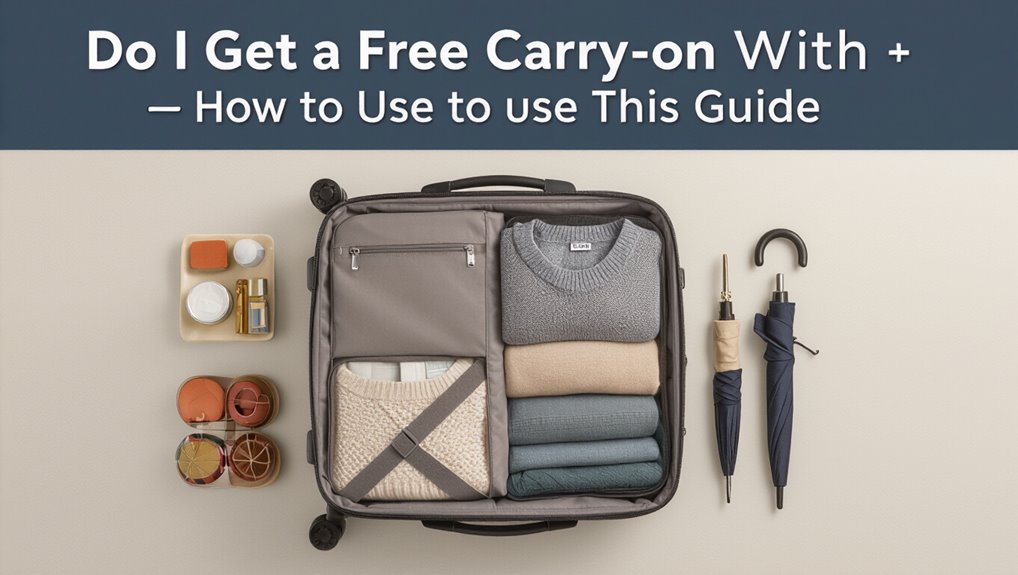
Before you plunge into the details, this short guide tells you what matters most and how to find it quickly.
Use headings to jump to baggage size, fees, and exceptions.
Scan the quick-answer section for an instant verdict, then read the relevant details for your fare and status.
Follow the checklist at the end to confirm dimensions and packing before you head to the airport.
Quick Answer: Do You Get a Free Carry-On With American?
Now that you know how to navigate this guide, here’s the quick answer: Yes—most passengers can bring one carry-on bag free on main cabin domestic and many international flights, but rules vary by fare, route, and elite status.
Basic Economy often excludes a full-sized carry-on.
Check your ticket and American’s site before packing to avoid fees or gate-checked items.
Carry-On vs Personal Item: What Counts
Think of your carry-on and personal item as two separate pockets of allowance: the carry-on is the larger, wheeled bag that fits in the overhead bin, while the personal item is a smaller bag—like a backpack, briefcase, or tote—that stows under the seat.
You get both on most fares; the personal item must fit beneath the seat, and only one of each is allowed per passenger.
Standard Carry-On Size and Weight Limits
You’ll want to know the exact carry-on dimensions American Airlines allows so your bag fits in the overhead bin.
Check the weight limits and how your personal item differs from the standard carry-on to avoid surprises at the gate.
Below we’ll cover the permitted dimensions, common weight guidelines, and what counts as a personal item.
Carry-On Dimensions Allowed
Most domestic American Airlines flights let you bring one standard carry-on and one personal item, but the carry-on must fit overhead bins and meet size limits: 22 x 14 x 9 inches (including wheels and handles) and no published weight limit on mainline flights.
However, some regional partners enforce lower limits—check your specific aircraft or ticket for any deviations.
You should measure your bag, verify compliance, and avoid oversize fees.
Weight And Personal Item
American Airlines lets you bring one personal item in addition to your standard carry-on; it should fit under the seat in front of you and commonly includes a purse, laptop bag, or small backpack.
Your standard carry-on must meet size limits (22x14x9 inches).
There’s generally no published weight limit for domestic flights, but pack reasonably—overly heavy bags may be refused or gate-checked.
What Fits in the Overhead Bin vs Under the Seat?
You’ll want to know the overhead bin dimensions so you can judge whether your suitcase will fit upright or need to be stowed differently.
Underseat item limits matter too—think smaller backpacks or personal bags that must slide under the seat in front of you.
Pack smart by testing shapes and compressing soft items to maximize space and meet both limits.
Overhead Bin Dimensions
Overhead bins on American Airlines are designed to hold standard carry-ons—usually suitcases up to about 22 x 14 x 9 inches—while smaller personal items must fit under the seat in front of you, typically within roughly 18 x 14 x 8 inches.
You should measure your bag before flying; soft-sided carry-ons can compress to fit, but oversized hard-shell luggage may be gate-checked.
Underseat Item Limits
If your carry-on clears the bin size—about 22 x 14 x 9 inches—then you’ll want to know what qualifies as an underseat item and how strictly airlines enforce those limits.
Underseat items must fit beneath the seat in front of you: small backpacks, briefcases, purses, laptop bags.
Airlines expect easy stowage; bulky or rigid items may be gate-checked if they don’t fit.
Packing Tips For Fit
1 smart packing move is to allocate items by size and urgency: put laptops, valuables, medication, and anything you’ll need mid-flight under the seat, and reserve the overhead bin for bulkier bags, coats, and souvenirs.
Measure your bag to meet AA limits, slide slim backpacks underfoot, collapse soft items to fit overhead, and board early to secure space.
Plan and prioritize.
Basic Economy: Carry-On Rules and Exceptions
Because Basic Economy fares are designed to be the airline’s most restrictive option, you’ll face tighter carry-on limits than other ticket types: you generally can bring one personal item that fits under the seat (like a purse or small backpack).
Full-size carry-ons aren’t included unless you purchase an upgrade, buy priority boarding, or qualify through elite status, military, or certain credit cards.
Main Cabin & Main Cabin Extra: Carry-On Allowance
In Main Cabin and Main Cabin Extra, you can bring one carry-on bag and one personal item—make sure the carry-on fits the size limits (typically 22 x 14 x 9 inches).
Your personal item should fit under the seat in front of you, like a backpack or small tote.
You’ll also have access to the overhead bin if space is available, so board early if you need guaranteed bin space.
Carry-On Bag Size
When you fly Main Cabin or Main Cabin Extra, you’re allowed one carry-on bag plus one personal item; the carry-on must fit in the overhead bin and meet the airline’s size limits so it can be stowed properly.
Check these size tips:
- Maximum dimensions: 22 x 14 x 9 inches
- Include wheels and handles
- Weighing usually not enforced
- Gate agents may check oversized bags
- Measure before travel
Personal Item Rules
You can bring one personal item in addition to your carry-on in Main Cabin or Main Cabin Extra, and it must fit under the seat in front of you—typical examples are a purse, small backpack, laptop bag, or briefcase.
Measure it against under-seat space; if it’s oversized, staff may ask you to gate-check it.
Keep valuables and essentials with you for easy access.
Overhead Bin Access
Travelers in Main Cabin and Main Cabin Extra can bring one standard carry-on bag that fits in the overhead bin, plus a personal item under the seat; make sure your carry-on meets the airline’s size limits so gate agents won’t have to gate-check it.
You should:
- Stow larger bag overhead
- Place personal item beneath seat
- Check dimensions before travel
- Arrive early for space
- Follow crew instructions
Premium Economy and Flagship First/Business: Carry-Ons
1 main benefit for Premium Economy and Flagship First/Business passengers is enhanced baggage allowance: you can bring the standard carry-on plus a personal item, and often board earlier to stow them comfortably in the overhead bins.
You’ll also get priority boarding and dedicated bin space on many flights, reducing the risk your bag won’t fit and speeding up boarding for you and fellow premium travelers.
International Flights: How Rules Change
When flying internationally with American Airlines, rules for carry-ons and personal items can differ from domestic flights, so check size limits, weight restrictions, and country-specific regulations before you pack.
You’ll also face varied allowances by fare, destination, and partner carriers. Check your itinerary and confirm with AA before departure.
Allowances vary by fare, destination, and partner carrier—check your itinerary and confirm with American Airlines before departure.
- Verify size limits
- Note weight caps
- Review fare rules
- Check partner policies
- Confirm customs items
Domestic vs International Baggage Differences to Watch
After checking international size, weight, fare, and partner differences, you should also compare domestic rules because they can be more permissive or stricter depending on the route and aircraft.
Domestic flights may allow different carry-on sizes, stricter gate-checking on smaller planes, and varying fee structures for basic economy.
Always confirm your specific itinerary and aircraft to avoid surprises at boarding.
Personal Item: Definition and Policy Details
Although smaller than a carry-on, a personal item is the bag you’re allowed to stow under the seat in front of you—think laptop bags, purses, briefcases, or small backpacks—and it must meet the airline’s size and content rules so it fits comfortably and contains no prohibited items.
You can bring one; keep essentials accessible and compliant.
- One item per passenger
- Stows under seat
- Contains essentials
- No prohibited items
- Must be size-appropriate
Examples of Acceptable Personal Items and Dimensions
A typical personal item you can bring is a small backpack, laptop bag, purse, or briefcase that slips under the seat.
Acceptable dimensions are generally about 18 x 14 x 8 inches (45 x 35 x 20 cm) or smaller.
Examples: compact camera bags, slim duffels, tote bags, and garment bags folded flat.
Check gate agents if unsure.
Combining a Carry-On and Personal Item Correctly
Wondering how to pack both items without hold-ups at the gate? You’ll want to balance size and accessibility.
Use a compact roller plus a slim personal bag that fits under the seat. Pack essentials in the personal item for quick access and heavier items in the carry-on.
Use a compact roller and a slim under-seat personal bag—essentials up front, heavier items in the carry-on.
- Measure both items before travel
- Prioritize under-seat fit
- Keep liquids accessible
- Avoid overstuffing
- Know airline size limits
When American Will Gate-Check Your Carry-On
When the overhead bins fill up, you may be asked to gate-check your carry-on to free space for everyone.
Tight aircraft doors and narrow aisles can make stowing larger bags impractical, so gate agents often decide based on the plane’s door size.
Your boarding group priority also matters—later groups are more likely to have their bags gate-checked.
Overhead Bin Space
If the overhead bins fill up before everyone boards, American will ask you to gate-check your carry-on so it can travel in the cargo hold.
You’ll usually comply; gate-checking is free and quick. Prepare by:
- Boarding early if possible
- Using a smaller bag
- Storing items under the seat
- Labeling fragile contents
- Keeping essentials in a personal item
Aircraft Door Size
Aircraft door dimensions vary by aircraft type, and when your carry-on won’t fit through the doorway American may ask you to gate-check it before boarding.
You should measure bags against common narrow jet openings and be ready to check oversized items. Gate agents make the call based on door width, cabin layout, and safety.
If asked, you’ll receive a tag and retrieve your bag at baggage claim.
Boarding Group Priority
As boarding groups fill the jetway, gate agents prioritize who keeps their carry-on by seating class, elite status, and fare type.
So be prepared that later groups are more likely to be asked to gate-check oversized bags.
You’ll usually see:
- First and business class exemptions
- Elite frequent flyers protected
- Priority boarding holders kept
- Basic economy last to gate-check
- Overhead space dictates choices
How to Avoid Having Your Bag Gate-Checked
When the gate fills up, know what to do so your carry-on stays with you: arrive early, board when your group is called, and choose overhead space near your seat.
Consolidate items into a smaller bag if needed, stow bulky coats, and be ready to lift your bag quickly.
Politely request assistance from gate agents before they start reassigning bags.
Elite Status: How Privileges Change Carry-On Rules
If you’ve done everything to keep your bag with you at the gate, your elite status can give you extra assurance—airlines often relax carry-on restrictions for frequent flyers, letting you board earlier, claim overhead space, or bring an additional personal item.
- You board earlier, so you secure space.
- Staff prioritize your bag if overheads fill.
- You’re less likely to be gate-checked.
- Agents may waive size concerns.
- You still must follow safety rules.
AAdvantage Tiers and Their Carry-On Benefits
AAdvantage has tiered perks that can make bringing carry-ons easier: as you climb from Gold to Platinum Pro and Executive Platinum, you get earlier boarding, better access to overhead bin space, and more leniency from gate agents on size and handling—so you’re less likely to be gate-checked and can travel with greater confidence.
Higher tiers also offer priority boarding, complimentary upgrades, and improved chances to keep your bag with you.
Partner Airline Status and Carry-On Allowances
Your elite status on American can help, but partner airline rules often govern carry-on allowances on codeshares and international segments, so you’ll want to check each carrier’s policy before travel.
- Verify partner carry-on size limits
- Confirm weight restrictions
- Check if elites get exceptions
- Review fare class terms
- Contact the operating carrier for final confirmation
AAdvantage Credit Cards: Carry-On Perks and Boarding
If you hold an AAdvantage credit card, you’ll want to know which card benefits affect your carry-on allowance and boarding.
Some cards let you bring an extra personal item or provide preferred boarding that can secure overhead bin space.
Check your specific card’s terms so you’re not surprised at the gate.
AAdvantage Card Benefits
One key perk for frequent flyers is that several American Airlines credit cards let you bring an extra carry-on or get priority boarding, helping you settle into the cabin faster and keep essentials within reach.
You’ll also enjoy benefits that simplify travel and save time:
- Priority boarding for earlier overhead space
- Free checked bag for cardholder
- Companion certificate offers
- Bonus miles on purchases
- Travel protection perks
Carry-On Allowance Details
Beyond boarding and checked-bag perks, AAdvantage credit cards can affect what you bring into the cabin: certain cards let you carry an additional personal item or grant earlier boarding so you’ll secure overhead space for a standard carry-on.
Check your specific card’s terms: some add a second personal item, others only improve boarding position.
Measure and weigh items to avoid gate charges.
Boarding Group Priority
Though AAdvantage credit cards vary, many give you improved boarding group priority so you’ll board earlier and have a better chance of finding overhead space for your carry-on.
- You’ll board sooner than general groups
- Overhead bin space is more likely
- Some cards grant Main Cabin 1 or priority boarding
- Priority helps if gates change or flights delay
- Check card terms for exact boarding group benefits
Which Cards Include Carry-On or Priority Boarding?
Which cards give you a free carry-on or priority boarding?
If you hold select American Airlines co-branded cards (like the AAdvantage® credit cards) or premium travel cards from partner issuers, you may get priority boarding or free checked/oversized benefits.
Hold select AAdvantage® and partner premium cards for possible priority boarding or complimentary checked/oversized baggage benefits.
Specific perks vary by card tier—check benefits guides.
Corporate and premium elite cards often include the best boarding priority and baggage allowances.
Military and Veteran Carry-On Rules
If you’re an active-duty service member, reservist, or veteran traveling on orders or with military ID, American Airlines provides specific carry-on and baggage considerations that can affect boarding and allowance limits.
You should check documentation, allowances, and boarding benefits before travel.
- Verify military ID at check-in
- Confirm carry-on and personal item sizes
- Ask about extra baggage on orders
- Request priority or preboarding
- Note eligibility varies by itinerary and fare
Family Boarding and Carry-On With Kids
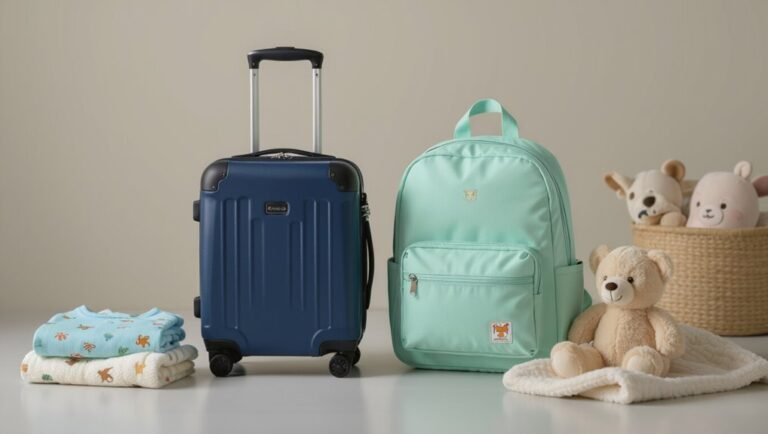
When you’re traveling with children, American Airlines’ family boarding and carry-on rules let you bring a stroller, car seat, and a carry-on plus a personal item for each adult without extra charges in many cases; confirm sizes and gate-check procedures ahead of time to avoid surprises.
During family boarding you’ll have extra time to stow items; follow gate agent instructions and label gate-checked gear.
Traveling With Infants: Stroller, Car Seat, Carry-On
Traveling with an infant? You can bring a stroller and car seat free in addition to your carry-on; gate-check options are common.
Pack essentials compactly and know size limits.
- Gate-check stroller at boarding
- Bring FAA-approved car seat for onboard use
- One personal item plus carry-on allowed
- Store items in overhead or under seat
- Label gear for easy retrieval
Medical Equipment, Mobility Aids, and Exemptions
You’ve already seen how airlines handle strollers and car seats for little ones; the rules for medical equipment and mobility aids offer similar accommodations but with added protections.
You can bring wheelchairs, walkers, crutches, and portable oxygen without extra fees.
Notify American Airlines in advance for battery-powered devices, removable batteries, and space needs.
Service animals are exempt from carry-on limits and get priority handling.
Carrying Food, Liquids, and Duty-Free Items
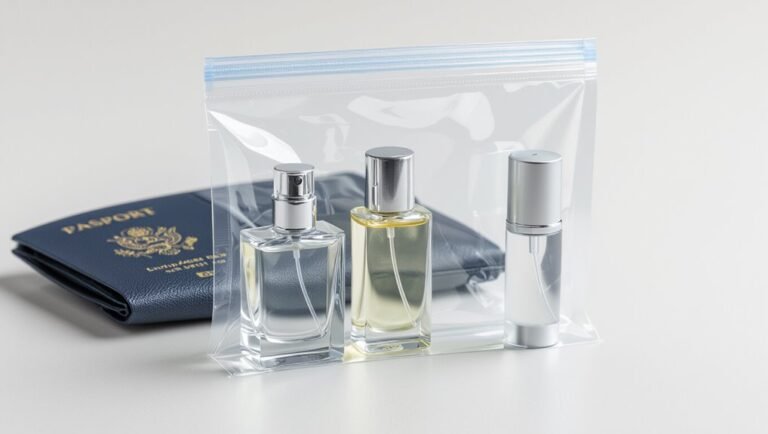
Although TSA rules set the baseline for liquids and gels, American lets you bring most solid foods in carry-on bags and allows liquids in containers 3.4 ounces (100 ml) or less inside a single quart-size bag—larger duty-free liquids bought after security are permitted if sealed with the receipt.
- Pack nonperishable snacks
- Keep sauces under 3.4 oz
- Store liquids in one bag
- Keep receipts for duty-free
- Declare food at security
Sports Equipment and Musical Instruments as Carry-On
Bringing food and liquids on board is one thing; bringing bulkier items like sports gear or musical instruments raises different packing and gate-check considerations. You’ll want sturdy cases, measure dimensions, and call ahead for oversized items. Gate-checks can apply; fees depend on fare and membership. Label gear and arrive early to discuss stowage.
| Item | Tip |
|---|---|
| Guitar | Hard case, gate-check if needed |
| Bike | Partially disassembled, padded |
| Skis | Ski bag, protect tips |
| Sports bag | Compress, check size |
If Your Carry-On Exceeds Size or Weight: What Happens
If your carry-on goes over American Airlines’ size or weight limits, staff will usually ask you to gate-check it or check it at the ticket counter before boarding; fees and procedures depend on your fare class, AAdvantage status, and the item’s dimensions.
- Gate-checking means you leave the bag at the jet bridge.
- Checked baggage goes to the hold.
- Fragile items get tags.
- You may wait at arrival.
- Ask agents for options.
Fees and Penalties for Oversized or Extra Carry-Ons
Airlines charge fees or enforce penalties when your carry-on exceeds size or quantity limits, and those charges vary by fare class, route, and your AAdvantage status.
You’ll usually pay a gate-checked fee, an oversize charge, or be required to check the bag with standard checked-baggage rates.
Elite members may get waivers; basic economy often incurs the highest penalties.
How to Measure Your Bag at Home and at the Airport
Often a quick measure at home saves time and fees at the gate: use a tape measure or a printable ruler to check your bag’s height, width, and depth (including wheels and handles) and compare them to American’s carry-on limits before you leave, and bring a soft tape or collapsible ruler to reconfirm dimensions if staff ask at the airport.
- Measure fully packed
- Include wheels/handles
- Use firm flat surface
- Note airline limits
- Recheck before boarding
Best Carry-On Luggage Features for American Flights
Picking the right carry-on can save you time, money, and stress on American flights, so look for a bag that meets size limits, fits under the seat or in the overhead, and stays organized.
Choose lightweight, durable materials, smooth-rolling wheels, a telescoping handle, clear external pockets for essentials, and a TSA-friendly laptop compartment.
Reinforced corners prevent wear.
Packing Tips to Maximize a Carry-On and Personal Item
When you plan what to bring and how you pack it, you can fit a week’s worth of outfits plus essentials into a carry-on and a well-chosen personal item by prioritizing versatile clothing, rolling garments to save space, nesting smaller items inside shoes, and using compression cubes to keep everything organized and visible.
- Pick mix-and-match pieces
- Roll, don’t fold
- Use compression cubes
- Stuff shoes with socks
- Keep liquids in a clear pouch
Use Boarding Groups to Protect Your Carry-On Space
If you want to secure overhead space, try to board as early as possible so you can stow your carry-on where you want.
Know the boarding group order and where you fall so you can plan arrival at the gate.
Use a gate strategy—stand near the jet bridge when your group’s called and be ready to board quickly to protect your bag.
Board Early For Space
Although you can’t always control who brings oversized bags, boarding early lets you secure the better overhead spots and avoid last-minute gate scrambles.
You should plan to board as soon as your group is called to protect space.
Tips:
- Choose aisle seats near front
- Gate-check bulky items proactively
- Stow smaller bag above your seat
- Travel light when possible
- Move quickly when boarding begins
Know Boarding Group Order
Knowing the boarding group order helps you protect carry-on space by letting you plan when to join the line and which bag to bring aboard.
Check your boarding pass for group number and monitor updates. Higher priority boards first; if you’re later in the sequence, bring a smaller personal item to guarantee it fits under the seat.
Adjust timing to your assigned group.
Gate Strategy For Carry-On
When you watch the boarding groups, you can time your arrival at the gate and choose the right bag to bring onboard; arrive with a small personal item if you’re in a later group, or be ready to line up early if your group boards near the front.
Use these tactics to protect overhead space:
- Board early if possible
- Keep a compact personal item
- Gate-check bulky items
- Ask politely at boarding
- Monitor overhead availability
Strategies to Avoid Checked Baggage Fees With Carry-Ons
If you want to skip checked baggage fees, smart use of carry-ons is your best bet: packing efficiently, choosing the right bag, and understanding airline rules can keep your luggage in the cabin and out of the fee column.
Roll clothes, use packing cubes, limit liquids, weigh your bag, pick a compliant underseat or overhead-sized case, and board early to secure overhead space.
When to Check a Bag Instead of Forcing a Carry-On
Although you can often squeeze everything into a carry-on, there are times you should check a bag—like when your items exceed size or weight limits, you’re traveling with fragile or bulky gear, or a tight connection makes gate-checking risky.
- oversize or overweight luggage
- fragile items (glass, instruments)
- sports equipment
- long trips needing more clothing
- checked baggage saves boarding stress
Recent American Airlines Carry-On Policy Changes
Since American Airlines has tweaked its carry-on rules recently, you’ll want to note a few practical shifts—smaller overhead bin allowances on some basic fares, clearer size enforcement, and updated guidelines for personal items and gate-checked bags.
You should pack strategically, use compliant luggage, and expect staff to measure or gate-check nonconforming bags.
Familiarize yourself with fare-specific baggage perks to avoid surprises.
Confirm Your Allowance at Booking and Before Boarding
When you book and again before you board, double-check your carry-on allowance so you’re not surprised at the gate: fares, aircraft, and route-specific rules can change what counts as a carry-on, whether a personal item fits, and whether overhead bin space is guaranteed.
Check these quickly:
- Review fare class rules
- Measure your bag
- Verify aircraft type
- Confirm route-specific limits
- Recheck online before departure
What Gate Agents and TSA Can Enforce Differently
Double-checking your allowance at booking and before boarding helps prevent surprises, but gate agents and TSA enforce different rules and have different priorities.
Gate agents focus on ticketed baggage allowance, carry-on size limits, and boarding logistics; they’ll gate-check items that don’t comply.
TSA enforces security: prohibited items, liquids, and screening; they can remove or confiscate items even if gate agents allowed them.
Real Scenarios: Common Surprises and Quick Solutions
Ever run into a last-minute surprise at the gate or security line? You can handle it quickly with practical fixes:
- Gate says overheads full — offer to gate-check.
- TSA flags liquids — consolidate or discard.
- Seat bin claimed — politely ask or stow under seat.
- Fare class denies carry-on — request supervisor.
- Unexpected boarding group — keep essentials accessible.
Quick Pre-Flight Carry-On Checklist
Those gate-side fixes are handy, but the easiest time-saver is a short pre-flight checklist you run through before leaving for the airport. Check size, weight, and prohibited items; secure liquids; and confirm personal item fits under the seat. Use this quick guide:
| Item | Action | Time |
|---|---|---|
| Size | Measure bag | 2 min |
| Liquids | Seal & bag | 1 min |
| Access | Pack essentials | 1 min |
Contact AA and Official Resources for Carry-On Questions
Questions about carry-on rules? You can get clear answers from official American Airlines channels and avoid surprises.
Check these resources and actions:
- Visit AA’s website baggage page
- Use the mobile app for policy updates
- Call AA reservations for specific cases
- Ask at airport check-in or customer service
- Review FAA and DOT guidelines for regulations
Contact promptly to confirm allowances and fees.
Frequently Asked Questions
Can I Bring Duty-Free Alcohol in My Carry-On Internationally?
Yes—you can bring duty-free alcohol in your carry-on for international travel, provided it’s packed in a sealed tamper-evident bag with receipt, and you follow destination/connecting airport liquid and customs rules to avoid confiscation or fines.
Are Breast Milk and Medication Exempt From Carry-On Liquid Limits?
Yes — you’re exempt: breast milk, formula, and medication aren’t subject to the 3.4-ounce liquid limit, but you’ll need to declare them at security, may undergo additional screening, and should bring documentation if available.
How Do I Handle Carry-On Claims for Damaged Items Onboard?
You should report damage to gate agents or customer service immediately, keep damaged item and receipts, take photos, file a written claim within the carrier’s required timeframe, and follow up persistently until you get compensation or repair.
Can I Carry Lithium Batteries or Power Banks in Checked Luggage?
No, you can’t put lithium batteries or power banks in checked luggage; you must carry them in your cabin baggage, keep terminals protected, and follow airline watt-hour and quantity limits to avoid seizure or fines.
Will Carry-On Rules Differ for Codeshare Flights on Another Airline?
Yes — carry-on rules can differ on codeshare flights because the operating carrier’s baggage policy applies. You’ll need to follow the actual airline’s size, weight, and allowance limits, so check the operating carrier before you travel.
Conclusion
Yes — American Airlines lets you bring one free carry-on bag plus one personal item on most domestic and many international flights. Your carry-on must meet the airline’s size limits to fit in the overhead bin; the personal item should fit under the seat. Gate agents and TSA can enforce rules differently, so measure and pack wisely. Check your fare and AA’s website beforehand, and have backup solutions like gate-checking or shipping if needed.