What Does a Tsa Agent Do Roles and Responsibilities Explained
You keep air travel safe and moving as a TSA agent by screening passengers and baggage, verifying IDs and boarding passes, and operating X‑rays and body scanners. You’ll watch images for prohibited items, conduct respectful pat‑downs or secondary checks when needed, and manage checkpoint flow to cut delays. You’ll also document incidents, work with law enforcement for serious threats, assist travelers with special needs, and follow evolving procedures and tech — keep going to learn more.
Quick Answer: What a TSA Agent Does
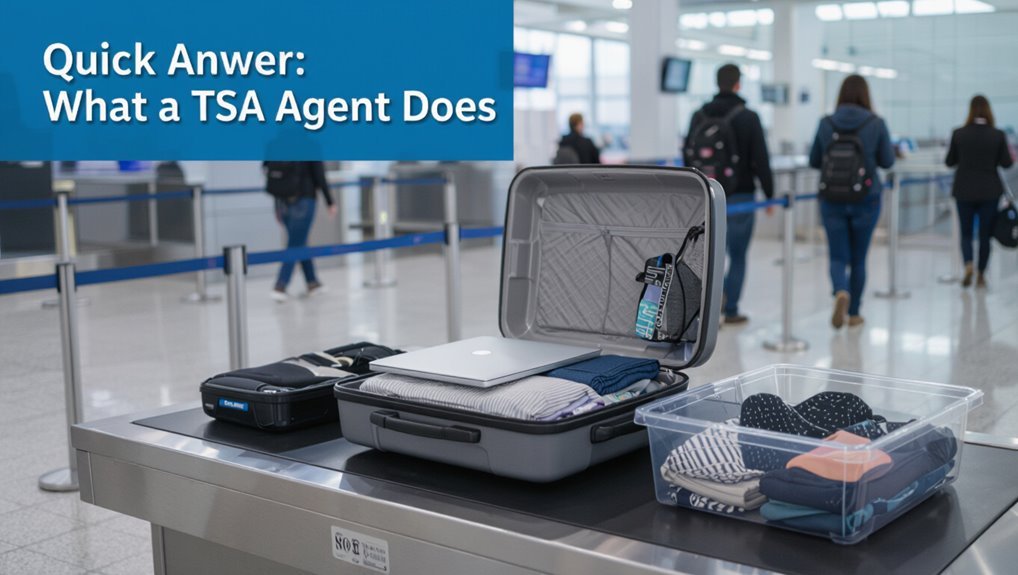
Think of a TSA agent as the frontline protector of airport security: they screen people and baggage, check IDs and boarding passes, operate X-ray and advanced imaging systems, and respond to potential threats so travelers stay safe and on schedule.
You enforce rules, manage line flow, inspect suspicious items, assist passengers with special needs, report incidents, and coordinate with law enforcement to keep operations efficient.
Who This Guide Is For
Who’s this guide for?
You’re considering work in airport security, career switching to TSA, or preparing for hiring steps. You want clear expectations about duties, skills, and workplace realities without jargon.
Thinking about TSA or airport security? Get straight, practical expectations about duties, skills, and real workplace life.
You may be a recruiter, trainer, or family member seeking to understand the role.
This guide gives practical, concise insight to help you decide or prepare.
Typical TSA Shift: Core Duties
On a typical shift you’ll screen passengers efficiently to keep lines moving while enforcing security rules.
You’ll operate X-ray machines to inspect carry-on items and flag anything unusual.
You’ll also manage security incidents calmly, coordinating responses and documenting what happened.
Screening Passengers Efficiently
Although each shift brings different challenges, you’ll spend most of your time efficiently screening passengers to keep security moving and flights on schedule.
You’ll verify IDs, check boarding passes, guide travelers through checkpoints, enforce carry-on rules, and manage lines.
You’ll resolve common issues quickly, communicate clearly, and prioritize speed without sacrificing thoroughness to minimize delays and maintain safety.
Operating X-Ray Machines
While guiding passengers through checkpoints, you’ll also operate the x-ray machine that scans carry-ons and personal items.
You monitor images for prohibited items, adjust settings for clarity, and flag suspicious images for secondary screening.
You’ll work quickly, communicate findings, and maintain equipment logs.
- Laptop tucked in a bin
- Liquid bottles lined up neatly
- Electronics layered and visible
Managing Security Incidents
Because quick decisions can prevent bigger problems, you’ll respond to security incidents with calm, clear actions: assess the situation, secure the area, and coordinate with teammates and law enforcement as needed.
You’ll document facts, collect evidence, interview witnesses, and preserve chain of custody.
You’ll manage passenger flow, implement emergency protocols, and communicate updates to supervisors so operations resume safely and efficiently.
Checkpoint Organization and Roles
You’ll coordinate passenger flow to keep lines moving and reduce bottlenecks while keeping security standards front and center.
You’ll staff screening stations, operating X‑ray machines and conducting physical inspections with clear role assignments.
Together, these duties guarantee efficient, consistent checkpoint performance.
Passenger Flow Management
Organize the checkpoint so passengers move smoothly and safely from entry to boarding gate—clear lanes, visible signage, and staff assigned to specific roles cut confusion and delays.
You direct lines, adjust staffing for surges, and guide travelers calmly while maintaining security. Visual cues and brief announcements keep people informed.
- Queue lanes with barriers
- Staff at bottlenecks
- Signage and floor markings
Screening Station Duties
Set clear roles at the screening station so each team member knows their tasks—document checker, x-ray operator, pat-down officer, and roving supervisor—to keep lines moving and security tight. You coordinate shifts, verify IDs, monitor trays, conduct targeted searches, and communicate changes. Stay alert, enforce procedures, and support teammates to maintain efficiency and safety.
| Role | Primary Task | Backup |
|---|---|---|
| Checker | ID verification | Assist trays |
| X-ray | Image analysis | Alarm response |
| Pat-down | Physical screening | Witness searches |
| Supervisor | Oversight | Incident handling |
| Roving | Flow support | Relief duties |
Screening Carry-On Baggage (X‑Ray Procedures)
Start by positioning each carry-on on the conveyor so the x‑ray gives a clear, unobstructed view of contents; you’ll then monitor the image for prohibited items, density anomalies, and unusual shapes that require further inspection.
Place each carry-on on the conveyor for a clear x‑ray view, then monitor for prohibited items and anomalies
You’ll flag, pause the belt, and request physical checks when needed.
Visualize common challenges:
- Dense electronics creating shadowed areas
- Liquids in opaque containers
- Layered clothing hiding small items
Operating Body Scanners and Interpreting Images
After you’ve handled carry-on x‑rays, you’ll move on to operating body scanners and reading their images to spot concealed items on passengers.
You’ll monitor real-time displays, adjust settings for clarity, and distinguish anomalies from harmless contours.
You’ll follow protocols for alerts, document findings, and promptly notify supervisors or request secondary screening when images suggest prohibited items, all while maintaining passenger dignity and safety.
Conducting Safe, Respectful Pat-Downs
You’ll conduct a pat-down when screening technology suggests a potential threat or a passenger requests a physical check.
Use a respectful, trauma-informed technique by explaining each step, getting consent when possible, and offering a private area or same-gender officer if requested.
Keep your touch professional, brief, and focused on safety to protect both the passenger and yourself.
When Pat-Downs Are Needed
Although most screenings are resolved with walk-through or hand-held screening, pat-downs become necessary when metal detectors, scanners, or an individual’s clothing or medical devices prevent a clear assessment.
You’ll be told why, given options, and asked to consent.
Visualize scenarios:
- Bulky coat triggering an alarm
- Prosthetic or medical pump obscuring a scan
- Empty-handed alarm after baggage cleared
Respectful, Trauma-Informed Technique
When a pat-down becomes necessary, conduct it with respect and trauma-awareness to keep the person safe and calm.
Explain steps, get consent when possible, and offer a private screening.
Use gentle, professional touch, narrate each movement, avoid sensitive areas unless required, and allow a support person or same-gender officer if requested.
Document concerns and debrief respectfully afterward.
Secondary Screening: When and How It’s Used
Secondary screening is a focused follow-up check that happens when an initial security step raises a specific concern about a passenger, bag, or item.
Secondary screening is a targeted follow-up when an initial check flags a passenger, bag, or item for closer inspection.
You’ll be guided politely, asked targeted questions, and sometimes directed to a private area for discretion. Expect calm explanations and options.
- a quiet screening room
- an agent reviewing images
- your carry-on opened for inspection
Identifying and Handling Prohibited Items
After secondary screening clarifies a concern, agents will determine if any prohibited items are present and take appropriate action.
You’ll inspect, document, and safely secure items like weapons, sharp objects, or undeclared liquids.
You’ll follow policy for disposal, return, or law-enforcement referral, maintaining chain-of-custody and passenger privacy.
You’ll explain outcomes clearly and record incidents per protocol.
Managing Checked-Baggage Security and Random Checks
When you supervise checked-baggage security, you’ll follow established screening procedures to spot threats while keeping operations efficient.
You’ll conduct random inspections per protocol and document each step to maintain transparency.
Always verify chain-of-custody during transfers and inspections to preserve evidence integrity and accountability.
Baggage Screening Procedures
Although you won’t see every step of the checked-baggage process, TSA agents use layered screening methods—conveyor X-rays, explosive trace detection, and explosives-detection systems—to catch threats before bags reach aircraft holds.
You monitor images, tag alarms, and document findings.
Visualize:
- a conveyor belt revealing silhouettes
- a swab under a hood
- a technician confirming a flagged item
Random Inspection Protocols
If you’re overseeing checked baggage security, random inspection protocols add an unpredictable layer that deters threats and verifies system integrity; you select bags, inspect contents, document results, and adjust sampling to emerging risks.
| Selection Method | Action | Outcome |
|---|---|---|
| Random sampling | Open and inspect | Threat deterrence |
| Intelligence-led | Targeted check | Risk reduction |
Chain-Of-Custody Checks
Random and intelligence-led inspections help you catch threats, but they also create points where custody of a bag changes hands and records must be airtight.
You document transfers, seal tamper-evident tags, and log timestamps. Maintain chain integrity so evidence holds up and passengers stay safe.
- sealed tag on handle
- timestamped handoff form
- security tape across zipper
Alarms, Explosives, and High-Risk Responses
When an alarm signals a potential explosive threat or another high-risk situation, you must move decisively to secure the area, assess the credibility of the threat, and coordinate with bomb technicians and local emergency responders.
Your actions can protect travelers and staff while preserving evidence for investigators. You’ll evacuate if needed, control access, document observations, follow protocols, and communicate clearly until specialists declare the scene safe.
Monitoring Queues and Flow Control at Checkpoints
You’ll keep lines moving and maintain safety by actively monitoring passenger queues, spotting congestion early, and adjusting staffing or lane assignments as needed; clear directions, visible signage, and brief interventions can prevent delays and reduce security risks.
- You reassign lanes like moving pieces to open space.
- You point to signs, guide travelers, and calm frustration.
- You coordinate radios and timing to smooth throughput.
Behavioral Detection and Spotting Suspicious Behavior
You’ll watch for nonverbal cues like eye contact, posture, and nervous gestures to spot potential threats.
Compare each traveler’s behavior to a baseline so you can tell what’s normal for that person versus what’s unusual.
That contrast helps you prioritize who needs closer observation or brief questioning.
Recognizing Nonverbal Cues
Although body language can be subtle, you’ll learn to spot consistent patterns—like repeated gaze aversion, unnatural stillness, or excessive fidgeting—that often indicate heightened stress or deception.
Recognizing these nonverbal cues helps you prioritize observations and decide when to engage further.
- A passenger avoiding eye contact while grip tightens
- Someone frozen, shoulders tense, breathing shallow
- Hands constantly shifting pockets or bags
Use cues to inform discreet, respectful checks.
Assessing Behavioral Baselines
Noting individual nonverbal cues is only the first step; to spot suspicious behavior reliably, you need to establish a behavioral baseline for each person.
Observe normal pacing, posture, eye contact, and interaction patterns.
Compare deviations over time and context. Use objective notes, avoid assumptions, and corroborate with other indicators.
This lets you prioritize interventions while minimizing false positives.
Working With Law Enforcement and Airport Police
When incidents escalate beyond screening protocols, you coordinate closely with law enforcement and airport police to protect passengers and maintain operations; this means promptly relaying accurate information, securing perimeters when directed, and following officers’ commands while preserving evidence and passenger safety.
- You guide officers to scenes while keeping bystanders back.
- You assist with controlled evacuations and crowd movement.
- You maintain clear radio contact and situational updates.
Writing Incident Reports and Documentation
Document incidents promptly and clearly so investigations and follow-up actions aren’t hindered; you should record who was involved, what happened, where and when it occurred, and any immediate measures taken. Keep statements factual, use objective language, sign and timestamp entries, and attach evidence. Use consistent formatting for clarity.
| Who | What | When |
|---|---|---|
| Names | Incident type | Time/date |
| Roles | Actions taken | Location |
TSA Rules, SOPs, and Evolving Threat Guidance
As threats and tactics evolve, you need to stay current with TSA rules, standard operating procedures (SOPs), and threat guidance so your actions stay lawful, consistent, and effective; you’ll apply updates during screening, inspections, and response planning.
- quick checklist in hand at checkpoints
- revised screening diagram on the wall
- dynamic threat bulletin on your tablet
Privacy, Civil Liberties, and Passenger Rights
Because passengers have legally protected rights, you must balance security measures with respect for privacy and civil liberties, ensuring searches and screenings are lawful, non-discriminatory, and minimally intrusive.
You should explain procedures clearly, obtain consent when required, document actions, accommodate disabilities and religious practices, and handle complaints professionally.
Protecting rights builds trust while maintaining effective security.
Training and Continuing Education for Agents
While you’re on the front lines of aviation security, thorough initial training and ongoing education keep your skills current and your judgment sharp.
You complete classroom instruction, hands-on equipment practice, and scenario drills, then pursue refresher courses and certifications to adapt to evolving threats.
- simulated threat detection drills
- equipment calibration and use sessions
- classroom updates on regulations and technology
Required Soft Skills: Communication and De‑Escalation
Communication is a core skill you use every shift, from clearly explaining screening procedures to calming upset travelers.
You listen actively, choose respectful language, and set clear expectations to prevent misunderstandings.
You use empathy and a firm, calm tone to de-escalate tense situations, recognizing cues and calling for backup when safety or compliance needs professional intervention.
Technical Skills: Operating and Troubleshooting Equipment
Good people skills help you keep screenings orderly, and you’ll rely on the same calm judgment when handling equipment.
You learn to operate X‑ray machines, metal detectors, and explosive trace portals, and troubleshoot common faults quickly to avoid delays.
- Peering at X‑ray screens, spotting anomalies
- Tuning sensitivity on walk‑throughs
- Rerouting bags while diagnostics run
Equipment Maintenance Checks and Handover Routines
Because equipment downtime disrupts screening flow, you’ll perform routine maintenance checks and follow clear handover steps at each shift change. You log status, report faults, swap consumables, and brief incoming staff. Clear records speed repairs and maintain throughput.
| Item | Action | Frequency |
|---|---|---|
| X-ray | Clean lens | Daily |
| Conveyor | Check belt | Shift |
| Monitor | Confirm signal | Shift |
| Printer | Replace paper | Daily |
Health, Safety, and Ergonomics on Long Shifts
You should set up your screening station to support neutral posture, proper monitor height, and reachable controls to reduce strain.
You should watch for signs of fatigue—like slowed reactions or muscle tension—and use breaks and task rotation to manage risk.
We’ll cover practical adjustments and scheduling strategies to keep you alert and injury-free.
Ergonomic Workstation Setup
When you spend long shifts at a screening station, setting up your workstation to support neutral posture and reduce repetitive strain will keep you sharper and help prevent aches, fatigue, and injury.
You should adjust height, organize tools, and use support aids.
Visualize:
- monitor at eye level and forearms parallel
- cushioned wrist rests and adjustable chair
- clear reach zone, tools within arm’s length
Managing Fatigue Risks
Although long screening shifts can blur the line between vigilance and exhaustion, you can manage fatigue by prioritizing short breaks, sleep hygiene, and on-shift pacing strategies. Use caffeine strategically, hydrate, and stretch. Track hours, report excessive fatigue, and rotate tasks to stay alert.
| Strategy | Action |
|---|---|
| Breaks | Short, frequent rests |
| Sleep | Consistent schedule |
| Rotation | Task variety |
Shift Structure, Scheduling, and Overtime Realities
Someone working as a TSA agent will quickly learn that shift patterns and scheduling are driven by airport needs, not personal preference.
You’ll face rotating shifts, early mornings, nights, and peak travel periods that demand flexibility. Overtime is common during disruptions; it’s paid but can be exhausting.
Visualize the rhythm:
- Sunrise checkpoint bustle
- Midnight baggage sorting
- Rush-hour security lines
Career Path: From Entry Agent to Supervisor
If you start as an entry-level TSA agent, you’ll move through a clear progression of skills and responsibilities that can lead to supervisory roles.
You’ll sharpen screening, customer service, and incident-response abilities while gaining qualifications like lead agent training and firearms or explosives handling endorsements where required.
You’ll pursue promotions by demonstrating leadership, mentoring others, completing required certifications, and successfully managing operations, inspections, and personnel.
Pay, Benefits, and Typical Compensation
You’ll see pay organized into clear tiers based on your grade and location, with step increases as you gain time in service.
Benefits include health, retirement, paid leave, and some travel-related perks that can add real value to your total compensation.
Overtime, premium pay for nights or holidays, and performance incentives can greatly boost your take-home pay.
Pay Scale Tiers
Compensation for TSA agents is structured across multiple pay tiers that reflect experience, duty assignments, and location. You’ll typically start at the entry-level GS-equivalent rate and progress to higher steps as you gain tenure, specialized qualifications, or supervisory roles.
You’ll see pay change with duty, overtime, and promotion:
- Entry-level screener wages and overtime opportunities
- Mid-level specialist or lead positions
- Supervisory and managerial pay scales
Benefits And Perks
Beyond pay tiers, benefits and perks round out what you actually take home and how the job supports your life. You’ll get federal health coverage, retirement plans, paid leave, and basic training reimbursement. These help balance shift work and family needs while boosting long-term security.
| Benefit | Typical Offering | Notes |
|---|---|---|
| Health | Federal plans | Varies by enrollment |
| Retirement | FERS/Thrift | Employer contributions |
| Leave | Vacation/sick | Accrues annually |
Overtime And Incentives
Overtime and incentive pay can noticeably boost your take-home earnings, especially during peak travel periods or when staffing shortages require extra shifts.
You’ll get overtime rates, holiday premiums, and occasional bonuses tied to performance or hard-to-fill shifts. These extras can change scheduling decisions and financial planning.
- Double pay for major holidays
- Extra hours on crowded travel days
- Shift-differential for nights
Common Misconceptions About TSA Jobs
Although TSA work is often pictured as just standing at a checkpoint, there’s a lot more variety and responsibility behind the scenes that people miss.
You might think agents only flag bags, but you’ll handle passenger screening nuances, equipment maintenance, incident reporting, and coordination with law enforcement.
You’ll also need judgement, communication skills, and ongoing training—it’s a skilled, multifaceted job, not just routine screening.
How TSA Updates Procedures for New Threats
Recognizing that frontline screening work must adapt as threats evolve, TSA continually reviews and updates procedures to keep passengers and staff safe.
You’ll learn new steps, get refreshed training, and follow revised checklists when risks change.
- A screener pauses, reroutes a suspicious bag to inspection
- An agent dons gloves, uses test kits
- Signs change at checkpoints, directing flow
Technology Trends Shaping TSA Screening
As new threats and passenger volumes change, TSA is adopting smarter screening tech—like advanced imaging, AI-powered bag checks, and remote inspection tools—to help you move through checkpoints faster while keeping detection rates high.
You’ll notice automated threat recognition, credential authentication, and sensor fusion improving accuracy. Agents use these systems to focus on anomalies, reducing manual searches and enabling more consistent, data-driven security decisions at scale.
Tips for Passengers to Speed Up Screening
If you want to move through screening faster, come prepared: have your ID and boarding pass ready, empty pockets, remove bulky jackets and shoes when required, and place laptops and liquids in accessible bins.
Then follow directions, stay patient, and organize carry-ons.
Visualize the process:
- A clear bin with laptop and liquids
- Shoes neatly placed beside your bag
- ID and boarding pass held ready
Frequently Asked Questions
How Do TSA Agents Handle Lost Property Found in Screening Areas?
They document and secure found items, follow local TSA and airport property procedures, tag and log belongings, attempt to locate owners, transfer valuables to lost-and-found or law enforcement, and keep records until retrieval or disposition.
Can TSA Agents Refuse Service to Intoxicated Passengers?
Yes — you can be denied screening if you’re visibly intoxicated or disruptive; TSA officers won’t process you until you’re safe for screening, and they’ll involve airline staff or law enforcement if you pose a safety risk.
What Accommodations Are Made for Disabled Employees Working as TSA Agents?
You’ll receive reasonable accommodations like modified duties, adjusted schedules, assistive technology, ergonomic equipment, and physical access changes; management and HR’ll work with you to identify needs, provide medical documentation, and guarantee a safe, accessible workplace.
Do TSA Agents Receive Hazard Pay for Dangerous Assignments?
No, you typically won’t get blanket hazard pay; TSA agents may receive premium pay for certain duties (like supervisory overtime or specific pay differentials), but hazardous-assignment hazard pay isn’t generally standard across TSA roles.
How Are Internal Complaints Against TSA Agents Investigated?
Investigations go to TSA’s Office of Inspection; you’ll report complaints, they’ll gather evidence, interview witnesses including the agent, review footage, and determine findings; you’ll be informed of outcomes and any disciplinary or corrective actions taken.
Conclusion
Now you know what a TSA agent does: they screen people and bags, manage checkpoints, use tech, and adapt to new threats to keep travel safe. If you travel smarter—have your ID and boarding pass ready, follow rules, and pack thoughtfully—you’ll make their job easier and speed up screening for everyone. Remember, agents enforce safety, not inconvenience, so cooperate, ask questions if unsure, and expect efficient, professional handling of security procedures.