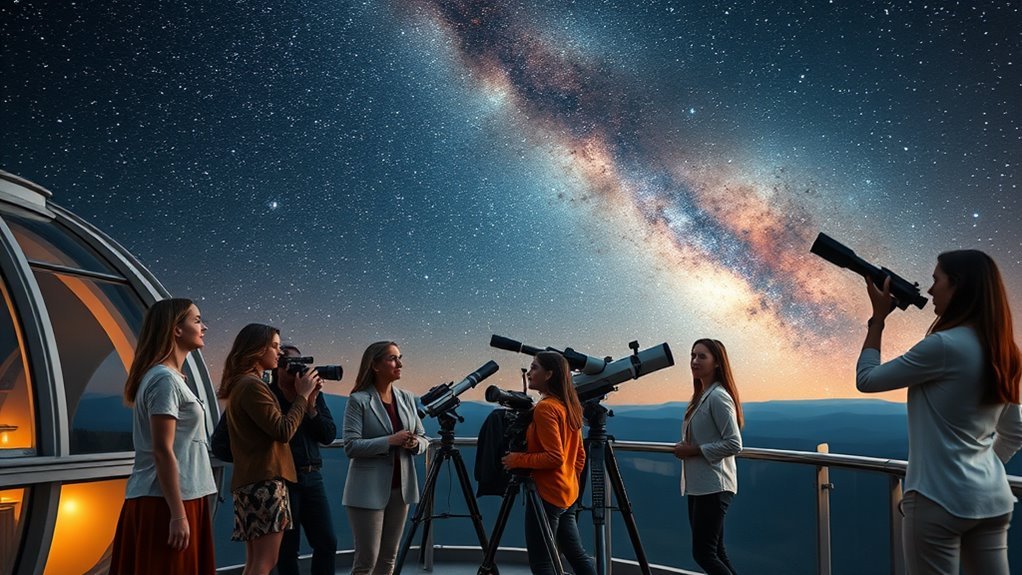
National Woman Astronomers Day
National Woman Astronomers Day is an annual celebration honoring the achievements and contributions of women in the field of astronomy. This day recognizes the pioneering work of female astronomers throughout history and aims to inspire future generations of women to pursue careers in astronomy and related sciences.
Quick facts
- When is it?: August 1
- Tagged as: Science, Astronomy, Women in STEM
- What’s the hashtag?: #WomanAstronomersDay
- When was it founded?: The exact founding year is unclear
- Who founded it?: The founder is not specified in the available information
History of National Woman Astronomers Day
National Woman Astronomers Day was established to commemorate the birth of Maria Mitchell, the first American woman astronomer, born on August 1, 1818. Mitchell made significant contributions to astronomy, including the discovery of a comet in 1847, which was later named after her. The day serves as a reminder of the important role women have played in advancing our understanding of the universe.
Timeline
1847: Maria Mitchell discovers a comet, later named “Miss Mitchell’s Comet”
1850: Mitchell becomes the first woman elected to the American Association for the Advancement of Science
1865: Mitchell becomes the first female astronomy professor at Vassar College
1963: Valentina Tereshkova becomes the first woman in space
1983: Sally Ride becomes the first American woman in space
1992: Mae Jemison becomes the first African American woman in space
National Woman Astronomers Day Dates
| Year | Month and Date | Day |
|---|---|---|
| 2025 | August 1 | Friday |
| 2026 | August 1 | Saturday |
| 2027 | August 1 | Sunday |
| 2028 | August 1 | Tuesday |
| 2029 | August 1 | Wednesday |
| 2030 | August 1 | Thursday |
Observed National Woman Astronomers Day
This day is observed by celebrating the achievements of women in astronomy and promoting gender equality in scientific fields. Many organizations host events, lectures, and workshops to highlight the contributions of female astronomers and encourage young women to pursue careers in astronomy and other STEM fields.
Educational institutions often organize stargazing events and astronomy-related activities to spark interest in the field. Museums and planetariums may feature special exhibits or programs focused on women astronomers throughout history.
The day also serves as an opportunity to discuss the challenges faced by women in astronomy and science, and to advocate for greater representation and support for women in these fields.
Fun Facts About National Woman Astronomers Day
- Caroline Herschel was the first woman to discover a comet in 1786
- Vera Rubin’s work on galaxy rotation rates provided evidence for the existence of dark matter
- Jocelyn Bell Burnell discovered pulsars as a graduate student in 1967
- Annie Jump Cannon developed the stellar classification system still used today
- Henrietta Swan Leavitt’s work on Cepheid variables helped establish the scale of the universe
Quiz
- Who was the first American woman to discover a comet?
- Which female astronomer’s work provided evidence for dark matter?
- Who was the first woman to receive a Nobel Prize in Physics for work in astronomy?
- Which female astronomer developed the stellar classification system?
- Who was the first woman to command the International Space Station?
(Answers: 1. Maria Mitchell, 2. Vera Rubin, 3. Andrea Ghez, 4. Annie Jump Cannon, 5. Peggy Whitson)
FAQs
Q: Why is National Woman Astronomers Day important?
A: It celebrates women’s contributions to astronomy and encourages more women to enter the field.
Q: How can I participate in National Woman Astronomers Day?
A: Attend local astronomy events, learn about female astronomers, or organize educational activities.
Q: Are there still gender disparities in astronomy?
A: Yes, women remain underrepresented in professional astronomy, though progress is being made.
Q: What are some challenges faced by women in astronomy?
A: Challenges include gender bias, work-life balance issues, and lack of representation in leadership roles.
Q: How can we encourage more girls to pursue astronomy?
A: By providing mentorship, creating inclusive environments, and highlighting successful female role models in the field.
Importance of National Woman Astronomers Day
National Woman Astronomers Day plays a crucial role in recognizing the often-overlooked contributions of women to the field of astronomy. It serves as a platform to highlight the groundbreaking discoveries and advancements made by female astronomers throughout history, inspiring future generations of women to pursue careers in astronomy and other STEM fields.
This day also brings attention to the ongoing challenges faced by women in astronomy, such as gender bias and underrepresentation. By raising awareness of these issues, it encourages the scientific community to work towards creating more inclusive and equitable environments for all astronomers, regardless of gender.
Furthermore, National Woman Astronomers Day provides an opportunity to educate the public about the importance of diversity in scientific research. It demonstrates how different perspectives and experiences can lead to innovative approaches and discoveries, ultimately advancing our understanding of the universe.
Related
- International Day of Women and Girls in Science
- Women’s History Month
- World Space Week
- International Astronomy Day
- Ada Lovelace Day