
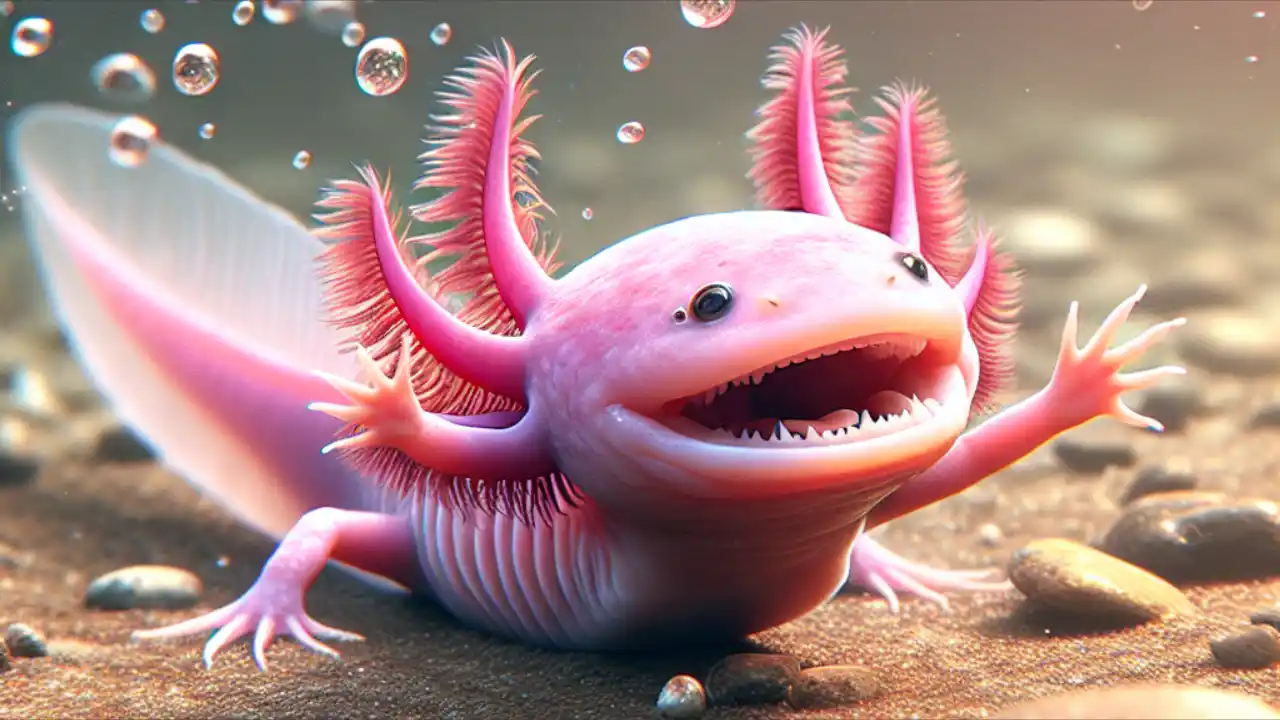
National Axolotl Day
National Axolotl Day: Celebrating Mexico’s Enigmatic Salamander
National Axolotl Day is an annual celebration dedicated to raising awareness about the unique and critically endangered axolotl, a neotenic salamander native to Mexico. This special day highlights the importance of conservation efforts and educates the public about this fascinating creature.
Quick Facts
- When is it?: February 1st
- Tagged as: Wildlife conservation, Mexican heritage
- What’s the hashtag?: #NationalAxolotlDay
- When was it founded?: 2018
- Who founded it?: Mexican Senate
History of National Axolotl Day
National Axolotl Day was established in 2018 following the publication of a groundbreaking study in the scientific journal Nature, which revealed the complete sequencing of the axolotl genome. This discovery showcased the axolotl’s remarkable genetic makeup, boasting the largest genome ever sequenced—32 billion DNA base pairs, more than ten times the size of the human genome.
Timeline
- 1864: First living axolotls brought from Mexico to Paris
- 1865: Axolotls reproduce in captivity, challenging previous scientific assumptions
- 2018: Axolotl genome fully sequenced
- 2018: Mexican Senate decrees February 1st as National Axolotl Day
Dates by Next Year
| Year | Month | Date | Day |
|---|---|---|---|
| 2025 | February | 1 | Saturday |
| 2026 | February | 1 | Sunday |
| 2027 | February | 1 | Monday |
| 2028 | February | 1 | Tuesday |
| 2029 | February | 1 | Thursday |
| 2030 | February | 1 | Friday |
Observed
National Axolotl Day is celebrated through various educational activities, including talks, workshops, and exhibitions. These events aim to inform the public about ongoing preservation efforts and scientific advancements related to axolotls. Many institutions, such as museums, aquariums, and research centers, participate by organizing special programs and interactive displays.
Fun Facts About Axolotls
- Axolotls can regenerate lost body parts, including limbs, organs, and even portions of their brain.
- They remain in a juvenile state throughout their lives, a phenomenon called neoteny.
- The name “axolotl” comes from the Aztec language Nahuatl and roughly translates to “water monster.”
- Wild axolotls are critically endangered, with estimates suggesting fewer than 1,000 remain in their natural habitat.
- Axolotls have been important in scientific research, particularly in studies of tissue regeneration and cancer.
Quiz
- What is the scientific name of the axolotl?
- In which year was National Axolotl Day established?
- What unique ability do axolotls possess?
- Where are axolotls originally from?
- How many DNA base pairs does the axolotl genome contain?
(Answers: 1. Ambystoma mexicanum, 2. 2018, 3. Regeneration of body parts, 4. Mexico, 5. 32 billion)
FAQs
Q: Why are axolotls important?
A: Axolotls are important for biodiversity, scientific research, and Mexican cultural heritage.
Q: Can axolotls be kept as pets?
A: Yes, but it’s regulated in some areas due to conservation concerns.
Q: What threatens wild axolotls?
A: Habitat loss, pollution, and introduced species are major threats to wild axolotl populations.
Related
- World Wildlife Day
- Endangered Species Day
- Mexican Independence Day
- World Amphibian Day
- Earth Day

