
Is There a Weight Limit on Carry On Bags? Airline Rules
There’s no universal carry‑on weight limit—you’ll need to check your airline because each sets its own rules. Many carriers focus on size rather than weight, but low‑cost and some international airlines strictly weigh bags at check‑in or the gate. You can usually repack, gate‑check, or pay a fee if you’re overweight, and elite passengers or premium cabins may get exceptions. Keep a luggage scale handy and keep going to see practical packing and enforcement tips.
Is There a Universal Carry‑On Weight Limit?
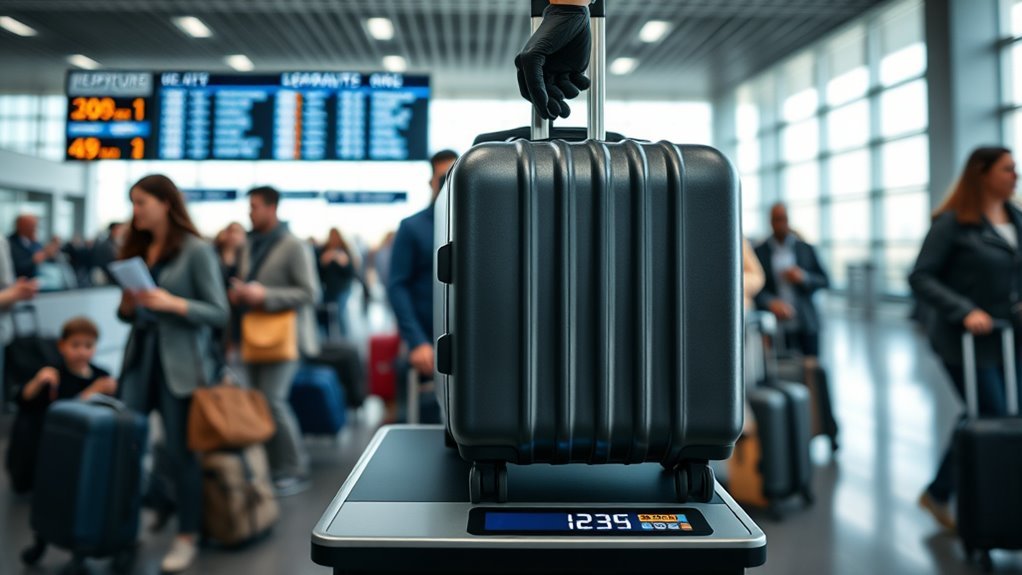
Because airlines set their own rules, there isn’t a single, universal carry‑on weight limit you can rely on worldwide. You’ll find broad variation: some carriers only limit dimensions, others set strict kilogram or pound caps, and regional or low‑cost airlines often enforce lighter allowances.
Before you pack, check your specific airline’s website or ticket details for precise weight and size rules. Frequent travelers keep a small scale and measure both bag weight and dimensions to avoid surprises at the gate.
When in doubt, contact customer service — they’ll confirm limits and help you decide whether to consolidate, redistribute, or gate‑check items.
Why Some Airlines Set Carry‑On Weight Limits (And Others Don’t)
When airlines set carry-on weight limits, they’re balancing safety, cabin space, and operational consistency—so you’ll see firms with strict caps and others that focus only on dimensions. You encounter weight rules when airlines want predictable load distribution, easier gate handling, and reduced injury risk for staff lifting bags into overhead bins.
Low-cost carriers often enforce limits to maximize seat and bin usage and to upsell checked baggage. Legacy carriers may rely on size standards and crew judgment, prioritizing passenger convenience.
Ultimately, policy differences reflect aircraft types, turnaround speed priorities, labor agreements, and business models, so check rules before you fly.
Size Rules Vs. Weight Rules: Which Matters More?
You’ll usually find that size rules matter more than weight limits because an over‑sized bag gets flagged regardless of how light it is.
That said, some airlines do enforce strict weight caps or have exceptions for premium passengers, so always check your carrier’s policy before you pack.
To stay safe, prioritize a compact, lightweight bag and use smart packing strategies like rolling clothes and limiting shoes.
Size Often Trumps Weight
Although weight limits get most attention, size restrictions usually decide whether your bag comes onboard; airlines can reject an oversized carry-on even if it’s light, because overhead bin space and cabin safety depend on dimensions. You’ll need to measure length, width, and height, not just lift it to check heft. Gate agents judge fit quickly, so a compact, well-shaped bag beats a bulky one. Pack strategically to maximize usable space and avoid odd protrusions.
- Measure before you fly to avoid surprises.
- Choose soft-sided bags for flexible fitting.
- Use packing cubes to compress items.
- Keep handles and wheels within limits.
Airline Exceptions And Policies
Because airlines balance safety, cabin space, and customer service differently, exceptions and enforcement can vary widely — and that’s why you should check specific carrier policies before packing.
You’ll find some carriers enforce strict size limits but ignore weight until gate checks are necessary, while others set explicit weight caps, especially on regional jets.
Elite status, fare class, or special items (medical equipment, duty-free purchases) can earn exceptions.
Gate agents have discretion; they’ll prioritize safe stowage and on-time boarding.
Don’t assume uniformity: consult your airline’s website or call ahead to avoid surprises and potential fees.
Practical Packing Strategies
When you’re deciding what to pack, focus first on size limits—if your bag won’t fit in the overhead or under the seat, weight won’t matter because it’ll be checked; after that, manage weight to avoid strain and fees. You’ll prioritize items that fit the shape and allowed dimensions, then trim bulk. Use compression, selective shoes, and travel-size toiletries. Pack smart to keep carry-ons compliant and comfortable.
- Roll clothes to save space and reduce wrinkles.
- Wear heavy items on board to lower carry weight.
- Use packing cubes to organize and compress.
- Limit liquids and duplicates to essentials only.
How U.S. Legacy Carriers Handle Carry‑On Limits
If you fly with a U.S. legacy carrier—like American, Delta, or United—expect clearer, more consistent carry‑on rules than with many low‑cost rivals: these airlines generally let you bring one standard carry‑on plus a personal item, enforce size limits strictly, and outline weight expectations (explicit or de facto) in their policies so you can plan what fits and what might get gate‑checked.
You’ll find staff check bags at boarding when cabins are full, and gate agents may ask you to gate‑check oversized or heavy items.
Pack to airline dimensions, know weight hints, and be ready to rearrange or check bags.
How European And International Carriers Set Carry‑On Rules
When you fly in Europe or beyond, you’ll notice rules shaped by regional regulators and local norms rather than a single U.S.-style standard.
Airlines set their own weight and size limits, so you’ll want to check each carrier’s policy before packing.
Also be aware that enforcement and exceptions — like premium cabin allowances or gate checks — vary by airline and airport.
Regional Regulatory Differences
Because aviation rules come from a mix of national authorities, regional bodies, and airline policies, carry-on limits can vary widely across Europe and the rest of the world. You’ll notice patterns driven by regulators, airport infrastructure, and safety standards. Check local rules before packing.
- EU: EASA guidance influences member states, but carriers set size and often weight limits you must follow.
- UK: Post‑Brexit, the CAA lets airlines prescribe limits; many mirror EU practice but can differ.
- US/Canada: Authorities focus on safety; airlines commonly impose size restrictions without a federal weight cap.
- Other regions: National regulators plus airport constraints create varied, sometimes stricter, rules.
Airline Weight Policies
How do airlines decide carry-on weight limits, and what does that mean for your packing? Airlines set policies based on cabin size, safety, boarding efficiency, and fleet type, so you’ll see varied limits across European and international carriers.
Legacy carriers often allow heavier bags; low-cost airlines restrict weight to control costs and turnarounds. Some specify per-bag kilograms, others combine piece and size rules.
You’ll need to check your carrier’s website before flying, note whether limits apply at boarding or gate, and weigh your packed bag at home. Adjust contents or buy an upgrade if your carry-on exceeds the stated limit.
Enforcement And Exceptions
European and international carriers enforce carry-on rules unevenly, and you’ll notice the differences at check-in, gate, and on board. You should expect strict weight checks on some European low-cost airlines, lenient staff at legacy carriers, and variable enforcement on regional routes.
Know your carrier’s written allowance, but be ready for surprise measures like gate weighing or compulsory stowage in hold. Pack smart: prioritize essentials, use a compact bag, and weigh it before travel.
- Check the airline’s official policy online.
- Weigh your bag at home.
- Prepare to gate-check if asked.
- Keep receipts for exceptions.
How Low‑Cost Airlines Enforce Strict Carry‑On Weight Rules
When you fly with a low-cost carrier, they’ll often weigh your carry-on at check-in or the gate to enforce strict limits, using scales, size frames, or both to make quick, consistent decisions.
You’ll be asked to place bags on a scale or slide them into a metal frame; if it’s over, attendants will insist on checking it or paying a fee.
Staff follow script and policy to reduce disputes, and peak-time checks speed boarding.
Staff stick to scripts and rules to avoid arguments, and busy-time spot checks keep boarding moving smoothly.
You should weigh and size your bag before heading to the airport, pack strategically, and be ready to rearrange items to avoid surprise charges.
Representative Carry‑On Weight Limits: Major Carriers And Low‑Costs
Now that you know how low-cost carriers enforce strict carry-on checks, it’s useful to see what weight limits you’ll actually face. You’ll find variation: big legacy airlines often set soft limits (7–10 kg/15–22 lb) while low-cost carriers impose firm caps (7–10 kg) or bundle allowances with paid priority. Check specifics before packing.
- Legacy US/European carriers: typically rely on size; weight guidance ~7–10 kg but rarely enforced.
- Low-cost European carriers: firm 8–10 kg limits and frequent checks.
- Budget Asian carriers: often 7 kg strict limits for free cabin item.
- Low-cost US carriers: variable policies, read the fare rules.
When And Where Airlines Are Likely To Weigh Your Carry‑On
If you’re flying a low-cost carrier or booked a basic fare, expect staff to weigh your carry-on at the gate or during boarding; legacy airlines are more likely to skip weighing unless your bag looks oversized or you’ve flagged security concerns.
Flying a low-cost or basic-fare flight? Expect gate or boarding carry-on weighs; legacy carriers less strict unless bags look oversized.
You’ll also face checks at check-in, curbside, or self-service kiosks where agents verify size and weight.
High-traffic flights, smaller aircraft, and strict markets (Europe, Asia) see more enforcement.
Security personnel might weigh items during screening if something seems suspect.
Frequent travelers find weighing stations useful—carry scales or packing lighter to avoid surprises and delays.
What Happens At The Gate If Your Carry‑On Is Overweight?
You’ll usually find out at the gate if your carry-on is over the limit because staff will ask you to put it on a scale or try to stow it in the overhead bin; agents then decide how to handle it based on airline policy and space.
You’ll be asked to change plans quickly.
- Pay a fee to gate-check the bag and keep essentials with you.
- Move items into a smaller personal bag if allowed and repack.
- Have the bag gate-checked free if the flight is full and policy permits.
- Refuse inspection and risk denied boarding or forced check.
Personal Item Vs. Carry‑On: Size And Weight Differences
Although airlines often let you bring both, a personal item and a carry‑on serve different roles: the personal item is smaller and meant to fit under the seat (think backpack, purse, or briefcase), while the carry‑on goes in the overhead bin and can be larger and heavier within the airline’s limits.
Personal items fit under the seat for essentials; carry‑ons go overhead for bulkier luggage within airline limits.
You should treat the personal item as immediate essentials—documents, devices, medications—so it stays accessible and compact.
Carry‑ons hold bulkier items and may face weight checks depending on the carrier.
Always check your airline’s specific size and weight rules before packing to avoid gate fees or forced gate check.
Cabin Class And Elite Status: Does Your Carry‑On Allowance Change?
Your cabin class can change how much weight and how many bags you’re allowed, with first and business often getting larger or additional carry-ons.
If you’ve got elite status, airlines may grant extra size or weight exceptions and other perks like priority boarding. Check your specific loyalty tier rules—some tiers cap carry-on dimensions while others waive limits entirely.
Class-Based Carry Allowance
When you pick a cabin—economy, premium economy, business, or first—or hold elite status with an airline, your carry‑on allowance can change, so check the specific rules before packing.
You’ll often see size and weight limits vary by class: higher classes may permit larger or heavier bags, while economy usually enforces stricter limits. Always verify the airline’s published dimensions and weight to avoid gate hassles.
- Economy: typically smallest allowance and strictest enforcement.
- Premium economy: modestly increased size or weight.
- Business: larger bags and relaxed weight rules.
- First: most generous carry allowances.
Elite Perks And Exceptions
Beyond cabin class, elite status or loyalty tier often changes what you can bring onboard. If you’re an elite member, you may get extra carry-ons, waived fees, or relaxed size rules; airlines advertise these perks as priority benefits.
Don’t assume uniformity: benefits vary by airline, tier level, and route. Verify your account benefits before travel—check your booking confirmation or airline app for documented allowances.
Some elites also enjoy priority boarding that makes stowing larger items easier.
Remember perks can be discretionary and tied to availability, so always have a compliant backup bag if gate agents enforce limits.
Loyalty Tier Size Limits
Many airlines let elite members bring larger or additional carry-ons, but policies vary widely by carrier and tier—so don’t assume your usual allowance applies.
- Check your airline app or website before you pack; elite benefits often list size or item exceptions.
- Higher cabin classes (business, first) commonly allow an extra personal item or a larger bag—confirm dimensions, not just quantity.
- Elite tiers may grant priority boarding, which helps secure overhead space, but isn’t a guaranteed size waiver at the gate.
- When in doubt, contact customer service to get written confirmation; visual gate agents sometimes enforce stricter limits.
Connecting Flights: Handling Conflicting Carry‑On Rules
If your trip includes connections on different airlines, you’ll want to check each carrier’s carry-on rules before packing, because size and weight limits can vary and gate agents enforce them differently. You should plan for the strictest rule on your itinerary, pack to that limit, and carry essential items in a personal item. At transfer, confirm allowance with the gate agent if rules conflict. Consider gate-checking or shipping bulky items ahead. Use this quick comparison to visualize possible mismatches:
| Airline A | Airline B |
|---|---|
| 22 x 14 x 9 | 21 x 15 x 8 |
| 10 kg | 7 kg |
| 1 bag | 1 bag |
| free | fee |
| gate-check possible | no gate-check |
Exceptions: Medical Gear, Baby Supplies, And Instruments
When you travel with medical devices, baby supplies, or musical instruments, airlines usually make exceptions to standard carry-on limits so essential items can stay with you. Check documentation rules and notify the airline in advance to avoid surprises. You’ll typically be allowed extra or oversized items if you can prove need, but policies vary by carrier and country. Pack confidently, keeping accessibility and safety in mind. Bring prescriptions, letters from your doctor, and any manuals. Call ahead to reserve space for bulky cases.
- Medical devices: masks, oxygen, mobility aids, battery rules
- Baby supplies: formula, diapers, breast pumps
- Instruments: soft cases, gate-check options
- Documentation: prescriptions, notes, receipts
How To Weigh Your Carry‑On Accurately At Home
You can get an accurate weight at home using a bathroom scale—step on it holding your bag, then subtract your body weight.
If you don’t have a scale, balance the bag against known household items (like two 10 lb dumbbells) and compare.
For the easiest and most reliable result, invest in a handheld luggage scale that clips to the handle and gives a direct readout.
Use A Bathroom Scale
Because most bathroom scales sit flat and give quick, repeatable readings, they’re the easiest tool to weigh a carry-on at home accurately. Place the scale on a hard, level floor and zero it if possible.
Don’t lift the bag awkwardly—use both hands and set it gently. Take two readings and average them if they differ.
- Weigh yourself first, note number.
- Hold the packed carry-on, step on scale, note combined weight.
- Subtract your weight from combined weight to get bag weight.
- Repeat once more to confirm and adjust contents as needed.
Balance With Household Items
If you don’t have a scale, balance your carry‑on with common household items to estimate its weight: place the packed bag on one end of a stiff board and stack known-weight objects (water bottles, canned goods, dumbbells) on the other until the board levels, then add those weights to get the bag’s approximate mass.
Use identical bottles or cans so their labeled weights are reliable. Position the fulcrum near the center for stability.
Count partially filled containers by comparing volume. Round up slightly to stay safe with airline limits.
Recheck after removing or adding items to guarantee accuracy before departure.
Invest In A Luggage Scale
Balancing your bag against household items works in a pinch, but a luggage scale gives you a faster, more precise read before you head to the airport. You’ll save fees and stress by weighing luggage at home.
Choose a digital hanging scale with a clear display and a 50 kg (110 lb) range. Test accuracy with a known weight, replace batteries regularly, and keep the strap handy in your suitcase.
- Buy a compact digital hanging scale.
- Calibrate with a known object.
- Weigh fully packed bags by the handle.
- Record weights for future packing.
Packing Strategies To Stay Under Carry‑On Limits
When you pack with intent, you can often shave pounds off your carry-on without sacrificing essentials. Prioritize versatile clothing that mixes and matches; pick lightweight fabrics and layer instead of bulky items. Wear your heaviest jacket and shoes onboard.
Use packing cubes to compress garments and prevent overpacking. Transfer liquids into travel-size containers and carry only required toiletries. Limit extras—bring one multipurpose gadget and minimal chargers.
Replace hardcover books with an e-reader. Plan outfits by day to avoid duplicates. Weigh your bag before leaving home and remove nonessential items until you meet the airline’s limit.
Lightweight Luggage And Smart Gear To Reduce Weight
Once you’ve pared down your packing, the next step is choosing luggage and gear that won’t fight you at the scale. Pick a lightweight carry-on frame or soft-sided bag to shave pounds before you load. Opt for slim, compressible packing cubes and a compact toiletry kit.
Trade heavy shoes for one versatile pair. Choose tech with detachable batteries and a single multi‑purpose adapter.
- Ultralight carry-on (under 5 lbs)
- Compression cubes and lightweight toiletries
- Collapsible daypack or tote
- Multi-use clothing and lightweight footwear
These choices cut dead weight without sacrificing function.
Gate Checklist To Avoid Overweight Fees
Before you hit the gate, run a quick weight-and-size check so you don’t get slapped with surprise fees. Weigh your bag on a portable scale or ask gate staff; measure dimensions if it looks bulky. Shift heavy items to your personal item, wear layers, and zip pockets closed. If it’s borderline, remove toiletries or duty-free bags.
| Action | Quick Tip |
|---|---|
| Weigh bag | Use portable scale or bathroom scale |
| Measure | Check length+width+height visually |
| Redistribute | Move heavy items to personal item |
| Final check | Close zippers, compress, ask staff if unsure |
Deciding When To Pay For Checked Baggage Vs. Squeezing Carry‑On
Decide whether to check a bag based on trip length, how many heavy items you’re carrying, and the airline’s fees.
If squeezing items into your carry‑on risks overweight fines or damaged gear, it’s often cheaper to pay for a checked bag.
Weigh the cost, convenience, and risk to pick the smarter option.
When To Check Bags
If you’re weighing whether to pay for a checked bag or cram everything into your carry-on, start by listing what you truly need on the trip—and what’s replaceable or can be left behind. Decide based on convenience, cost, and risk: will oversized items slow you down, or is a checked bag worth avoiding airport stress?
Choose checking when items exceed airline size/weight, when you need bulky gear, when you’d rather not gate‑check, or when multiple connections raise theft/damage risk. Pack valuables and essentials in your carry‑on, then check the rest if the tradeoff favors ease over carry flexibility.
- Size/weight exceed limits
- Bulky gear needed
- Multiple connections risk
- Cost vs convenience
Carry‑On Weight Tradeoffs
When you’re weighing whether to squeeze more into your carry-on or pay for a checked bag, compare the real costs: gate‑check hassles, potential fees, and how much time and freedom you’ll lose versus the risk of delays or lost luggage.
Decide based on trip length, itinerary, and activities. For short trips, prioritize carry‑on to skip waits. For longer or gear‑heavy travel, check a bag to avoid overweight surcharges and cramped overhead bins.
Factor connecting flights, carry‑on size limits, and your tolerance for hauling items through airports. If fees are low and lost‑bag risk concerns you, check it.
Frequently Asked Questions
Can I Bring Liquids Over 100ML in My Carry‑On if Medically Necessary?
Yes — you can bring liquids over 100ml in your carry‑on if medically necessary; declare them at security, carry prescriptions or a doctor’s note, and security staff may inspect or test the liquids before allowing them through.
Do International Carry‑On Weight Limits Count Layovers in Multiple Countries?
No, they usually don’t count layovers; each airline sets its own carry‑on weight rules and enforces them at boarding for each flight segment, so you’ll need to meet the limit for every carrier operating those legs.
Are Duty‑Free Purchases Included in My Carry‑On Weight Allowance?
Yes — duty‑free purchases count toward your carry‑on weight allowance unless an airline or airport exempts sealed duty‑free bags. Check policies at purchase and your airline; keep receipts and sealed bags to guarantee compliance during boarding.
Can Sports Equipment (E.G., Tennis Racket) Be a Carry‑On Instead of Checked?
Yes — you can often carry a tennis racket onboard if it fits overhead or under the seat and meets airline size rules; check specific carrier policies, gate agent discretion, and security guidelines, as some items may need to be checked.
Will Airline Staff Let Me Redistribute Items Between Passengers to Avoid Fees?
Yes — you can usually redistribute items between passengers to avoid fees, but airlines may inspect bags and enforce size/weight limits; be discreet, cooperative, and know stricter low-cost carriers might still charge or refuse redistribution.
Conclusion
There isn’t a universal carry‑on weight limit, so you’ll need to check your airline before you pack. Focus on size first—most carriers enforce dimensions more than pounds—while noting that some international and low‑cost airlines do set strict weight caps. Use lightweight luggage, smart packing, and a gate checklist to avoid surprises. If your bag’s pushing limits, weigh the convenience of paying for checked baggage versus trimming and redistributing items.
