How to Travel to Kyoto From Tokyo Best Routes Explained
You can pick speed, savings, or scenery. If you want fast and convenient, take the Shinkansen (Nozomi ~2–2.5 hours; Hikari ~2.5–3 hours) for comfort and frequent departures. If you want to save money, choose overnight buses or local JR trains (7–9 hours; buses ¥3,000–¥6,000). For a relaxed trip, use coastal or regional lines to enjoy landscapes. Pack light, book seats for long trips, and keep plans flexible to learn the best options ahead.
Which Tokyo–Kyoto Route Should You Choose? Fast, Cheap, or Scenic?
Wondering whether to prioritize speed, savings, or scenery on your Tokyo–Kyoto trip?
You’ll pick based on priorities: choose the Shinkansen for fastest, efficient travel; opt for overnight buses or local trains if you’re watching costs; take slower coastal or rural routes when you want landscapes and unhurried stops.
Balance time, budget, and experience to match your itinerary and travel style.
Quick Summary: Travel Times and Costs at a Glance
You’ll see that Shinkansen trips shave travel time down to about 2–2.5 hours, while budget overnight buses can take 8–9 hours but cost a fraction of the price.
I’ll compare typical fares and ticket types so you can weigh speed against savings.
That way you can pick the option that fits your schedule and budget.
Shinkansen Travel Times
1 quick glance will show you that Shinkansen options balance speed and cost: the Nozomi cuts Tokyo–Kyoto to about 2 hours 15 minutes but costs more, the Hikari takes roughly 2 hours 40 minutes with slightly lower fares, and the Kodama stops more often, stretching travel past 3 hours while offering the cheapest tickets.
| Service | Time/Fare |
|---|---|
| Nozomi | Fastest / Higher |
| Hikari | Mid / Moderate |
| Kodama | Slowest / Lowest |
| Notes | Reserved seats available |
Budget Bus Options
Budget buses shave travel costs between Tokyo and Kyoto to a fraction of Shinkansen fares, though they add several hours to your journey—expect about 7–9 hours on overnight or daytime services priced roughly ¥3,000–¥6,000 one-way depending on season and seat type.
You’ll board from major terminals, get reclining seats with varying legroom, and can save by booking in advance or choosing less popular departure times.
Estimated Trip Costs
After weighing bus options, let’s look at estimated trip costs and travel times so you can pick the best balance of speed and price.
You’ll compare fares, durations, and comfort to match your priorities. Consider these typical figures and choices:
- Shinkansen: ~2–2.5 hours, ¥13,500–¥14,500 (one-way).
- Highway bus: ~8–9 hours, ¥3,000–¥7,000.
- Overnight bus: ~7–9 hours, ¥3,000–¥5,000.
Travel-Time Comparison
When planning your trip, compare Shinkansen travel time against flying to see which fits your schedule.
Remember to factor in airport transfers, security, and boarding so you get an accurate flight versus train picture.
Add door-to-door time to know the real total travel time between Tokyo and Kyoto.
Shinkansen Travel Time
Shinkansen trains make the Tokyo–Kyoto trip fast and predictable: depending on the service you choose, you’ll travel in about 2 hours 15 minutes on the Nozomi, roughly 2 hours 40 minutes on the Hikari, and closer to 3 hours or more on slower Kodama services that stop frequently.
- Choose Nozomi for speed and frequency.
- Pick Hikari for JR Pass compatibility.
- Take Kodama if you need local stops.
Flight Versus Train
Although flying can look faster on paper, you should weigh total door-to-door time: trains often beat flights once check‑in, security, and transfers are considered.
The shinkansen runs frequently, is punctual, and gets you straight into central Kyoto.
Flights may save airborne minutes, but you’ll spend extra time reaching airports, queuing, and transferring—so compare schedules and luggage needs before choosing.
Total Door-To-Door
Comparing total door-to-door time gives a clearer picture than looking at in‑air or on‑rail minutes alone.
You’ll factor airport transfers, security, train station walks, and luggage handling. For most, Shinkansen from central Tokyo beats flights once you include transfers.
Consider these estimates:
- Shinkansen: ~3–4 hours door-to-door.
- Domestic flight: ~4.5–6 hours door-to-door.
- Overnight bus: ~7–9 hours door-to-door.
Cost Comparison and Sample Fares
When you’re choosing between rail, bus, and budget flights, think about total cost—not just the ticket price—because travel time, luggage fees, and seat reservations change the value of each option.
A shinkansen run costs ¥13,000–¥14,500 one-way; highway buses typically ¥3,000–¥8,000; low-cost flights can be ¥5,000–¥12,000 plus transfers.
Factor convenience and extras when comparing.
Best Route for First-Time Visitors to Japan
For your first trip from Tokyo to Kyoto, choose the transport that best fits your budget and comfort—Shinkansen for speed, overnight bus for savings, or a flight if you’re connecting.
Book tickets in advance to lock in seats and release better fares, and check luggage rules so you won’t be caught off guard.
Time your departure to avoid rush hours and give yourself plenty of transfer time at stations or airports.
Best Transport Option
If this is your first trip to Japan, taking the shinkansen (bullet train) from Tokyo to Kyoto is the clearest, fastest option: it gets you downtown in about 2–2.5 hours, runs frequently, and offers comfortable seating with easy luggage storage.
You’ll enjoy reliability, scenery, and punctuality.
- Speed and convenience
- Comfort and luggage space
- Frequent departures
Ticket Booking Tips
Because train times and seat availability change quickly, you’ll want to book your shinkansen tickets as early as possible—especially during peak travel seasons like Golden Week, Obon, and New Year. Use JR Rail Pass if eligible, reserve seats online, and keep copies. Compare Nozomi versus Hikari for speed and pass coverage.
| Tip | Action |
|---|---|
| Pass | Check eligibility |
| Reserve | Book online |
| Compare | Nozomi vs Hikari |
| Confirm | Print or save e-tickets |
Luggage And Timing
While you’re planning the best route from Tokyo to Kyoto, think practical about luggage and timing so your trip stays smooth: pack light, use lockers or delivery services, and book trains off-peak to avoid crowds.
Consider reservation windows and transfer time. Balance convenience and cost by choosing trains that fit your schedule and luggage limits.
- Use luggage delivery (takuhaibin).
- Reserve green/carriage seats.
- Allow 30–45 minutes for transfers.
Best Route for Travelers on a Tight Schedule
Although you’ve got limited time, the shinkansen is the clear choice: take the Nozomi on the Tokaido line for the fastest, most frequent service (about 2 hours 15 minutes).
Then use local transit in Kyoto to reach your sites quickly.
Book morning departures, reserve seats, pack light for quick transfers, and aim for a hotel near a major station to maximize sightseeing time.
Best Route for Slow Travel and Sightseeing En Route
If speed mattered before, now you’ll slow down to savor the journey: choose Kodama or Hikari services on the Tokaido line that stop at charming towns, or leave the shinkansen at Odawara, Atami, or Mishima to explore coastline, onsen, and historic post towns by local train and bus.
You’ll linger, photograph, and taste local specialties.
- Stop at Odawara for castle and Hakone access.
- Explore Atami’s seaside and ryokan baths.
- Visit Mishima for plum gardens and quiet streets.
When to Pick Speed Over Savings
When your schedule is tight or you want more time at destinations, choose speed over savings: take Nozomi or faster Hikari shinkansen services so you spend less time on trains and more exploring Kyoto and stops along the way.
Opt for speed when you have limited days, tight connections, early meetings, or bad weather forecasts that could cut into sightseeing — prioritize time.
Fastest Option: Taking the Shinkansen (Bullet Train)
Speed matters most on the Tokyo–Kyoto corridor, and the Shinkansen is hands-down the fastest way to get there.
You’ll board quickly, enjoy smooth riding, and arrive refreshed. Tickets are straightforward, stations are central, and luggage space is practical.
- Book seats for peak times.
- Travel light for easier boarding.
- Use station lockers if needed.
Which Shinkansen Line and Train Types to Take
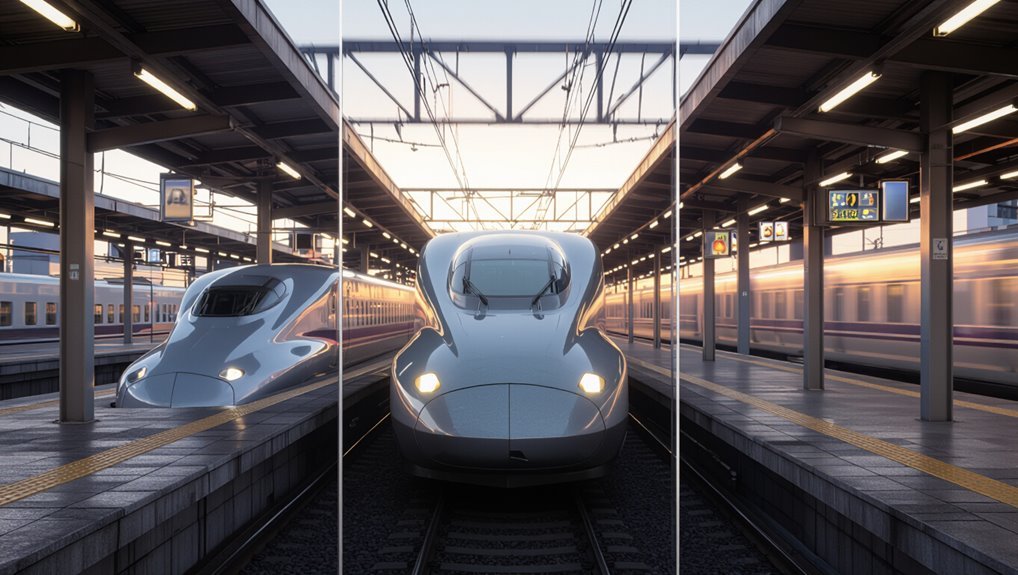
Several Shinkansen services run between Tokyo and Kyoto, but you’ll most often choose the Tokaido Shinkansen line and pick between Nozomi, Hikari, or Kodama trains depending on speed, stops, and ticket rules.
Nozomi is fastest with few stops, Hikari balances speed and stops, and Kodama stops everywhere.
Choose based on travel time and connecting station needs.
Reserving Shinkansen Seats vs Riding Unreserved
You can reserve a seat for guaranteed space, extra legroom, and peace of mind on busy routes.
If you skip a reservation, head for the unreserved cars early to secure a good spot and keep luggage managed.
Decide based on crowd levels, travel time, and how much risk you’re willing to take.
Reserved Seat Benefits
Wondering whether to reserve a Shinkansen seat or try your luck with unreserved cars? You’ll appreciate reserved seats for guaranteed seating, quieter cars, and luggage space.
Book in advance if you value certainty.
- Guaranteed seat avoids standing during peak times.
- Quieter carriages help you relax or work.
- Dedicated luggage areas secure bags and free your hands.
Unreserved Car Tips
If you’re flexible and travelling off-peak, riding in unreserved cars can save time and money while still being comfortable for shorter trips.
Choose early or late departures, avoid weekends and holidays, and board quickly at the correct car.
Keep luggage compact, stand if needed, and swap seats when available.
Buy tickets in advance at kiosks or via apps to streamline boarding.
How to Book Shinkansen Tickets Online and at Stations
Looking to reserve Shinkansen seats from Tokyo to Kyoto? You can book online via JR East/Sanyo sites or apps, or use third-party sellers.
At stations, use ticket machines or staffed counters (Midori no Madoguchi). Bring your passport if using rail passes.
- Online: choose train, seat type, and print/collect.
- Machines: English menus, IC card options.
- Counters: ask staff for help.
Cheapest Option: Overnight and Highway Buses
Several budget travelers choose overnight or highway buses as the cheapest way to get from Tokyo to Kyoto, cutting costs by up to 70% compared with the Shinkansen.
You’ll save on a night’s accommodation while traveling, though rides are longer and less spacious.
Bring earplugs, a light blanket, and snacks.
Buses run frequently; book early for the best fares.
Overnight Bus Companies, Classes, and Booking Tips
You’ll find several major overnight carriers—like Willer Express, JR Bus, and Keio Highway Bus—each offering different seat types and fares.
Check class options (standard, reclining, or “relax” solo seats) and compare amenities like power outlets, blankets, and onboard toilets.
Book early for the best seats and prices, use company sites or trusted agencies, and confirm pickup/dropoff locations before you go.
Bus Companies Overview
While trains dominate travel between Tokyo and Kyoto, overnight buses offer a cheaper, flexible alternative if you don’t mind sacrificing a bit of comfort for savings.
You’ll find national carriers and smaller operators, varying routes, and amenities. Choose by schedule, price, and reputation. Compare reviews and pickup spots.
- Willer Express
- JR Bus Kanto
- Keihan Bus
Booking Tips & Classes
Now that you’ve compared carriers and routes, it helps to know how classes and booking options affect price and comfort on overnight buses.
Choose between economy, semi-recline, and private or premium seats; pick amenities you need (blanket, charging port, restroom access).
Book early for discounts, reserve aisle or window as preferred, and confirm luggage allowances and cancellation policies before paying.
What to Expect on a Highway Bus: Comfort and Facilities
Wondering how comfortable a highway bus really is? You’ll find roomy reclining seats, footrests, and curtains for privacy, though legroom varies by operator.
Expect onboard restrooms and overhead storage; some buses offer Wi‑Fi and power outlets.
- Seating: recline, leg support, occasional personal reading light.
- Facilities: toilet, luggage bay, limited refreshments.
- Ambience: quiet rides, occasional stops, clean interiors.
Budget Train Option: Local and Rapid JR Trains
If you want the cheapest rail option, you can take local JR trains that stop frequently and require transfers along the way.
For a faster budget-friendly choice, use rapid JR services which skip many stations but still cost much less than shinkansen.
Check timetables and platform changes so you’re ready for transfers and varying travel times.
Local JR Train Details
1 affordable option for traveling between Tokyo and Kyoto is to use local and rapid JR trains, which run frequently and let you save money compared with shinkansen fares.
You’ll change trains, watch scenery, and carry less luggage for easier transfers.
- Check JR timetable for local services and transfer points.
- Buy tickets at machines or JR counters.
- Reserve minimal connections to avoid tight transfers.
Rapid Service Tips
Alongside local trains, rapid services give you a good balance of speed and savings on the Tokyo–Kyoto route: they skip many small stops, cut travel time noticeably, and usually keep fares much lower than the shinkansen.
You can use JR East and JR West rapid trains with ordinary tickets, transfer at major hubs, reserve seats when available, and pack light for quicker boarding and easier transfers.
Taking the Tokaido Main Line: Stops and Transfers
While the shinkansen gets most of the attention, the Tokaido Main Line offers a slower, often cheaper route with useful local stops and straightforward transfers.
While the shinkansen dazzles, the Tokaido Main Line provides a slower, cheaper option with handy local stops and easy transfers
You’ll pass major stations like Shinagawa, Yokohama, and Nagoya where connections to regional lines or rapid services make adjusting your itinerary easy.
- Check platform info at major hubs for quick transfers.
- Reserve extra time during peak hours for crowds.
- Use station maps to locate exit gates and transfer corridors.
Using Local JR Trains to Save Money (Step-by-Step)
If you want to save on fare, check which local JR pass options cover the Tokaido Main Line and nearby segments.
Then plan step-by-step transfers—identify key transfer stations, platform changes, and typical wait times so you won’t miss connections.
With a pass in hand and a simple transfer plan, you’ll move from Tokyo to Kyoto without paying Shinkansen prices.
Local JR Pass Options
Because you’re not in a hurry, using local JR trains can cut costs dramatically compared with the shinkansen — and it’s easier than it sounds.
Choose a pass that matches your route and duration to maximize savings. Check regional JR passes and commuter pass combos before buying.
- Kansai-Tokyo regional options
- JR West passes for segments
- Commuter passes and IC card top-ups
Step-By-Step Transfers
You’ve seen the pass options that can lower your fare; now you’ll walk through the actual transfers you’ll make when taking local JR trains from Tokyo to Kyoto.
Start at Tokyo Station, catch a JR Tokaido local to Odawara, transfer to a shinkansen-alternative rapid or local toward Atami, then change at Mishima or Numazu.
Continue via JR Tokaido locals, and arrive in Kyoto after several timed hops.
How to Use the Japan Rail Pass Between Tokyo and Kyoto
When you’re planning travel between Tokyo and Kyoto, the Japan Rail Pass makes using the Tokaido Shinkansen simple and cost-effective—just reserve seats on Hikari or Kodama services (Nozomi isn’t covered) and show your pass at ticket gates or manned counters.
You’ll save money and skip lineups; make reservations early during peak season.
- Reserve seats at JR ticket offices.
- Use green car for extra comfort.
- Validate pass before boarding.
Direct Flight Option: When Flying Makes Sense
If you’re short on time, flying can shave hours off the journey between Tokyo and Kyoto.
Remember to factor in airport transit, security, and potential delays when comparing total travel time.
Also weigh ticket prices and extra fees, since a cheap flight can end up costing more once you add transfers and luggage.
When Flying Is Faster
Although trains usually dominate the Tokyo–Kyoto route, flying can be faster in specific situations, so check total door-to-door time including travel to airports, security, and transfers before booking.
You’ll save time when you’re tight on schedule, connecting from an international flight, or departing from western Tokyo where airport routes are quicker.
- Tight schedules
- International connections
- Western Tokyo departures
Airport Time And Cost
A direct flight can shave hours off your door-to-door time, but you’ll only gain that edge if you factor in airport transit, check-in and security lines, and baggage handling into the total cost and schedule.
You’ll add time and taxi or train fares to reach airports, plus potential delays.
Compare ticket price, luggage fees, and transit time against shinkansen convenience to decide.
Flying to Kansai or Osaka-Itami: Airports and Transit Times
Two airports serve most international travelers heading from Tokyo to Kyoto: Kansai International (KIX) and Osaka Itami (ITM), and each offers different transit-time tradeoffs depending on where in Kyoto you’re staying.
You’ll choose based on convenience vs. total travel time.
- KIX: farther from Kyoto, 75–90 minutes by train or airport limousine.
- ITM: closer, ~50–70 minutes via bus/train.
- Consider traffic, luggage, and final neighborhood.
Domestic Flight Booking Tips and Baggage Rules
When you book a domestic flight from Tokyo to the Kansai region, check fare classes and baggage allowances up front so you won’t get surprised at the gate.
Compare carry-on and checked limits, fees for overweight items, and whether baggage is included.
Reserve seats early, note cancellation/change policies, and confirm arrival airport (KIX vs ITM).
Pack strategically to avoid extra charges.
Scenic Option: Driving the Tokaido Route by Car
If you want a scenic alternative, drive the Tokaido route to stop at coastal towns, beaches, and viewpoints along the way.
You’ll enjoy flexible timing for photo ops and seafood meals, but be ready for tolls, parking limits, and local traffic rules.
Plan your route, check car-rental requirements, and factor in rest stops for a smoother trip.
Scenic Coastal Stops
Drive the historic Tokaido route and you’ll turn a straightforward trip into a coastal road trip full of sea views, seaside towns, and invigorating detours.
You’ll stop for fresh seafood, walk cliffside promenades, and photograph sunsets over Sagami Bay. Plan short pauses to savor each stretch without rushing.
- Kamakura — temples and coastal cafés
- Enoshima — island views, shrimp plates
- Atami — hot springs, harbor walks
Driving Practicalities
You’ve enjoyed the coastal views and seaside stops; now plan the practical side of driving the Tokaido so the scenery stays stress-free.
Check rental insurance, GPS with English, and ETC card access for tolls. Schedule driving shifts, allow extra time for narrow roads and parking in towns, and prebook accommodations with parking.
Keep cash, a phone charger, and a paper map as backups.
Renting a Car: Routes, Tolls, and Driving Rules in Japan
When you rent a car for the Tokyo–Kyoto trip, plan your route, toll costs, and Japan’s driving rules up front to avoid surprises. Expressways cut travel time but add tolls, local roads save money but take longer, and familiarizing yourself with left-side driving, speed limits, and compulsory documentation is essential.
Consider:
- Toll passes vs pay-as-you-go and estimated costs.
- International driving permit requirements and ID.
- Parking rules, fees, and time limits in cities.
Self-Drive Itinerary Suggestions With Stops Along the Way
As you plan a self-drive from Tokyo to Kyoto, consider scenic route stops like Hakone or Lake Biwa for photo ops and short hikes.
Break the trip with overnight ryokan stays to soak in onsen and experience traditional kaiseki dinners.
I’ll suggest sample day-by-day stops and ryokan options to help you map a relaxing itinerary.
Scenic Route Stops
Although the fastest way from Tokyo to Kyoto is on the shinkansen, taking a self-drive route lets you pause for hidden shrines, seaside vistas, and mountain hamlets you’d otherwise miss.
This section suggests scenic stop combinations and timing tips so you can build a relaxed, photo-ready itinerary.
- Enoshima coast → Hakone lakeside: sunrise, two hours.
- Izu Peninsula loop: cliff overlooks, seafood lunch.
- Kiso Valley towns: afternoon walks, historical post stations.
Overnight Ryokan Stays
If you want a truly local pause on your self-drive from Tokyo to Kyoto, plan overnight stays at ryokan—traditional inns that combine tatami rooms, kaiseki dinners, and often private onsen—to break long drives into manageable legs and soak in regional character. You’ll unwind, taste seasonal cuisine, and recharge before the next scenic stretch.
| Region | Ryokan Style | Highlight |
|---|---|---|
| Hakone | Onsen | Mountain views |
| Izu | Coastal | Fresh seafood |
| Kinosaki | Rustic | Public bath-hopping |
Best Scenic Detours Between Tokyo and Kyoto
Want to break up the high-speed blur between Tokyo and Kyoto? Take scenic detours that add culture and views without huge delays.
- Hakone: hot springs, lake ashore strolls, and mountain vistas.
- Takao & Hachioji: forested hiking near Tokyo, quieter temples.
- Nagoya via Tokaido: castle stop, local cuisine, and short urban exploration.
Combining Modes: Hybrid Itineraries That Balance Time and Cost
When you mix bullet trains, regional lines, and a bit of driving or bus travel, you can cut costs without sacrificing much time — and tailor the trip to the sights you care about most.
Plan faster segments on Shinkansen, then switch to local trains or highway buses for cheaper access to smaller towns.
Rent a car only for rural detours and factor luggage and transfer time.
Sample Itineraries: Day Trips, Overnight, and Multi-Day
You can cover Kyoto in a day if you focus on Day-Trip Essentials like a morning shrine visit, a temple cluster, and a gait through Gion.
If you stay overnight you’ll have time for evening lantern-lit streets and a relaxed pace.
Multi-day Highlights let you add Arashiyama, Nara, and less-touristed neighborhoods without rushing.
Day-Trip Essentials
A well-planned day trip from Tokyo to Kyoto packs the highlights into a smooth, efficient schedule so you can see key temples, shrines, and neighborhoods without feeling rushed.
You’ll prioritize must-sees, use a JR Pass or shinkansen tickets, and time arrivals. Plan transport, meals, and a walking route to maximize daylight.
- Morning: Fushimi Inari and nearby.
- Midday: Gion stroll, lunch.
- Afternoon: Kiyomizu-dera visit, return.
Multi-Day Highlights
If you want to savor Kyoto beyond a single whirlwind day, these sample itineraries will help you balance must-see landmarks with relaxed exploration—day trips for quick highlights, overnight stays to catch evenings and mornings, and multi-day plans for deeper neighborhood and cultural immersion.
Choose a day trip for Fushimi Inari and Gion, an overnight for evening strolls, or three+ days to explore Arashiyama, tea ceremonies, and hidden temples.
Packing Checklist for Shinkansen, Buses, and Flights
Packing smart makes travel between Tokyo and Kyoto smoother whether you’re on the Shinkansen, a long-distance bus, or a flight.
Packing smart keeps travel between Tokyo and Kyoto smooth, whether by Shinkansen, long-distance bus, or flight.
Pack essentials for comfort, quick security, and sightseeing readiness. Keep valuables accessible and weather layers handy.
- Travel docs, phone charger, noise-cancelling earbuds.
- Lightweight layers, compact umbrella, refillable water bottle.
- Portable snacks, hand sanitizer, small first-aid kit.
Luggage Options: Takkyubin (Delivery) vs Bringing On Board
When you’re deciding how to move your bags between Tokyo and Kyoto, you can either send them ahead with takkyubin delivery or carry them with you on the train, bus, or plane — each option changes what you pack and how you travel.
Takkyubin is convenient for bulky items and door-to-door service; bringing luggage saves time on arrival but means handling suitcases, storage limits, and extra fees.
Time-of-Day Strategies to Avoid Crowds and Rush Hour
Because trains and buses peak at predictable times, you can plan departures and arrivals to dodge the worst of the crowds and make your trip between Tokyo and Kyoto far more comfortable.
Because trains and buses peak predictably, plan departures to dodge crowds and make Tokyo–Kyoto travel more comfortable.
Aim for off-peak windows and use this checklist:
- Travel mid-morning after rush hour.
- Choose late afternoon departures before evening spikes.
- Book early morning Shinkansen for quiet seats and smooth boarding.
Travel With Children: Seats, Amenities, and Naps
Avoiding rush-hour crowds also makes traveling with kids far easier, since quieter trains give you more space to settle into seats, manage strollers, and keep naps on schedule.
Choose reserved seats near toilets and carriage ends for easy access, pack quiet snacks and entertainment, and bring a lightweight blanket.
Aim for departures that align with nap times to minimize fuss and maximize comfort.
Accessibility and Traveling With Limited Mobility
When you travel from Tokyo to Kyoto with limited mobility, you’ll find many major stations are wheelchair-friendly with ramps, elevators, and accessible restrooms.
Shinkansen and regional trains offer accessible seating and priority spaces, but it’s smart to reserve assistance or seats in advance.
Plan simple mobility assistance steps—confirm station layouts, request help at ticket counters, and allow extra transfer time.
Wheelchair-Friendly Stations
Though Japan’s stations are often busy, many are well-equipped for wheelchair users, and knowing which features to look for makes travel smoother.
You can plan routes around barrier-free exits, elevators, and staffed assistance desks. Check station maps and ask staff for help when changing lines.
- Elevators and ramps
- Accessible restrooms and platforms
- Tactile paving and signage
Accessible Train Services
If you need extra help getting between Tokyo and Kyoto, accessible train services make long-distance travel manageable: reserved wheelchair spaces, onboard accessible restrooms, and staff-assisted boarding are common on shinkansen and many limited express trains.
You can book accessible seats in advance, confirm car layouts, and request station support when purchasing tickets so transfers and platform access stay smooth throughout your journey.
Mobility Assistance Tips
Alongside accessible train features, planning small practical steps can make your Tokyo–Kyoto journey much smoother when you have limited mobility.
You should book assistance in advance, pack light for easier boarding, and confirm station elevator locations. Staff are helpful if you notify them early and request wheelchair spaces or ramp support to avoid last-minute hurdles.
- Book assistance ahead
- Pack minimally
- Confirm elevators
Pet Travel Rules and Practical Options
When you’re planning to bring a pet from Tokyo to Kyoto, you’ll need to follow specific rules for identification, vaccinations, and transport mode that vary by train operator and local regulations.
Check JR and private lines for carrier size limits, leashing, and ticket policies.
Prepare vaccination records, microchip details, and a secure carrier.
Consider highway bus pet services or driving for larger animals; reserve early.
How Weather Affects Trains, Buses, and Driving
Although Japan’s trains, buses, and highways generally run on reliable schedules, severe weather—typhoons, heavy rain, snow, and heatwaves—can delay or suspend services and change driving conditions.
So you should plan extra time, check real-time updates, and have backup options.
- Monitor JR and bus operator alerts for suspensions.
- Expect slower road travel and possible closures.
- Pack layers, water, and charged devices for waits.
Safety and Emergency Procedures for Each Mode
Because emergencies can happen on any leg of your trip, you should know basic safety and evacuation procedures for trains, buses, and cars before you depart.
Locate emergency exits, alarms, and instruction stickers.
On trains, follow staff directions; on buses, use emergency hammers and exits; in cars, pull over safely and call for help.
Keep ID, medication, and a charged phone.
Using IC Cards and Ticketing Etiquette on Trains and Buses
If you plan to ride trains or buses between Tokyo and Kyoto, grab an IC card—like Suica or ICOCA—to speed through ticket gates and avoid fumbling for exact change. You’ll tap in/out, top up at machines, and use cards for convenience stores.
Follow polite boarding rules and keep volume low.
- Tap clearly at gates.
- Queue patiently.
- Reserve seats separately when needed.
How to Read Timetables and Platform Information
Now that you’re comfortable with IC cards and basic boarding etiquette, learning to read timetables and platform signs will make getting between Tokyo and Kyoto smoother.
Check departure times, train type (Nozomi, Hikari, Kodama) and final destination. Note platform numbers, car and seat reservation indicators, and transfer connections.
Look for English translations, and arrive a few minutes early to confirm boarding position.
Best Apps and Websites for Planning and Booking
When planning and booking your trip from Tokyo to Kyoto, use a mix of apps and websites to compare schedules, fares, and seat availability so you can pick the fastest or cheapest option that fits your plans.
Use reliable tools to reserve seats, check transfers, and get real-time updates.
- HyperDia or Jorudan for timetables
- JR East/South apps for reservations
- Google Maps for route planning
Money-Saving Hacks for Tokyo–Kyoto Travel
Although you’ll want comfort and convenience, you can still cut travel costs between Tokyo and Kyoto by choosing the right combination of tickets, timing, and booking tools; pick slower trains, local buses, or discount passes for big savings.
Buy tickets in advance or late-night deals, and use apps to compare fares and seat availability so you never overpay.
Use regional rail passes, night buses, and company promotions, and travel off-peak.
Seasonal Considerations: Cherry Blossom and Autumn Tips
If you plan your Tokyo–Kyoto trip around cherry blossom season or autumn colors, you’ll need to book earlier, expect larger crowds, and allow extra time for transit and sightseeing.
Peak bloom and koyo windows are short and can shift with the weather, so stay flexible and monitor forecasts.
- Choose shoulder dates to avoid crowds.
- Reserve shinkansen and accommodations early.
- Prioritize specific sites and start early to beat lines.
How to Travel Sustainably Between Tokyo and Kyoto
Choose greener options to lower your trip’s carbon footprint without sacrificing convenience: take the shinkansen and offset its emissions, split journeys with overnight buses for lower-energy travel, or use regional trains and local transit to connect slowly and see more en route.
Pack light, bring a refillable bottle, buy multi-ride passes, support eco-certified accommodations, and plan fewer transfers to reduce waste and energy use.
What to Do on Arrival in Kyoto: First Steps and Transit
Once you arrive in Kyoto, get oriented quickly so you can make the most of your time and stick to your sustainable plan.
Head to a tourist info desk, buy an IC card, and check train/bus apps. Prioritize nearby sites by transit convenience to reduce emissions.
- Find a map and wifi.
- Load an IC card.
- Plan routes by public transit.
Common Mistakes Travelers Make on This Route
When you’re traveling between Tokyo and Kyoto, the biggest mistakes are usually avoidable with a little planning: overpacking, underestimating transfer times, and ignoring regional train options lead to wasted time and money.
You’ll also want to book seats for long-distance trains, check peak travel days, keep passports handy for discounts, and avoid assuming taxis are affordable — plan connections and luggage carefully.
How to Adjust Plans Last Minute: Cancellations and Refunds
Even with good planning, things change — missed connections, sudden weather, or a canceled event can force you to reroute.
You should check refund policies, keep receipts, and contact providers immediately. Be ready to switch to buses or later trains, and use travel insurance if needed.
- Document cancellations and receipts promptly.
- Request refunds or credits quickly.
- Compare alternate transport options.
Official Timetables and Booking Resources
Start by checking official timetables from Japan Rail (JR) and regional operators so you’ve got accurate departure times, platform info, and transfer options.
Use JR-West, JR-East, and hyperdia or Jorudan to plan routes and fares.
Book seats via the JR ticket office, online reservation sites, or the Japan Rail Pass app.
Confirm cancellations, refund rules, and payment methods before finalizing.
Frequently Asked Questions
Can I Bring Oversized Sports Equipment on the Shinkansen or Buses?
Yes, you can bring oversized sports equipment, but you’ll need to follow rules: reserve a seat with large baggage space on some shinkansen, or use luggage delivery services; buses may restrict size, so check carriers’ policies.
Are There Luggage Storage Lockers at Osaka/Kyoto Transfer Stations?
Yes — you’ll find coin and electronic luggage lockers at major Osaka and Kyoto transfer stations (Osaka, Shin-Osaka, Kyoto, and Tennoji). They’re convenient but can fill up during peak times, so plan alternatives just in case.
Do Student, Senior, or Disability Discounts Apply on All Routes?
Generally no — discounts vary by operator and ticket type, so you’ll need to check each route. JR offers student and senior fares on many trains; private buses or shinkansen reserved seats may not qualify, so confirm before booking.
How Do I Claim Travel Insurance for Delays or Lost Luggage?
You contact your insurer promptly, file a claim online or by phone, provide booking, delay or luggage reports, receipts and photos, keep tags and police reports, follow claim instructions, and track progress until you receive reimbursement or resolution.
Can I Use International Sim/eSIMs or Wi‑Fi Rentals During Travel?
Yes — you can use international SIMs, eSIMs, or Wi‑Fi rentals while traveling. You’ll choose based on convenience, data needs, device compatibility, coverage, and cost; compare plans, buy beforehand or at arrival, and test connectivity promptly.
Conclusion
Whether you choose speed, savings, or scenery, you’ll get to Kyoto ready to explore. If you value time, take the Shinkansen; if you’re on a budget, overnight buses or local trains save money; and if you want views, consider a slower, scenic route. Once you arrive, hop on a bus or subway, pick up a transit card, and head to your accommodation. Stay flexible with bookings and check official timetables for last-minute changes.