How to Store Luggage in Small Apartment Smart Ideas
You can reclaim floor space by stashing suitcases under the bed, raising it with risers for extra clearance, or using wall hooks and ceiling pulley racks for heavier bags. Nest soft duffels inside hard cases, use compression bags for seasonal clothes, and keep small gear in labeled clear bins or hanging organizers. Protect items with breathable covers and silica packs, and purge duplicates to stay organized—keep going for more practical layouts and DIY organizer ideas.
Quick Wins for Storing Luggage in a Small Apartment
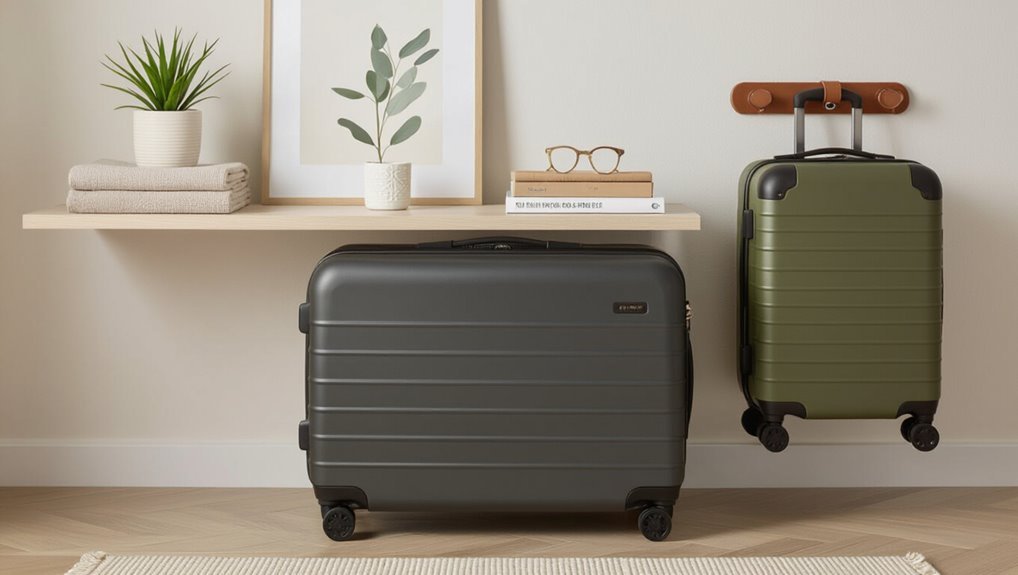
Start by targeting easy, high-impact moves you can do tonight: tuck carry-on suitcases under your bed, hang soft duffels on a sturdy coat hook, and stash small bags inside larger ones to save space.
Rotate seasonal items into vacuum bags, label invisibly tucked bundles, use top-shelf closet bins for rarely used luggage, and keep rolling bags upright to free floor area.
Decide Which Bags to Keep and Which to Purge
Sort through your luggage with purpose: decide which bags you actually use, which serve a clear purpose (weekender, work bag, checked suitcase), and which just take up space.
Keep versatile, durable pieces you reach for regularly. Donate, sell, or recycle duplicates, worn-out items, and impulse buys.
Be ruthless—fewer bags mean easier storage and clearer choices when it’s time to pack.
Measure Your Luggage and Available Spaces First
Start by measuring each bag’s height, width, and depth so you know what’ll actually fit.
Then map out nooks—under beds, closets, over-door shelves, and vertical spaces—and note their dimensions.
With those numbers in hand, you’ll match bags to spots and avoid surprises.
Measure Luggage Dimensions
Before you tuck a suitcase under the bed or into a closet, measure both the exterior dimensions of your luggage and the spaces you plan to use so you know what actually fits.
Note height, width and depth; include wheels and handles. Use a tape measure, record numbers, and compare them to openings, shelf depths and under-bed clearance so you avoid surprises when stowing.
Map Available Nooks
Now that you know the exact dimensions of your luggage and potential spots, walk through your apartment and sketch out where each bag could live. Measure niches, underbeds, closet corners, and vertical spaces. Label sketches with heights and clearances, then prioritize easy-access versus long-term storage.
| Spot | Dimensions | Suitcase fit? |
|---|---|---|
| Under bed | 40×15×10 | Yes |
| Closet top | 30×20×12 | Maybe |
| Corner shelf | 25×18×10 | Yes |
Choose Best Luggage to Store vs. Keep Handy
Pick the few bags you use most and keep them within easy reach, then designate the rest for storage.
Prioritize everyday carry, weekenders, and a lightweight carry-on for frequent trips.
Keep your go-to bags — daily carry, weekenders, and a light carry-on — within easy reach for frequent trips.
Store bulky, infrequent suitcases and specialty cases.
Label stored pieces, collapse soft bags, and group by season or purpose so you can retrieve what you need quickly without cluttering living space.
Use Under-Bed Storage for Suitcases and Duffels
Slide suitcases and duffels under your bed to maximize vertical space without cluttering closets.
Use low-profile bins or fabric covers to protect them from dust and moisture.
Add labeled organizers or packing cubes so you can grab what you need quickly.
Maximize Vertical Space
If your bed has clearance, tuck suitcases and duffels under it to free up floor and closet space while keeping luggage accessible.
Then stack vertically in order of size, placing flat bags beneath taller roller suitcases.
Use slim wheeled platforms or low-profile racks to slide items easily.
Label visible edges so you grab the right piece without pulling everything out.
Protect And Organize
After tucking suitcases and duffels under your bed, protect and organize them so they stay ready and damage-free.
Use fabric or plastic bins to separate items, wrap delicate handles in bubble wrap, and place silica gel packets inside to prevent moisture.
Label each container for quick identification, slide bags onto felt or caster risers to avoid scuffs, and rotate contents seasonally for easy access.
Raise Your Bed With Risers to Add Under-Bed Space
Lift your bed onto risers to instantly create usable under-bed storage without major furniture swaps. You’ll gain clearance for rolling luggage, slim bags, and storage bins.
Choose sturdy, height-appropriate risers and secure mattress and frame to prevent shifting. Measure opening height to match suitcase dimensions.
Label containers and keep frequently used items accessible, so retrieval stays quick and effortless.
Nest Suitcases and Compress Bulk to Save Room
Start by nesting your suitcases by size, sliding smaller ones into larger shells to cut wasted space.
Use compression bags for clothes and soft items so they take up far less volume inside the bags.
Protect fragile inner contents with padding or foam so nothing shifts when you stack them.
Nest By Size
Think of your suitcases like nesting dolls: place the smallest inside the next size up, then slide that into the largest to cut wasted floor space.
You’ll save vertical and floor area, keep shapes protected, and spot the right bag fast.
Follow these steps:
- Empty and dry each suitcase.
- Stack by descending size.
- Cushion edges with soft items.
- Store under bed or in closet.
Use Compression Bags
While you’re nesting suitcases, use compression bags to squeeze bulky items—like sweaters, jackets, and spare bedding—flat so they fit inside smaller bags or in the gaps between stacked luggage.
Roll or vacuum-seal to reduce volume, then tuck bags into corners and cavities.
Label contents and keep delicate fabrics separated with tissue or thin cloth to prevent creasing and make retrieval easier.
Protect Inner Contents
To protect nested suitcases and their contents, tuck fragile items into hard-sided shells and cushion them with folded clothing or bubble wrap. Then compress bulkier textiles with vacuum or rolling techniques so everything sits snugly without shifting.
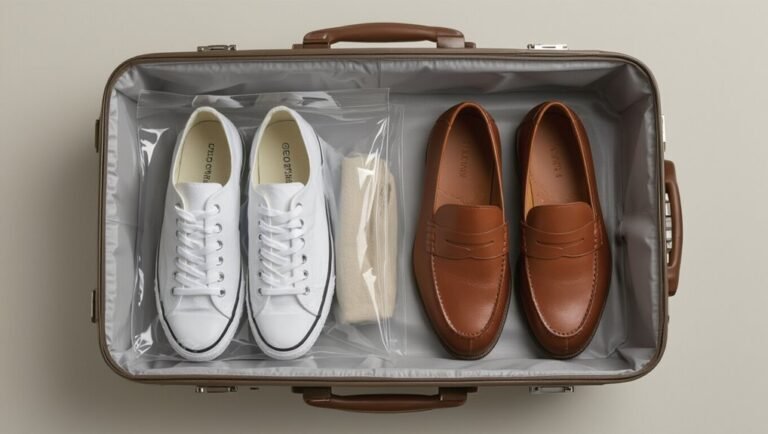
- Place shoes in shower caps to keep soles off fabrics.
- Use packing cubes for organization.
- Label compressed bundles by contents.
- Fill gaps with soft items to prevent movement.
Stack Soft Bags Inside Hard Suitcases
If you own hard-shell suitcases, tuck soft duffels or cloth bags inside them to save floor and closet space while keeping things organized. You’ll maximize capacity, protect fragile items, and spot what’s inside quickly. Compress soft bags, label them, and stack by frequency of use to avoid pulling everything out.
| Bag Type | Tip |
|---|---|
| Duffel | Compress |
| Tote | Label |
| Laundry | Seal |
| Shoes | Wrap |
| Extras | Stack |
Hang Backpacks and Daypacks on Wall Hooks
Wondering how to free up floor space and keep your packs ready to grab?
Hang backpacks and daypacks on sturdy wall hooks near your door or closet. You’ll preserve shape, spot dirt, and access essentials fast.
- Use heavy-duty hooks
- Arrange by frequency of use
- Add labels or colors
- Keep straps secured to avoid tangles
Add an Overhead Door Shelf for Spare Bags
Install a slim overhead shelf above your apartment door to tuck away spare bags without eating floor or closet space. You’ll access rarely used totes, foldable duffels, and small suitcases easily while keeping entryways clear. Secure with anchors, keep weight light, and label bins for quick grabs.
| Item | Size | Tip |
|---|---|---|
| Tote | Medium | Fold |
| Duffel | Small | Roll |
| Suitcase | Compact | Strap |
Build Vertical Luggage Storage With Open Shelving
An overhead shelf frees up entryway space, but you can get even more mileage by building vertical open shelving to stack bags, suitcases, and packing cubes upward instead of outward.
An overhead shelf clears entryway clutter; vertical open shelving stacks bags and suitcases upward for tidy, space-saving storage
You’ll maximize floor area, spot items quickly, and keep bulky gear tidy. Plan adjustable shelves, secure to studs, and group by size for balance.
- Measure height
- Pick sturdy material
- Anchor to studs
- Use baskets
Use Wardrobe Top Shelves for Carry-Ons and Weekend Bags
If you keep a few carry-ons and weekend bags up on your wardrobe’s top shelf, you’ll reclaim floor space while keeping travel essentials within easy reach. Use labeled bins, lightweight cases, and a step stool for access. Rotate seasonally and store fragile items inside soft bags.
| Item Type | Storage Tip | Frequency |
|---|---|---|
| Carry-ons | Bin with handle | Monthly |
| Weekenders | Soft cover | As needed |
| Accessories | Clear pouch | Weekly |
Convert a Closet Into Dedicated Luggage Zones
Storing carry-ons on the wardrobe top shelf works great for quick access, but you can free even more space by converting a closet into dedicated luggage zones.
You’ll assign shelves or corners for sizes, add clear labels, and keep travel extras together so packing’s faster.
Consider these zones:
- Rolling suitcases
- Weekender bags
- Backpacks and daypacks
- Packing cubes and accessories
Use Tension Rods to Create Vertical Suitcase Slots
You can turn a narrow closet or alcove into tidy vertical slots by installing tension rods to hold suitcases upright; they’re easy to adjust, don’t damage walls, and keep cases separated so zippers and handles don’t rub.
Place rods at staggered heights to fit different suitcase sizes, slide cases in vertically, and label each slot for quick access while preserving finishes and maximizing floor space.
Install Ceiling Pulley Racks for Heavy Suitcases (Safety Tips)
If you’re installing a ceiling pulley rack for heavy suitcases, pick hardware rated for the weight you plan to lift.
Make sure the attachment is anchored to a ceiling beam or joist, not just drywall, and check connections regularly.
Use safe lifting practices—test the system with a lighter load first, lift slowly, and never stand directly under a suspended bag.
Choose Rated Hardware
Because ceiling pulley racks will bear heavy suitcases overhead, pick hardware rated for at least twice the expected load and approved for structural mounting.
You should inspect load ratings, manufacturer specs, and material quality before buying. Use certified anchors and corrosion-resistant fittings, and keep spare fasteners on hand.
- Verify working load limit
- Choose stainless or galvanized steel
- Check certification marks
- Inspect regularly
Secure Ceiling Attachment
Before you start drilling, locate ceiling joists and plan attachment points so the pulley rack transfers load directly to structural members.
Use appropriately rated lag bolts or toggles that match joist type, and pre-drill pilot holes to prevent splitting.
Tighten hardware to manufacturer torque specs, add lock washers or threadlock, and inspect periodically for loosening, corrosion, or wood damage.
Safe Lifting Practices
Lift smart and protect your back by using proper body mechanics and the ceiling pulley as designed: you’ll avoid strains and keep suitcases secure.
Use controlled movements, lock the pulley before release, and never exceed weight limits.
Follow these steps:
- Bend knees, keep spine neutral.
- Use handles and straps.
- Lock pulleys before lowering.
- Check load rating regularly.
Use Clear Bins and Labels for Seasonal Travel Gear
A few clear bins make seasonal travel gear easy to find and keep it protected from dust and pests.
Label each bin with contents and season—swimwear, winter boots, ski accessories—so you grab what you need fast.
Label bins by contents and season—swimwear, winter boots, ski gear—so you can grab what you need quickly.
Stackable bins save floor space; pick sizes that fit under beds or on shelves.
Keep heavier items low and rotation-ready for upcoming trips.
Protect Soft Luggage With Dust Covers or Pillowcases
If you want to keep soft luggage looking fresh and dust-free, cover it with dust covers or clean pillowcases before storing them away.
Use breathable fabric to prevent mildew, label covers for quick access, tuck small items inside to save space, and avoid plastic that traps moisture.
Store in a dry, ventilated spot to maintain shape and fabric integrity.
- Choose breathable covers
- Label each bag
- Stuff lightly to hold shape
- Avoid plastic wrapping
Store Suitcases Inside Each Other When Possible
When space is tight, nest smaller suitcases inside larger ones to save floor and closet room while keeping them organized.
Stack by descending size, remove straps or loose items, and wrap delicate shells with soft cloths to prevent scratches.
Use packing cubes or vacuum bags inside nested pieces to maintain shape and reduce air.
Label the outer case so you can quickly find what’s inside.
Hide Bags Inside Ottomans or Storage Benches
You can tuck smaller bags inside ottomans or storage benches to free up closet space and keep them out of sight.
Use padding to protect finishes, stack by size, label contents for quick grabs, and rotate seasonally.
Keep heavier luggage on the floor to avoid crushing frames.
Clean interiors before storing to prevent odors and pests.
- Pad fragile pieces
- Stack smartly
- Label clearly
- Rotate often
Choose Multi-Use Furniture With Built-In Luggage Storage
1 smart piece of furniture can replace a closet for your suitcases: choose multi-use items like beds with drawers, benches with compartments, or shelving units with cubbies that hide and support luggage.
You can slide slim carry-ons under platform beds, tuck weekenders into bench lockers, and use cubby depths to store checked bags upright — keeping them accessible without cluttering living space.
Repurpose a Bookshelf for Rolled Suitcases and Totes
Think of a bookshelf as a vertical luggage locker: remove a few shelves to create tall bays for rolling suitcases and keep smaller totes on remaining tiers.
You’ll gain easy access, visible organization, and dust protection while maximizing vertical space.
- Measure suitcase heights before removing shelves.
- Use shelf pegs for adjustable spacing.
- Label totes for quick access.
- Add non-slip liners.
Use Hanging Shoe Organizers for Small Travel Items
When floor space is tight, hang a clear or fabric shoe organizer on the back of a closet or door to store chargers, toiletries, passports, and other small travel items within easy reach.
You’ll sort items by pocket, label compartments, and tuck cables neatly to prevent tangles. Choose clear pockets for quick visibility, fold soft goods, and rotate contents based on upcoming trips.
Optimize Entryway Space for Daily Travel Bags
You can free up floor space by installing slim wall-mounted hooks for daily travel bags, keeping them visible and off the way.
Pair the hooks with under-bench storage bins for items you want tucked out of sight but within reach. This combo keeps your entryway tidy and makes grabbing essentials quick.
Slim Wall-Mounted Hooks
Although space is tight, slim wall-mounted hooks give you a neat, accessible spot to hang daily travel bags without blocking traffic or stealing floor area.
You can mount them near the door, stagger heights for varied bag sizes, and keep straps untangled. Choose sturdy, low-profile hooks that match decor and install into studs for secure everyday use.
- Install near door
- Stagger heights
- Use sturdy hooks
- Protect wall
Under-Bench Storage Bins
Something as simple as a slim bench can double your entryway storage: slide shallow bins underneath to keep daily travel bags out of sight but within reach.
Choose stackable, labeled containers for quick access and visibility. Use low-profile bins with wheels or cut-out handles so you can pull bags out easily.
This keeps the area tidy and your essentials grab-and-go ready.
Pack Vacuum Bags for Seasonal Clothing Inside Luggage
Compress seasonal clothes into vacuum bags before slipping them into luggage to maximize space and protect garments from dust and moisture.
You’ll save room and keep items fresh; label each bag and avoid overpacking to maintain fabric shape. Store bags upright or flat inside suitcase cavities to stabilize weight.
- Roll, don’t fold
- Label contents
- Avoid sharp items
- Keep a small desiccant
Quick Packing Hacks to Cut Luggage Volume
When you need to shave inches off your suitcase, smart packing tricks make all the difference: Roll clothes tightly, tuck socks into shoes, wear bulky items, and prioritize versatile pieces. Use compression cubes and eliminate duplicates. Here’s a quick visual:
| Trick | Benefit |
|---|---|
| Rolling | Saves space |
| Bundling | Reduces wrinkles |
| Compression cubes | Compress volume |
| Wear layers | Free suitcase space |
Budget-Friendly DIY Luggage Organizers
You don’t need to spend much to organize your luggage—everyday items can become neat, durable organizers that save space and protect fragile items.
Repurpose shoeboxes, cardboard dividers, and vacuum bags to customize interiors. Use hooks or straps to secure cases upright. Label everything for quick access.
- Shoebox dividers
- Cardboard inserts
- Vacuum-seal pouches
- Straps/hooks
Rotate Stored Bags Seasonally to Keep Access
Set a simple seasonal rotation schedule so the bags you’ll need next are the easiest to reach.
Place off-season luggage in less accessible spots and keep current-season pieces within arm’s reach.
Before storing, clean and protect each bag with a dust cover or silica packs to prevent damage.
Seasonal Rotation Schedule
Although it’s tempting to stash all your bags and forget them, rotating them seasonally keeps the ones you need within reach and prevents long-term wear from constant compression.
Plan a simple schedule, label bags, and swap quarterly so items stay usable.
- Spring: lightweight totes and weekenders
- Summer: beach bags and duffels
- Fall: rolling suitcases for trips
- Winter: insulated carriers and stowaways
Easy Access Placement
When rotating bags each season, place the ones you’ll need most within easy reach—at eye level, near doorways, or on open shelves—so you can grab them without unpacking stored items.
Label cases with season and contents, keep less-used bags in higher or tucked spots, and arrange by size so larger pieces don’t block access.
Check placement monthly and swap as plans change.
Protect During Storage
Once you’ve arranged bags for easy access, rotate them seasonally to prevent wear and keep contents fresh.
You’ll avoid pressure damage, musty odors, and forgotten gear by swapping positions and airing interiors. Check straps and zippers, refresh silica packs, and note repairs.
- Inspect seams and wheels
- Air and sun for an hour
- Replace desiccants
- Record rotation dates
How to Keep Stored Luggage Dust-Free and Ventilated
A simple routine keeps your stored luggage dust-free and ventilated: clean each bag, use breathable covers or cotton sheets, and store them off the floor in a spot with gentle airflow.
Empty pockets, wipe interiors with a mild cleaner, and prop zippers open slightly to prevent mildew.
Rotate and air bags monthly, and add silica gel packets to absorb moisture without trapping odors.
Troubleshooting: Where to Store Extra or Oversized Bags
If you’re short on floor space, look up and use vertical wall space with hooks or a sturdy hanging rack to keep extra bags off the ground.
You can also slide oversized suitcases under the bed in low-profile storage bins to hide them while keeping them accessible.
Finally, repurpose higher closet shelves for rarely used or bulky bags so they don’t crowd everyday items.
Use Vertical Wall Space
When floor space runs out, turn your walls into practical storage: mounting heavy-duty hooks, a pegboard, or a sturdy rail lets you hang suitcases, duffels, and oversized bags out of the way while keeping them accessible.
You’ll protect bags, free floors, and display gear neatly. Consider placement, weight limits, and secure anchors.
- Measure load capacity
- Use wall studs
- Add padded hooks
- Group by size
Under-Bed Stowage
Since under-bed space often goes unused, slide in low-profile suitcases, duffels, or storage boxes to tuck away extra or oversized bags without cluttering your room.
Use shallow organizers with wheels or clear bins so you can pull items out easily.
Label containers, keep seasonal or rarely used bags underneath, and leave a small gap for airflow to prevent mustiness.
Repurpose Closet Shelves
Under-bed storage handles low-profile bags, but taller or oddly shaped suitcases need a different approach—your closet shelves can fill that gap.
You can stack vertically, slide smaller bags inside larger ones, or install removable dividers to protect finishes and save space.
Rotate seasonally and label visible edges so you grab the right case fast.
- Stack vertically
- Nested storage
- Removable dividers
- Label edges
Frequently Asked Questions
Can Luggage Stored in a Closet Attract Pests or Mold?
Yes — it can. If you stash dirty, damp, or food-contaminated luggage, you’ll invite mold and pests. You should clean, dry, and store suitcases in breathable covers, elevated off the floor, with occasional inspections.
How Do I Insure Valuable Luggage or Its Contents in Storage?
You insure valuable luggage or contents by checking homeowners/renters policies for personal property coverage, adding scheduled personal property or floater endorsements, keeping receipts and photos, and considering separate private storage insurance for high-value items.
Can I Store Lithium-Ion Batteries Inside Packed Suitcases?
You shouldn’t. You’ll risk fire and damage because lithium-ion batteries can short, overheat, or spark in packed suitcases. Remove batteries, carry them in cabin luggage when flying, and store them separately in cool, protected containers.
What’s the Best Way to Transport Stored Luggage Between Apartments?
Use a wheeled luggage cart or dolly, secure bags with straps or bungees, distribute weight evenly, lock zippers, cover with a tarp if rainy, enlist a friend for heavy loads, and load carefully into the vehicle to avoid damage.
Are There Tenant-Legal Restrictions for Modifying Walls or Ceiling Storage?
Usually you can’t modify walls or ceilings without permission; you’ll need written landlord approval for drilling, anchors, or built-in racks. Check your lease, local codes, and any HOA rules, and document approval to avoid disputes.
Conclusion
You’ve got practical, space-saving options to keep luggage out of the way without losing access to what you need. Start by sorting bags, measuring spaces, and picking the best ones to store versus keep handy. Use under-bed storage, vertical spots, and inexpensive DIY organizers, and rotate seasonally so stuff doesn’t get forgotten. Keep bags clean and aired, and for oversized pieces, get creative with ceiling hooks or shared storage spaces to reclaim your apartment.