How Long Does It Take to Get Luggage After Flight Wait Times
You’ll usually reach baggage claim within 10–45 minutes after landing, though times vary. Domestic direct flights and small regional airports tend toward the short end, mid‑size hubs average 20–30 minutes, and major international or peak‑time flights can take 30–60+ minutes. Factors like customs, late incoming aircraft, staffing, weather, and oversized items can add delays. Keep essentials with you and track bags via apps or RFID; continue for tips on speeding things up and managing holdups.
Expected Wait Time at Baggage Claim
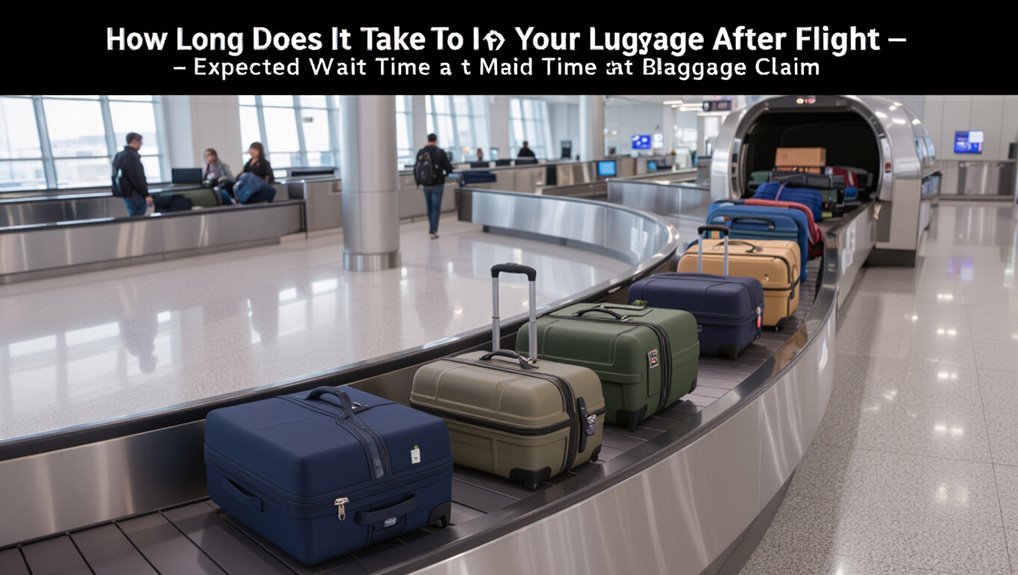
When your plane docks, you’ll usually wait anywhere from 10 to 45 minutes for bags to start appearing on the carousel, though times vary by airport size, airline efficiency, and whether baggage is transferred between connecting flights.
Expect domestic direct flights at the faster end; international and transfer flights often take longer.
Factors include unloading pace, customs holds, and peak-hour congestion—plan accordingly.
Baggage Wait: Airport-Size Overview
At larger airports you’ll usually wait longer for luggage than at regional terminals, so check average wait times for your arrival airport.
Factors like peak travel hours, number of incoming flights, and baggage handling systems all affect delays. Keep those variables in mind when estimating how long you’ll be at baggage claim.
Average Wait Times
Airport size strongly influences how long you’ll wait for checked bags: small regional airports often return luggage within 10–20 minutes, mid-sized hubs typically take 20–30 minutes, and major international airports can push waits to 30–60+ minutes during peak periods.
Expect variance by time of day, airline, and terminal layout.
- Plan extra time for connections
- Use priority baggage when possible
- Track bags via airline app
Factors Affecting Delays
Because airport size shapes staffing, baggage system complexity, and flight volume, it’s a primary driver of delays you’ll experience at the carousel.
You’ll also face longer waits when flights arrive simultaneously, during peak travel seasons, or after weather disruptions.
Older conveyor systems, limited staff, international transfers, and tight connection windows increase backlog.
Knowing these factors helps you set expectations and plan arrival or pickup times.
Typical Waits at Major International Hubs
When you land at a major international hub, expect baggage times to vary widely—often 15 minutes for quick turnarounds at efficient airports and up to an hour (or more) at the busiest transfer points during peak periods.
You’ll see variability based on flight connections, customs processing, and ground handling.
Plan extra time, monitor updates, and contact your airline if delays occur.
- Connections
- Customs clearance
- Ground handling
Typical Waits at Domestic Hub Airports
At domestic hub airports you’ll usually wait anywhere from 10 to 35 minutes for checked bags, though peak times can push that longer.
Baggage delays often stem from tight connection windows, late arrivals, or limited apron and belt capacity.
To speed retrieval, pick seats near the front, tag bags as priority when eligible, and head straight to the correct carousel.
Typical Baggage Claim Times
If you’re flying into a domestic hub, expect baggage waits that typically range from about 15 to 40 minutes after landing, depending on airport size, arrival volume, and whether your flight was routed through connecting terminals.
You’ll usually collect bags faster on early flights; evenings can be slower. Track status via apps and watch carousel signs.
- Check real-time app updates
- Head to correct carousel
- Stay near claim area
Factors That Cause Delays
Knowing typical wait ranges helps, but several factors can push your baggage retrieval well beyond that 15–40 minute window.
Peak travel, late flights, tight connections and limited belt space create backups. Weather, staffing shortages, and mechanical issues with conveyors or carts slow handling.
Misrouted or oversized bags require manual processing, and security holds or customs checks add unpredictable delays.
Tips To Speed Retrieval
When you want your bags fast, plan and act proactively: choose direct flights when possible, tag luggage with a bright ribbon or luggage tag for quick spotting, and board early so you can be near the carousel when bags start arriving.
Stay near your carousel, check the airline app, and alert staff quickly if delays occur.
- Position yourself early
- Track bags via app
- Report missing luggage immediately
Typical Waits at Regional and Commuter Airports
Because regional and commuter airports handle fewer flights and smaller aircraft, you’ll usually get your bags faster than at major hubs—often within 10 to 20 minutes after arrival.
Baggage systems are simpler, staffing is leaner but more focused, and fewer transfers reduce delays. Expect quick unloading, shorter carousel waits, and minimal crowding, though weather or isolated handling issues can still add a short delay.
How Airline Type Affects Baggage Timing
Smaller airports often mean quicker baggage turnaround, but the airline you fly can change that timeline considerably.
You’ll notice differences due to handling contracts, fleet size, and hub operations. Choose flights wisely and plan for variability.
- Contracted handlers may slow or speed delivery
- Larger fleets can create bottlenecks during disruptions
- Hub-focused carriers often prioritize transfer bags
Legacy Carriers vs Low‑Cost Carrier Baggage Speed
You’ll notice legacy carriers often promise faster expected delivery times for checked bags, while low-cost carriers may take longer or have more variability.
Pay attention to handling and transfers—hub connections and interline agreements affect how quickly your luggage moves.
Also check each airline’s policies and fees, since priority tags or baggage fees can speed up or delay delivery.
Expected Delivery Times
Legacy carriers usually aim to unload checked bags within 20–30 minutes of an aircraft door opening.
You’ll often get bags faster on long‑haul flights; regional hops and tight turnarounds slow things. Low‑cost carriers may take longer due to leaner ground crews and fewer priority processes.
- Expect averages, not guarantees
- Peak times increase waits
- Priority tags speed delivery
Handling And Transfers
1 key difference in how bags move through airports is who’s handling them and how transfers are managed—full‑service carriers typically assign larger, specialized ground teams and established transfer corridors, while low‑cost carriers rely on leaner crews and simpler processes.
You’ll often see faster internal sorting and priority transfers with legacy airlines; budget operators may take longer during tight connections or peak times due to fewer staff.
Policies And Fees
Sometimes the biggest factor in how fast your bag appears at baggage claim isn’t the conveyor or crew but the airline’s baggage policy and fees.
You’ll notice legacy carriers prioritize checked baggage with included fees, while low‑cost carriers rush turnarounds and may gate‑check bags to save time.
Pick flights and fares knowing how fees affect handling speed.
- Legacy: included, prioritized
- Low‑cost: pay, quicker turnarounds
- Gate‑check: delays or faster offload
Peak Times and Arrival‑Volume Effects
When flights arrive in clusters—during early morning bank-ups, midday waves, or evening rushes—baggage systems and staff get stretched, and you’ll usually wait longer for your suitcase. You can expect delays when multiple flights unload simultaneously; staffing levels and carousel availability matter. Plan buffer time, check status boards, and consider faster baggage options if available.
| Peak period | Typical effect |
|---|---|
| Morning bank | Longer waits |
| Midday wave | Variable delays |
| Evening rush | High congestion |
Aircraft Type and Door Configuration Impacts
Because aircraft size and door layout determine how quickly baggage can be offloaded, you’ll often see shorter waits from narrowbodies with single or dual forward doors than from widebodies with multiple lower-deck holds.
Narrowbodies with forward doors typically unload faster than widebodies with multiple lower-deck holds.
You should expect different handling times based on access and cargo location.
- Fewer doors = faster door-to-belt transfer
- Lower-deck holds slow ground crew cycles
- Side cargo doors and conveyor access matter
Connecting Flights and Baggage Timing
Aircraft type and door layout affect how quickly bags reach the belt, but your connection plans and the airline’s handling rules have an equal or greater influence on whether your luggage arrives with you.
If you have a tight layover, your bags might be transferred separately or held for direct flights.
Confirm minimum connection times, check through-checked baggage, and alert gate agents if time’s short.
Why Some Flights Unload Faster
If you’ve waited at enough carousels, you’ll notice some flights empty out far quicker than others; that’s down to a mix of crew workflow, ground crew coordination, and airport layout.
You’ll see faster unloads when planes use efficient door sequences, bags are routed directly to nearby carousels, and customs or transfer holds are minimal.
- direct door-to-belt routing
- close carousel assignment
- minimal transfer/customs delays
Ground‑Crew Staffing and Efficiency
How many agents are on the ramp directly affects how fast bags move from plane to belt.
If staffing’s thin you’ll see longer waits, while a full crew speeds up unloading and sorting.
Let’s look at how staffing levels and baggage-handling processes shape your wait time.
Staffing Levels Impact
Because ground crews handle every step from unloading to belt delivery, staffing levels directly shape how quickly you’ll get your bag.
Understaffing or uneven shift coverage can add anywhere from minutes to hours to wait times. You’ll notice delays when crews are stretched, so check airline updates and consider carry‑on options.
- Peak vs off‑peak staffing
- Overtime and fatigue effects
- Rapid call‑in response
Baggage Handling Speed
While you wait at the carousel, ground crews’ pacing and procedures determine how fast your bag appears. Delays often stem from staffing and operational bottlenecks rather than sheer distance from plane to belt.
You’ll notice speed varies with crew size, training, equipment reliability, and supervisor coordination. Efficient teams prioritize sequencing, minimal handoffs, and rapid scanner updates so your luggage gets routed and loaded quickly.
Customs, Immigration, and Baggage Delays
If you’re arriving from an international flight, expect customs and immigration to add time before you see your baggage, since officers need to process passports, ask questions, and run any necessary checks.
This can take anywhere from 15 minutes to well over an hour depending on staffing and passenger volume. You’ll wait, follow instructions, and have documents ready.
- Be prepared with passports and forms
- Declare items honestly
- Use eGates or fast lanes if eligible
Late Arrivals, Diversions, and Knock‑On Effects
When a flight arrives late or gets diverted, expect delays to ripple through baggage handling and connections.
You may wait considerably longer for your luggage than the normal carousel time. You’ll face longer transfer processing, re-prioritized unloads, and staffing strains.
Airlines may reroute bags, causing misplacements or slower delivery to reclaim areas.
Stay patient, track updates, and report missing items promptly.
Weather Impacts on Baggage Delivery
Because extreme weather can shut down tarmac operations and slow ground crews, expect baggage delivery times to stretch considerably during storms, heavy snowfall, or high winds.
You’ll face longer waits, possible bag reroutes, and limited staff. Pack essentials in carry-on and check airline alerts.
- Bring crucial items in carry-on
- Monitor airline and airport updates
- Allow extra connection time
Airport Layout and Claim‑to‑Exit Time
Although airports vary widely, the distance from baggage claim to the terminal exit — plus factors like how many people are on the carousel, signage clarity, and whether you need to clear customs or recheck bags — directly affects how long you’ll be standing there after the plane lands.
Plan for walking time, possible queues at customs or recheck counters, and crowded corridors when estimating total claim‑to‑exit time.
Conveyor Capacity and Carousel Assignment
If your flight shares a crowded carousel or the conveyor is running slow, you’ll wait longer regardless of how quickly the plane taxied in.
You should check carousel assignments on arrival boards, expect delays when multiple flights use one belt, and be ready to move when bags appear. Efficient belt speed and clear assignments cut wait time.
- Check arrival displays
- Expect shared belts
- Position near exits
Handling Oversized and Special Baggage
If you’ve checked oversized items or things marked fragile, expect them to follow different procedures than regular bags.
You’ll usually pick oversized baggage at a separate oversized/oversize desk or curbside area, and fragile items may be handled with special tags and extra care.
Ask the airline or baggage staff on arrival for the exact location and expected wait so you’re not left guessing.
Oversized Bag Procedures
Expect a different process when your luggage is oversized or classified as special baggage. You’ll usually collect it at a separate carousel or oversize counter, sign forms, and may wait longer while handlers maneuver bulky items.
Keep paperwork and ID ready, and know fees may apply.
- Go to the oversize carousel or counter
- Sign required forms promptly
- Have ID and receipts available
Fragile And Special Handling
When your items are labeled fragile or require special handling, follow airline instructions closely and alert staff at check-in so handlers know to treat them with extra care.
Pack securely, use rigid cases and padding, and remove loose parts. Confirm special-tag placement and ask for tracking or priority delivery.
Expect slightly longer handling times but quicker retrieval from a designated area to prevent damage.
Multiple Flights Sharing One Carousel
Because several flights can be routed to the same carousel, you might find your bags delayed while airport staff sorts arrivals and clears space, especially during peak times.
You’ll wait as handlers stagger unloads, and announcements may not match timing. Keep patience and watch displays.
- Check flight tags and carousel number
- Stay near the belt to claim quickly
- Ask staff for updates and priority options
Baggage System Failures and Delays
If the airport’s conveyor or sorting systems fail, you can face long waits or even have your bag sent to the wrong plane or terminal.
Staffing shortages, mechanical breakdowns, software glitches, and power outages all slow recovery.
You’ll want to report missing luggage immediately, keep tags and receipts, and ask for status updates; proactive tracking and persistence often speed corrective action and reunite you with belongings.
Realistic Expectations for International Arrivals
Arriving on an international flight usually means you’ll wait longer for your bags than on a domestic trip.
Expect passport control, customs checks, and longer conveyor rotations; typical waits range 20–60+ minutes.
Pack essentials in carry-on and track tags.
- Carry-on essentials shorten pain
- Use airline/baggage tracking apps
- Prepare extra time for customs and inspections
Realistic Expectations for Domestic Arrivals
For domestic arrivals, you can usually expect to wait 10–30 minutes at baggage claim depending on airport size and flight volume.
Delays can come from tight turnarounds, late flights, or staffing issues, so check the airline app for updates and listen for announcements.
To speed retrieval, tag your bag, choose quick-turn flights when possible, and head to the carousel right away.
Typical Baggage Claim Times
On most domestic flights you’ll usually wait between 15 and 45 minutes for checked bags, though factors like aircraft size, airline efficiency, and airport layout can push that window shorter or longer.
You can usually expect faster times on smaller planes and direct flights; busier hubs often take longer. Plan accordingly and track your bag when possible.
- Smaller aircraft = quicker turns
- Direct flights reduce handling
- Peak times lengthen waits
Factors That Cause Delays
Because several moving parts must line up before your bag appears on the carousel, delays are common even on domestic flights: late incoming aircraft, limited ramp crews, tight connection windows, baggage-system backups, and weather or security holds can each add minutes to the wait. You should expect variability and occasional waits beyond posted estimates.
| Cause | Effect | Typical Delay |
|---|---|---|
| Late aircraft | Bags unloaded late | 10–30 min |
| Crew limits | Slower handling | 5–20 min |
| System backup | Conveyor jams | 10–45 min |
| Weather/security | Holds, reroutes | 15–60+ min |
Tips To Speed Retrieval
Knowing what causes delays helps you take practical steps to get your bag sooner.
Move promptly off the plane, check the carousel number on the airport app, and pick a spot near the belt.
Stay alert for announcements and have ID and claim tags ready so you can confirm ownership quickly if needed.
- Move quickly from gate
- Monitor carousel info
- Keep ID/claim tag handy
Carry‑On vs Checked Baggage Wait Differences
When you step off the plane, your wait time will depend heavily on whether you carried your bag aboard or checked it, since carry‑ons let you leave the gate immediately while checked luggage requires retrieval from the baggage claim. You’ll move faster with carry‑ons; checked bags add 10–40 minutes. Plan accordingly and watch monitors.
| Type | Typical Delay | Action |
|---|---|---|
| Carry‑on | 0–5 min | Exit |
| Checked | 10–40 min | Wait |
| Oversize | 20–60 min | Special claim |
| Delayed | 30+ min | Report |
| Priority | 5–15 min | Faster collection |
Status and Cabin Class Effects on Bag Priority
If you have elite status, your bags often get prioritized on the carousel so you’ll usually wait less.
Flying in a premium cabin also speeds up baggage delivery, since airlines tag those suitcases for earlier loading and unloading.
Check your loyalty program perks before travel so you know exactly which benefits apply to your trip.
Elite Status Priority
Frequent flyers and premium passengers usually see their bags come off the belt sooner because airlines push elite status and cabin class to the front of the priority line.
You’ll still wait less with higher status, faster tagging, and dedicated cart service. Expect variable times by airport and staffing levels.
- Faster handling for elite members
- Priority tagging and loading
- Dedicated carts and staff
Premium Cabin Benefits
Although you’re paying for comfort and convenience, premium cabins also get tangible baggage advantages: first- and business-class passengers usually see their bags tagged and loaded ahead of economy, and airlines route those bags onto earlier carts and carousels so you get them faster.
You’ll generally wait less at the carousel, especially on busy flights, and priority handling reduces misloads and delays.
Loyalty Program Perks
Most airlines give elite-status members clear advantages when it comes to baggage handling: your checked bags are often flagged for priority loading and unloading, so they hit the carousel before standard luggage.
You’ll usually wait less if you’ve flown premium cabin or hold high status, though airport operations still affect timings.
- Priority tags speed delivery
- Premium cabins get early loading
- Status may include expedited handling
Early Check‑In and Correct Tagging Benefits
If you check in early and make sure your bag is tagged correctly, you’ll usually speed up how quickly it appears on the carousel—airlines load correctly tagged luggage first and can route it more efficiently through baggage systems. You’ll reduce misrouting, speed handling, and lower wait uncertainty.
| Action | Benefit | Tip |
|---|---|---|
| Early check‑in | Faster loading | Arrive 60–90 min |
| Correct tag | Accurate routing | Verify destination |
| Clear labeling | Fewer delays | Add contact info |
How Priority‑Baggage Programs Work
If you enroll in a priority-baggage program, you’ll get a special tag that flags your suitcase for faster handling.
Ground crews route and load tagged bags first, which usually speeds them onto the carousel or to your connecting flight.
Many programs also include delivery-time guarantees or compensation if your bag isn’t returned within the promised window.
Priority Baggage Enrollment
One simple way to speed up getting your bag is to enroll in a carrier’s priority baggage program, which tags your luggage for expedited handling so it’s loaded and unloaded before standard bags.
You’ll usually sign up online, link your frequent‑flyer number, or pay a fee at booking. Benefits vary by airline and fare class.
- Faster delivery
- Clear enrollment steps
- Often included with elite status
Handling And Tagging
When you tag a bag as priority, airlines route it through expedited handling channels so ramp crews load and unload it before standard luggage.
This usually means a colored tag or barcode scanned separately from regular bags. You’ll see priority stickers, separate conveyor lanes, and handling codes in baggage systems.
That visibility speeds identification, reduces misrouting, and raises the chance you’ll get your bag earlier.
Delivery Time Guarantees
Airlines back many priority-baggage programs with explicit delivery-time targets, promising your tagged bag will be on the carousel within a set window after arrival or deplaning.
You’ll get faster handling, fewer transfers, and clearer accountability if delays occur. Check enrollment, eligibility, and how claims work so you can enforce the promise.
- Faster processing lanes
- Limited transfer hops
- Defined compensation timelines
Signs Your Bag Is Delayed but En Route
If your bag doesn’t appear on the carousel but tracking still shows movement, it’s likely delayed en route rather than lost; signs include updated scan timestamps, a route change in the tracking feed, or status notes like “in transit” or “awaiting transfer.”
You should check timestamp freshness, confirmed transfers between carriers, and recent location hops.
Expect delivery updates and occasional short delays before arrival.
When to Report a Missing Bag at the Airport
Wondering whether to wait or report your bag missing? You should report it at the airport if the carousel stops, your bag isn’t listed on monitors, or you’ve waited 30–45 minutes after other flights unload.
Report at the airline desk or baggage office before leaving; get a written claim number and contact info so you can track updates.
Before leaving the airport, report missing baggage at the airline desk and get a written claim number and contact details.
- Carousel stopped
- Not on monitor
- Waited 30–45 minutes
What to Expect at the Airline Baggage Counter
When you go to the airline baggage counter, the agent will confirm your flight details and check the status of your bag.
They’ll record a report and give you a reference number, explain next steps, and outline any compensation or delivery options.
If your bag is lost, they’ll walk you through the lost-bag procedures and what information you need to provide.
Baggage Counter Process
At the baggage counter you’ll hand over paperwork, confirm your ID, and get precise information about lost, delayed, or oversized bags.
Agents can usually tell you where your luggage is in the system and the next steps to retrieve it. You’ll receive instructions, timelines, and contact details.
They’ll log claims and arrange delivery when available.
- Ask for reference numbers
- Note expected timelines
- Confirm contact method
Lost Bag Procedures
If your bag doesn’t arrive, head to the airline baggage counter right away and report it—agents will open a record, check system scans, and tell you what to expect next.
You’ll provide ID, flight details, and a description; they’ll issue a Property Irregularity Report (PIR) and tracking number.
Ask about delivery options, interim essentials reimbursement, and expected timelines; keep contact info handy.
Filing a Delayed Baggage Claim Quickly
Because delays can leave you stranded without essentials, start your delayed baggage claim as soon as the belt stays empty: report the issue to the airline at the airport, get a Property Irregularity Report (PIR) or claim reference, and confirm how they’ll contact you and where your bag will be delivered.
If your bag doesn’t arrive, report it immediately—get a PIR/claim reference, confirm contact and delivery details.
File online if possible and keep receipts.
- Note accurate contact details
- Photograph baggage tags
- Keep expense records
Compensation Rules for Delayed or Lost Luggage
When your bag’s delayed or declared lost, you’re often entitled to reimbursement for reasonable expenses and, in some cases, statutory compensation from the airline or under international conventions like Montreal or Warsaw.
Check limits, deadlines, and required documentation so you can claim what you deserve. Keep receipts, file promptly, track communications, and know maximum liability amounts and timeframes for claims and appeals.
Tips to Minimize Baggage Waiting on Arrival
Although you can’t control every airport delay, you can take simple steps to cut your wait for baggage—pack carry-on essentials, check flight and baggage carousel updates on the airline app, and request priority tagging at check-in if eligible.
You should also arrive early, label bags clearly, and confirm baggage policies to avoid reprocessing.
- Arrive early
- Clear, visible tags
- Confirm policies
Carry‑On Packing Checklist for Delays
Even with steps to speed up baggage claim, you should assume checked bags might be delayed and pack a carry‑on that keeps you comfortable and functional for 24–48 hours. Bring essentials: change of clothes, medications, chargers, hygiene items, snacks, and a lightweight jacket. Use this quick checklist:
| Item | Quantity | Purpose |
|---|---|---|
| Change shirt/pants | 1 each | Comfort |
| Meds | As needed | Health |
| Charger/backup | 1–2 | Power |
Tracking Checked Bags With Airline Apps
Wondering where your checked bag is right now? Use the airline app to track status updates, scan timestamps, and gate/claim assignments so you know when to expect it.
Enable push notifications for real-time alerts and keep your confirmation code handy. Check the app before contacting staff to avoid delays.
- Real-time status
- Push alerts
- Confirmation code ready
Managing Baggage on Tight Connections
If you’ve got a tight connection, plan for your checked bag to move slower than you do: request minimum connection time info when booking, choose flights on the same ticket, and tag bags as priority if available so ground crews route them ahead of others.
Pack essentials in carry-on, notify gate agents about tight transfers, and confirm luggage transfer at check-in to reduce missed-bag risk.
Escalation Steps When Handling Is Slow
When baggage handling’s moving slowly, act quickly: stay at the carousel a few extra minutes, note your bag claim number, and speak to the airline’s baggage agent as soon as you can so they can log the delay and start a trace.
If nothing happens, escalate politely and document everything.
- Ask for a supervisor
- Request written delay confirmation
- File an electronic trace and keep reference numbers
Major‑Hub Baggage Checklist (Airport Specifics)
At major hubs you’ll want to check the baggage claim layout on airport maps so you know which carousel and exit to head for.
Time your arrival at the belt to avoid peak crowds and use priority or family lines if available.
If your bag doesn’t show up, follow the airport’s lost baggage procedures immediately and get a claim reference before you leave.
Airport Baggage Layouts
Major hubs each organize baggage claim differently, so knowing the layout at your arrival airport can shave minutes off retrieval time and cut stress.
Check terminal maps, carousel assignments, and transfer pathways before you land. Arrive prepared: know which level, gate exits, and skybridge connections to use.
- Look up terminal maps in advance
- Note carousel numbers for your airline
- Identify quickest path to exits
Peak-Time Retrieval Tips
Knowing the layout gets you to the right carousel faster, but peak periods still slow everyone down — so plan how you’ll navigate crowded claim areas.
Aim for aisles near exits, keep tags visible, and step back if staff unloads large pallets.
Volunteer to help lift if appropriate, use mobile alerts for carousel changes, and move confidently when your bag appears to avoid jams.
Lost Baggage Procedures
If your bag doesn’t show up, head straight to the airline’s baggage office in the claim area and report it immediately so they can start a trace — have your boarding pass, luggage tag number, and a description ready, and note where you were seated and any connections you made.
You’ll get a reference number, estimated delivery, and compensation options.
- Keep receipts for essentials.
- Track using reference.
- Follow up within 24–48 hours.
Preparing for Travel to Small or Remote Airports
Traveling to small or remote airports means you’ll face different logistics than at big hubs, so plan ahead: check airline baggage rules, confirm ground-transport options and schedules, and verify that your connecting times account for limited services. Pack essentials in carry-on, label checked bags, and have backup transport contacts.
| Item | Tip | Priority |
|---|---|---|
| Baggage | Weigh & tag | High |
| Transport | Prebook | High |
| Timing | Add buffer | Medium |
| Contacts | Save numbers | Medium |
| Supplies | Bring snacks | Low |
Common Passenger Mistakes That Slow Baggage
Because checked bags move through many hands and systems, small passenger actions can create big delays; you can help keep the line moving by avoiding a few common mistakes.
Don’t overpack, label bags clearly, and arrive early for check-in.
- Poor labeling or missing tags
- Oversized or unsecured luggage
- Last‑minute gate transfers or rechecks
Technology Trends Reducing Baggage Waits
As airports and airlines adopt new tech, you’ll see baggage moves get faster and more predictable: RFID tags and IoT sensors give real‑time tracking, automated sorting systems cut handling time, and mobile apps send live bag updates so you know exactly where your luggage is. You’ll experience fewer delays, clearer notifications, and quicker recoveries when issues occur.
| Technology | Benefit |
|---|---|
| RFID/IoT | Real‑time tracking |
| Automation | Faster sorting |
| Mobile apps | Live notifications |
Touchdown to Claim: 8‑Step Practical Timeline
New technology speeds up baggage handling, but knowing what actually happens from touchdown to baggage claim helps you set realistic expectations.
You’ll follow an 8-step flow: taxi/park, doors open, cabin service, offload, transfer, sort, load to belt, arrival.
Expect 20–45 minutes on average; delays happen. Pack essentials in carry-on and track bags via the airline app.
- Know typical timings
- Carry essentials
- Use tracking app
Frequently Asked Questions
Can Baggage Delays Affect Connecting Flight Rebooking Automatically?
Yes — airlines can automatically rebook you if baggage delays threaten connections, but it depends on their policies and available seats; you’ll usually get notified via app, text, or gate agents, so stay reachable and proactive.
Are Pet Carriers Handled Differently Than Regular Checked Bags?
Yes — airlines treat pet carriers differently than regular checked bags. You’ll usually check them at the counter or gate, they get special handling, documentation, and sometimes temperature-controlled or priority storage; fees and rules vary by carrier.
Do TSA Security Issues Ever Hold Bags After Arrival?
Yes, TSA can hold bags after arrival for inspection; you’ll be notified or contacted by the airline or airport. They’ll open and screen items, and you might retrieve your luggage once they clear it or finish their checks.
How Are Fragile Items Insured During Prolonged Waits?
You’re covered if you declare and document fragile items, buy declared-value or separate insurance, and keep receipts; airlines or insurers will compensate proven damage during prolonged waits, but small claims often have strict limits and exclusions.
Can Airline Alliances Transfer Baggage Priority Between Carriers?
Yes — you can. Airline alliances typically honor baggage priority across member carriers, so your priority tag, elite status benefits, and through-checked baggage usually transfer, but check specific alliance policies and ticketing rules for any exceptions or fees.
Conclusion
You can usually expect to wait anywhere from 10 minutes at a small regional airport to 45 minutes (or more) at a busy international hub, but planning ahead cuts stress. Know your airport’s baggage trends, pack essentials in your carry-on, and use tracking apps or priority tags when possible. Move toward the carousel promptly, avoid common delays like crowding or checking last minute items, and stay patient — your bag will show up.