Do You Still Have to Remove Liquids From Carry on in 2026
Yes — in 2026 you’ll usually still need to take liquids out of your carry‑on and place them in a clear quart‑size bag, though some airports with CT scanners now let liquids stay inside. Expect random checks and medical or baby exemptions. Trusted traveler programs may speed screening but officers can still ask to inspect items. Always check your departure and arrival airport rules before you go; keep liquids accessible so you move through security faster and learn what exceptions apply.
What This Guide Covers and How to Use It
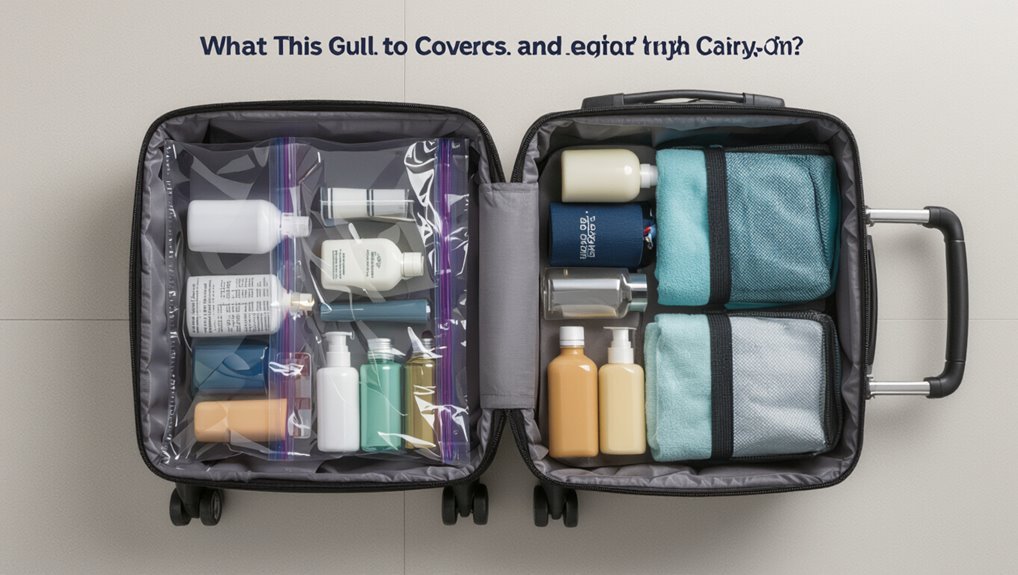
This guide explains current carry-on liquid rules, when they apply, and practical tips for packing and passing through security so you know what to expect at the checkpoint.
You’ll get concise explanations of scope, exemptions, and documentation to carry.
Use the checklists and samples to prep your bag, speed screening, and troubleshoot common problems so you move through security confidently and without surprises.
Quick Answer: Do You Still Have to Remove Liquids From Carry‑On in 2026?
Short answer: yes — in 2026 you still usually have to remove liquids from your carry‑on into a clear, resealable quart‑size bag for screening, though a growing number of U.S. and international checkpoints now let travelers leave well‑packed liquids in carry‑on if they pass through advanced CT scanners or if the liquids are in an approved transparent bag.
You’ll still need to follow local rules and prep accordingly.
How Airport Screening Technology Has Changed Since the 3‑1‑1 Rule
You’ve probably noticed newer carry-on scanners that give clearer images and speed up screening.
Many airports now use computed tomography machines, which let agents rotate 3D images of your bag without pulling out liquids.
Those upgrades include better liquid threat detection, so screening is more accurate and often less disruptive for you.
Advanced Carry‑On Scanners
As security tech has advanced since the 3‑1‑1 rule was introduced, many airports now use sophisticated carry‑on scanners that can image bag contents in greater detail. This allows agents to spot liquids, electronics, and hidden items without you unpacking everything.
You’ll clear faster, but follow signage; some scanners still need items separated.
- high‑resolution X‑ray images
- automated threat detection
- faster lane throughput
- reduced manual checks
Computed Tomography Adoption
Get ready to put liquids and trays through a new kind of scanner: many airports are replacing traditional X‑ray machines with computed tomography (CT) systems that create 3D images of carry‑on contents, letting screeners rotate and slice views to identify threats without you unpacking everything.
You’ll experience faster lanes, fewer bag checks, and automated alerts that let agents focus on real risks while you pass through security.
Liquid Threat Detection
While the 3‑1‑1 rule still shapes what you can carry, modern screening tools have reduced how often you actually have to unpack liquids: advanced detectors now analyze chemical signatures and 3D densities to flag suspicious containers, letting many travel-sized bottles stay sealed in bags unless a specific alert demands inspection.
- detectors read molecular fingerprints
- 3D CT maps density and shape
- AI prioritizes alerts for staff
- flagged items get targeted checks
How Advanced Imaging Tech Affects the Need to Remove Liquids
Because airports now use advanced imaging technology (AIT) at many checkpoints, you may not always have to remove liquids from your carry-on the way you used to.
You’ll find scanners can identify benign containers, reducing manual checks. Still, compliance varies by airport and officer; pack liquids accessibly, follow posted rules, and be ready to separate items if an agent requests clearer screening.
Airports Using CT/Advanced Liquid Scanners
Many airports have started replacing traditional X-ray lanes with computed tomography (CT) or advanced liquid scanners, so you’ll see fewer trays and more carry-ons screened without you opening every bag.
You’ll notice changes in lines, signage, and what agents ask as machines separate liquids and solids more reliably.
- dedicated CT lanes
- fewer tray stations
- clearer carry-on throughput
- faster secondary checks
How to Check If Your Airport Uses CT or Advanced Scanners
Check your airport’s website or the Transportation Security Administration’s online resources to see if they list CT or other advanced scanners at your terminal.
You can also call the airport or TSA contact center directly to confirm what screening technology they currently use.
If you’re planning for a trip, doing this ahead of time lets you know whether you’ll need to remove liquids or not.
Airport Technology Lookup
Wondering whether your airport uses CT or other advanced carry-on scanners? You can quickly confirm tech at your departure point using online resources and on-site signs.
Check:
- Airport official website security or FAQ pages
- Airline emails or notifications
- Photos or maps of the security checkpoint
- Traveler reports on forums and social apps
Verify scanner type before packing to avoid surprises.
Contact The TSA
If online resources or signage leave you unsure about the screening tech at your airport, contact the TSA directly to get a definitive answer.
Call the TSA Contact Center or use their website’s feedback form; provide your airport code and travel date.
They’ll confirm whether CT or advanced scanners are in use and advise if liquids must be removed, helping you pack and prepare correctly.
Current TSA Rules for Liquids on U.S. Domestic Flights (2026)
How do the current TSA rules affect what you pack in your carry-on for U.S. domestic flights in 2026?
You must follow the 3-1-1 rule for liquids, place permitted items in screening-ready bags, and expect random checks for larger medical or baby needs.
Pack smart to speed screening and avoid delays.
- 3-1-1 liquids in quart bags
- Screening-ready placement
- Medical/baby exceptions
- Expect random checks
EU and UK Liquid Rules: What’s Changed in 2026?
Starting in 2026, the EU and UK tweaked the 100ml rule and you’ll want to know how those limits now apply at different airports.
Some hubs are adopting targeted security exemptions for certain items or passengers, so check specific airport guidance before you pack.
I’ll also touch on likely policy shifts coming later this year and what they mean for your carry-on.
New 100ml Rule Changes
Wondering what the 2026 updates mean for your carry-on liquids? You’ll find the 100ml limit clarified: containers must be ≤100ml, stored in a transparent resealable bag, and presented separately.
Enforcement varies by airport but centers on container size and visibility.
- Single resealable bag per passenger
- Clear labeling encouraged
- Exceptions tightened for medical items
- Staff may measure containers
Airport Security Exemptions
Who qualifies for liquid exemptions at EU and UK airport security, and what changed in 2026? You can carry medically necessary liquids, baby formula, and duty-free purchases exempt from the 100ml rule when declared and screened. In 2026 authorities standardized documentation and screening procedures, eased proof requirements, and clarified staff training, reducing inconsistent gate-side refusals while keeping security checks intact.
Future Policy Outlook
Although security remains the priority, changes rolled out in 2026 make it easier for you to carry medically necessary liquids, baby formula, and duty-free purchases through EU and UK checkpoints by standardizing documentation, screening procedures, and staff training to reduce inconsistent refusals.
You’ll face clearer rules, faster checks, and more predictable outcomes.
- standardized medical letters and labels
- dedicated screening lanes
- trained frontline officers
- digital pre-declaration options
Rules for Canada, Australia, and Major International Hubs (2026)
How do liquid rules differ when you fly through Canada, Australia, or major international hubs in 2026? You’ll find mostly harmonized screening: limits, clear bags, and some tech-enabled lanes. Check local updates for exceptions.
| Country/Hub | Note |
|---|---|
| Canada | Harmonized limits |
| Australia | Same limits, tech lanes |
| Amsterdam | Enhanced screening |
| Dubai | Variable exemptions |
| Singapore | Fast-track lanes |
Carry‑On Liquids: Size Limits and Packaging (mL/oz)
You’ll need to know the maximum container size allowed—typically 100 mL (3.4 oz) per item—before you pack.
Put those containers in a single, clear, resealable bag and make it easy to remove for screening.
Follow presentation rules at the checkpoint to keep the line moving and avoid having items discarded.
Allowed Container Sizes
When packing liquids in your carry‑on, the airline and security rules limit each container to small, travel‑size amounts—typically 100 milliliters (3.4 ounces) or less—so you’ll need to transfer larger products into compliant bottles or buy travel-sized versions.
You can carry multiple containers if they fit in a single clear bag; check rules for exceptions like medicines.
- Shampoo in 100 mL bottles
- Toothpaste tube
- Perfume sample vials
- Contact lens solution
Packing And Presentation
Now that you’ve capped containers at the allowed sizes, focus on how to pack and present them for security screening. Place all liquids in a clear, resealable quart‑size bag, one bag per passenger. Lay bottles flat and avoid overfilling. Present the bag separately at the checkpoint for faster inspection.
| Item | Tip |
|---|---|
| Bag | Clear, resealable |
| Placement | Easy access |
| Volume | Under limit |
| Presentation | Separate at screening |
Exceptions: Medications, Baby Formula, and Duty‑Free Liquids
Although standard liquid limits apply to most carry-ons, airports let you bring essential items that exceed those rules: prescription medications, baby formula and breast milk, and duty‑free liquids bought after security.
You should declare these at screening, keep meds in original containers when possible, and expect extra inspection.
Pack smart to minimize delays:
- clearly labeled prescription bottles
- sealed breast milk bags
- measured baby formula containers
- duty‑free receipt and packaging
How PreCheck and Trusted Programs Change Liquid Rules
If you enroll in TSA PreCheck or a similar trusted-traveler program, you’ll usually keep liquids in your carry-on without removing them from your bag, because you don’t have to take off shoes, belts, or laptops and often skip the 3-1-1 screening step; still, expect officers to pull items for inspection if something looks suspicious or you trigger additional screening.
| Program | Screening | Liquids |
|---|---|---|
| TSA PreCheck | Expedited | Often leave packed |
| Global Entry | Customs+Pre | Similar benefit |
| CLEAR | ID speed | Mixed results |
| Combined | Best case | Least handling |
If Your Checkpoint Lacks CT: What to Expect
Wondering what happens when your checkpoint doesn’t have computed tomography (CT) scanners?
You’ll face manual checks and standard X-ray lanes. Expect slightly longer screening, possible bag inspections, and instructions to remove certain items.
Expect manual checks and X-ray lanes—longer screening, possible bag inspections, and directions to remove items.
- Staff may open bags for inspection
- Liquids might need separate screening
- Expect clear instructions from agents
- Screening times can increase slightly
Pack Liquids to Speed Screening (2026)
When you pack liquids, put them in clear, sealable bags so officers can spot them quickly.
Arrange bottles and tubes flat and with labels facing up to make the contents obvious. That small extra effort can speed screening and reduce the chance your bag gets pulled for inspection.
Use Clear, Sealable Bags
Most travelers speed through security by packing their liquids in clear, resealable bags so TSA officers can quickly see what’s inside; put each container upright and close the bag fully to avoid spills and delays.
You’ll grab your bag fast, show contents without fumbling, and replace it easily after screening.
- Small shampoo, conditioner bottles
- Toothpaste tube
- Travel-size sunscreen
- Contact lens solution
Arrange Items For Visibility
Packing liquids in a clear, sealable bag is just the first step; arranging them so TSA officers can see labels and nozzles at a glance speeds screening even more. Lay bottles upright, largest back, sprays forward, and caps visible so you’ll avoid delays. Keep similar items together and don’t overstuff the bag.
| Position | Item type |
|---|---|
| Front | Sprays |
| Middle | Lotions |
| Back | Bottles |
| Side | Gels |
Best Travel Containers and Clear Bag Alternatives for Liquids
Anyone can simplify airport security by choosing the right travel containers and clear bag alternatives for liquids.
Anyone can breeze through airport security by using the right leakproof travel containers and a clear, TSA-friendly pouch.
Pack leakproof bottles, silicone travel tubes, and refillable perfume atomizers in a durable clear pouch or reusable TSA-approved zip bag. You’ll speed screening and protect belongings.
- 100ml leakproof bottles
- Silicone squeeze tubes
- Refillable atomizers
- Reusable TSA-approved clear pouch
How to Handle Duty‑Free Purchases and Sealed Liquids on Connecting Flights
When you buy duty‑free liquids, make sure the receipt stays with the sealed security bag and keep the bag unopened until you clear your final security checkpoint.
Airlines and airports often require the original tamper-evident bag and receipt on connecting flights, especially when transferring between countries.
If a connection requires re‑screening, present the sealed bag and receipt promptly; if asked, request assistance to avoid delays or confiscation.
International Transfers: When Checked Bags Are Safer for Liquids (Screening Risks)
If you’re worried about duty‑free rules on a long international itinerary, consider checking liquids instead of carrying them through multiple security checkpoints.
You’ll reduce screening hassles, avoid resealing issues, and lower risk of confiscation during transfers with varying rules. Pack securely and declare valuable bottles at check‑in.
- Multiple airports, multiple rules
- Tight connection, limited time
- Fragile or valuable liquor
- Long layovers or rechecks
Special Cases: Aerosols, Gels, Creams, and Solid Alternatives
Because aerosols, gels, creams, and similar products don’t all fit neatly into the 100 ml/3-1-1 rule, you should know which items are allowed, which need special packaging, and when it’s safer to check them.
Aerosols usually require pressure-safe containers and may be limited.
Gels and creams must meet volume rules unless medically necessary.
Solid alternatives (balms, sticks) often travel in carry-on without issue.
How Checkpoint Officers Commonly Enforce Liquid Rules and What to Expect
When you reach the checkpoint, officers follow Transportation Security guidelines that require liquids to be screened separately in a clear quart-sized bag.
You’ll typically place your bag on the conveyor and send larger containers through a separate bin for X-ray inspection or manual check.
Expect officers to ask you to remove, repack, or dispose of items that don’t meet the rules.
Transportation Security Guidelines
Although checkpoint procedures can vary by airport, officers generally expect you to separate your liquids for X-ray screening and follow the 3-1-1 rule: containers no larger than 3.4 ounces (100 ml), all fitting in one clear quart-sized bag, one bag per passenger.
You should:
- Place the bag on top of carry-on items
- Remove bulky toiletry cases
- Declare exceptions like medications
- Expect random checks
Typical Screening Procedures
If you’re approaching a security checkpoint, expect officers to ask you to remove your quart-sized liquids bag and place it in a separate bin for X-ray screening, with bulky toiletry cases and electronics often taken out as well.
Follow directions, show containers openly, and answer questions calmly. Officers may ask to test or repack items; cooperative, quick responses speed processing and reduce secondary screening.
Common Mistakes That Lead to Delays or Confiscation
Because security officers handle thousands of bags every day, small mistakes with liquids—like overfilling containers, packing gels outside a clear quart-sized bag, or stashing toiletries in checked-specific compartments—can slow your screening or lead to confiscation.
You should double-check packing to avoid holdups. Common slip-ups include:
- Overfilled travel bottles
- Unsealed or leaking containers
- Packing liquids in outer pockets
- Multiple small bags with unclear contents
How to Verify Rules Before Your Trip: Official Sources and Apps
Where can you quickly confirm what’s allowed in your carry-on before you leave?
Check official government aviation sites (TSA, CATSA, UK CAA) and your airline’s baggage policy.
Check official government aviation sites (TSA, CATSA, UK CAA) and your airline’s baggage policy before you travel.
Use their mobile apps or official checklists for real-time updates and security alerts.
For international trips, consult both departure and arrival authorities.
Save screenshots and contact the airline if rules seem unclear.
Packing Checklist: A 60‑Second Liquids Audit Before You Leave
When you’re about to head out the door, do a quick 60‑second liquids check:
- Grab your clear bag and confirm bottles fit under size limits.
- Check lids are secure and sealed to prevent leaks.
- Separate travel meds and baby formula for easy access.
- Put prohibited or oversized containers in checked luggage or discard before leaving.
Likely Liquid‑Screening Changes After 2026 and Timelines
After that quick liquids check, it’s worth looking ahead: regulators and airports are planning phased changes to screening procedures starting after 2026 that could alter what you can carry in your cabin bag.
You should expect pilot programs, upgraded scanners, and gradual rule shifts over 2027–2029. Stay alert for carrier notices and TSA/aviation authority updates so you can adjust packing and avoid surprises.
Frequently Asked Questions
Can I Bring Frozen Liquids or Ice Packs in Carry‑On Baggage?
Yes — you can bring frozen liquids or ice packs in carry‑on, but they must stay frozen when screened; if they thaw and become liquid above allowed limits, security will treat them as liquids and may confiscate them.
Are Airport Lounge Liquids Subject to the Same Rules?
Yes — airport lounge liquids follow the same security rules as carry‑on: you’ll need containers ≤100ml in a clear quart‑size bag unless purchased and sealed after security, or exempt items like medication or baby food.
Do Liquid Rules Differ for Overnight or Redeye Flights?
No, liquid rules don’t change for overnight or redeye flights; you’ll still follow the same carry-on limits and screening procedures regardless of flight time, though checked baggage can carry larger quantities if packed and declared properly.
Can I Carry Refillable Perfume Atomizers Through Security?
Yes — you can carry refillable perfume atomizers, but they must follow liquids rules: each bottle 100ml/3.4oz or less, fit in a single clear quart-sized bag, and you’ll remove them for security screening unless directed otherwise.
What Happens to Donated or Confiscated Liquids at Checkpoints?
Confiscated or donated liquids are typically disposed of or recycled by airport security; you’ll either forfeit them at the checkpoint or donate them to charities if available, and staff’ll follow local regulations for handling or destruction.
Conclusion
In short, you’ll usually still need to follow liquid rules, though more airports now use CT or advanced scanners that can let you leave certain items in your bag. Check your departure airport’s screening tech and official guidance before you fly, pack smart with a clear quart‑size bag, and do a quick liquids audit at home. Stay alert for policy updates—changes are rolling out unevenly, so verify rules for each trip.