Can You Take Alcohol on a Plane in Hand Luggage Rules Explained
You can take alcohol in your hand luggage, but limits apply: containers must be 100 ml (3.4 oz) or smaller in your clear quart bag unless you bought duty-free after security in a sealed tamper-evident bag with receipt. Drinks under about 70% ABV are generally allowed; stronger spirits are usually banned. Airlines and countries may have stricter rules and customs limits, so check carrier and destination laws before you pack, and keep your receipt handy if you want more details.
Quick Answer: Can You Take Alcohol in Hand Luggage?
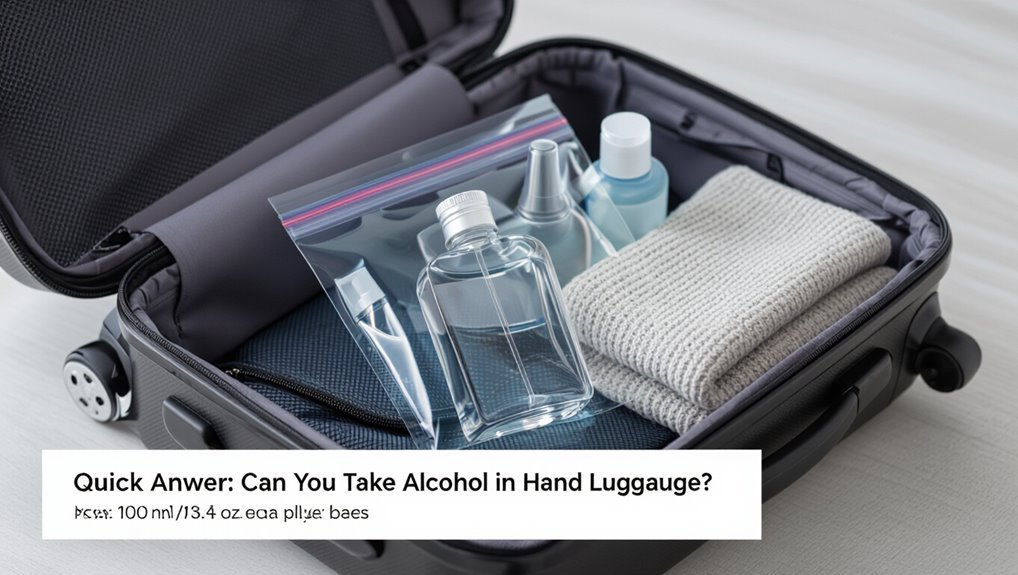
Curious whether you can bring alcohol in your carry-on? You can, but rules and limits matter.
Duty-free purchases often travel in secure bags; liquids over 100 ml are restricted through security unless duty-free and sealed.
Alcohol under 70% ABV generally allowed; above that’s usually banned.
Airlines may set stricter policies and require packing or declaration, so check your carrier before flying.
Short Rules Summary: Carry-On Alcohol at a Glance
You can bring wine or spirits in carry-on only if each container follows TSA liquid limits (usually 3.4 ounces/100 ml in a quart bag) unless you’ve bought duty-free items in sealed bags.
Remember international rules and allowances vary, so check destination duty-free limits and customs declarations before you fly.
Keep receipts and sealed packaging to avoid hassles at security or on arrival.
TSA Liquid Limits
When packing alcohol in carry-on luggage, remember the TSA’s 3-1-1 liquid rule: containers must be 3.4 ounces (100 ml) or less, fit in a single clear quart-sized bag, and each passenger is limited to one bag.
You can bring duty-free bottles bought abroad only if sealed in tamper-evident bags with receipts.
Pack bottles upright, declare if asked, and expect screening.
International Duty Rules
Although rules vary by country, most let you carry limited amounts of alcohol duty-free if it meets specific size, packaging, and receipt requirements—so check both the departure and destination regulations before you travel.
You’ll need to declare purchases, keep receipts, and guarantee bottles from duty-free shops are sealed in tamper-evident bags.
Limits, age rules, and prohibited items differ, so verify before flying.
U.S. Rules Overview: TSA Basics for Alcohol in Hand Luggage
Because security rules focus on safety and consistency, you’ll find clear limits on how much alcohol you can carry in your hand luggage through U.S. checkpoints.
You can bring unopened alcohol in containers 3.4 ounces (100 ml) or less inside a single quart-sized clear bag.
Duty-free purchases over that limit must meet TSA packaging rules and airline policies; always check carrier and state alcohol transport restrictions.
International Rules Overview: ICAO & IATA Guidance
If you’re traveling internationally, ICAO and IATA set the baseline standards airlines and national authorities follow for carrying alcohol, covering everything from packaging and labeling to quantity limits and duty-free handling.
You should follow their guidance and airline rules; check limits and declarations.
- Packaging requirements
- Labeling standards
- Quantity limits
- Duty-free procedures
Domestic Versus International: Key Differences
When you fly domestically, rules tend to be simpler and set by your national aviation authority or the airline.
But international travel adds layers—customs, differing duty-free allowances, and coordinated ICAO/IATA guidance—that can change what you can bring, how it’s packaged, and whether you must declare it.
You’ll follow domestic baggage policies and airline limits, while international trips require customs declarations, import limits, and varied tax rules.
Carry-On Liquid Limit: 100 Ml (3-1-1)
Alongside customs and duty-free rules, you also need to follow strict carry-on liquid limits set for security screening—most countries enforce the 100 ml (3-1-1) rule for liquids in hand luggage.
Remember the 100 ml (3-1-1) carry-on liquid rule—pack bottles in one clear 1‑litre bag for screening.
You’ll pack alcohol accordingly and present it separately at screening.
- Bottles max 100 ml each.
- Fit all containers in one clear 1‑litre bag.
- One bag per passenger.
- Keep bag accessible.
How ABV Affects Whether Alcohol Is Allowed
How strong the alcohol is determines whether you can carry it on or check it in, since many airlines and security agencies set bottle strength limits by ABV.
You’ll usually find stricter rules for spirits above a certain ABV, while lower-proof beers and wines are treated more leniently.
Remember duty-free purchases often get exceptions if they’re packed and sealed according to airport rules.
Bottle Strength Limits
Although airport rules vary by carrier and country, most regulators use alcohol by volume (ABV) to decide whether a bottle can fly, and you’ll need to check the percentage on the label before packing.
- Under 24% ABV: usually treated as non-restricted.
- 24–70% ABV: often limited or requires duty-free provisions.
- Over 70% ABV: commonly prohibited in hand luggage.
- Always confirm with your airline.
Duty-Free Exceptions
If your bottle meets airline ABV limits, duty-free purchases can still change what you’re allowed to carry on board.
If you buy alcohol after security, keep it sealed in the tamper-evident bag with receipt.
Connecting flights or differing country rules may force surrender or repackaging.
Check transit and destination ABV rules before buying to avoid confiscation or fines.
Why Spirits Over 70% ABV Are Banned in Carry-On
You can’t bring spirits over 70% ABV in your carry-on because regulators and airlines treat them as a flammable liquid hazard: at that strength the alcohol’s vapors can ignite more easily, increasing fire risk in the cabin.
Spirits above 70% ABV are banned from carry‑on luggage due to increased ignition and cabin fire risk.
So security rules restrict such bottles to checked luggage or ban them entirely.
- Fire risk
- Evaporation rate
- Cabin safety protocols
- Insurance/liability limits
What’s Allowed: 24%–70% ABV in Hand Luggage
You can carry alcohol between 24% and 70% ABV in your hand luggage, but you’ll need to follow bottle size limits and pack it in a clear, resealable bag for security screening.
Remember duty free purchases often come with different rules and may be allowed through security if sealed and accompanied by a receipt.
Check the specifics with your airline and departing airport so you don’t get caught out.
Bottle Size Limits
When carrying alcohol in your hand luggage, airlines and security screeners let you bring bottles between 24% and 70% ABV, but they must still fit within the usual 100ml/3.4oz liquid limits and the clear resealable bag rule.
- Check each bottle is 100ml or less.
- Keep bottles visible in the bag.
- Limit total bags per passenger.
- Label any purchased duty-free.
Security Screening Rules
Having confirmed bottle sizes and packaging, next focus on what security screeners will actually allow through: spirits and liqueurs between 24% and 70% ABV can go in your carry-on, but they must meet liquid limits and be presented for inspection.
Pack them in a clear, resealable bag, keep containers within volume rules, and place them where scanners can easily view labels to speed screening and avoid confiscation.
Duty Free Exceptions
Because duty‑free purchases are treated differently from regular liquids, you can carry spirits and liqueurs between 24% and 70% ABV in your hand luggage if they’re packed and presented according to the rules.
Follow these steps to guarantee compliance:
- Keep the sealed duty‑free bag intact.
- Retain the receipt inside the bag.
- Present the bag at security.
- Confirm destination allowance before boarding.
Wine and Beer Rules for Carry-On
If you’re bringing wine or beer in your carry-on, remember that airport security limits liquids to 3.4 ounces (100 milliliters) per container and requires they fit inside a single clear quart-sized bag.
You can’t carry full bottles through security unless purchased after screening.
Pack small containers, label alcohol content, and be aware some airlines restrict onboard consumption or transport of alcoholic beverages.
Duty-Free Alcohol in Hand Luggage: How It’s Treated
You can still bring duty-free alcohol through security, but it’s treated differently than your small carry-on bottles.
You’ll usually get it in a sealed bag with receipt. Know these points:
- Alcohol over 100ml allowed if bag sealed.
- Keep receipt visible.
- Follow airline quantity limits.
- Be prepared for extra screening or refusal at boarding.
Sealed Bag Rules for Duty-Free on Connecting Flights
When you buy duty-free alcohol for a trip with connections, airports usually seal it in a tamper-evident bag and expect you to keep the purchase receipt visible inside; this lets you carry bottles through security and onto a connecting flight within the same ticketed itinerary. You should keep the seal intact, show the receipt when asked, and keep transfers within the same ticket.
| Action | Tip |
|---|---|
| Keep seal | Don’t open |
| Show receipt | Keep visible |
Duty-Free Bag Validity and What Breaks It
When you buy duty-free alcohol, the sealed security bag and its receipt are your proof that the purchase can travel through connecting airports.
If the tamper-evident seal is opened or damaged, or the receipt goes missing, you risk having the bottle confiscated or being asked to recheck it.
Keep the bag intact and the paperwork accessible to avoid problems during security checks.
Duty-Free Seal Requirements
Although duty-free purchases can save you money, their security seals and packaging are what determine whether you can carry them through connecting flights and into your destination.
You should:
- Keep the sealed tamper-evident bag intact.
- Retain the original receipt inside the bag.
- Avoid opening or modifying packaging.
- Present the sealed bag for inspection at transfers.
Follow airline and transit country rules closely.
When Seal Is Broken
If the tamper-evident seal on your duty-free bag gets broken, the bag usually loses the protections that let you carry alcohol through security and onto connecting flights.
You should treat an opened seal as a potential problem. Tell security, keep receipts, and expect inspection or confiscation.
Airline or airport staff decide validity; resealing yourself rarely restores rights, so plan accordingly.
Carrying Alcohol Bought After Security on Domestic Flights
Since you buy duty-free or airport-bar beverages after clearing security, you can usually carry them onto domestic flights, but you’ll need to follow airline rules about size, packaging, and on-board consumption.
You should:
- Keep receipts visible for sealed duty-free bags.
- Confirm alcohol percentage limits.
- Ask the airline about open-container policies.
- Avoid consuming beyond crew instructions to prevent refusal.
Checked Baggage vs Carry-On: Where to Pack Bottles
Whether you bought bottles after security or packed them at home, you’ll need to decide if they go in your carry-on or checked bag. Carry small, sealed duty-free past security in cabin; heavier or over-limit bottles belong checked. Consider breakage, leakage, access, and alcohol percentage.
| Option | Tip |
|---|---|
| Carry-on | Protect, limit 100ml if not duty-free |
| Checked | Cushion, declare if valuable |
| Duty-free | Keep receipt |
Airline Rules That Override Airport Rules
Even when airport security lets you carry a bottle through screening, your airline can still set stricter limits on size, quantity, and alcohol content.
Even if TSA allows it, your airline may enforce stricter limits on bottle size, quantity, and alcohol strength.
So you should always check the carrier’s policy before boarding.
- Check airline size and alcohol-by-volume caps.
- Note per-passenger quantity limits.
- Confirm carry-on vs. gate-purchased allowances.
- Understand on-board service and consumption rules.
Country Import Limits and Declaring Alcohol at Customs
When you arrive in a new country, you’ll usually face strict limits on how much alcohol you can bring in duty-free and what you must declare, so check the specific allowance and declaration rules before you travel. You must declare excess, pay duties, or face seizure. Know limits, proof of purchase rules, and penalties to avoid surprises.
| Country | Allowance | Declare? |
|---|---|---|
| Example A | 1 L | Yes |
| Example B | 2 L | Yes |
Bringing Alcohol to the U.S.: Customs Allowances
After checking other countries’ limits, you’ll want to know what the U.S. allows for bringing alcohol across its borders.
You’re generally allowed 1 liter duty-free if 21+, but rules vary by state.
Declare all alcohol and expect duties if over the exemption.
Follow these points:
- Age requirement: 21+
- Usual exemption: 1 liter
- Declare excess
- State restrictions apply
Bringing Alcohol to the EU: Allowances and Variations
If you’re bringing alcohol into the EU, know that allowances and rules differ by country and whether you’re coming from inside or outside the EU; most member states set specific limits for spirits, wine, and beer and expect you to declare amounts exceeding those thresholds.
Check the destination’s customs site for exact limits, duty rules and age restrictions, and keep receipts to speed inspections.
Traveling to the UK: Post‑Brexit Alcohol Rules
Bringing alcohol into the UK now follows different rules than many EU countries did, because Brexit changed allowances and duty treatments for travelers arriving from outside Great Britain.
You should note limits, declare excess, and expect duties for high-value imports.
- Alcohol allowance varies by type and quantity.
- Declare if over allowance.
- Duty may apply.
- Keep receipts for customs.
Rules for Australia, Canada and Other Common Destinations
Different countries set their own limits and declaration rules, so check Australia’s, Canada’s, or your other destination’s specific allowances before you pack alcohol.
In Australia you’ll face strict import limits and duty rules; Canada lets you bring limited duty‑free amounts depending on province and arrival point.
For other destinations, verify volume, ABV limits, tax exemptions, and whether you must declare or pay duty on arrival.
Packing Bottles to Avoid Breakage in Checked Baggage
Wrap bottles carefully before you pack them to cut the risk of leaks and shattering in checked luggage.
Use these steps:
- Wrap each bottle in bubble wrap or clothing.
- Seal caps with tape and place in plastic bags.
- Nest bottles upright in the center of your suitcase.
- Surround with soft items and avoid heavy compression.
These precautions reduce breakage and protect other belongings.
Pack Carry-On Alcohol to Avoid Checkpoint Confiscation
If you want to carry alcohol through TSA checkpoints, know the volume and packaging rules so you won’t have bottles confiscated:
Keep containers 3.4 ounces (100 ml) or less in your quart-sized, resealable clear bag.
Declare duty-free purchases and carry receipts if over limits.
Don’t try to board with loose liquids exceeding limits—officers will confiscate them.
Pack securely to prevent spills.
Best Travel Containers for Small Amounts of Spirits
Once you’ve sorted what size bottles can pass through security, pick travel containers that protect the spirit and fit those limits.
Choose leakproof, durable options and label contents clearly.
Pick sturdy, leakproof containers and clearly label each bottle to avoid spills and confusion.
- Silicone bottles — flexible, crush-resistant
- Glass miniatures with secure caps — best flavor preservation
- Stainless steel flasks — sturdy, opaque
- Travel-sized pump sprayers — for samples, spill-free
Gifts and Shipping Alcohol: Legal Alternatives
If you need to send booze instead of carrying it, you’ll want to know the basic shipping regulations for alcohol so you don’t run afoul of carrier or state rules.
Check carrier policies, age-verification and labeling requirements, and any destination restrictions before you pack.
For gifts, choose sturdy, leakproof packaging and clear external markings to protect the bottle and satisfy shippers.
Shipping Regulations Overview
When you’re sending alcohol as a gift or shipping it across state or international lines, you must follow a patchwork of federal, state, and carrier rules that differ widely in what they allow, how bottles must be packaged, and who can legally receive them.
You should:
- Check federal and destination laws.
- Verify carrier policies.
- Confirm recipient age requirements.
- Use approved shipping declarations.
Gift Packaging Options
Since many carriers and jurisdictions restrict shipping liquor, you’ll often rely on alternative gift-packaging approaches that keep you compliant while still presenting a thoughtful package.
You can include sealed miniature bottles within a non-breakable gift box, wrap alcohol-related accessories (glasses, corkscrew, cocktail mix), or send an e-gift card for local pickup.
Label contents honestly and follow carrier rules to avoid issues.
Medicinal and Specialty Alcohol in Hand Luggage
Although regulations generally limit liquids in carry-on bags, medicinal and specialty alcohol—like rubbing alcohol for wounds or concentrated spirits for culinary demonstrations—can usually travel with you if you follow a few rules.
Medicinal and specialty alcohols are often allowed in carry‑on—follow rules and declare when unsure.
You should:
- Declare items at security if unsure.
- Keep volumes within 100ml per container.
- Pack in a clear resealable bag.
- Carry prescriptions or manufacturer labeling for verification.
Special Cases: Airline Crew and Duty‑Free Staff Limits
If you’re a member of an airline crew or work in duty‑free, different limits often apply to carrying alcohol on board and through security, so you’ll want to check both your carrier’s policy and local aviation rules before packing. You may get allowances for duty shifts, must declare stock, and follow storage rules.
| Role | Allowance | Notes |
|---|---|---|
| Crew | Varies | Check airline |
| Duty‑free staff | Stock limits | Airport rules |
| Transit staff | Restricted | Security clearance |
Traveling With Homemade or Artisanal Liquors
When you’re bringing homemade or small-batch artisanal liquors on a trip, remember they often face stricter scrutiny than store-bought bottles—customs, airline rules, and local laws may treat them as uncommercial or undeclared spirits.
- Check host country import rules.
- Pack in checked baggage if allowed.
- Declare at customs proactively.
- Carry documentation of origin and alcohol content.
Consequences of Carrying Prohibited Alcohol
If you try to bring prohibited alcohol, authorities can confiscate it and issue fines.
You may also be denied boarding or face detention if the item violates regulations or laws.
Know the rules beforehand so you don’t risk penalties or arrest.
Confiscation And Fines
Although you mightn’t expect strict penalties for carrying prohibited alcohol, airports and airlines enforce clear rules that can lead to immediate confiscation and monetary fines.
You’ll face consequences if you try to bypass limits:
- Seizure of the alcohol.
- On-the-spot fines.
- Possible civil penalties by the carrier.
- Requirement to dispose of or forfeit items before boarding.
Flight Denial Or Arrest
Because airports and airlines treat prohibited alcohol as a security and safety risk, you can be denied boarding or even arrested for trying to bring it aboard.
Security officers and airline staff enforce rules strictly; if your bottle violates limits or is concealed, you may face detention, fines, or criminal charges.
Cooperate, declare items, and pack compliant alcohol to avoid delays, legal trouble, or travel disruption.
What Happens at Security If Your Bottle Exceeds Limits?
When your bottle exceeds the security limits, you’ll be asked to remove it from your carry-on and present it to the TSA officer for inspection.
If your bottle exceeds limits, remove it and present it to the TSA officer for inspection.
You can expect one of the following outcomes:
- Disposal of the liquid.
- Surrender for checked baggage.
- Denial of carriage.
- Brief questioning and documentation.
Follow instructions, remain calm, and avoid arguing to expedite resolution.
How to Declare Alcohol at Customs to Avoid Fines
After you’ve handled any security issues with oversized bottles, you’ll need to declare alcohol at customs to avoid fines and delays.
Tell officers the quantity and type, keep receipts handy, and follow allowance limits for your destination.
If you exceed duty-free allowances, be prepared to pay duty or surrender excess.
Honest, prompt declaration prevents penalties and speeds processing.
Buying Duty-Free: Tips to Ensure Compliance
Buying duty-free can save you money, but you’ve got to follow the rules to avoid problems at customs and security.
Buying duty-free can save money, but follow the rules to avoid customs and security hassles.
You should check allowances, keep receipts, and guarantee sealed bags stay intact.
Follow these steps:
- Verify destination limits.
- Keep purchase proof accessible.
- Request tamper-evident bagging.
- Declare when required to avoid fines.
How Layovers Affect Take-On of Duty-Free Alcohol
When you buy duty-free alcohol, keep the original sealed bag and receipt handy because some airports require the tamper-evident packaging to stay intact for transit.
Check the rules at your connecting airport since security and allowance limits can differ and might force you to surrender the bottle.
Also confirm whether your final carrier’s security will let you carry the sealed item onto the next flight.
Duty-Free Sealing Requirements
How do layovers affect whether you can keep duty-free alcohol sealed for your flight?
You’ll usually need a tamper-evident bag (STEB) and receipts to keep it sealed through connections. Check rules when you buy.
- Keep STEB intact.
- Carry receipt showing purchase time.
- Verify airline allowance.
- Confirm final security checkpoint accepts sealed items.
Transit Airport Regulations
If your trip includes a layover, you’ll need to check the transit airport’s security rules before assuming your duty-free bottle will make it to your final flight sealed and on board.
Different airports and countries treat duty-free sealed bags differently; some allow transfer if you keep the receipt and seal intact, others require re-screening that can confiscate liquids.
Verify rules and plan accordingly.
Connecting Flight Security
Because layovers can change the screening rules you’ll face, always verify each airport’s policy before assuming a duty-free bottle will stay with you—some terminals accept sealed purchases with receipts, while others require you to re-screen and may confiscate liquids.
- Check transit country rules.
- Keep proofs of purchase visible.
- Expect resealing or confiscation.
- Consider checked luggage if unsure.
Handling Alcohol Purchases During Domestic Transit
When you buy alcohol during a domestic layover—whether at an airport shop or the terminal bar—know the rules about carry-on limits, security screening, and connecting-flight policies so your purchase doesn’t get confiscated or delayed.
Keep receipts, guarantee bottles are sealed per store or TSA requirements, pack purchases in approved transparent bags if required, and confirm your airline and connecting airport allow transit of alcohol bought post-security.
Traveling With Alcohol for Weddings and Special Events
If you’re bringing bottles for a wedding or special event, pack them securely in checked luggage or in a protective case to prevent breakage.
Remember duty-free allowances and any connecting-flight rules so you don’t exceed limits or lose your purchase.
Plan ahead to confirm airlines’ and countries’ size and quantity restrictions before you travel.
Packing Alcohol For Events
Heading to a wedding or milestone event and want to bring your own bottle? Pack smart: you’ll need to protect glass, follow airline liquid rules, and respect venue policies.
Consider these steps:
- Wrap bottle in bubble wrap or clothing.
- Use a hard-sided case.
- Check liquid limits for carry-on.
- Confirm the venue allows outside alcohol.
Navigating Duty-Free Limits
Because duty-free allowances and transport rules vary by country and carrier, you’ll need to check limits before you buy so your wedding or event plans aren’t derailed at the airport.
Confirm alcohol volume and duty-free allowance, note connecting-flight restrictions, and keep receipts.
If limits are exceeded, arrange checked luggage or ship items home.
Declare purchases when required to avoid fines or confiscation.
Lounge and Onboard Purchases: How They Count
When you buy alcohol in an airport lounge or on board, it still counts toward your overall allowance and any applicable restrictions, so keep receipts and check how those purchases fit with duty-free limits, carry-on rules, and the laws at your destination.
You should:
- Retain receipts as proof of purchase.
- Verify volume and ABV limits.
- Understand transit rules.
- Declare when required.
Pre‑Flight Checklist for Carrying Alcohol
Now that you’ve handled lounge and onboard purchases, get your pre‑flight checklist in order so you won’t face surprises at security or immigration.
Check liquid limits, container sizes, and whether duty‑free seals are intact. Pack bottles upright in carry cases or original packaging. Carry receipts for purchased alcohol.
Verify destination and transit rules, and guarantee any alcohol over limits goes in checked luggage.
Common Traveler Mistakes With Alcohol in Hand Luggage
Though you’ve checked limits and packed carefully, travelers still make predictable errors with alcohol in hand luggage that can ruin a trip or slow you down at the checkpoint.
You should avoid common mistakes:
- Exceeding permitted volume for liquids.
- Forgetting receipts for duty‑free purchases.
- Packing open or improperly sealed bottles.
- Assuming all airports accept the same allowances; rules vary.
Apps and Tools to Check Airline and Country Rules
Several reliable apps and websites help you quickly check airline and country rules for carrying alcohol, so you can avoid surprises at the checkpoint.
Use airline apps, government customs sites, and travel-regulation tools like IATA’s guidelines to confirm allowances, duty-free limits, and packaging rules.
Bookmark pages, screenshot regulations, and use notifications for updates so you don’t rely on memory or hearsay.
When to Call the Airline or Customs Ahead of Travel
If your trip involves unusual baggage, multiple stopovers, expensive or commercial quantities of alcohol, or travel to a country with strict import rules, call the airline or the destination’s customs office before you go so you’ll know what paperwork, packing, or limits apply.
Traveling with unusual baggage, many stopovers, or large/expensive alcohol? Call the airline or destination customs first.
- Confirm allowances and taxes.
- Ask about declaration forms.
- Verify transit rules.
- Get packing recommendations.
Key Takeaways: Pack Alcohol in Hand Luggage Safely
1 clear rule: you can’t carry more than 100 ml (3.4 oz) of liquid in each clear, resealable plastic bag through security, and that includes alcohol—so plan accordingly, buy duty-free after screening, or pack bottles in checked luggage if they exceed the limit.
Check alcohol ABV limits, declare purchases when required, seal duty-free bags, label gifts, and know destination customs to avoid fines or confiscation.
Frequently Asked Questions
Can I Open and Drink My Duty‑Free Alcohol Onboard During Flight?
Yes — you can usually open and drink duty‑free alcohol onboard, but the crew can refuse service or confiscate it if they deem it unsafe, if local laws prohibit consumption, or if the flight’s alcohol policy forbids it.
Are Homemade Infusions or Fruit Spirits Treated Differently at Security?
Yes — homemade infusions or fruit spirits aren’t treated specially; you’ll face the same liquid restrictions and alcohol limits as commercial bottles, so pack them in compliant containers, declare if required, and expect potential additional screening.
Do Medical Prescriptions for Alcohol Tinctures Exempt Them From Limits?
No, medical prescriptions don’t automatically exempt alcohol tinctures from limits; you’ll need proper labeling and documentation, and you should check the airline and destination’s specific rules beforehand, because security and customs still enforce volume and alcohol restrictions.
Will Travel Insurance Cover Lost or Confiscated Alcohol Purchases?
Generally no — most travel insurance won’t cover alcohol lost or confiscated, since it’s often excluded as contraband or perishables. Check your policy’s exclusions and contact your insurer; some premium plans might offer limited coverage.
Can Minors Carry Alcohol Purchased for Adults in Sealed Duty‑Free Bags?
No, you generally can’t; airlines and security require passengers carrying duty‑free alcohol to be of legal drinking age, so you’ll need an adult to carry the sealed bag for you or face confiscation and denied boarding in some cases.
Conclusion
You can bring alcohol in your hand luggage, but rules vary by volume, proof and origin—so check limits before you pack. In the U.S., carry-on alcohol under 140 proof follows TSA rules and 3.4 oz restrictions for liquids in security bags; duty-free purchases can exceed that if you keep the sealed bag and receipt. International travel follows ICAO/IATA guidance and country-specific laws. When in doubt, contact your airline or customs ahead of time to avoid confiscation or fines.