Can I Take Camera With Batteries on Plane
Yes — you can bring your camera and most batteries on a plane, but there are rules. Keep lithium‑ion and lithium metal batteries in your carry‑on, protect terminals, and watch watt‑hour (Wh) and lithium content limits; under 100 Wh is normally fine, 100–160 Wh may need airline approval, and over 160 Wh is usually prohibited. Non‑lithium batteries can go checked. Check your airline and pack documentation; more details follow if you want to know the specifics.
Quick Answer – Camera Batteries: Allowed or Not
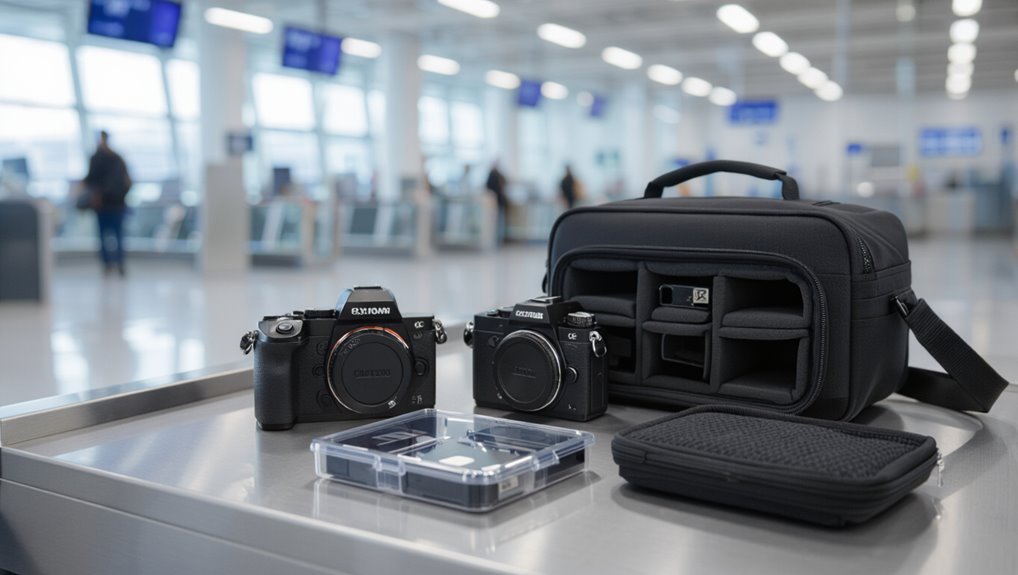
Wondering whether you can bring camera batteries on a plane? You can, but there are limits: most airlines allow camera batteries in carry‑on with capacity and quantity rules.
You’ll need to protect terminals against short circuits and follow airline or TSA instructions. Check battery markings and airline policies before travel so you don’t face confiscation or delays.
Which Camera Battery Types Are Allowed in Carry‑On vs Checked Luggage
Now that you know batteries are generally allowed in carry‑on with rules, you should also know which types go where:
lithium‑ion (rechargeable) batteries are typically allowed only in carry‑on luggage and often limited by watt‑hour (Wh) rating and quantity;
lithium metal (non‑rechargeable) cells are also usually restricted to carry‑on and limited by lithium content;
alkaline, NiMH, and other common non‑lithium camera batteries can usually go in either carry‑on or checked bags but still must have terminals protected.
Read Battery Labels: Wh and mAh Made Simple
You should know the difference between watt‑hours (Wh) and milliamp‑hours (mAh) because airlines set limits in Wh.
If your battery only lists mAh, you can convert to Wh by multiplying mAh by voltage (V) and dividing by 1000: Wh = (mAh × V) / 1000.
Check the resulting Wh against airline rules before you pack.
Understanding Wh Versus mAh
How do Wh and mAh differ, and which one should you check before boarding with a spare battery?
You should focus on Wh for airline rules, but mAh tells you capacity.
Read labels and prioritize Wh when deciding allowed carry-on.
- Wh indicates energy limit for airlines
- mAh shows cell capacity and runtime
- Check both labels; follow airline Wh limits
Converting mAh To Wh
Because battery labels can show either mAh or Wh (and sometimes both), it’s helpful to know how to convert between them so you can confirm a battery meets airline limits.
Convert mAh to Wh by multiplying mAh by voltage (V) and dividing by 1000: Wh = (mAh × V) / 1000.
Check the device or battery label for voltage, then calculate and compare to airline limits.
How Wh Limits Determine Airline Allowance
Now that you can read Wh ratings, let’s look at how those limits shape what you can bring.
Airlines set clear Wh thresholds that dictate whether a battery can go in your carry-on, checked baggage, or needs airline approval.
You’ll also see some variation between carriers, so always check your airline’s specific battery capacity rules before you travel.
Wh Limits Overview
When you’re deciding whether a camera battery can fly with you, airlines usually look at watt-hours (Wh) to set their limits, since Wh measures a battery’s usable energy and correlates with fire risk.
You should check labels and airline policies, and pack higher-Wh cells in carry-on only.
- Check the Wh printed on the battery
- Compare to airline maximums
- Carry spares in carry-on
Battery Capacity Rules
How much battery power you can bring on a plane depends on the cell’s watt-hour (Wh) rating: airlines and regulators set clear cutoffs that determine whether a battery can go in your carry-on, checked bag, or needs airline approval.
Generally, under 100 Wh is allowed in carry-on without approval; 100–160 Wh often needs airline consent; over 160 Wh is typically prohibited.
Airline Policy Variations
Because airlines follow the same watt-hour framework but apply it differently, you’ll see variation in how batteries are treated across carriers:
- Some let spare lithium-ion batteries up to 100 Wh in carry-on without approval.
- Others allow 100–160 Wh with airline approval and limits on quantity.
- A few ban batteries above certain capacities or require special packaging and documentation.
TSA, ICAO, IATA Rules That Affect Camera Batteries
Curious what rules govern camera batteries on flights? You’ll follow TSA screening and carry-on preference, while ICAO and IATA set international safety standards and lithium battery classifications.
Airlines enforce watt-hour limits, quantity caps, and packaging guidance based on those bodies’ rules. Check airline specifics and pack documentation for higher-capacity cells to guarantee compliance and smooth security processing.
Installed Batteries vs Spare (Loose) Batteries: Rules and Risks
While installed batteries in cameras usually travel without issue in checked or carry-on bags, spare (loose) lithium-ion cells carry stricter rules and higher risk and should always go in your carry-on, properly protected against short circuits and damage.
You must separate spares, cover terminals, and follow airline watt-hour limits.
- Keep spares in original packaging or plastic caps
- Tape terminals or use battery case
- Check airline and country limits before you fly
Pack Camera Batteries Safely for Security Checks
How should you pack camera batteries so security screenings go smoothly?
Place installed batteries in the camera and carry spare batteries in your carry-on, not checked luggage.
Insulate terminals with tape or original covers, and use a dedicated battery case or separate pouches to prevent short circuits.
Keep batteries accessible for inspection and declare any unusual cells to security personnel if requested.
What to Do If Your Battery Exceeds Airline Limits
What if your camera battery is over the airline’s watt-hour (Wh) limit? You’ll need to act quickly and responsibly: check airline rules, pack safely, and inform staff.
If your camera battery exceeds airline Wh limits, act fast: check rules, pack safely, and notify staff immediately.
Options include asking gate agents for guidance or leaving the battery behind.
- Tell airline or security immediately
- Carry proof of Wh rating and specs
- Isolate terminals and pack in carry-on only
Travel Alternatives for Large Lithium Batteries (Shipping, Courier, Approvals)
If your battery exceeds airline limits, you can ask the airline for special shipping approval and follow their packaging and documentation rules.
You can also use specialized couriers that handle hazardous batteries and will arrange the right labeling and permits.
Check costs, transit times, and insurance so you know this option is practical for your trip.
Shipping With Airline Approval
When you can’t carry a large lithium battery in your checked or carry-on baggage, getting airline approval to ship it offers a regulated alternative that keeps you compliant and on schedule.
You’ll request permission, follow packaging and labeling rules, and note size/Wh limits. Prepare documentation, meet pickup deadlines, and confirm tracking with the airline.
- Request written airline approval
- Use approved packaging
- Include battery specifications and paperwork
Using Specialized Couriers
Getting airline approval to ship a large lithium battery is one route, but specialized couriers can offer more predictable handling and clearer rules for oversized or high-Wh cells.
You should compare carrier certifications, packaging standards, and hazardous-goods expertise. Couriers often provide documentation, ground-only options, and insured transport.
Expect higher fees, strict prep requirements, and mandatory advance notice to guarantee legal, traceable delivery of your camera batteries.
Airline Exceptions, Approval Steps, and Where to Confirm Limits
Although most airlines let you bring cameras, some have exceptions and specific approval steps you’ll need to follow.
Check airline battery watt-hour limits, declare extra spares, and get written approval for oversized or taped terminals. Confirm rules on the carrier website or contact customer service before travel.
- Check battery watt-hour and quantity limits
- Declare and label spare batteries
- Request written approval for exceptions
Practical Packing Checklist for Camera Gear and Batteries
If you want trouble-free security checks and safe transport, pack your camera gear with a simple, organized checklist:
| Item | Storage | Notes |
|---|---|---|
| Camera body | Carry-on | Wrap in padded sleeve |
| Lenses | Carry-on | Caps on, lens pouch |
| Batteries | Carry-on | Isolate terminals, spare limits |
Also include charger, memory cards, and a compact toolkit.
Common Mistakes That Lead to Confiscation or Delays
When you shove loose batteries and spare memory cards into a checked bag or leave camera bodies unshielded, you’ll raise red flags at security and risk confiscation or delays.
You should pack batteries in carry-on, cover terminals, and keep gear organized so agents can inspect quickly.
- Uncovered battery terminals
- Mixed damaged and usable cells
- Packing batteries deep in checked luggage
Troubleshooting at Security: What to Say and What Documentation to Carry
Because security officers deal with lots of unfamiliar gear, stay calm and speak clearly about what you’re carrying—identify the items (camera bodies, lenses, batteries, chargers, memory cards), explain why they’re packed the way they are, and offer to demonstrate or power on devices if asked. Carry receipts, manuals, and battery specs. Show credentials if relevant.
| Document | Purpose |
|---|---|
| Receipt | Proof of ownership |
| Manual | Device details |
| Specs | Battery limits |
Frequently Asked Questions
Can I Carry Camera Batteries in Checked Baggage for International Flights?
No, you generally shouldn’t pack spare lithium camera batteries in checked baggage; you’ll need to carry them in your carry-on, protected against short circuits, and follow airline and country-specific limits for watt-hours and quantity.
Are Power Banks Treated the Same as Camera Batteries?
No — they’re not treated the same. You’ll need to carry power banks in your carry-on because airlines restrict lithium-ion spare batteries; camera batteries may sometimes be allowed checked if installed, but spares generally must stay with you.
Do Battery Manufacturing Defects or Recalls Affect Travel Permissions?
Yes — manufacturing defects or recalls can restrict travel: if a battery’s recalled or deemed unsafe, regulators and airlines can ban it from carry-on or checked luggage, and you’ll need to follow recall instructions before flying.
Can I Bring Rechargeable Aa/Aaa Batteries in Bulk?
Yes — you can bring rechargeable AA/AAA batteries in bulk, but you’ll need to carry them in your cabin baggage, protect terminals (tape or plastic cases), and follow airline or country limits on quantity and spare lithium battery rules if applicable.
Will Airport Lounges or Gates Provide Battery Disposal Options?
Usually they won’t. You’ll rarely find dedicated battery disposal at lounges or gates; security may offer collection bins for used batteries or dangerous items, but you should bring proper disposal or check airline/airport guidelines beforehand.
Conclusion
You can bring camera batteries on a plane, but you’ve got to follow rules: carry most lithium batteries in carry‑on, keep spares protected against short circuits, and watch Wh/mAh limits (check battery labels). Know TSA, ICAO/IATA basics and call your airline if unsure—some require approval for higher‑capacity cells. Pack gear neatly, declare when asked, and have documentation handy. Do this and you’ll avoid delays, confiscations, and unhappy surprises at security.