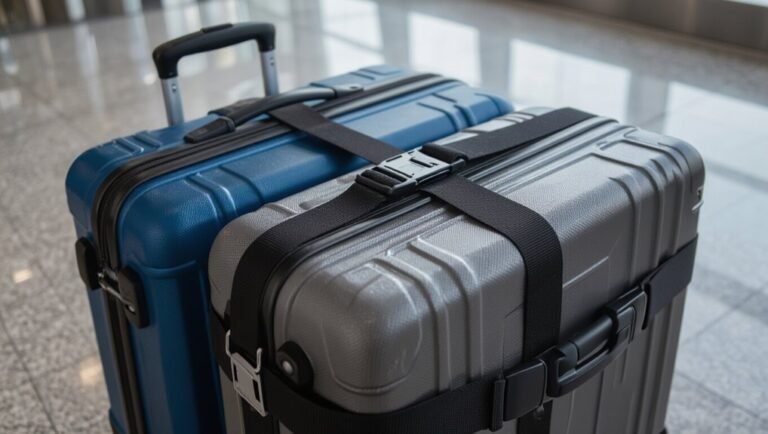
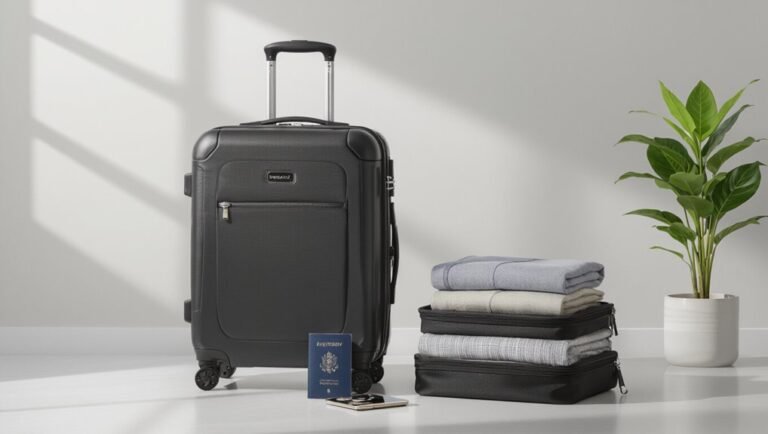
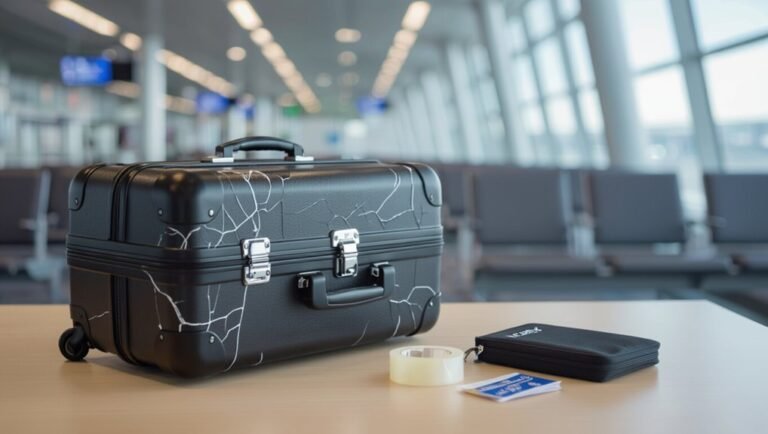
Is 25 Inch Luggage Carry on or Checked Baggage
A 25-inch suitcase is usually too big for carry-on and will need to be checked, since most airlines cap carry-ons around 22 inches; smaller planes and regional jets may be stricter. Measure height including wheels and handles, mind expandable zippers, and check both size and weight rules for your carrier and fare class to avoid fees or gate checks. Pack essentials in a personal item and keep receipts; continue on to learn practical measuring and packing tips.
Quick Answer: Is a 25-Inch Suitcase Carry-On or Checked?
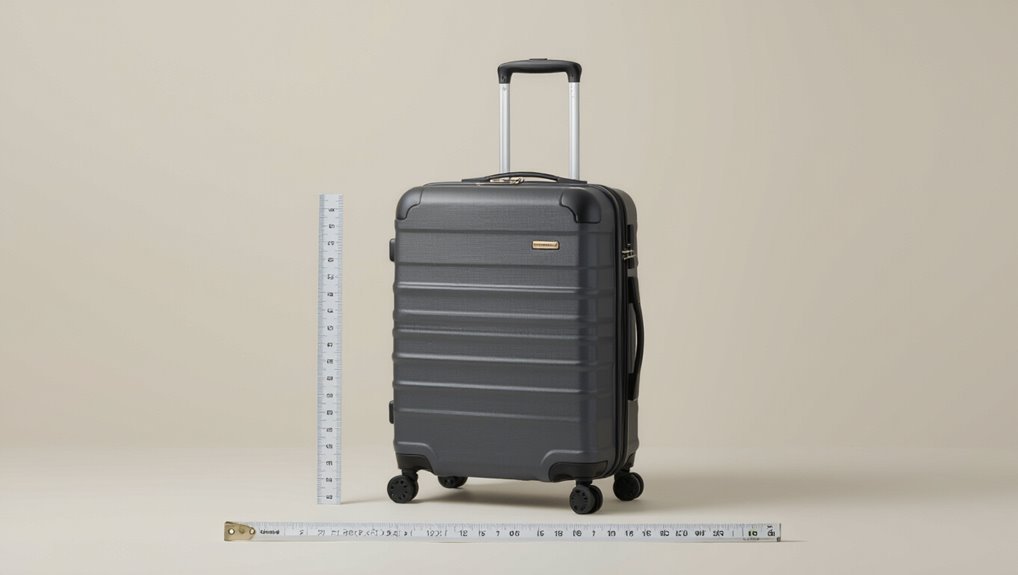
Wondering whether a 25-inch suitcase goes in the cabin or the hold? You’ll usually need to check it.
Most airlines limit carry-ons to about 22 inches or smaller, so a 25-inch bag typically exceeds cabin dimensions and must go in the hold.
Always verify your carrier’s specific allowance to avoid fees or gate-check surprises, especially on smaller aircraft.
How Airlines Define Carry-On Size Limits
Because airlines set carry-on limits to fit cabin storage and safety requirements, they define size by exact linear dimensions—length plus width plus height—and sometimes by individual measurements for each side.
Airlines set carry-on limits by exact linear dimensions—and sometimes individual side measurements—to meet cabin storage and safety requirements.
You should check your carrier’s published limits, measure packed bags, and consider wheels/handles.
- Linear dimension rule
- Individual side limits
- Weight vs. size distinctions
- Gate-check policies
How Airlines Define Checked-Baggage Size Limits
Carry-on limits focus on fitting the cabin; checked-baggage rules address size for cargo hold handling and aircraft weight distribution.
You’ll find airlines set checked limits by combined linear dimensions (length + width + height), often around 62 inches for standard checked bags.
Excess size may trigger oversized fees or require cargo shipment.
Always check your carrier’s specific limits and fee policies before you travel.
How to Measure a 25-Inch Suitcase Correctly
Measure the suitcase from base to top, making sure you include the wheels and the extended handle so you get the true height.
You’ll want to record the total dimensions (height x width x depth) with those parts counted.
Then compare those numbers to your airline’s carry-on and checked-baggage limits to know if it’s allowed.
Measure Height Correctly
When you check a suitcase’s height, include the wheels and handle in your measurement so the number matches what airlines use for size limits.
Measure from the floor to the highest point while the bag stands upright. Use a tape measure, record inches and centimeters, and double-check before travel.
- Stand bag on hard, level surface
- Measure vertical edge precisely
- Note compression from packing
- Re-measure if unsure
Include Wheel And Handle
If you want an accurate 25-inch measurement, stand the suitcase upright and include the wheels and fully extended handle so the number matches airline limits.
Measure from base of wheels to top of handle, keeping tape straight. Don’t ignore protruding parts like wheel housings or handle locks.
Record the total height; airlines judge external dimensions, so include everything that affects fit in overhead bins or cargo.
Compare Airline Limits
Now that you’ve included wheels and the handle in your measurement, check how that total stacks up against different airlines’ size limits.
Measure height + width + depth, then compare to carriers’ carry-on and checked thresholds.
Know gate-check rules and fees. Confirm dimensions on your airline’s site before travel.
- Domestic carry-on maximums
- International variations
- Gate-checked policies
- Oversize fee thresholds
How Weight Limits Affect Carry-On Eligibility
You’ll need to check airline weight thresholds because some carriers limit carry-ons by weight, not just dimensions.
That means a 25-inch bag that fits the size rules could still be forced into checked baggage if it’s too heavy.
Think about packing density and how tightly you fill the suitcase to avoid surprises at the gate.
Airline Weight Thresholds
Because airlines set both size and weight limits, a 25-inch suitcase can be carry-on on one carrier and checked on another depending on how heavy it is.
You should verify weight caps, pack strategically, and expect gate checks if overweight. Know that fees, enforcement strictness, and aircraft type all matter.
- Typical carry-on weight ranges
- Overweight fee thresholds
- Staff enforcement variability
- Aircraft-specific limits
Carry-On vs Checked
How much your 25-inch suitcase weighs will often decide whether you can bring it into the cabin or must check it.
Airlines pair size limits with strict weight caps and won’t bend on one just because the other’s met. You should weigh your bag before heading to the airport, redistribute or remove items to meet carry-on limits, or prepare to check it and expect possible fees.
Packing Density Limits
When your 25-inch suitcase looks like it fits the overhead bin, don’t assume you can carry it on—airlines enforce weight limits that effectively cap how densely you can pack.
You’ll need to balance essentials, prioritize light fabrics, and distribute weight for handling. Check airline policies before packing to avoid gate checks and fees.
- Weigh bags before leaving
- Use packing cubes
- Shift heavy items to checked luggage
- Wear bulky shoes
Why 25-Inch Bags Are Borderline for Many Airlines
Although a 25-inch suitcase falls into a gray area for many carriers, you’ll often find it teeters between carry-on limits and checked-bag rules depending on airline, aircraft type, and how the carrier measures dimensions.
You should expect variations due to gate size constraints, overhead bin depth, weight policies, and whether airlines include wheels and handles in measurements, so confirm specs before travel.
U.S. Domestic Airlines: Carry-On Size Limits
When you check U.S. domestic carry-on rules, you’ll find most airlines list dimensions around 22 x 14 x 9 inches as the standard.
Policies vary by carrier and fare class, so a 25-inch bag can be acceptable on some flights but too large on others.
Let’s compare typical limits and where a 25-inch bag usually fits.
Typical Carry-On Dimensions
Most U.S. domestic airlines let you bring a carry-on that’s roughly 22 x 14 x 9 inches (including wheels and handles).
So a 25-inch bag usually exceeds that limit and will be treated as checked baggage. You’ll want to confirm dimensions before travel.
- Measure including wheels and handles
- Soft-sided bags may compress slightly
- Overhead bin fit matters more than length
- Weigh limits still apply
Airline Variations And Limits
Because airlines set their own carry-on rules, you need to check each carrier’s size limits before you pack.
U.S. domestic airlines vary: major carriers commonly allow 22 x 14 x 9 inches, but some low-cost or regional airlines impose smaller limits or strict weight policies.
Measure your 25-inch bag and confirm whether it’ll be checked, pay fees if required, or choose a compliant substitute.
Major International Airlines: 25-Inch Carry-On Rules
Across major international carriers you’ll find differing policies on 25-inch bags: some let slightly larger carry-ons in the cabin, others require anything that size to be checked.
Across airlines, 25-inch bags can be allowed or must be checked—always verify your carrier’s rules.
You should always verify dimensions, weight limits, and gate-check practices before flying. Check loyalty status and cabin class for exceptions.
- Confirm published size limits
- Weigh bags pre-trip
- Ask gate agents if unsure
- Know fee policies
Low-Cost Carriers: 25-Inch Carry-On Restrictions
Low-cost carriers usually have the strictest rules for a 25-inch bag, and you’ll often be required to check it or pay a bulky carry-on fee. You should check size limits, gate-check policies, fees, and boarding priority before flying to avoid surprises.
| Item | Tip |
|---|---|
| Size | Measure your bag |
| Fee | Expect charges |
| Boarding | Priority helps |
| Policy | Read airline rules |
Regional/Small Aircraft: When 25-Inch Won’t Fit
When you board regional or small turboprop aircraft, a 25-inch suitcase often won’t fit in the overhead bins and may be too wide for the cabin aisles.
So you’ll usually have to check it at the gate or pay to gate-check it. You’ll want to plan ahead and pack accordingly.
- Confirm aircraft type before packing
- Measure overhead bin dimensions if available
- Consider gate-check fees and wait times
- Keep valuables and essentials in a personal item
Soft-Sided vs Hardshell 25-Inch Bags: Fit Differences
If you’ve had to gate-check a 25-inch suitcase on a smaller plane, the shell type can make a big difference in whether it fits in tighter overheads or squeezes down narrow aisles.
Soft-sided bags compress slightly, letting you force them into snug spaces and slide past obstacles.
Hardshells keep shape, resisting compression but protecting contents; they may require aisle clearance and careful angling to stow.
Expandable Zippers: When Expanders Push You to Checked
Although expanders add helpful packing room, they can quickly push a 25-inch suitcase over airline size limits and turn what you planned as carry-on into checked baggage.
You should measure fully expanded dimensions, weigh it, and factor in unpredictable gate checks. Pack strategic items and avoid overstuffing.
- Measure with expander zipped and unzipped
- Check airline max linear size
- Weigh after packing
- Prioritize compressible items
Seat Class and Elite Status That Allow Larger Carry-Ons
Because airlines often give bigger carry-on allowances to premium cabins and frequent flyers, check your seat class and elite status before assuming a 25-inch bag will be allowed onboard.
If you’ve booked business or first class, or hold high-tier status, you may get relaxed size limits or an extra bag.
Confirm policies on your carrier’s site or call customer service to avoid surprises.
Connecting Flights: Mixed-Carrier Carry-On Issues
Traveling on a single itinerary with multiple airlines can leave you wondering which carry-on rules apply, and you should assume the strictest carrier sets the limit.
When flying multiple carriers on one itinerary, expect the strictest airline’s carry-on rules to govern.
You’ll need to check each airline’s size and weight rules, confirm through-checked baggage, and prepare to gate-check if needed.
- Check first carrier’s allowance
- Verify partner agreements
- Pack essentials in a smaller bag
- Be ready to gate-check
International vs Domestic Size Differences
When you travel internationally, remember that airline size standards can differ from domestic rules.
Your 25-inch bag might be allowed as carry-on on one carrier but only as checked baggage on another, since carry-on allowance variance is common.
Check both the outbound and return airlines’ checked baggage rules before you pack.
Airline Size Standards
Although airlines aim for consistency, size limits for carry-on and checked bags vary widely between domestic and international carriers, so you can’t assume your 25-inch suitcase will be treated the same on every flight.
You should check specific carrier rules, consider international weight and dimension combos, and factor in connection airlines’ policies.
- Regional regulator standards differ
- Low-cost carriers restrict sizes
- International lines allow larger checked bags
- Gate-check practices vary
Carry-On Allowance Variance
Curious how your 25-inch case will be treated on different routes?
You’ll find domestic carriers often allow slightly larger carry-ons, while international airlines stick to stricter dimensional limits.
Low-cost carriers may force gate checks even if it fits.
Always check the specific airline’s website before travel, since allowances and enforcement vary by route, aircraft, and fare class.
Checked Baggage Rules
If your 25-inch case doesn’t make the cut for cabin carriage, you’ll need to evaluate varying checked-baggage standards between domestic and international travel.
You should compare size/weight limits, fees, and airline-specific exceptions before booking. Pack to meet the strictest rule on your itinerary to avoid surprises.
- Domestic weight limits often higher
- International dimensions vary by carrier
- Fees differ per route
- Special rules for transfers
Train & Cruise Luggage Rules for 25-Inch Bags
When you’re planning a trip that includes trains or cruises, know that a 25-inch suitcase usually counts as checked baggage rather than carry-on — but policies vary by carrier and cabin type. You should check weight limits, storage availability, and fees ahead of time. Use this quick comparison:
| Mode | Storage | Tip |
|---|---|---|
| Train | Checked/hold | Book space |
| Cruise | Checked/stowed | Label bag |
| Ferry | Varies | Confirm rules |
What Gate Agents Look For When Sizing Bags
Because gate agents need flights to leave on time, they focus on three quick checks when sizing bags: overall dimensions, how the bag fits in the sizer, and whether it looks like it exceeds weight or stowsable shape limits.
You’ll be judged quickly, so make packing neat and predictable.
- Trim external straps and pockets
- Collapse telescoping handles
- Avoid bulging soft sides
- Keep heavy items low and centered
Common Fees If Your 25-Inch Luggage Is Checked
If your 25‑inch bag gets checked, expect possible oversize baggage charges if it exceeds the airline’s linear dimension limits.
You may also face weight overage fees when your suitcase is heavier than the allowance.
Plus, optional service extras like priority handling or gate-check fees can add to the total.
Oversize Baggage Charges
Although a 25-inch suitcase often falls within many airlines’ checked-size limits, you may still face oversize fees if its dimensions or weight exceed carrier-specific thresholds.
Check policies before travel to avoid surprises and measure girth including handles.
- Fees for linear dimensions over limit
- Higher charges on international routes
- Airline-specific size cutoffs vary
- Waivers for elite status or special fares
Weight Overage Fees
Most airlines let a 25‑inch suitcase meet checked-size rules, but they’ll hit you with weight overage fees once it exceeds their per‑bag weight limit—commonly 50 lbs (23 kg) for economy and 70 lbs (32 kg) for premium cabins.
If your bag’s heavier, expect fixed surcharges or tiered charges by weight. You can avoid fees by redistributing items, using a smaller bag, or paying for a heavier allowance in advance.
Optional Service Extras
You’ll often face optional extras when checking a 25‑inch suitcase—things like priority handling, fragile/item declarations, excess-piece fees, and delivery-to-your-door services—that can add to the base checked‑bag charge.
You should budget for add-ons, compare carrier offerings, and check prepay discounts to avoid surprises at the airport.
- Priority handling
- Fragile/item declaration
- Excess-piece or oversize fees
- Door-to-door delivery
Strategies to Avoid Checked-Bag Fees With a 25-Inch Bag
If you want to travel with a 25-inch bag without paying a checked-bag fee, plan ahead and use a few practical tactics:
- Check airline size rules.
- Measure and weigh your loaded bag.
- Choose flexible carriers or fare classes that allow larger carry-ons.
- Request gate-check only if needed.
- Wear bulky items.
- Use compression cubes to stay within limits while keeping essentials accessible.
Packing Tips to Slim a 25-Inch Suitcase for Overhead Fit
You can slim a 25-inch suitcase by compressing clothes into packing cubes to shave bulk and stay organized.
Prioritize lightweight fabrics like synthetics and linen blends to cut weight without sacrificing outfits.
Wear your bulkiest items on the plane so they don’t take up precious overhead space.
Compress With Packing Cubes
When you zip clothes into compression packing cubes, they shave bulk and keep items organized so a 25-inch suitcase can sit closer to overhead limits.
You’ll squeeze more, prevent shifting, and spot outfits fast. Use different cube sizes and color codes to maximize space and speed.
- Pack heavier items flat
- Roll fragile fabrics lightly
- Fill gaps with socks
- Compress nonessentials tightly
Prioritize Lightweight Fabrics
Because lightweight fabrics cut bulk without sacrificing outfits, prioritize them to slim a 25-inch suitcase and meet overhead limits.
Choose thin-knit tops, travel-friendly synthetics, and wrinkle-resistant blends that compress easily.
Swap heavy denim and thick sweaters for breathable layers that still warm.
Pack versatile pieces you can mix, and limit bulky toiletries; lighter textiles free space for essentials and keep weight under airline carry-on caps.
Wear Bulky Items
Lightweight fabrics free up room inside your 25-inch bag, so save space by wearing the bulkiest pieces on the plane: parkas, heavy boots, and thick sweaters compress awkwardly but add little to your packed volume when worn.
You’ll stay warm and free suitcase space for essentials.
- Wear layers to adapt to cabin temps
- Use boots for walking and storage
- Choose a packable parka
- Belt bulky items securely
Alternatives: Carry Multiple Smaller Bags Instead of One 25-Inch
If you prefer flexibility over a single bulky 25-inch suitcase, consider splitting your gear across two or three smaller bags so you can move faster, fit different airline size rules, and keep essentials within reach.
Use a compact carry-on for valuables and a soft duffel or backpack for clothes; you’ll avoid oversized fees, handle stairs and crowded transit more easily, and adapt to varied cabin limits.
Best 23–24-Inch Carry-On Models vs 25-Inch Options
Choosing between a 23–24-inch carry-on and a 25-inch suitcase comes down to priorities: airline compliance, maneuverability, and packing needs.
Decide between 23–24″ carry-ons for ease and compliance or 25″ for extra capacity.
You’ll prefer 23–24-inch models for guaranteed gate fit and easier handling; opt for 25-inch when volume matters and you accept possible check fees.
Consider these features when choosing:
- Lightweight shell and spinner wheels
- Expandability versus fixed capacity
- Internal organization and compression straps
- Durable zippers and warranty
When to Buy a Smaller Bag vs Pay Checked Fees
If you’re taking a short trip, a smaller bag can save you checked fees and time at the airport.
Weigh the cost-benefit—compare baggage fees to the price of a new carry-on and how often you’ll use it.
Use packing-efficiency tips like rolling clothes and limiting shoes to make a compact bag work.
Trip Length Consideration
How long will you be gone, and what do you really need to bring? You should match bag size to trip length: short trips favor compact carry-ons; longer stays often need checked bags.
Decide whether convenience beats extra items and consider laundry options. Think about transit and storage limits before committing.
- 1–3 days: light carry-on
- 4–7 days: versatile carry-on
- 8–14 days: consider checked
- 15+ days: checked or shipping
Cost-Benefit Comparison
You’ll want to weigh the upfront cost of a smaller carry-on against recurring checked-bag fees and the value of convenience. If you fly often, buy compact gear; occasional travelers may pay fees. Consider size, frequency, and stress.
| Option | Cost | Benefit |
|---|---|---|
| Smaller bag | One-time | Saves fees, quicker |
| Checked fee | Per trip | More capacity, less packing limits |
Packing Efficiency Tips
Deciding whether to buy a smaller carry-on or accept checked-bag fees comes down to how efficiently you pack and how often you travel: choose a compact bag when you can reliably fit essentials for most trips into one carry-on, and opt to pay fees when trips regularly demand extra gear or you value less restrictive packing.
Pack smart, weigh costs, test fits, rotate items.
- Use packing cubes
- Roll clothing
- Limit duplicates
- Weigh before travel
What to Do If Your 25-Inch Bag Is Denied at the Gate
If the gate agent says your 25-inch bag can’t come on board, stay calm and act quickly:
ask why and whether gate-checked or checked baggage is required,
request a fee waiver if the size was listed as carry-on,
remove valuables and essentials,
repack items into a personal item if possible,
get a baggage tag and receipt,
note agent name, and
confirm where and when to retrieve your bag.
How International Customs Handle Checked 25-Inch Baggage
Across most countries, customs treat a checked 25-inch suitcase like any other checked baggage: they’ll inspect it if they’ve a reason, declare any dutiable goods, and expect you to follow local import rules.
You should pack transparently, keep receipts, and be ready to answer questions quickly.
- Carry receipts for high-value items
- Know restricted/prohibited lists
- Declare dutiable goods honestly
- Cooperate with inspections
Travel Insurance and Theft/Damage Risk for Checked Bags
You should check your travel insurance limits to know how much it will pay for lost, stolen, or damaged checked bags.
If something happens, follow the insurer’s claims steps promptly—document damage, keep receipts, and file within the required timeframe.
To reduce risk, lock and label your 25-inch bag, use tamper-evident straps, and avoid packing irreplaceable valuables in checked luggage.
Insurance Coverage Limits
Insurance matters when you check a 25-inch suitcase because common travel policies and airline liability limits often don’t cover the full value of electronics, designer items, or packed gear.
You should verify policy caps, buy supplemental coverage for high-value items, document contents, and consider cardholder protections before handing luggage over.
- Check per-item and total claim limits
- Note depreciation rules
- Keep receipts and photos
- Compare policy exclusions
Claims Process Steps
When a checked 25-inch suitcase is lost, stolen, or damaged, start by documenting the situation immediately: note time, location, and what’s missing or broken, take photos of the bag and contents, and keep all travel documents and boarding passes. File an airline report, contact your insurer, and submit receipts and photos promptly.
| Step | Who | Deadline |
|---|---|---|
| Report | You | Immediately |
| Insurer | You/Agent | 24–72 hrs |
| Follow-up | Airline | Ongoing |
Preventing Theft And Damage
Although checked bags face more handling, you can cut theft and damage risk with a few smart steps: lock luggage with TSA-approved locks, declare valuables and insure them, wrap fragile items in clothing, and tag bags clearly.
Consider travel insurance covering theft/damage and keep receipts and photos for claims.
- Use TSA-approved locks
- Buy appropriate insurance
- Pad fragile contents
- Document condition and contents
How to Tag and Protect a 25-Inch Suitcase for Checking
Tag your 25-inch suitcase clearly before you hand it over to airline staff, and protect it with simple steps that cut the risk of damage or loss.
Attach a durable, visible ID tag with your contact info and a covered itinerary tag.
Wrap fragile items in clothing, use a hard-shell or padded cover, lock with a TSA-approved lock, and photograph contents and labels for records.
Real Traveler Examples: Accepted vs Denied 25-Inch Cases
Many travelers have shared clear-cut outcomes showing how a 25-inch suitcase can be accepted or denied at the gate or check-in.
You’ll read cases where gate agents let marginal bags aboard and others where identical bags were tagged for hold.
Learn differences in timing, airline, packing, and luck.
- Airline size enforcement examples
- Gate agent discretion stories
- Packed-to-limit vs light cases
- Timing and boarding priority
Quick Checklist: Decide Carry-On or Checked for a 25-Inch Bag
1 clear rule will help you decide: measure your packed 25-inch bag (including wheels and handles) and compare it to the airline’s carry-on dimensions — if it fits, you can try to bring it aboard; if it exceeds limits or you’re unsure, check it to avoid last-minute gate fees or rejections.
| Item | Action | Tip |
|---|---|---|
| Size | Measure | Include wheels |
| Weight | Weigh | Use scale |
| Confidence | Decide | Check bag if unsure |
| Fragile | Pack | Use padding |
How to Check Your Airline’s Exact Policy Before Travel
Want to avoid surprises at the gate? Check your airline’s size and weight rules, carry-on limits, and fees before you pack.
Visit the carrier’s official website, review FAQs, and confirm during online check-in.
- Search “baggage policy” on the airline site
- Compare allowed dimensions to your 25″ bag
- Note weight and fee thresholds
- Save a screenshot of the policy
Frequently Asked Questions
Can a 25-Inch Suitcase Fit in International Train Luggage Racks?
Yes — a 25-inch suitcase will often fit on international train luggage racks, but you’ll need to check specific train dimensions and rack types, secure your bag properly, and be ready to store it in a carriage or luggage area if needed.
Will a 25-Inch Bag Count as Personal Item on Any Airlines?
No, a 25-inch bag won’t count as a personal item on most airlines; you’ll need to check specific carrier size rules, but it typically qualifies as a full carry-on or checked suitcase, not the smaller personal item.
Are There Airlines That Measure Bag Capacity Instead of Dimensions?
Yes — some budget carriers and regional airlines measure bag capacity (liters) or weight instead of strict external dimensions, so you’ll need to check each airline’s rules and may have to weigh or report your bag’s volume before boarding.
Can Gate Agents Force You to Check a Slightly Underlimit 25-Inch Bag?
Yes — gate agents can make you check a slightly underlimit 25-inch bag if it won’t fit in overhead bins, the cabin’s full, or safety/crew instructions require it, and you’ll be asked to gate-check it.
Do Size-Check Devices Vary Between Airports and Airlines?
Yes — size-check devices and enforcement vary by airport and airline. You’ll find different sizers, tolerance practices, and gate-agent discretion; some are strict, others lenient, so expect inconsistency and prepare accordingly.
Conclusion
You’ll usually have to check a 25-inch suitcase because most airlines limit carry-ons to about 22–23 inches exterior length, but some low-cost or international carriers vary—so check first. Measure height, width, and depth including wheels and handles, and weigh your bag to avoid surprises. If you must gate-check, pad corners, lock it, and tag it inside. When in doubt, confirm the airline’s size rules before you head to the airport.