Can You Fly With Co2 Cartridges in Checked Luggage Rules Explained
You can usually pack small, non‑refillable CO2 cartridges in checked luggage, but airlines and countries differ and some ban them or limit size and quantity; you should check your carrier’s rules first and verify cartridges are empty, protected, and properly packed to avoid rupture or inspection issues. Larger or refillable cylinders are often prohibited and may need declaration or shipping as hazardous goods. Keep documentation handy and follow airline guidance to avoid delays—learn what to check next.
Quick Answer: Can You Fly With CO2 Cartridges?
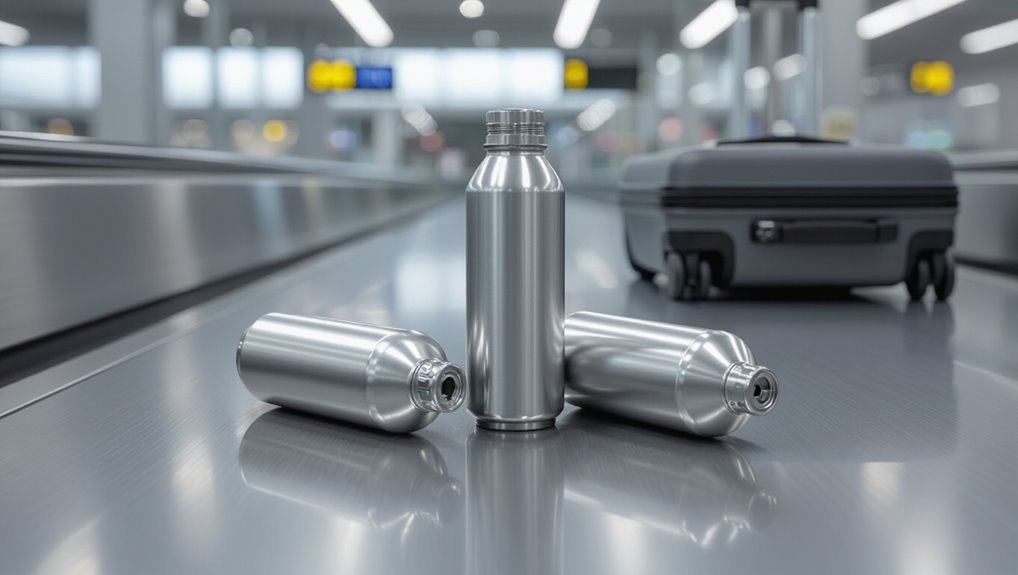
Wondering if you can fly with CO2 cartridges? You can, but limitations apply: airlines and TSA typically allow small, non-refillable cartridges in checked baggage if properly protected against damage.
Larger or refillable cartridges, or those containing pressurized gas beyond limits, may be prohibited. Always check airline-specific rules before packing, because allowances and required packaging vary and can change.
Decision Flow: Check, Carry, or Ship CO2 Cartridges
Now that you know small, non‑refillable CO2 cartridges are often allowed in checked bags but rules vary, you’ll want a clear decision flow to pick whether to check, carry, or ship them.
First, confirm airline and country rules.
Always check both your airline’s and destination country’s rules before packing CO2 cartridges.
If allowed in checked bags, pack them securely and declare if required.
If restricted or numerous, carry fewer in cabin if permitted or ship via ground courier.
Who This Guide Is For and What You’ll Learn
Who needs this guide and what’ll you get from it?
You’re a traveler, cyclist, paintballer, or retailer who handles CO2 cartridges and wants clear packing options.
You’ll learn practical rules for checked baggage, simple compliance steps, alternatives like shipping, and tips to avoid delays or confiscation.
This helps you plan trips without surprises or fines.
Why Airlines and Regulators Control CO2 Cartridges
You need to know that airlines and regulators limit CO2 cartridges mainly to manage safety risks from pressurized cylinders.
They set size and quantity limits so leaks, ruptures, or pressure changes in cargo don’t create hazards.
Following regulatory compliance standards keeps you and the crew safe and prevents fines or confiscation.
Safety Risk Management
Because CO2 cartridges can rupture or leak under pressure and create oxygen-displacing gas, airlines and regulators tightly control their transport to prevent explosions, fires, and asphyxiation hazards in the cabin and cargo holds.
You must follow handling, packaging, and declaration rules so crews can manage risks, inspectors can verify compliance, and emergency responders know what they’re dealing with during incidents.
Pressurized Cylinder Limits
Although CO2 cartridges seem small and harmless, regulators set strict limits on pressurized cylinders because a single rupture can compromise aircraft safety and complicate emergency response.
You’ll find limits on size, quantity, and permitted pressure to reduce rupture risk, fragmentation, and fire propagation.
Carriers restrict loose cylinders, require protective packaging, and may forbid high-capacity or damaged units to protect baggage holds and passengers.
Regulatory Compliance Standards
Those size and packaging limits exist because regulators and airlines enforce specific standards that govern CO2 cartridges on aircraft. You must follow UN packing, labeling, and quantity rules to prevent leaks, ruptures, and fire risks. Compliance protects passengers and cargo and avoids fines or confiscation.
| Authority | Requirement | Consequence |
|---|---|---|
| IATA | Packing group | Fine |
| FAA | Limits | Confiscation |
| ICAO | Labeling | Delay |
What Makes a CO2 Cartridge Hazardous
You should know CO2 cartridges are hazardous mainly because they’re filled with high-pressure gas that can rupture if damaged or heated.
If a cartridge leaks or releases suddenly in a confined space, the dense CO2 can displace oxygen and cause chemical asphyxiation.
Those two risks—mechanical failure and oxygen displacement—are why carriers treat cartridges cautiously.
Pressurized Gas Risk
When a CO2 cartridge is punctured, dropped, or exposed to high heat, the compressed gas can escape violently and cause physical injury, fragmentation, or rapid cooling burns.
You should treat cartridges as miniature pressure vessels: sudden rupture sends shrapnel and blast force, damages luggage, and risks eye or skin injury.
Handle, pack, and declare them properly to minimize rupture hazards.
Chemical Asphyxiation Potential
Although CO2 is non-flammable and chemically inert, it can still asphyxiate in confined spaces because it displaces oxygen and you may not notice the danger until symptoms appear.
If a cartridge leaks in luggage or an enclosed area, you could suffer dizziness, headache, or unconsciousness.
Store cartridges sealed, ventilate baggage handling zones, and never open or puncture them indoors where people breathe.
Key Terms: Non‑Flammable Gas, UN Numbers, Valve Protection
Understanding these key terms helps you assess whether CO2 cartridges are allowed in checked luggage and what precautions you must take.
Non‑flammable gas means the cartridge won’t ignite, but it’s still pressurized.
UN numbers classify the hazard; you’ll see UN 1013 for carbon dioxide.
Valve protection prevents accidental discharge—use capped, crimped, or boxed cartridges and verify valves can’t be depressed during handling.
ICAO and IATA Rules for CO2 Cartridges
You need to know ICAO’s dangerous goods limits for CO2 cartridges, since those set the baseline for how much gas and what packaging is allowed.
Check IATA’s carrying restrictions next, because airlines often add specific quantity limits and valve protection requirements you must follow.
Together, these rules determine whether your cartridges can go in checked luggage and how they must be prepared.
ICAO Dangerous Goods Limits
When you’re planning to pack CO2 cartridges, follow ICAO and IATA limits closely because they’re the baseline rules airlines use worldwide:
You must respect per-cartridge pressure/volume caps, aggregate quantity per package, and proper packaging/marking. Non-compliant cartridges can be refused.
- Per-cartridge limits (pressure/grams)
- Total allowed per package
- Required packaging, labeling, documentation
IATA Carrying Restrictions
Although ICAO sets the baseline, IATA adds specific carrying restrictions you’ll need to follow for CO2 cartridges on passenger flights: limits on cartridge size and total quantity, rules on whether cartridges can be in checked or carry-on baggage, and precise packaging, labeling, and declaration requirements that airlines and ground handlers enforce.
You must check airline policies, pack cartridges in original or approved packaging, declare when required, and expect inspections.
TSA Rules for U.S. Travel With CO2 Cartridges
If you’re flying within or from the U.S., the TSA treats CO2 cartridges as hazardous small compressed gas cylinders and restricts how you can pack them: loose cartridges aren’t allowed in checked baggage, but those installed in a device (like a pneumatic tool or marker) may be acceptable if the device’s valve is protected and the airline permits it.
Follow these tips:
- Check airline policy first.
- Secure valves and cover devices.
- Declare if unsure.
EASA Guidance for Flights in Europe
Because European rules differ from those in the U.S., you should follow EASA and airline guidance for CO2 cartridges on flights within or departing Europe.
EASA typically treats filled cartridges as dangerous goods; allowances, quantity limits, and packing vary by carrier.
Check your airline’s policy, pack cartridges securely in checked baggage if permitted, and declare them when required to avoid delays or confiscation.
Rules in Canada, Australia, and Other Regions
When traveling to or from Canada, Australia, or other regions, check each country’s aviation authority and your airline for specific rules on CO2 cartridges—they often vary and can be stricter than U.S. policies.
- Know allowed cartridge counts and pressure limits.
- Declare or pack cartridges per airline instructions—some ban checked storage.
- Verify local transport or sporting goods regulations before departure to avoid fines or confiscation.
Why Airline Policies Differ on CO2 Cartridges
You’ll notice airlines handle CO2 cartridges differently because regulators don’t always classify them the same way.
Some authorities see them as low-risk consumer items, while others treat them as pressurized hazards requiring tighter controls.
That split in perceived hazard levels drives the variety of airline rules you’ll encounter.
Regulatory Classification Differences
Though many airlines treat CO2 cartridges similarly, differences in how regulators classify them explain why policies vary between carriers.
You’ll see divergent rules because agencies label cartridges as non-flammable pressurized or hazardous, apply packing limits differently, and reference varying transport codes.
That creates inconsistent allowances and documentation requirements.
- Classification labels
- Packing/quantity limits
- Transport code references
Perceived Hazard Levels
Because different airlines judge the risk of CO2 cartridges through varied lenses—safety, liability, and operational impact,you’ll find policies that range from permissive to strict. You should check carrier rules because perceived hazard levels shape allowances, packaging needs, and documentation. Below’s a quick comparison:
| Factor | Impact |
|---|---|
| Safety assessment | Limits |
| Liability concern | Restrictions |
| Operational risk | Handling |
| Historical incidents | Policy tightening |
| Manufacturer data | Exceptions |
Airlines That Allow CO2 in Checked Baggage
When you pack CO2 cartridges for checked baggage, airlines vary widely in their rules, so check each carrier’s policy before you fly.
You’ll find many carriers permit small, non‑refillable cartridges if properly protected and declared. Confirm limits, packaging, and quantity with your airline.
- Major international airlines often allow limited quantities.
- Regional carriers may set stricter caps.
- Low‑cost airlines can require advance notice.
Airlines That Restrict CO2 to Carry‑On Only
If some airlines let you pack CO2 cartridges in checked baggage, others limit them to carry‑on only for safety and handling reasons.
You’ll find this rule with carriers concerned about pressure changes and baggage handling risks. Always check your airline’s website or contact customer service before travel.
Pack cartridges secured and accessible for inspection to avoid delays or confiscation at the gate.
Common Airline Limits on Cartridge Size and Count
Although rules vary by carrier and country, most airlines set clear limits on both the size and number of CO2 cartridges you can bring.
Airlines differ, but most limit CO2 cartridge size and quantity—check your carrier’s rules before packing.
You should check airline policy before packing.
Typical constraints include:
- Small hobby cartridges often allowed in checked baggage.
- Limits on total cartridge count per passenger.
- Certain airlines require cartridges to be in original packaging and protected from damage.
Size and Pressure Limits That Matter
Size and pressure ratings determine whether a CO2 cartridge is treated as a harmless accessory or a regulated hazardous item, so you should check both the cartridge’s volume (typically grams or cc) and its working pressure stamped on the cylinder.
Airlines and regulators often limit maximum fill mass and pressure; higher-pressure or larger-capacity cartridges may be banned or need special packaging, so verify specs before packing.
When CO2 Cartridges Are Allowed in Checked Luggage
You can bring CO2 cartridges in checked luggage only when they’re completely empty and depressurized, so they pose no overpressure risk.
Check that the cartridges are the types approved by the manufacturer and match any airline or regulatory listings.
If either condition isn’t met, the cartridges should stay out of checked bags or be transported under specific approved procedures.
Empty And Depressurized Cartridges
1 essential condition for carrying CO2 cartridges in checked luggage is that they be completely empty and depressurized. You should verify no hiss, weight suggests empty, and open any removable valves per airline rules.
Store cartridges in a sealed bag to prevent debris. Follow carrier and TSA guidance to avoid refusal.
- Confirm no pressure
- Inspect physically
- Pack securely
Manufacturer-Approved Cartridge Types
After confirming cartridges are fully empty and depressurized, check whether the specific make and model are approved for checked luggage by the manufacturer and your airline.
You should inspect labels, manuals, or manufacturer websites for explicit approvals and any size, material, or valve restrictions.
If approval isn’t clear, contact the manufacturer or airline. Don’t assume generic acceptance—get written confirmation when possible.
When CO2 Cartridges Must Be in Carry‑On
Because CO2 cartridges can pose a safety risk when damaged or exposed to heat, airlines and regulators often require you to carry them in your carry‑on rather than checked baggage.
You should keep them with you when:
- local rules or airline policies prohibit checked carriage.
- security screening demands inspection.
- you’re transiting multiple carriers with varying rules.
How Used vs. Full Cartridges Change the Rules
Rules also shift depending on whether a CO2 cartridge is full, partially used, or completely empty.
If a cartridge still contains pressure, airlines and regulators typically treat it as hazardous and often require it in carry‑on or subject it to quantity limits.
Partially discharged items may face restrictions similar to full ones, while fully empty, depressurized cartridges are usually permitted in checked baggage.
Packing CO2 Cartridges: Protect Valves and Stop Leaks
When you pack CO2 cartridges in checked luggage, protect the valve and prevent leaks by cushioning cartridges, keeping valve caps on, and securing them in a rigid container so they can’t shift or be punctured during handling.
You should also pad gaps, separate cartridges from sharp objects, and fasten the container to prevent movement.
- Cushion tightly
- Cap valves
- Use rigid case
Labeling and Declaring Checked CO2 Cartridges
When you pack CO2 cartridges in checked luggage, you’ll need to follow specific labeling rules so handlers and inspectors know what’s inside.
You should also declare them to the airline at check-in and follow any carrier or national regulations about quantity and documentation.
Check the airline’s guidance beforehand so you can present the correct labels and declarations without delays.
Proper Labeling Requirements
Although CO2 cartridges are allowed in checked baggage under strict conditions, you must label and declare them precisely so airline and security staff can handle them safely.
You should attach clear, durable labels showing contents, quantity, and pressure status, and keep cartridges in original packaging or a protective container.
- Content and hazard class
- Quantity and unit count
- Packaging integrity
How To Declare
Because airlines and security depend on clear information, you should declare CO2 cartridges at check-in and attach durable labels that state the contents, number of cartridges, and whether they’re full or discharged.
Tell the agent any manufacturer limits, show receipts if asked, and confirm carrier-specific rules.
Keep cartridges accessible for inspection, note valve protection, and retain proof of declaration until you land.
How to Present Cartridges at Check‑In and Security
At check‑in and at security, keep your CO2 cartridges easily accessible and clearly declared so staff can inspect them without delay; place them in original packaging or a labeled pouch, and be ready to show any paperwork.
Follow these steps:
Follow these steps: declare cartridges, open your bag, and present boxes and receipts for inspection.
- Tell the agent and open your bag.
- Present cartridges in original box or labeled container.
- Hand over declarations and receipts when asked.
Ship vs. Carry: Legal Options for CO2 Cartridges
You’ll need to decide whether to ship CO2 cartridges ahead or carry them with you, since rules differ for each option.
Check your airline’s policy and TSA regulations before you travel so you know quantity limits and documentation requirements.
If you ship, use approved packaging and clear labeling; if you carry, follow airline packing rules and present them at check‑in.
Ship Or Carry?
When deciding whether to ship or carry CO2 cartridges, weigh the legal restrictions, safety risks, and practicality of each option so you can choose the compliant method that fits your trip.
You’ll assess destination rules, packaging needs, and liability. Decide based on convenience and compliance; don’t assume both are allowed.
- Check laws
- Evaluate safety
- Pack appropriately
Airline And TSA Rules
Because airlines and the TSA treat CO2 cartridges as hazardous materials, you’ll need to confirm whether you can carry them in checked baggage, carry-on, or must ship them separately; rules vary by carrier and cartridge size.
Check airline policies and TSA guidance before travel. Some carriers allow small quantities in carry-on only, others prohibit them entirely, and international rules can differ markedly.
Packaging And Labeling
Having checked airline and TSA rules, you now need to sort out how to package and label CO2 cartridges for whichever legal option you choose—carry-on, checked, or shipment.
Pack cartridges in original or protective packaging, secure against impact, and separate from heat sources.
Label shipments per hazmat rules and notify carrier if required.
- Inspect packaging
- Use protective sleeves
- Apply proper labels
How to Ship CO2 Cartridges by Courier or Freight
If you need to ship CO2 cartridges by courier or freight, understand that they’re treated as hazardous goods and subject to strict regulations and packaging requirements. You must declare, use approved packaging, label appropriately, and choose carriers that accept compressed gas. Follow quantity limits, provide documentation, and consult carrier or hazardous materials experts before sending.
| Requirement | Action |
|---|---|
| Declaration | Notify carrier |
| Packaging | Use tested boxes |
| Labeling | Apply hazard labels |
| Documentation | SDS + forms |
| Carrier policy | Verify acceptance |
Bike Repair: Traveling With CO2 for On‑Road Fixes
Shipping rules aside, you’ll still want CO2 cartridges on hand when you’re out on the road for quick tire repairs.
Keep them in checked or carry-on per airline rules, capped and unused, and pack a small pump and patch kit too.
Pack capped, unused CO2 cartridges in checked or carry-on luggage per airline rules, plus a compact pump and patch kit.
- Store cartridges in protective case
- Carry compatible inflator head
- Know airline quantity limits and declare if required
Soda Makers and Small Appliances With Cartridges
When you travel with soda makers or other small appliances that use CO2 cartridges, keep the cartridges empty or installed per airline rules and pack them where they’re easily inspected.
Checked baggage is usually required for charged cartridges, while empty or removed cartridges may be allowed in carry-on.
Check airline and TSA policies, secure devices against accidental discharge, and declare charged cartridges at check-in if required.
Paintball and Airgun Cartridges: Travel Considerations
When traveling with paintball or airgun CO2 cartridges, check your airline’s specific policy first because rules can differ widely.
Pack cartridges in approved cases or their original packaging and secure them to prevent punctures or movement.
Always declare them at check-in if the carrier requires it to avoid delays or confiscation.
Airline Policies Vary
Although many airlines forbid loose CO2 cartridges in carry-on bags, policies for checked luggage can differ markedly between carriers and countries.
You should confirm rules before travel and expect variations in quantity limits, packaging requirements, and permit needs.
- Quantity limits per passenger
- Required packaging or containment
- Documentation or permits required by carrier or nation
Packing And Declaration
Because paintball and airgun CO2 cartridges are considered hazardous, you’ll need to pack them carefully and declare them where required to avoid delays or fines.
Pack cartridges in original packaging or a sturdy, sealed container, cushion to prevent punctures, and keep them in checked baggage only if allowed.
Before travel, check airline and country rules and declare items to the carrier or security when prompted.
What to Do If Security Flags Your Cartridges
If security flags your CO2 cartridges, stay calm and cooperate—don’t try to hide them or give them to an officer without being asked.
Explain purpose, show packaging and receipts, and follow instructions.
Explain the CO2 cartridges’ purpose, present packaging and receipts, and comply with officer instructions.
If asked, you can request supervisor presence and note officer name.
Know your rights but comply with lawful orders to resolve the issue quickly.
- Explain purpose and show documentation
- Follow instructions promptly
- Request supervisor and note details
Penalties for Packing CO2 Cartridges Incorrectly
If you pack CO2 cartridges incorrectly, you could face fines or other civil penalties and your trip plans could be disrupted.
In severe cases you might even risk criminal prosecution if authorities believe there was intent to break safety laws.
Expect confiscation of the cartridges and possible travel delays while officials investigate.
Fines And Civil Penalties
When you pack CO2 cartridges incorrectly in checked luggage, federal and airline rules can lead to significant fines and civil penalties that quickly add up.
- You may face monetary fines ranging from hundreds to thousands of dollars per violation.
- Airlines can assess civil penalties and refuse transport or demand removal and rebooking costs.
- Repeated or severe violations increase penalty amounts and administrative fees.
Criminal Prosecution Risk
Because packing CO2 cartridges incorrectly can create a safety hazard, you could face criminal charges in serious cases where intent, recklessness, or clear endangerment is found.
Prosecutors may pursue misdemeanors or felonies depending on harm risk, prior violations, or knowingly violating transport laws.
You should comply with regulations, document shipments, and consult counsel if charged to minimize penalties and protect your rights.
Confiscation And Delays
Beyond potential criminal charges, improper packing often leads to immediate administrative penalties like confiscation and travel delays.
You’ll lose the cartridges, face missed connections, and pay unexpected fees.
Security personnel may inspect bags, hold you for questioning, or deny carriage.
Follow regulations, declare items, or ship properly to avoid hassles.
- Confiscation
- Delays
- Fines
Pre‑Trip Checklist for Packing CO2 Cartridges
If you’re planning to pack CO2 cartridges in checked luggage, start by checking the airline and governing regulations, then confirm cartridge size, quantity limits, and packaging requirements so you don’t run into last‑minute hassles.
Next, inspect cartridges for damage, secure them in original or approved packaging, declare them if required, place them where baggage handlers can’t crush them, and keep documentation accessible.
Alternatives: Pumps, Rentals, Buying Locally
When carrying CO2 cartridges feels risky or inconvenient, consider simple alternatives that get you rolling: a compact hand or floor pump, renting a pump or CO2 kit from a bike shop at your destination, or buying cartridges or a pump locally.
You’ll save space and avoid airline issues while staying prepared for flats.
- Compact pump
- Rent at destination
- Buy locally
How to Verify Your Airline’s Policy Quickly
If you’d rather confirm the rules before leaving your CO2 cartridges behind, check your airline’s hazardous materials policy directly—don’t rely on general advice.
Visit the carrier’s website, search “hazmat” or “dangerous goods,” or use their FAQ.
Call customer service for instant clarification and note the agent’s name.
Save screenshots or emails showing permission or restrictions for peace of mind.
Paperwork to Carry for Unusual or Commercial Cartridges
Because commercial or non-standard CO2 cartridges can trigger extra scrutiny, carry documentation that proves they’re compliant and designed for harmless use.
You should present clear, concise paperwork at check-in and security to avoid delays.
- Manufacturer spec sheet showing pressure and designed use
- Purchase invoice or commercial invoice indicating quantity and purpose
- Safety Data Sheet (SDS) and any airline-specific approval letters
Myths and Misunderstandings About CO2 on Planes
Having the right paperwork reduces hassles, but you’ll still run into plenty of myths about CO2 cartridges on planes.
You might hear they’re always banned, explode in checked bags, or never need declaration. In reality, rules hinge on cartridge size, charge, and airline policy.
Confirm limits, declare when required, and don’t assume uniform treatment across carriers or countries.
Real Cases: Approved Packing and Denied Boarding
When airlines and passengers follow the rules, CO2 cartridges often travel without incident. However, mistakes still lead to denied boarding or confiscation at the gate.
You should pack cartridges in original packaging, declared if required, and keep them in checked bags per airline limits. Examples show both smooth trips and gate disputes when limits or declarations are ignored.
- Properly packed
- Undeclared overloads
- Damaged cylinders
Tips for International Travel and Tight Connections
If you’re traveling internationally or racing to a tight connection, plan for extra time and stricter checks at both departure and arrival airports.
Check carrier and country rules in advance, declare cartridges if required, and carry documentation or manufacturer labels.
Pack items accessibly for inspection, allow delays for security, and consider alternative shipping or removing cartridges to avoid missed flights or confiscation.
Tools and Products to Transport Cartridges Safely
You’ll want a few key items to move CO2 cartridges through airports with the least hassle: a rigid, crush-resistant case or cartridge-specific pouch, tamper-evident packaging or zip ties for individual cartridges, clear labeling or manufacturer documentation, and a small toolkit (pliers or a protective sleeve) to secure valves if required.
Carry CO2 cartridges in a rigid, crush-resistant case with tamper-evident seals and valve protection for hassle-free travel.
- Protective hard case
- Tamper-evident seals
- Valve protection tool
Summary Decision Flow and Resources
Because regulations and airline policies vary, follow a clear decision flow to determine whether to pack CO2 cartridges in checked luggage and which resources to consult.
First, check airline and departure/arrival country rules, then verify cartridge type and quantity, and confirm packaging meets hazardous materials guidance.
If unsure, contact the airline and your civil aviation authority, and keep documentation accessible during travel.
Frequently Asked Questions
Can CO2 Cartridges Be Carried in Checked Luggage With Lithium Batteries Installed?
No, you can’t pack CO2 cartridges with installed lithium batteries in checked luggage; airlines and regulations require such items only in carry-on with battery terminals protected, or shipped separately per airline hazmat rules. Check airline-specific restrictions.
Do Event or Race Organizers Have Different Rules for Participants’ Cartridges?
Yes — organizers can set different rules, and you’ll need to follow them; they may restrict sizes, require declared or sealed cartridges, ban replacement canisters at venues, or mandate specific storage and transport procedures for participant safety.
Are There Medical Exceptions for CO2 Cartridges on Flights?
Generally, you won’t get medical exceptions for CO2 cartridges; airlines and regulators treat them as hazardous. You should contact your airline and carry documentation; they’ll tell you allowed quantities or alternatives for medical needs.
Can I Use Airport Couriers to Send Spare Cartridges Ahead?
You can, but you’ll face restrictions: many couriers won’t accept CO2 cartridges or will require special handling, documentation, and labeling. Check the courier’s hazardous materials policy and airline regulations before shipping to avoid refusals or fines.
Will Rental Bikes or Scooters’ Cartridges Be Allowed on Planes?
Generally, you won’t be allowed to bring rental bike or scooter CO2 cartridges on planes; airlines and security usually prohibit spare compressed-gas cartridges in both carry-on and checked baggage, so you should confirm with the airline beforehand.
Conclusion
You can usually carry small, inert CO2 cartridges in checked luggage if they meet airline and regulatory size limits, but you should always check with your carrier and declare them when required. If cartridges are punctured, leaking, or exceed quantity limits, they’re unsafe and must be shipped or left behind. For international trips, confirm local rules and pack cartridges in original packaging or a hard case. When in doubt, contact the airline.