Can You Take Yogurt Through Tsa: Tsa Rules Explained
You can bring yogurt through TSA, but you’ll need to follow the 3‑1‑1 liquids rule: single‑serve cups 3.4 ounces (100 mL) or less go in your quart‑size clear bag, while larger tubs must be checked or tossed. Drinkable or very soft yogurts are treated as liquids/gels, and medically necessary amounts can be declared for inspection. Pack containers accessibly, label or keep receipts, and stay ready to answer questions at screening — keep going for practical tips and exceptions.
Quick Answer: Can You Bring Yogurt Through TSA?
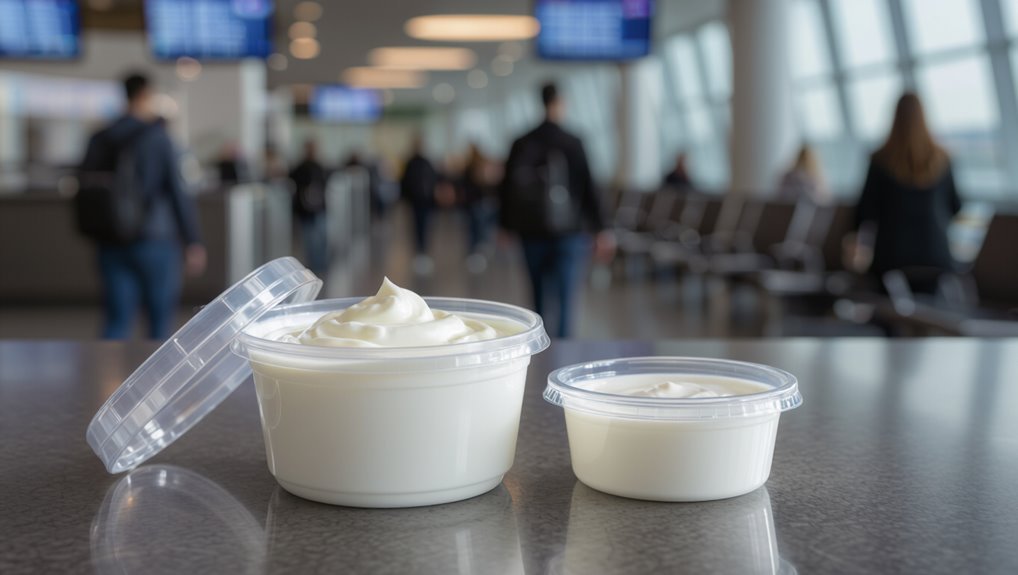
Can you bring yogurt through TSA? Yes, you can, but rules depend on whether it’s in carry-on or checked luggage.
In carry-ons, single containers over 3.4 ounces (100 mL) aren’t allowed unless medically necessary; multiple smaller containers must fit in a quart-sized bag.
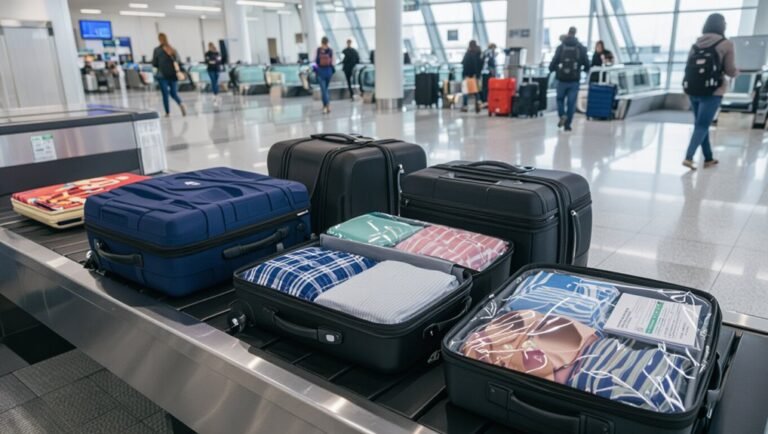
Yogurt in checked bags is permitted without liquid limits, though temperature and leakage are your responsibility.
Who This Guide Is For and How to Use It
This guide is for travelers who want clear, practical rules about bringing yogurt through airport security—whether you’re packing a snack for a flight, transporting chilled yogurt in checked luggage, or carrying medically necessary portions. You’ll find concise tips, examples, and quick decisions so you can pack confidently.
| Who | Why | How |
|---|---|---|
| Flyers | Clarity | Step-by-step |
| Parents | Convenience | Packing tips |
| Patients | Safety | Documentation |
How TSA Defines Liquids, Gels, and Semi‑Solids
When you pass through security, TSA treats many food items—including yogurt—as liquids, gels, or semi‑solids based on texture and how they’re packaged, not just the label.
You’ll be judged by consistency (pourable vs. spoonable), container size, and whether it’s in a sealed factory package or opened cup.
Solid bars and frozen blocks often count differently than creamy or spoonable products.
The 3-1-1 Liquids Rule Explained
The 3-1-1 rule limits the liquids, gels, and semi‑solids you can bring through carry‑on security to make screening faster and more consistent: each passenger may carry one quart‑size clear bag containing containers of 3.4 ounces (100 milliliters) or less.
You’ll pack wisely, check sizes, and zip that bag for inspection.
- Frustration when items don’t fit
- Relief at quick screening
- Confidence in compliance
3-1-1 Rule for Single‑Serve Yogurt
When you’re packing single‑serve yogurt, remember TSA’s liquid rules still apply and size limits matter.
You’ll want to check that your container fits the allowed single‑item dimensions or fits within your quart‑size bag.
Pack yogurt where security can easily inspect it—top of your carry‑on or in an accessible pocket—to speed screening.
TSA Liquid Rules
Because TSA treats most drinks and gels as liquids, you’ll need to contemplate how that applies to single‑serve yogurt before you pack it for carry‑on.
You should expect scrutiny: containers that behave like gels can count against your liquid allowance.
Pack wisely, declare if asked, and consider alternatives to avoid surprises at security.
- Frustration when told to discard
- Relief when cleared
- Anxiety about wasted food
Single‑Serve Size Limits
If you’re packing single‑serve yogurt for carry‑on, know TSA treats it like a liquid or gel and applies the 3‑1‑1 rule — but single‑serve cups often get a slightly different look:
most individual yogurt containers under about 3.4 ounces (100 milliliters) usually fit within your liquid allowance, while larger tubs can count against it or be flagged for disposal.
Check cup size before flying.
Packing Tips For Security
Anyone flying with single‑serve yogurt should pack it so it clears security without surprise confiscations. You’ll keep it accessible, under the 3.4‑ounce limit, and labeled if possible.
Consider squeezing it into a clear quart bag and placing it atop your carry‑on for quick inspection.
- Protect comfort and routine during travel
- Avoid stress and last‑minute waste
- Preserve a small, familiar pleasure
When TSA Treats Yogurt as a Liquid or Gel
When you pack yogurt for a flight, remember single‑serve containers generally fit the TSA 3‑1‑1 liquids rule and can stay in your carry‑on.
Larger tubs usually aren’t allowed through security unless you check them or they meet exceptions.
If you need yogurt for medical reasons or special dietary needs, you’ll want to declare it at screening and follow the TSA’s exception guidance.
Single-Serve Containers Rule
Although yogurt often feels solid, the TSA usually treats single-serve cups and squeezable pouches as liquids or gels for carry-on screening.
So you’ll need to follow the 3-1-1 rule: containers must be 3.4 ounces (100 mL) or less and fit inside a single quart-sized clear bag.
You should pack wisely and expect inspection.
- Frustration when favorites are denied
- Relief finding compliant sizes
- Confidence at security checkpoints
Larger Containers Prohibited
If you’ve been trimming your yogurt stash to meet the 3-1-1 rule, remember that larger tubs and family-size containers won’t make it through carry-on screening when TSA treats yogurt as a liquid or gel.
Pack single-serve cups or transfer portions into clear quart bags. Larger containers should go in checked baggage or be left behind to avoid confiscation and delays at security.
Exceptions For Medical Needs
Because some travelers need yogurt for medical or dietary reasons, TSA makes allowances beyond the usual 3-1-1 limits for liquids and gels. You can bring medically necessary yogurt in reasonable amounts, but declare it at screening and be prepared for inspection. Keep documentation handy if possible.
- Relief when rules recognize real needs
- Comfort during stressful travel
- Dignity preserved through clear communication
Carry‑On vs Checked Bags: Yogurt Rules
When packing yogurt for a flight, know that TSA treats it like any other liquid or gel: if it’s in your carry-on, it must fit within your 3.4-ounce (100 mL) container limit and all containers must go in a single quart‑size clear bag; larger tubs belong in checked baggage.
You’ll need to decide based on size and access needs—place small cups in the clear bag, larger tubs in checked bags.
Size Limits That Matter for Yogurt Containers
TSA limits mean you can only carry yogurt in containers of 3.4 ounces (100 mL) or less in your carry-on, and all those small containers must fit in a single quart‑size clear bag.
Anything larger—like standard 6–8 ounce cups or multi‑serving tubs—needs to go in checked baggage.
You’ll plan accordingly to avoid delays or discarded snacks.
- Frustration at tossing favorites
- Relief when rules are clear
- Confidence packing smartly
Packing Single‑Serve Yogurt in Carry‑On
If you want to bring single‑serve yogurt in your carry‑on, choose containers of 3.4 ounces (100 mL) or less and pack them inside a single clear quart‑size bag so they’ll meet the liquid/gel rule and pass through security without issue.
Label or keep receipts if possible, nest containers to save space, and place the bag on top of your carry‑on for easy removal during screening.
Packing Yogurt in Checked Luggage Safely
Packing yogurt in checked luggage takes a bit of planning to prevent leaks, spoilage, and pressure-related bursts, so pack smart and keep perishables safe.
You’ll want sturdy containers, insulation, and absorbent layers. Wrap jars in plastic, use hard-sided cases, and consider ice packs if allowed, labeling perishables clearly to help handlers and ease your mind.
- Protect treasured snacks
- Avoid messy surprises
- Preserve comfort foods
Frozen and Solidified Yogurt at Security
When you bring frozen or solidified yogurt through security, you’ll need to treat it like other frozen foods: it’s allowed but may trigger extra screening if it thaws or looks like a liquid.
Pack containers frozen and clearly labeled, keep them insulated, and separate from other carry-ons.
If agents suspect liquids, they may test or ask you to open items; comply to avoid delays.
Drinkable Yogurts, Greek Yogurt, and Flavored Types
If you’re bringing drinkable yogurts through security, know they count as liquids and must follow the 3.4-ounce (100 ml) rule unless frozen solid.
Thick Greek yogurt can be treated like a gel, so keep individual containers within carry-on limits or pack larger tubs in checked baggage.
For flavored varieties, watch for added mix-ins that might change consistency and trigger extra screening.
Drinkable Yogurt Rules
Although you can bring many types of yogurt through TSA checkpoints, drinkable yogurt and other liquid-like varieties are treated under the 3.4-ounce (100 mL) rule for carry-ons.
So you’ll need to pack any container larger than that in checked luggage or buy one past security. You’ll feel relief planning ahead and avoiding surprises.
- Frustration if forgotten
- Comfort when prepared
- Freedom to enjoy travel snacks
Greek Yogurt Limits
Because Greek yogurt ranges from thick, spoonable cups to drinkable, smoothie-style varieties, you’ll need to treat each type differently at TSA checkpoints: bring spoonable Greek in solid-food carry-on quantities; thicker tubs typically pass without liquid restrictions, while drinkable Greek counts toward your 3.4-ounce liquids limit and must fit in a quart-sized bag.
Label containers and declare if asked.
Flavored Yogurt Tips
Having covered how thickness affects Greek yogurt at checkpoints, let’s focus on flavored and drinkable varieties and what you’ll need to pack.
You can carry small flavored cups or drinkable yogurts in your carry-on if they meet the 3.4 oz/100 ml liquid rule. If larger, check them or declare at security. Keep receipts and sealed containers to avoid hassle.
- Comfort: familiar taste soothes travel nerves
- Joy: bright flavors lift your mood
- Safety: sealed packaging protects your health
Yogurt‑Based Sauces, Dips, and Parfaits
| Item | Tip |
|---|---|
| Sauces | 3.4 oz rule |
| Dips | Seal tightly |
| Parfaits | Layer visibility |
| Homemade | Label clearly |
Traveling With Baby Yogurt and Baby Food Rules
If you’re packing yogurt for a baby, you’ll follow different rules than for adult single-serve containers.
You can bring baby food and formula in reasonable quantities over 3.4 ounces; declare them at screening. TSA may test or open containers. Carry a doctor’s note only if needed.
- Comforting bites during delays
- Relief for fussy eaters
- Peace of mind for parents
Medically Necessary Yogurt and Dietary Supplements
If you need yogurt for medical reasons—like managing a digestive condition or taking probiotic supplements—you can bring it in quantities larger than 3.4 ounces, but you must declare it at security screening so TSA can inspect or test it.
Carry a doctor’s note or prescription when possible.
Pack dietary supplement yogurts with other medications and inform agents to avoid delays or disposal.
Declaring Yogurt at the Security Checkpoint
When you approach the security checkpoint with medically necessary yogurt or supplement-packed containers, tell the TSA officer right away so they can inspect or test them without holding up the line.
Explain briefly what it is, show documentation if you have it, and cooperate with simple screening procedures to keep the process smooth.
- Relief knowing you’re understood
- Confidence in a quicker screening
- Gratitude for clear communication
What TSA Officers May Ask or Test About Yogurt
When you bring yogurt through security, officers may ask about its contents and planned use to determine if it needs special screening.
They might swab or test it as a liquid/gel to check for prohibited substances, and they’ll also assess whether it poses any food-safety concerns.
Have your container accessible and be ready to answer a few quick questions.
Carry-On Screening Questions
Because yogurt can look like other liquids or gels in screening, TSA officers may ask you specific questions or request tests to confirm it’s allowed in your carry-on.
You’ll be polite, clear, and ready to show the container or opening. They might probe volume, contents, or packaging.
Stay cooperative to avoid delays.
- Nervousness eased by readiness
- Relief when cleared
- Frustration avoided by honesty
Liquid And Gel Testing
If an officer asks additional questions after you show your yogurt, they may perform simple liquid-and-gel tests to confirm it’s allowed in carry-on. Cooperate, open containers if asked, and explain contents. Tests are quick; they check volume and consistency.
| Test | Purpose | Your action |
|---|---|---|
| Visual | Confirm appearance | Point out label |
| Dip | Check texture | Open lid |
| Measure | Verify size | Show container |
Food Safety Inspection
Although TSA’s primary role isn’t food safety, officers may ask a few simple questions or run quick checks to make sure your yogurt won’t cause a spill or contaminate other items.
You’ll need to open containers if asked, show packaging or ingredients, and prove it’s not hazardous. Be cooperative to speed screening.
- Relief: quick clearance
- Annoyance: extra handling
- Reassurance: safety upheld
TSA Testing and Swab Procedures Explained
When screening your yogurt or other carry-on items, TSA officers may use handheld or portable swabs to quickly test for traces of explosives or other prohibited substances.
You’ll usually be asked to step aside briefly while they do it. You should cooperate, avoid touching tested areas, and accept secondary inspection if swabs register a concern; inspections are brief and noninvasive.
Airline Policies That Differ From TSA
Curious how an airline’s rules for yogurt can differ from TSA’s? You’ll find airlines set their own carry-on size limits, aboard food policies, and service rules—sometimes stricter than TSA.
Check your carrier before packing to avoid surprises, fees, or disposal.
- Frustration when you’re forced to toss a favorite snack
- Relief finding friendly crew policies
- Annoyance at inconsistent rules across carriers
Flying Internationally With Yogurt: Customs Basics
When you’re flying internationally with yogurt, you need to declare any dairy items on your customs form and to officers if required.
Check the destination country’s import limits and restrictions beforehand, since allowances vary widely.
Keep yogurt in its original packaging with labels intact to help speed inspection and avoid confiscation.
Declare Dairy Items
Because many countries treat dairy as a potential agricultural risk, you must declare yogurt and other milk-based items on your customs form or to an officer when arriving internationally.
Be honest to avoid fines or confiscation; officers will inspect items. Keep receipts and original packaging if possible.
- Relief when you follow rules
- Frustration avoided by declaring
- Confidence arriving prepared
Country Import Limits
Many countries set strict limits on importing dairy, so check each destination’s rules before you pack yogurt for an international flight.
You’ll often face bans or quantity caps, and some countries require permits or health certificates.
Consider restrictions on commercial versus homemade products, and be prepared to declare yogurt at customs.
Failure to comply can mean confiscation, fines, or delays upon arrival.
Packaging And Labeling
If you plan to carry yogurt across borders, make sure its packaging and labels clearly show the product name, ingredients, country of origin, and expiration date so customs agents can quickly verify compliance.
You should seal containers, keep originals or translated labels, and declare dairy when required to avoid delays or confiscation.
- Comfort of familiar food during travel
- Relief from smooth, clear labeling
- Frustration avoided by proactive disclosure
Quarantine and Food Import Restrictions to Know
While yogurt is usually fine for travel, you still need to check quarantine and import rules for your destination because some countries tightly restrict dairy products to prevent disease and pests.
You should declare dairy on arrival forms, verify allowed quantities, and confirm whether pasteurized commercial yogurt is acceptable.
Failure to declare can lead to fines, confiscation, or delays at customs.
Alternatives to Carrying Yogurt Through Security
You don’t have to lug yogurt through security to keep your snacks and meals intact; instead, consider alternatives that meet TSA rules and save time.
Pack shelf-stable options, buy yogurt after screening, or bring solid snacks that satisfy cravings without liquid limits.
- Shelf-stable yogurt cups or pouches for peace of mind
- Buy at airport to avoid stress
- Cheese, granola bars, dried fruit for comfort
How to Freeze or Solidify Yogurt for Travel
Packing shelf-stable swaps or buying yogurt after security works, but you can also freeze or solidify your own to keep familiar snacks on hand without tripping TSA liquid rules.
Freeze single-serve portions in silicone molds or ice cube trays, then pack them in an insulated bag with gel packs.
Thaw partially during travel; firm yogurt won’t count as a liquid if solid when screened.
Using Clear Bags, Labeling, and Documentation
If you plan to bring yogurt through security, put portions in clear, resealable bags and label them so TSA officers can quickly see what’s inside.
Carry receipts or ingredient lists for special dietary needs. Be ready to remove bags for inspection. Keep quantities within 3.4 oz rules to avoid confiscation.
Bring receipts or ingredient lists, be ready to show bags, and keep yogurt under 3.4 oz for hassle-free screening
- Relief knowing you followed rules
- Pride in prepared documentation
- Calm during screening
Long‑Flight Tips for Packing Yogurt in Carry‑On
After following the clear-bag and labeling tips for security, plan how you’ll keep yogurt fresh and safe during a long flight.
Pack individual servings in sealed containers, use a small insulated bag with frozen gel packs, and place them near your cabin carry-on.
Consume before packs thaw, check airline rules for refrigeration, and dispose of melted contents before security reentry.
How to Ship Yogurt Safely to Your Destination
For shipping yogurt safely to your destination, choose sturdy, leakproof containers and keep them cold with insulated packaging and frozen gel packs so the product stays within safe temperature ranges during transit.
You’ll label fragile and perishable, choose fast shipping, and track the parcel.
Pack absorbent material for leaks and cushion jars to prevent breaks.
- Peace of mind
- Excitement on arrival
- Relief if delayed
Troubleshooting Common Checkpoint Issues With Yogurt
When you approach the security checkpoint with yogurt, stay calm and be prepared to show its packaging and any receipts so agents can quickly verify it’s a food item; this prevents delays and reduces the chance they’ll open containers.
If asked to dispose, politely request clarification or inspection options, offer to transfer to a clear container, and keep backup snacks and documentation to avoid missed connections.
Real Traveler Examples: Passes and Confiscations
You’ll see how container size matters when TSA officers check your yogurt, with small cups often passing while oversized tubs get flagged.
You’ll also notice that thicker, solid-style yogurts are treated differently than runny, liquid-like ones.
Keep these security check outcomes in mind so you can pack to avoid confiscation.
Container Size Matters
Most travelers don’t realize that a few ounces can make the difference between packing yogurt and tossing it at security. TSA’s 3-1-1 rule limits carry-on liquids, gels, and similar substances to containers of 3.4 ounces (100 milliliters) or less, all fitting in a single quart-sized bag.
You’ll learn fast: size decides whether your snack survives or gets seized.
- Relief when it fits
- Frustration when it’s confiscated
- Joy using compliant containers
Solid Vs. Liquid Yogurt
Size rules matter, but whether your yogurt counts as a “liquid” can matter even more at the checkpoint.
If it’s thick, refrigerated, or sold as “spoonable,” TSA often treats it as a solid and you may carry it past security.
Runny, drinkable, or blended yogurt usually falls under the 3.4 oz liquid rule and can be confiscated if over the limit.
Security Check Outcomes
When you go through security with yogurt, what happens often comes down to how it looks and how a TSA officer interprets it—thick, spoonable tubs frequently get waved through while drinkable or blended varieties can be flagged as liquids.
You’ll sometimes keep your snack, other times lose it at the checkpoint. Know the rules, pack smart, and be ready to explain.
- Relief when permitted
- Frustration if confiscated
- Pride if you planned ahead
TSA Checklist for Traveling With Yogurt
Although yogurt’s creamy texture makes it a travel favorite, you’ll need to follow a few simple TSA rules to avoid delays at the security checkpoint.
Pack single-serving containers, place liquid or gel-like yogurt in your quart-size clear bag if over 3.4 ounces, label homemade or specialty items, be ready to remove them for screening, and check airline carry-on restrictions before you fly.
Where to Find Official TSA and Airline Resources
You can start by checking the TSA official website for the latest rules on carrying yogurt through security.
Then look at your airline’s policy pages, since some carriers have specific guidelines or limits.
If anything’s unclear, contact TSA directly by phone or social media for a definitive answer.
TSA Official Website
If you want the quickest, most reliable answers about flying with yogurt, go straight to the TSA’s official website—it’s the authoritative source for current carry-on rules, allowed quantities, and screening procedures.
You can check guidance, updates, and contact info so you won’t guess at checkpoints. Bookmark tsa.gov and consult before travel.
- Relief: know the rules
- Confidence: avoid surprises
- Ease: quick verification
Airline Policy Pages
Beyond the TSA site, check airline policy pages for rules that affect onboard storage and carry-on allowances—airlines can have limits or packaging guidance that differ from TSA screening rules. You’ll find specifics on quantities, packaging, and gate-checking. Use official pages before travel to avoid surprises.
| Airline | Liquids | Notes |
|---|---|---|
| Airline A | 3.4 oz | Sealed jars |
| Airline B | 4 oz | Cooler allowed |
Contacting TSA Directly
Wondering where to get definitive answers about bringing yogurt through security? You can contact TSA and your airline for clear guidance—call, email, or use their websites.
Expect fast, factual replies that ease travel stress.
- Relief when an agent confirms rules
- Confidence knowing you asked directly
- Calm in case of last-minute questions
Frequently Asked Questions
Can Yogurt Melt and Create a Mess in Checked Baggage During Long Flights?
Yes — yogurt can melt and create a mess in checked baggage during long flights. You’ll want to secure containers in sealed plastic bags, use sturdy packaging, and consider frozen packs or hard-sided luggage to minimize leakage and spoilage.
Are There Restrictions on Bringing Yogurt on International Cruises or Ferries?
Yes — you’ll face restrictions: many countries and cruise lines limit dairy imports, and ferries often follow local rules. You’ll need proper labeling, unopened commercial packaging, and declare items; check destination and carrier policies beforehand.
Can I Bring Powdered Yogurt or Yogurt Protein Mixes Through TSA?
Yes, you can bring powdered yogurt or yogurt protein mixes in your carry-on or checked bag; dry powders under 12 ounces generally go through, but larger amounts may need screening, so declare if asked and pack securely.
Do Rideshare Drivers or Rental Car Companies Have Rules About Transporting Yogurt?
Generally no, they don’t have explicit rules about transporting yogurt, but you should check your rideshare’s or rental agreement for food policies; you’ll be responsible for spills, stains, and any cleaning fees if damage occurs.
Will Bringing Yogurt Affect Airport or Airline Loyalty Status Benefits?
No, bringing yogurt won’t affect your airport or airline loyalty status benefits; airlines don’t track snacks for status, and TSA procedures won’t change your elite perks, so you can carry yogurt without worrying about benefits.
Conclusion
You can usually bring yogurt through TSA if you follow the 3-1-1 liquids rule: containers must be 3.4 oz (100 mL) or less and fit in a single quart-size bag, or pack larger tubs in checked luggage. Expect staff to inspect anything that looks like a liquid or gel. If you’re unsure, declare it and be ready to discard or check it. Check TSA and airline rules before you travel to avoid surprises.