Can a Duffel Bag Be a Carry On Airline Rules
Yes — you can usually take a duffel as a carry-on if it meets your airline’s size and weight limits and fits in the overhead bin or under the seat. Measure length, width and depth (include straps and wheels), and compare with the carrier’s stated dimensions and weight caps, especially on low‑cost airlines. Pack smart so it compresses, use a 40–45L soft duffel with a rigid base, and keep a small personal bag for essentials; more tips follow.
Can a Duffel Bag Be a Carry-On?
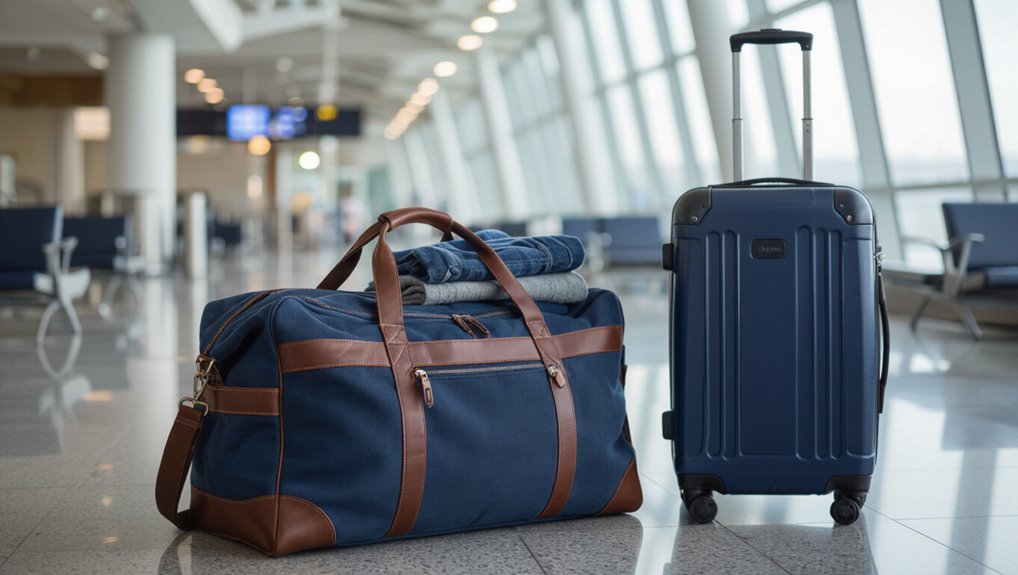
Can a duffel bag count as a carry-on? You can often use a duffel as carry-on if it meets the airline’s size and weight limits and fits in the overhead bin or under the seat.
Choose a structured or slightly compressible duffel, pack efficiently, and check your carrier’s specific rules—some treat soft bags differently or require stricter dimensions.
How Do I Measure My Duffel for Carry-On?
Wondering how to measure your duffel for carry-on?
Lay it flat and measure length from end to end, width across the base, and depth at the deepest point including any pockets.
Lay your duffel flat, measure length end-to-end, width across the base, and depth at the deepest pocket.
Include wheels or straps that affect size.
Use a soft tape measure for accuracy, record dimensions in inches or centimeters, and compare them to your airline’s stated limits before packing.
Which Carry-On Dimensions and Definitions Matter?
What matters most when sizing your duffel for carry-on is which dimensions your airline enforces and how they define them. You’ll check external size, linear dimensions, and whether handles/wheels are counted. Confirm regional versus international limits and gate-check policies.
| Dimension type | What to check |
|---|---|
| External | Width×Height×Depth |
| Linear | Sum of three sides |
| Included parts | Handles, wheels, straps |
Duffel Carry-On Weight Limits and Common Caps
Although airlines vary, most cap carry-on weight to keep overhead bins manageable, and you should check limits before packing.
Typical limits range 7–12 kg (15–26 lb) on budget carriers and 8–10 kg (18–22 lb) on many international lines.
You’ll avoid fees by weighing packed duffels, redistributing items, or using personal item allowances for heavier essentials.
Airlines’ General Duffel Carry-On Policies (US & Intl)
You’ll want to check each carrier’s size and weight limits since some US airlines are more generous than international ones.
Remember that soft-sided duffels can squeeze into tight overhead bins while hard-shell bags may meet stricter dimensional rules.
I’ll compare typical limits and notable international variations so you can pick the best option for your route.
Size And Weight Limits
Airlines set carry-on size and weight rules to guarantee bags fit overhead bins and comply with safety limits. Duffel bags are treated the same way as other soft-sided carry-ons in most cases.
You should check each carrier’s dimensions (usually ~22 x 14 x 9 inches) and weight limits (often 7–15 kg). Measure packed duffels and redistribute items to avoid fees or gate check.
Soft-Sided Versus Hard-Shell
Most carriers treat soft-sided duffels more leniently at the gate because they can compress into overhead bins, while hard-shell bags must match exact size limits and often block tighter spaces.
You’ll find soft duffels easier to squeeze, check, or stash. Choose based on flexibility, protection, weight, and overhead fit.
- Flexibility
- Protection
- Weight
- Overhead fit
International Carrier Variations
Soft-sided duffels that compress easily can make overhead storage simpler on domestic flights, but international carriers often apply different size, weight, and carry-on count rules you should check before packing.
Check each airline’s specifics: some limit dimensions stricter, others enforce weight or only allow one personal item plus a small bag.
Confirm allowances, fees, and transfer carrier rules before you travel.
Low‑Cost Carriers: Will My Duffel Count?
Flying a budget airline means you’ll need to check both size and weight limits for your duffel before you get to the gate.
Policies vary widely between low-cost carriers—some treat a small duffel as a personal item, others call it carry-on or charge extra.
Check the carrier’s exact dimensions and weight allowances to avoid surprises and fees.
Size And Weight Limits
Low-cost carriers often enforce stricter size and weight rules than legacy airlines, so you’ll want to check whether your duffel meets their carry-on and personal-item limits before you pack.
Measure dimensions and weigh packed items. If it’s over limit, expect gate checks or fees. Pack smart to avoid surprises.
- measure exterior dimensions
- weigh packed duffel
- stick to soft-sided compression
- know fee thresholds
Airline Policy Variations
Because budget airlines set tighter, more specific rules, you’ll want to confirm how they classify your duffel before packing.
Check their size, weight, and shape limits—some treat soft duffels as personal items, others as carry-ons.
Review fee schedules and boarding group policies; a misclassified bag can cost you.
Measure packed dimensions and weigh it at home to avoid surprises.
Soft‑Sided vs Hard‑Sided Duffels: Which Fits Overhead?
When you’re choosing a duffel for overhead bins, the key trade-off is flexibility versus protection: soft‑sided bags compress to squeeze into tight spaces, while hard‑sided shells hold their shape and can be tougher to jam into crowded bins.
You’ll pick soft for tight bins and fragile gear for hard shells.
Consider:
- Compression for variable spaces
- Protection for fragile contents
- Weight differences
- Ease of stowing
Duffel Styles That Typically Qualify as a Personal Item
When you need something that fits under the seat, small crossbody duffels are a great option because they’re compact and hands‑free.
Slim laptop‑compatible duffels pair protection with a narrow profile that airlines often accept as a personal item.
Foldable nylon duffels are lightweight and pack down when not in use, so you can bring an extra bag without exceeding size limits.
Small Crossbody Duffels
Looking for a compact duffel that counts as your personal item? You’ll want a small crossbody duffel that fits under the seat, stays secure, and keeps essentials reachable.
Choose lightweight, structured designs with adjustable straps so it won’t bulge or block access during boarding.
- Under-seat fit
- Secure zip closures
- Adjustable crossbody strap
- Lightweight, structured build
Slim Laptop-Compatible Duffels
If you need to carry a laptop without checking a bag, choose a slim laptop-compatible duffel that slips under the seat or into the overhead while keeping your device protected and accessible.
Pick one with a padded sleeve, easy external pockets for chargers and documents, and a low-profile shape that meets airline personal item limits.
That keeps essentials organized and board-ready.
Foldable Nylon Duffels
Though lightweight and deceptively simple, foldable nylon duffels make ideal personal items because they compress into a small pouch yet expand to hold souvenirs, gym gear, or an extra outfit.
You’ll stash it easily under a seat, toss it in overhead bins, or use it as a backup bag when shopping.
- Compressible for tight storage
- Lightweight for weight limits
- Durable for casual use
- Affordable replacement option
Packing Hacks to Make a Duffel Fit in an Overhead Bin
Slide smarter, not harder: with a few simple packing hacks you can compress, arrange, and protect your items so your duffel slips neatly into the overhead bin.
Roll clothes, use packing cubes, tuck shoes along edges, and fill gaps with socks.
Put heavy items near the bottom, flatten toiletries in leakproof pouches, and unzip slightly to shape the bag for a tight fit.
What to Do at Check‑In If Your Duffel Looks Oversized
When your duffel looks too big at check‑in, stay calm and act quickly: ask staff about size limits, offer to shift items into a personal bag, request a quick remeasure, and be ready to gate‑check if required.
Pack essentials in a small carry item and keep receipts for checked fees.
Keep vital items in a small personal bag and hold onto receipts for any checked baggage fees.
- Ask size/weight limits
- Transfer items
- Request remeasure
- Prepare for gate‑check
How to Avoid Last‑Minute Gate Checks and Fees
Start by packing your duffel to the airline’s stated carry-on dimensions so it fits easily in overhead bins.
Know your carrier’s size and weight limits and any soft-bag allowances before you head to the airport.
Arrive at the gate early and stow your bag promptly to avoid last-minute gate checks and fees.
Pack To Size
Pack to the exact dimensions allowed and you’ll sidestep last‑minute gate checks and surprise fees. Measure your duffel, compress clothes, and weigh it before you leave.
Keep essentials accessible and avoid overstuffing pockets. Follow these quick checks:
- Measure length, width, height
- Use packing cubes or compression bags
- Keep liquids under limits
- Weigh bag on a portable scale
Know Airline Limits
Airline policies change often, so check your carrier’s exact carry‑on size, weight, and bag count before you head to the airport to avoid surprise gate checks and fees.
Verify limits on the airline’s website or app, note domestic versus international differences, and confirm whether personal items count.
If your duffel meets published dimensions and weight, you’ll avoid extra charges and smoother boarding.
Gate Arrival Strategy
Want to skip the scramble and the chance of a gate check? Plan arrival, pack smart, and act fast at boarding. Aim for carry-on compliance and priority zones to avoid fees.
- Arrive early to secure overhead space
- Use a compact, compliant duffel
- Wear bulky items to save bag room
- Join priority or early boarding when possible
Best Duffels for Carry‑On Travel (Size, Structure, Features)
Choosing the right duffel for carry-on travel means balancing size, structure, and features so your bag fits overhead bins, protects your gear, and keeps you organized. Pick a 40–45L soft-sided bag with a rigid base, lockable zippers, and padded straps. Look for compression straps and a laptop sleeve to streamline packing and protect electronics.
| Feature | Why it matters |
|---|---|
| Size | Overhead fit |
| Structure | Protects gear |
Quick Pre‑Flight Checklist to Confirm Compliance
Once you’ve picked a carry-on duffel that meets size and structure needs, run a quick pre-flight checklist to make sure it actually complies with your carrier’s rules.
Confirm measurements, weigh it, check external pockets for prohibited items, and verify handle/wheel fit for overhead bin or gate check.
- Measure external dimensions
- Weigh fully packed
- Inspect pockets
- Review airline policy
When a Suitcase Is a Better Carry‑On Than a Duffel
Although duffels are flexible and light, a hard-sided suitcase can make more sense when you need structure, organization, and durability. You’ll prefer a suitcase for fragile items, better packing compartments, built-in wheels, and protection from weather. Choose it when you want easier security checks and upright storage in overhead bins.
| Advantage | Situation | Benefit |
|---|---|---|
| Structure | Electronics | Protection |
| Organization | Business trips | Neat packing |
| Durability | Rough handling | Longevity |
| Mobility | Long walks | Wheels |
Frequently Asked Questions
Can Liquids in a Duffel Be Stored Differently Than in a Hard Suitcase for Security?
Yes — you can store liquids differently in a duffel versus a hard suitcase, but you’ll still follow TSA rules: consolidate liquids in a clear quart bag, keep it accessible, and avoid loose containers to speed screening.
Are Duffels With Wheels Treated Differently by Airlines at Boarding?
Generally no, airlines don’t treat wheeled duffels differently at boarding; you’ll be held to size and weight limits, gate-checked if needed, and they’ll fit overhead or cargo depending on aircraft and available space.
Do Airline Loyalty Tiers Influence Whether My Duffel Is Allowed as Carry-On?
Yes — loyalty tiers can help. If you’re elite, you’ll often get priority boarding and an extra carry-on allowance, so your duffel is likelier allowed. Still check airline size rules, since dimensions ultimately decide acceptance.
Can Fragile Items in a Duffel Receive Special Handling or Priority Boarding?
Yes — you can request special handling for fragile items and sometimes get priority boarding if your ticket or status includes it; call the airline in advance, label items fragile, and ask gate staff politely for assistance.
Are Duffels With Built-In Battery Packs Subject to Additional Restrictions?
Yes — you’re restricted: built‑in batteries usually count as spare lithium cells, so airlines and TSA may limit capacity, require carry‑on only, and sometimes forbid specific sizes. Check airline rules and label details before flying.
Conclusion
You can usually bring a duffel as your carry-on if it meets the airline’s size and weight rules, so measure it and know your carrier’s limits before you go. Pack strategically, choose a structured duffel or use packing cubes to stay within dimensions, and follow the pre‑flight checklist to avoid gate checks or fees. When you need protection or organization, opt for a small wheeled suitcase instead of a soft duffel.