Can I Wear a Dress on Safari Trips
You can wear a dress on safari if you pick the right styles and fabrics. Choose knee‑length or longer, quick‑dry, breathable materials and avoid flowing skirts or heavy embellishments that snag or blow around. Pair dresses with closed‑toe shoes, leggings or shorts for protection, and pack lightweight layers for dawn, dusk, or insect coverage. Stick to neutral, non‑reflective colors for safety and cultural respect. Keep it practical and you’ll stay comfortable — there’s more on fabrics, shoes, and packing tips ahead.
Quick Answer: Is a Dress Practical on Safari?
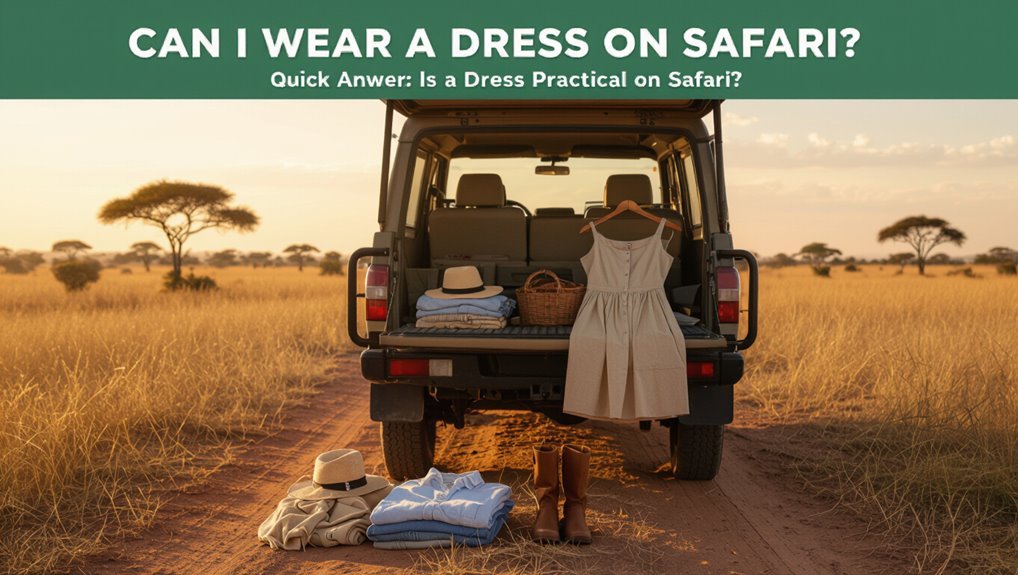
Wondering if a dress works on safari? You can wear one if you pick the right style: breathable, knee-length or longer, neutral colors, and quick-dry fabric.
Pair it with leggings or shorts for added protection, closed-toe shoes, and a sun hat.
Avoid flimsy, bright patterns and heavy embellishments.
Practicality hinges on fabric, fit, and layering for comfort and safety.
Why People Ask If Dresses Work on Safari
You’re probably wondering if a dress will keep you comfortable in changing safari climates, like hot days and chilly mornings.
You’ll also want to weigh safety and practicality—think mobility, insect protection, and sun coverage.
And don’t forget cultural norms and how a dress might affect your photos or interactions with guides and locals.
Comfort And Climate
Because safari climates vary from chilly pre-dawn drives to blistering midday sun, people often ask whether dresses can keep you comfortable and protected.
You’ll want breathable, moisture-wicking fabrics that layer easily for temperature swings. Choose mid-length cuts to allow airflow while minimizing sun exposure.
Lightweight wraps or jackets help at dawn and dusk, and quick-dry materials prevent discomfort from sweat or unexpected drizzle.
Safety And Practicality
Although dresses can feel breezy and stylish, you’ll want to weigh safety and practicality before choosing one for a safari.
Pick sturdy, knee-length or longer options to protect legs from insect bites, sun and thorny brush. Choose muted colors, breathable fabrics and layers for changing temperatures.
Avoid flowing skirts that snag, compromise mobility or attract insects, and bring quick-dry leggings as backup.
Cultural And Photography Considerations
1 key reason people ask whether dresses work on safari is cultural respect—many destinations have conservative norms, especially in rural or mainly religious areas, so you’ll want to choose styles that cover shoulders and knees to avoid drawing unwanted attention.
You’ll also think about photography and mobility:
- Choose muted colors to blend with landscapes.
- Pick non-reflective fabrics for better shots.
- Guarantee easy movement for quick photo opportunities.
How Game Drives, Walking Safaris, and Boat Trips Change Clothing Needs
When you choose a safari activity—game drive, walking safari, or boat trip—you’ll find each one changes what you should wear, from fabric weight to footwear and layering needs.
For game drives, opt for comfortable, neutral clothing and closed shoes.
Walking safaris require durable pants, sturdy boots, and movement-friendly layers.
Boat trips call for windproof outerwear, non-slip shoes, and quick-dry fabrics.
How Climate and Season Affect Whether a Dress Works
Activity type shapes what you wear, but climate and season often decide whether a dress will actually work on safari. You’ll choose differently for heat, rain, or cool mornings.
Consider these factors:
- Temperature swings: layers matter for dawn and dusk.
- Rainy season: cover and quick changes prevent discomfort.
- Dusty, windy conditions: length and fit reduce exposure and snagging.
Best Fabrics: Breathable, Quick-Dry, and Protective for Safari Dresses
You’ll want fabrics that keep you cool and comfortable, so breathable natural fibers like cotton and linen are great for daytime wear.
For quicker drying after unexpected rain or sweat, choose synthetic blends with moisture-wicking finishes.
Also look for textiles with built-in UV protection to shield your skin during long game drives.
Breathable Natural Fabrics
Although safari days are hot and dusty, choosing the right natural fabrics keeps you cool, dry, and protected without sacrificing comfort or style.
You’ll favor breathable, lightweight fibers that resist odors and allow airflow. Consider these options:
- Cotton: soft, breathable, best for low-humidity days.
- Linen: ultra-breathable, wrinkles but cool.
- Merino wool: temperature-regulating, odor-resistant, lightweight.
Quick-Dry Synthetic Blends
Moisture-wicking blends like nylon-spandex or polyester-rayon are ideal when you want a dress that dries fast, breathes, and still protects against sun and brush. They pull sweat from your skin, shed splashes, and keep you comfortable on long game drives or humid evenings.
Choose lightweight, ripstop or brushed finishes for durability, and prefer darker neutrals to hide dirt while staying low-profile.
UV-Protective Textiles
Because sun exposure is constant on safari, choose UV-protective textiles that block rays while staying breathable and quick-dry.
You’ll want fabrics with UPF ratings, lightweight weaves, and moisture-wicking finishes to keep cool and shielded.
Consider these options:
- UPF-rated polyester blends for consistent protection
- Lightweight linen blends with treated finishes
- Nylon-spandex mixes for stretch, breathability, and sun defense
Dress Styles That Work on Trails: Lengths, Fits, and Silhouettes
When you’re choosing a dress for trail walks, prioritize lengths and silhouettes that keep you comfortable and mobile: knee-length or midi skirts usually hit the sweet spot, offering coverage without snagging on brush, while shirt dresses and wrap styles give adjustable fits that move with you.
Opt for A-line or straight cuts, minimal ruffles, secure closures, and a defined waist to prevent flapping.
Colors and Patterns to Choose : What to Avoid for Safety and Photos
If you want clear, safe photos and to avoid spooking wildlife, pick muted, natural tones—olive, tan, rust, and dusty blues blend into the landscape and won’t attract undue attention.
You should avoid bright neons, high-contrast black-and-white, and bold animal prints that startle animals or ruin photos.
- No neons or fluorescents
- Skip stark black/white contrasts
- Avoid flashy metallics and sequins
Layering Dresses on Safari: Morning Chill, Sun, and Insect Protection
Start with a lightweight base layer under your dress to wick moisture and add a bit of warmth for crisp mornings.
Midday, use a breathable, wide-brimmed hat or a light long-sleeve cover to shield your skin from intense sun.
In the evening, top with a thin, insect-resistant layer or treated scarf to block bites without overheating.
Lightweight Base Layers
Although mornings can feel crisp, lightweight base layers let you stay comfortable without bulk: you’ll add warmth, wick sweat, and block insects beneath a dress.
Choose thin merino or synthetic tops that fit close to skin. Layering stays breathable and packable.
- Thin merino or polyester long-sleeve
- Seamless tank for humid days
- Lightweight leggings for leg protection
Midday Sun Shielding
When the sun climbs high and the temperature spikes, layer a lightweight, breathable sunshirt or kimono over your dress to shield skin without overheating.
Choose UPF-rated fabrics, light colors to reflect heat, and loose cuts that allow airflow.
Add a wide-brim hat and UV-blocking sunglasses.
Roll sleeves or secure a sash for coverage control, keeping you protected while staying cool and comfortable.
Evening Insect Barriers
As evening cools the air and mosquitoes wake, layer a lightweight, long-sleeved wrap or kimono over your dress to keep bugs off without trapping heat.
Pick tightly woven, breathable fabrics and consider a garment treated with insect-repellent finish for extra protection. You’ll stay comfortable and bite-free by choosing pieces that pack small and dry quickly.
- Choose treated fabrics
- Prefer coverage over style
- Carry a compact roll-up barrier
Safari Shoes to Wear With a Dress
Pick shoes that balance comfort, grip, and style so your dress looks great without sacrificing safety on uneven trails.
Choose closed-toe options like breathable leather sneakers, low hiking boots, or sturdy ankle boots. Opt for non-slip soles, supportive insoles, and neutral colors that complement your dress.
Lightweight, quick-drying materials help if conditions change, and adjustable closures guarantee a secure fit throughout the day.
Sun and Insect Protection Strategies When Wearing a Dress
Because you’ll be exposed to sun and bugs for long stretches, prioritize breathable coverage and repellents that work with your dress.
Choose lightweight long sleeves, a wide-brim hat, and UV-rated fabric liners. Apply insect repellent to exposed skin and skirt hems. Re-treat clothing with permethrin if desired.
- Lightweight UV-blocking layers
- Hat and neck protection
- Permethrin-treated fabrics
Staying Safe and Mobile in a Dress Around Wildlife
When you move around wildlife in a dress, prioritize mobility and awareness so you can react quickly without compromising modesty or safety.
Choose knee-length or split designs, secure loose fabric, and wear sturdy closed-toe shoes.
Keep movements calm, scan surroundings, stay with guides, and avoid sudden gestures.
Pack a lightweight layer to cover up quickly if needed and maintain clear sightlines.
Local Dress Norms: Cultural Respect at Lodges and Villages
When you visit lodges or nearby villages, follow local attire cues and choose dresses that show respect for community norms.
Stick to modest lengths and coverage in village settings, and cover shoulders if that’s customary.
Always ask your hosts before entering homes or sacred areas so you don’t unintentionally offend.
Respect Local Attire
If you want to show respect at lodges and in villages, dress modestly and follow local cues—what’s acceptable at a lodge may differ from village norms, so observe and ask when unsure.
You’ll blend in and avoid offense by choosing appropriate fabrics, colors, and coverage.
- Ask hosts about preferred attire
- Favor neutral, muted colors
- Cover shoulders and knees when visiting communal spaces
Modesty Around Villages
Because village life often centers on shared spaces and traditions, dress modestly to show respect and avoid drawing unwanted attention.
Choose knee-length or longer dresses, higher necklines, and sleeves when visiting lodges or public areas.
Layer with a lightweight scarf or cardigan for flexibility.
Prioritize local norms over fashion, and opt for breathable fabrics that keep you comfortable while honoring community standards.
Ask Hosts Before Entering
Want to make sure you’re dressed appropriately? Ask hosts before entering lodges or villages—it’s polite and clarifies expectations.
Respect local norms, and they’ll appreciate it.
- Ask about head coverings, shoulders, and skirt length.
- Follow host guidance even if it differs from tourist areas.
- Offer to adjust your outfit or use a wrap if requested.
When Not to Wear a Dress: Terrain, Activity, and Safety Red Flags
When rough trails, thick brush, or active wildlife-viewing are on the day’s agenda, skip the dress—you’ll need durable, protective clothing that won’t snag, blow open, or limit movement. Choose pants, sturdy shoes, and layers when visibility is low, terrain is uneven, or guides advise caution.
| Red Flag | Recommended Gear |
|---|---|
| Thick brush | Long pants |
| Wet/muddy trails | Waterproof boots |
| Close wildlife | Neutral layers |
| Windy conditions | Secure outerwear |
Packing and Care: Folding, Protecting, and Refreshing Dresses
Even if you packed pants for rough sections, you’ll likely bring at least one dress for lodge dinners or sunset photos, so pack and care for it to stay wearable.
Fold gently, protect from dust, and refresh between wears:
- Roll lightweight dresses to minimize creases.
- Use a breathable garment bag or zip pouch.
- Spot-clean with a travel stain stick and air-dry overnight.
Accessories That Make Dresses Safari-Ready (Hats, Scarves, Belts)
Although a simple dress can look great on safari, the right accessories make it functional and photo-ready; choose hats, scarves, and belts that add sun protection, layering, and shape without weighing you down.
Pick a wide-brim hat with ventilation, a lightweight scarf for dust and sun, and a slim belt to define your waist.
Opt for neutral tones and quick-dry fabrics.
Shopping Checklist: What to Buy Before Your Safari Trip
Before you pack a single dress, make a focused shopping list that covers sun protection, practical layers, and fabric choices so you won’t be caught off-guard on safari.
Before packing dresses, make a focused shopping list emphasizing sun protection, practical layers, and breathable fabrics.
Buy breathable, quick-dry dresses, neutral-toned sunhat, and sturdy closed-toe shoes. Consider lightweight layering pieces and insect-repellent fabric.
- UPF sunhat
- Neutral, moisture-wicking dress
- Durable, comfortable walking shoes
Real Traveler Examples: Outfits That Worked and What Went Wrong
When you hear real travelers describe their safari outfits, patterns quickly emerge: breathable, neutral dresses paired with sturdy closed-toe shoes usually get high marks, while bright colors, flimsy sandals, or heavy fabrics often cause discomfort or unwanted insect attention.
You’ll learn: pack a midi cotton dress, wear ankle boots, layer a light jacket, and avoid loud prints; expect sun, dust, and occasional muddy game drives.
Frequently Asked Questions
Can I Wear a Dress on a Night-Time Lodge Dinner?
Yes, you can wear a dress to a night-time lodge dinner; choose something comfortable, modest, and layered for cooler nights, pair it with closed-toe shoes, a cardigan or jacket, and simple accessories to suit the lodge’s vibe.
Do Dresses Interfere With Wearing Insect-Repellent Clothing Treatments?
Yes — dresses can interfere if treated repellents aren’t applied properly; lighter fabrics absorb sprays differently, and long skirts may block treated layers. You should treat fabrics as directed, reapply when needed, and wear treated overgarments or permethrin.
Are Dresses Allowed on Small Charter Flights to Safari Camps?
Yes — you can wear a dress on small charter flights to safari camps, but you’ll want a comfortable, modest length, avoid long flowing skirts that catch in doors, and bring layers for variable temperatures and dust protection.
Can Maternity Dresses Be Practical for Safari Travel?
Yes—you can wear maternity dresses on safari, and they’re practical. Choose breathable, neutral-colored, wrinkle-resistant fabrics, pair with layers, supportive shoes, sun protection, and a secure crossbody; you’ll stay comfortable during drives and walks.
How Do Dresses Fare During Multi-Day Camping Safaris With Limited Laundry?
They can work, but you’ll need quick-dry, neutral-colored dresses, layered pieces for warmth, and plan to rotate outfits. Bring laundry soap, a line, and odor-control fabrics so dresses stay wearable across multi-day camping safaris.
Conclusion
You can wear a dress on safari if you plan carefully and choose the right styles. Pick breathable, quick-dry fabrics and neutral colors; bring a lightweight cover-up for sun and bugs. For game drives, opt for knee-length or midi dresses and sturdy shoes; for walking safaris, prefer pants or a utility skirt. Pack a hat, scarf, and belt, and plan for layering. With smart choices, a dress can be comfortable and practical.