Can Non US Citizens Get TSA PreCheck
Yes — you can get TSA PreCheck even if you’re not a U.S. citizen, as long as you meet specific immigration or program requirements. Permanent residents, Global Entry members, and travelers from certain partner countries may qualify after applying, completing a background check, and attending an enrollment interview with original immigration documents. Convictions or active deportation proceedings can disqualify you, and a nonrefundable fee applies. Keep going to see which pathways and documents work best for you.
Who Can Get TSA PreCheck : The Short Answer
If you’re a non‑U.S. citizen wondering whether you can get TSA PreCheck, the short answer is: maybe — eligibility depends on your immigration status, country of citizenship, and whether you qualify through a trusted-traveler program or a participating airline.
You’ll typically qualify if you’re a U.S. permanent resident, a Global Entry member, or from a country with a TSA reciprocal arrangement; otherwise, it’s unlikely.
How TSA PreCheck Works for Non‑US Travelers
Wondering how TSA PreCheck works when you’re not a U.S. citizen?
You’ll follow similar screening: apply, provide ID and documents, and complete background checks. If approved, you get a Known Traveler Number to add to reservations and use expedited lanes at participating airports.
- Apply online and schedule appointment
- Complete fingerprinting and interview
- Add KTN to bookings and use PreCheck lanes
Eligible Non‑US Citizens for TSA PreCheck
Now that you know the application steps and how PreCheck works, you’ll want to confirm whether your immigration status qualifies.
Generally, U.S. citizens, U.S. nationals, and lawful permanent residents are eligible. Certain visa holders and foreign nationals may qualify through specific DHS-approved programs or partnerships.
Check TSA guidance and bring valid immigration documents to your enrollment appointment to verify eligibility.
Trusted Traveler Programs That Include PreCheck
If you’re eligible for Global Entry, SENTRI, or NEXUS, you may already get TSA PreCheck benefits when flying in the U.S.
These trusted traveler programs streamline both border processing and airport security, so you’ll skip the regular security line on participating flights.
Check each program’s enrollment rules to confirm your PreCheck eligibility and any required documentation.
Global Entry Members
While you can apply to several trusted traveler programs, Global Entry is the most common route that includes TSA PreCheck for non-U.S. citizens. It gives expedited customs processing on arrival and automatically provides PreCheck benefits for domestic departures from participating airlines.
- You’ll apply online and attend an interview.
- Eligibility depends on citizenship and program reciprocity.
- Approval adds PreCheck to your PASSID.
SENTRI And NEXUS
Because SENTRI and NEXUS streamline border crossings between the U.S., Mexico, and Canada, they’re attractive options if you frequently travel across those borders and want TSA PreCheck for domestic flights.
You can apply if you meet residency and eligibility rules; both programs include PreCheck benefits for qualifying members.
Expect background checks, interviews, and varying fees—approval timelines differ by program and nationality.
Global Entry as a PreCheck Pathway
As a non‑US citizen, you can often get TSA PreCheck through Global Entry, which combines expedited customs processing on arrival with the PreCheck benefit for eligible flights.
Enrolling means you’ll zip through both immigration and security more smoothly on many trips.
- Check eligible citizenship or residency.
- Verify flight carriers honor PreCheck.
- Maintain Global Entry membership to retain PreCheck.
Apply for Global Entry (Non‑US Citizens)
If you’re a non‑US citizen seeking Global Entry, start by confirming you’re eligible based on your country of citizenship or residency and understanding any additional country-specific requirements.
Then create a Trusted Traveler Programs (TTP) account, complete the Global Entry application, and pay the fee.
Await conditional approval, schedule and attend an in‑person interview with required documents, and follow any enrollment instructions to receive your Known Traveler Number.
Apply for TSA PreCheck (When Eligible)
When you’re eligible for TSA PreCheck as a non‑US citizen, start by confirming which enrollment pathway applies to you—either through Global Entry reciprocity, a participating airline, or a country-specific program—so you know whether to apply directly or claim benefits via your Known Traveler Number.
Then follow application steps, pay fees, and schedule any required appointments.
- Verify eligibility
- Apply or link KTN
- Complete appointment
Documents Non‑US Applicants Must Bring
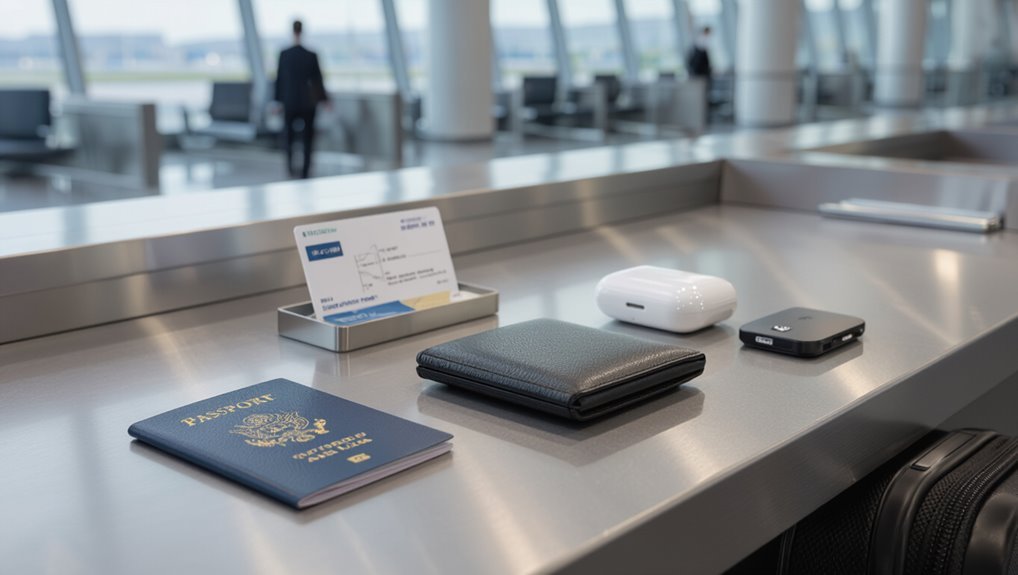
When you go to your TSA PreCheck appointment, bring the passport type that matches your application—regular passport, diplomatic, or other acceptable travel document.
You’ll also need any supporting immigration documents, like a visa, green card, or employment authorization, to prove your status.
Have originals ready and organized so the agent can verify them quickly.
Acceptable Passport Types
Most non‑US applicants must bring a valid passport that the U.S. government recognizes for travel; specifically, you’ll need an unexpired passport issued by your country of citizenship.
In some cases, a biometric (ePassport) or machine‑readable passport is required. Bring the original document and verify it’s current.
- Ordinary passport
- ePassport (biometric)
- Machine‑readable passport
Supporting Immigration Documents
If you’re not a U.S. citizen, you’ll need to bring the immigration documents that prove your current legal status and travel authorization—originals only, no photocopies. Bring one primary document and any supporting evidence to confirm identity and permission to remain or travel. Check expiration dates and USCIS/CBP stamps before your appointment.
| Document type | Examples |
|---|---|
| Primary | Green card, I-766 EAD |
| Supporting | Visa, I-94 admission |
Visa and Immigration Statuses That Qualify
Because eligibility ties closely to your immigration status, certain visa holders and lawful permanent residents can qualify for TSA PreCheck while others can’t.
You should check status-specific rules and eligibility lists before applying.
Common qualifying statuses include:
- Lawful Permanent Residents (green card holders)
- Certain work visas with valid DHS recognition
- Trusted traveler program reciprocity for eligible foreign nationals
In‑Person Interview for Non‑US Applicants
When you apply as a non‑US citizen, you’ll need to attend a brief in‑person interview at an enrollment center to verify identity, travel documents, and eligibility; bring your passport, visa or residency card, and any DHS notices of approval.
You’ll answer questions about travel history and provide fingerprints and a photo.
Be punctual, bring originals, and expect processing guidance and any follow‑up instructions.
What Background Checks Examine
When you apply, the background check first verifies your identity using documents and databases.
It then screens criminal history to see if you meet security standards.
Finally, it reviews immigration and travel records to confirm your status and travel patterns.
Identity Verification Checks
Before TSA PreCheck can clear you, they run identity verification checks to confirm you’re who you say you’re and to link your application to accurate records.
You’ll provide documents and biographic data; agents verify names, birthdates, and identity documents against government databases.
- Document authenticity checks
- Database matching (passport, visa, DHS records)
- Biographic consistency verification
Criminal History Screening
Although TSA PreCheck focuses on trusted travelers, they still screen criminal histories to assess risk and eligibility.
You’ll undergo checks for felony convictions, terrorism-related offenses, serious violent crimes, and recent arrests that could affect trustworthiness.
Background reviews pull criminal records from national databases and fingerprint submissions.
Convictions or patterns of criminal behavior can disqualify you, even if you’re not a U.S. citizen.
Immigration And Travel Records
If you’ve applied for TSA PreCheck as a non-U.S. citizen, officials will review your immigration status and travel history to verify identity, residency, and patterns that could affect risk assessments.
You should expect checks of visas, entry/exit records, and residency documentation to spot inconsistencies or security concerns.
- Visa and status verification
- Entry/exit travel history
- Residency and address records
Common Disqualifiers for Non‑US Applicants
When you apply for TSA PreCheck as a non‑US citizen, certain factors can immediately bar you from eligibility—criminal convictions, recent immigration violations, or unresolved federal warrants are the most common.
You’ll also be denied for active deportation proceedings, certain terrorism‑related concerns, or falsified application information.
Past misdemeanors can matter if they indicate security risks, and unresolved background checks will halt approval.
Costs, Fees, and Fee‑Waiver Options
There are two main costs to know: the nonrefundable application fee you pay upfront and any additional expenses for document translation or travel to an enrollment center.
You’ll also consider replacement card fees or lost‑document charges. Fee‑waiver options are limited but may exist for certain visa holders or veterans; check eligibility before applying.
- Application fee
- Translation/travel costs
- Replacement fees
Typical Processing and Approval Times
When you apply, expect a clear timeline from submission to decision, starting with your online application.
You’ll schedule any required interview within a specific window set by the enrollment center.
Meanwhile, the background check runs in the background and typically determines final approval timing.
Application Submission Timeline
If you apply for TSA PreCheck as a non‑U.S. citizen, expect most background checks and approval notices to arrive within 2–4 weeks.
Though a small portion of applications can take longer due to additional vetting or incomplete information.
You’ll submit documents online, wait for verification, and get notified of next steps.
- Complete online form promptly.
- Upload accurate ID docs.
- Monitor email for updates.
Interview Scheduling Window
After you submit documents and start watching for verification emails, you’ll get a separate notice with available interview dates and locations.
Most non‑U.S. applicants are offered appointments within 1–3 weeks of application completion, though some cases may take longer if extra checks are required or documentation needs clarification.
You should confirm your interview promptly, reschedule only if necessary, and arrive with originals to avoid delays.
Background Check Duration
Because TSA runs multiple security and identity checks on each non‑U.S. applicant, you can usually expect a decision within 2–4 weeks from your interview.
Though some cases clear in as little as a few days, others may take several months if extra verification is needed.
- Expect typical processing: 2–4 weeks.
- Faster if records are clear.
- Prepare for delays if additional checks arise.
If Your PreCheck Application Is Denied
When your TSA PreCheck application gets denied, don’t panic—you’ve got options to find out why and to address the issue. Contact enrollment center or CBP for reason, request reconsideration, and correct records or documentation. You can reapply after resolving issues.
| Step | Action | Outcome |
|---|---|---|
| 1 | Request denial reason | Clarity |
| 2 | Fix records | Eligibility |
| 3 | Reapply | New review |
| 4 | Appeal | Possible reversal |
How to Add Your Known Traveler Number (KTN)
Once you get your Known Traveler Number, you’ll want to add it to each flight reservation so TSA PreCheck can appear on your boarding pass.
You can enter the KTN when booking, update existing reservations online or with the airline, and add it to your frequent-flyer profile to save time.
Check that the KTN is correctly saved in your profile and printed on your boarding pass before you head to the airport.
Adding KTN To Reservations
Adding your Known Traveler Number (KTN) to reservations guarantees you get TSA PreCheck benefits on boarding passes, and you should add it to every itinerary that includes U.S. travel.
When booking or managing a trip, enter your KTN into the passenger details so the airline transmits it to TSA.
- Add during booking.
- Verify on confirmation.
- Check boarding pass for TSA PreCheck.
Updating Airline Profiles
If you want TSA PreCheck on every ticket without re-entering your KTN each time, add it to your airline profile so it’ll automatically populate bookings.
Most carriers let you save the number under your frequent flyer or personal details. Log into the airline website or app, edit your profile, enter your Known Traveler Number, and save.
Verify on future reservations and update after renewals.
Airlines That Grant PreCheck to Non‑US Passengers
Many major U.S. airlines participate in TSA PreCheck for eligible non‑U.S. citizens, so you can often enjoy expedited screening when flying with carriers that transmit Known Traveler Numbers (KTNs) to TSA.
Check each airline’s booking profile to confirm KTN entry and eligibility.
Common participating carriers include:
- American Airlines
- Delta Air Lines
- United Airlines
How KTNs Apply on One‑Way and Multi‑Carrier Trips
When you have a Known Traveler Number (KTN), it applies to each flight segment that the airline transmits to TSA.
So you’ll get PreCheck on one‑way trips and on any legs of multi‑carrier itineraries where the carrier includes your KTN at booking or check‑in.
Check each airline’s transmitted passenger data—PreCheck only appears for segments where your KTN was shared, not automatically for all carriers.
Tips for Adding KTN to Reservations and Profiles
Add your KTN to every place an airline or travel site stores passenger data: the reservation passenger name record (PNR), your frequent‑flyer profile, and the booking form at check‑out.
Then verify it shows on boarding passes and confirmation emails. If it’s missing, update the profile or call the carrier.
- Check PNR and booking confirmation
- Update frequent‑flyer profile
- Call airline to merge or correct records
Common Application Mistakes to Avoid
Watch for simple but critical errors like typos in your passport number, name spelling, or expiration date—these can delay or invalidate your application.
Don’t pick documents that aren’t accepted by TSA PreCheck; choose the correct passport or eligible ID type.
Double-check entries before submitting so you won’t have to correct them later.
Incorrect Passport Details
Many applicants accidentally enter passport numbers, expiration dates, or name spellings incorrectly, and those small errors can delay or invalidate your TSA PreCheck enrollment.
Double-check originals before submitting, match names exactly, and correct typos immediately to avoid denials or extra verification.
- Verify passport number and country code.
- Confirm expiration date format (MM/DD/YYYY).
- Match full legal name and diacritics.
Ineligible Document Selection
If you pick a document the TSA doesn’t accept—like an expired passport, a foreign ID that isn’t on the approved list, or a temporary travel certificate—you’ll stall your application and may be asked to reapply with proper proof of identity; double-check the TSA’s accepted-document list before you submit and choose the exact document type that matches what you’ll present at enrollment.
| Document | Accepted? | Action |
|---|---|---|
| Expired passport | No | Renew |
| Temporary certificate | No | Get valid ID |
| Approved foreign ID | Yes | Use it |
Alternatives if You’re Ineligible for PreCheck
Even if you don’t qualify for TSA PreCheck, you’ve still got practical ways to speed through security and make travel less stressful.
Even without TSA PreCheck, simple alternatives can still make security faster and travel much less stressful.
Use these alternatives to save time and hassle:
- Enroll in Global Entry (if eligible) for faster customs and domestic benefits.
- Use CLEAR at participating airports to skip ID lines.
- Choose off-peak flights and pack carry-on-only to breeze past checkpoints.
Reciprocity: Canada and Other International Agreements
If you’re a Canadian traveler, you may qualify for reciprocal access to TSA PreCheck through agreements that speed your screening when flying to the U.S.
You should also know the U.S. has limited arrangements with other countries that can affect your eligibility.
Let’s look at which programs qualify you and what steps you’ll need to take.
Canadian Reciprocal Access
While the TSA PreCheck program primarily serves U.S. travelers, Canada maintains a reciprocal arrangement that lets eligible Canadian citizens and permanent residents access expedited screening when flying from U.S. airports on participating carriers.
You’ll need proof of Canadian eligibility, enrollment in the partnered program, and to fly with approved airlines.
Consider:
- Proof of residency or citizenship
- Enrollment confirmation
- Eligible carrier on itinerary
International PreCheck Agreements
Because the U.S. has bilateral and multilateral arrangements with a handful of countries, you may be able to use expedited screening through TSA PreCheck even if you’re not a U.S. citizen—provided you’re enrolled in a partner program and flying on participating carriers.
Check if your country participates in Trusted Traveler reciprocity (like Canada, UK, Japan).
Enroll through the partner program, confirm airline participation, and carry valid ID and documentation.
Dual Citizens and Permanent Residents: Which ID to Use
When you’re a dual citizen or a lawful permanent resident enrolling in TSA PreCheck, pick the ID that best matches the passport or travel document you’ll use at the airport to guarantee your Known Traveler Number (KTN) links correctly to your boarding pass.
Use the document presented at check-in; mismatches can block PreCheck benefits.
- Use the passport for international travel.
- Use your green card for domestic-only ID.
- Update TSA whenever your primary travel document changes.
What PreCheck Does and Does Not Speed Up
If you enroll in TSA PreCheck, you’ll move through several parts of airport security faster—like using dedicated lanes, keeping your shoes and light outerwear on, and leaving laptops and compliant liquids in your bag—though it doesn’t guarantee shorter lines, faster screening for non-PreCheck companions, or exemptions from random checks or other ID and document requirements.
You’ll usually spend less time at checkpoints, but not all delays vanish.
Security Checks You’ll Still Face With PreCheck
PreCheck speeds many routine steps, but you’ll still face several security layers: random secondary screening, ID and document checks at the checkpoint or gate, carry-on inspections, and enhanced screening for certain items or travelers.
You’ll keep shoes and belts on but expect brief stops. Know these possible encounters so you’ll move smoothly through checkpoints.
- Document/ID verification
- Random secondary checks
- Targeted carry-on inspection
Renewing or Updating PreCheck/Global Entry
Renewing or updating your PreCheck or Global Entry status is straightforward if you stay on top of expiration dates and required documentation.
You’ll typically start online, pay the fee, and may need to schedule an interview or provide updated fingerprints and IDs.
Check your known traveler number, update passport or visa details, respond promptly to requests, and bring originals to any appointment to avoid delays.
Country‑Specific Official Resources and Links
Because enrollment rules, required documents, and application portals vary by country, you’ll want to consult official government sources for the most accurate guidance on TSA PreCheck/Global Entry eligibility and application procedures.
- Check your country’s immigration or border agency website for partnership details.
- Use the U.S. Customs and Border Protection site for Global Entry lists.
- Contact your local embassy or consulate for verified application help and links.
Frequently Asked Questions
Can Family Members Travel With My Precheck Status on the Same Boarding Pass?
No, your family members can’t use your TSA PreCheck just because they share a boarding pass; each traveler must have their own Known Traveler Number on the reservation to get PreCheck benefits, so add theirs individually.
Can Non-Us Citizens USe Precheck for Domestic-Only Itineraries Within the US?
Yes, non‑US citizens can use TSA PreCheck for domestic itineraries if they’re eligible members (Global Entry, NEXUS, SENTRI, or approved TSA PreCheck applicants) and their Known Traveler Number is on the reservation.
Will Precheck Speed up Re-Entry at US Land Border Crossings?
No, PreCheck won’t speed re-entry at U.S. land border crossings; it’s only for airport security. You’ll use Customs and Border Protection processing, which may have its own trusted traveler lanes like Global Entry or SENTRI if you’re eligible.
Can Minors Without Passports Get Precheck When Traveling With Guardians?
No, minors without passports generally can’t get TSA PreCheck because enrollment requires identity and citizenship documentation; you’ll need acceptable ID (often a passport) during application and at travel. Guardians should enroll eligible children or use family lanes.
Does Enrolling in Precheck Impact Visa Renewal or Immigration Applications?
No, enrolling in TSA PreCheck won’t directly affect your visa renewal or immigration applications; it’s a trusted traveler program unrelated to immigration adjudications, though you should still provide accurate travel history and follow any application disclosure requirements.
Conclusion
Yes — non‑U.S. citizens can get TSA PreCheck if they’re enrolled through certain Trusted Traveler Programs like Global Entry or are citizens/nationals of partner countries included in TSA’s arrangements. You’ll still face some screening, and eligibility, documentation, and enrollment steps vary by program and country. Check official government sites for specific requirements and renewals. If you travel often, these programs can save time, but always confirm your status before departure.