Can Toothpaste Go Through TSA Rules
Yes — you can bring toothpaste through TSA in your carry‑on, but each tube must be 3.4 oz (100 mL) or less and fit inside your single quart‑size clear bag under the 3‑1‑1 rule. Treat toothpaste as a gel/paste, keep tubes accessible for inspection, and seal them to prevent leaks. Medicated or larger medical items can be declared, and solid alternatives avoid limits. Keep going to learn packing tips and exception details.
Quick Answer: Can Toothpaste Pass TSA Screening?
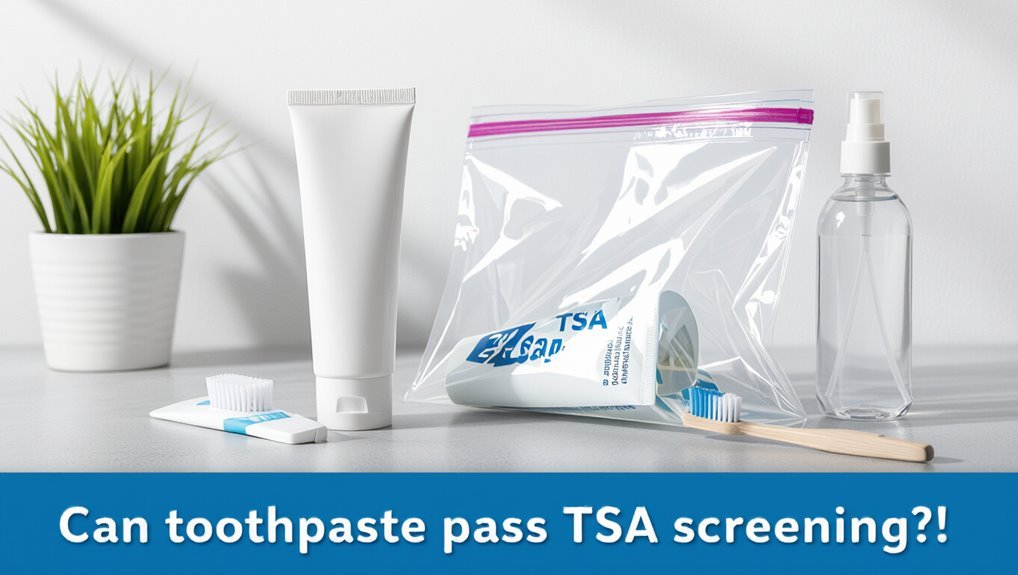
Wondering if your toothpaste can get through TSA screening? You can bring it, but you’ll need to follow carry-on limits and packaging.
Solid toothpaste bars pose no liquid issues, while standard paste counts toward liquids. Pack larger tubes in checked baggage to avoid restrictions.
Always place permitted tubes in an accessible spot for inspection, and label unclear containers to speed the process.
TSA 3-1-1 Rule (Plain English)
Since standard toothpaste counts as a liquid for carry-ons, you’ll want to follow the TSA 3-1-1 rule to avoid problems at the checkpoint. Pack travel-size tubes (3.4 oz or less) inside a single quart clear bag, one per traveler. Be ready to remove the bag for screening.
| Item | Limit |
|---|---|
| Tube | 3.4 oz |
| Bag | 1 quart |
Is Toothpaste a Liquid, Gel, or Paste for TSA?
You might wonder how TSA classifies toothpaste—it’s treated like a gel for checkpoint purposes.
That means you’ll need to follow the 3-1-1 carry-on size limits, keeping tubes in a single quart-sized, resealable bag and 3.4 ounces (100 milliliters) or less per container.
If your tube is bigger, you’ll have to pack it in checked luggage or transfer some into a compliant travel-size container.
TSA Classification Rules
1 simple rule helps you pack toothpaste for carry-on: the TSA treats it as a gel-like toiletry, so it falls under the 3-1-1 rule and must fit in a single quart-sized bag with containers no larger than 3.4 ounces (100 mL). You should pack tubes accordingly and declare if asked.
| Item | Classification |
|---|---|
| Toothpaste | Gel-like |
| Mouthwash | Liquid |
| Solid bar soap | Solid |
| Gel deodorant | Gel |
| Lip balm | Solid |
Carry-On Size Limits
That 3-1-1 rule from the TSA Classification Rules directly shapes how you pack toothpaste for carry-on: the agency treats toothpaste as a gel-like substance, so each tube must be 3.4 ounces (100 mL) or smaller and fit inside your single quart-sized, clear plastic bag with other liquids and gels.
Pack extra toothpaste in checked luggage, or transfer a small amount into travel-friendly containers to comply.
Maximum Toothpaste Size Allowed in Carry-Ons
You’ll need to follow the TSA liquids rule, which generally limits toothpaste in carry-ons to containers of 3.4 ounces (100 mL) or less that fit in a quart-sized bag.
Travel-size toothpaste is designed to meet that limit and save space in your carry-on.
If you need more than that for medical reasons, bring documentation and declare it at the checkpoint as an exception for medications.
TSA Liquids Rule
Although the TSA allows toothpaste in carry-ons, they’re strict about liquid-size limits, so you can only bring containers of 3.4 ounces (100 milliliters) or less in your quart-sized bag. You should pack tubes upright, place the bagable items together, and expect screening. Below is a quick guide:
| Item | Max Size | Pack |
|---|---|---|
| Toothpaste | 3.4 oz | Quart bag |
| Gel/cream | 100 ml | Same bag |
| Spare tube | 3.4 oz | Screened |
Travel-Size Toothpaste
If you’re packing toothpaste for carry-on, stick to tubes of 3.4 ounces (100 milliliters) or smaller so they fit in your quart-sized liquids bag and pass TSA screening.
Labeling helps, but you should place the tube in a clear, resealable bag with other liquids.
Keep only what you need for the flight to avoid delays and bag rechecks at security.
Exceptions And Medications
When you need toothpaste for medical or disability-related reasons, TSA lets you carry more than the standard 3.4-ounce limit, but you should declare it at the checkpoint and be prepared for additional screening. You’ll want a doctor’s note, clear labeling, and calm explanation to avoid hassle.
| Support | Respect | Compliance |
|---|---|---|
| Note | Smile | Show ID |
| Label | Explain | Pack safe |
How to Measure Toothpaste to Meet TSA Limits
To fit toothpaste into TSA’s 3.4-ounce (100 mL) liquids rule, measure what you’ll carry and pack only what’s necessary for your trip.
Use a travel container marked in milliliters or a graduated syringe to transfer paste. Label the container, close it tightly, and place it in a clear quart-sized bag for screening.
Check amounts before leaving to avoid disposal.
Travel-Sized vs Full-Size Toothpaste: What Counts
Wondering whether that tiny tube counts as a travel-size or a full-size item? You should check the milliliter labeling: travel-size is 100 ml (3.4 oz) or less, full-size exceeds that.
If unsure, measure or replace with a clearly marked travel tube before screening.
- Check the volume on the tube
- Use a 100 ml cutoff
- Swap larger tubes for travel ones
Toothpaste in Quart (ZIP-Top) Bags: Rules and Tips
You can carry toothpaste in a clear quart (ZIP-top) bag as long as each tube is 100 ml (3.4 oz) or less and the bag closes fully; pack only one bag per passenger and place it in an accessible spot for screening.
Separate medications and baby items if needed.
Zip it closed, avoid overstuffing, and present the bag at security to speed inspection and prevent spills.
TSA-Approved Travel Containers for Toothpaste
When packing toothpaste for carry-on, you’ll need a travel container that fits the TSA’s 3.4-ounce (100 mL) liquid limit and fits inside your quart-sized clear bag.
Consider silicone squeeze tubes or reusable travel bottles that are clearly labeled and leak-proof.
If you want to skip the liquid rules, bring an approved solid toothpaste tablet or powder instead.
Carry-On Liquid Limits
1 clear rule governs carry-on toothpaste: each container must be 3.4 ounces (100 milliliters) or smaller and fit comfortably inside a single clear quart-sized resealable bag for TSA screening.
You’ll pack efficiently, avoid oversized tubes, and present the bag separately at security. Follow limits to prevent delays and confiscation.
- Choose travel-sized tubes
- Use a single quart bag
- Keep liquids accessible
Approved Solid Alternatives
Although liquid toothpaste has strict limits, solid alternatives let you skip the quart bag and breeze through security; they’re TSA-friendly and often more travel-friendly.
Choose toothpaste tablets, solid sticks, or powdered formulas in labeled, leakproof tins or biodegradable wrappers. You’ll avoid liquid restrictions, save space, and reduce spills.
Pack a small toothbrush and chew or wet to activate—simple, compliant, and efficient for travel.
Solid Toothpaste Bars: Allowed in Carry-Ons?
Curious whether solid toothpaste bars clear TSA checkpoints? You can bring solid bars in carry-ons since they’re not liquids; pack them accessibly for screening.
Declare if asked, and keep labels or receipts to prove composition.
- Solid form avoids 3.4 oz liquid limit
- Place where TSA can inspect easily
- Keep quantity reasonable to avoid extra questioning
Toothpaste Tablets and Powders: TSA Treatment
When you pack toothpaste tablets or powdered toothpaste, remember TSA treats them differently than liquids: tablets generally pass as solids, while powders above 12 ounces (350 mL) may be subject to additional screening or restrictions in carry-ons.
Pack small containers, label contents, and keep tablets accessible for inspection.
If a powder triggers screening, be prepared to transfer it to checked baggage or discard it if denied.
Specialty Toothpastes (Whitening, Charcoal): Any Limits?
If you use whitening or charcoal toothpaste, know that TSA treats them like regular gels and pastes for the 3.4-ounce rule.
You’ll need travel-sized tubes or to pack larger jars in checked luggage, and keep in mind charcoal formulas can be messier if they leak.
Check ingredients and packaging before you fly so you’re not surprised at security.
Whitening Toothpaste Restrictions
Because whitening and other specialty toothpastes still count as toothpaste for travel rules, you’ll need to follow the same TSA liquid/gel limits as regular paste when flying; in carry-on bags that means any toothpaste—whitening, charcoal, or enzyme-based—must fit inside a single quart-sized clear bag and be in containers 3.4 ounces (100 milliliters) or smaller.
- Pack travel-sized tubes
- Declare oversized items at check-in
- Place the bag for screening
Charcoal Toothpaste Regulations
You’ll treat charcoal toothpaste the same way you do whitening or other specialty pastes for air travel: it counts as a toothpaste under TSA rules and must fit in your single quart-sized clear bag with containers 3.4 ounces (100 milliliters) or smaller for carry-on.
Checked luggage has no liquid limit, but seal jars to avoid mess.
Declare nothing; follow size rules.
Prescription and Medicated Toothpaste: Declare or Not?
Wondering whether prescription or medicated toothpaste counts as your regular carry-on gel? You can usually carry it in quantities over 3.4 oz if you declare it and show documentation, like a prescription or doctor’s note, during security screening.
- Keep original packaging and label visible
- Pack documentation accessible for inspection
- Expect possible additional screening or testing
Baby and Child Toothpaste Rules and Exceptions
When you’re packing for kids, know baby toothpaste often falls under the 3.4-ounce/100-milliliter carry-on liquid limit but some travel-friendly small tubes are fine.
If you’re bringing specially formulated “formula” toothpaste or larger medicated jars for infants, declare them at security and be ready for inspection.
Check airline and TSA guidance beforehand so you won’t be surprised at the checkpoint.
Baby Toothpaste Quantity Limits
Many parents ask how much baby toothpaste they can pack for flights, and TSA lets you bring reasonable quantities of baby and child toothpaste even if it exceeds the usual 3.4-ounce liquid rule—so long as it’s declared, screened, and deemed necessary for the trip.
You should:
- Pack clearly labeled tubes or containers.
- Declare them at screening.
- Keep amounts reasonable for travel duration.
Traveling With Formula Toothpaste
If you’ll be carrying infant formula or powdered milk in addition to baby toothpaste, know TSA treats those items differently from liquids and gels: you can bring reasonable quantities of formula, breast milk, and supplies beyond the 3.4-ounce limit, but you should declare them for inspection and separate them from carry-on items for screening.
Pack toothpaste clearly labeled, disclose it, and expect possible additional screening.
Which Toothpaste Formulations Often Trigger Checks?
Because toothpaste can vary widely in texture and composition, some formulations draw more attention from TSA officers than others.
You’ll find certain types more likely to be inspected:
- Gel-based or clear toothpastes that resemble liquids
- Activated charcoal or oddly colored specialty pastes
- Large travel-size or foil-sealed tubes that look atypical
Pack smart and be prepared to explain ingredients if asked.
How to Pack Toothpaste in Checked Luggage
You can safely stash toothpaste in checked baggage without worrying about the TSA’s 3.4-ounce liquid rule, but pack it to prevent leaks and damage. Use sturdy tubes, cap securely, and place tubes in sealed plastic bags or between clothes. Cushioning reduces punctures.
| Tip | Why |
|---|---|
| Seal cap | Prevents leaks |
| Bag it | Contains spills |
| Cushion | Avoids puncture |
| Separate | Easy inspection |
| Label | Quick ID |
When to Choose Checked Baggage for Bulk Toothpaste
When you’re traveling with more than a few tubes, choosing checked baggage makes sense: you’ll free up carry-on space, avoid 3.4 oz limits, and transport larger containers without hassle.
Traveling with many tubes? Check them to save carry-on space, skip 3.4 oz limits, and carry larger sizes.
Consider these factors before checking bulk toothpaste:
- total volume and weight vs. airline limits
- potential for leaks and protective packaging
- destination import rules and quantity allowances
How TSA Officers Inspect Toothpaste at Checkpoints
Although toothpaste usually passes through checkpoints without drama, TSA officers actively screen it as part of their liquids and gels checks.
You’ll place your travel-size tube in a clear quart bag, present it separately for X-ray, and answer brief questions if an officer flags it.
They may open suspicious containers for visual inspection and swab them for explosives residue before letting you proceed.
What Happens If Your Toothpaste Is Over the Limit?
If your toothpaste exceeds the TSA’s 3.4-ounce (100 mL) carry-on limit, officers will require you to remove it from your bag and either dispose of it, return it to checked luggage, or surrender it at the checkpoint.
You’ll then choose one option; officers won’t argue. Consequences are limited to loss of the item and delay.
- Dispose at checkpoint
- Move to checked baggage
- Surrender without refund
How to Avoid Having Toothpaste Confiscated
Having your toothpaste removed at the checkpoint is annoying, but you can prevent it with a few simple steps. Pack travel-size tubes, place them in a clear quart bag, declare larger items when required, and keep them accessible. Be calm and cooperative with officers to reduce stress and avoid delays.
| Action | Feeling |
|---|---|
| Travel-size | Relieved |
| Quart bag | Confident |
| Declare | Honest |
| Accessible | Prepared |
| Cooperative | Calm |
Handling Damaged or Leaking Toothpaste in Transit
When a tube bursts or the cap comes loose, quick action limits the mess and saves your other gear—wipe excess paste with a disposable wipe or paper towel, seal the tube in a plastic bag, and isolate any soiled items to clean later.
Act fast, check for leaks, and prevent staining by laundering or wiping affected fabrics promptly.
- Rinse stains with cold water
- Replace damaged caps
- Store spare travel tubes
What to Do If TSA Confiscates Your Toothpaste
If an agent takes your toothpaste, ask for clarification about why it was confiscated and whether it can be returned.
If they say it’s allowed but already removed, ask where you can retrieve it—sometimes lost items are held at the checkpoint or a nearby office.
Keep calm, have your ID and boarding pass ready, and follow instructions to recover or document the incident.
Ask For Clarification
Wondering what to do if TSA takes your toothpaste? Ask calmly for a clear reason and the specific rule it violates.
Request the officer’s name and badge number if you plan to follow up. Note the checkpoint and time.
- Ask for the regulation citation.
- Request a written receipt if they keep it.
- Politely record contact details for later questions.
Retrieve From Checkpoint
After you’ve asked for a clear reason and noted the officer’s details, you can try to retrieve your toothpaste from the checkpoint.
Politely request return or ask where and when you can collect it. If denied, ask for written documentation and a supervisor’s review.
Keep receipts and photos, note names, and file a complaint with TSA afterward to document the incident.
Packing Strategy: Best Places to Store Toothpaste in Carry-On
While you’re organizing your carry-on, tuck toothpaste into a clear, resealable quart bag with your other liquids so it meets TSA rules and stays easy to find.
Place the bag near the top of your bag for quick removal at security. Keep a small travel tube and a spare in a zip pocket for in-flight use.
- Top compartment
- Outer zip pocket
- Dedicated toiletry pouch
Combining Multiple Small Tubes: Tips and Rules
If you’re carrying several small toothpaste tubes, group them so they’re easy to inspect and within the quart-size liquids bag.
TSA treats each tube as a liquid item, so keep each under 3.4 oz (100 ml) and make sure the bag closes fully for quick security checks.
Place tubes upright if possible, seal caps tightly, and use a clear pouch pocket for rapid access at screening.
Combining Toothpaste With Other Liquids in Your Quart Bag
Now that you’ve organized multiple small tubes for inspection, think about how they share space with other liquids in your quart bag.
Pack upright if possible, seal caps, and place absorbent material to catch leaks. Keep visibility for TSA screening and avoid overfilling.
Pack bottles upright, tightly seal caps, add absorbent padding, keep contents visible for TSA, and don’t overfill.
- Separate lids and small caps
- Use waterproof pouch lining
- Group by leak risk
Refillable Travel Toothpaste Tubes: Pros and Cons
Refillable travel toothpaste tubes let you control size to meet TSA’s travel-friendly capacity limits, so you won’t get held up at security.
You should also clean them thoroughly between uses to avoid buildup and bacterial growth.
Finally, be aware that cheap or overfilled tubes can leak, so pack them upright or inside a sealed bag to protect your luggage.
Travel-Friendly Capacity Limits
Because airlines enforce strict carry-on liquid limits, choosing a travel toothpaste tube that fits those rules matters for stress-free security checks.
Pick sizes under 100 ml, confirm labeling, and pack in a clear quart bag. You’ll save time and avoid disposals.
- Choose 30–90 ml refillable tubes
- Verify TSA-compatible markings
- Store tubes upright in a clear bag
Cleaning And Leakage Risks
You’ll need to be diligent about cleaning and securing travel toothpaste tubes, since leftover paste and pressure changes can cause clogs or messy leaks.
Rinse and dry tubes thoroughly before refilling, wipe caps, and seal openings with tape or a tiny plastic wrap.
Store tubes upright in a zip bag, check seals after flights, and replace worn caps promptly to prevent spills.
How to Transfer Toothpaste Without Contaminating It
When you’re moving toothpaste from one container to another, work over a clean surface and use a sterile spatula or spoon to avoid introducing bacteria or debris.
Transfer small amounts, avoid touching rims, and reseal immediately. Sanitize hands and tools before starting. Store in a dry, cool place.
- Use single-use spatulas
- Squeeze, don’t scoop when possible
- Label transfer date
Labeling Tips to Speed Up Security Screening
Label your toothpaste containers clearly so TSA agents can see what’s inside at a glance.
Make sure volume markings are visible and accurate to show they meet the 3.4 oz/100 ml rule.
Pack labeled items in a clear, TSA-friendly bag to speed screening and avoid questions.
Clear Container Labels
Although TSA officers don’t require every travel-size bottle to be labeled, clear, consistent labeling makes your screening faster and reduces questions.
So use simple, legible tags that state the contents and date filled. You’ll prevent delays and confusion by labeling toothpaste, gels, and creams clearly.
Keep labels waterproof, readable, and minimal.
- Content name
- Date filled
- Your initials
Visible Volume Markings
Clear volume markings help TSA officers verify your travel-size toothpaste at a glance, so add visible, graduated lines or a bold percentage to each container.
You’ll speed screening when markings match the container’s max capacity and current fill level. Use waterproof ink or embossed marks that won’t rub off.
If you transfer paste, note original size so officers can confirm compliance quickly.
TSA-Friendly Packing
Now that your containers show their capacity and fill level, make packing itself obvious to TSA officers by grouping and labeling items so they can be inspected quickly.
Use clear, waterproof labels and a single transparent pouch so agents can verify compliance without unpacking.
Keep similar items together and note special items.
- Label contents and volumes
- Use one clear quart bag
- Group like items by type
Security-Friendly Oral Care Kit Checklist
When you pack your oral care kit for carry-on, focus on items that meet TSA liquid limits, save space, and make security checks smoother; include travel-size toothpaste or solid toothpaste tablets, a rinse-free mouthwash or single-use mouthwash packets, a compact toothbrush (folding or soft-bristle), and dental floss or interdental picks.
Add a small travel case, label liquids clearly, and keep items accessible for screening.
TSA PreCheck and Toothpaste: Any Differences?
If you’ve packed a TSA-friendly oral care kit, you might wonder whether TSA PreCheck changes any rules about toothpaste. It doesn’t—liquid limits still apply, but screening is faster and you usually keep items in your bag.
Pack accordingly and follow standard guidelines.
- Keep tubes ≤3.4 oz (100 mL)
- Use clear quart bag
- Place larger medical toothpaste with documentation
Declaring Large Quantities of Toothpaste at Security
If you’re carrying toothpaste over 3.4 ounces, tell the TSA officer at the checkpoint before screening.
They’ll ask you to separate it for inspection and may require you to carry it in checked luggage or dispose of it.
Following their instructions keeps the line moving and avoids delays.
Declaring Over 3.4 Oz
Because airport security enforces the 3.4 oz rule for carry-ons, you’ll need to declare any toothpaste that exceeds that limit before screening.
Tell an officer, present the item separately, and be prepared for inspection. They’ll decide if it can travel in your carry-on.
Declare honestly to avoid delays or confiscation.
- Inform an officer
- Present separately
- Expect inspection
Airport Security Procedures
After you tell an officer and set the oversized tube aside, expect airport security to follow a standard procedure for large quantities of toothpaste: they’ll ask you to present the item, may swab it for explosive residue, and might open or test the contents to confirm it’s a benign personal care product.
Cooperate, answer questions, and be ready to surrender or repack the toothpaste if it’s disallowed.
Airline-Specific Variations to TSA Rules to Watch
While TSA sets the baseline for carry-on toothpaste and other liquids, individual airlines can impose tighter limits or different documentation requirements.
So you’ll want to check your carrier’s rules before packing. You should verify size allowances, carry-on versus checked distinctions, and any medical exemptions the airline accepts to avoid surprises at the gate.
- size limits
- allowed containers
- medical exceptions
International Travel: Toothpaste Rules in Other Countries
When you travel internationally, remember that liquid limits can differ from the TSA’s 3.4-ounce rule, so check the specific allowance for each country you visit.
Local security procedures and enforcement vary widely, and some airports may have stricter or more lenient screening for toothpaste.
Pack accordingly or buy travel-size toothpaste at your destination to avoid delays.
Liquid Limits Abroad
If you’re traveling internationally, know that liquid rules for toothpaste can vary widely by country and airport, and you’ll need to check limits before you pack.
You’ll often face a size cap, carry-on bag rules, or duty-free exceptions. Pack accordingly, declare when required, and consider solid toothpaste alternatives.
- Size caps (e.g., 100 ml)
- Carry-on quart restrictions
- Duty-free sealed exceptions
Local Security Variations
Because airports and nations set their own security rules, you’ll want to check local toothpaste limits before you pack for an international trip.
Look up the destination’s aviation authority or airport website for allowed container sizes, carry-on liquid policies, and duty-free exceptions. Some countries mirror the 100 ml rule; others have stricter or more relaxed limits.
When unsure, pack toothpaste in checked luggage.
Buying Toothpaste After Security: Airport Options and Costs
Many airports let you buy travel-size toothpaste after security, but prices and availability vary widely—expect convenience-store markups, chain-brand kiosks, vending machines, and sometimes free samples at airline lounges.
You can grab essentials quickly, but check sizes and receipts to avoid surprises.
- Convenience stores: higher prices
- Vending machines: limited options
- Airline lounges: occasional complimentary samples
Best Toothpaste Formats for Short Business Trips
When you’ve only got a couple of nights on the road, pick a toothpaste format that’s compact, mess-free, and TSA-friendly so packing is painless and morning routines stay smooth.
Use travel-size tubes under 3.4 oz, toothpaste tablets in a small tin, or single-use paste pods. They’re lightweight, leakproof, and quick to pack.
Carry them in your quart bag for easy security screening.
Best Toothpaste Formats for Long Trips or Remote Destinations
For extended trips and remote destinations, choose toothpaste formats that balance longevity, low weight, and easy disposal so you won’t run out or struggle to pack them out.
You’ll want durable, compact options that suit limited water, tight packing, and disposal rules.
- Solid toothpaste tablets: lightweight, measured doses
- Concentrated gels: small tubes, long-lasting
- Powder toothpastes: minimal waste, space-saving
Eco-Friendly Toothpaste Travel Options
If you want to cut plastic and chemical waste on the road, choose travel toothpaste options that are biodegradable, refillable, or zero-waste so you leave less impact without sacrificing oral care.
Pick toothpaste tablets, powders in compostable pouches, or solid bars in metal tins. Refillable glass jars and concentrated pastes reduce single-use plastic.
Check ingredients for natural, fluoride-containing formulas you trust.
Space-Saving Packing Hacks for Toothpaste
You can save space by choosing travel-size toothpaste tubes or single-use packets that meet TSA limits.
If you prefer your regular paste, transfer a small amount into a reusable travel tube or a multiuse container that also holds floss or moisturizer.
These simple swaps keep your bag light and compliant without sacrificing your routine.
Travel-Size Toothpaste Options
When space is tight, choosing the right travel-size toothpaste can make packing simpler and lighter. You’ll pick between mini tubes, tablets, or solid bars depending on preference and flight rules.
Each saves space and meets carry-on limits when packed correctly.
- Mini tubes: familiar, squeezable, up to 3.4 oz
- Tablets: no liquid, mess-free
- Solid bars: compact, durable
Toothpaste Transfer Techniques
Packing alternatives like tablets or mini tubes are great, but sometimes you’ll want to squeeze more convenience from a full-size tube at home.
Cut the tube near the base, press contents into a travel-sized container, then reseal or roll the remaining tube for later.
Use a small spatula for sanitary transfer, label the new container, and pack it within your quart bag.
Multiuse Container Tips
If you want to cut down on clutter and abide by TSA limits, choose a single small container that can hold toothpaste plus one or two other essentials like moisturizer or sunscreen.
You’ll save space, meet carry-on liquid rules, and simplify security checks. Clean between uses, label contents, and cap tightly to avoid leaks.
- Use a silicone tube
- Keep volumes under 3.4 oz
- Rinse before refilling
Keeping Toothpaste Usable After Long Flights
Although air pressure and temperature swings can compress tubes and change textures, you can take simple steps to keep your toothpaste usable after long flights.
Store tubes upright, squeeze gently from the bottom, and seal caps tightly.
Use travel-sized, temperature-resistant tubes or transfer paste into sterile, leakproof containers.
Inspect consistency before use and discard if separation, odd odor, or discoloration appears.
Dental Hygiene Alternatives If Toothpaste Is Confiscated
When TSA takes your toothpaste, don’t panic—you can still keep your mouth clean with a few simple swaps:
- Chew sugar-free gum to stimulate saliva and freshen breath.
- Use a damp toothbrush with a pinch of baking soda for mild cleaning.
- Rinse vigorously with mouthwash or saltwater to reduce bacteria and loosen debris while you travel.
Common Traveler Mistakes That Delay TSA Screening
Ever wondered why lines crawl or your screening takes longer than expected? You might fumble with liquids, carry oversized toothpaste, forget prohibited items in carry-ons, or keep electronics packed.
You slow others by not emptying pockets, wearing complicated shoes, or missing boarding documents.
Pack smart, pre-sort liquids, and remove gadgets before the scanner to speed your screening and respect fellow travelers.
Real Traveler Scenarios and How to Handle Them
How would you handle it if your toothpaste exceeds the 3.4-ounce rule or the TSA agent asks you to remove a partially used tube from your carry-on?
You stay calm, comply, and choose the best option for your trip.
- Offer the tube for inspection or transfer to checked luggage.
- Dispose of or donate oversized tubes.
- Pack travel-size toothpaste next time.
Quick Pre-Flight Checklist for Toothpaste Compliance
Before you head to the airport, check that your toothpaste meets carry-on liquid limits and is in a compliant container.
You should place it in a clear quart-size bag with other liquids and follow simple packing tips to make security screening faster.
If your tube is over the limit, put it in checked luggage or transfer a travel-sized amount into an approved container.
Carry-On Liquid Limits
When you’re packing your carry-on, remember that toothpaste counts as a liquid or gel under TSA rules.
So it must fit within your quart-sized, clear plastic bag and each tube can’t exceed 3.4 ounces (100 milliliters).
Pack efficiently, label if needed, and expect screening.
- Keep tubes visible and resealable
- Consolidate small items in one bag
- Remove oversized tubes before screening
Toothpaste Container Rules
Think of this as your quick checklist: make sure each toothpaste tube is 3.4 ounces (100 mL) or less, placed inside your single quart-sized clear plastic bag, sealed visibly, and ready to be removed for screening if asked. Follow labeling, count, and accessibility rules below:
| Item | Rule | Action |
|---|---|---|
| Tube | ≤3.4 oz | Verify size |
| Bag | Quart | Use clear bag |
| Quantity | Limited | Consolidate tubes |
| Screening | Inspectable | Be ready to remove |
Packing Tips For Security
If you want a smooth security check, pack your toothpaste in a single, clearly sealed quart-sized bag with each tube 3.4 oz (100 mL) or less, and keep that bag near the top of your carry-on so you can pull it out quickly for screening.
You’ll breeze through if you follow these quick checks:
- Label or use clear tubes
- Remove bulky cases
- Inspect expiration dates
Recommended Travel Products and Containers That Pass TSA
Although TSA limits can seem strict, you can still bring effective travel-size toiletries by choosing approved containers and smart product formats.
Use 3.4-ounce (100 ml) clear plastic bottles, travel toothpaste tablets, solid shampoo bars, and prepackaged single-use oral wipes.
Seal liquids in a quart-sized clear bag, label unconventional items, and keep them accessible for screening to speed inspection and avoid confiscation.
How to Handle Multiple Oral-Care Items in One Bag
When you pack several oral-care items in one bag, organize them by type and accessibility so TSA screening goes smoothly and you can find what you need without emptying the whole kit.
Use clear, compliant containers and place liquids in a single quart bag for easy inspection.
Label or color-code compartments to speed checks.
- Toothpaste and gels
- Brushes and floss
- Mouthwash samples
When to Choose Checked Baggage for Heavy or Bulk Toothpaste
Because airlines limit liquids in carry-ons, choose checked baggage for heavy or bulk toothpaste that exceeds the 3.4-ounce rule or when you’re packing multiple full-size tubes for a long trip. This keeps you compliant, avoids a confiscation delay at security, and frees up space in your quart bag for other essentials.
Pack tubes securely, cushion them against pressure changes, and label valuables for easy retrieval.
Resources: Official TSA Links and Further Reading
For quick, authoritative answers about toothpaste and other travel-size toiletries, consult the TSA’s official resources—you’ll find up-to-date rules, exceptions, and guidance on permitted quantities, packaging, and screening procedures.
You can verify allowances, prepare documents, and check updates before you travel.
- TSA liquids rule overview
- What to pack in carry-on vs checked
- Contact and help center links
Final Quick Tips: Avoid Delays and Keep Smiling
Although small, a few simple habits will help you breeze through security: pack travel-size toothpaste in a clear quart bag, place electronics and liquids on top for quick removal, keep receipts or prescriptions handy, and wear easy-to-remove shoes.
Check TSA updates before you leave, arrive early, and stay calm—these steps cut delays and keep your trip smiling from the start.
Frequently Asked Questions
Can Toothpaste Be Placed in a Carry-On Pocket Instead of the Quart Bag?
Yes — you can place toothpaste in a carry-on pocket only if the tube is 3.4 ounces (100 milliliters) or smaller and you’ve squeezed it into your single quart-sized clear bag; larger tubes must go in checked luggage.
Are Electric Toothbrush Paste Cartridges Treated Like Liquids?
Yes, they’re treated like liquids, so you’ll need to follow TSA liquid rules: keep cartridges in your quart-sized bag, each container 3.4 ounces (100 ml) or less, and present them for screening if asked.
Do Airlines Sell Travel Toothpaste Onboard International Flights?
Yes — many international airlines sell travel toothpaste onboard, especially long-haul flights and premium cabins; you’ll often find small tubes or kits in duty-free, snack areas, or via flight attendants, though availability varies by carrier and route.
Will Flavored Toothpaste Cause Additional Screening at Security?
No, flavored toothpaste won’t usually trigger extra screening; you should keep paste tubes under the 3.4-ounce limit and inside a quart bag, but if agents find something suspicious they might inspect it further.
Can I Bring Homemade Toothpaste Through TSA Checkpoints?
Yes — you can bring homemade toothpaste, but if it’s in a container over 3.4 ounces (100 mL) it won’t pass carry-on security; keep it in checked luggage or use travel-sized containers and label any unusual ingredients.
Conclusion
Yes — you can bring toothpaste through TSA, but remember the 3-1-1 rule: containers must be 3.4 oz (100 mL) or less and fit in one clear quart-sized bag. Treat toothpaste as a gel/paste, measure carefully, and consolidate items to avoid exceeding limits. If you need more, pack toothpaste in checked baggage. Keep your travel toiletries organized and accessible to prevent delays and stay fresh on the go.