Can You Bring Food Through TSA Checkpoints
You can bring most solid foods through TSA checkpoints, like sandwiches, whole fruit, and packaged snacks, but gels, soups, yogurts, and spreads must follow the 3-1-1 liquid rule or go in checked baggage. Declare baby formula, breast milk, and medically necessary liquids at screening. Frozen items are fine when fully solid, and clear containers speed inspection. Watch customs rules for international travel and airline perishability policies—keep going to learn helpful packing and screening tips.
Quick Answer: Can You Bring Food Through TSA?
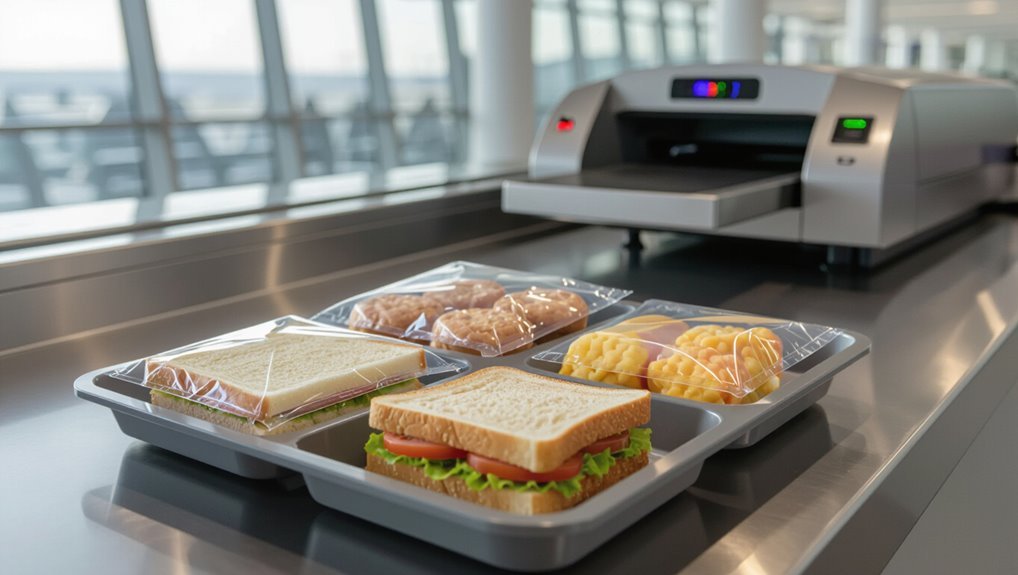
Wondering if you can bring food through TSA? Yes — solid, non-liquid foods generally pass through security in carry-ons.
Pack snacks in clear containers, declare anything that looks like a liquid or gel, and be ready to remove items for inspection.
Follow airline rules for international travel and refrigerated or perishable items; otherwise, most dry, wrapped foods are allowed through checkpoints.
TSA Definitions: Food, Liquid, and Gel
You’ll want to know how TSA classifies food, liquids, and gels so you can pack correctly and avoid delays.
Learn what counts as food versus a liquid or gel, which items get exceptions, and how solid foods are treated. That clarity will help you decide what to carry in your carry-on or checked bag.
What Counts As Food
Because TSA treats some foods differently than solid snacks, it helps to know how items are classified as food, liquid, or gel before you pack.
Generally, whole fruits, sandwiches, baked goods, and dry snacks count as solid food and travel in carry‑on.
Foods that flow, spread, or require refrigeration—soups, yogurts, sauces, and dips—may be treated under liquid/gel rules, so pack accordingly.
Liquids Versus Gels
How do you know whether an item counts as a liquid or a gel?
TSA treats soups, sauces, spreads, and beverages as liquids/gels if they flow or spread. Pack them in your quart-sized, clear bag and follow the 3-1-1 rule.
Solid items that hold shape aren’t subject to liquid limits, but anything pourable, squeezable, or scoopable will be screened as a gel.
Exceptions And Solid Foods
While most soups, sauces, and spreads fall under the 3-1-1 liquid/gel rule, TSA makes clear exceptions for many solid foods you can carry through checkpoints without packing them in a quart-sized bag.
You can bring solid snacks, sandwiches, and whole fruits, but spreadable items may be limited.
- Sandwiches
- Whole fruits
- Packaged chips
The 3-1-1 Rule Explained (TSA Liquids and Gels)
The TSA’s 3-1-1 rule limits the liquids, gels, and aerosols you can carry through security: each passenger may bring containers of 3.4 ounces (100 milliliters) or less, all must fit inside a single clear quart-sized resealable bag, and you’re allowed one bag per traveler.
Pack sauces, yogurt, and spreads in travel-size containers, place the bag separately for screening, and declare medically necessary liquids.
Solid Ready-to-Eat Foods Allowed Through TSA
If you’re packing solid ready-to-eat foods for your trip, you can bring most items through TSA checkpoints without placing them in your quart-sized liquids bag.
If you’re bringing solid ready-to-eat foods, you can usually pass them through TSA checkpoints without using your liquids bag.
You should still pack clearly, declare unusual items, and expect inspection if needed.
Consider compact, nonperishable choices that travel well:
- Sandwiches and wraps
- Whole fruits and nuts
- Prepackaged snack bars
Gel-Like Foods: Hummus, Yogurt, and Peanut Butter
Solid ready-to-eat items are easy to pack, but you’ll need to handle gel-like foods—like hummus, yogurt, and peanut butter—differently because TSA treats them as liquids or gels. Keep containers under 3.4 oz (100 ml) or pack larger amounts in checked bags. Declare jars if asked and place them in a clear quart bag.
| Item | Tip |
|---|---|
| Hummus | Small containers |
| Yogurt | Single-serve |
| Peanut butter | Checked bag suggested |
| Bulk jars | Declare when screening |
Sauces, Dressings, and Condiments at Screening
When you pass through screening, treat sauces, dressings, and condiments as liquids or gels and keep individual containers at or under 3.4 oz (100 ml) so they fit in your clear quart bag; larger bottles belong in checked luggage or should be declared during inspection.
Pack small sealed bottles, label homemade items, and be ready to remove them for screening.
- Carry sealed single-serve packets
- Use travel bottles
- Declare unusual sauces
Bringing Dips and Spreads Within 3-1-1 Limits
Sauces and dressings follow the same 3-1-1 rules as dips and spreads, so pack them the same way: keep each container at or under 3.4 oz (100 ml), fit all containers inside a single clear quart bag, and be ready to remove the bag for screening.
Label homemade jars, secure lids to prevent leaks, and place the quart bag in an accessible pocket to speed up TSA inspection.
Can You Carry Soups, Stews, and Chili?
Wondering whether you can bring soups, stews, or chili through TSA? You can carry them only if each container fits the 3-1-1 liquid limit (3.4 oz/100 mL) in carry-on; larger portions must go in checked baggage.
Declare them if asked and pack securely to prevent leaks.
- Small servings: OK in carry-on
- Large pots: check them
- Solid components: treated separately
Transporting Hot Liquids and Airport Coffee Safely
You can bring hot drinks through TSA, but there are rules you need to follow about containers and liquid amounts.
Remember the 3-1-1 limits for carry-on liquids and that security may ask you to taste or discard beverages.
Use a leak-proof, insulated travel mug and secure lids to keep coffee safe during screening and on the plane.
Hot Drink Carry Rules
When you’re bringing hot drinks through TSA checkpoints, remember that the main concern is safety and screening—liquids over 3.4 ounces (100 mL) aren’t allowed in carry-on bags unless you bought them past security, so plan accordingly and keep your cup sealed for X‑ray screening.
You should also:
- Use spill‑proof lids.
- Carry insulated containers.
- Buy drinks after security when possible.
TSA Liquid Limits
Because TSA restricts liquids in carry-ons to containers of 3.4 ounces (100 mL) or less unless you buy them past security, plan to either finish hot drinks before screening or purchase coffee after you clear the checkpoint.
You can carry small bottled drinks in your quart-sized bag; gels, soups, and sauces count too.
Pack larger beverages in checked luggage or buy them inside the secure area.
Safe Travel Mug Tips
If you plan to bring hot drinks through security or carry a filled mug onto the plane, pick a leak‑proof, insulated travel mug with a secure locking lid and test it before you leave home.
You’ll want to cool liquids below scalding, stash the mug upright, and keep receipts for airport purchases.
- Use a locking lid
- Cool before screening
- Keep upright and accessible
Sealed Canned and Jarred Foods: Permitted or Not?
Though TSA rules can seem strict, you can usually bring sealed canned and jarred foods through security in your carry-on as long as they meet the liquids rule—containers larger than 3.4 ounces (100 milliliters) must go in checked baggage or be declared for air travel exceptions, while unopened solid-packed items generally pose no issue.
Check labels: sauces, oils, and broths count as liquids and follow the 3.4-ounce rule.
Frozen Food, Ice Packs, and TSA Rules
You can bring solid frozen items through TSA, but anything partially melted or slushy may be treated as a liquid and screened more closely.
Ice packs are allowed, but they must be completely frozen when you go through the checkpoint; melted or thawed packs could trigger additional inspection.
Check with your airline and allow extra time if you’re carrying frozen foods or gel packs that might thaw.
Frozen Items Allowed?
Frozen food and ice packs often raise questions at TSA checkpoints, so it’s helpful to know the rules before you pack.
You can bring solid frozen foods in carry-on or checked bags. Partially melted items or liquids over 3.4 oz may be restricted.
Pack smart and expect inspection.
- Solid frozen foods allowed
- Melted/partial liquids limited
- Declare suspicious items
Ice Packs Rules
If you’re packing ice packs to keep perishables cold, know TSA treats them differently depending on whether they’re completely frozen or partially melted.
Fully frozen packs are allowed in carry-ons; partially melted or slushy packs count as liquids and must meet the 3.4-ounce rule or go in checked baggage.
Label frozen food clearly and be prepared for inspection to avoid delays.
Checked Bags: Perishables, Temperature, and Spoilage
When packing perishables in checked luggage, plan for delays and limited temperature control so your food arrives safe and edible.
Plan for delays and limited temperature control when packing perishables so your food arrives safe and edible.
You should use insulated containers, frozen gel packs, and sturdy packaging to slow spoilage. Expect rough handling and variable hold times.
Consider shelf-stable alternatives if freshness matters.
- Insulation and sealing
- Frozen gel packs rotated pre-flight
- Durable, crush-resistant containers
What TSA Commonly Confiscates : And Why
Although you can bring many food items through security, TSA officers regularly confiscate things that pose safety, inspection, or carry-on limits—like liquids over the 3.4-ounce rule, large containers of sauces or oils, and unwrapped or soft cheeses that can’t be easily screened. You should expect removal of:
| Item | Reason | Tip |
|---|---|---|
| Large liquids | Exceed limit | Portion into 3.4 oz |
| Sauces/oils | Screening issue | Pack checked |
| Soft cheeses | Hard to X-ray | Bring sealed |
| Aerosols | Safety risk | Leave home |
Packing Snacks for Carry-On: Practical Checklist
Pack smart with a compact, practical checklist that keeps you fueled and TSA-friendly throughout your trip.
You’ll choose sturdy packaging, obey liquid limits, and separate snacks for quick screening. Carry a reusable container and small cooler pack if needed, and keep receipts for packaged items.
- Durable, clear containers
- Single-serve portions, labeled
- Easy-to-inspect packaging and receipts
Best TSA-Friendly Foods for Hassle-Free Screening
Now that you’ve organized snacks into clear, single-serve containers and kept receipts handy, pick foods that speed security checks and stay fresh. Choose whole fruits, sealed protein bars, and pre-packaged nuts. Avoid liquids and gels. Pack bite-sized portions for quick inspection and easy eating on board.
| Fruit | Protein | Snacks |
|---|---|---|
| Apple | Bar | Nuts |
| Banana | Jerky | Crackers |
Labeling and Organizing Packaged Food for Fast Checks
When you pack snacks, make sure product labels are clear so TSA can identify contents at a glance.
Group similar items together—like all snacks, drinks, or condiments—to speed visual checks.
Use packaging with visible windows when possible so officers can confirm what’s inside without opening packages.
Clear Product Labels
Because TSA agents move quickly, keep product labels clear and visible so they can identify items at a glance.
Use legible fonts, peel-back windows, and contrast colors so agents don’t waste time. You’ll speed inspections and reduce questions.
- Use original packaging with readable nutrition labels.
- Add simple handwritten tags for homemade items.
- Avoid obscuring labels with tape or stickers.
Group Similar Items
If you pack like items together and label each group clearly, TSA agents can scan your food much faster and with fewer questions.
Group snacks, sandwiches, condiments and baby food separately, and mark each container with a brief description.
Keep similar textures together to reduce pull-outs. Use simple labels and organized bags so inspections are quick and you move through security with minimal delay.
Visible Packaging Windows
Though TSA agents can open opaque containers, you’ll move through screening faster if your packaged foods show their contents at a glance; clear windows or transparent bags let officers confirm what’s inside without extra handling.
Use visible packaging and simple labels to speed checks.
- Choose resealable clear bags.
- Label contents and date.
- Group like items together.
Bringing Homemade Meals: Avoid Common Mistakes
When you pack homemade meals for the airport, follow simple rules to avoid delays and confiscations: label ingredients, cool hot dishes before sealing, use clear, leakproof containers, and portion into single-serve sizes.
Keep sauces under allowed liquid limits and pack utensils separately. Declare any unusual items if asked.
Don’t include prohibited agricultural products or fail to remove excess liquid packaging.
TSA Screening: What Triggers Secondary Checks?
Packing smart cuts down on problems at the checkpoint, but you should also know what sends items or passengers to secondary screening.
You’ll be pulled aside for unclear liquids, dense or oddly shaped food items on X‑ray, or alarms from carry‑on scans.
Be ready to open containers and explain contents to speed things up.
- Unclear liquids
- Dense/opaque items
- Scanner alarms
How TSA PreCheck Changes Food Screening
If you have TSA PreCheck, food screening usually moves faster and you’ll spend less time at the checkpoint.
You can keep certain snacks in your carry-on with slightly relaxed rules, though liquid and gel limits still apply.
In some lanes you mightn’t need to place food on a security tray, but be ready to remove items if an officer asks.
Faster Food Screening
Though you still need to declare food, TSA PreCheck speeds screening by letting you keep containers and many packaged snacks in your bag, so you move through checkpoints with less hassle.
You’ll spend less time unpacking and reassembling items, and random checks are less frequent.
- Pack clearly labeled snacks.
- Use resealable containers.
- Keep liquids within allowed amounts.
Carry-On Rules Adjusted
Because TSA PreCheck lets you keep many containers and packaged snacks in your bag, your carry-on packing rules loosen up a bit—so you can travel with more convenience while still following limits on liquids and gels.
You’ll still declare oversized liquids or baby formula, but you can pack solid foods, unopened jars, and sealed snacks without removing them, speeding up screening and reducing hassle.
Security Tray Exceptions
When you have TSA PreCheck, you’ll usually skip the standard bins for many food items—solid snacks, sealed packages, and unopened jars can stay in your carry-on as agents rely on alternate screening methods for faster processing.
You’ll still follow rules, but screening’s quicker and less intrusive. Consider:
- Keep liquids under limits and accessible.
- Pack messy foods separately.
- Declare unusual items proactively.
Baby Formula, Breast Milk, and Juice : Allowed?
Wondering whether you can bring baby formula, breast milk, or juice through TSA checkpoints? Yes — they’re allowed in reasonable quantities, screened separately. Declare items, expect inspection; ice packs and frozen items are permitted. Keep bottles accessible.
| Item | Allowed? | Screening |
|---|---|---|
| Formula | Yes | Separate screening |
| Breast milk | Yes | Separate inspection |
| Juice | Yes | Subject to screening |
| Ice packs | Yes | May be X-rayed |
Packing Breast Milk and Formula for TSA Screening
Now that you know these items are allowed and will be screened separately, pack breast milk and formula so TSA can inspect them quickly without risking spills or spoilage.
Use insulated bags, leakproof bottles, and clear plastic bags for separation.
Use insulated carriers, leakproof bottles, and clear plastic bags to keep breast milk and formula tidy and secure.
Follow these steps:
- Label containers with contents and date.
- Place bottles upright in an insulated carrier.
- Keep receipts or a doctor’s note handy.
Commercial Baby Food Jars: Carry-On Tips
Pack commercial baby food jars so TSA can inspect them quickly and keep your feeding routine on schedule.
Carry jars in an accessible part of your bag, separate from liquids, and declare them at screening. Expect inspection and possible opening; bring extra sealed jars in case of disposal.
Label jars clearly, pack spoons and wipes, and plan for feedings during delays or gate waits.
Medical Food and Dietary Restrictions: What to Tell TSA
If you need medical foods or have strict dietary restrictions, tell the TSA officer before screening so they can help.
Medical foods and necessary supplements are allowed, even if they exceed liquid limits, but you should separate them for inspection.
Be ready to explain the purpose briefly and declare any medications or special formulas.
Medical Foods Allowed
Many travelers rely on medical foods, and TSA accommodates them so you can bring what you need through checkpoints.
You can carry formula, supplements, and specialized nutrition for conditions; solid or gel consistency matters only for liquid limits.
Keep items accessible for inspection and declare them if asked.
- Baby or clinical formula
- Thickened liquids or gels
- Prescribed nutrition packets
Communicating Dietary Needs
When you have medical foods or dietary restrictions, tell TSA officers what the items are and why you need them so screening goes smoothly; keep them accessible and be ready to answer brief questions about contents or consistency. Explain allergies, textures, medications, or formulas calmly. Bring documentation if possible.
| Item | Reason | Tip |
|---|---|---|
| Formula | Nutrition | Accessible |
| Allergy meds | Emergency | Labelled |
| Puree | Texture needs | Sample |
| Supplements | Daily use | Docs |
Insulin, Refrigerated Meds, and Traveling With Meds
Although traveling with medications adds a layer of planning, you can move insulin and other refrigerated meds through TSA checkpoints smoothly by knowing the rules and prepping properly.
Carry prescriptions and a doctor’s note, pack meds in clear, labeled containers, and use insulated coolers or gel packs.
Follow TSA liquid rules for injectable supplies and declare supplies at screening.
- Documentation
- Packaging
- Declaration
Bringing Alcohol Through Security and Onboard
If you plan to bring alcohol, know the carry-on rules for liquids and the limits on bottles in checked baggage.
You’ll also want to check airline policies about bringing open containers and how onboard beverage service might affect what you can consume.
Follow those guidelines so you don’t lose a bottle at security or run into trouble during the flight.
Carry-On Alcohol Rules
You can bring alcohol through TSA checkpoints, but there are strict limits and rules you’ll need to follow depending on type, packaging, and whether you’re carrying it in a carry-on or buying it after security.
You’ll follow the 3-1-1 liquid rule for under 3.4 oz bottles, keep duty-free purchases sealed with receipt, and obey airline service policies.
- Carry-on limits
- Duty-free rules
- Onboard service
Checked Baggage Allowances
Checked baggage rules let you pack more alcohol than carry-on limits, but they still impose quantity, packaging, and legal restrictions you need to follow. You can stow wines and spirits within airline and country limits, seal bottles securely, and declare large quantities. Check state, federal, and destination rules before packing.
| Item | Tip |
|---|---|
| Bottle size | Use original sealed bottles |
| Quantity | Follow airline limits |
| Packing | Cushion in clothing |
| Declaration | Declare if required |
Serving Alcohol Onboard
Once your bottles are packed and declared as required, think about how alcohol can be consumed aboard: airlines and flight attendants control onboard service and have rules that affect what passengers may drink.
You can’t bring open containers onto the plane for consumption, and crew may refuse service for safety or intoxication.
Consider:
- Airline policies vary.
- No self-service drinking of duty-free alcohol.
- Follow crew instructions.
Duty-Free Alcohol and Connecting-Flight 3-1-1 Rules
If you’re buying duty-free alcohol for a flight that connects domestically, remember that TSA and airline carry-on rules still apply: you’ll need sealed, tamper-evident packaging and receipts.
If your connection goes through security, liquids over 3.4 ounces may be confiscated unless they stay in the sealed bag.
Check airline policies—some let you gate-check duty-free bottles to avoid issues on connecting flights.
Fresh Fruit and Vegetables: Domestic TSA vs. Customs
When you’re traveling within the U.S., TSA generally lets you bring fresh fruit and vegetables through checkpoints.
If you’re arriving from or going to another country, however, customs rules can ban or restrict produce to protect agriculture.
Check your destination’s customs website before you pack so you don’t risk fines or confiscation.
Domestic TSA Rules
Although TSA lets you bring most fresh fruits and vegetables through domestic security checkpoints, restrictions from customs and state agricultural agencies still apply when you fly across borders or bring produce into certain states.
You should declare restricted items and check state rules before travel. Follow packing tips to speed screening.
- Inspect state agriculture lists
- Declare questionable produce
- Pack clearly labeled containers
International Customs Restrictions
Domestic TSA screening focuses on safety, but crossing an international border brings a different set of rules driven by customs and agriculture authorities.
You’ll need to follow those regulations even if TSA allowed the item through security. Check destination country rules before travel—many ban fresh fruit, vegetables, plants, seeds, and soil.
Declare permitted items, expect inspections, and face fines or confiscation for violations.
Packing Meat, Fish, and Dairy for Domestic Travel
If you plan to bring meat, fish, or dairy through TSA checkpoints, know the basic rules and pack them to prevent spills and odors.
You can carry these in checked or carry-on bags, but liquids/creams follow the 3.4 oz rule in carry-ons. Seal, refrigerate with ice packs, and declare if required.
- Vacuum-seal or leakproof containers
- Insulated cooler with ice packs
- Double-bag strong odors
Pet Food: Carry-On and Checked Bag Rules
If you’re traveling with pet food, know the carry-on limits and how TSA treats powders, jars, and wet food so you won’t get delayed at the checkpoint.
Checked baggage has different rules and packaging recommendations to prevent spills and meet airline policies.
Also check international and state regulations before you go, since some places restrict certain animal products.
Carry-On Pet Food Limits
When you’re bringing pet food through a TSA checkpoint, remember that dry kibble and sealed wet food are usually allowed in carry-on bags.
However, gels, liquids, and frozen items can trigger additional screening. You should pack clearly labeled containers, follow the 3-1-1 liquid rule for sauces, and be ready to remove food for inspection.
- Label jars and bags
- Consolidate liquids
- Declare items
Checked Baggage Guidelines
Although checked bags generally let you carry larger quantities of pet food, you should still pack thoughtfully: dry kibble, sealed canned food, and frozen packets are usually fine, but gels, liquids, and open containers may get extra inspection or be subject to airline restrictions.
You should label containers, secure packaging against leaks, and check your airline’s pet and hazardous material rules to avoid surprises.
International And State Rules
Because rules vary by country and even by state, you’ll need to check local regulations before packing pet food for carry-on or checked bags.
You should declare commercial or bulk pet food, follow quarantine rules, and expect inspections.
Consider airline policies, import restrictions, and biosecurity measures to avoid fines or confiscation.
- Check destination import/quarantine rules
- Confirm airline policies
- Declare and inspect items
Minimizing Mess and Odor When Packing Food
If you want to keep your carry-on clean and fellow travelers happy, pack foods to prevent spills and contain odors before you reach the checkpoint.
Wrap liquids and sauces in leakproof containers, double-bag fragile items, and use airtight tubs for strong-smelling foods.
Place absorbent paper towels under containers, seal sandwiches in reusable bags, and separate messy items from electronics to avoid stains and odors.
What to Do If TSA Confiscates Your Food Item
When TSA takes an item, stay calm and ask why it’s being confiscated so you know your options and next steps.
If it’s allowed elsewhere, retrieve it at a designated area or ship it home. If it’s prohibited, accept disposal or inquire about paperwork for uncommon exceptions.
- Request clear reason
- Ask about retrieval/shipping
- Get agent name and receipt
How to Check Airline Policies on Food Onboard
Before you pack, check your airline’s food rules on their website so you know what’s allowed in the cabin.
Look over carry-on size and weight limits to guarantee your snacks and containers fit.
Also confirm any special-item policies for things like liquids, baby food, or meals for medical needs.
Check Airline Food Rules
Want to know what you can eat on the plane? Check airline food rules before you pack so you’re not surprised onboard.
Look up your carrier’s website, contact customer service, and review in-flight meal info for special diets.
Follow these quick checks:
- Website policy pages
- Airline customer service
- Special meal and allergy procedures
Review Carry-On Limits
Because airlines set different rules for what you can bring onboard, review each carrier’s carry-on limits for food so you don’t get stopped at the gate.
Check size, weight, and item count limits on the airline’s website or app before packing.
Confirm rules for liquids, gels, and perishable items and whether snacks must fit inside your allowed bag to avoid gate-checking or disposal.
Confirm Special Item Policies
When you’re unsure about specific foods, check the airline’s special-item policies so you don’t face surprises at the gate. Most carriers publish rules for perishables, liquids, alcohol, and medical or dietary items on their website under “baggage,” “special items,” or “traveling with food.”
You’ll avoid fines or confiscation by confirming allowances, packaging, and documentation before travel.
- Check perishables and packaging
- Verify liquid and alcohol limits
- Note medical/dietary exemptions and proof
Packing Food for Long Layovers and Connections
If you’ll be stuck in an airport for hours, pack a mix of sturdy, nonperishable snacks and a few fresh items that travel well, like whole fruits, cheese sticks, or sealed sandwiches.
Bring resealable bags, small containers, and an insulated bag for perishables. Keep portions modest for easy security checks, label homemade items, and plan meals to fit layover length so you avoid overpriced terminal options.
International Flights: How Rules and Inspections Change
You’ve prepared snacks for a long layover, but international travel brings different rules and inspections you’ll need to know.
You’ll face customs declarations, security screenings, and arrival inspections that vary by country. Pack sealed, labeled items and know liquid limits. Declare fresh produce.
- Check departure and arrival rules.
- Pack documentation for specialty items.
- Expect random inspections and fines.
Which Countries Commonly Ban Certain Food Imports
Because many countries protect their agriculture and ecosystems, you’ll often find strict bans on foods like fresh fruits, vegetables, meat, dairy, seeds, and live plants.
You should check destination rules: Australia, New Zealand, Japan, and many Pacific islands enforce tight prohibitions. Some European and African nations restrict products during outbreaks.
Follow airline guidance and pack only approved, commercially processed, or explicitly permitted items to avoid fines or confiscation.
Declaring Food on Customs Forms: When and How
When crossing a border, declare all food items honestly on your customs form and to officers so you avoid fines, delays, or confiscation.
You should list packaged, fresh, and animal products, and be ready to answer questions. Follow instructions, keep receipts, and accept inspections.
- Packaged/snacks: list contents and origin.
- Fresh produce: always declare.
- Animal/dairy: disclose quantity and purpose.
Avoiding Agricultural Fines and Food Seizures Abroad
Declaring food is your first safeguard, but you’ll need extra steps to avoid agricultural fines and seizures abroad.
Check destination rules before packing, get certificates for permitted items, and separate produce for inspection.
Don’t assume cooked or sealed equals allowed. If unsure, discard or consume before arrival.
Honest declarations and documentation cut risk of fines, delays, and confiscation.
Common Myths About Bringing Food Through TSA
You’ve probably heard lots of rules about what you can and can’t bring through TSA, but many are myths that cause unnecessary hassle.
You can bring solid snacks, nonalcoholic baby food, and commercially packaged items; liquids follow the 3-1-1 rule.
Know that officers decide screenings case-by-case.
- Solids are generally fine.
- Homemade sauces may be inspected.
- Declare agricultural items.
Quick Troubleshooting: Last-Minute Food Screening Tips
If a TSA officer stops you for a last-minute food check, stay calm and be ready to show items and answer a few quick questions—this speeds things up for everyone.
Remove containers from bags when asked, separate liquids or gels, declare perishable or suspicious items, and follow instructions promptly.
If something’s denied, dispose politely or accept carry-on limits to keep screening moving.
Quick Reference: Allowed, Restricted, and Best Practices
When you’re packing snacks or meals for a flight, know what’s allowed, what’s restricted, and the best ways to present food at security to avoid delays.
You’ll usually bring solid foods, declare liquids/gel-like items, and separate items for screening.
Pack clearly, use resealable bags, and be ready to remove containers.
- Solids: allowed in carry-on
- Gels/liquids: follow 3-1-1 or declare
- Presentation: easy-access, labeled
Frequently Asked Questions
Can I Bring Alcoholic Mixers Like Tonic or Soda Through Security?
Yes — you can bring unopened, solid mixers through, but liquids over 3.4 ounces/100 mL must go in checked baggage. You’ll need to put compliant liquids in a quart-sized bag and remove them for screening.
Are Powdered Supplements and Protein Powders Allowed in Carry-On?
Yes — powdered supplements and protein powders are allowed in carry-on, but larger amounts (generally over 12 ounces/350 milliliters) might require additional screening; be prepared to separate them and follow TSA agent instructions at the checkpoint.
Do TSA Rules Differ for Food on International Departures?
Yes — TSA rules apply to U.S. departures, but other countries enforce different security and customs rules, so you’ll need to follow the departing country’s screening and the destination’s import restrictions; check both before you travel.
Can I Bring Live Shellfish or Whole Crabs in Carry-On?
Yes—you can bring live shellfish or whole crabs in carry-on only if airline and destination allow; you’ll need to declare them, follow federal, state and international transport rules, and expect security or airline inspection and possible denial.
Will Sealed Baby Food Jars Be Screened Differently on International Flights?
Yes — sealed baby food jars will be screened, but you’ll usually get them through; expect X-ray inspection and possible opening if officers need to test. Declare them and follow the destination country’s rules to avoid issues.
Conclusion
You can usually bring food through TSA, but you’ll need to follow rules for liquids and gels and be mindful of international restrictions. Solid, ready-to-eat items are generally fine; spreadable or gel-like foods must follow the 3-1-1 liquid rule or be placed in checked bags. Declare agricultural items when required to avoid fines. When in doubt, pack solids, carry small portions, and be ready to remove food from carry-ons during screening to keep your trip hassle-free.