How Many Suitcases Do I Need to Move to College
You’ll likely need 1–4 suitcases depending on your housing and shopping plans: one for tiny dorms or commuters, two to three for most students packing clothes, toiletries, bedding, and basics, and four or more if you’re setting up an apartment or bringing seasonal gear. Think about laundry frequency, shared storage, and whether you’ll buy items after you arrive. Pack versatile clothes, use packing cubes, and keep a small essentials box—keep going to get specific counts and packing tips.
Quick Answer: How Many Suitcases to Expect (1–4)
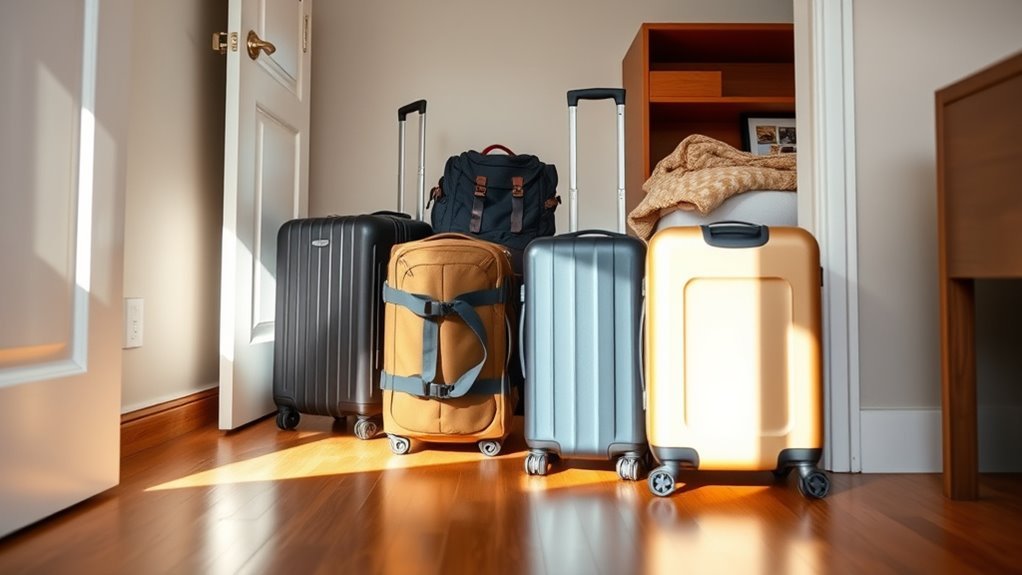
Expect to bring around 1–4 suitcases depending on your housing situation and how much you plan to buy once you’re there. You’ll likely choose one if you’re commuting or moving into tiny dorms with limited storage.
Bring 1–4 suitcases based on housing and shopping plans—one for tiny dorms or commuting.
While two to three suitcases suit most students balancing clothes, toiletries, and basics. Four works if you’re setting up an apartment or bringing seasonal gear.
Think about laundry frequency, shared storage, and whether you’ll shop locally. Prioritize versatile clothing, compact organizers, and a small box for extras.
That lets you adapt without hauling unnecessary weight or paying extra moving costs.
Typical Student Packing: What Most Bring
You’ll want to start with the essentials—clothing, toiletries, bedding, and basic school supplies—that most students pack first.
Then think about extras like a small toolkit, decor, and electronics chargers.
Don’t forget seasonal items (a warm coat or flip-flops) that might change how many suitcases you need.
Essentials Most Students Pack
When you’re packing for college, focus on the essentials that cover daily living, studying, and basic comfort. Bring enough casual clothes, underwear, and sleepwear for a week, plus a light jacket.
Pack toiletries, towels, and a laundry bag with detergent. Include bedding fitted to your bed size, a mattress topper, and a pillow.
For studying, take a laptop, charger, notebooks, pens, and a desk lamp.
Add basic kitchen items if allowed: a mug, utensils, and a small dish set.
Don’t forget important documents, a small first-aid kit, and a phone charger.
Extras And Seasonal Items
Although the essentials cover daily needs, you’ll want a handful of extras and seasonal items to stay comfortable and prepared through the year. Pack a lightweight blanket, a small toolkit, and a power strip. Bring seasonal gear—winter coat, gloves, rain jacket—or swap for swimwear and sunscreen if you’re in a warm climate. Store overflow in vacuum bags or a plastic bin.
| Item | Purpose | Pack Tip |
|---|---|---|
| Blanket | Extra warmth | Compress |
| Toolkit | Quick fixes | Compact |
| Seasonal wear | Weather-ready | Rotate |
| Rain gear | Keep dry | Waterproof bag |
Move Types and Recommended Suitcase Counts
Whether you’re doing a quick dorm drop-in, a full campus move, or sending boxes ahead, pick suitcase counts that match the scope. For a short move or weekend visit, 1–2 medium suitcases plus a backpack covers basics and toiletries.
If you’re relocating for a semester with limited storage, bring 3–4 suitcases: two for daily wear, one for bedding/towels, one for toiletries and extras.
For a complete move into an apartment, plan 5–7 suitcases and a duffel for linens, shoes, and kitchen items. Ship bulky or seasonal items to minimize what you carry on move-in day.
College Wardrobe: Estimate Clothing for Packing
If you want to pack a practical college wardrobe, start by estimating how often you’ll do laundry and what weather you’ll face—these two factors determine how many outfits you’ll actually need. Choose versatile pieces: neutral tops, one lightweight jacket, one heavier coat if winters are cold. Pack enough underwear and socks for a week, two pairs of shoes, and outfits for classes, workouts, and one nicer event. Use layering to reduce bulk. Prioritize items you wear often and consider modular outfits to mix and match.
| Item | Quantity | Notes |
|---|---|---|
| Tops | 7 | mix of tees/blouses |
| Bottoms | 4 | jeans, skirts, shorts |
| Outerwear | 2 | jacket, coat |
Semester Length, Laundry Access, and Packing Impact
Your semester’s length and how often you can do laundry directly shape how much you pack. If you’re on a short term or study abroad, you’ll need fewer outfits—think essentials and versatile layers.
For a full semester with weekly laundry, pack a two-week rotation to reduce trips home; if laundry’s monthly or unreliable, bring more basics and a hamper.
Consider detergent access, machine type, and drying options; bulkier items need space and careful planning.
Balance frequency against suitcase space: fewer but mix-and-match pieces save room, while limited laundry access justifies extra casuals and underwear.
Carry vs. Ship vs. Buy: A Decision Checklist
Think about cost per item, time and convenience, and size and practicality when deciding whether to carry, ship, or buy things once you get to campus.
You’ll save money by shipping bulky items you’ll use often, but carrying small, essential items can save time and hassle.
If something’s large, cheap to replace, or only needed for a short term, buying on arrival might be the simplest option.
Cost Per Item
How much will each thing actually cost you to get to campus—carry it, ship it, or buy it there? Tally prices: extra baggage fees, shipping labels, packing supplies, and replacement costs if you leave things behind.
Compare per-item math: divide total extra-bag fee by number of items you’d carry; calculate shipping cost per box by item count and weight; factor in local purchase price and sales tax for replacements.
Don’t forget one-time purchases like surge protectors or hangers vs. bulk shipping. Use a simple spreadsheet or notes to spot items where buying beats transporting, and prioritize cost-effective choices.
Time And Convenience
Cost and time often point in different directions, so weigh convenience as carefully as dollars. You’ll choose carrying, shipping, or buying based on travel plans, deadlines, and energy.
If you’re driving and have help, hauling extra suitcases saves shipping fees and gets things immediately.
Flying? Airlines’ baggage limits and delays push you toward smarter packing or shipping essential boxes ahead.
Shipping fits bulky items you won’t need day one but adds wait time and tracking hassle.
Buying cheap replacements on arrival saves effort when time is tight.
Match your decision to arrival timing, budget, and how urgently you need items.
Size And Practicality
Because suitcase size, item fragility, and arrival timing all change the math, pick carry, ship, or buy based on what’s practical for each category of belongings. You’ll carry essentials and valuables, ship bulky or nonurgent items, and buy cheap replacements on arrival when that’s cheaper or easier. Weigh cost, risk, and effort: luggage limits, shipping fees, breakage, and the time until you really need things.
Prioritize comfort and study needs first, then extras. Decide per item, not by emotion, and you’ll avoid overpacking, surprise fees, and last-minute stress.
- Relief when you pack light
- Panic avoided by planning
- Joy unpacking just what matters
- Regret skipped with smart choices
- Confidence traveling prepared
Best Suitcase Sizes for Dorm Storage
When you pick suitcases for dorm storage, think about space efficiency and accessibility first. Choose one medium suitcase (24–26 inches) for seasonal clothing and bulkier items; it fits under beds or on high shelves.
Add a small carry-on (20–22 inches) for daily extras, toiletries, and paperwork you access often. Consider a slim garment bag or soft duffel that can compress for odd-shaped items without wasting room.
Prioritize lightweight, collapsible options with flat tops so you can stack. Aim for pieces that nest or compress to maximize limited dorm closet and under-bed space.
Sharing Storage: Where Bulky Items Should Go
You can stash bigger items in your dorm closet if there’s space, but be realistic about what fits alongside clothes and school supplies.
If the dorm is tight, consider renting an off‑campus storage unit for seasonal gear or extra furniture.
Talk with roommates about sharing closet or storage trunk space so bulky things are kept accessible and out of the way.
Use Dorm Room Closets
If storage space in your dorm is limited, make the closet your go-to spot for bulky items like winter coats, extra bedding, and luggage; closets keep them out of the way while staying accessible.
Use vertical space with clear bins and a hanging organizer so you can see what’s inside without digging. Label everything and rotate seasonal gear to avoid clutter.
Hang a shoe organizer on the door for small items and stash seldom-used suitcases on the top shelf.
Treat the closet like a shared resource: communicate with roommates about space and keep a tidy system so everyone benefits.
- Relief
- Order
- Confidence
- Calm
- Pride
Rent Off‑Campus Storage
Since dorm closets fill up fast, renting a small off‑campus storage unit can be a smart way to keep bulky seasonal items and extra luggage out of the room but still within easy reach. You’ll save living space and avoid tripping over extra bags.
Choose a conveniently located, secure facility with month‑to‑month leases so you’re not locked in. Measure items before renting to pick an appropriately sized unit and share costs only if approved by roommates or housing rules.
Label boxes, use sturdy containers, and keep an inventory list. Visit periodically to rotate seasonal items and retrieve what you need.
Share With Roommates
When roommates share storage responsibilities, agree early on who keeps bulky items like suitcases, extra bins, and seasonal gear so everyone knows where things belong. You’ll avoid clutter and tension by assigning spots—underbed, closet, or a labeled bin—and setting rotation rules for shared space.
Keep one suitcase for guest use, another for long trips, and stash seasonal items in clear containers with lids. Check in monthly to rebalance storage if someone accumulates more. Clear labels and a simple map on the door cut arguments.
- Relief when you find space
- Pride in a neat room
- Comfort sharing responsibly
- Trust built over time
- Joy in uncluttered living
Seasonal Clothes and Holiday Travel Planning
Because weather and holidays change through the school year, you’ll want a clear plan for seasonal clothes and travel items so you’re not lugging extra suitcases back and forth.
Plan seasonal clothing and travel items so you avoid lugging extra suitcases between home and campus.
Decide what stays at school and what goes home for breaks: keep a lightweight winter coat if you’ll be on campus, send bulky gear home if you’ll be away for long holidays.
Make a compact travel kit with essentials—toiletries, a versatile outfit, chargers—so short trips don’t require full packing.
Coordinate with family about shipping or storing off-season items.
Review plans each term to adapt to changing schedules and weather.
Use Packing Cubes and Compression Effectively
Planning what stays at school versus what goes home pairs well with smart packing techniques, so you’ll keep more in less space. Use packing cubes to group outfits, toiletries, and tech, then compress bulky items to free suitcase real estate.
Roll thin fabrics, fold structured pieces, and reserve a cube for emergency items you’ll need first day. Label cubes so unpacking feels calm, not chaotic.
- Relief when everything fits
- Pride in efficient choices
- Comfort finding essentials fast
- Confidence traveling lighter
- Joy seeing your organized space
These tactics cut trips and stress.
Room-by-Room Move Checklist to Finalize Bags
Although you’ve packed smartly with cubes and compression, run a quick room-by-room checklist to make sure every essential is in a bag before you leave—bedroom, bathroom, kitchen, study area, and closet each have a few nonnegotiables.
Even packed tight, do a final room-by-room sweep to snag those few nonnegotiable essentials before you go.
In the bedroom, grab bedding, pajamas, a lamp, and chargers.
In the bathroom, pack toiletries, a shower caddy, flip-flops, and a towel.
In the kitchen, bring a set of dishes, cutlery, a mug, and a multi-tool.
For study, pack laptop, notebooks, pens, and a power strip.
From the closet, include seasonal outerwear, a pair of sneakers, and laundry supplies.
Dorm Packing Mistakes That Add Suitcases
That room-by-room sweep helps, but you can still overpack if you fall into common traps that quietly fill extra suitcases. You’ll feel safer packing “just in case,” but those choices weigh you down and steal space. Stop bringing duplicates, guilt-driven items, or full-size toiletries you won’t use. Opt for versatile pieces and a strict “will I wear or use this weekly?” rule.
Let practicality, not anxiety, guide decisions so you’ll avoid extra trips and baggage fees.
- Fear of forgetting comforts that aren’t essential
- Holding onto “maybe” outfits for every event
- Packing full-size, heavy toiletries
- Bringing duplicate electronics
- Storing sentimental clutter “just in case”
Sample Plans: Minimalist (1), Balanced (2–3), Full Move (4+)
When you evaluate how much to bring, think in terms of three realistic plans: a minimalist single-suitcase move, a balanced two-to-three-suitcase setup, or a full four-plus suitcase move for those who want everything from home.
For minimalist, pack versatile clothing, essentials, chargers, a small bedding set, and a compact toiletry kit—aim to buy extras later.
Balanced gives seasonal clothes, extra shoes, a laptop bag, basic kitchen items, and a few decor pieces; it balances comfort and mobility.
Full move includes complete wardrobe, bulky bedding, cookware, storage bins, and sentimental items—you’ll need transport help and storage space in your room.
Frequently Asked Questions
Can I Bring a Pet in My Luggage or Suitcase?
No, you can’t bring a pet in your luggage or suitcase. Airlines, trains, and buses require pets in approved carriers, and checked baggage isn’t safe or allowed. You’ll need proper documentation, fees, and compliant pet carriers.
Are Musical Instruments Counted as Suitcases?
No, musical instruments aren’t usually counted as suitcases; you’ll treat them as carry-on or oversized items, follow airline or dorm rules, and pack or case them securely so they’re protected during travel and moving.
Do Roommates Split Airline Baggage Fees?
No, you don’t split airline baggage fees automatically; each ticket’s baggage rules apply. You can arrange to share costs informally, but the airline charges per passenger and won’t combine allowances or fees across different tickets.
How Do I Transport Plants to Campus?
Bring small, hardy plants in sturdy pots or plastic trays, water lightly, and secure them in cardboard boxes with ventilation. You’ll carry them in your car or as carry-on, avoiding soil spills and extreme temperature exposure during transit.
Will Moving Suitcases Affect My Student Visa Status?
No, moving suitcases won’t affect your student visa status as long as you maintain full-time enrollment and follow visa rules; just keep receipts for valuable items, declare goods if required, and avoid unauthorized work or extended absences.
Conclusion
You’ll probably need between one and four suitcases depending on your style, but you can nail the packing by matching wardrobe size to semester length, laundry access, and move type. Use packing cubes and compression to shrink bulky items, follow the room-by-room checklist to avoid extra bags, and skip nonessentials that swell your suitcase count. Pick a plan—minimalist, balanced, or full—so you unpack faster and keep your move simple and stress-free.