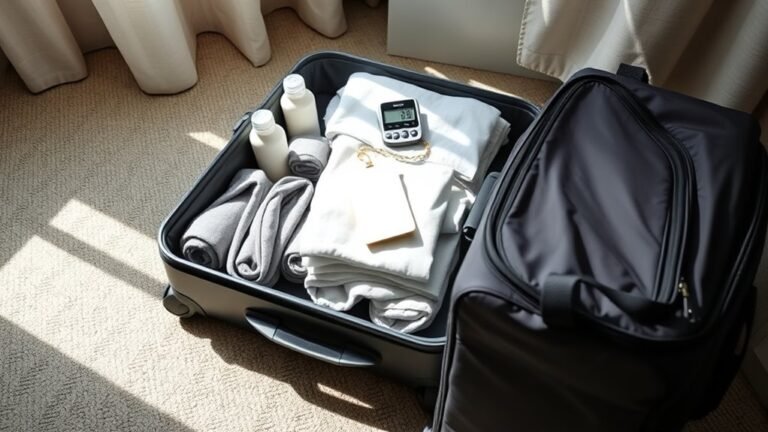
How to Fold Clothes to Save Space in Luggage Like a Pro
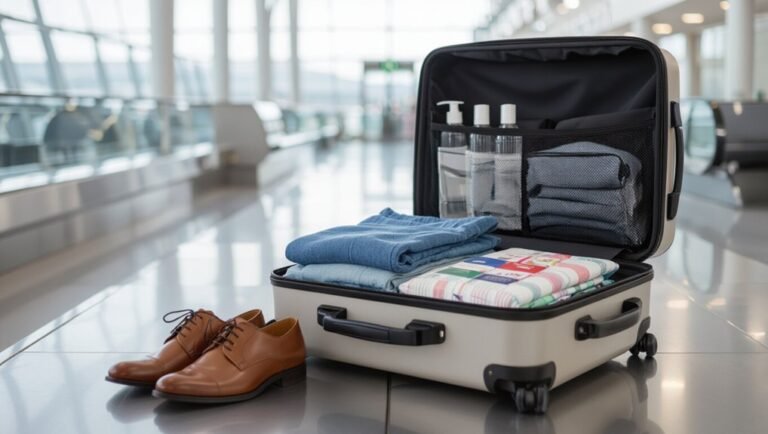
Decide your packing goal—space, wrinkle control, or balance—then sort clothes by fabric and outfit. Roll soft items tight, file‑fold shirts and stack vertically in packing cubes, and bundle outfits to eliminate gaps. Use tissue under collars, stuff shoes with socks, and put heavy items low for stability. Compress bulky knits in bags but don’t overdo it. Wear your bulkiest pieces on travel days to save room. Keep going to pick up smart tools and pro tricks.
Quick Folding Overview to Save Luggage Space
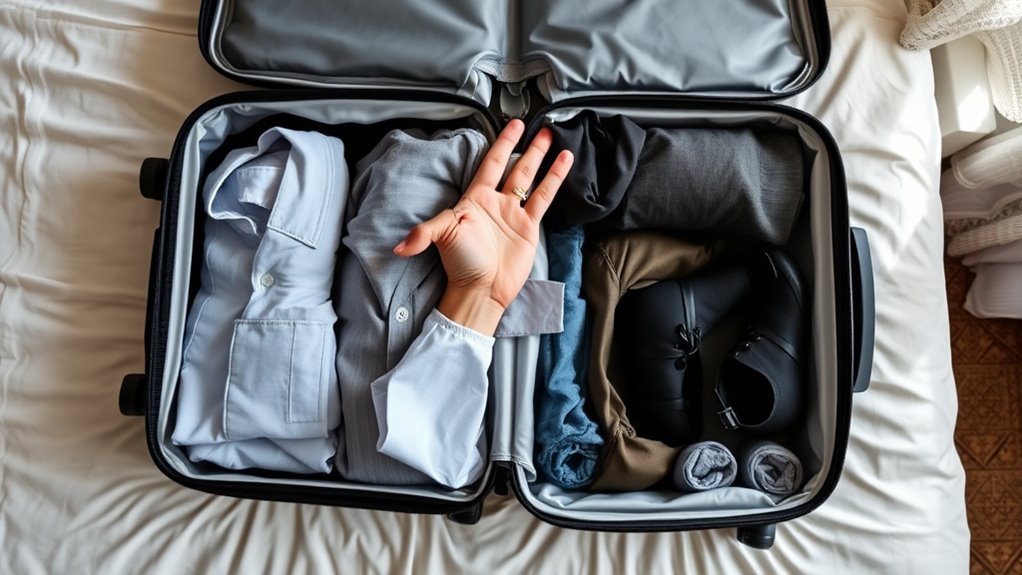
Start by grouping similar items—shirts with shirts, pants with pants—so you can apply the same folding method across each pile and cut packing time.
Start by grouping like items—shirts with shirts, pants with pants—to fold faster and pack smarter
You’ll choose a compact fold for tees, roll casual shirts, and use flat folds for dress shirts to minimize creases.
Fold pants by smoothing, aligning seams, then folding into thirds or rolling from the waist to the cuffs for narrow bundles.
Stack rolled items into cubes or line flat folds along suitcase edges.
Keep delicate pieces separate in tissue or pouches.
Use packing cubes to compress groups and maintain order, so you can unpack fast and reuse space.
Pick One Packing Goal: Space, Wrinkle‑Free, or Balance
Decide whether you’re aiming to cram in as much as possible or keep clothes smooth and crease-free.
If you want to maximize packing space, you’ll favor rolling and compression methods.
If wrinkle prevention matters more, you’ll use flat folding, tissue, or packing folders to keep garments neat.
Maximize Packing Space
When you want to squeeze the most into your luggage, fold with compactness and consistency so every inch counts; roll thin items, bundle heavier pieces around a core, and flatten seams to reduce bulk.
Stack similarly shaped garments together, aligning edges so layers compress uniformly. Use compression bags for bulky sweaters and vacuum-seal only if you’ll unpack immediately to avoid creasing.
Tuck socks and underwear into shoes and gaps to eliminate dead space. Prioritize versatile pieces you’ll actually wear to avoid overpacking.
Weigh and double-check layout before zipping to confirm everything fits snugly without wasted volume.
Prioritize Wrinkle Prevention
If you want your clothes to arrive ready to wear, prioritize wrinkle prevention by choosing folding and packing methods that minimize creases and shifting. Lay garments flat, smooth seams, and roll only soft items; reserve folding for structured pieces like blazers using tissue or thin foam between layers.
Use packing cubes to keep items from sliding and clip delicate straps so they don’t snag. Place heavier items on the bottom, stack shirts with collars supported, and pack trousers along the suitcase spine.
Unpack promptly and hang garments in a steamy bathroom to relax minor wrinkles before wearing.
Best Luggage Types for Compact Packing
When you’re aiming for compact packing, choosing the right bag matters: a hard-shell carry-on keeps things compressed and protected.
A soft-sided expandable suitcase gives you flexibility if you need a bit more room.
For ultimate compression and mobility, a compression-friendly backpack lets you roll and squeeze layers into a tight, organized bundle.
Hard-Shell Carry-On
Looking for a carry-on that protects your neatly folded clothes and still compresses well? You’ll appreciate a hard-shell carry-on: rigid exterior guards against crushing, letting you stack folded cubes and layers without worrying about wrinkles. Choose one with a snug interior layout, quality zippers, and internal straps to lock bundles in place. Wheels and weight matter—light models give more packing allowance. Avoid overpacking to keep the shell’s structure effective.
| Feature | Benefit |
|---|---|
| Material | Impact resistance |
| Interior straps | Keeps folds secure |
| Weight | More packing room |
| Zippers | Security and compression |
| Design | Smooth stacking and organization |
Soft-Sided Expandable
Because they flex with your load, soft-sided expandable bags give you extra room without sacrificing organization. So you can cram in that last sweater or souvenirs and still keep garments neatly folded.
You’ll appreciate external pockets for shoes or quick-access items and expandable zippers that let you adjust capacity on the fly.
Choose durable fabric with reinforced seams to avoid bulging and compression straps inside to stabilize layers.
Roll or bundle clothes to fit contours, tuck socks into shoes, and use packing cubes for categories.
When you expand, redistribute weight evenly to keep the bag balanced and easy to carry.
Compression-Friendly Backpacks
Soft-sided expandables give you extra wiggle room, but for the tightest packing you’ll want a compression-friendly backpack that’s built to shrink your load without warping your gear. You’ll favor frames that keep shape, straps that cinch evenly, and compartments that separate fragile items. Roll or bundle clothes, use packing cubes, then activate external compression to reduce volume. Choose durable fabrics and low-profile hardware so the bag compresses fully. Test straps with your heaviest load to avoid bulging.
| Feature | Benefit | Tip |
|---|---|---|
| Compression straps | Reduce bulk | Tighten incrementally |
| Frame | Protects shape | Lightweight aluminum |
| Pockets | Organize | Use for small items |
Wear vs. Pack on Travel Days
When you’re juggling limited space and tight security lines, choosing what to wear versus what to pack can shave pounds and headaches off your travel day. Pick your bulkiest, neutral jacket and heaviest shoes for travel—they free cabin or checked space and handle temperature swings. Layer lightweight items under the jacket to stay flexible.
Pack wrinkle-prone, lighter fabrics inside the suitcase to protect them. Wear one extra outfit piece (like a scarf) that doubles as a blanket.
Balance comfort, security rules, and arrival needs: you’ll board lighter, sail through checkpoints, and unpack with fewer decisions.
Sort Clothes by Fabric, Outfit, and Weight
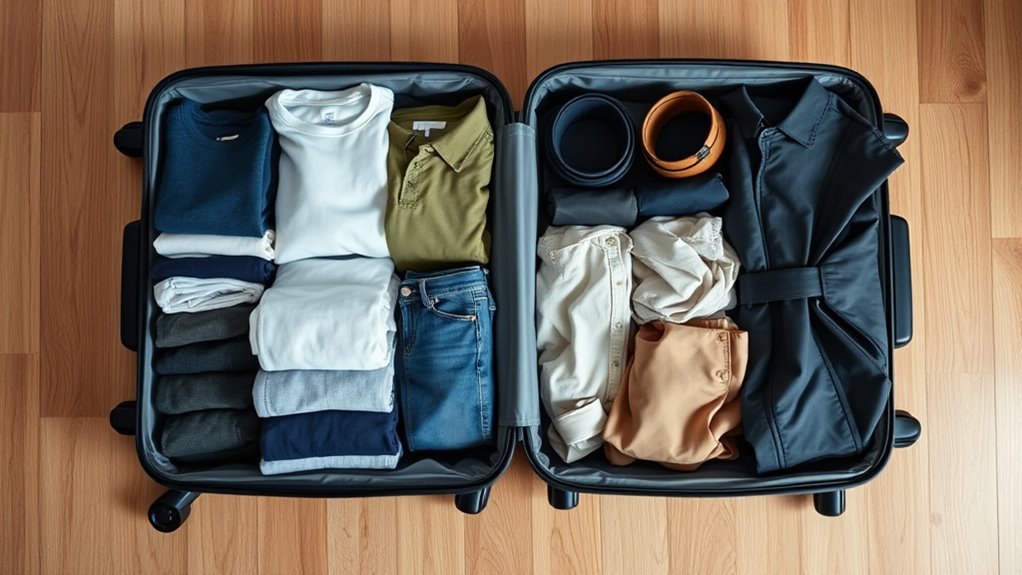
Start by grouping garments by fabric so similar materials sit together and won’t crush each other.
Then plan outfits by weight—put heavier items at the bottom and lighter, wrinkle-prone pieces on top. This makes packing, unpacking, and finding what you need much faster.
Group By Fabric Type
Because different fabrics pack and compress differently, group your clothes by material, outfit, and weight before you fold. Start by separating delicates (silk, lace) from knits, synthetics, and heavy cotton or denim.
Stack similar fabrics so you can apply the right folding or rolling method—smooth, thin pieces get flat folds; bulkier items get rolling or compression. Keep moisture-prone items together and pack technical fabrics separately to avoid snagging.
Use packing cubes or bags per fabric group to maintain order and protect delicate surfaces. Label or note groups mentally so unpacking is quick and items stay crease-free.
Plan By Outfit Weight
If you want to pack efficiently, sort your clothes by outfit weight so you can balance your suitcase and choose the best folding method for each piece. You’ll pair heavy items with lighter ones, decide whether to roll bulky sweaters or layer them flat, and place dense shoes near the center to stabilize weight.
Think in outfits: top, bottom, and extras together so you can grab ready-to-wear sets. Prioritize delicate fabrics on top and compress sturdy items below.
Use packing cubes by weight groups to simplify access and preserve shape.
- Heavy: denim, jackets, boots
- Medium: knits, chinos, closed shoes
- Light: tees, underwear, scarves
Must‑Have Tools: Cubes, Folders, and Compressors
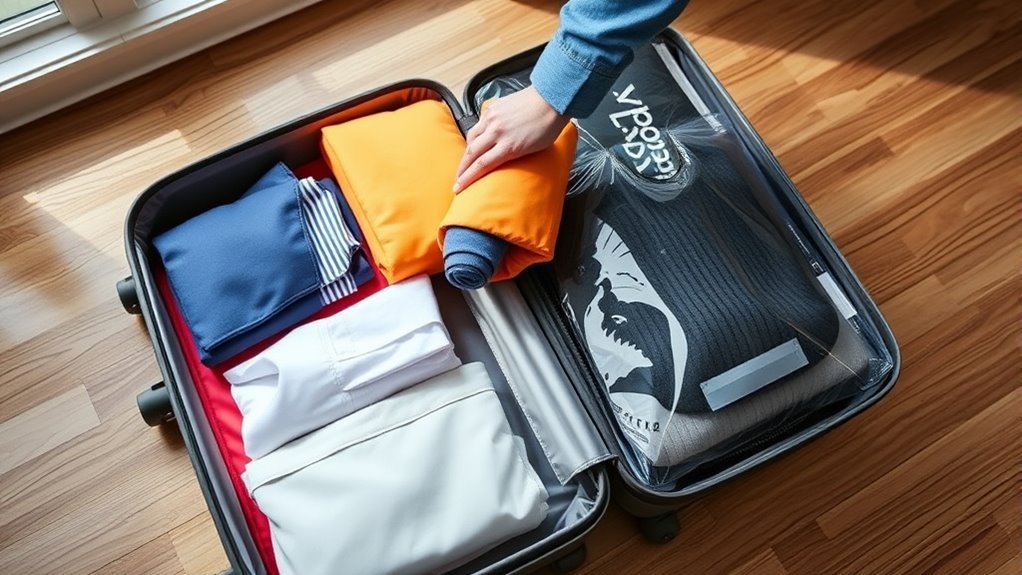
When you want to keep your suitcase organized and fit more into less space, packing tools like cubes, folding boards, and compression bags make a big difference.
Choose cubes in varied sizes to separate outfits, underwear, and toiletries; they keep garments compressed and reachable. Use a folding board for uniform stacks that slide into tight gaps without rewrinkling.
Pack with varied-size cubes and a folding board—compress, organize, and slide wrinkle-free stacks into every gap for easy access.
Pack compression bags for bulky items like jackets or sweaters—squeeze air out to shave inches. Label or color-code pieces so you grab what you need quickly.
Combine these tools thoughtfully to maximize capacity, protect garments, and simplify unpacking during travel.
Fold a T‑Shirt for Minimal Volume
Want to save inches of space and keep shirts neat? Fold a T‑shirt into a compact rectangle that stacks tightly and fits into cubes. Lay the shirt face down, fold each side toward the center forming a long rectangle, then fold the sleeves in. Fold the bottom up twice into a small, dense block you can stand or stack.
- A slim, uniform stack that fits luggage corners
- No bulky shoulders or uneven layers
- Quick to do when packing multiple shirts
This method trims wasted air and creates tidy, space‑efficient piles for smarter packing.
Roll a T‑Shirt to Avoid Wrinkles
Although it seems counterintuitive, rolling a T‑shirt can actually reduce wrinkles and save space. Lay the shirt face up, smooth out creases, fold the sleeves inward, then roll tightly from the bottom to create a compact cylinder that tucks neatly into gaps in your luggage.
Roll with even tension to prevent shifting, and press as you go to expel air. Place similar fabrics together so soft knits cushion dressier items. Use elastic bands or packing cubes to keep rolls secure.
When unpacking, unroll promptly to let fibers relax; many small wrinkles will fall out without ironing.
Fold Button‑Downs to Prevent Creases
If you’ve been rolling tees to save space, button‑downs need a different approach to keep collars and plackets crisp. Lay the shirt face down, straighten seams, and button the top two buttons to stabilize the collar.
Rolling works for tees, but button‑downs need careful laying, buttoning, and smoothing to keep collars and plackets crisp.
Fold one sleeve across the back, then the other, keeping cuffs aligned. Fold each side toward the center in narrow, even panels so the placket lies flat.
Finish with a single clean fold at the waist to create a compact rectangle that stacks without bulging.
- Smooth fabric with palms to remove air pockets
- Use tissue or a thin plastic sheet under the collar
- Stack collars alternating to protect edges
Roll Button Shirts for Casual Packing
Choose soft cotton shirts when you want to roll button shirts for casual packing, since they’ll compress without getting stiff.
Smooth each shirt and fold the sleeves evenly before you start so the roll stays neat.
Roll tightly from the hem up to save space and keep shirts wrinkle-free in your luggage.
Choose Soft Cotton Shirts
When you’re packing casual outfits, pick soft cotton button-downs that roll smoothly and resist creasing so you can fit more into tight luggage. You’ll want shirts with a bit of give—cotton slubs, lightweight oxford, or brushed cotton—because they compress without looking wrinkled.
Roll each shirt from hem to collar, tuck sleeves in, and stack rolls to save space. Soft cotton also breathes, so you can rewear more between washes.
- lightweight oxford for structure without bulk
- slub cotton for texture that hides minor wrinkles
- brushed cotton for extra softness and compression
Smooth And Fold Evenly
Because neat rolling starts with an even surface, lay each button shirt face down on a flat area and smooth out collars, plackets, and sleeves with your hands before you roll.
Straighten seams and remove wrinkles by running palms from center outward.
Fold sleeves inward along natural shoulder lines so they lie flat against the back.
Bring side edges toward the center to form an even rectangle, checking that fabric layers align.
Keep the collar flat to avoid bulk.
Once everything’s smooth and symmetrical, you’re ready to roll compactly without bumps, making stacking and packing neater and more space-efficient.
Roll Tightly From Hem
Now that your shirt’s flat and aligned, start the roll from the hem to keep bulk away from the collar and shoulders. You’ll fold sleeves inward, smooth creases, then press the hem tight and roll upward in one steady motion. Keep tension consistent so the roll stays compact and won’t uncoil.
- Picture a neat cylinder that fits snugly into suitcase corners.
- Imagine stacking several rolls side by side to maximize space and visibility.
- Visualize pulling one roll out without disturbing others because they’re firm and uniform.
This method prevents shoulder bumps, saves room, and keeps casual button shirts travel-ready.
Fold Sweaters Without Stretching
If you want to pack sweaters without stretching them, fold them flat and support the shoulders to keep their shape. Lay the sweater face down, smooth wrinkles, and fold each sleeve straight across the back so they lie along the body.
Fold the sides in toward the center to create a neat rectangle, avoiding pulling at the neck. Fold up from the hem in one or two compact folds depending on length.
Place thin tissue or a small scarf inside the shoulder area to preserve the curve. Stack sweaters rather than compressing them to prevent distortion and maintain loft.
Roll Bulky Knitwear to Save Space
Want to save space without crushing your chunky sweaters? Roll bulky knitwear tightly to minimize volume while protecting shape. Lay the sweater flat, fold sleeves across the chest, then fold in half lengthwise. Starting at the hem, roll upward firmly but gently, smoothing as you go to avoid wrinkles.
Place rolls vertically in your suitcase to use depth and see everything at a glance.
- A rolled wool jumper tucked beside shoes keeps air pockets and reduces compression.
- A chunky cardigan roll fits into corners where folded items won’t reach.
- Color-coded rolls help you grab outfits fast.
Fold Pants and Jeans Into Compact Stacks
When space is tight, fold pants and jeans into neat, uniform stacks so you can pack more and find what you need quickly. Lay each pair flat, smooth wrinkles, fold one leg over the other, then fold in half or thirds depending on length.
Align waistbands and hems so stacks stay even; compress by pressing down as you add items. Group by weight or outfit to avoid digging through piles.
Place stacks vertically in cubes or side-by-side in suitcase compartments to use depth efficiently. This method keeps garments organized, minimizes shifting, and makes unpacking faster without extra tools.
Roll Pants to Maximize Suitcase Space
Want to save room in your suitcase? Roll pants tightly from the cuff to eliminate air and compress fabric.
Stand the rolls upright in your bag for added stability and easy packing.
Roll Pants Tight
If you’re trying to cram more into your suitcase, roll pants tight to eliminate air pockets and create a compact, uniform bundle that fits neatly alongside shoes and toiletry kits.
Lay pants flat, fold in half lengthwise, smooth seams, then start at the cuff and roll toward the waistband, keeping tension to prevent puffing. Use elastic bands or packing cubes to hold rolls together.
Stack rolls horizontally to fill gaps.
- Two slim denim rolls tucked between shoes
- Lightweight chinos rolled into a compression cube
- Pajama pants rolled into a toiletry-side gap for balance
This saves space and reduces shifting.
Stand Roll For Stability
Because standing your pant rolls upright saves both space and prevents shifting, it’s a go-to for maximizing suitcase stability.
Roll each pant leg tightly from cuff to waistband, smooth seams as you go, then tuck the waistband around the roll to lock it.
Place rolls upright in rows, packing heavier pairs at the base and lighter ones on top for balance.
Use gaps for socks or belts to wedge rolls firmly.
This method keeps pants accessible and reduces creasing.
When you unpack, lift rolls out vertically to preserve shape and keep your suitcase organized on every trip.
Fold Dresses to Cut Bulk and Creases
When you fold dresses with a few smart moves, you’ll reduce bulk and cut down on creases so they arrive ready to wear. Lay the dress face down, smooth fabric, fold sleeves inward, then fold lengthwise into thirds.
Fold dresses face down: smooth fabric, tuck sleeves in, then fold lengthwise into thirds to cut bulk and creases.
For maxi or midi lengths, fold once at the waist; for short dresses, fold twice to match suitcase depth. Use thin tissue between folds for delicate fabrics, and place heavier items beneath to keep dresses flat.
- A lightweight sundress folded into thirds fits in a packing cube.
- A silk slip needs gentle smoothing to avoid lines.
- A knit dress stacks without extra bulk.
Pack Wrap and Delicate Dresses Safely
You’ve already folded dresses to cut bulk and prevent creases; now focus on wrapping delicate pieces so they stay protected during transit.
Lay each dress flat, smooth fabric, and place tissue paper between folds to cushion seams and embellishments.
For beading or lace, wrap a layer of soft tissue, then roll gently from hem to neckline to avoid stress points.
Use small zip pouches for straps and detachable elements.
Position wrapped dresses atop other items or in a garment sleeve to minimize pressure.
At the airport, handle checked bags gently and keep fragile pieces in carry-on when possible to control treatment.
Fold Underwear, Bras, and Socks Efficiently
While sorting small essentials, fold underwear, bras, and socks so they stay compact and easy to find; quick, consistent techniques keep your bag organized and save space. You’ll roll or fold underwear into neat rectangles, tuck briefs inside each other, and use slim rolls for boxer briefs to reduce bulk.
Fold and roll underwear, nest bras, and pair socks—compact, consistent techniques keep your bag organized and clutter-free.
For bras, nest cups and tuck straps inside to protect shape; compress with a soft layer of clothing rather than squashing.
Socks pair and roll or fold into a ball to prevent individual loss. Use small packing cubes or zip bags to separate types and keep retrieval simple.
- Nest bras to preserve cups
- Roll socks into pairs
- Fold underwear into slim blocks
Pack Shoes Smartly to Protect and Compress
Because shoes take up a lot of space and can dirty clothes, pack them deliberately: stuff each shoe with socks or small items to hold shape, place them heel-to-toe along the suitcase edges to maximize room, and keep dress shoes in a cloth bag or wrap to protect uppers while using casual pairs to shield fragile items.
Next, separate dirty shoes in a waterproof pouch so soils don’t transfer.
Use compression bags for bulky boots after protecting leather with paper. Tuck thin soles under folded garments, and weigh placement so heavier shoes sit near wheels for balance and easier carrying.
Use the File‑Fold for Organized Packing
Lay each garment flat and smooth out wrinkles before you start folding.
Fold items into neat rectangles so they stack evenly, then stand them up vertically in your suitcase.
You’ll see everything at a glance and fit more by packing like files.
Prep Garments Flat
When you prep garments flat, you’ll get neater, slimmer stacks that slide into your suitcase without shifting. Lay each piece face down, smooth wrinkles with your hands, and align seams and hems so edges match.
Trim bulky folds—tuck collars and roll cuffs flat—so layers sit flush. Use consistent orientation so files stack easily and you can see tops at a glance. This sets you up for efficient filing and quick access.
- A T-shirt smoothed flat, sleeves folded inward
- A blouse buttoned, shoulders aligned
- Pants folded at the crease, waistband straightened
Fold Into Rectangles
Once you’ve prepped garments flat, fold each item into a neat rectangle so it stands upright like a file in your suitcase. Smooth wrinkles, align edges, and fold sleeves or excess fabric tightly toward the center.
For shirts, fold sides in, then fold bottom up to create a compact block. For pants, fold in half lengthwise, then into thirds. Aim for uniform sizes so pieces stack cleanly.
Use heavier items as base rectangles to stabilize lighter ones. Label or remember what’s where by color or pattern, and keep delicate fabrics separated with tissue to avoid snags.
Store Vertically Neatly
Because the file-fold lets garments stand on their edges, you’ll see everything at a glance and grab items without disrupting the rest. You fold shirts, pants, and underwear into slim rectangles, then stand them upright like books. That vertical arrangement maximizes space, keeps fabrics wrinkle-free, and makes packing lists literal: you can count items at a glance.
Pack heavier pieces along the suitcase spine for balance and put delicate items in a top layer. When you unpack, slide pieces out without toppling the stack; it’s fast, tidy, and repeatable.
- A row of tees like a color gradient
- Neat stacks of socks and underwear
- Pants folded and shelved
Use KonMari Folds for Drawers and Luggage
If you want to maximize space and keep everything visible, use the KonMari fold: it turns shirts, pants, and even underwear into compact, upright rectangles you can stand in rows. You fold garments into small, stable packets that stay neat and don’t topple, so you can scan choices at a glance.
For luggage, nest shorter items beside taller ones to fill gaps; in drawers, align rows by category and color for quick access. Roll bulky sweaters into tighter blocks with a flat top before folding.
Practice simple, consistent folds so packing becomes faster and your suitcase stays organized.
Bundle Outfits to Reduce Bulk and Mix‑and‑Match
When you bundle entire outfits—shirt, bottoms, and underlayers—into single compact packets, you cut bulk and make it easy to grab ready-to-wear combinations. You’ll pair neutrals with one accent piece, roll each layer tightly, then stack and secure with a rubber band or ribbon to keep shapes intact.
Bundle full outfits into compact packets—roll layers, secure, and label for grab-and-go, mixable looks without the bulk.
Label packets with a sticky note or use transparent pouches so you see contents at a glance. This method reduces decision fatigue, prevents overpacking, and helps you create multiple looks from a few pieces.
- Casual day: tee, jeans, lightweight cardigan
- Evening: blouse, slim skirt, camisole
- Active: tank, shorts, sports bra
When to Use Packing Cubes and How to Fold for Them
If you want faster packing, better organization, and easier unpacking, packing cubes are your go‑to.
Use rolling for t-shirts and casual wear to maximize cube space, and flat folding or square folding for dress shirts and bulkier items so they stack neatly.
You’ll also learn when to skip cubes—like for short trips where garments can be paired down—or combine methods for mixed wardrobes.
When To Use Them
Wondering whether packing cubes are worth the space? You’ll reach for them when you need organization, quick access, or to compress bulk. Use cubes on weekend trips, multi-destination itineraries, and business travel where outfits must stay neat. They help separate clean from dirty, protect delicate fabrics, and speed packing.
- Weekenders: keep outfits pre-planned and grab-and-go.
- Multi-stop trips: stash daywear, evening wear, and swim separately for easy unpacking.
- Business travel: preserve shirts, suits, and ties to reduce creasing and save time before meetings.
Choose cube sizes to match your itinerary and clothing types.
Folding Methods For Cubes
Because packing cubes arrange and compress items differently than open packing, you’ll want folding techniques that match each cube’s size and purpose.
Choose slim rolls for T-shirts and underwear to maximize cube depth and prevent shifting. Fold dress shirts into flat bundles or use tissue-style folds to reduce creases and stack them at a cube’s base.
For bulkier items, like sweaters or jeans, use a loose fold that preserves loft, then compress the cube’s zipper partly to balance shape.
Reserve one cube for dirty clothes. Label cubes and pack by outfit or function so you can grab what you need quickly.
Use Compression Bags Without Crushing Clothes
When you use compression bags, don’t over-squeeze—aim to remove excess air while preserving garment shape so wrinkles and fabric damage stay minimal. You’ll fold garments gently, stack similar fabrics, and slide them into the bag without forcing bulky seams.
Use a slow, controlled valve or roll method to expel air, watching fabric response. Leave a little loft for delicate items and unzip slightly after sealing to check shapes. Label bags for quick access and avoid compressing items with embellishments or structured pieces.
- soft T-shirts neatly stacked
- lightweight sweater folded flat
- dress with padded shoulders wrapped
Layer Folded Items to Balance Suitcase Weight
Start by laying heavier folded items like shoes and jeans at the bottom of your suitcase so the weight stays low and stable.
Then stack lighter garments on top to keep things balanced and prevent tipping.
This simple layering helps your bag feel easier to carry and makes packing more efficient.
Even Weight Distribution
Aim to balance heavy and light items across the suitcase so it sits evenly and won’t tip or strain zippers. You’ll layer folded garments to distribute weight side-to-side and front-to-back, keeping the bag stable when lifted.
Place denser folded pieces where they counterbalance each other; tuck lighter items into gaps to prevent shifting. Check by lifting and adjusting until it feels centered.
- Place medium-weight jeans opposite a small toiletry pouch to steady the center.
- Slide rolled tees into corners to fill voids without adding bulk.
- Nest soft items around shoes to lock the layout.
Layer Heavy Items First
Why put the heaviest folded pieces at the base of your suitcase? You’ll stabilize the bag, protect lighter garments, and make rolling or layering on top easier. Start with shoes (stuffed), jeans, and bulky sweaters, then add medium-weight shirts and delicate items above.
| Item type | Placement |
|---|---|
| Shoes | Bottom, in bags |
| Jeans/sweaters | Directly above shoes |
| Jackets | Folded flat after bulk |
| Shirts | Middle layer, rolled |
| Underwear/socks | Top or gaps |
Protect Delicate Items and Prevent Snags
When you pack delicate items, wrap them in soft layers—like tissue paper, socks, or foldable pouches—to cushion seams and hardware and keep them from rubbing against rough fabrics or zippers. You’ll separate fragile pieces from coarse items, secure straps and hooks with small fabric ties, and place delicate layers toward the center of your bag.
Aim for compact protection without excess bulk so you still save space.
- Silk blouse wrapped in tissue and nested among tees
- Lingerie in a soft pouch tucked into shoe cavities
- Jewelry clipped to card and slipped into a zip pocket
Pack Wrinkle‑Prone Fabrics and Revive Creases
You’ve protected delicate pieces; now focus on handling fabrics that crease easily so your outfits arrive wearable. Lay wrinkle-prone items flat, smooth out seams, and roll loosely with tissue or plastic between layers to reduce friction.
Use packing cubes to keep garments gently compressed but not crushed. For suits and dresses, employ a garment folder or fold along natural lines and place them atop other items.
Pack a small, portable spray bottle or wrinkle-release sheet to refresh fabrics on arrival. Hang items immediately when you unpack, and steam or shower with them in the bathroom to relax remaining creases quickly.
How Many Items to Pack Using These Folds?
Because space-saving folds change how much you can fit, decide by outfit planning rather than item counting: pick versatile pieces that mix and match, then fold them using the methods above to maximize volume.
Think in outfits: plan daily looks, layer options, and a couple of extras for surprises. You’ll avoid overpacking and still have variety.
Aim for pieces that serve multiple roles — a neutral top, one smart layer, adaptable bottoms — and fold them tight or roll where appropriate.
Pack shoes and bulky items first, then nest folded garments into gaps to keep balance and compression.
- Three tops, two bottoms, one jacket
- Two pairs of shoes, compacted
- Minimal underwear and layers
Fold for Business Travel and Formal Outfits
If you need to keep looks crisp on the road, prioritize techniques that minimize wrinkles and preserve structure. Start by buttoning shirts, smoothing fabric, and folding along natural seams into a slim rectangle; lay tissue paper between layers for extra protection.
If you need crisp looks on the road, button shirts, smooth seams, fold slimly, and layer with tissue.
For suits, remove jackets and hang if possible; if not, fold jacket inside out over trousers, cushion shoulders with socks, and place in the center of your bag.
Roll ties loosely or store them flat in a shoe compartment. Pack dress shoes in shoe bags and use collars or shoe trees to keep shape.
Unpack and hang immediately on arrival.
Pack for Active Trips: Workout Gear and Swimwear
For active trips, pick quick-dry fabrics so your workout gear and swimwear pack light and come back ready to wear.
Roll swimsuits tightly to minimize bulk and prevent creases.
Use compression packing cubes to shave inches off your bag and keep wet items contained.
Choose Quick-Dry Fabrics
Want your workout and swimwear to dry fast so you can rewear them or pack them damp? Choose quick-dry fabrics like polyester blends, nylon, or merino blends that wick moisture and release it quickly. You’ll save space by avoiding bulky damp layers and skip the stink by drying faster.
Pack lightweight pieces that compress easily and stay fresh between uses.
- Lightweight polyester tees that shed sweat and crush into small pockets
- Nylon swim trunks that drain and dry overnight on a towel
- Merino-blend base layers that resist odors and dry faster than cotton
Roll Swimwear Compactly
Need to save space without creasing your swimwear? Roll it. Lay flat, fold straps inward, smooth fabric, then roll from the bottom toward the waistband to avoid wrinkles and retain shape. Tuck rolled suits into gaps or a small pouch to protect delicate cups.
| Benefit | Tip |
|---|---|
| Saves space | Roll tightly, not aggressively |
| Protects shape | Fold padding inward before rolling |
You’ll fit more and keep suits ready to wear. For bikinis, roll tops and bottoms separately; for one-pieces, roll after smoothing. Use a breathable pouch if items are damp.
Use Compression Packing Cubes
When you pack for active trips, compression packing cubes let you squeeze down bulky workout clothes and wet swimwear so you can carry more without extra bulk. Use a small cube for sweaty tees and shorts, a medium for leggings and a hoodie, and a waterproof cube for damp suits.
Compress gradually to avoid wrinkles, seal firmly, and tuck the cube along the suitcase spine to stabilize contents. You’ll separate clean from dirty, keep odors contained, and free space for shoes or souvenirs.
Choose durable zippers and breathable fabric so gear dries between uses and lasts trip after trip.
- small cube: tees, shorts
- medium cube: leggings, hoodie
- waterproof cube: swimwear
Adapt Folding for Carry‑On Only Travel
Because carry-on limits force you to be selective, your folding has to maximize every inch and keep weight low. Prioritize versatile pieces you can layer and wear multiple times.
When carry-on space is tight, fold strategically: choose versatile layers, roll to save space, and keep weight down.
Roll lightweight items tightly; use flat folds for structured garments to avoid wrinkles. Stack rolled items in a compression cube, placing heavier shoes and toiletries at the base to stabilize contents.
Tuck socks and underwear into gaps or shoes to save room. Reserve a slim outfit for travel day so you wear bulkier items on the plane.
Review weight distribution before zipping to avoid exceeding airline limits and to keep retrieval simple.
Common Folding Mistakes That Waste Space
If you cram clothes in without a plan, you’ll waste space and create wrinkled piles that make unpacking a chore. Stop stuffing items, folding irregularly, or leaving gaps. Fold similarly sized pieces the same way, roll soft items into cylinders, and stack rigid pieces flat. Mistakes add bulk and chaos.
- Stuffing sweaters and shirts randomly so they bulge pockets and edges.
- Folding every item the same thick way instead of varying methods by fabric.
- Leaving empty corners and gaps instead of tucking small items to fill voids.
Fix these and you’ll fit more, unpack faster, and avoid crushed garments.
Troubleshoot Bulges and Uneven Suitcases
Though uneven bulges and lopsided packing can look inevitable, you can quickly rebalance your suitcase by identifying the offending items and redistributing weight. Check corners and sides for dense items—shoes, toiletries, electronics—and move them toward the suitcase center or base for stability.
Fill gaps with soft items like socks or underwear to smooth surfaces and prevent shifting. If one side still rides high, swap similarly sized pieces rather than adding bulk.
Use compression cubes strategically: group bulkier pieces together and place cubes evenly. Zip and test balance before closing; make small adjustments until the suitcase sits flat.
Create Quick Outfit Kits From Folded Stacks
When you assemble folded stacks into quick outfit kits, you’ll cut decision time and keep clothes organized for every day of your trip. Sort pieces by day and activity, stack them in outfit-ready piles, and secure with a thin elastic or packing cube to prevent shifting. Label each stack with a sticky note or packing list so you grab the right kit fast.
Include shoes or accessories nearby so outfits stay complete.
- A workday kit: shirt, trousers, underwear
- A casual day: tee, shorts, light sweater
- An evening: dress/top, slacks, scarf
Unpack Fast at Your Destination Using Travel Folds
Because you packed with purpose, you can unpack in minutes: use travel folds to keep garments ready-to-wear so you can stash, hang, or pull out an outfit without reshaping everything.
Because you packed with purpose, unpack in minutes—use travel folds to grab ready-to-wear outfits without reshaping.
Start by removing packed stacks as complete kits—many travel folds sit upright and stay neat. Unfold only what you need; hang shirts by the folded collar or drape dresses to smooth creases.
Slip undergarments into drawers or cubbies without unfolding. If a piece needs revitalizing, steam it while still folded to speed the process.
This approach gets you dressed fast, keeps luggage organized, and minimizes ironing at your destination.
Practice Folding: Quick Drills Before Your Trip
Now that you’ve mastered travel folds for fast unpacking, spend a little time practicing them at home so they become automatic before you pack. Set a timer for short drills: fold five shirts in two minutes, roll three pairs of pants, and pack a cube in under five. Repeat with different fabrics and sizes until your hands know the motions.
- Lay shirts flat, fold sleeves in, fold lengthwise, then roll tightly.
- Smooth wrinkles, fold pants at seams, then roll from waist to cuff.
- Stack items by weight in a cube, compress, zip, and label.
Frequently Asked Questions
Can I Fold Clothes to Fit Inside Specific Airline Size Restrictions?
Yes — you can fold clothes to meet specific airline size restrictions. Measure your bag, choose compact folding methods like rolling or bundling, use compression bags, prioritize essentials, and adjust packing until everything fits within limits.
How Do I Pack Souvenirs or Items I Buy While Traveling?
Pack souvenirs in soft items like clothes to cushion fragile pieces, and use zip bags or pouches to compress and protect. You’ll keep receipts, distribute weight, and reserve spare space or an expandable bag for unexpected purchases.
Can Folding Methods Protect Electronics and Chargers?
Yes — folding methods can protect electronics and chargers when you wrap devices in soft clothes, sandwich chargers between garments, and cushion corners with rolled items; you’ll reduce movement and absorb shocks, keeping gear safer in your luggage.
How Do I Store Folded Clothes Between Trips to Keep Them Ready?
Store folded clothes in labeled airtight bins or vacuum bags, and keep them in a cool, dry spot. You’ll avoid wrinkles by layering acid-free tissue, replenishing cedar sachets, and rotating items before each trip.
Can Packing Techniques Help Reduce Laundry Needs on Long Trips?
Yes — smart packing cuts laundry: you’ll pack breathable, quick‑dry items, use packing cubes to separate worn from clean, rotate outfits, bring a small detergent and sink‑wash essentials, and plan repeats to stretch clothing between washes.
Conclusion
You’ve learned the quick folds and smart choices that make packing feel easy, so now practice them once before you leave. Pick a clear goal—more space, fewer wrinkles, or better balance—then sort, fold, and kit outfits the way that fits your trip. Wear heavy items on travel days, use the best suitcase you have, and troubleshoot bulges before zipping. With a short practice run, you’ll pack faster and arrive with less stress.