Is a 28 Inch Suitcase Too Big? Luggage Size Guide
A 28‑inch suitcase isn’t too big for most checked trips — it gives you generous space without the bulk of a trunk. It refers to external height including wheels, so interior capacity is a bit less than it seems. Expect about a week to 10 days of clothes, plus room for extras or souvenirs, but watch airline linear‑inch and weight limits to avoid fees. Want tips on packing, measuring, and better size choices if you need them?
Quick Verdict: Should You Pick a 28‑Inch Suitcase?

Thinking about a 28‑inch suitcase? You’ll choose it if you need maximum capacity for long trips, shared packing, or bulky items. It’s great for road travel and checked luggage where weight limits and maneuverability aren’t major concerns.
You’ll face drawbacks: heavier lifting, bulkier storage, and potential airline overweight fees. If you pack light, visit cities with tight transit, or frequently lift your bag, a smaller size serves you better.
Choose a 28‑inch when volume matters more than convenience. Otherwise, prioritize a carryon or 24‑ to 26‑inch option for easier handling and savings.
What Does “28‑Inch” Actually Mean?
When a suitcase is labeled “28‑inch,” that’s the external height from wheel to top, not the space you’ll pack.
You’ll find the internal capacity is often several liters less because of shell thickness, wheel housings, and linings.
External Height Measurement
What does “28‑inch” actually measure on a suitcase? It refers to the external height from the bottom (including wheels) to the top, not the interior packing space.
You should measure with the suitcase standing upright, wheels and handle retracted, to match manufacturer specs. Some brands include wheel housings or small feet that add an inch or two; others round measurements.
If you need to compare sizes or check airline limits, measure the tallest and widest points, including protrusions like handles or bumpers.
Accurate external measurement guarantees you know the true footprint and helps avoid surprises at check‑in or storage.
Internal Capacity Difference
Measuring a suitcase as “28‑inch” tells you its external height, but that number doesn’t tell you how much you can actually pack inside. You’ll find internal capacity varies with wall thickness, frame, lining, and wheel housings.
Manufacturers quote liters or cubic inches; compare those instead of relying on the inch label.
Soft-sided bags compress more; hard shells lose volume to structured walls and reinforcements.
Internal organizers, pockets, and built-in dividers reduce usable space too.
When choosing, check both external dimensions and stated interior liters, then factor in weight of the case itself to gauge real packing potential.
Airline Size and Weight Limits for Checked Bags
Curious about how much your checked bag can weigh or how big it can be? Airlines set size limits by linear dimensions (length + width + height) and weight caps, typically 62 linear inches (158 cm) and 50 lbs (23 kg) for standard economy.
Many international carriers follow the 158 cm rule, while low-cost or domestic flights may limit weight to 50 lbs or charge fees for 23–32 kg allowances.
Oversized or overweight bags incur hefty surcharges or must be shipped as cargo. Always check your carrier’s policy before packing, and weigh and measure your 28‑inch suitcase pretravel to avoid fees.
How a 28‑Inch Compares to Carry‑On, 24″, and 30″
You’ll want to know how a 28‑inch bag stacks up against a carry‑on, a 24‑inch, and a 30‑inch to pick the right balance of capacity and convenience.
A 28‑inch gives you far more packing space than a carry‑on and noticeably more than a 24‑inch, but it’s still smaller and easier to manage than a 30‑inch.
Next, we’ll compare capacity, maneuverability, and typical airline handling so you can decide which size fits your travel style.
Carry‑On Versus 28‑Inch
When comparing a 28‑inch suitcase to a carry‑on, you’ll notice it’s considerably larger—offering roughly double the packing capacity of most carry‑ons while still falling short of a 30‑inch trunk.
It sits between a compact 24‑inch and the bulkier 30‑inch, giving you more room without becoming unwieldy for most checked‑bag needs. You’ll gain flexibility: fewer outfit limits, room for bulky items, and less need to overpack.
Expect checked‑bag handling and slightly higher fees versus a carry‑on.
Visualize the size difference:
- A carry‑on tucked under a seat
- A 28‑inch standing at baggage claim
- Clothes spilling from a packed 30‑inch
28‑Inch Versus 24‑And 30‑Inch
While a 28‑inch suitcase sits closer in scale to a 30‑inch trunk, it still offers a noticeably smaller footprint than that larger model and roughly doubles the capacity of a typical carry‑on, making it a practical middle ground between the compact 24‑inch and the bulky 30‑inch.
You’ll find a 24‑inch better for short trips, easier to lift and stow, and airline friendlier.
A 28‑inch suits weeklong travel, roomy without being oversized for most car trunks.
A 30‑inch maximizes packing for long stays but can be cumbersome, heavy, and may exceed airline size limits, so pick based on trip length and handling.
How Many Days Can a 28‑Inch Handle?
Because a 28‑inch suitcase holds considerably more than carry‑on or medium checked bags, it’ll comfortably handle trips of about 7–10 days for most travelers, or longer if you pack light and plan to do laundry.
A 28‑inch suitcase easily covers roughly 7–10 days of travel, longer if you pack light and wash.
You’ll fit outfits, shoes, and extras without cramming; still, how many days depends on your style, weather, and activities. Consider packing strategy and access to washing to stretch capacity.
- Folded shirts, trousers, and a sweater stacked flat
- A pair of shoes plus sandals in shoe bags
- Toiletries and a compact travel laundry kit
Plan by outfits per day, not item count.
When a 28‑Inch Is Smart: Common Use Cases
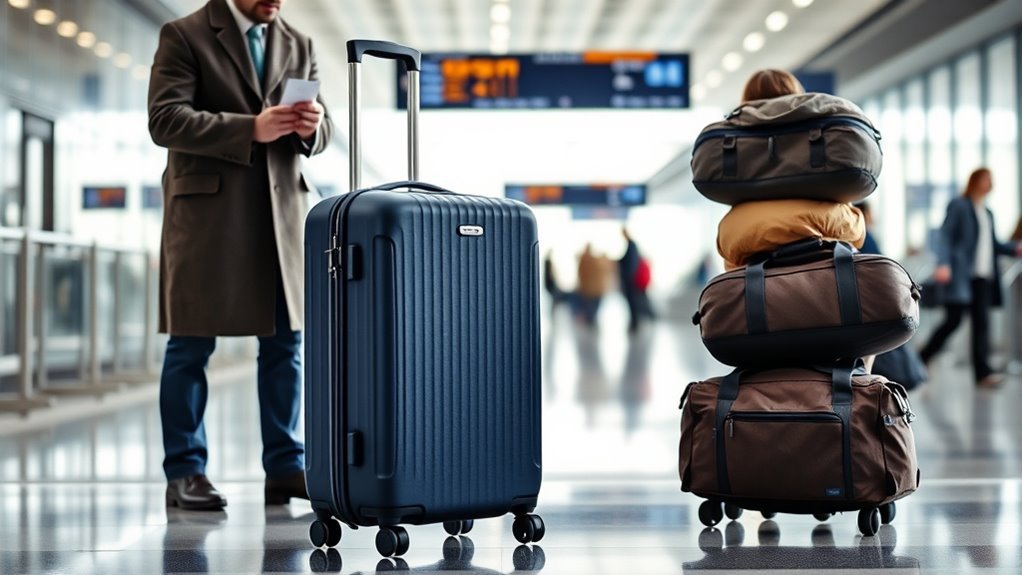
If you’re heading out for a week or more and want to avoid squeezing and re-wearing the same few items, a 28‑inch suitcase makes sense — it gives you room for outfits, shoes, a toiletry kit, and extras like a jacket or souvenirs without constant Tetris packing.
Use it for family vacations where everyone needs changes and gear, business trips requiring multiple outfits or samples, extended city breaks with varied weather, or destination weddings where formal wear and accessories take space.
It’s also smart for road trips, ski trips (packed clothing bulk), and international travel with limited laundry options.
When a 28‑Inch Is Overkill: Trips to Skip It
If you’re heading out for a short weekend getaway, a 28‑inch is usually more hassle than help — it’s bulky and likely won’t fit in a car trunk or overhead bin easily.
For city‑only business trips where you’ll only need a laptop and a couple of outfits, a carry‑on or a compact checked bag keeps you nimble.
Save the 28‑inch for longer trips where extra space actually matters.
Short Weekend Getaways
When you’re heading out for a quick two- or three-night trip, a 28‑inch suitcase slows you down more than it helps—you’ll be hauling extra weight, paying higher baggage fees, and fighting for space in trains, taxis, or crowded hotel rooms. Pack light instead: choose a carry-on or weekend bag so you move faster and skip checked baggage hassles.
Imagine traveling with a smaller case that fits overhead and under seats, so you avoid delays and spare energy for enjoying the trip.
- A compact bag slipping into crowded train racks
- A neat, light case tucked in taxi trunks
- A slim suitcase nestling beside a tiny hotel closet
City-Only Business Trips
Heading into the city for a day of meetings or a tight 24‑hour trip? You don’t need a 28‑inch suitcase. You’ll struggle with storage, stairs, taxis and crowded transit.
Choose a carry‑on or compact rolling bag that fits overhead and tucks under seats; it keeps you nimble and speeds security lines.
Pack versatile outfits, a lightweight blazer and toiletries in travel sizes. Use packing cubes and a slim shoe bag to stay organized.
A smaller bag also avoids baggage claim delays and extra fees.
For short, urban business trips, less luggage means less hassle and more focus.
Pros and Cons of a 28‑Inch Suitcase
Because a 28‑inch suitcase strikes a middle ground between capacity and manageability, you’ll find it’s ideal for longer trips or family travel where checked luggage is the norm. You get generous space for outfits, shoes, and extras, but you’ll also face check‑in fees and heavier handling.
Consider how you’ll move it, store it, and whether you’ll really need that volume.
- A stuffed 28″ with rolled clothes, shoes, and a toiletry kit balanced for two.
- A bulky winter coat, boots, and gift boxes fitting snugly with padding.
- A family’s shared essentials, neatly organized in compartments.
Packing Strategies for a 28‑Inch Without Overpacking
You’ll want a plan that gives you the 28‑inch capacity you need without turning the case into dead weight at the airport. Start by listing outfits per day, limiting each to one top and one bottom that mix and match.
Use packing cubes to compress and separate essentials; roll soft items and fold structured pieces. Put heavy items near wheels to balance weight.
Reserve one cube for toiletries and another for electronics and chargers. Pack versatile layers and shoes you’ll actually wear—limit to two pairs.
Leave a small space for souvenirs so you won’t force unnecessary extras on the return.
Avoid Surprise Baggage Fees: Weigh, Measure, Document
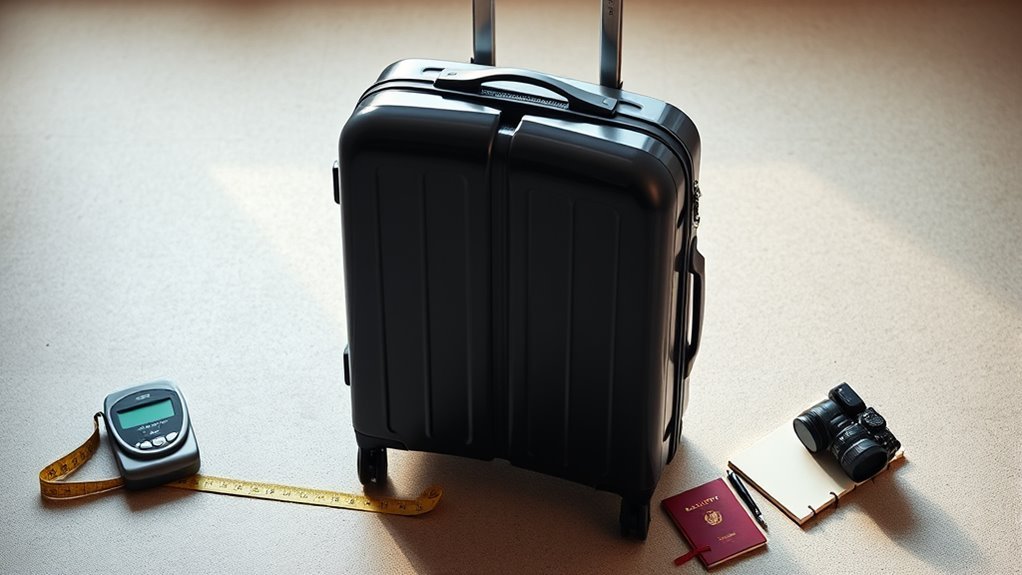
If you want to dodge surprise baggage fees, get into the habit of weighing and measuring your suitcase before you leave home. Airlines enforce strict size and weight limits, and an accurate pre-trip check saves time and money.
Weigh and measure your suitcase at home to avoid surprise airline size and weight fees.
You should weigh packed luggage with a reliable scale, measure length/width/depth including wheels and handles, and note airline allowances. Photograph dimensions and scale readouts for proof if disputes arise.
At the airport, recheck only if necessary. Keep a packing list to justify items.
Visualize typical problem items:
- bulky coats squeezed into corners
- extra shoes tucked at the base
- toiletries concentrated in a clear bag
Best Features to Look for in a 28‑Inch Suitcase
When you pick a 28‑inch suitcase, prioritize durability, maneuverability, and organized capacity: look for a hard or high-denier fabric shell, a sturdy telescoping handle with smooth locking, and four spinner wheels that roll quietly and evenly.
Also check reinforced corners, corrosion-resistant zippers with locks, and a balanced frame to prevent tipping.
Choose interior features like compression straps, removable toiletry pockets, and zippered compartments for separation.
Pick a weight-conscious model so packing capacity isn’t negated by the case itself.
Finally, verify warranty coverage and easy-repair policies so your luggage stays reliable trip after trip.
Alternatives to a 28‑Inch: Carry‑On and Checked Options
Although a 28‑inch suitcase works well for long trips, you might prefer a carry‑on or a different checked size depending on airline rules, trip length, and how much you want to lug around. Consider smaller and larger options to match your itinerary.
A carry‑on keeps you nimble; a 24‑26‑inch checked bag balances capacity and handling; a 30‑32‑inch holds bulky gear but can be cumbersome.
Picture your choices:
- A single compact carry‑on zipped with outfits for a weekend.
- A mid‑sized checked bag rolled through city streets on a two‑week trip.
- A large duffel packed with ski boots and layered coats.
Quick Checklist: Keep It Compact or Go 28‑Inch?
You’ve weighed the carry-on, mid-size, and oversized options; now decide whether to keep packing light or pick a 28‑inch as your go‑to. Ask: how long’s your trip, how many people share luggage, and do you need bulky gear?
Check airline size/weight limits, transfer ease, and storage space at home. If you value maneuverability, quick transfers, and avoiding fees, stick smaller.
If you pack for two weeks, need room for shopping, or carry sports equipment, the 28‑inch makes sense.
Balance convenience versus capacity, estimate typical loads, and choose the size you’ll actually use.
Frequently Asked Questions
Can a 28‑Inch Suitcase Fit in a Taxi or Rideshare Trunk?
Yes — you can often fit a 28-inch suitcase in a taxi or rideshare trunk, but it depends on the vehicle. You’ll want to angle it, remove loose items, and be prepared to use the backseat if trunk space’s limited.
Is a 28‑Inch Suitcase Allowed on Cruise Ship Luggage Carts?
Generally, yes — you can use a 28‑inch suitcase on most cruise ship luggage carts, but don’t assume; check your cruise line’s size and weight rules, and pack carefully so porters can handle and stow it safely.
How Durable Are Telescoping Handles on 28‑Inch Suitcases?
They’re fairly durable if you buy quality; you’ll avoid bent or stuck tubes by choosing reinforced frames, metal rails, smooth locks, and gentle handling, but cheap models can wobble, jam, or fail after heavy use or rough transport.
Will a 28‑Inch Suitcase Fit in Hotel Room Closets or Under Beds?
Yes, a 28‑inch suitcase will often fit in hotel closets and under higher beds, but it depends on closet depth and bed clearance; you’ll sometimes need to store it diagonally or use luggage racks if space’s tight.
Can I Ship a 28‑Inch Suitcase as Checked Luggage Door‑To‑Door?
Yes — you can ship a 28‑inch suitcase as checked door‑to‑door, but carriers have size, weight, and packing rules, and you’ll pay oversize or extra fees if it exceeds limits, so check the carrier’s specific policies first.
Conclusion
If you want roomy packing and fewer outfit compromises, a 28‑inch suitcase is a solid choice for longer trips, family travel, or when you’re checking bulkier items. It usually fits most airlines’ checked-size rules but can push weight limits, so weigh and measure before you fly to avoid fees. If you’re mostly short trips or like fast, light travel, stick with a carry‑on or 24‑inch. Pick features like solid wheels, good organization, and durable shell.