What Is Considered a Full Sized Carry on Bag
You’ll call a bag a full‑sized carry‑on when it fits the common overhead‑bin limit—about 22 x 14 x 9 inches including wheels and handles—so it stows in the cabin without gate‑checking. Measure height from wheel base to top handle, include protrusions, and weigh it against the carrier’s limits since policies vary. Softside bags can squeeze into tight bins; expandables risk oversize fees. Keep this checklist handy and you’ll know when to adjust size, weight, or packing choices to comply.
What Is a Full-Sized Carry-On : Quick Answer
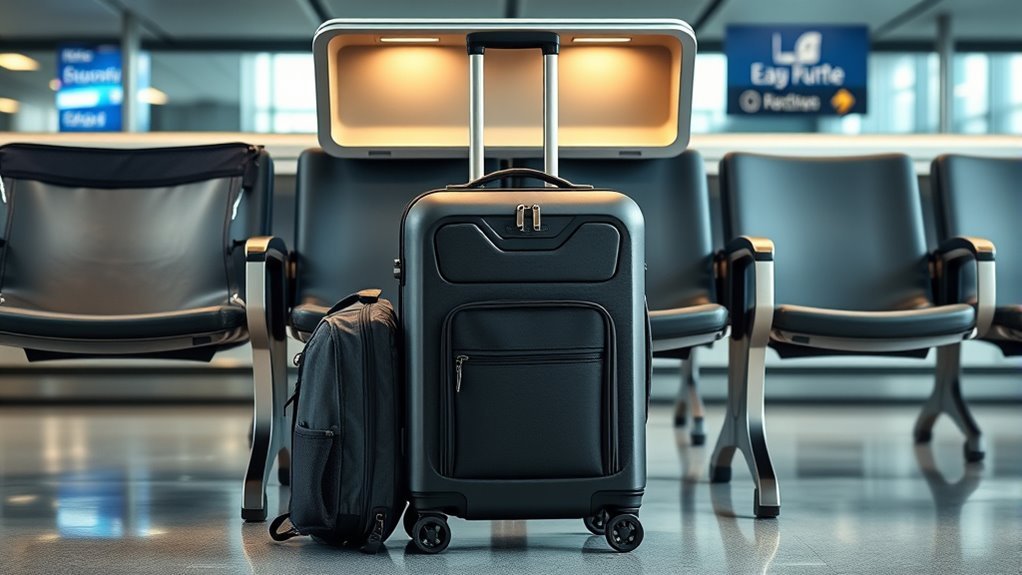
Although airlines vary, a full-sized carry-on generally means a bag that fits the most common overhead-bin limit—about 22 x 14 x 9 inches (56 x 36 x 23 cm)—including wheels and handles.
A full-sized carry-on typically fits the common overhead limit—about 22 x 14 x 9 inches, wheels and handles included.
In quick terms, you’re looking for a bag that maximizes allowed space without exceeding limits that trigger gate check fees.
It should be sturdy, easy to lift into bins, and organized enough to access essentials midflight.
Weight limits still matter on some carriers, so check policies.
If your suitcase nests or compresses, you’ll gain flexibility, but always confirm dimensions before travel to avoid surprises.
Standard Carry-On Dimensions Airlines Use (22 X 14 X 9)
Airlines commonly use 22 x 14 x 9 inches as the standard exterior measurement for a full-sized carry-on, so you’ll want to check those numbers before you pack.
That size breaks down into height, width, and depth and includes handles and wheels, which can eat into usable space.
Knowing the dimensions helps you judge packing capacity and fit items efficiently without surprises at the gate.
Airline Standard Measurement
When you hear “standard carry-on,” most U.S. and many international carriers mean a bag no larger than 22 x 14 x 9 inches, a size that’s designed to fit in overhead bins and meet gate-check policies.
You should measure your packed bag—including handles and wheels—since airlines enforce maximums strictly.
That 22x14x9 guideline balances cabin storage with safety and boarding efficiency, so manufacturers and retailers label suitcases accordingly.
Remember, some airlines set slightly different limits or use linear inches (length + width + height), so check your carrier before travel.
Pack smart to avoid surprises and possible fees at the gate.
Exterior Dimension Breakdown
If you’re sizing a carry-on to the common 22 x 14 x 9-inch rule, measure the bag’s full exterior—including wheels, handles, and any external pockets—because airlines enforce maximums based on overall dimensions.
Measure height from wheel base to top of handle when fully stowed, width across the widest points including side pockets, and depth from front to back with any protrusions.
Soft-sided bags compress; still count their expanded state. Rigid shells don’t compress, so allow no extra.
Small differences can trigger gate checks, so confirm dimensions before travel and choose a bag that reliably fits overhead bins.
Packing Capacity Guidelines
Because most carriers use the 22 x 14 x 9-inch standard, you can plan packing around a predictable volume—about 2,772 cubic inches—and expect to fit roughly 2–3 days’ worth of clothing plus essentials if you pack efficiently.
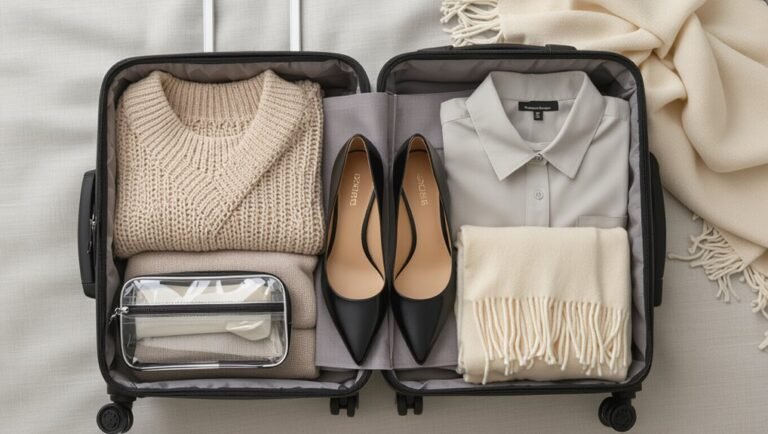
Start by rolling lightweight garments, using compression sacks for bulkier items, and placing shoes in corners to maximize voids. Reserve a top compartment for toiletries in travel-sized containers and a slim pocket for documents and electronics.
Limit duplicates, choose multi-use pieces, and weigh items before packing to avoid surprises. With strategic organization you’ll hit capacity without exceeding airline limits.
How to Measure Your Suitcase Like an Airline Agent
To measure your suitcase like an airline agent, start by measuring the height and width at the bag’s fullest points.
Don’t forget to include wheels and handles in those measurements, since carriers count them too.
If your total exceeds the airline’s limits, you’ll need a smaller bag or to check it.
Measure Height And Width
When you measure your carry-on like an airline agent, start by standing the bag upright on a flat surface and use a tape measure to record the height from the floor to the highest hard point (including wheels and handles).
Next, measure the width across the widest rigid points, keeping the tape straight and taut.
Measure the depth from front to back at the thickest section.
Note any protrusions that affect packed dimensions.
Write down each measurement in inches or centimeters, rounded to the nearest half unit.
Compare your figures to airline limits before packing to avoid surprises at the gate.
Include Wheels And Handles
If you want an accurate measurement, include wheels and handles as part of your carry-on’s height and depth—airline agents do. When you measure, extend telescoping handles and count wheel housings; those bits push you over limits more often than the bag’s fabric.
Place the bag upright on a flat surface and use a rigid tape for straight lines.
- Measure from wheel bottom to handle top for total height.
- Measure depth including wheel bulge, not just body thickness.
- Check side handles and external pockets; they add bulk.
Doing this avoids surprises at the gate and keeps your bag compliant.
Why Airlines Count Wheels and Handles in Size Limits
Because airlines measure the space your bag actually occupies, they count wheels and handles toward size limits so carriers can guarantee luggage fits in overhead bins and under seats. You’ll avoid surprises at boarding by including projections like wheels, side pockets, and extended handles when measuring. That keeps load planning consistent and prevents gate-checking. Measure fully assembled, compare to airline specs, and choose designs with recessed wheels or retractable handles if you need extra room. Quick reference:
| Feature | Why counted | Tip |
|---|---|---|
| Wheels | Add length/width | Recessed wheels help |
| Handles | Add height | Fully retract before measuring |
| Pockets | Add bulk | Compress or remove |
Typical Weight Limits for Carry-Ons and Where They Vary
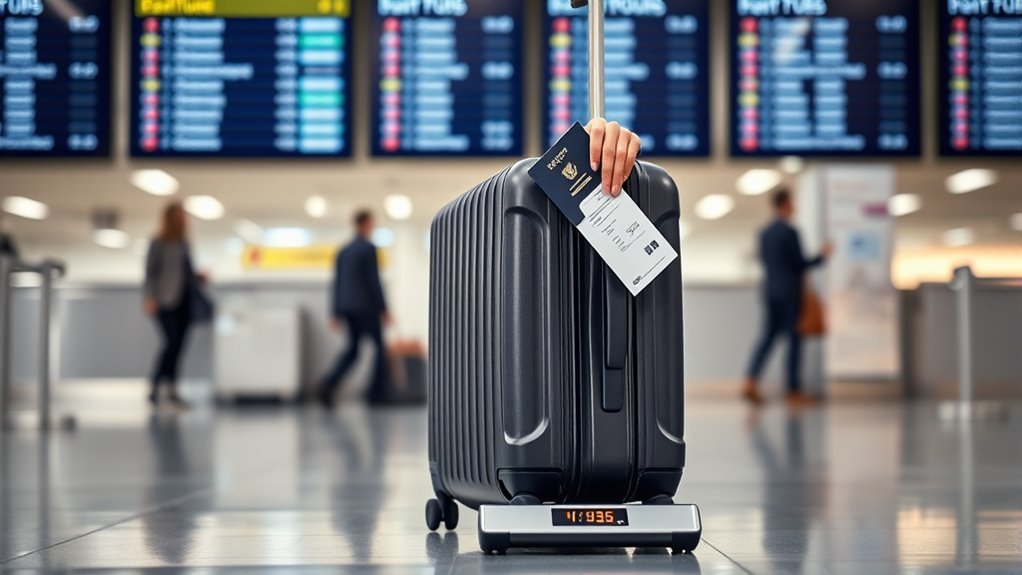
You’ll usually see carry-on weight limits stated in the airline’s policy, and they’ll range from no limit to about 7–10 kg (15–22 lbs) on some international carriers.
Rules often differ between countries and airlines, so check international routes carefully where limits tend to be stricter than on many U.S. airlines.
Remember checked-bag allowances are measured differently and are typically much higher than carry-on limits.
Airline Weight Restrictions
Curious how much weight your carry-on can actually hold? Airlines set weight caps to keep overhead bins manageable and balance aircraft. You’ll see limits vary by carrier and fare class, so check before packing.
Typical scenarios include:
- Low-cost carriers: strict 7–10 kg (15–22 lb) limits for basic fares.
- Legacy airlines: more generous 8–12 kg (18–26 lb), sometimes no weight check for standard carry-ons.
- Premium/priority passengers: higher allowances or multiple bags without extra charge.
You should weigh your packed bag at home and prioritize essentials. Don’t assume all airlines treat carry-on weight the same.
International Differences Explained
Where do carry-on weight rules differ most, and how will that affect what you pack? You’ll find big variation by region and carrier: many U.S. and low-cost European airlines emphasize size over weight, while Asian, Middle Eastern, and some legacy European carriers often set strict weight caps (7–10 kg common).
For short flights, stricter limits push you to prioritize essentials; for long-haul carriers with higher allowances, you can carry heavier electronics or shoes. Check your airline’s policy before packing, weigh your bag at home if limits are tight, and distribute items between personal item and carry-on to avoid surprises.
Checked Vs. Carry-On Limits
Regional policies on carry-ons also shape checked-bag allowances, so it’s worth comparing both when planning what to bring. Airlines often set carry-on weight between 7–15 kg (15–33 lbs), while checked bags commonly range 20–32 kg (44–70 lbs).
You’ll notice stricter limits on regional or low-cost carriers and looser limits on long-haul international flights. Check specific carrier rules to avoid fees.
- Short flights and budget airlines: lighter carry-ons, tight checked limits.
- International carriers: heavier checked allowances, sometimes stricter carry-on sizes.
- Frequent flyer status: waived fees, higher weight allowances.
Full-Sized Carry-On vs. Personal Item: Key Differences
Although both are allowed in the cabin, a full-sized carry-on and a personal item serve different purposes. You’ll use a carry-on for larger items like clothing, shoes, and bulkier gear; airlines expect it to fit in the overhead bin.
A personal item is smaller—think laptop bag, purse, or small backpack—and must stow under the seat.
You can carry both, but the personal item stores essentials you want within reach: devices, documents, medications.
Size limits and enforcement differ, so choose items that match those roles. Packing smart maximizes space and avoids gate-checking or delays.
Which Major U.S. Carriers Accept the Standard Size
Now let’s look at which major U.S. carriers accept the standard carry-on size and how their policies line up.
You’ll compare size limits across airlines, note any exceptions to the standard dimensions, and check whether carry-ons incur fees on different fare classes.
This will help you pick the best airline or fare if a full-sized bag matters to your trip.
Major U.S. Airlines Policy
When you’re packing to meet the standard full-size carry-on dimensions (typically around 22 x 14 x 9 inches), most major U.S. carriers will accept that size in their overhead bins, though exact allowances and fee policies vary by airline and fare class. You should check each carrier before you travel because rules change with fare type, elite status, and aircraft.
Common points to note include:
- Basic economy often restricts or charges for carry-ons, while main cabin usually allows one free bag.
- Loyalty status can grant priority boarding and guaranteed overhead space.
- Smaller regional jets may have tighter bin space; gate agents make final calls.
Size Limits Compared
Having checked how fare class and aircraft affect carry-on rules, you’ll want to know which airlines actually accept the common 22 x 14 x 9-inch size.
Most major U.S. carriers—American, Delta, United, Southwest, and JetBlue—list dimensions equal to or slightly larger than that standard, so your bag typically qualifies.
Alaska and Spirit also accept similar dimensions, though Spirit enforces strict gate checks for oversized items.
Regional partners may vary, so double-check codeshare flights.
International and low-cost subsidiaries can have different limits.
Always verify the specific carrier operating your flight to avoid surprises at the gate.
Exceptions And Carry‑On Fees
Although most major U.S. carriers accept the common 22 x 14 x 9-inch carry-on as standard, there are important exceptions and fee rules you’ll want to note. Airlines like Southwest, Delta, United, and American generally allow that size, but regional subsidiaries, basic economy fares, and low-cost carriers may restrict size or charge for overhead space. You should check class, frequent‑flyer status, and aircraft type before packing.
- Low-cost carriers (Spirit, Frontier) often charge for carry-ons beyond personal items.
- Basic economy fares may prohibit full-size carry-ons.
- Regional jets sometimes have smaller overhead bins and stricter limits.
How International Carriers’ Carry-On Rules Differ
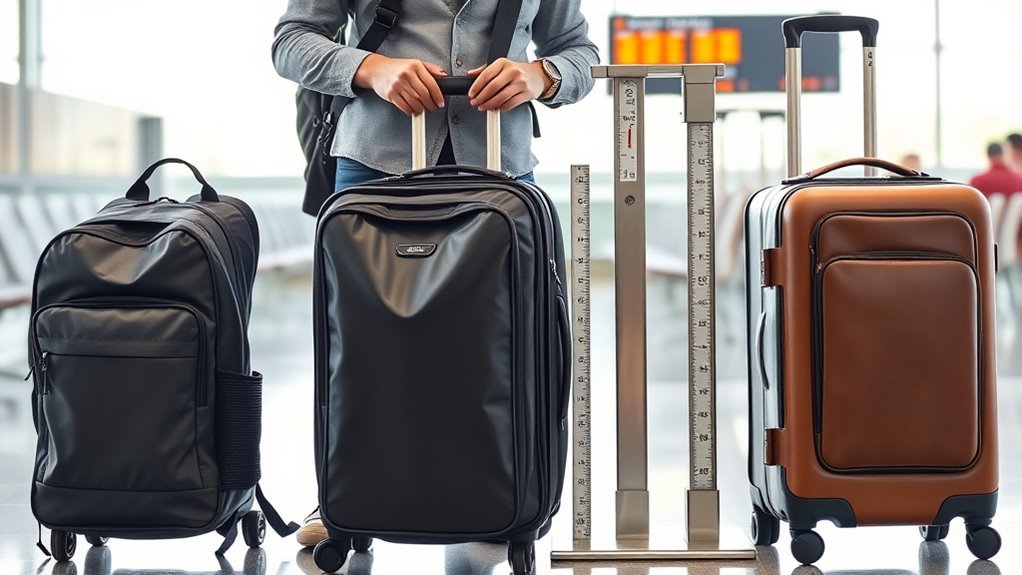
Because airlines follow different regulatory bodies and cabin layouts, international carry-on allowances can vary widely from what you’re used to at home. You’ll find stricter size, weight, and item-count rules on some intercontinental carriers; others let you bring a larger bag plus a personal item. Always check the carrier’s website before packing. Consider transfer airports and codeshares, since gate agents enforce the operating carrier’s rules. Below is a quick comparison to scan common differences:
| Carrier Type | Typical Size Limit | Common Weight Limit |
|---|---|---|
| European flag | 55×40×20 cm | 8–10 kg |
| Asian longhaul | 56×36×23 cm | 7–10 kg |
| Middle East | 50×40×25 cm | 7 kg |
Low-Cost Carriers and Stricter Carry-On Policies to Watch
International carriers can vary, but low-cost carriers (LCCs) often tighten rules further to maximize revenue and cabin space, so you’ll want to pay extra attention.
You’ll face stricter size limits, carry-on fees, and aggressive gate checks. Before booking, check the airline’s exact dimensions and weight, and prepare for enforcement that’s often inconsistent.
- Smaller size allowances than legacy carriers, sometimes only a personal item
- Fees for any bag beyond a tiny free item, charged per flight segment
- Early boarding or priority passes as the usual workaround you can buy
Pack light and measure carefully.
Gate vs. Check‑In: When Your Bag Gets Checked
When airlines decide your bag needs to go under the plane, it usually happens either at check‑in or at the gate—and knowing the difference can save you time and fees.
At check‑in, agents measure and weigh your carry‑on against ticket rules; if it’s too large or overweight, they’ll tag it for the hold and you’ll drop it at the counter.
At the gate, space constraints or full overhead bins prompt gate agents to request gate‑checked bags; you’ll leave it just before boarding and reclaim it at baggage claim.
Know your fare’s allowances and pack to avoid surprises at either point.
Carry-On Materials and Construction That Increase Usable Capacity
If you want to get the most out of your carry-on, choose materials and construction that squeeze extra usable space without adding bulk. You’ll want lightweight, flexible fabrics and smart internal layouts so every inch counts.
Look for welded seams, low-profile frames, and thin-yet-strong zippers that avoid wasted interior volume. Also consider reinforced corners and stretch panels that expand slightly when packed.
- Elastic mesh pockets for flat organization
- Compression straps and removable dividers
- Recessed wheels and telescoping handles that sit flush
These features boost usable capacity while keeping weight and external size minimal.
Best Carry-On Styles That Usually Meet Size Limits
When you’re choosing a carry-on, hardside luggage gives rigid protection and often maximizes internal space within airline size limits.
Softside carry-on backpacks flex into overhead bins and can squeeze a bit more gear while keeping essentials accessible.
Both styles usually meet most carriers’ dimensions, so pick the one that fits your packing style and travel needs.
Hardside Carry-On Luggage
Because hardside carry-on luggage combines a rigid shell with slim profiles and built-in organization, it’s one of the easiest styles to fit within most airlines’ size limits. You’ll appreciate its protective exterior for fragile items, smooth-rolling wheels for quick gate runs, and zipped compartments that keep toiletries and chargers tidy.
Choose a model with a secure lock and lightweight polycarbonate for durability without bulk. Consider expandable seams cautiously—they can push you over size limits.
Typical uses include short business trips, weekend getaways, and flights where overhead space is tight.
- Sleek shell protecting electronics
- Four-wheel maneuverability
- Zipped internal organization
Softside Carry-On Backpacks
Wondering which carry-on style gives you flexibility, organization, and lightweight comfort all at once? Softside carry-on backpacks fit snugly under size limits while offering expandable pockets and external compartments for quick access. You’ll appreciate padded laptop sleeves, compression straps, and breathable backs that make hauling through terminals easier.
Choose one with reinforced stitching, water-resistant fabric, and lockable zippers to protect gear. Measure packed dimensions to confirm compliance with airlines — soft shell lets you squeeze into tight overhead bins, but don’t overfill.
For efficient travelers who value mobility and organization, a well-built softside backpack is a smart, practical option.
Packing Tips to Cut Weight Without Losing Essentials
If you want to shave pounds from your carry-on without sacrificing must-haves, focus on multifunctional items, lightweight fabrics, and strict portioning of toiletries and tech gear. Pick clothes that layer and mix, choose travel-sized containers filled from home, and limit shoes to one pair plus sandals.
Roll garments, use compression cubes sparingly, and wear your bulkiest items on the plane.
Prioritize dual-purpose tech like a phone with an e-reader app and a lightweight charger. Keep essentials accessible in a slim organizer to avoid overpacking.
- One neutral outfit that mixes easily
- Small toiletry kit, refillable
- Compact power bank
Convertibles and Expandables: Pros, Cons, and Size Tricks
After trimming your pack to lean, you might want gear that adapts to changing needs—convertible and expandable carry-ons give you that flexibility. You’ll like convertibles for multi-function use; expandables for extra souvenirs. Watch overall dimensions when expanded so you don’t exceed airline limits. Use compression cubes, stash bulky items in checked bags, or partially expand only when allowed. Consider durability, zipper integrity, and how expansion affects balance. Below is a quick comparison to help you decide.
| Feature | Convertible | Expandable |
|---|---|---|
| Flexibility | High | Moderate |
| Risk of overpacking | Low | High |
| Typical weight impact | Minimal | Slight |
Choosing a Carry-On by Trip Type: Business, Weekend, Family
How will your itinerary shape what you pack? You’ll pick different carry-ons depending on purpose: sleek roller for meetings, nimble backpack for quick escapes, roomy spinner for family needs. Think about maneuverability, organization, and durability so you can move fast and stay composed.
- Business: slim, organized, laptop-safe, easy to stow.
- Weekend: lightweight, versatile, enough outfit choices, easy to wear on your back.
- Family: larger capacity, multiple compartments, durable with wheels for airport sprints.
Match features to trip demands so you avoid overpacking, fumbling at security, or running out of essentials on arrival.
Case Capacity: Liters vs. Linear Inches – How to Compare
Because airlines and luggage makers measure size differently, you’ll need to translate liters into linear inches to know what actually fits overhead or under a seat. Convert liters to cubic inches (1 L ≈ 61.024 in³), then estimate linear inches by solving for length+width+height based on typical shape. Hard shells and soft bags pack differently, so compare manufacturer linear dimensions with converted volume. Use the table below to guide quick estimates and common size anchors.
| Liters | Approx. cubic inches |
|---|---|
| 20 L | 1,220 in³ |
| 30 L | 1,830 in³ |
| 40 L | 2,441 in³ |
| 45 L | 2,746 in³ |
Quick Checklist to Confirm a Bag Will Be Accepted Onboard
When you’re deciding whether a bag will be accepted onboard, check three things quickly: the carrier’s maximum linear dimensions (length + width + height), the bag’s weight limit if the airline enforces one, and any specific rules about wheels, handles, or external pockets that affect fit.
Use this checklist before packing so you don’t get surprised at the gate.
Use this quick checklist before packing to avoid surprises and gate hassles.
- Measure your bag fully: include wheels and handles; compare to the airline’s published linear inches.
- Weigh it loaded if the carrier enforces limits; aim slightly under to account for scales.
- Note restrictions on external pockets or protrusions that might invalidate fit.
When to Upgrade to a Larger or Smaller Carry-On Model
If your trips change in length, destination, or the amount you pack, it’s time to reassess your carry-on size. Decide based on trip duration, weather and activities: longer trips or varied climates need more space, while short city breaks require less.
Factor in packing style—if you compress or rewear, a smaller bag works. Also consider vehicle and accommodation storage limits, and whether you prefer maneuverability over capacity.
When you find yourself repeatedly gate-checking, upgrading makes sense; if your bag is half-empty, downsizing saves weight and fees. Choose the size that matches typical trip needs.
How Airlines Enforce Carry-On Rules at the Gate vs. Check-In
Although airports have similar rules on paper, airlines enforce carry-on limits differently at check-in and the gate, and you’ll usually notice stricter scrutiny as boarding approaches. You’ll face different checks: staff at check-in focus on paid allowances and oversized pieces, while gate agents watch cabin space and weight. Be ready to act if your bag’s flagged.
- At check-in: measured, weighed, fees applied; staff note exceptions.
- At gate: visual inspection, bag sizers, last-minute gate checks for overhead space.
- Boarding priority: frequent flyers and small personal items go first, others may be gate-checked.
Frequently Asked Questions
Can Carry-On Dimensions Differ for International Flights Within Alliances?
Yes — you’ll find carry-on size limits can vary by airline and alliance, so check each carrier’s rules before travel; they’ll often differ on dimensions, weight, and allowed items even for intra-alliance flights.
Do Soft-Sided Bags Compress Differently Through Sizers?
Yes, soft-sided bags compress more through sizers, so you’ll often squeeze them tighter than hard shells, but they can still be rejected if overpacked; always test packed compression and know airline-specific tolerances before boarding.
Are Medical Devices Exempt From Carry-On Size Limits?
Yes, medical devices are usually exempt from carry-on size limits, though you’ll need to notify the airline and TSA, pack batteries safely, provide documentation if requested, and follow specific airline or international regulations for larger equipment.
How Do Carry-On Rules Apply to Lap Infants’ Bags?
You can bring one bag for a lap infant in addition to your carry-on; airlines often allow an extra diaper bag or small personal item for the infant, but size and allowance vary, so check your carrier’s specific policy.
Will TSA Precheck Status Affect Carry-On Enforcement?
Yes — TSA PreCheck can make security faster, but it won’t change carry-on size enforcement; you’ll still need to follow airline dimensions and gate agents’ rules, so don’t assume PreCheck lets you bring oversized bags.
Conclusion
In short, a full-sized carry-on usually means the 22 x 14 x 9 inch guideline most U.S. airlines use, and you’ll want to measure including wheels and handles so it won’t get refused at the gate. Check weight limits, compare liters to linear inches if you prefer metric, and use the checklist to confirm fit. If it’s tight or you pack heavy, consider switching sizes before travel to avoid surprises and fees.