What Items Are Not Allowed on a Plane in Hand Luggage
You can’t bring sharp blades (knives, box cutters, large scissors) or heavy tools in your carry-on, and most aerosols, flammable liquids, fireworks, explosives, corrosive chemicals, and gas canisters are forbidden. Loose high-capacity batteries and unprotected spare cells must stay out of checked bags, while power banks go in the cabin with terminals covered and capacity labeled. Medications, baby food, and duty‑free liquids have exceptions—keep them accessible and declare them at screening if needed, and keep going to learn practical packing tips.
Carry-On Rules : Quick Checklist
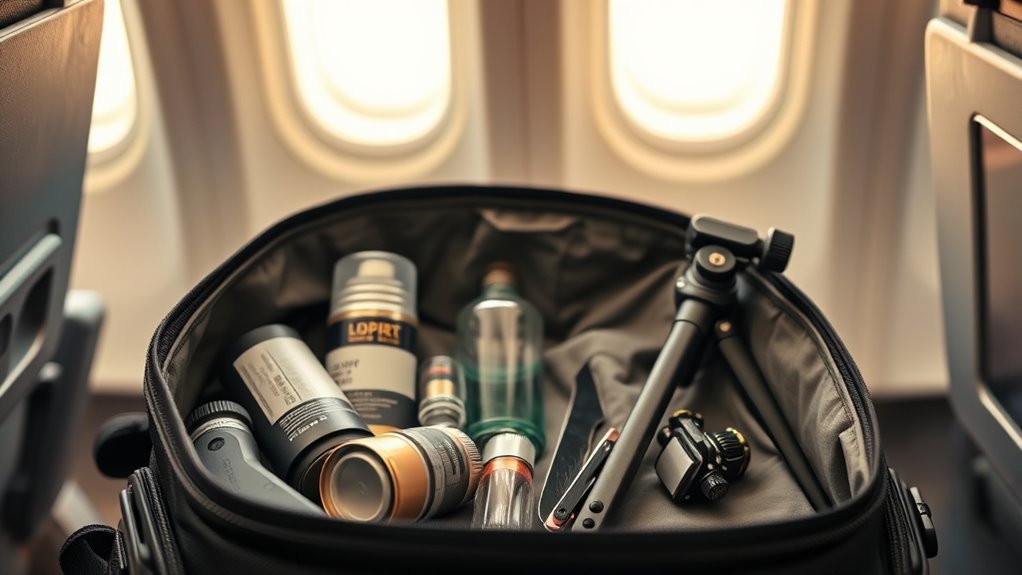
When you pack your carry-on, follow a quick checklist to avoid surprises at security.
First, keep liquids in containers of 100 ml or less and place them in a clear, resealable bag. Pack medications and essential documents within easy reach and declare any medical liquids.
Keep liquids in 100 ml containers in a clear resealable bag; keep meds and documents handy and declare medical liquids.
Make certain electronics larger than a phone are accessible for separate screening. Remove bulky outerwear and shoes if required, and avoid prohibited items like flammable materials or oversized batteries.
Label valuables and carry a backup ID.
Check your airline and departure country rules before leaving; policies vary and last-minute changes happen.
Sharp Items & Tools You Can’t Bring (And Safe Alternatives)
Although some small tools seem harmless, security rules sharply restrict knives, box cutters, razor blades, and most tools with a fixed or folding blade in carry-on bags. You should pack them in checked luggage or ship them ahead.
TSA and international agencies vary, so check rules before travel. Consider safe alternatives and storage options:
- Disposable razors: pack in checked baggage or use cartridge razors in carry-on
- Multi-tools with blades: leave in checked bags or remove blade and ship
- Scissors: small blunt-tip scissors under 4 inches are sometimes allowed
- Screwdrivers/wrenches: avoid large tools; place them in checked luggage
Liquids, Gels & Aerosols : Limits, Exceptions & Packing Tips
Curious what you can actually bring through security? You can carry liquids, gels and aerosols in containers 100ml (3.4oz) or less, all fitting in one transparent 1‑litre resealable bag per passenger. Exceptions include medications, baby food and duty‑free purchases—declare them at screening. Pack creams and sprays in your clear bag, place bulky toiletries in checked baggage, and seal leak‑prone items in extra plastic. Follow airline rules for medical needs. Below is a quick reference:
| Item | Action |
|---|---|
| Toiletries ≤100ml | Carry in clear 1L bag |
| Medications | Declare, bring documentation |
| Baby food | Allowed, inspect |
| Duty‑free liquids | Keep receipt, carry on |
Flammables & Hazardous Materials to Avoid in Carry-On
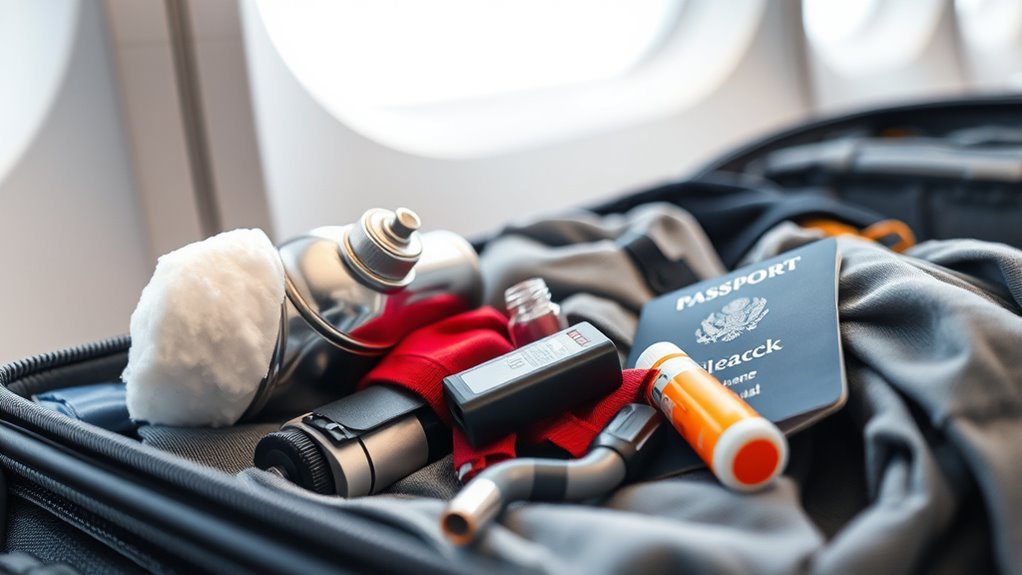
Because items that can ignite, corrode, or explode pose serious safety and security risks, you should keep flammables and hazardous materials out of your carry-on. Stick to nonhazardous alternatives and check airline rules before packing. Don’t assume small quantities are okay — declare anything questionable at security.
- Aerosol paints, solvents, and fuel cans
- Matches, lighter refills, and torch lighters
- Corrosive acids, bleach, and pool chemicals
- Fireworks, ammunition, and other explosives
If an item is labeled “dangerous” or “flammable,” leave it in checked baggage only when allowed, or ship it via approved courier.
Batteries, Power Banks & Electronics : What’s Allowed and How to Travel With Them
When you pack electronics, remember batteries—especially lithium cells and power banks—carry special rules because they can overheat or short-circuit.
Keep them in your carry-on, protected from damage, with terminals covered and capacity clearly labeled, and check airline and TSA/ICAO limits before you fly.
You should carry spare batteries and power banks only in your cabin baggage, not checked luggage.
Tape or use protective cases for loose cells, switch devices off, and avoid metal objects that could cause a short.
Know watt-hour (Wh) or mAh limits, declare oversized batteries, and follow crew instructions to guarantee safe transport.
Frequently Asked Questions
Can I Bring Prescription Medication in Liquid Form Exceeding Limits?
Yes — you can bring prescription medication in liquid form exceeding limits, but you’ll need documentation (prescription or doctor’s note), declare it at security, and follow airline or international regulations to avoid delays or confiscation.
Are Baby Food and Breast Milk Exempt From Liquid Restrictions?
Yes — you’re allowed to bring baby food and breast milk in amounts exceeding standard liquid limits; declare them at security, separate them for screening, and expect additional inspection, though rules can vary by country and airline so check ahead.
Do Airport Lounges Enforce the Same Carry-On Bans?
Yes, airport lounges enforce the same carry-on bans since they follow airport and airline security rules; you’ll still go through TSA/CBP screening, so restricted items remain prohibited even if you’re inside a lounge.
Can Religious Items (E.G., Ceremonial Knives) Be Carried On?
You can sometimes carry religious items like ceremonial knives, but you’ll need to check airline and country rules, declare them, and submit items to security; some blades are prohibited, so get written approval when required.
What Happens to Prohibited Items Discovered at Security?
If security finds prohibited items, they’ll confiscate them, may return permitted personal effects later, and could issue fines or delay you for questioning; in serious cases you might face arrest, criminal charges, or travel bans.
Conclusion
When packing your carry-on, remember you can’t bring sharp tools, most flammables, large liquids, or improperly packed batteries. Stick to TSA limits for gels and aerosols, put spare lithium batteries and power banks in your cabin bag with terminals covered, and leave hazardous materials at home. Choose safe alternatives—blunt scissors, travel-size toiletries, and checked storage for prohibited items—so you breeze through security and keep everyone safe during your flight.