Will Champagne Explode in Checked Luggage
You can fly with champagne in checked luggage, but it can burst, leak, or the cork pop if it’s poorly packed or exposed to big temperature and pressure swings. Airlines and bottles are designed for travel, so incidents are uncommon, but rough handling and warming raise the risk. Cushion each bottle, isolate the neck, and follow airline alcohol limits to reduce problems. Keep these precautions in mind and you’ll learn practical packing and safer alternatives ahead.
Can Champagne Explode in Checked Luggage? Bottom-Line Answer
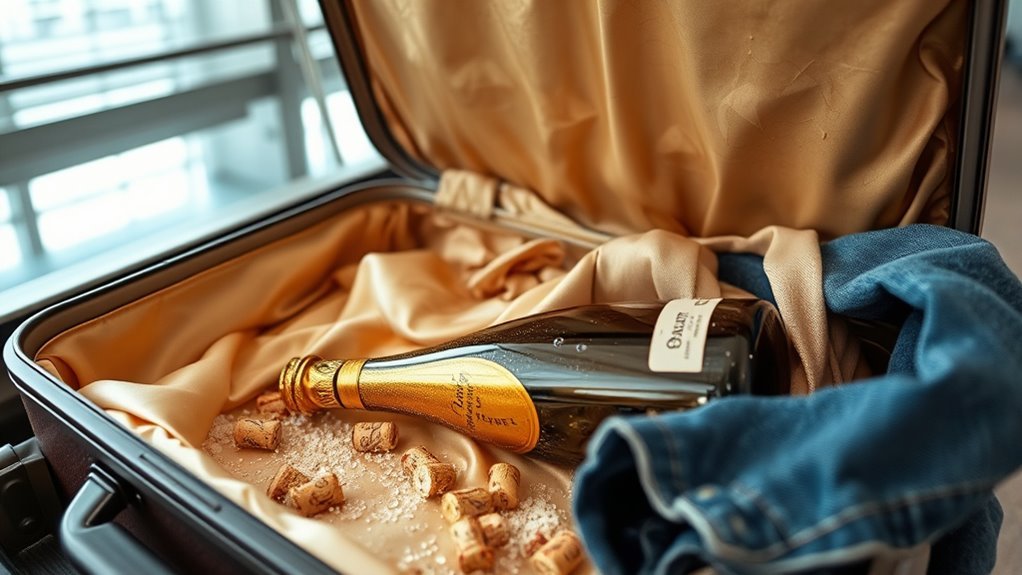
Yes — champagne can explode in checked luggage, but it’s uncommon if you pack it properly. You should know pressure changes, temperature swings, and rough handling raise risk. That means bottles can leak, corks can pop, and glass may shatter if you ignore basics.
Still, manufacturers design bottles to withstand typical transport stresses, and major incidents are rare. You’ll reduce chance by controlling conditions and using protective materials, but no method is foolproof.
If you’re carrying valuable or sentimental bottles, consider alternatives like shipping insured or carrying in cabin when allowed to minimize the small but real risk.
Quick Packing Checklist for Champagne in Checked Luggage
When packing champagne in checked luggage, make sure you secure each bottle with padding and keep them upright if possible.
Check your airline’s limits on alcohol by volume and quantity so you don’t get stopped at the counter.
With proper cushioning and compliance, you’ll cut the risk of breaks and fines.
Secure Bottles Properly
If you’re packing champagne in checked luggage, secure each bottle so it can’t shift, hit other items, or suffer temperature shock. Wrap the neck and body separately, cushion the base, and keep bottles upright if possible.
Use bubble wrap or foam sleeves snugly around the body, then tape or tie the neck padding so it won’t slide. Nest bottles in clothing or use a rigid divider to prevent collisions.
Place a soft layer beneath and between bottles to absorb shocks. Seal caps with tape or plastic wine savers to reduce seal movement.
Label the bag fragile and handle with care stickers.
Know Airline Limits
After you’ve wrapped and cushioned each bottle, check airline rules so you don’t pack more than allowed or risk confiscation. You’ll want clear limits before finalizing packing: different carriers and countries set varying quantity, packaging, and alcohol-content rules.
Confirm weight limits and declare bottles if required. Note that limits can change, so check the airline website or call customer service.
Follow local import regulations at your destination to avoid fines.
- Max bottles allowed per passenger
- Alcohol by volume (ABV) restrictions
- Required declarations or special packaging
Plan ahead, document rules, and you’ll travel confidently.
How Pressure and Temperature Affect Carbonated Bottles
Although you mightn’t notice it, the gas inside a sealed bottle responds strongly to changes in pressure and temperature. You’ll find that warming raises internal pressure as CO2 expands and escapes more readily from liquid, increasing burst risk.
Cooling lowers pressure and keeps more CO2 dissolved, but rapid warming after a cold flight can still cause foaming. Reduced cabin or cargo pressure at altitude lets dissolved gas come out of solution, stressing seals.
You should anticipate gradual temperature shifts and pressure differentials when transporting carbonated bottles, since abrupt changes and trapped gas pockets create the highest failure risk.
Best Protective Materials and DIY Wraps for Bottles
Because pressure and temperature can push a bottle to its limits, you’ll want to wrap and cushion it so gas release or a sudden jolt won’t lead to a mess. Choose sturdy, shock-absorbing layers and seal leaks fast. Wrap the neck tightly, pad the base, and isolate the bottle from hard surfaces.
Consider these DIY-friendly materials:
- Bubble wrap around the body, taped snugly to prevent shifting.
- Clothing or towels rolled tightly as soft barriers inside a suitcase compartment.
- A hard-sided bottle sleeve or DIY cardboard cocoon reinforced with duct tape for rigid protection.
Pack bottles upright and check padding before travel.
How Airlines and TSA Treat Champagne in Checked Bags?
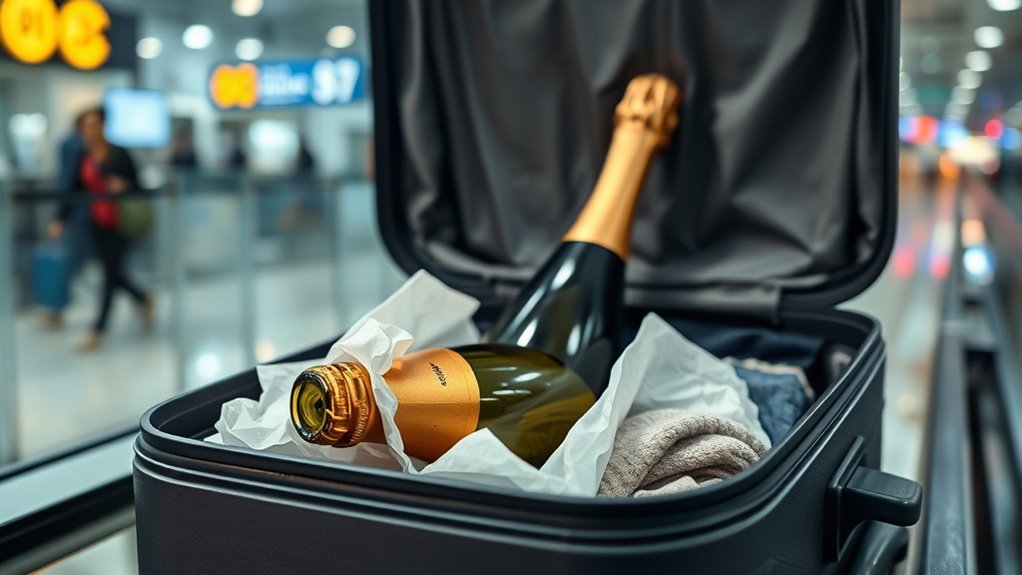
When you pack champagne in checked luggage, you need to know the allowed quantities and any airline-specific limits on liquids and alcohol content.
Expect bottles to go through standard security screening and possibly additional inspection if TSA or airline staff need to verify contents.
Check your carrier’s rules and TSA guidelines before you fly so you won’t be surprised at the gate or baggage claim.
Allowed Quantities And Limits
If you’re packing champagne in checked luggage, know that airlines and the TSA treat it as a limited quantity of alcohol subject to rules. You’ll need to follow limits based on alcohol content and airline policy.
Most carriers and the TSA allow bottled alcohol in checked bags when alcohol is under 70% ABV, but they cap amounts for duty-free or personal use. Check your airline for stricter limits.
Consider these quick points:
- Typical allowance: up to 5 liters of alcohol between 24–70% ABV per person.
- Bottles must be unopened and sealed.
- Heavier or larger quantities may require airline approval or incur fees.
Security Screening Procedures
Curious how champagne is handled during screening? You’ll find TSA and airlines treat sealed bottles like any checked liquid item: they focus on safety and documentation.
Agents screen luggage with X-rays and may flag bottles for secondary inspection. If a bottle looks suspicious or leaks, they’ll open the bag to inspect and may remove the item.
You should declare high-value or unusual alcoholic items when asked and pack bottles in protective sleeves or hard-sided cases to reduce breakage during handling and inspection.
Follow airline limits; if inspectors determine a bottle’s unsafe, they’ll confiscate or dispose of it.
Why Bottles Break or Leak During Airline Travel
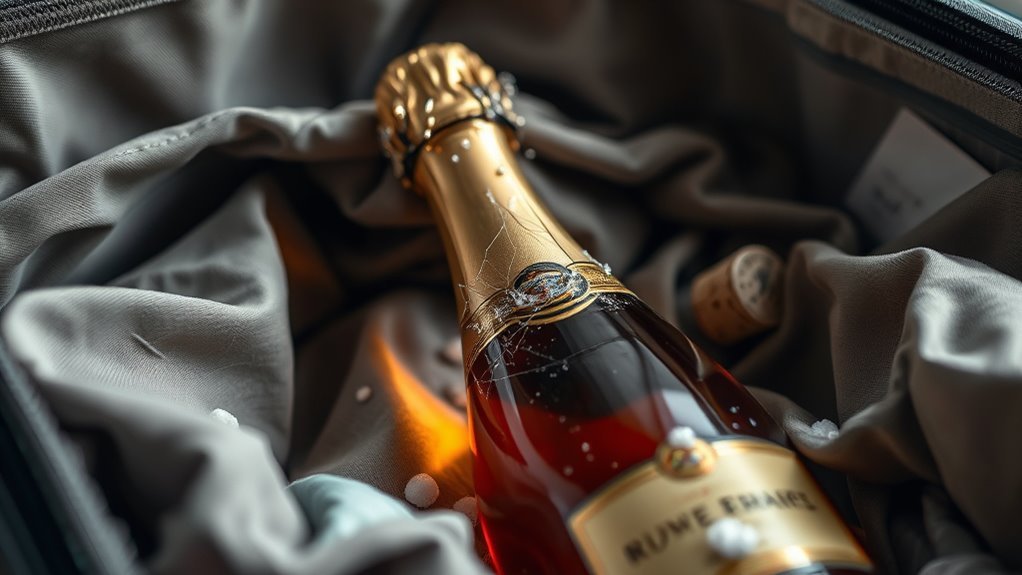
Because checked baggage endures rough handling, bottles commonly break or leak during airline travel. You’ll face sudden drops, conveyor impacts, and tight packing that stress glass and seals. Temperature shifts change internal pressure, and manufacturing flaws or loose caps make leaks more likely.
Checked luggage takes a beating—drops, impacts, tight packing, and pressure changes often cause bottles to crack or leak.
Protecting bottles means understanding common failure modes:
- Impact fractures: sharp knocks crack glass, especially at the neck or base.
- Pressure differentials: altitude and temperature changes force seals or closures to fail.
- Poor packing: unsecured bottles shift, collide, or press against zippers and seams, opening or breaking the container.
What to Do if a Bottle Leaks or Breaks in Your Suitcase
When you find a bottle has leaked or shattered in your suitcase, act quickly to limit damage and salvage items. Remove the suitcase contents and set them aside on a protected surface. Wear gloves, then wipe up sticky residue with paper towels, absorbing as much liquid as possible.
For broken glass, use thick gloves and a brush to collect shards; place debris in a puncture-proof container. Spot-clean fabrics with mild detergent and cold water; rinse and air-dry.
If the smell lingers, sprinkle baking soda on fabrics overnight and vacuum. File an airline claim promptly and document damage with photos.
Safer Alternatives to Flying With Champagne
If you’d rather avoid the risk of leaks, breakage, or confiscation, there are several safer ways to enjoy champagne after a flight. You can plan ahead and still celebrate without hauling glass.
- Buy at your destination: pick up champagne from a local store or airport duty-free after security so it travels safely.
- Ship ahead: use a reputable courier to send bottles to where you’ll stay, ensuring proper packaging and tracking.
- Choose alternatives: bring canned or Tetra Pak sparkling wine, which meets carry and checked rules and won’t shatter.
Each option keeps you sipping without the stress of damaged baggage.
Frequently Asked Questions
Can I Ship Champagne by Mail Instead of Flying With It?
Yes — you can ship champagne by mail, but you’ll need to follow carrier and legal rules: pack it securely in approved bottles and cushioning, check alcohol shipping restrictions, use proper labels, and expect extra costs and delivery limitations.
Are There Specific Countries That Ban Bringing Alcohol in Checked Luggage?
Yes — some countries ban or heavily restrict bringing alcohol in checked luggage; you’ll face limits or prohibitions depending on destination, customs rules, and duty-free allowances, so always check that country’s regulations before packing bottles.
Can Sparkling Wine Differ From Champagne in Explosion Risk?
Yes — sparkling wine can differ from Champagne in explosion risk because bottle pressure varies by style, sugar, and fermentation. You’ll face higher risk with higher carbonation and weaker bottles; always pack securely and check airline rules.
Will Travel Insurance Cover Broken Bottles in Checked Luggage?
Usually not fully—you’ll need to check your policy. Some travel insurance covers accidental damage or lost baggage, but bottles are often excluded or limited. Read terms, document purchases, keep receipts, and file claims promptly.
Can I Bring Opened Bottles With Resealed Caps in Checked Bags?
Generally, you can, but airlines and countries vary. You’ll need to seal bottles well, pack them in protective sleeves or clothing, and follow alcohol quantity and duty rules. Check your airline’s specific policy before flying.
Conclusion
You can avoid a bubbly disaster by packing champagne carefully or choosing alternatives. Wrap bottles in bubble wrap, seal them in plastic bags, and cushion them among soft clothes. Remember pressure and temperature changes can stress glass, and airlines may limit alcohol in checked bags—so check rules before you fly. If a bottle breaks, isolate the mess and launder immediately. When in doubt, ship bottles or buy locally to skip the risk altogether.