Do Beer Cans Explode in Checked Luggage
You usually won’t have beer cans explode in checked luggage if you pack them smartly—cans tolerate normal pressure changes and handling. Dents, corrosion, extreme heat, overfilling, or rough impacts raise the risk of seams popping or spraying, so cushion cans, keep them upright, and use leak-proof bags or a hard container. Airlines generally allow beer in checked bags within limits, and following packing tips cuts chances of messes; keep going to learn practical precautions and alternatives.
Short Answer: Will Beer Cans Explode in Checked Luggage?
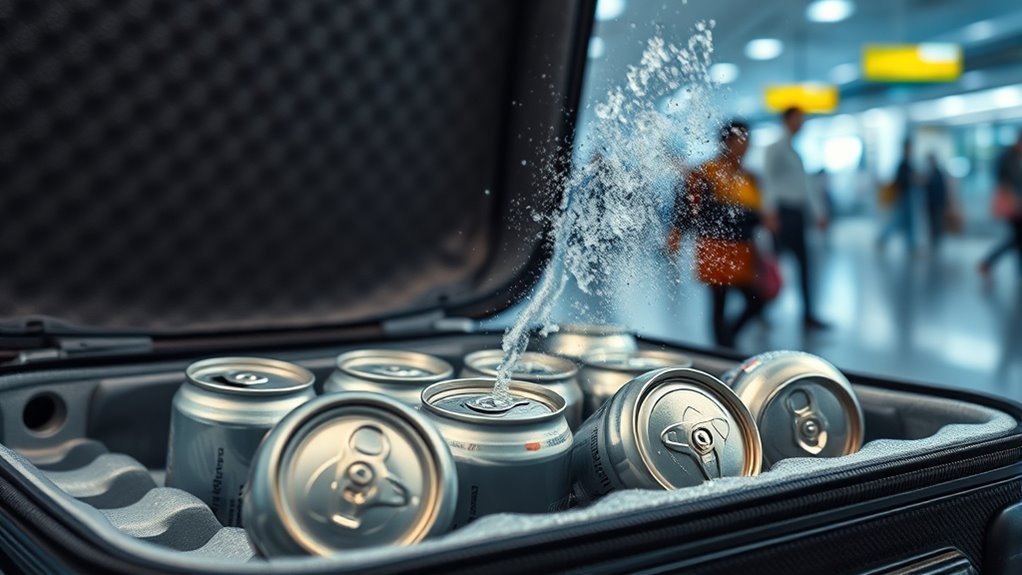
Although it’s possible for beer cans to burst under pressure changes and rough handling, they don’t usually explode in checked luggage if they’re sealed and handled normally. You’ll rarely face a catastrophic rupture; most cans tolerate routine transit stresses.
Still, dents or corrosion increase failure risk, so inspect cans before packing. Pack them upright if you can, cushion with clothing, and keep them away from sharp objects and heavy items that might compress them.
Consider using sturdy containers or sealed plastic bags to contain leaks. If you follow these simple precautions, you’ll greatly reduce the chance of mess or damage.
How Does Cabin/Cargo Pressure Affect Sealed Beer Cans?
When you pack sealed beer cans in checked luggage, changes in cabin and cargo pressure can slightly alter the internal pressure of the cans and create stress on seams and lids.
As the aircraft climbs, external pressure drops and the gas above the liquid expands a bit, raising internal pressure; on descent, external pressure rises and compresses the can.
Cans are designed to tolerate typical pressure differentials, so minor expansion or contraction usually won’t cause failure.
However, any manufacturing defects, existing dents, or overfilled cans increase risk.
Secure packing and using intact cans minimize stress-related leaks or ruptures during flight.
Can Temperature Swings in the Cargo Hold Burst Cans?
You’ll notice the cargo hold can swing from cold to surprisingly warm during loading and on the ground, and those temperature shifts change the pressure inside your beer cans.
As altitude changes push external pressure down, the internal gas can expand, and combined with heat, a weak seam or dented can might fail.
We’ll look at how much temperature and pressure change cans can tolerate and what you can do to protect them.
Cargo Hold Temperature Variability
If you pack beer in checked luggage, temperature swings in the cargo hold can stress cans as pressure and metal fatigue change with heating and cooling. You’ll face repeated cycles: cold at altitude, warmer on the ground, and variability in between.
Those cycles expand and contract liquid and metal, slowly weakening seams and lids. Well-made cans tolerate normal variations, but older or dented cans are likelier to fail after repeated swings.
Pack cans upright, cushion them, and avoid packing near rigid edges to reduce flex. Consider insulating wraps or a hard case to moderate temperature change and protect integrity.
Pressure Changes At Altitude
Those temperature cycles in the cargo hold pair with changing air pressure to stress beer cans: as the plane climbs and cabin pressure drops, the gas above the liquid expands, raising internal can pressure; during descent, pressure falls back and the can contracts. You’ll notice repeated expansion-contraction cycles can weaken seams or cause slow leaks, especially in older or dented cans. Handle cans gently and pack them to limit movement. Quick checklist:
| Factor | Effect |
|---|---|
| Ascent | Internal pressure rises |
| Descent | Pressure decreases |
| Repeated cycles | Metal fatigue risk |
| Movement | Higher puncture chance |
Can Integrity Under Heat
Because cargo-hold temperatures can swing widely between ground and cruise, heat-driven expansion and contraction add stress to beer cans’ seams and seals. You should know that metal and liquid expand at different rates: the beer warms and builds slight internal pressure while the aluminum expands, then cools and contracts, creating cyclic stress.
Repeated cycles can fatigue seams, especially on older or dented cans. You can reduce risk by packing cans snugly, insulating them, and avoiding direct heat sources.
While a single temperature change rarely bursts a sound can, combined damage and extremes raise the chance of leaks or rupture.
Can Rough Baggage Handling Make Cans Explode?
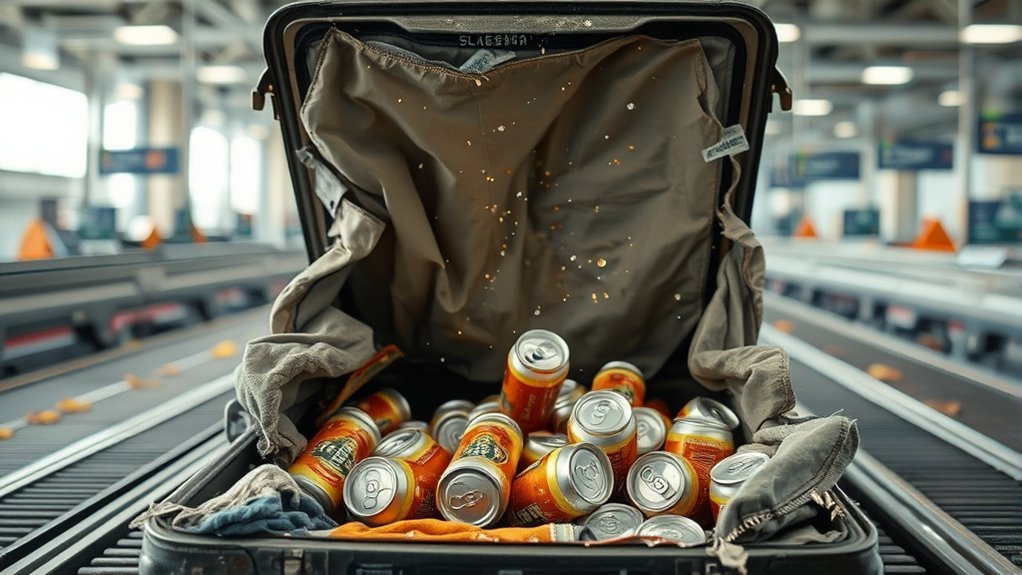
You might think pressure shifts are the main threat, but rough handling adds a real physical risk to cans. When baggage gets tossed or crushed, weakened seams or dents can fail under internal pressure and cause ruptures.
Pack carefully and cushion cans to reduce both pressure-related and impact-related failures.
Pressure Changes Impact
If baggage handlers toss or crush your suitcase, the sudden jolts and pressure on cans can raise the chance of ruptures, though full-blown explosions are rare. You should know cabin-to-pressurized-hold changes and altitude-related stress affect can integrity, plus how trapped air and liquid interact under changing pressure.
Consider these factors:
- Altitude-induced lower external pressure increases internal relative pressure.
- Temperature shifts expand gases, adding strain.
- Overfilled or shaken cans have higher rupture risk.
- Minor structural defects amplify vulnerability.
- Multiple compromised cans can leak, causing messes and odor, not detonations.
Pack wisely and use protective insulation.
Physical Impact Risk
When baggage handlers toss or drop a suitcase, that blunt force can dent or puncture beer cans and sometimes break seals, turning a bruised can into a leaking—or rarely—ruptured one. You’ll usually see spills rather than explosions: aluminum yields before pressure builds catastrophically.
Still, sharp impacts, edges inside the bag, or repeated crushing can open seams or pry lids. Packing matters: cushioning, hard-sided cases, and keeping cans upright reduce direct strikes. Use bubble wrap, clothing, or rigid containers to isolate cans.
If you handle checked luggage, assume impact risk exists and pack to prevent dents and leaks.
Do Airlines Let You Transport Beer in Checked Bags?
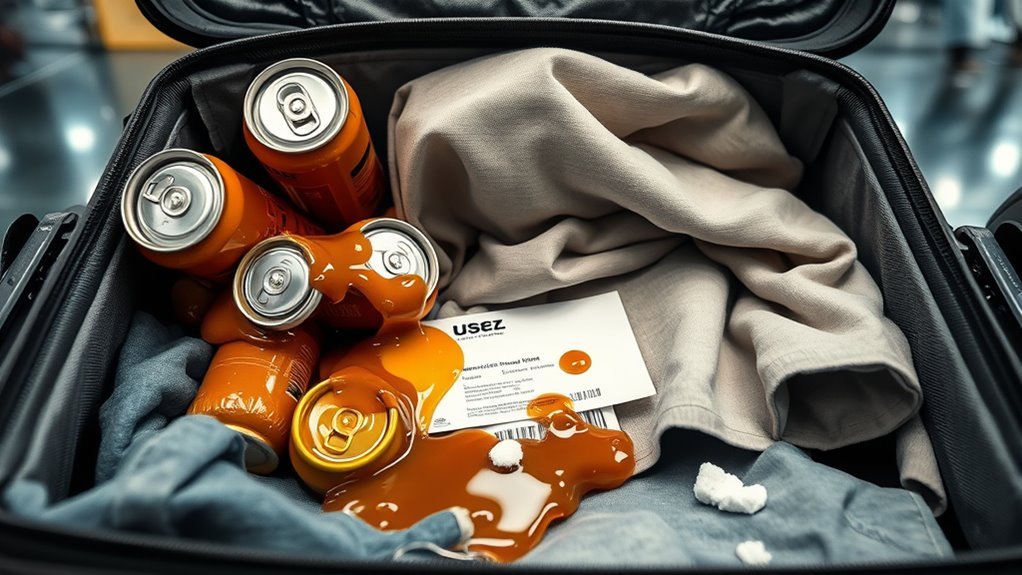
Although rules vary by carrier and country, most airlines let you pack beer in checked luggage as long as it meets volume and alcohol-content limits. You should still check your carrier’s policy and customs rules for destinations to avoid seizures or fines.
Most airlines allow beer in checked bags if volume and alcohol limits are met; always verify carrier and customs rules.
Pack securely to prevent leaks and pressure changes from causing mess. Consider declared limits, country import rules, and connections when planning.
- Use sturdy, sealed containers
- Cushion cans to prevent crushing
- Place liquids in a leak-proof bag
- Keep receipts for proof of purchase
- Declare when required by customs
Follow airline guidance and you’ll avoid surprises.
What Alcohol Limits Apply to Checked Luggage?
Many airlines and countries limit how much alcohol you can pack in checked luggage by volume and alcohol-by-volume (ABV) percentage, so check both carrier and destination rules before you travel. You’ll usually see limits like total liters for beverages under 24% ABV and stricter caps for higher ABV bottles or cans. Pack commercially sealed containers, declare if required, and consider duty-free allowances. Below is a quick comparison to help you plan:
| ABV Range | Typical Limit |
|---|---|
| <24% | Several liters (often generous) |
| 24–70% | Lower liters, strict declaration |
Follow carrier guidance to avoid confiscation or fines.
How Do Different Countries’ Rules Affect Checked Beer?
Because countries set different limits and inspection practices, what you can pack and how it’s treated in checked luggage varies a lot. You should check destination rules before packing beer because customs, duty-free allowances, and safety inspections differ.
Some nations ban large volumes, others restrict alcohol percentage, and airport security may open bags for inspection. To plan, note these typical variations:
- Allowance limits (liters per person)
- Alcohol by volume restrictions
- Duty and tax thresholds
- Local possession or import bans
- Inspection and repacking likelihood
Follow airline policies too, since carriers enforce or add rules at boarding.
Should You Carry Beer in Hand Luggage Instead?
If you’re thinking of keeping beer with you, remember cabin pressure still changes and cans can burst if they’re over-pressurized.
You’ll also face security screening limits—most airports ban liquids over 100 ml in carry-on unless bought after security.
Finally, consider space and weight constraints in your overhead or under-seat area before deciding to carry beer on board.
Carry-On Pressure Risks
When you bring beer in your carry-on, cabin pressure changes and rough handling still pose risks, but they’re generally lower than in checked baggage; you stay in control, can cushion cans, and spot leaks early. Still, take precautions to avoid mess or pressure issues.
- Stow upright to minimize sloshing and impact stress
- Use padded pockets or clothing as shock absorbers
- Don’t overfill soft containers that can burst under pressure
- Check cans for dents before packing; compromised seals fail more easily
- Place cans in a sealed plastic bag to contain leaks and simplify cleanup
You’ll reduce rupture chances and hassle.
Security Screening Rules
Before deciding where to pack your beer, check the security screening rules: most airports and airlines follow strict liquid limits for carry-on bags (typically containers no larger than 100 mL/3.4 oz in a single, clear quart-sized bag), so standard beer cans won’t pass through security in United States, EU, or many international terminals. You should usually place beer in checked luggage. If you try carry-on, expect confiscation. Know exceptions for duty-free sealed bags and connecting flight rules. Confirm with your airline.
| Situation | Likely outcome |
|---|---|
| Standard can in carry-on | Confiscated |
| Duty-free sealed bag | Often allowed |
| Checked bag | Allowed (subject to baggage rules) |
| Connecting flights | Varies by airport |
Space And Weight Limits
Though you can technically stash a few cans in your carry-on, airline size and weight limits usually make checked baggage the more realistic option for transporting beer. You’ll need to balance convenience with rules: carry-on limits restrict volume, while checked baggage allows more but may add fees or weight penalties. Pack smart to avoid surprises and stay within limits.
- Check your airline’s carry-on dimensions and weight allowance
- Count cans and estimate total weight before packing
- Use sturdy padding to prevent crushing in checked bags
- Beware fees for excess weight or extra bags
- Consider local customs and import limits
How to Choose: Check, Carry, or Ship Beer?
If you’re deciding whether to check, carry, or ship beer, weigh the rules, risk, and convenience of each option so you can pick the safest and simplest route.
Carrying lets you control temperature and pressure and keeps cans from rough baggage handling, but you’re limited by TSA liquid rules and space.
Checking avoids carry limits but risks temperature swings, pressure changes, and rough handling—pack beers in insulated, cushioned containers and follow airline limits.
Shipping removes travel hassle but adds cost and transit time; choose a reliable carrier and proper packing.
Prioritize regulations, bottle protection, and your tolerance for inconvenience.
Can You Ship Beer Instead of Checking It?
Want a hassle-free alternative to checking beer with your luggage? You can ship beer, but you’ll need to follow carrier rules, packaging standards, and local laws. Plan ahead, declare contents, and use sturdy boxes with padding. Consider insurance and delivery timing so your beer arrives intact.
- Check carrier policies for alcohol shipments and required permits.
- Use sealed cartons, cushioning, and leak-proof inner containers.
- Label packages according to regulations and include recipient ID where required.
- Choose ground services to avoid pressure and temperature extremes.
- Verify state-to-state or international restrictions before sending.
Are Aluminum Cans Riskier Than Glass Bottles in Checked Bags?
You might think aluminum cans are more likely to fail under pressure changes, since their thin walls flex more than glass. However, cans tend to rupture by popping seams or spraying liquid, while glass bottles are more prone to catastrophic shattering.
Consider both pressure sensitivity differences and material rupture likelihood when packing to decide which risk you accept.
Pressure Sensitivity Differences
While both aluminum cans and glass bottles face the same lower air pressure in a plane’s cargo hold, aluminum cans are generally more pressure-sensitive because their thin walls flex and equalize internal pressure more slowly, making them more prone to bulging or rupturing under stress.
You should know how that translates to risk: cans react to pressure changes with visible deformation, while bottles hold shape but transmit force differently.
Consider factors that affect sensitivity:
- Headspace and fill level influence internal pressure shifts
- Temperature swings alter gas expansion inside containers
- Can geometry (seams, ribs) changes stress points
- Bottle thickness and shape distribute forces
- External crushing multiplies pressure effects
Material Rupture Likelihood
Although both aluminum cans and glass bottles can fail under the stresses of air travel, aluminum cans are generally more likely to rupture in checked luggage because their thin walls flex, fatigue, and tear more easily under fluctuating pressure, temperature changes, and external crushing forces. You should expect dents, seam failures, and spray leaks from cans; glass tends to fracture catastrophically but needs higher impact energy. Pack carefully, use padding, and isolate containers. Consider bottles for slower leaks versus cans for messy sprays. Below is a concise comparison:
| Feature | Aluminum Can | Glass Bottle |
|---|---|---|
| Flexibility | High | Low |
| Leak type | Spray | Break |
| Energy to fail | Low | High |
Which Beer Packaging Is Least Likely to Leak?
When you’re choosing beer packaging for checked luggage, pick containers that resist punctures, pressure changes, and impact. Glass bottles are sturdy but shatter, so they can break easily if mishandled. Cans handle pressure well but can dent if dropped or impacted. Sealed plastic growlers or PET bottles flex without exploding and often leak less if capped properly.
You should prioritize sealed designs, robust caps, and protective wrapping. Consider placement and cushioning to minimize stress on seals. Compare options by seal type, material flexibility, and resistance to impacts before packing.
- Sealed screw caps (tight threads)
- Crimped crown caps (bottles)
- Stay-on-tab cans
- PET bottles with tamper rings
- Resealable growlers
How Many Cans Per Checked Bag Is Safe?
You can safely pack several cans of beer in a checked bag, but the exact number depends on airline limits, weight restrictions, and how well you protect them.
Most carriers allow alcohol in checked luggage if it’s 24%–70% ABV (or unrestricted if under 24% ABV) and you stay within the checked bag weight (usually 50 lb/23 kg) and size limits.
Aim for a practical count: enough to stay under weight and leave room for padding.
Use protective sleeves, place cans centrally, and distribute weight evenly.
If you exceed limits or neglect protection, you risk damage, fees, or confiscation.
How Does Overfilled Luggage Increase Burst Risk?
When you cram a bag full of beer cans, trapped air and liquid have less room to expand, which raises the internal pressure inside each can.
Tight packing also lets soft items press cans together and against hard surfaces, increasing the chance that a dent or puncture will trigger a burst.
Next, we’ll look at how pressure changes at altitude combine with compression to create the biggest risks.
Increased Internal Pressure
If overpacking squeezes cans tightly against each other and hard surfaces, internal pressure can rise enough to weaken seams and push pop-tops outward. You’ll feel the risk when cans have no room to flex as temperature and altitude change. Small dents become stress points, and trapped liquid shifts add momentary spikes.
Prevent failures by understanding what increases internal pressure:
- Elevated temperature from luggage near heaters or sun
- Rapid altitude-related pressure drop stressing sealed cans
- Pre-existing dents or manufacturing flaws concentrating stress
- Vibration and jostling transmitting force to weakened seams
- Filling to brim with minimal headspace increasing expansion risk
Pack with cushion and ventilation.
Compression From Packing
Pressure changes aren’t the only threat — tight packing squeezes cans directly, and that compression raises burst risk by deforming seams and reducing the can’s ability to absorb internal pressure spikes.
When you cram luggage, soft materials and adjacent hard items press against cans, creating localized stress points. Dents weaken the metal and can shift internal pressure distribution, making a sudden rupture likelier during handling or temperature swings.
You should pad cans, avoid stacking heavy objects atop them, and leave small gaps so pressure can equalize.
Using rigid containers or transporting beer in checked bags with proper cushioning cuts burst risk considerably.
Should You Open or Drain Cans Before Travel?
Because airline rules and practical risks both matter, you should usually drain or empty cans before packing them in checked luggage. Emptying reduces pressure changes, mess from ruptures, and suspicion at security.
Because airline rules and practical risks matter, drain cans before checked luggage to avoid pressure bursts, mess, and scrutiny.
If you decide to drain, do it safely and label containers.
- Reduce rupture risk by removing liquid
- Prevent sticky, smelly damage to clothes
- Avoid flight crew or inspector concerns
- Carry alcohol within allowed limits and declare if required
- Use resealable, clearly labeled containers for any residual liquid
You’ll balance convenience against rules; when in doubt, pack empties and carry beverages in compliant, protected ways.
How to Wrap and Seal Individual Cans for Transit?
Now that you’ve decided whether to drain cans, you’ll want to protect what you pack: wrap each can to prevent dents, leaks, and sticky surprises.
Start by wiping cans dry. Use a layer of bubble wrap or a thick dish towel, snugly covering the body and top. Secure with tape or a rubber band so the wrap won’t shift.
For extra leak protection, slip each wrapped can into a resealable plastic bag and expel excess air before sealing. Label bags if some are opened.
Handle wrapped cans gently when loading; avoid compressing them under heavy items.
How to Pack Beer Cans in Checked Luggage to Prevent Leaks?
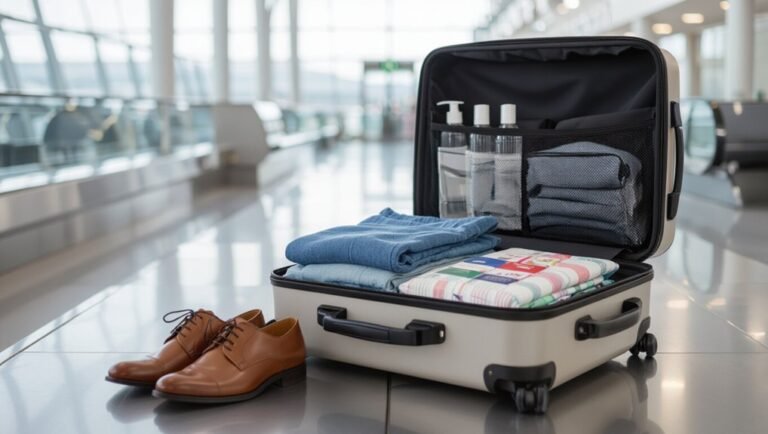
When you load wrapped cans into checked luggage, place them upright in the center of your suitcase and surround them with soft clothing to cushion against shocks. This keeps seams and tops from bearing the brunt of impacts that cause leaks.
You’ll want a stable core and clear separation from hard items so pressure points aren’t created. Use rigid containers or boxes to keep cans aligned and prevent shifting.
Consider pressure changes and handle weight distribution to avoid crushing.
Helpful steps:
- Pack cans upright in a sealed bag
- Add a rigid divider around the cluster
- Fill gaps with soft garments
- Keep heavy items away
- Label the bag fragile
Which Soft Barriers (Clothing, Towels) Protect Cans Best?
If you want the best cushioning for beer cans in checked luggage, choose dense, absorbent fabrics like towels, sweatshirts, and thick socks that compress to absorb shocks and rebound to maintain protection.
Wrap each can individually in a towel or layers of clothing to prevent metal-on-metal contact.
Wrap each can in towels or layered clothing to avoid metal-on-metal contact and reduce dents.
Use rolled socks or T-shirts as spacers between cans and suitcase walls.
Place heavier garments beneath cans to stabilize and softer items around them to cushion impacts.
Avoid single thin layers or loosely packed spaces where cans can shift.
Check for secure compression before closing your bag to minimize movement.
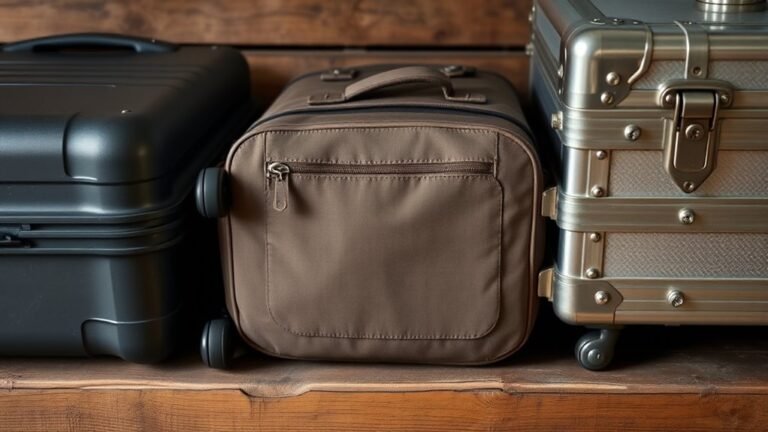
How to Use Hard-Sided Cases for Beer Safety?
Soft barriers help, but hard-sided cases give a different level of protection you’ll appreciate for longer trips or rough handling. You’ll lock cans into a rigid shell that resists crushing and punctures, keeping pressure changes from causing deformation.
Use padding to prevent internal shifting and label the case as fragile or containing bottles.
- Choose a case rated for impact and water resistance
- Pack cans upright in snug dividers or foam inserts
- Add absorbent material in case of leaks
- Avoid overpacking to prevent pressure on seals
- Inspect seals and wheels before checking the case
Are Insulated Coolers Worth Checking With Beer?
Although insulated coolers keep beer cold and protected from bumps, they’re not always worth checking with cans or bottles. You might think insulation adds padding, but many coolers are soft-sided and compress under luggage handlers, risking dented cans or broken bottles.
They also add weight and take roomy space, potentially pushing you into overweight fees. Unless you use a rigid, well-padded cooler designed for transport, you’ll gain little safety.
If you prioritize temperature control and fragile cargo, ship via ground service or use a hard-sided case. Otherwise, skip checking an insulated cooler to avoid hassles.
Best Commercial Packing Products to Prevent Beer-Can Leaks?
When you’re packing beer cans for travel, choosing the right commercial packing products cuts leak risk and protects your luggage. You’ll want durable, purpose-built items that contain spills and cushion impacts. Focus on sealable barriers, shock absorption, and easy cleanup so a single can failure won’t ruin everything.
- Leakproof zippered pouches sized for cans
- Rigid can carriers with individual compartments
- Absorbent spill pads or liners for baggage floors
- Inflatable air cushions to prevent movement
- Heavy-duty plastic tubs with snap lids
Select certified materials, check dimensions, and pack strategically to minimize pressure on cans.
How to Spot Damaged Cans Before You Pack?
Before you pack, run your fingers over each can to feel for dents or misshapen spots that could weaken the seal.
Give suspect cans a gentle squeeze and listen for hissing or sticky residue that signals a leak.
If a can shows any of these signs, don’t pack it—replace it or transport it in carry-on with extra protection.
Check For Dents
If a can’s body or rim shows any dents, don’t pack it—those imperfections weaken the seal and raise the risk of leaks or bursts during pressure changes. You should inspect cans visually and by touch before packing.
Run your fingers around the top and bottom rims, press gently along the side, and look for creases or bulges. If something seems off, set that can aside.
- Check for sharp creases that break the coating
- Look for rim distortions that prevent proper sealing
- Feel for soft spots when you press the side
- Rotate the can under light to spot subtle dents
- Discard cans with any structural compromise
Inspect For Leaks
How can you tell a can’s integrity at a glance and by touch? You’ll examine seams, lids, and the base for moisture, sticky residue, or tiny bulges. Run your fingers around the can; a rough spot, softened metal, or sharp edge suggests a breach.
Hold it to your ear and gently squeeze—hissing or fizz that escapes signals a leak. Look for rust, crusty buildup, or discoloration near joints.
Place cans upright on paper; blotting will reveal slow seepage. If any sign appears, don’t pack it. Replace or double-bag damaged cans to prevent spills and pressure issues.
What to Do if a Can Bursts in Checked Luggage?
When a can bursts in your checked bag, act quickly to contain the mess and protect your belongings. Stop packing more, unzip carefully to avoid splatter, and move the bag to a surface you can clean. Wear disposable gloves if you have them.
Blot—don’t rub—any liquid with towels or absorbent material. Dispose of heavily soaked items and isolate salvageable ones.
- Signal the airline at baggage claim if needed
- Photograph damage for a claim
- Use plastic bags to separate affected items
- Clean the suitcase interior with mild detergent
- Air out fabrics before storage
How to Salvage Clothes and Gear After a Leak?
Because you want to save as much as possible, act fast and sort items by stain type and fabric—move greasy or heavily stained pieces into plastic bags, set aside delicates, and rinse or blot affected areas immediately to prevent stains from setting.
Act quickly: sort items by stain and fabric, bag greasy pieces, set aside delicates, and blot spills immediately.
Treat fabrics with appropriate cleaners: use dish soap or a stain remover for greasy beer residue, diluted vinegar for odor, and gentle detergent for delicates.
Soak stubborn stains in warm water if fabric allows, then launder promptly.
For nonwashables, wipe with a damp cloth and air dry; stuffing shoes and bags with paper helps absorb moisture.
Repeat cleaning if odor or stains persist.
How to Document a Damaged Bag and File an Airline Claim?
If your bag arrived damaged, start by documenting everything clearly and promptly: take time-stamped photos of the exterior damage, any torn zippers or broken wheels, and all affected contents before you move or clean anything. Then report the issue to the airline at the airport baggage service office so they can inspect and create an official irregularity report (PIR).
You should also:
- note flight details, tag numbers, and arrival time
- list damaged items with approximate value and purchase dates
- keep originals and receipts for high-value items
- request a copy of the PIR and a claim reference number
- ask about deadlines and required forms for filing a claim
How Do Airlines Handle Damaged Baggage and Compensation?
Although airlines vary, they generally follow the same basic process for handling damaged checked baggage: you report the damage at the airport so staff can inspect and create an irregularity report, then file a claim with required documentation and await evaluation for repair, replacement, or reimbursement.
You’ll need receipts, photos, and the PIR (property irregularity report) number. Airlines assess liability, consider wear-and-tear exclusions, and may offer immediate minor-item reimbursements.
Keep copies and follow deadlines—often seven days for visible damage. If denied, escalate to a supervisor, use mediation or small-claims court, and keep communication records.
Common Myths About Cans Exploding at Altitude: True or False?
You’ve seen advice about filing claims for damaged luggage, but you might still wonder whether beer or soda cans actually burst in checked bags during flight. You shouldn’t assume explosions are common; pressure changes, temperature, and handling matter.
Consider these myths—true or false—and what actually influences leaks or ruptures:
Consider these myths—true or false—and discover what really causes cans to leak or burst during flight
- Myth: Cabin pressure causes cans to explode — False; pressurization keeps pressure differences small.
- Myth: Altitude alone makes cans burst — False; manufacturing defects or overfilling matter more.
- Myth: Cold cargo holds prevent damage — Partly true; cold can contract gases.
- Myth: Foam padding stops all leaks — False; it helps but isn’t foolproof.
Real-World Incidents: Lessons From Airline Reports
When airlines investigate luggage damage, they usually find a mix of predictable causes—temperature swings in the cargo hold, rough handling during loading, and occasional faulty seals on the cans themselves—and rare truly catastrophic ruptures. You’ll learn from reports that most incidents are minor leaks rather than explosions.
Airlines document dented cans, sticky interiors, and ruined clothes; claims data show pressure differentials rarely cause full ruptures. Investigations point to poor packing, expired or damaged containers, and exposure to heat.
You should inspect cans, use sealed plastic bags, and declare liquids when required to reduce loss and speed claim resolution.
Low-Risk Alternatives to Packing Canned Beer
If you want to avoid the risk of crushed or leaking cans, consider alternatives to packing beer in checked luggage like using a hard-sided case or protective sleeves.
You can also ship beer ahead to your destination via a carrier that handles alcohol, following their packaging and legal rules.
Or simply plan to buy beer when you arrive to skip transport hassles altogether.
Pack Beer In Checked?
Although packing canned beer in checked luggage can work, many travelers choose low-risk alternatives to avoid leaks, dents, or pressure-related bursts. You can still bring beer without risking a sticky suitcase or ruined cans.
Consider compact, protective options and local purchases that simplify transit. Choose what fits your priorities—convenience, cost, or keeping a favorite brew—while obeying airline rules. Practical choices reduce hassle and mess.
- Wrap cans individually in resealable plastic bags
- Use hard-sided toiletry cases or insulated pouches
- Transfer beer into durable growlers or bottles
- Buy beer at your destination
- Opt for vacuum-sealed beer packs
Ship Beer Ahead
Shipping beer ahead can remove most of the stress and mess of bringing cans through airport security or checked baggage. You can ship via courier, use a specialty shipper, or ask a friend to forward purchases. Pack with bubble wrap, sturdy boxes, and leak-proof seals. Insure the shipment and check carrier rules for alcohol. Expect higher costs but lower risk of broken cans or baggage delays.
| Method | Speed | Risk |
|---|---|---|
| Courier | Fast | Low |
| Specialty shipper | Moderate | Very low |
| Friend/forward | Variable | Low |
Buy At Destination
When you want to skip the hassle of packing cans, buy beer at your destination—local shops, supermarkets, and airport concessions carry a wide selection, including regional brews you mightn’t find at home. You’ll avoid leakage, pressure changes, and airline restrictions by picking up drinks after arrival. Focus on convenience, freshness, and supporting local producers.
- Check hours and ID rules at shops near your lodging
- Buy resealable growlers or crowlers for better transport
- Look for duty-free deals at international airports
- Ask staff for seasonal or limited releases
- Compare prices between stores and on delivery apps
Packing Checklist: Avoid Beer-Can Disasters When Flying
If you’re bringing beer in checked luggage, pack smart to prevent sticky, ruined clothes and damaged suitcases; a single popped can can turn a trip sour.
Wrap cans individually in plastic bags, seal with tape, and cushion them with soft clothing.
Use sturdy, hard-sided luggage and place cans in the center away from edges.
Consider reusable insulated sleeves or a commercial beer shipping box.
Limit quantity to legal allowances and check airline and destination rules.
Mark the bag fragile and avoid overpacking to reduce pressure.
Inspect cans for dents before packing and recheck them after transit to catch leaks early.
Frequently Asked Questions
Will Pressure-Relief Valves on Craft Cans Prevent Explosions?
Yes — they usually will: you’ll benefit from pressure-relief valves on craft cans because they release excess pressure, reducing rupture risk, but extreme temperature or rough handling can still cause leaks or failure, so pack carefully and cushion them.
Can Pasteurized vs. Unpasteurized Beer Affect Rupture Risk?
Yes — unpasteurized beer can raise rupture risk because live yeast continues fermenting, boosting pressure, while pasteurized beer’s yeast’s largely inactive so it’s less likely to overpressurize; temperature and bottle/can integrity still matter.
Do Altitude Changes Affect NITROgen-Infused (NITRO) Beers Differently?
Yes — you’ll notice altitude affects nitro beers more because the pressurized widget and dissolved nitrogen respond to lower external pressure, increasing internal stress and making cans likelier to foam, hiss, or rupture during ascent.
Will Combining Cans With Carbonated Mixers Increase Burst Likelihood?
Yes — combining cans with carbonated mixers raises burst risk because you’re adding more gas and agitation; pressure and shaking can exceed can limits, so you’ll want sturdy packing, cooled contents, and minimal movement to reduce chances.
Are Home-Canned or Re-Seamed Cans Riskier for Air Travel?
Yes — you’re risking more with home-canned or re-seamed cans because their seals and pressure ratings aren’t certified; they’re likelier to leak or burst under cabin pressure changes, so avoid packing them in checked baggage.
Conclusion
In most cases, your beer cans won’t explode in checked luggage, but there’s still risk. Changes in pressure and especially temperature, plus rough handling, can make cans leak or burst. Airlines generally allow packed beer but check limits and pack carefully—use sealed plastic bags, padding, and a sturdy hard-sided suitcase or specialized cooler. Consider alternatives like buying at your destination or using bottles in protective packaging to avoid a sticky, ruined trip.