Do I Collect My Luggage on a Connecting Flight
Usually you won’t pick up checked luggage on a same‑ticket connection—airlines typically transfer it to your final destination—unless your itinerary is on separate tickets, involves customs, or the carrier can’t interline bags. For international arrivals you often must clear passport control and reclaim bags for customs, then recheck them. Tight layovers, small airports, or low‑cost carriers can also require manual pickup. Keep documents and ask agents to confirm; more details ahead will help you prepare.
Do I Need to Pick Up My Checked Bag? Quick Checklist

If your flight connects at a single airline or partner airlines and your ticket shows a through-checked bag, you usually don’t need to pick it up—airline staff will transfer it to your final destination.
Check these points: confirm your bag tag lists the final airport; verify both segments are on one itinerary; note if you have customs or immigration layovers requiring recheck; look for interline agreements if carriers differ; confirm minimum connection time at the airport; ask the agent at check-in to note transfer instructions; keep receipts and ID accessible; monitor baggage status via airline app or screens at the airport.
Same-Ticket Connections: When Airlines Transfer Checked Bags
When your itinerary shows all flights on one ticket, airlines will usually transfer your checked bag through to your final destination without you collecting it. You should still confirm at check-in which airport and flight the bag’s tag lists, since some carriers route bags only to the next major hub.
Keep your baggage claim receipt and note any tight connections—if the carrier deems a transfer impractical, they’ll notify you.
For international itineraries, ask whether you must clear customs and recheck bags at the first entry point.
Pack essentials in carry-on in case of misrouting or delays.
Separate Tickets or Different Airlines: Who’s Responsible for Your Bag?
Because different airlines and separate tickets create gaps in responsibility, you’ll usually need to collect and recheck your bag yourself unless the carriers have a baggage interline agreement covering your segments.
If you booked separate tickets, assume no transfer: the first airline’s liability ends at arrival. You should confirm with both carriers whether they’ll interline baggage; if not, plan time to claim, clear any required procedures, and check in again with the second airline.
Consider travel insurance, minimal connection times, and carry-on only when possible. At booking, ask agents about baggage transfer policies to avoid surprises.
International Connections: When Passport Control Forces Bag Pickup
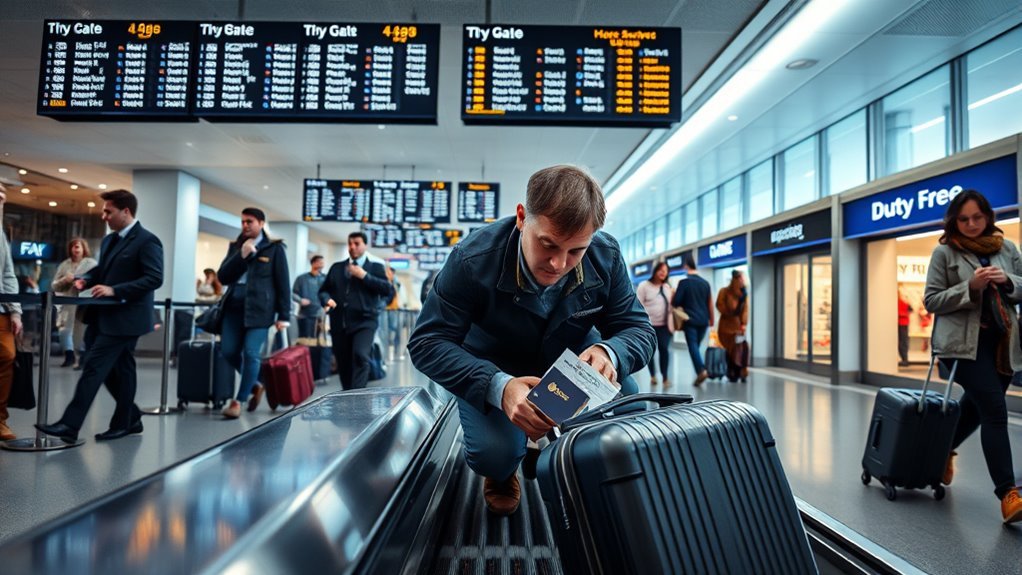
If your connection requires you to pass passport control, you’ll usually have to collect checked bags to clear customs before rechecking them for the next flight.
Procedures and where you recheck depend on the airport and airline, so check whether your itinerary is through-checked or if you need to carry bags between terminals.
Know the time needed for customs and recheck to avoid missing your next flight.
When You Transit Through Customs
Arriving at an international hub and passing through passport control usually means you’ll have to collect your checked bags for customs inspection before rechecking them for your onward flight.
When customs requires inspection, follow signage to the baggage area, present documents, and place your suitcase on the inspection belt or open it if asked. Stay nearby to answer questions and remove prohibited items if necessary.
After clearance, look for signs or airline staff directing you to a recheck counter or transfer desk. Keep boarding passes and ID handy; cooperating speeds the process and reduces the chance of missed connections.
Rules For Rechecking Bags
Once customs clears your bags, you’ll need to recheck them for your next international or domestic leg, and the process usually follows a few standard rules.
You must collect checked luggage, pass passport control and customs, then proceed to the airline recheck counter or designated transfer desk. Have boarding passes and travel documents ready; agents may verify onward flights and tag bags to the final destination.
Security may require carry-on screening. Allow extra time for lines and possible re-screening.
If your bags miss the connection, file a property irregularity report immediately and keep contact details for tracing and delivery.
Airline And Airport Procedures
When passport control requires you to collect checked luggage during an international connection, follow the airport’s designated flow: clear immigration, pick up your bags from the carousel, clear customs, and then proceed to the airline recheck counter or transfer desk to have your luggage tagged for the next flight. You’ll need your boarding pass, passport, and any customs forms. Follow signs and staff instructions; times vary. If tight on time, notify airline staff immediately for assistance or expedited transfer. Keep receipts for baggage and inspection. Know local rules—some airports demand security rescreening before you rejoin departures.
| Step | Who | Tip |
|---|---|---|
| Immigration | You | Keep documents ready |
| Baggage Claim | You | Watch carousel number |
| Customs | Officers | Declare items if required |
| Recheck | Airline | Get new tag and receipt |
Will Reclaiming Bags Make You Miss a Tight Connection?
How likely are you to miss a tight connection if you have to reclaim checked bags? It depends on factors like time between flights, airport layout, and whether you clear customs.
Reclaiming adds steps: waiting at the belt, possibly rechecking, and steering through terminals. You can still make it if timings are generous, lines are short, and the airline assists.
Be realistic: tight connections leave little margin for baggage delays, especially on international arrivals that require immigration.
- Short layovers increase risk
- Large or confusing airports add time
- Customs/immigration can be unpredictable
- Airline through-checks reduce risk
If You Must Reclaim Bags: Step-by-Step Procedure
If you do have to reclaim your bags, follow a clear sequence so you don’t waste time or miss your next flight. Exit sterile area, check monitors for carousel, and head to baggage claim quickly. Retrieve luggage, inspect tags, then proceed to customs/immigration if required. After clearance, drop bags at the transfer desk or airline check-in, keep receipts, and confirm new tag and departure gate.
| Action | Tip |
|---|---|
| Find carousel | Note flight number on monitors |
| Customs/Drop | Keep documents handy |
| Re-check | Get luggage receipt |
Move briskly and ask staff if anything’s unclear.
How to Confirm Baggage Transfer Rules Before You Travel

Because baggage rules vary by airline, route, and airport, check transfer policies well before you head to the airport. You’ll confirm whether bags transfer automatically, require recheck, or need customs pickup. Start with your airline’s baggage transfer page, then verify connections and codeshares.
If you booked separate tickets, assume no automatic transfer until told otherwise.
- Check the airline’s website baggage/connecting flights section.
- Call the airline or use online chat for specific itineraries.
- Review your itinerary and ticketing carrier for transfer notes.
- Save screenshots or emails that confirm gate-to-gate or checked-through handling.
Airport Quirks That Force Checked-Bag Pickup
When airports or international rules require customs clearance or terminal changes, you’ll often have to collect checked bags even on a through ticket.
You’ll also face mandatory pickup when carriers don’t interline baggage agreements, forcing you to recheck at a partner or different airline.
Smaller airports may lack baggage transfer services, and some low-cost carriers only allow gate-to-gate connections without transfer handling.
Security protocols can require physical inspection between flights.
If your connection forces a terminal change with no secured transfer, you’ll clear screening and reclaim luggage.
These quirks mean you should expect occasional manual retrieval despite a single booking.
Practical Tips to Avoid Baggage Hassles During Connections
Before you travel, check the airline’s through-check policy so you know if your bags will go all the way to your final destination.
Know the rules for international connections—some countries require you to reclaim and recheck luggage even on a single ticket.
Give yourself extra connection time to handle unexpected delays or baggage transfers.
Check Through-Checked Policies
If you’re connecting between two flights, check-through policies determine whether your bag goes straight to your final destination or you need to pick it up and recheck it — and knowing the rules can save time and stress.
Check at booking and at the airline desk whether carriers have interline agreements, or if codeshares force separate tickets. Ask if the connection is protected and whether you’ll clear customs.
If you’re unsure, tag your bag to the final city and get confirmation in writing.
- Confirm interline or through-check at booking
- Request baggage tag to final destination
- Get written confirmation from agent
- Keep layover time in mind
Know International Rules
Because international connections often involve customs, differing airline agreements, and country-specific regulations, you should confirm baggage rules for every segment of your itinerary so nothing surprises you at a transfer.
Check whether you’ll clear customs at the first arrival or final destination; many countries require you to reclaim and recheck bags on entry.
Verify interline agreements and baggage tags—if your carriers accept through-check, you won’t collect luggage.
Confirm transit visa rules affecting baggage handling.
Contact airlines directly or review their websites, and keep documentation showing your checked-through status to present if agents question whether your bag should stay on the onward flight.
Allow Extra Connection Time
When you build extra time into your connection, you cut stress and give yourself room to handle delays, long lines, or unexpected baggage steps like customs or recheck. Plan for at least 90–120 minutes for domestic-to-domestic, 2–3 hours for international, and more if you’re changing terminals or airlines.
You’ll reduce the chance you’ll need to rebook or retrieve luggage unexpectedly. Use these quick tactics to protect your trip:
- Choose longer layovers when booking, even if slightly pricier.
- Check terminal maps and transfer times in advance.
- Pack essentials in carry-on in case checked bags lag.
- Confirm baggage transfer policies with airlines.
Frequently Asked Questions
Can I Leave Items in My Checked Bag During a Long Layover?
Yes — you can leave items in your checked bag during a long layover, but remember airlines might access it for security, risk damage or loss, and you shouldn’t pack valuables, medications, or essential documents in checked luggage.
Can Airline Staff Access My Checked Bag if I Request?
Yes — airline staff can access your checked bag if you request, but they’ll follow security protocols, may need TSA or airport security present, and you’ll need ID and authorization; don’t expect access after baggage is loaded onto the aircraft.
Do Codeshare Partners Always Transfer Baggage Between Flights?
No, codeshare partners don’t always transfer baggage; you should confirm with the operating carrier. If they do, they’ll tag and transfer it, but exceptions occur for separate tickets, different terminals, or customs rules, so verify beforehand.
Will Damaged Items in Checked Luggage Be Handled Differently on Connections?
Yes — damaged items in checked luggage are usually handled per the carrier that checked your bag; you’ll file a claim with them, but connecting carriers or handlers may share liability depending on routing, tickets, and international rules.
Can I Add Travel Insurance for Lost Baggage on Connecting Itineraries?
Yes — you can add travel insurance covering lost baggage for connecting itineraries; check policy terms, limits, and connection-specific exclusions, then buy before travel, declare valuables, keep receipts, and note carrier liability versus insurer reimbursement.
Conclusion
In most cases you won’t need to collect checked luggage on a same-ticket, single-airline connection — the airline usually transfers it for you. But if you’ve booked separate tickets, change carriers, or pass through international passport control, you may have to reclaim and recheck your bags. Always confirm with airlines and check airport procedures beforehand. Allow extra connection time when you must handle luggage yourself to avoid missing your onward flight.