Do I Have to Declare Alcohol in Checked Luggage
You usually have to declare alcohol in checked luggage if it exceeds airline carry limits, duty‑free allowances, or country-specific volume/ABV rules. Tell the airline at check‑in for oversized or specially packaged bottles and keep receipts and labels handy. At arrival, declare and show purchase proof if your total goes over the duty‑free threshold to avoid fines or seizure. High‑proof spirits and commercial quantities are scrutinized more closely, and below are details to help you comply.
Do You Need to Declare Alcohol in Checked Luggage?
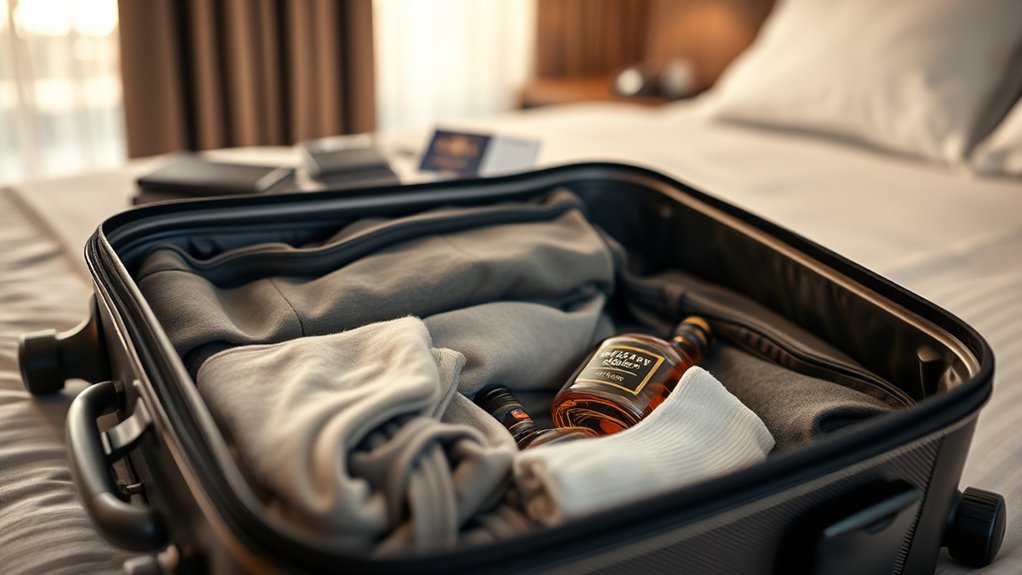
If you’re packing alcohol in checked luggage, you generally don’t have to declare it to the airline—provided the bottles meet size and alcohol-content limits and are properly packed to prevent breakage.
You should still check your airline’s rules and the destination’s import limits: some carriers ban certain containers or require notifications for larger quantities.
Pack bottles in sealable plastic, cushion them, and place them upright within a sturdy suitcase to avoid leaks.
Remember security and customs are separate: you won’t declare to the airline in most cases, but you may need to declare or pay duties at your destination.
Rule of Thumb: When Declaration Is Required
As a rule of thumb, you’ll need to declare alcohol when you exceed a country’s duty-free quantity limits or when its value triggers customs duty.
Check the specific volume and alcohol-by-volume limits before you travel so you don’t get surprised at the border.
If you’re unsure, declare it—it’s safer than risking fines or confiscation.
Quantity Limits Apply
When you’re packing alcohol, remember most countries and carriers set clear quantity limits before you must declare it; these rules usually hinge on alcohol by volume (ABV) and total volume per person. You should check both airline and destination rules: low-ABV items often have generous allowances, while spirits over a set ABV require declaration or are restricted. Pack receipts, note ABV on bottles, and separate containers to make inspection easier. If you exceed limits, expect questioning and possible seizure. Know limits before you fly to avoid delays or fines.
| Item | Typical limit |
|---|---|
| Beer/Wine | 2–3 liters |
| Spirits | 1–2 liters |
Customs And Duty
Curious whether you need to declare the alcohol you’re carrying? Customs and duty kick in when your alcohol exceeds the duty-free allowance or comes from restricted origins. You should declare if limits are surpassed, if bottles are unopened commercial purchases, or if value looks commercial rather than personal. Failing to declare can mean fines, confiscation, or embarrassment.
- Fear: fines and delays if you skip declaration.
- Relief: declare and avoid penalties.
- Anger: confiscation hurts holiday plans.
- Confidence: knowing limits keeps travel smooth.
Check destination rules, keep receipts, and always declare when in doubt.
Airline Rules vs. Customs Rules: What’s the Difference
Although both set limits on what you can bring, airline rules and customs rules serve different purposes and apply at different times during your trip. Airline rules focus on safety and carriage: weight, packaging, quantity per passenger, and whether alcohol is allowed in checked or carry-on baggage. You follow them at check-in and boarding.
Customs rules enforce import limits, duties, and prohibited items when you enter a country; you declare goods and may pay tax. You must satisfy both: comply with airline restrictions to travel, then meet customs requirements on arrival.
Ignoring either can mean penalties, confiscation, or fines.
ABV Rules That Affect Declaration
You’ll need to know the alcohol by volume (ABV) limits that affect whether a bottle must be declared or can travel duty-free. These rules tie into duty-free allowances and sometimes restrict bottle sizes or quantities you can pack in checked luggage.
Check both the airline’s size limits and your destination’s duty-free thresholds so you don’t get surprised at the airport.
Alcohol By Volume Limits
When packing alcohol, know that airlines and customs base declaration and carriage rules on alcohol by volume (ABV): you’ll need to check the ABV of each bottle because it determines whether it’s allowed in checked luggage, how much you can bring, and if you must declare it at arrival.
ABV limits vary: low-strength drinks often travel freely, high-proof spirits face strict caps or bans. Before flying, verify carrier and destination rules, label ABV clearly, and separate restricted bottles.
Consider these emotional prompts:
- Relief — when you confirm limits.
- Frustration — if a favorite bottle’s banned.
- Security — when rules are followed.
- Confidence — packing correctly.
Duty-Free Allowances
Because duty-free allowances tie directly to alcohol by volume, you’ll need to know both the ABV and the quantity limits to understand what must be declared.
Check the arrival country’s allowance for spirits, wine, and beer—higher ABV items often have lower permitted volumes.
If your total exceeds the duty-free threshold, declare it and expect duties or taxes.
Keep receipts and original packaging to speed inspection.
Transfers between international and domestic flights can change which allowance applies, so verify rules for each stop.
When in doubt, declare; failing to do so can mean fines, confiscation, or delays.
Bottle Size Restrictions
How much can you pack often depends on each bottle’s alcohol by volume (ABV), since higher-ABV spirits are subject to stricter size and quantity limits than wine or beer.
You’ll face different rules: many countries let you bring limited liters of low-ABV beverages duty-free, but hard liquor over a set ABV often counts against personal allowances or needs declaration.
Check destination thresholds and pack receipts. If you try to hide oversized bottles, you’ll risk fines or confiscation.
Consider consolidating, using duty-free seals, or shipping.
- Shock — confiscation hurts.
- Relief — compliant packing eases travel.
- Anger — unexpected fees sting.
- Pride — you planned well.
How Many Bottles Are Allowed on International Flights?
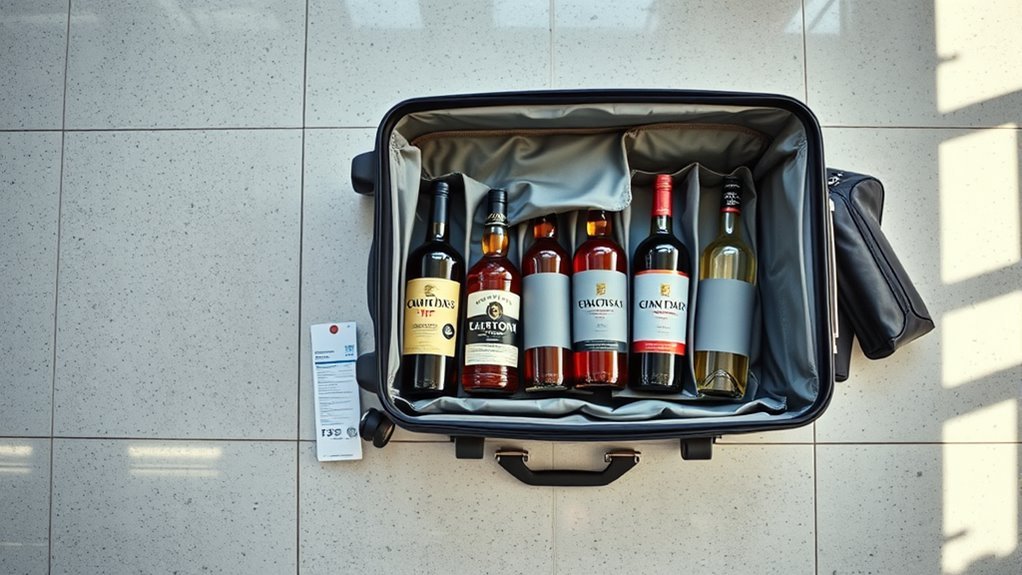
Rules for carrying alcohol on international flights vary by country, airline, and whether it’s in your carry-on or checked baggage, so you’ll need to check limits before you pack.
Typically, many countries let travelers bring a duty-free allowance—often one to three liters of spirits or several liters of wine and beer per person—without duty.
Airlines may restrict quantity for safety and baggage weight; some forbid large numbers of bottles in carry-on.
You’ll also face customs limits on arrival that determine if duty applies.
Confirm the destination’s allowance and your airline’s policy to avoid fines or confiscation.
Domestic Travel: When Declaration or Special Packing Is Needed
On domestic flights you still need to watch alcohol volume limits—most carriers restrict high-proof spirits even in checked bags.
Pack bottles in leakproof, cushioned containers or seal them in plastic to prevent spills and damage.
Also check airline-specific rules before you fly, since some carriers have stricter limits or packing requirements.
Alcohol Volume Limits
Wondering when you need to declare or specially pack alcohol for domestic flights? You don’t usually declare standard amounts, but limits matter.
If you’re carrying alcohol in checked baggage, keep these volume rules in mind:
- 3.4 oz rules apply only to carry-on, not checked, so breathe easier.
- Most airlines allow up to 5 liters of alcohol between 24%–70% ABV per passenger in checked bags.
- Alcohol over 70% ABV is generally prohibited in both checked and carry-on—don’t risk it.
- Limits can vary by carrier and state—double-check before you pack to avoid surprises.
Packaging And Spill Prevention
How should you pack alcohol in checked bags to prevent leaks and avoid special handling? Wrap bottles individually in absorbent material—clothes, bubble wrap, or purpose-built sleeves—and seal them in sturdy, resealable plastic bags.
Use original caps plus tape or screw-top protectors to reduce pressure-related seepage. Place bottles upright in the center of your suitcase, cushioned by soft items and away from edges. Consider a hard-sided case for extra protection.
For multiple bottles, separate them with dividers or padding to prevent collisions. Label fragile if you want handlers to be cautious, but don’t rely on that alone to prevent spills.
Airline-Specific Rules
While federal rules set the basic limits for alcohol in checked luggage, each airline can add its own requirements, so you should check your carrier’s policy before packing.
Carriers may require stronger packaging, declaration, or limit amounts on domestic flights. You’ll want to review size, alcohol percentage, and declared value.
If you don’t follow them, you risk delays, fines, or confiscation. Check the airline site or call before travel.
- Fear: unexpected confiscation ruins plans.
- Relief: clear rules prevent surprises.
- Anger: extra fees feel unfair.
- Confidence: compliance keeps travel smooth.
How to Declare Alcohol at Check-In and on Customs Forms
Need to declare alcohol at check-in or on your customs form? Tell the airline agent if your checked luggage contains alcohol over carry-on limits or if special packing is required; they’ll note it and may tag the bag.
At self check-in, follow prompts and attach required labels or paperwork.
For customs, honestly list alcohol on arrival forms when asked about goods or duty-free allowances; include type, volume, and value if the form requests it.
Keep receipts and any airline declarations handy for inspection. Answer officers’ questions directly, and you’ll speed processing and avoid fines or confiscation.
Duty-Free Purchases: Arrival Rules and Keeping Receipts
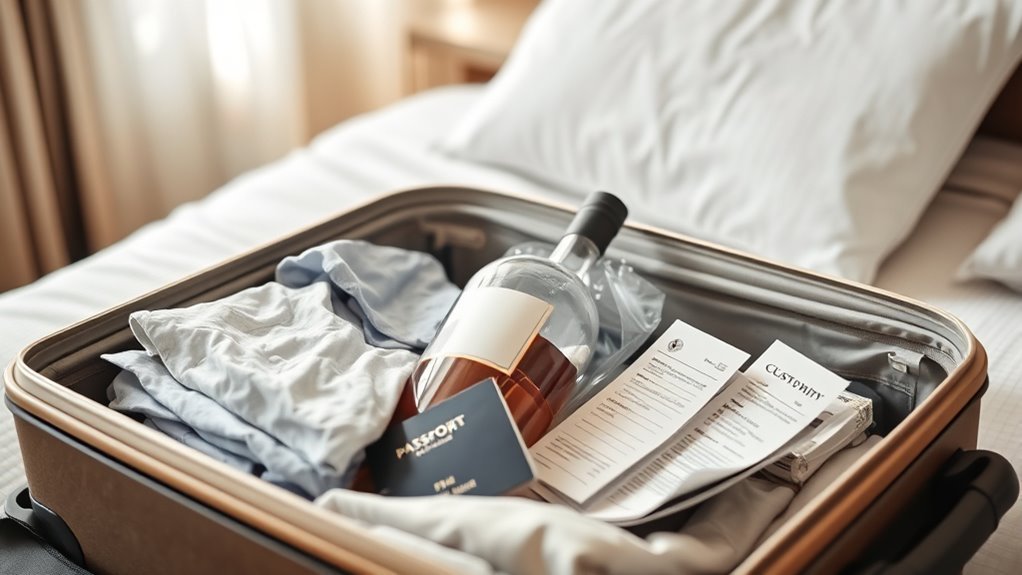
If you buy alcohol duty-free, keep your receipts and any export paperwork handy so you can declare the items on arrival if required; customs officers will want to see the purchase price, volume, and whether the bottles were sealed. You’ll need to present proof to avoid fines or seizure.
Know your destination’s allowances and be honest on forms. If exceeding limits, expect duty or confiscation.
- Anxiety when you forget receipts.
- Relief showing clear paperwork.
- Frustration if duties apply.
- Satisfaction when everything’s permitted.
Carry receipts in an accessible pocket and keep bottles sealed until you clear customs.
Packing Tips to Protect Bottles in Checked Luggage
Because glass bottles can break and spill under rough handling, pack them with a strategy that cushions, stabilizes, and contains leaks.
Wrap each bottle in bubble wrap or clothing, sealing necks with tape and placing caps under a plastic bag to contain drips.
Use a hard-sided suitcase and position bottles vertically in the center, surrounded by soft items.
Fill gaps with socks or air pillows to prevent shifting.
Consider commercial bottle protectors or padded inserts for extra security.
Place bottles in a sealed plastic bag and label fragile on the outside.
Check weight limits to avoid overstuffing and extra pressure.
Penalties for Undeclared or Excess Alcohol
You’ve taken smart steps to protect bottles in checked luggage, but you also need to be aware that failing to declare alcohol or bringing more than allowed can carry real consequences. You could face fines, seizure, or delays if officials find undeclared or excess alcohol.
Consequences vary by country and airline, so check limits and declare honestly to avoid surprises.
- Monetary fines that sting your budget and plans.
- Confiscation of bottles, leaving you empty-handed.
- Travel delays and missed connections while issues are resolved.
- Possible record of violation affecting future travel privileges.
Exceptions: Gifts, Commercial Shipments, and Duty-Free
When you’re carrying alcohol as a gift, through a commercial shipment, or purchased duty-free, different rules can apply—so you should know which exceptions might ease declaration requirements or change allowable quantities. Gifts often qualify for relaxed limits if value and quantity fall under personal exemption; label and receipts help. Commercial shipments follow trade rules and paperwork, not traveler allowances. Duty-free purchases usually fit within specific limits tied to arrival country; keep receipts and original packaging.
| Situation | What to do |
|---|---|
| Gifts | Document value |
| Commercial | Use proper paperwork |
| Duty-free | Keep receipt |
Country Rules for Travelers (US, EU, UK, Canada, Australia)
Although rules vary by destination, you’ll generally need to declare alcohol if it exceeds a country’s personal allowance or triggers duty/tax obligations. Check limits before packing: the US lets adults bring 1 liter duty-free but state laws vary; the EU usually allows 1–4 liters between member states; the UK permits 1 liter of spirits or 2 liters fortified wine for travelers arriving from outside.
Canada allows 1.5 liters of wine or 1.14 liters of spirits duty-free for adults; Australia gives a 2.25-liter alcohol allowance. Know limits, declare when over, and be ready for duties or seizure.
- Shock
- Relief
- Frustration
- Certainty
Frequently Asked Questions
Can I Pack Alcohol in My Carry-On Instead of Checked Luggage?
Yes, you can pack alcohol in your carry-on if each container is 100 milliliters (3.4 ounces) or less and fits in a single transparent quart‑size bag; larger bottles must go in checked luggage.
Do Airlines Limit Alcohol Content in Checked Luggage for Minors?
Yes — airlines and many countries prohibit minors from transporting alcohol in checked luggage; you’ll be denied if they find underage possession, and carriers often limit alcohol carriage by age, requiring adults to pack or declare it instead.
Can I Ship Alcohol Separately to My Destination Instead?
Yes — you can ship alcohol separately, but you’ll need to follow carrier rules, packaging requirements, age verification, customs regulations, and possible taxes or restrictions at the destination. Check the carrier and local laws before sending.
Are There Special Rules for Transporting Alcohol in Sports or Cooler Bags?
Yes — there are special rules. You’ll need to follow airline and TSA limits, seal alcohol in approved containers, pack bottles upright and cushioned, and make certain cooler bags meet leakproof and size restrictions to prevent damage or confiscation.
Does Alcohol in Checked Luggage Affect My Travel Insurance Coverage?
Usually yes—you’ll want to check your policy because carriers often exclude claims if alcohol caused damage, theft, or policy breaches. If you follow airline rules and limits, your coverage’s more likely to apply, but always confirm specifics.
Conclusion
You don’t usually have to declare alcohol in checked luggage for domestic flights, but you do for international arrivals when you exceed duty-free limits or local allowances. Check both airline and destination customs rules, mind ABV limits (usually 24–70% restrictions), and follow packing tips to avoid breakage. Declare excess or commercial quantities to avoid fines or confiscation. When in doubt, declare it — it’s simpler than dealing with penalties later.