National Eisteddfod
The National Eisteddfod is a vibrant celebration of Welsh culture that brings together poetry, music, and community spirit. Although the dates change each year, it always gathers people from across Wales for a week of artistic expression and cultural exchange. This year’s event runs from August 1 to August 8, offering a unique opportunity to immerse yourself in the rich heritage of Wales. Whether you’re a local or a visitor, the National Eisteddfod provides an engaging platform for everyone to experience the heart of Welsh language and culture.
Quick Facts
When is it?: 1 August
Tagged as: National Eisteddfod of Wales
What’s the hashtag?: #Eisteddfod #Wales #CulturalCelebration #WelshLanguage #ArtsFestival
When was it founded?: Not clearly documented; the Eisteddfod tradition dates back to at least the 12th century, celebrating Welsh poetry and music.
Who founded it?: Not officially confirmed; the modern Eisteddfod was revived in the 19th century by figures such as Iolo Morgannwg and others who sought to promote Welsh culture.
History of National Eisteddfod
The National Eisteddfod has its roots in medieval Wales, where gatherings were held to celebrate literature and music. These early festivals were often local events, but over time they grew into larger competitions that attracted poets and musicians from across the country. The modern National Eisteddfod began to take shape in the 19th century, particularly through the efforts of Iolo Morgannwg, who emphasized the importance of Welsh culture and the Welsh language.
Initially, these gatherings were small and informal, but they gained prominence as they began to attract royal patronage and public interest. The first official National Eisteddfod, as we know it today, was held in 1861 in Aberdare. Since then, the event has evolved into a week-long festival that includes competitions, performances, and a cultural expo, all while maintaining its focus on the Welsh language.
Today, the National Eisteddfod is celebrated in various locations across Wales, showcasing not only the arts but also the vibrant community spirit that defines Welsh culture.
Timeline
- 1176: The first recorded Eisteddfod is held in Cardigan.
- 1861: The first official modern National Eisteddfod takes place in Aberdare.
- 1896: The Eisteddfod is held outside Wales for the first time, in London.
- 1960: The festival expands to include competitions in various artistic disciplines.
- 1990: The Eisteddfod becomes a week-long event, attracting thousands of visitors.
- 2000: The Eisteddfod introduces a dedicated youth programme to engage younger audiences.
- 2011: The event emphasizes sustainability and eco-friendly practices.
- 2020: The Eisteddfod is adapted to a virtual format due to the COVID-19 pandemic.
Past and Future Dates
| Year | Month | Date | Day |
|---|---|---|---|
| 2026 | August | 1 | Saturday |
| 2027 | August | 1 | Sunday |
| 2028 | August | 1 | Tuesday |
| 2029 | August | 1 | Wednesday |
| 2030 | August | 1 | Thursday |
| 2031 | August | 1 | Friday |
| 2032 | August | 1 | Sunday |
| 2033 | August | 1 | Monday |
Observed
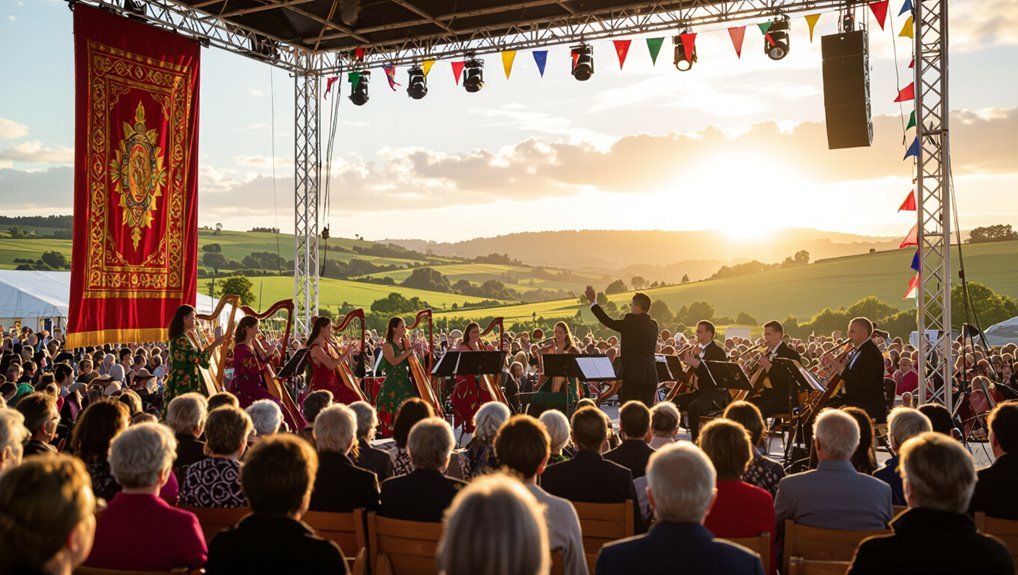
The National Eisteddfod is observed through a variety of events, competitions, and performances spread throughout the week. Visitors can enjoy live music, poetry readings, and theatrical performances in both Welsh and English. There are also stalls featuring local crafts, books, and food, where attendees can sample traditional Welsh cuisine. Community events, debates, and workshops foster discussions about language and culture, making it a lively and inclusive gathering for all.
Activities for This Day
1. Attend Competitions
Experience the thrill of poetry and music competitions where talented individuals showcase their skills.
2. Explore the Cultural Expo
Visit stalls featuring traditional crafts, contemporary art, and local produce to learn more about Welsh heritage.
3. Participate in Workshops
Join workshops that focus on learning the Welsh language, traditional music, or crafts.
4. Enjoy Live Performances
Catch a performance by choirs, solo artists, or bands representing various genres of music.
5. Engage in Community Discussions
Take part in talks and debates regarding language policy and arts education that resonate with current issues.
How to Celebrate National Eisteddfod
- Attend local events and performances.
- Participate in workshops to learn about Welsh culture and language.
- Visit the cultural expo to support local artisans and producers.
- Engage with the community through discussions and debates.
- Share your experiences on social media using relevant hashtags.
Why National Eisteddfod is Important
The National Eisteddfod is a cornerstone of Welsh culture, promoting the Welsh language and celebrating artistic expression. It serves as a platform for both established and emerging artists, fostering a sense of community and cultural pride. By bringing people together to share their talents and ideas, the Eisteddfod plays a crucial role in preserving and promoting Welsh identity for future generations.
FAQ
1. What is the National Eisteddfod?
The National Eisteddfod is an annual festival celebrating Welsh culture through music, poetry, and arts.
2. Where is the Eisteddfod held?
The Eisteddfod is held in various locations across Wales each year.
3. Do I need to speak Welsh to attend?
No, while the Welsh language is central to the festival, many activities and performances are accessible to English speakers.
4. Can anyone participate in the competitions?
Yes, individuals of all ages and skill levels can enter various competitions.
5. What types of performances can I expect?
You can expect a wide range of performances, including choirs, soloists, bands, and theatrical productions.
6. Is there food available at the Eisteddfod?
Yes, there are numerous stalls offering local food and traditional Welsh cuisine.
7. How can I get involved in the Eisteddfod?
You can participate by attending events, entering competitions, or volunteering during the festival.
Related
- International Day of the Welsh Language
- National Poetry Day
- St. David’s Day
- Welsh Language Rights Day
- Festival of Literature Wales