Why Do You Have to Take Your Shoes Off at the Airport Explained
You take your shoes off at airport security because they can hide explosives, weapons, or other threats that X-rays and metal detectors might miss, so officers visually and physically check footwear to keep flights safe. The rule tightened after the 2001 shoe-bombing attempt and varies by country, airport, and traveler status—trusted traveler lanes often let you keep shoes on. Keep slip-ons for faster checks, and keep going to learn what to pack and when you might be exempt.
Who This Guide Helps and What You’ll Learn
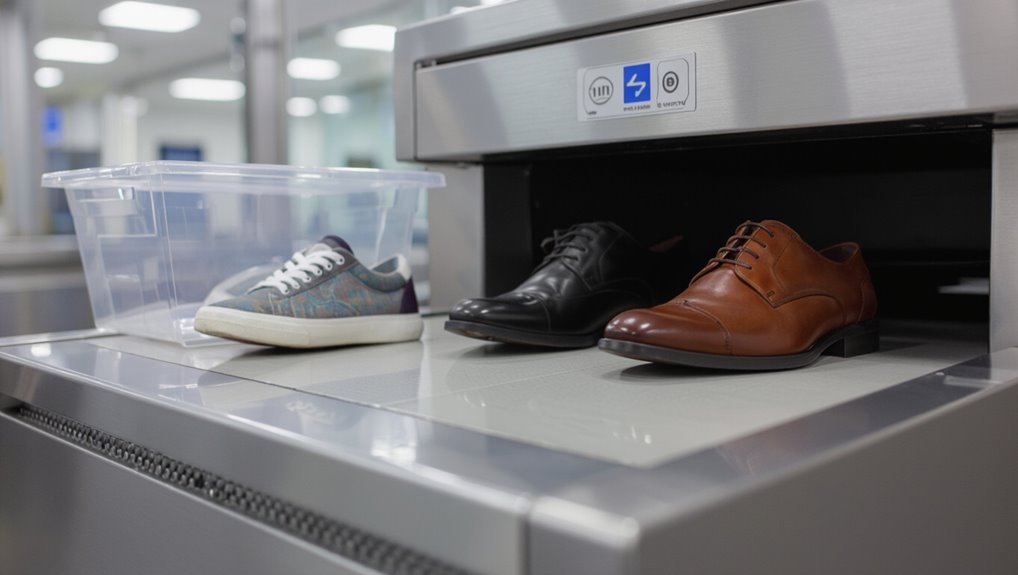
This guide helps travelers who want clear, practical advice about airport shoe removal—whether you’re a frequent flyer, a nervous first-timer, or someone with mobility, cultural, or security concerns.
You’ll learn what to expect at screening, how to prepare shoes and socks for quicker checks, alternatives and accommodations you can request, and simple tips to stay comfortable and respectful while moving through security lines.
Quick Answer: Why You May Be Asked to Remove Shoes at Security
Now that you know who this guide serves, here’s the short version: security officers ask you to remove shoes because footwear can hide prohibited items—like explosives, weapons, or contraband—and X-ray machines and handheld detectors sometimes can’t clearly show every detail.
Removing shoes lets officers visually and physically inspect soles, linings, and insoles quickly, reducing risk and speeding up resolution if something suspicious appears.
Airport Screening in One Sentence
Although airport screening can seem intrusive, it’s a quick, standardized process where security officers and machines check people and belongings for prohibited items to keep everyone safe.
You’ll follow clear steps—remove items as instructed, place belongings in bins, walk through scanners or undergo a pat-down if needed—and cooperate promptly so screening moves efficiently and lets you get to your gate with minimal delay.
The 2001 Shoe-Bombing Attempt That Changed Airport Rules
You remember Richard Reid’s 2001 plot to ignite explosives hidden in his shoes on a transatlantic flight.
That attempt forced authorities to tighten procedures, introduce shoe removal at checkpoints, and expand screening technologies.
Those changes reshaped long-term passenger checks and how you experience airport security today.
Richard Reid’s Plot
When Richard Reid tried to detonate explosives hidden in his shoes aboard a transatlantic flight in December 2001, his failed attempt forced immediate changes to airport screening and made shoe removal a routine security measure.
You remember seeing reports of a passenger subdued as crew and travelers acted quickly; the incident showed how a simple concealment could threaten many and why you now remove shoes during screening.
Security Response Changes
Reid’s failed attempt didn’t just end with his arrest; it forced immediate changes in how airports screened passengers and luggage.
You saw shoes added to mandatory checks, extra pat-downs for suspicious items, and stricter carry-on inspections. Those shifts aimed to close gaps quickly and visibly.
- Shoes removed for X-ray
- Targeted pat-downs increased
- Carry-on rules tightened
Long-Term Screening Effects
Although airports had already tightened immediate procedures after the 2001 shoe-bombing attempt, the incident reshaped long-term screening practices worldwide, embedding shoe removal and enhanced footwear scrutiny into routine security protocols and prompting ongoing research into noninvasive detection technologies. You now face frequent shoe checks, clearer signage, and tech trials that aim to speed screening while keeping you safer.
| Measure | Impact | Status |
|---|---|---|
| Shoe removal | Visual check | Standard |
| Footwear scanners | Noninvasive screening | Pilots |
| Policy updates | Traveler compliance | Ongoing |
How Security Agencies Update Screening After Threats
When a threat emerges, you see agencies change rules quickly, often turning a single incident into policy shifts like mandatory shoe removal.
You’ll notice technology and procedures get upgraded next—better scanners, new pat-down protocols, and revised checkpoint layouts.
Those changes are increasingly guided by intelligence, so screening targets risk rather than applying one-size-fits-all checks.
Threat-Driven Policy Changes
After a successful attack or a foiled plot, security agencies move quickly to reassess risks and adjust screening procedures. You’ll often see new rules rolled out within days or weeks.
You’ll notice policy shifts target vulnerabilities, mandate immediate measures, and communicate changes to staff and travelers.
- tightened screening focus
- temporary restrictions
- clearer passenger guidance
Technology And Procedure Upgrades
Because threats expose weak spots fast, agencies accelerate upgrades to both tech and procedures so screening actually closes the gaps you’ve been warned about.
You see newer scanners, better explosives detection, and automated analytics replacing slow manual checks.
Staff get focused training on emerging tactics, protocols are tightened, and pilots of targeted procedures roll out quickly so airports adapt before vulnerabilities are exploited.
Intelligence-Led Screening
Though intelligence doesn’t replace frontline checks, it guides them—helping agencies focus resources where the threat picture shows real risk. You learn patterns, adjust screening, and target inspections based on credible tips. That means your line may change quickly when new data arrives.
- Analysts flag risks so officers act decisively.
- Screening intensity shifts to higher-risk routes.
- Procedures update after validated threats.
What X‑Rays and Advanced Imaging Detect in Shoes
When security X‑rays and advanced imaging scan shoes, they reveal dense objects, irregular shapes, and material contrasts that can indicate hidden contraband, electronics, or structural modifications—so you’ll see metal fasteners, batteries, wiring, and unusual cavities more clearly than soft materials.
You’ll also notice layered soles, stitched alterations, and nonorganic inserts; imaging highlights anomalous geometry and inconsistent densities that prompt closer inspection by officers.
Why Shoes Can Hide Explosives, Liquids, and Contraband
One reason shoes often conceal explosives, liquids, and contraband is their hollow spaces and layered construction, which let someone tuck items into cavities between insoles, heels, and outsoles without changing the shoe’s outward shape.
Shoes can hide contraband in hollow spaces and layered soles, concealing items without altering appearance
You should inspect or remove shoes because these hidden voids can mask density, fluids, or small objects.
- Voids behind insoles
- Hollow heels or soles
- Sealed compartments
How Metal Detectors Differ From Shoe X‑Rays and Body Scanners
Because they detect different things in different ways, metal detectors, shoe X‑rays, and body scanners complement each other in security screening.
You walk through metal detectors to reveal metallic threats; shoe X‑rays image soles and hidden compartments for nonmetallic items; millimeter‑wave body scanners map concealed shapes beneath clothing.
Together they reduce blind spots, letting officers target inspections efficiently without assuming one tool catches everything.
Random Checks Versus Universal Shoe Removal
You’ll notice airports use two main approaches: random security screening and universal shoe policies.
Random checks target a subset of passengers to balance efficiency and security, while universal rules make everyone follow the same step.
Consider how each affects wait times, privacy, and risk.
Random Security Screening
When airports choose random shoe checks over a universal rule, they balance efficiency, passenger convenience, and perceived security; you’ll sometimes pass through without removing footwear, but selection methods and screening consistency vary widely.
- You might be chosen by behavior detection, risk profiling, or purely random algorithms.
- Officers may still inspect shoes manually or with scanners.
- Expect variability between airports and flight types.
Universal Shoe Policies
Airports generally adopt one of two approaches to screening footwear: universal removal, where every traveler takes off shoes before the security checkpoint, or selective checks that target individuals based on profiling, behavior, or random selection.
You’ll notice universal policies speed throughput and avoid bias, while targeted checks reduce inconvenience but risk inconsistency; both balance security, efficiency, and passenger experience differently.
Which Countries Still Require Shoe Removal and Which Don’t
Although many countries relaxed strict shoe-removal rules after threats shifted and screening tech improved, some still ask you to take shoes off during security checks while others never did or have since stopped—so it’s worth knowing local practices before you travel.
Shoe-removal rules vary by airport—some still require it, others use scanners. Check local policies before you travel.
- Some airports still require removal for random checks.
- Others use scanners and let you keep shoes on.
- Policies change, so check your airline or airport website.
How European Airports Handle Shoes Compared With the U.S
You’ll notice some clear differences in screening procedures between European airports and those in the U.S.
Pay attention to how footwear policies vary—some European hubs let you keep shoes on more often, while U.S. screening can still require removal in certain lanes.
Think about how these procedural and policy contrasts affect your airport routine and packing choices.
Screening Procedures Difference
When you approach security in Europe, expect a different routine than at many U.S. checkpoints: most European airports let you keep your shoes on during X‑ray screening, while U.S.
- you’ll often remove shoes for manual checks or scanners
- European lanes rely more on advanced imaging and selective checks
- procedures focus on risk‑based screening, so follow officer instructions promptly
Footwear Policy Variations
Across Europe, airports generally let you keep your shoes on during X‑ray screening more often than U.S. checkpoints do, where travelers are still frequently asked to remove footwear for manual inspection or older scanners.
You’ll find variance by country and airport: newer European hubs use advanced scanners and clear procedures, while some U.S. terminals still rely on spot checks, causing inconsistency and occasional delays.
How Canada, Australia, and Other Regions Treat Shoes
Although policies vary by country, many airports outside the U.S. take a more relaxed approach to shoe removal:
- In Canada you’ll usually keep shoes on unless screening flags an issue.
- In Australia you’ll often only remove footwear if secondary checks require it.
- In parts of Europe and Asia routine removal is uncommon; officers rely more on scanners and selective checks, so you’ll rarely be asked to remove shoes.
How Airport Size and Risk Level Affect Shoe Policies
If you’re flying from a small regional airport, you’ll probably keep your shoes on more often than at a major hub, because smaller airports handle fewer passengers and face lower baseline risk, so security can rely on visual checks and random screening instead of routine shoe removal. You’ll notice big hubs use layered checks, signage, and queues to manage higher threat levels.
| Size | Risk | Policy |
|---|---|---|
| Small | Low | Visual |
| Medium | Moderate | Targeted |
| Large | High | Routine |
Why Some Airlines and Airports Trial Exemptions and Changes
When airlines and airports trial exemptions or alter shoe policies, they’re usually testing ways to speed screening, cut costs, or respond to changing threat assessments without sacrificing safety.
You’ll see pilots, frequent flyers, or low-risk routes get temporary changes while authorities monitor results. You’re asked to follow new signage and staff directions as trials run.
- Faster processing
- Lower operating costs
- Measured security impact
What TSA PreCheck and Similar Programs Mean for Shoes
Because programs like TSA PreCheck vet travelers in advance, you’ll usually keep your shoes on and move through security faster than in standard lines.
You’ll still face random checks or technology-screened footwear if needed, but expedited lanes reduce removal frequency.
Similar trusted-traveler initiatives worldwide offer comparable benefits, letting you pass through with less hassle while maintaining security standards.
Who Qualifies for Expedited Screening and Keeps Shoes On
Many travelers who enroll in vetted programs get to keep their shoes on, but who exactly qualifies varies by program and country.
You usually qualify if you:
- Pass background checks and fingerprinting for programs like TSA PreCheck or Global Entry.
- Hold memberships through trusted traveler reciprocity between countries.
- Maintain a clean travel record and update credentials when required.
How Risk-Based Screening Influences Shoe-Removal Rules
If airport security flags you as higher risk—based on travel patterns, watchlist matches, or inconsistent ID and booking data—you’ll likely face more intensive screening and may be asked to remove your shoes.
Risk-based systems let officers allocate resources, so profiling, random checks, and algorithmic scores influence who keeps shoes.
You can reduce scrutiny by maintaining consistent records and enrolling in trusted traveler programs.
What to Expect If You’re Selected for Additional Screening
If you’re pulled for additional screening, an officer will walk you through the security screening process and explain what needs to be removed for inspection.
You’ll usually be asked to take off shoes, belts, and anything in pockets, then place items in trays or on a table for checking.
Expect brief follow-up procedures like pat-downs or swabbing of items, and ask questions if you’re unsure about next steps.
Security Screening Process
When you’re chosen for additional screening, airport security staff will explain why and what’ll happen next, so you know what to expect and can cooperate quickly.
You’ll move to a private area, follow instructions, and have any flagged items inspected. Stay calm, answer questions, and show ID when asked.
- Follow directions promptly
- Keep explanations brief
- Expect courteous, professional checks
What To Remove
1 clear rule: follow the screener’s instructions about what to remove and why, so you can move through the process quickly and respectfully.
Remove shoes, belts, outerwear, and anything from pockets when asked. Take off bulky jewelry or watches if directed.
If you need help, ask politely. Keep items organized for reproofing and put them back only when the screener says it’s okay.
Follow-Up Procedures
After you’ve followed the screener’s directions and removed the requested items, you may be asked to undergo additional screening before reboarding.
You’ll stay calm, cooperate, and expect clear instructions. Officers may swab, hand-inspect, or search bags and shoes.
Follow their guidance, ask concise questions if unsure, and you’ll be cleared promptly.
- Swab test
- Manual inspection
- Bag/shoe search
How Children and Elderly Passengers Are Screened for Shoes
Although children and elderly passengers may be screened differently than typical adults, TSA officers aim to balance security with sensitivity, using age-appropriate procedures and additional accommodations when needed.
You’ll usually remove shoes for X-ray screening, but officers may use visual inspection, pat-downs by same-gender staff, or handheld detectors to reduce stress.
Notify officers about mobility limits or anxiety so they can adapt the process.
How Medical Devices, Prosthetics, and Orthotics Change Screening
If you use medical devices, prosthetics, or orthotics, screening can require extra steps to balance safety and comfort.
You’ll often be asked to remove or show the device for inspection, or undergo alternative screening such as a targeted pat-down or a swab.
Tell the officer about any implants or mobility aids before screening to speed the process and avoid misunderstandings.
Screening With Medical Devices
Many travelers rely on medical devices, prosthetics, or orthotics, and these items can change how security screening is conducted.
You should tell officers about implants, wearables, or mobility aids before screening. They’ll decide whether to use a wand, pat-down, or alternate imaging.
- Inform officers up front
- Expect targeted inspection options
- Preserve privacy when possible
Handling Prosthetics And Orthotics
When you wear or use a prosthetic or orthotic, tell officers before screening so they can choose the least invasive method; that might mean a visual inspection, targeted wanding, or a private pat-down instead of walking through a scanner.
You’ll usually keep the device on; officers may ask to inspect, remove covers, or perform a secondary check.
Ask for privacy or a support person if needed.
What Travelers With Disabilities Should Tell Security About Shoes
Because security officers need to know how your shoes affect screening, tell them right away about any mobility aids, prosthetics, or sensory issues that make removing footwear difficult or painful.
If shoe removal is difficult or painful, promptly tell screening staff about any mobility aids, prosthetics, or sensory issues.
Be clear, concise, and ask for accommodations or private screening if needed.
- Which aid or prosthetic you’re wearing
- Pain or sensory triggers from shoe removal
- Preferred alternative screening method
Packing Tips for Easy Shoe Screening
After telling security about prosthetics, mobility aids, or sensory triggers, pack smart so shoe screening goes smoothly.
Place small items (socks, insoles) in an easily accessible top carry-on pocket. Use clear bags for laces or metal bits.
Keep shoes in a separate compartment to avoid rummaging. Label any medical footwear or inserts to speed explanations and reduce handling.
Best Footwear Choices for Faster Security Lines
When you pick shoes for airport security, go for slip-ons that you can remove and put back on quickly.
Lightweight sneakers are a good all-purpose choice that still scan well.
Avoid sandals with hidden compartments to keep screening smooth and avoid extra checks.
Slip-On Shoes
- Choose low-profile, easy-grip soles.
- Prefer slip-ons without metal embellishments.
- Keep socks clean and intact for screening convenience.
Lightweight Sneakers
Choose lightweight sneakers with simple soles and minimal hardware so you can slip them on and off quickly at the security checkpoint.
Pick low-profile, breathable pairs that don’t trap metal in midsoles and that fit snugly without laces that tangle.
You’ll speed the process, stay comfortable during long walks, and reduce delays when you’re asked to remove footwear for screening.
No-Compartment Sandals
If you prefer sandals, pick styles without hidden pockets, thick compartments, or elaborate buckles so security can screen them quickly without extra handling.
Choose simple, open designs that slip on and off. You’ll move faster through screening and avoid secondary inspection.
- Flat, single-strap sandals
- Minimal hardware, no zippers
- Easy-clean materials that lie flat
How to Organize Shoes and Belongings in Bins Efficiently
Bins keep the security line moving, so stack and arrange your shoes and belongings with purpose: place heavier items like boots or laptops at the bottom, group smaller loose items in a corner or a small pouch, and orient pairs toe-to-heel to save space.
Place belts and bulkier clothing beside shoes, keep toiletries consolidated, and leave a clear center for quick visual inspection.
How to Prepare Shoes for X‑Ray (Clean, Empty, Easy On/Off)
When you prepare your shoes for X‑ray, clean them, empty them, and make them easy to slip on and off so the scanner can do its job quickly.
Wipe soles, remove loose debris, and take out insoles or objects that could obscure images.
Arrange shoes facing the same way in the bin to speed processing.
- Wipe and brush
- Remove inserts
- Position neatly
How to Handle Socks, Hosiery, and Bare Feet at Checkpoints
Wondering whether you need to remove your socks or hosiery at security? You usually don’t; TSA and most agencies screen footwear and feet with metal detectors or scanners.
Keep socks or tights on unless an agent asks otherwise. If barefoot, step onto the machine as directed.
Carry clean socks and wear easy-to-remove hosiery for quicker processing and comfort.
What to Do If You’re Uncomfortable Removing Shoes for Cultural Reasons
If removing your shoes conflicts with your cultural or religious beliefs, tell the officer calmly and explain your concerns.
You can request an alternative screening, such as a pat-down or swab, and ask for a private screening if that would help.
To make things easier, carry footwear that’s simple to slip on and off so you can comply quickly while preserving your comfort.
Explain Your Concerns Politely
Because cultural or religious practices might make removing your shoes feel intrusive, explain your concerns calmly and respectfully to security staff.
Use clear language, stay composed, and state your needs without confrontation.
- Briefly describe your cultural or religious constraint.
- Ask what procedures exist for respectful handling.
- Offer documentation if helpful, and thank staff for understanding.
Request Alternative Screening
How can you ask for an alternative screening while keeping things efficient and respectful?
Tell the officer your cultural or religious concern clearly, request a private screening or hand inspection, and offer to cooperate fully.
Ask about options like a pat-down or visual inspection.
Stay calm, provide identification if needed, and accept the chosen alternative to maintain security and move through screening smoothly.
Carry Easy-To-Remove Footwear
When you expect to be asked to remove shoes, choose slip-on or lightweight footwear that you can take off and put back on quickly; this makes screening faster and helps you stick to your cultural preferences without causing delays.
- Pack a simple pair for screening only.
- Wear socks that match your comfort and modesty needs.
- Keep shoes accessible in a carry bag so you can swap them swiftly.
How to Request Privacy or Alternative Screening Politely
Need privacy? You can politely ask an officer for a private screening or alternative method—say, “Could I have a private screening, please?”—and mention specific needs (medical, religious). Stay calm, keep ID ready, and accept reasonable alternatives.
| Request | Reason | Tone |
|---|---|---|
| “Private screening?” | Medical | Polite |
| “Alternative?” | Religious | Calm |
What Happens During a Secondary Shoe Inspection
If an alarm goes off or an agent asks, you’ll be guided to a secondary shoe inspection where you’ll remove footwear for closer checks.
The inspector will look for hidden items, unusual densities on the scanner, and any signs of tampering or concealed compartments.
You can expect a visual exam and possibly a handheld scanner or swab for explosives residue.
Screening Process Steps
Because airport security must verify footwear won’t hide prohibited items, a secondary shoe inspection is a focused, step-by-step check you’ll go through if your shoes trigger an alarm or screening agent requests it.
You’ll be guided through screening, briefed on procedures, and kept with minimal delay.
- You’ll remove shoes and present them for inspection.
- An agent may swab or x-ray.
- You’ll replace shoes and be cleared.
What Inspectors Look For
After your shoes are removed and the agent begins inspection, they’ll look for anything that could hide a prohibited item or affect the screening results.
They’ll check seams, soles, heels, insoles, and hidden compartments, and they may swab for explosives residue.
You should cooperate, answer questions, and remove insoles if asked.
The process is quick, focused, and safety-driven.
How to Respond If Security Finds Something in Your Shoe
Stay calm and cooperate when security tells you they’ve found something in your shoe; doing so keeps the situation brief and orderly.
You’ll be asked questions, shown the item, and possibly asked to repack or dispose of it. Follow instructions, keep hands visible, and speak clearly.
- Answer questions honestly and succinctly
- Allow inspection or swab if requested
- Request a supervisor politely if uneasy
Common Myths About Shoe Removal Debunked
You’ve probably heard a few firm-sounding rules about taking shoes off at the airport, but many are exaggerated or outdated; understanding what’s myth and what’s policy makes security lines less stressful.
You don’t always need to remove shoes—rules depend on country, screening tech, and footwear type.
TSA’s focus is safety, not punishment. Ask an officer if unsure; follow directions calmly.
Privacy and Dignity Concerns Around Shoe Screening
Knowing the rules helps, but some travelers still worry about how shoe screening affects their privacy and dignity.
You want respect and clear explanations when asked to remove footwear. Officers can minimize exposure and embarrassment by being professional and discreet.
Expect clear explanations and respectful, discreet handling when asked to remove shoes to minimize embarrassment.
- Ask questions about procedures and alternatives
- Request a private screening if needed
- Expect courteous, lawful handling of personal concerns
How Airports Balance Speed, Safety, and Passenger Experience
When airports try to move lines quickly while keeping everyone safe, they rely on layered strategies that let you pass through screening without unnecessary delay or intrusion.
You’ll see clear signage, trained staff managing flow, risk-based screening that focuses resources where needed, and standardized procedures to reduce variability.
These measures aim to respect your time and privacy while maintaining robust security.
New Technology That Could Let You Keep Your Shoes On
If airports can reliably scan footwear without manual checks, you won’t have to remove your shoes at security lines as often.
New tech aims to speed screening, reduce contact, and keep lines moving while preserving safety.
- Sensors that detect hidden threats without opening shoes
- Automated conveyors that flag anomalies instantly
- Remote verification to minimize hands-on inspections
How CT Scanners and AI Could Change Shoe Screening
You’ll notice that computed tomography screening can capture a full 3D image of your shoes without you taking them off.
Pairing those CT scans with AI-powered threat detection lets systems flag suspicious items faster and with fewer false alarms.
That could mean smoother, quicker screening for passengers while keeping security tight.
Computed Tomography Screening
Although current shoe checks rely on manual inspection and X-ray images, computed tomography (CT) scanners paired with AI are poised to transform screening by producing detailed 3D images and quickly flagging concealed threats.
You’d benefit from faster, noninvasive scans that show depth and material composition.
- Faster throughput, fewer shoe removals
- Clearer visualization of hidden items
- Reduced human error and subjective judgment
AI-Powered Threat Detection
When CT scanners produce 3D, material-sensitive images and AI analyzes them in real time, shoe screening becomes faster and more accurate—so you spend less time removing footwear and screeners spot threats with greater consistency.
AI flags anomalies, prioritizes inspections, and reduces false alarms. You benefit from quicker lanes and fewer invasive checks, while operators get decision support that standardizes threat detection and improves throughput.
Budget and Logistics Reasons Some Airports Can’t Upgrade Yet
Because airport upgrades cost millions and involve complex scheduling, many smaller facilities can’t justify immediate changes to screening procedures.
You’ll see phased rollouts, funding applications, and vendor waitlists that delay new scanners.
You can expect limited staff for training and constrained space for equipment, so airports prioritize essential safety while seeking grants.
- phased budgets
- vendor lead times
- training and space limits
How Laws and Policies Limit What Airports Can Change
If you’re wondering why some security practices stay the same, laws and agency policies often put strict limits on what airports can change. You’ll find federal mandates, certification needs, and liability rules that slow reforms. Below is a brief schematic of constraints and effects.
| Constraint | Source | Effect |
|---|---|---|
| Mandates | Federal law | Required action |
| Certification | Agencies | Delays |
| Liability | Courts | Caution |
| Funding | Budgets | Limits |
How Public Pressure and Incidents Shape Future Policy
Although agencies set rules, public pressure and high-profile incidents often force policymakers to act more quickly than bureaucratic timelines allow.
You’ll see media coverage, advocacy, and sudden incidents push revisions, funding shifts, and new screening tech trials. These responses balance safety, optics, and practicality, but they’re reactive and can reshape procedures rapidly.
- Media scrutiny speeds political action.
- Public outrage demands visible changes.
- Incidents justify expedited testing.
Traveler Rights and Responsibilities During Shoe Screening
You have the right to a respectful, non-discriminatory screening and to ask questions if procedures seem unclear or improper.
You’re also required to comply with lawful screening requests, including removing shoes when directed, to keep security moving.
Knowing both your rights and obligations helps you navigate checkpoints confidently and responsibly.
Screening Rights Explained
1 clear rule: you can expect to be asked to remove shoes during security screening, but you also have rights about how that’s done.
You can request private screening, ask for explanation, and refuse invasive searches without proper cause. Officers must respect dignity and provide alternatives when needed.
- Ask for private, same-gender screening
- Request an explanation of procedures
- Decline searches without probable cause
Passenger Screening Obligations
Having rights during shoe checks doesn’t remove your responsibilities as a traveler; security works smoothly when passengers cooperate while asserting those rights.
You must follow screening instructions, remove shoes when requested, present items for inspection, and answer brief procedural questions.
If you believe rights are violated, calmly request a supervisor or file a complaint afterward.
Cooperation speeds screening and keeps everyone safer.
Tips for Aircrew and Frequent Flyers on Shoe Rules
Frequent flyers and aircrew know airport security’s shoe rules can change by country or even by terminal, so plan ahead: keep slip-on shoes or easily removable footwear in your kit and carry a lightweight pair of socks if you expect to remove shoes during screening.
- Pack shoes that slip on and off quickly
- Wear socks that look clean and professional
- Keep a spare pair tucked in carry-on for long shifts
How to Appeal or Complain About Mishandled Shoe Screening
If your shoes were mishandled during screening, you can file a formal complaint with the airport or security agency to document the incident.
You should also ask about reimbursement for damaged or lost belongings and keep receipts and photos as evidence.
If the response is unsatisfactory, escalate the case to the appropriate oversight agency for further review.
Filing A Formal Complaint
Start by documenting exactly what happened: note the date, time, airport, checkpoint lane, names or badge numbers if available, and a clear timeline of the interaction.
Then file a formal complaint with the airport authority or TSA online, attaching photos and notes. Be concise, factual, and request a written response.
- Include evidence
- State desired outcome
- Keep copies of everything
Seeking Lost-Belongings Reimbursement
Losing a pair of shoes during screening is frustrating, but you can seek reimbursement by promptly documenting the incident, filing a formal claim with the responsible authority, and following the appeals process if your initial claim is denied.
Keep receipts, photos, and witness names; note screening location and time. Submit forms within deadlines, track responses, and appeal promptly with new evidence if needed to increase your chance of recovery.
Escalating To Oversight Agencies
Although you’ve already filed a claim with the airline or screening authority, you can escalate mishandled shoe screening to oversight agencies when that process stalls or results in a denial.
File a clear complaint with details, keep records, and request investigation or mediation. Agencies vary by country; expect timelines and possible follow-up.
- Document dates, names, and photos
- Submit formal complaint online
- Ask for case number and timeline
Real Traveler Stories: Common Shoe-Screening Experiences
Many travelers have felt the awkwardness of removing shoes in a crowded security line. You tug off a boot, balancing on one foot while an agent inspects its sole.
Sometimes staff offer polite patience; other times you face brusque instructions and delayed flights. You learn quick packing tricks, slip-on shoes, and a resigned sense that screening will always demand small, public inconveniences.
How Shoe-Removal Rules Have Evolved Historically
When airport shoe-screening became widespread after the 2001 terrorist attacks, authorities moved quickly from ad hoc checks to standardized rules you’d to follow at checkpoints.
You watched policies tighten, scanners improve, and exemptions appear for kids or medical needs.
Changes tracked threats, tech, and public pushback.
- stricter protocols
- better screening tech
- targeted exceptions
Predicted Timeline for Global Harmonization of Shoe Policies
Having tracked how rules tightened, tech improved, and targeted exemptions emerged, we can now look ahead at how airports worldwide might sync their shoe-screening policies. You’ll likely see phased alignment: pilot tech adoption, regional standards, regulatory harmonization, then routine practice.
| Phase | Timeline | Impact |
|---|---|---|
| Pilot | 1–2 yrs | Tests tech |
| Regional | 3–5 yrs | Shared protocols |
| Global | 6–10 yrs | Standard practice |
Security Checklist to Avoid Shoe Delays
A short pre-flight checklist will help you breeze through shoe screening:
- Wear slip-on shoes and avoid metal accents that trigger alarms.
- Remove shoes promptly and place them in a bin, keeping socks on for hygiene.
- Keep boarding pass and ID handy so you can move through the checkpoint quickly.
Follow these steps, and you’ll minimize delays while staying cooperative with security procedures.
Quick Packing Checklist for Shoes and Security Documents
After you’ve got your shoes and documents ready for security, pack with the same mindset: keep shoes accessible and documents together so you can reach them without unpacking.
Slide shoes into an outer compartment or top of carry-on, use a clear pouch for boarding pass and ID, place receipts or vaccination cards with them, and zip compartments closed.
Keep essentials reachable for quick, calm screening.
When to Check Airport Policies Before You Travel
Because airports and airlines update rules often, check policies at least 72 hours before you leave so you’re not blindsided by last-minute changes to shoe removal, carry-on limits, or ID requirements.
Check travel rules at least 72 hours before departure to avoid surprises from last-minute policy changes.
You’ll confirm expectations, save time, and avoid fines. Check again 24 hours before departure for gate-specific advisories.
- Review airline website
- Check TSA or local authority
- Confirm connecting airports
Final Takeaway: What to Expect at Security
When you approach security, expect a few predictable steps—ID check, belt and shoe removal if required, X-ray of your carry-ons, and a possible pat-down or swab—so move confidently, keep documents ready, and follow instructions to speed the process.
Be ready to remove laptops and liquids, place items in bins, and answer brief questions; staying calm and cooperative gets you through faster.
Frequently Asked Questions
Can I Bring Shoe Inserts or Gel Insoles Through Security?
Yes, you can bring shoe inserts or gel insoles through security; they’re allowed in carry-on or checked bags, but you’ll need to remove shoes and place bulky inserts in a bin if asked during screening.
Do Airport Shoe Rules Apply to Staff and Crew the Same Way?
Yes — you’ll see staff and crew follow similar screening rules, though they often use trusted-traveler lanes or screening exceptions; security officers can require extra checks, and airlines may set additional footwear policies for crew.
Are Certain Shoe Materials More Likely to Trigger Alarms?
Yes, certain shoe materials can trigger alarms more often. You’ll find metal components, thick eyelets, shanks, or steel toes set off detectors; dense rubber or layered soles sometimes register too, so opt for simpler, low-metal footwear.
How Do Shoe Policies Apply to Religious Footwear Like Clogs or Sandals?
You’ll usually be allowed to keep religious footwear on, but security may ask you to remove or swab them for inspection. If removal conflicts with practice, request a private screening and explain your beliefs calmly to the officer.
Will Removing Shoes Affect My Boarding Priority or Flight Status?
No, removing your shoes during security won’t change your boarding priority or flight status; it’s a screening step. You’ll keep any elite benefits, seat assignments, and boarding group privileges unaffected while complying with TSA or local security procedures.
Conclusion
You’ll likely be asked to remove shoes so TSA or other agencies can screen for hidden threats—most famously after the 2001 shoe-bombing attempt. Rules change when new risks appear, so always follow local procedures and cooperate calmly. Pack slip-on shoes, keep boarding pass and ID handy, and check your airline or airport’s screening policies before you travel. Expect quick, routine checks at security: remove shoes if asked, reclaim them, and move on without delay.