
Why Are Tsa Lines So Long and How to Avoid Delays
You’re hitting long TSA lines because passenger surges, staffing gaps, stricter screening rules, and bulky carry‑ons create chokepoints that slow everyone down. You can speed through by coming prepared: empty pockets, remove shoes and belts, have ID and boarding pass ready, and pack liquids and electronics for easy access. Enroll in TSA PreCheck, Global Entry, or CLEAR to skip the longest queues, and arrive early—keep going for practical step‑by‑step tips to shave minutes off your trip.
Quick Answer: Why TSA Lines Are Long
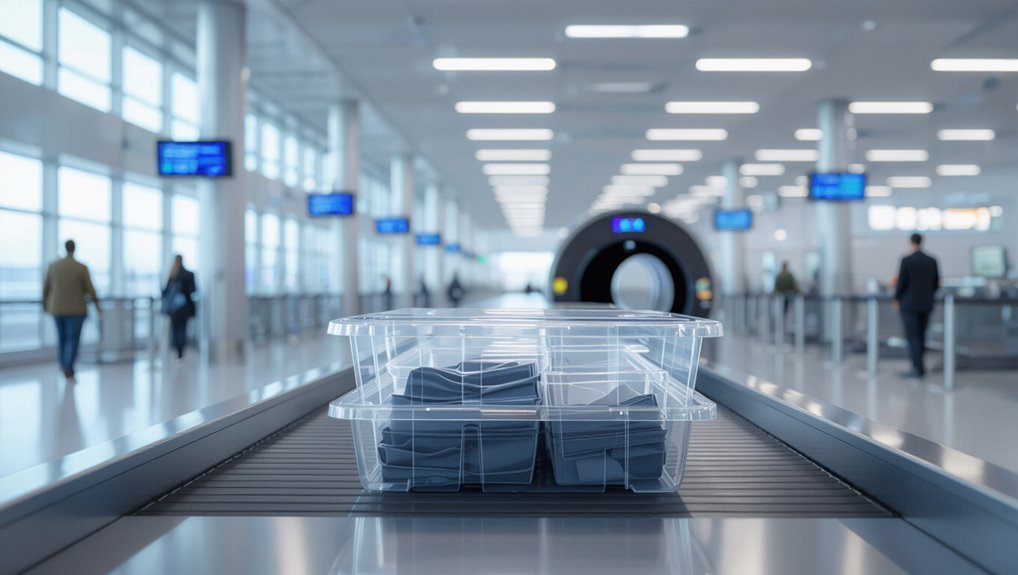
Because airports juggle fluctuating passenger volumes, staffing limits, and security procedures, you’ll often hit long TSA lines during peak travel times.
Bottlenecks stem from limited screening lanes, unpredictable staffing, increased carry-on volume, complex traveler needs, and enhanced threat detection protocols.
Seasonal surges, delayed flights, and sporadic security alerts amplify queues, so systemic constraints and operational variability create frequent, unavoidable congestion.
What to Do Now to Speed Up Security
Knowing why lines form helps you focus on what you can control to move through security faster.
Empty pockets, remove belts and shoes beforehand, and place electronics and liquids in an accessible bin.
Pre-screen: enroll in TSA PreCheck or Global Entry if eligible.
Have boarding pass and ID ready, follow staff instructions, and consolidate carry-ons to speed shuffling through checkpoints.
How TSA Screening Works, Step‑by‑Step
1 step at a time: when you arrive at the checkpoint you’ll first queue, then present your ID and boarding pass to the officer for identity and boarding verification. Then remove shoes, belts, electronics, and liquids; place items in bins; walk through the metal detector or body scanner; collect belongings and recompose.
| Stage | Your action |
|---|---|
| Check-in | Queue, show ID |
| Prep | Remove items |
| Screening | Scan, follow instructions |
| Exit | Reclaim items |
Main Causes: Staffing, Volume, and Rules
When lines back up at TSA checkpoints, three factors usually drive the bottleneck: staffing shortfalls, sudden passenger volume spikes, and evolving security rules that change how screening is done.
You’ll notice slower throughput when passenger numbers surge, new procedures require extra checks, or equipment and processing lanes can’t handle peaks.
Plan arrivals, use trusted traveler programs, and follow prep rules to move faster.
Staffing Shortages and Shift Scheduling
Because TSA agents work in shifts and can’t be everywhere at once, gaps in staffing and uneven schedules often create peak-time shortages that slow screening lines.
You can reduce delay risk by arriving early, choosing off-peak flights, enrolling in TSA PreCheck, and watching airport staffing alerts.
Know that last-minute call-ins, overtime limits, and constrained hiring affect how many lanes are open.
Peak Travel and Rising Passenger Volumes
As airlines fill more seats and special-event weekends draw crowds, airport passenger volumes spike and security lanes strain to keep up.
You’ll face longer waits during holidays, spring break, and major conventions.
Plan travel during off-peak hours, arrive earlier than usual, check real-time airport wait times, and enroll in expedited programs if eligible.
Packing smartly speeds screening and reduces hold-ups for everyone.
New Security Rules That Add Screening Steps
You’ll notice new security rules that can slow things down, like stricter identity checks at document counters.
You’ll also face more thorough inspections of carry-on bags, which take extra time at screening lanes.
Knowing these changes helps you pick faster lines and prepare your documents and items ahead.
Enhanced Identity Verification
While new airport security rules aim to catch fake or stolen IDs, they also add steps that can slow you down at the checkpoint.
You’ll face additional ID checks, closer photo comparisons, and cross-referencing with watchlists.
To speed things up, have your ID ready, use mobile ID options where accepted, and cooperate promptly with officers to reduce secondary screening and keep lines moving.
Expanded Carry-On Inspections
New screening rules mean TSA officers are inspecting carry-on bags more thoroughly, so you may face more frequent hand searches, swab tests, and item-by-item checks before you reach the X-ray belt.
You should pack strategically: keep electronics and liquids accessible, consolidate small items in clear pouches, remove metal and dense objects, and allow extra time.
Cooperate quickly to speed the process.
Scanner and Queue Technology Problems
You’ll notice long waits often start with outdated scanner hardware that misses threats or slows throughput.
Software integration failures between machines and databases can force manual checks and create backups.
And when queue algorithms aren’t optimized, lanes stay imbalanced and lines grow longer.
Outdated Scanner Hardware
Many airports still rely on aging scanner machines that slow screening and force longer lines.
You’ll notice older X‑ray tunnels and clunky CT units take longer to image and require manual checks, so agents stop lanes more often.
You can’t control hardware upgrades, but choosing off-peak flights and carrying simple, organized carry-ons reduces secondary inspections and helps you move through outdated equipment faster.
Software Integration Failures
A handful of airports still struggle because scanners, queue-management systems, and identity databases don’t talk to each other, and that mismatch creates bottlenecks you can see in real time. You’ll wait longer when data stalls, manual checks multiply, and staff juggle systems. Fixes require interoperability, vendor cooperation, and clear protocols.
| Problem | Impact |
|---|---|
| No API | Delays |
| Duplicate checks | Lines |
Inefficient Queue Algorithms
When systems can’t share data, your line’s rhythm gets thrown off — and even with interoperable hardware, poor queue algorithms can make matters worse.
You’ll face misallocated lanes, slow reassignment when workloads shift, and scanners that don’t prioritize throughput.
Smart routing and predictive models cut wait times, so push for adaptive algorithms, real-time load balancing, and simple metrics that keep passenger flow steady.
Airport Layouts, Chokepoints, and Signage
Because airports balance security, retail, and passenger flow in limited space, their layouts often create predictable chokepoints that slow you down—security checkpoints, passport control, and narrow connector corridors are common examples—and poor signage can leave you wandering into queues or dead ends.
Scan maps, follow directional signs, ask staff for shortcuts, arrive early to absorb bottlenecks, and choose gates with simpler access paths.
Inefficient Use of Screening Lanes Explained
Those chokepoints you learned to spot often feed directly into screening areas, and how airports manage those lanes determines whether you breeze through or get stuck. You notice idle lanes, uneven staffing, and poor signage that funnel stress onto travelers. Quick adjustments—reassigning staff, opening lanes, clear instructions—cut wait times and calm crowds.
| Frustration | Relief |
|---|---|
| Idle lane | Open gate |
| Confusion | Clear sign |
| Delay | Swift staff |
| Crowding | Flow |
| Stress | Ease |
Traveler Habits That Slow TSA for Everyone
You slow the line when your carry-on is packed like a moving truck and agents have to search through it.
Showing up late and rushing through the checkpoint creates chaos for everyone behind you.
If you’re not ready for screening — shoes on, liquids out, electronics accessible — you’ll add minutes for the whole queue.
Overpacked Carry-On Bags
When travelers cram too many items into a carry-on, security checks slow to a crawl as agents unpack, search, and reassemble belongings; you can’t breeze through if your bag needs a full inspection.
Streamline: limit items, separate electronics and liquids, use clear pouches, and keep chargers accessible. A tidy bag speeds X-ray review, reduces manual searches, and gets you through the line faster.
Late Arrival Panic
If you rush into the security line at the last minute, frazzled and juggling boarding passes, shoes, and a full carry-on, you’ll slow everyone down as agents stop to help and fellow travelers fumble around you.
Arrive early, organize documents, and pre-position items for inspection.
Calm, prepared arrivals keep lines moving, reduce agent interventions, and prevent cascading delays that frustrate everyone.
Unprepared Security Screening
Because most delays stem from simple oversights—like liquids left in carry-ons, laptops still packed, or belts and shoes not removed—unprepared travelers create preventable backups at the checkpoint.
You can speed things up by prepping your items and knowing rules. Do these before you reach the conveyor:
- Remove liquids into a clear bag
- Pull out laptops and tablets
- Take off belts and shoes
- Empty pockets of metal
- Have boarding pass ready
Common Prohibited Items and Packing Errors
Wondering which items will slow you down at security? Don’t pack liquids over 3.4 ounces, sharp objects, or prohibited electronics in carry-ons.
Avoid obscured bags and loose batteries; place gels, aerosols, and powders where they’re easily inspected.
Don’t wrap items that require unwrapping. Clear organization and removing restricted items beforehand keeps you moving and prevents secondary screening delays.
How to Prep IDs and Documents for TSA
Have your government-issued ID ready and easily reachable before you hit the checkpoint.
Organize boarding passes, visas, and any supporting documents in a single folder or travel wallet so you can pull them quickly.
Keep photocopies or digital backups accessible in case the originals get misplaced.
Ready Your ID
One simple step can shave minutes off your time in line: get your ID and travel documents ready before you reach the checkpoint.
Keep them accessible and obvious so screening goes smoothly.
Tips:
- Place ID in an easy-to-grab pocket
- Remove bulky holders or wallets
- Use a clear travel pouch if needed
- Have boarding pass visible
- Check ID validity ahead of time
Organize Travel Documents
Before you get to the checkpoint, gather and arrange all IDs, boarding passes, and any required travel documents in a single, easy-to-access spot so you can present them quickly.
Keep passports and government IDs at the top, fold boarding passes neatly, and separate any vaccination or customs forms if needed.
Use a thin travel wallet or clear pouch to avoid fumbling and speed the line.
Keep Copies Accessible
Once your documents are organized, keep accessible copies so you can handle unexpected checks or lost originals without slowing the line.
Carry duplicates and digital scans, and know where they are. Have backups ready to show quickly.
- Photo ID copy (front/back)
- Boarding pass screenshot
- Passport scan
- Emergency contact info
- Proof of vaccination or travel authorization
When to Arrive to Avoid TSA Lines
Aim to arrive earlier than the airline’s suggested check-in time—typically 60–90 minutes for domestic and 2–3 hours for international flights—when you want to avoid long TSA lines.
Aim for at least 30–45 extra minutes during peak travel (mornings, holidays).
Check airport alerts and factor in parking, shuttle, and security wait estimates.
Adjust for group size and mobility needs.
TSA PreCheck vs. Global Entry vs. CLEAR
If you want to cut time at security beyond arriving earlier, several trusted traveler programs can help: TSA PreCheck, Global Entry, and CLEAR each speed things up in different ways.
You’ll choose based on travel habits:
- TSA PreCheck: shorter screening lanes.
- Global Entry: fast customs plus PreCheck benefits.
- CLEAR: biometric ID to skip ID line.
- Combine programs for max speed.
- Not every airport offers all options.
How to Apply: Timelines, Costs, and Tips
Because applying for trusted-traveler programs requires a few steps, plan ahead so you’re not surprised by timelines or fees: expect online forms and fee payments, an application processing period that varies by program, and an in-person appointment for identity verification or fingerprints for most options.
Check eligibility, gather documents, schedule interviews early, use expedited processing when available, and track status online to avoid surprises.
Carry‑On and Checked‑Bag Packing Checklist
Start by listing essentials for both carry‑on and checked bags so you can pack once and avoid last‑minute scrambles.
Start by listing carry‑on and checked essentials so you pack once and skip last‑minute scrambles.
Pack documents and valuables in carry‑on, toiletries in travel sizes, and heavier or prohibited items in checked luggage. Use packing cubes and label bags.
- Passport, boarding pass, wallet
- Laptop, charger, headphones
- Medications, small toiletries
- Bulk liquids, sharp items (checked)
- Extra shoes, travel laundry kit
Clothing and Accessories That Speed Screening
Now that you’ve organized your bags and separated items for carry‑on and checked luggage, think about what you wear through security to move faster.
Choose slip‑on shoes, minimal metal, and simple belts to avoid removals. Wear pants with accessible pockets and avoid bulky jewelry or layered outerwear.
Keep electronics and liquids reachable so you can place them in bins quickly.
Mobile Boarding Passes, Digital IDs, and TSA
You can usually use a mobile boarding pass at TSA checkpoints, but some airlines or airports still prefer paper, so have a backup if your phone dies.
When you present a digital ID, TSA officers will verify it against your boarding pass and may ask for a physical ID if verification fails.
Knowing each airline’s mobile acceptance and the ID verification steps will help you move through security faster.
Mobile Boarding Pass Acceptance
Because more travelers use phones for everything, TSA and airlines have had to adapt to mobile boarding passes and digital IDs.
However, acceptance and processing can still cause slowdowns at security. You can reduce delays by preparing your device and documents ahead:
- Charge your phone fully
- Open boarding pass in wallet app
- Disable screen lock notifications
- Keep backup screenshot
- Use airline app rather than email
Digital ID Verification Process
When you present a mobile boarding pass or digital ID at TSA, officers scan barcodes and may visually verify your photo and name against your ID. This can add a few seconds per passenger but prevents mismatches and fraud.
You should guarantee your device screen is bright, the pass is accessible offline, and your ID photo matches. These steps speed verification and reduce hold-ups.
Family and Group Strategies for Faster Lanes
If you’re traveling with family or a group, coordinating everyone before you reach the security checkpoint will shave minutes off your wait and reduce stress.
Prepare together, assign roles, and choose faster options when available.
- Designate one person to lead and queue
- Pre-load boarding passes and IDs
- Consolidate liquids and electronics
- Use family/priority lanes if eligible
- Stagger arrivals to streamline screening
What Airports and Airlines Are Doing to Cut Waits
You’ll see airports and airlines reworking staffing and schedules to match peak traffic so lines move steadier.
They’re also investing in tech and infrastructure—like automated lanes, biometric checkpoints, and smarter queue layouts—to speed processing.
Next, we’ll look at specific changes and what they mean for your wait times.
Staffing And Scheduling
Airports and airlines are reshuffling staff rosters and tweaking schedules to shave minutes off TSA lines.
You’ll see earlier shift starts, staggered breaks, and rapid redeployment to busy checkpoints. They’re also cross-training agents to fill gaps.
Tips you can expect:
- More staff during peak waves
- Flexible shift swaps
- On-call surge teams
- Shorter overlap periods
- Faster shift handoffs
Technology And Infrastructure
While staffing changes can move people through lanes faster, tech and infrastructure upgrades are doing the heavy lifting to cut waits:
You’ll see automated screening lanes, faster X-ray and CT scanners, biometric ID gates, and improved queue layouts.
Airports and airlines are investing in data-driven scheduling, real-time passenger flow tools, and streamlined security procedures so you’ll spend less time in line and move through checkpoints smoothly.
Actionable Pre‑Flight Checklist to Beat TSA Lines
Because a little planning cuts through most security delays, this pre-flight checklist focuses on the exact steps you should take the day before and the hour before departure to speed you through TSA lines.
- Check-in online and save boarding pass to your phone
- Pack liquids in a clear quart bag (≤100ml each)
- Wear easy shoes and minimal metal
- Charge devices and put them accessible
- Verify ID and travel documents are ready
Frequently Asked Questions
Can TSA Lines Cause Missed Connections and Compensation?
Yes — TSA lines can make you miss connections, and you might get limited compensation. You’ll need to document delays, contact airlines promptly, seek rebooking or refunds, and check travel insurance or airline policies for reimbursement options.
Are TSA Screening Videos or Photos Allowed During Screening?
Yes — you can usually take photos or videos of your own screening, but you’ll need to follow TSA officer directions, avoid obstructing operations, and respect other passengers’ privacy; officers can ask you to stop or delete footage.
How Do Medical Devices and Disability Accommodations Work at Security?
You’ll announce devices and accommodations to TSA, show documentation if asked, and follow screening procedures (pat-downs, swabbing, or visual inspection). You can request private screening and a passenger support specialist for assistance.
Can Items Purchased in Airport Shops Bypass Screening?
No, items you buy in airport shops usually must go through screening; you’ll sometimes get expedited checks or resealable bags for liquids, but security can require additional inspection before you board, so don’t assume immunity.
Do TSA Wait Times Differ by Airline or Ticket Class?
Yes — TSA wait times can vary by airline and ticket class because some carriers and premium passengers access dedicated or expedited lanes, so you’ll often experience shorter lines if you fly status, business/first class, or use trusted traveler programs.
Conclusion
You can avoid long TSA lines by planning ahead and using every tool available. Arrive early, enroll in TSA Pre✓® or CLEAR if you can, pack smart with liquids and electronics accessible, and use mobile boarding passes and digital IDs. Travel with prepared family members, split up when needed, and follow staff directions. Stay flexible—airports and airlines are improving processes, but your proactive habits are the fastest way to cut delays and stress.
