Which Suitcase Material Is Best
For most travelers you’ll want a polycarbonate case: it’s lightweight, flexes under impact instead of cracking, and is relatively easy to repair for small dents and scratches. If you’re on a tight budget ABS or polyester will do for occasional trips, while aluminum suits heavy-duty, stylish use despite extra weight. Soft Cordura or ballistic nylon work for rough handling and expandability. Keep luggage weight, trip type, and repairability in mind — more details follow.
Quick Buying Guide: Best Suitcase Material by Traveler
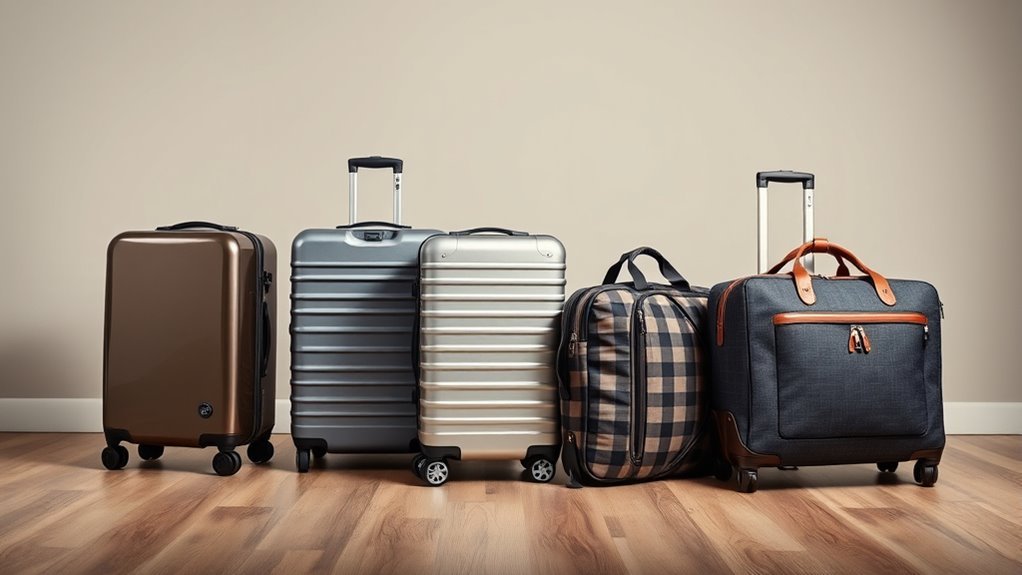
Whether you’re a weekend road-tripper, a business traveler, or a backpacker logging months on the road, choosing the right suitcase material makes a big difference in durability, weight, and security.
Whether road-tripping, flying for work, or backpacking long-term, the right suitcase material shapes durability, weight, and security.
You’ll pick polycarbonate if you want lightweight impact resistance for frequent flights.
Aluminum suits you when theft protection and longevity matter, though it’s heavier and pricier.
ABS or polypropylene works for infrequent trips or tight budgets, balancing cost and basic protection.
Soft-sided nylon or polyester gives flexibility and extra pockets for city trips.
Match material to your trip style, luggage limits, and how much you value weight versus toughness.
Choose Material by Travel Frequency
If you travel several times a year, pick a material that balances durability with weight so your bag survives repeated handling without slowing you down. For frequent flyers, hard shells like polycarbonate resist dents and weather while remaining lightweight; they protect electronics and compress better in overhead bins.
Ballistic nylon or Cordura works if you need abrasion resistance and exterior pockets. If trips are occasional, lighter fabrics can suffice.
Consider how you travel—commuting with carry-ons favors lighter, durable options; checked-bag regulars need tougher shells or reinforced fabric. Match material to trip frequency to minimize repairs and replacements.
How to Balance Weight vs Durability
Because you want a bag that’s easy to carry and lasts, prioritize the features that matter most to your trips: choose lighter polycarbonate or high-denier nylon for frequent carry-on use, and favor thicker ABS, aluminum, or reinforced Cordura when you check bags or expect rough handling.
Weigh your tolerance for repairs versus lifting strain: lighter shells save fees and fatigue but may scuff or crack under impact; sturdier builds resist dents and abrasion yet add pounds.
Compare tested weight ratings, zipper and wheel quality, and warranty terms.
Pack strategically to minimize unnecessary bulk and choose based on typical trip demands.
Polycarbonate : Pros, Cons & Best Uses
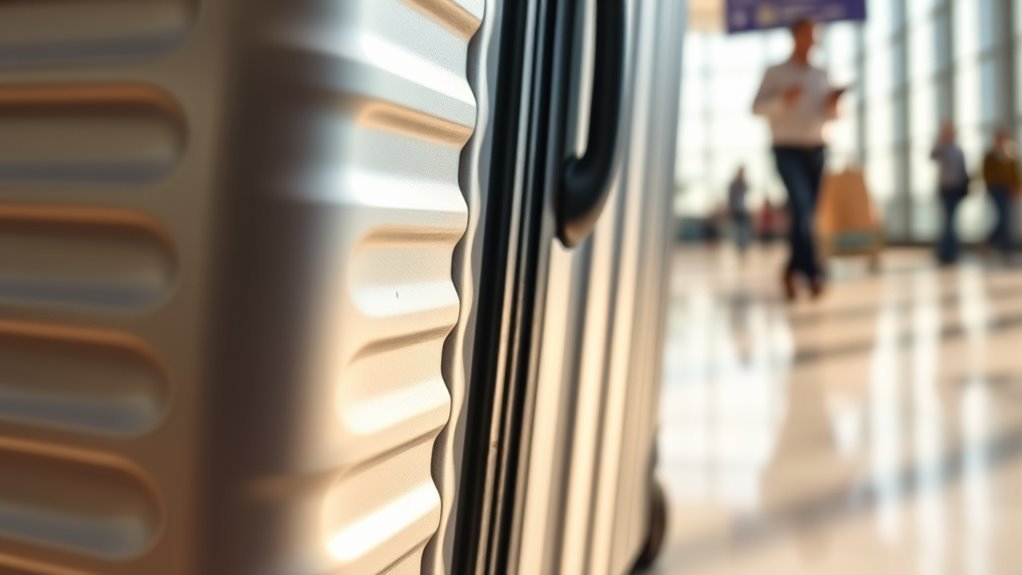
Polycarbonate gives you excellent durability and impact resistance, so it can take knocks without failing.
It’s relatively lightweight for easy portability, but be mindful that deep scratches and cracks can still occur.
You can often repair or buff out minor scratches and get cracks fixed, so weigh repairability when choosing this material.
Durability And Impact Resistance
When you drop a polycarbonate suitcase, it’s likely to dent rather than crack, so this material’s toughness makes it a smart choice for travelers who need reliable impact resistance. You get a shell that flexes under force, then springs back, reducing catastrophic failure. Scratches and scuffs are cosmetic; structural integrity holds. Repairs for dents are possible, and molded designs distribute shock well. You should still expect some surface wear over time, but polycarbonate balances resilience and longevity better than many plastics.
| Benefit | Note |
|---|---|
| Dents not cracks | Maintains structure |
| Shock distribution | Lower failure risk |
| Repairable | Cosmetic wear only |
Weight And Portability
How light should your luggage feel to make airport sprints and overhead-bin lifts easier? Polycarbonate gives you a strong yet lightweight shell, so you carry less baseline weight and can pack more without breaching limits. You’ll appreciate the reduced wrist and shoulder strain when steering terminals and stairs.
Hard-sided polycarbonate balances weight with rigidity, so rolling and lifting stay manageable. For frequent flyers, choose thinner-gauge panels and efficient wheel systems to cut overall heft.
Expect slightly heavier models with extra reinforcements; pick what matches your mobility needs and travel style for maximum portability.
Scratch And Crack Repairability
Because you’ll likely scuff your shell over time, know that polycarbonate’s repairability is one of its practical strengths. You can buff light scratches, use heat to blend shallow marks, and apply epoxy for small cracks. Deep fractures may need professional welding or panel replacement, but most everyday damage is manageable.
| Damage | DIY fix | Expectation |
|---|---|---|
| Surface scratches | Polishing compound | Often invisible |
| Shallow cracks | Heat and press | Restores integrity |
| Deep cracks | Epoxy or pro repair | May be visible |
| Structural breaks | Panel replacement | Full strength return |
ABS : When Cheap Hard-Shells Make Sense
If you’re looking for an inexpensive, lightweight hard-shell that survives a few rough trips, ABS is worth considering: it’s cheap to produce, resists minor impacts, and keeps suitcase weight down so you can maximize your luggage allowance.
You’ll find ABS models at many price points, ideal for occasional travelers, students, or as backup bags. They’re easy to replace if damaged and often come in bright colors or patterns that make spotting luggage simpler.
Expect less rigidity and lower repairability than premium plastics, but for short-term use or tight budgets, ABS delivers practical protection without breaking the bank.
Aluminum Suitcases : Longevity, Dents & Tradeoffs
You’ll notice aluminum holds up far longer than most plastics, but time and rough handling will still leave marks. Small dents can often be popped or smoothed, and many brands offer repair services or replacement panels.
Balance that durability against heavier weight—aluminum gives strength and protection, but you’ll trade kilos and potential airline fees.
Durability Over Time
When you pick an aluminum suitcase, you’re choosing a case that’ll likely outlast most soft-sided and polycarbonate options, thanks to its rigid shell and corrosion-resistant alloy. You’ll benefit from years of service: frames stay straight, corners resist abrasion, and zippers and hardware often use heavier gauges.
Aluminum tolerates temperature swings and UV exposure better than many plastics, so it won’t craze or weaken quickly. Expect cosmetic wear—scratches and patina—that doesn’t impair function.
You should inspect rivets, seals, and handles periodically and tighten or replace worn fasteners to preserve longevity and avoid sudden failures.
Dent Repair Options
Because aluminum takes hits and holds them, dents are one of the main cosmetic—and sometimes structural—issues you’ll face, and knowing repair options helps you decide whether to fix, live with, or replace a case.
You can do small hail-like dings yourself with suction tools or gentle tapping from the inside, but risk finish damage.
Professional repair shops can reshape panels, replace rivets, and refinish brushed or polished surfaces, preserving seals and locks.
For severe creases you may need panel replacement or chassis work.
Consider cost versus sentimental or resale value; sometimes living with a dent is the most practical choice.
Weight Versus Strength
Although aluminum cases can be impressively thin and light, they balance weight with strength in ways that affect longevity and how dents behave. You’ll appreciate their rigidity and scratch resistance, but you’ll also notice that impacts create visible, often permanent dents rather than flexible deformation.
That rigidity protects contents well, yet repeated knocks can fatigue corners and fastenings faster than flexible shells. You can mitigate damage by using protective corners, careful packing, and avoiding overhead tosses, but you shouldn’t expect aluminum to hide blemishes.
Choose it if you prioritize structural integrity and longevity over pristine appearance after rough handling.
Ballistic Nylon : Why It’s Tougher Than Fabric
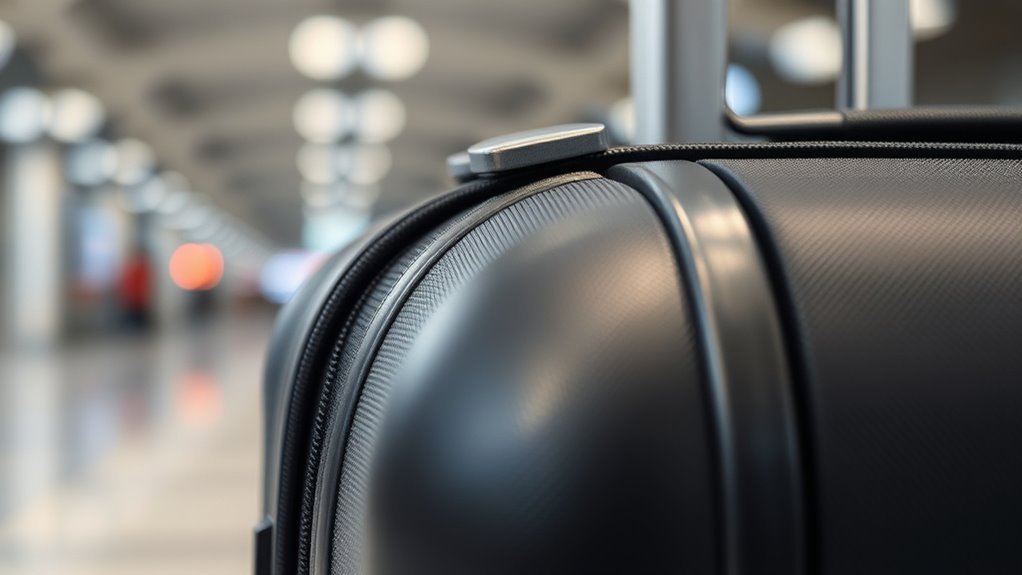
If you handle luggage often, you’ll notice ballistic nylon stands up to rough treatment where ordinary fabric fails. You get densely woven filaments with a tight plain weave that resists abrasion, tearing, and punctures.
The material’s thickness and high-denier yarns absorb impacts, so zippers and seams endure repeated stress. Water and stains bead on many ballistic finishes, making cleaning simple.
While heavier than ultralight textiles, its durability means fewer repairs and longer service life, saving you replacement costs. When you prioritize protection for gear and value longevity, ballistic nylon is a sensible, workmanlike choice.
Polyester & Nylon Blends : Lightweight Budget Options
Wondering where to save weight and dollars on luggage? You’ll find polyester and nylon blends are light, affordable, and practical for casual travel. They resist tearing reasonably well, dry quickly, and let you carry more without extra fees. Expect lower abrasion resistance and less structure than hardshells, but replacements are inexpensive.
| Feature | Benefit | Trade-off |
|---|---|---|
| Weight | Very light | Less protective |
| Cost | Budget-friendly | Shorter lifespan |
| Flexibility | Compresses | Less rigid |
| Water resistance | Decent with coating | Coating can wear |
| Repairability | Easy to mend | Cosmetic wear shows |
Choose blends for low-cost, low-stress trips.
Leather & Canvas Suitcases : Style, Durability & Care
When you want luggage that looks timeless and stands up to regular use, leather and canvas suitcases deliver a blend of style and toughness that synthetic bags usually can’t match. You’ll appreciate leather’s rich patina as it ages and canvas’s forgiving, repairable weave. Both need occasional cleaning, conditioning, and weatherproofing to stay attractive and functional.
Choose leather for formal trips and canvas for casual, rugged travel; both breathe better than plastics and hide scuffs differently. Pack thoughtfully to avoid misshaping. Consider hardware quality—zippers, buckles, and reinforced seams make the difference between heirloom and hassle.
- Scuffed leather gaining warm, glossy edges
- Waxed canvas shedding rain, not water
- Brass buckles warming in your hand
- Rolled clothes keeping corners neat
Hardshell vs Softshell Suitcases: Protection & Packing
Although both types aim to get your stuff from A to B, hardshell cases prioritize impact resistance and water protection while softshell bags emphasize flexibility, exterior pockets, and lighter weight for stuffing into tight spaces.
You’ll choose hardshell when fragile items need rigid support and sealed zippers guard against rain; they resist crushing and create a stable packing cavity.
You’ll pick softshell when you want quick access, expandable compartments, and easier handling in crowded trunks.
Pack smart: use internal straps and dividers in hardshells to prevent shifting, and use compression and protective pouches in softshells to safeguard delicate gear.
Material Effects on Weight, Size & Airline Rules
Think about how the material you pick changes your suitcase’s weight and external dimensions, because that affects what you can carry and how much you can pack.
Airlines set strict size and weight limits, so choosing lighter fabrics or thinner shells can keep you under fees and gate-check requirements.
We’ll compare common materials and how they match typical airline rules so you can pick the best option.
Material Impact On Weight
How much your suitcase material adds to your carry-on’s weight can decide whether you hit airline limits before you pack a single sock. You’ll want lightweight shells like polycarbonate or nylon to maximize what you carry, while aluminum and thick ABS eat into your allowance.
Consider frame, wheels, and hardware—those add ounces. Balance durability with pound-savings: lighter doesn’t always mean fragile, but heavy metals and dense composites will cost you room for essentials.
Visualize material choices:
- A slim polycarbonate shell you lift with one hand
- A bulky aluminum case that resists dents
- A soft nylon bag you compress
- Thick ABS absorbing a drop
Airline Rules And Size
Now that you’re weighing how materials affect your suitcase’s heft, remember airlines enforce both size and weight limits—and materials can push you over either. You’ll choose polycarbonate, aluminum, or fabric knowing rigid shells can eat into carry-on size allowances while lighter fabrics may let you pack more but risk damage. Check airline linear dimensions and your bag’s tare weight; hard-shells tend to be heavier. Balance durability against allowable weight to avoid fees. Use a scale and tape measure before you travel, and pick materials that keep you within limits without sacrificing protection.
| Material | Typical Weight | Size Impact |
|---|---|---|
| Polycarbonate | Light | Slim profile |
| Aluminum | Heavy | Rigid, bulky |
| Fabric | Very light | Flexible packing |
Weather Resistance: Rain, Salt & Sun Performance
Because your suitcase faces rain, salt spray, and strong sun on trips, material choice matters for long-term performance and appearance. You want fabric that dries fast and resists salt corrosion, polycarbonate that won’t warp in heat, and coatings that block UV fading.
Choose materials with sealed seams, stainless or coated zippers, and UV-stable finishes so colors stay true. Maintain by rinsing salt off and drying thoroughly.
- A drenched nylon drying on a balcony after a storm
- Salt crust around metal hardware after a beach day
- Sun-bleached polyester straps on a rooftop
- A glossy shell shrugging off rain droplets
Scratch, Dent & Scuff Resistance Ranked
Weather and UV resistance keep a suitcase looking good, but you’ll also want to know how materials hold up to everyday knocks, scrapes, and luggage-handling abuse. Hardshell polycarbonate resists deep dents and often flexes back, scoring high for dent resistance while showing light surface scratches. ABS is cheaper but gouges and cracks more easily.
Aluminum resists scratches less—surface marks are visible—but dents are often shallow and can be hammered out; it ages characterfully. Soft-sided ballistic nylon and Cordura fend off scuffs and abrasion, though sharp impacts can tear stitching or zippers.
Choose based on your tolerance for visible wear versus structural damage.
Repairability, Parts & Warranty Differences
While materials determine how a suitcase wears, repairability and parts availability decide how long it can stay in service. You’ll want a shell that’s fixable, wheels and handles that can be replaced, and clear warranty terms.
Choose luggage with repairable shells, replaceable wheels and handles, and transparent warranty terms.
Hard shells often need patch kits; soft luggage may stitch back or swap panels. Check manufacturer parts channels and local cobblers. Warranties vary: limited to defects, or lifetime with exclusions. Keep receipts and register product.
When choosing, favor brands that publish part numbers and offer service centers so you can extend use instead of replacing prematurely.
- Scuffed polycarbonate patch
- Wheel carriage swapped out
- Zipper tape resewn
- Telescoping handle rebuilt
Cost Ranges by Material and Quality
You’ll notice different materials come with predictable price bands, so you can match your budget to what you need.
Consider how much extra you’ll pay for tougher shells or premium fabrics versus how long they’ll actually last.
That trade-off between durability and price will help you decide where to spend and where to save.
Budget Ranges By Material
When choosing a suitcase material, expect prices to vary widely based on durability, brand, and construction—hard-shell polycarbonate and aluminum models usually sit at higher price points, while basic polyester and nylon bags are the most affordable.
You’ll find clear budget tiers: entry-level softside rollers for weekend trips, mid-range polycarbonate spinners with better frames, premium aluminum cases with lifetime warranties, and hybrid models blending fabric and shell.
Consider what fits your travel habits and wallet.
Visualize options:
- A worn polyester duffel for quick jaunts
- A glossy polycarbonate spinner at the check-in line
- A dented aluminum trunk on a carousel
- A sleek hybrid carry-on in an overhead bin
Durability Versus Price
You’ve seen how price tiers align with materials; now look at how durability maps onto those costs so you can decide where to spend.
Lower-priced fabrics and thin polycarbonate save money but wear faster, scuff easily, and often need earlier replacement.
Midrange hard shells and reinforced fabrics balance weight, impact resistance, and longevity — they’re smart if you travel regularly.
Premium materials like aluminum or thick, molded polycarbonate resist dents and harsh handling, justifying higher cost for heavy users.
Match expected trip frequency and handling conditions to material resilience so you buy durability where it matters and save elsewhere.
Longevity, Depreciation & Resale Value
Because different materials age and absorb wear in distinct ways, choosing the right suitcase affects how long it serves you and how much value it keeps. You’ll notice hard shells resist dents but scratch, fabric scuffs hide small marks yet stain, and treated leathers patina attractively while requiring care.
Depreciation ties to perceived condition, brand, and repairability; you’ll get more back for a clean, repairable case. When reselling, clear photos and honest descriptions boost trust. Consider lifecycle: initial cost, maintenance, and how quickly style or tech features date the piece.
- A scuffed polycarbonate shell under airport lights
- Frayed fabric at zipper corners
- Patina on leather handles after years
- Stickered corners and repair patches
Best Materials for Checked Baggage vs Carry-On
If you check heavy, older items, pick robust, impact-resistant materials like polycarbonate or aluminum that tolerate rough handling and occasional drops.
For checked bags you want hard shells or dense ballistic nylon to guard fragile contents and resist crushing; reinforced corners and quality wheels matter.
For carry-ons prioritize light, flexible materials—soft fabrics or lightweight polycarbonate—that let you maximize interior space and meet weight limits.
Soft carry-ons compress into overhead bins; hardside carry-ons protect electronics but can add weight.
Match material to how you travel: durability and protection for checked luggage, low weight and flexibility for carry-ons.
Best Materials for Business, Adventure & Families
Having covered checked vs carry-on needs, let’s look at which materials suit different traveler types: business, adventure, and families. You’ll want sleek, durable shells for work—polycarbonate or aluminum protect laptops and look professional.
For adventure, pick ballistic nylon or high-denier Cordura that shrug off mud, straps, and rough handling.
Families need lightweight, forgiving fabrics like polyester with reinforced corners and easy-clean linings to handle spills and toys. Consider hybrid designs that mix a hard shell front with fabric back for flexibility and organization.
- A glossy aluminum case rolling through airport lights
- Mud-splattered Cordura after a trail exit
- Crayon-streaked polyester that wipes clean
- A hybrid bag open to reveal tidy compartments
How to Test a Suitcase Material In-Store
When you’re testing a suitcase in-store, start by running your hands over the exterior shell to feel for rigidity, scratches, or thin spots.
Then move on to the zipper—zip and unzip it several times and check for smoothness and tight teeth alignment.
Finally, inspect the seams for even stitching and reinforced areas where stress is likely.
Check Exterior Shell
Before you buy, give the shell a hands-on inspection to confirm it meets your needs: press, flex, and listen for creaks to judge durability and construction. You’ll want to assess impact resistance, stiffness, and finish quality.
Press in several spots to detect thin areas, flex the edges to see rebound, and tap to hear hollow versus dense sounds. Check for consistent texture and coating adhesion. Picture dents, scuffs, and resilience under load.
- A palm pressing a panel, fingers splaying at a weak spot
- Fingertips feeling grainy versus smooth finishes
- An edge bending slightly then snapping back
- A hollow, echoing tap versus a dull thud
Inspect Zipper And Seams
Although zippers and seams might seem minor, they’re the parts that fail first, so check them carefully in-store. Run each zipper end-to-end, feeling for snags, stiffness, or gaps; the slider should move smoothly without wobble.
Tug gently along seams and piping to detect loose stitching or puckering; nothing should pull away or show frayed threads. Open pockets and inspect internal seams and linings for reinforcement.
Test zipper locks and double zippers together to guarantee alignment. If the case has welded seams, look for uniform bonding.
Walk away if repairs look likely—durability beats a slightly lower price every time.
Quick Decision Flow: Pick Material in Three Steps
If you want a quick, no-fuss way to choose suitcase material, follow three simple questions that narrow options fast.
Ask: will you need light weight, tough shell, flexible fabric, or budget-friendly?
Match answers: hard-shell for protection, polycarbonate for balance, ballistic nylon for rough handling, polyester for occasional travel.
Picture choices as travel scenes:
- A glossy polycarbonate case bouncing through airport conveyors.
- A rugged ballistic nylon bag shrugging off scrapes on a road trip.
- A compact polyester suitcase sliding into an overhead bin.
- A hardshell spinner guarding fragile camera gear on a plane.
Decide by priority, then pick the best-fitting material.
Final Checklist Before You Buy
You’ve narrowed materials by priority, so now confirm the details that will make the suitcase work for your trips. Check size and weight limits for your common airlines, opening dimensions for packing, and whether the material resists scratches or dents in real conditions.
Test zippers, handles, wheels, and telescoping mechanisms for smooth operation and secure locks. Consider interior organization, expansion capacity, and repairability—replaceable wheels or patchable shells matter.
Verify warranty terms and expected lifespan, then balance cost against long-term value. Buy the suitcase that matches your travel habits, not just the flashiest finish.
Frequently Asked Questions
Can Material Affect TSA Lock Compatibility or Integrated Locks?
Yes, material can affect TSA lock compatibility and integrated locks. Hard shells may need reinforced mounts; soft fabrics allow flexible placement. You’ll want sturdy hardware and proper cutouts so locks align, function, and resist tampering.
Do Certain Materials Interfere With GPS Trackers or Smart Luggage?
Yes — metal shells can weaken GPS or Bluetooth signals, while plastics, polycarbonate, and fabrics let trackers work better; you’ll want external pockets or strategically placed antennas to avoid signal blockage from aluminum or hard-shell frames.
Which Materials Are Best for Frequent International Voltage Exposure?
You should choose hard-shell polycarbonate or ABS with quality internal insulation and sealed compartments; they’re durable, resist moisture, and won’t short electronics. You’ll also want surge-protected adapters and removable batteries for frequent international voltage exposure.
Are There Materials Prone to Off-Gassing or Strong New-Luggage Odors?
Yes — you’ll notice off‑gassing from some plastics, faux leather, and cheap adhesives; they’ll emit strong new‑luggage odors. You can air them out, sun them briefly, or use baking soda and activated charcoal to reduce smells.
Do Any Materials Require Special Storage When Not in Use?
Yes — you should store hard-shell polycarbonate and ABS in cool, dry places to avoid warping or odor; keep fabric and leather cases aired, stuffed to keep shape, and away from direct sun or damp to prevent mold and fading.
Conclusion
You’ve got the essentials to pick the right suitcase material for how you travel. Match durability to frequency, balance weight against toughness, and choose polycarbonate for impact resistance or ABS for light, budget-friendly trips. Think about your trip type—business, adventure, or family—and test zippers, handles, and shell flex in-store. Use the three-step flow and final checklist to decide quickly, then buy with confidence and travel lighter, smarter, and less stressed.