What to Pack in Checked Luggage Essential Checklist
Pack bulky gear, extra outfits, shoes, and nonessential toiletries in checked luggage to free carry‑on space for valuables and meds. Stow full‑size products, spare razors, and duplicates in sealed bags, cushion fragile items, and put heavy shoes at the bottom to balance weight. Keep travel documents and electronics with you, follow airline size and battery rules, and separate wet or seasonal gear in waterproof pouches. Continue for practical packing tips and step‑by‑step checks.
How This Checklist Helps
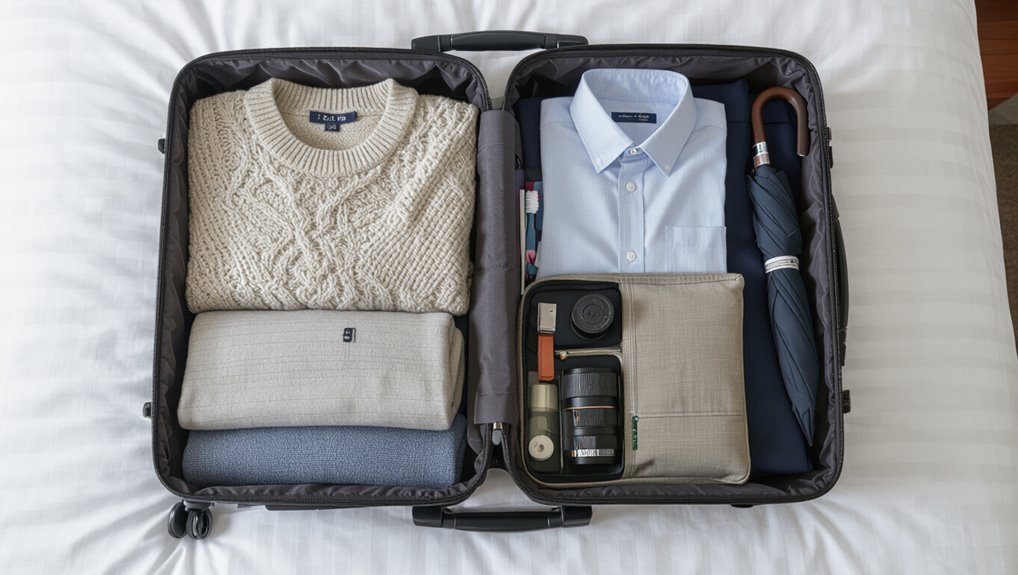
A clear packing checklist helps you avoid last-minute stress by listing exactly what to put in checked luggage and when to pack it.
You’ll prioritize essentials, prevent overpacking, and spot missing items before departure. It guides weight distribution, protects fragile goods, and saves time at the airport.
Following it reduces anxiety and guarantees you leave with everything necessary for a smooth trip.
Quick Checklist: What To Pack In Checked Luggage
Start by packing essential clothing items you’ll need every day, like underwear, socks, and a couple versatile outfits.
Include bulky gear and shoes that’d be awkward in a carry-on, such as boots or a jacket.
Put nonurgent toiletries and extras—spare sunscreen, full-size bottles, and backup chargers—in checked luggage to save space in your carry-on.
Essential Clothing Items
Pack versatile clothing that covers daily needs and unexpected changes in weather, so you won’t scramble for replacements once your bag’s checked.
Include layered basics: T‑shirts, a long‑sleeve, a lightweight sweater or jacket, underwear, socks, and one smart outfit for evenings.
Bring sleepwear, a compact rain layer, and quick‑dry pieces you can wash on the road.
Pack by outfits to simplify.
Bulky Gear And Shoes
Stow your bulky gear and heaviest shoes in checked luggage to keep carry-ons light and avoid airline size limits. Pack boots, hiking gear, and sports equipment securely; use straps and padding. Place shoes in bags to protect clothing and fill gaps to save space.
| Item | Protection | Tip |
|---|---|---|
| Boots | Wrap | Stuff with socks |
| Helmet | Pad | Use helmet bag |
| Skis | Case | Strap together |
| Duffel | Compress | Use straps |
| Cleats | Bag | Clean first |
Nonurgent Toiletries & Extras
While you’ll want essentials in your carry-on, put nonurgent toiletries and extras in checked luggage to save space and avoid liquid limits; think spare bottles, full-size skin and hair products, bulk sunscreen, extra contact solution, and backup razors.
Pack duplicates, travel-size jars of creams, extra deodorant, a small first-aid kit, and laundry soap.
Seal liquids in zip bags to prevent spills.
What Goes In Checked Luggage Vs Carry‑On?
Decide what goes in checked luggage by separating bulky items from things you’ll need onboard—think shoes, jackets, and sports gear that won’t fit in the overhead.
Keep security-restricted goods like liquids over 100 mL, sharp objects, and lithium batteries in your carry‑on or follow airline rules for checked items.
If you’re unsure, check the airline’s restrictions before you pack.
Items Too Large
If an item won’t fit in the overhead bin or meet carry‑on size limits, pack it in checked luggage instead; oversized gear like large suitcases, full‑size musical instruments, bulky sporting equipment, and most collapsible strollers belong in the hold rather than in the cabin.
Secure fragile large items with padding, lock your bag, and tag it clearly.
Check airline size/weight rules to avoid fees.
Security-Restricted Goods
Because some items can pose safety or security risks in the cabin, you need to know which goods belong in checked luggage and which must stay with you.
Pack flammable liquids, large batteries (spare lithium-ion), gas canisters, and fireworks in checked bags only if allowed by your carrier; many are prohibited.
Keep medications, small batteries, and valuable electronics in your carry‑on.
Essential Clothing To Pack In Checked Baggage
When you’re packing checked baggage, focus on versatile clothing that covers the basics, matches your itinerary, and fits the airline’s weight limits.
Pack underwear, socks, a mix of tops (casual and one dressier), neutral pants, a lightweight jacket, and sleepwear.
Pack essentials: underwear, socks, versatile tops (casual + one dressier), neutral pants, light jacket, and sleepwear.
Include a compact rain layer and a pair of shoes suited for activities.
Use packing cubes to save space and stay organized.
How Many Outfits To Pack For Your Trip Length
Aim for one outfit per travel day plus two extras for flexibility: one clean casual change and one dressier option (or an extra layer) to handle spills, unexpected plans, or laundry delays. Pack versatile pieces you can mix, prioritize comfort, and plan laundry stops. Adjust for weather and activities.
| Day | Outfit | Note |
|---|---|---|
| 1 | Casual | Layer |
| 2 | Casual | Mix |
| 3 | Dressy | Optional |
Shoes To Include And How To Pack Them Safely
Choose two to three pairs that cover walking, a dressier option, and an activity-specific shoe (like hiking boots or water shoes), then protect them so they don’t crush your clothes or scuff each other.
Stuff socks or soft items inside to maintain shape, wrap each pair in cloth or shoe bags, place heavier shoes at the bottom near the suitcase wheels, and secure with straps.
Outerwear And Specialty Weather Gear To Check
After packing shoes, think about outerwear and specialty weather gear that’ll protect you and fit efficiently in your checked bag.
Pack a compact, packable coat or insulated jacket, rain shell, and a lightweight down layer if needed.
Include gloves, a warm hat, and a waterproof pouch for wet items.
Roll or compress with packing cubes to save space and prevent wrinkles.
Undergarments, Sleepwear, And Socks Checklist
Pack enough underwear, socks, and sleepwear for the trip length plus a couple extras so you’re never stuck; aim for breathable fabrics, quick-dry materials for washes on the road, and at least one pair of compression or sport socks if you’ll be flying long-haul or doing lots of walking.
Include a lightweight robe or cover-up, thermal underlayers for cold climates, and a compact laundry kit.
Toiletries To Put In Checked Luggage (Non‑Liquids And Backups)
Now that you’ve planned undergarments and sleep layers, think about the non-liquid toiletries and backups that can safely go in checked bags. Pack solid soap, spare toothbrushes, extra razor blades in a case, travel brush, and backup deodorant sticks. Use sealed pouches to prevent messes and label items for quick access.
| Item | Purpose | Tip |
|---|---|---|
| Solid soap | Cleansing | Wrap in wax |
| Razor blades | Shaving | Store in case |
| Toothbrushes | Hygiene | Spare pair |
Packing Medications And Medical Supplies In Checked Bags
While you generally want essential meds in your carry-on, some noncritical prescriptions and medical supplies can go in checked luggage if you take precautions:
Pack them in original labeled containers, cushion fragile items, note dosages and instructions, and keep a copy of prescriptions accessible.
Don’t pack critical inhalers, EpiPens, or allergy meds in checked bags.
- Original labeled containers
- Padded cases for devices
- Written dosage instructions
- Copy of prescriptions
Packing Liquids For Checked Baggage
Because checked bags don’t have the same liquid limits as carry-ons, you can stow larger bottles and toiletries there—but you should seal and cushion them to prevent leaks and damage.
Wrap bottles in plastic, use zip bags or travel pouches, and pad with clothing. Drain or secure pressurized containers, double-check caps, and consider placing fragile toiletries in the center of your suitcase.
Electronics And Batteries: What Belongs In Checked Baggage
1 simple rule will keep most of your electronic gear safe: put spare batteries and power banks in your carry-on, and pack only non-lithium, fully-contained devices in checked baggage.
You should also switch devices off, protect fragile gear, and secure loose parts.
- Hair dryer (non-lithium)
- Travel alarm clock
- Battery-operated razor (sealed)
- Digital camera body (without spare lithium)
Chargers, Adapters, And Power Banks To Include
Pack a universal travel adapter so you can plug in anywhere, and bring your device-specific chargers to keep phones, cameras, and laptops ready.
Remember that most power banks must go in your carry-on, not checked luggage, so plan where you’ll store them.
Check airline limits on capacity and number of batteries to avoid surprises.
Universal Travel Adapters
When you’re traveling internationally, a compact universal travel adapter and a reliable power bank are essential so your devices stay charged and usable. Include the right plugs for your destinations, a USB-C charger for fast charging, and a power bank that meets airline capacity limits.
- Choose a lightweight, multi-plug adapter
- Prefer USB-C PD support
- Verify voltage compatibility
- Pack a TSA-compliant power bank
Device-Specific Chargers
Although a universal adapter handles outlets, you’ll still want device-specific chargers and cables tailored to each gadget so you can charge efficiently and avoid stranded devices.
Pack original chargers for laptops, phones, tablets, camera batteries and any proprietary plugs.
Include spare USB-C, Lightning, micro‑USB cables, a compact multiport USB charger, and labeled cords to speed setup and prevent mixups during travel.
Power Bank Restrictions
Because airlines limit spare batteries, check power bank capacity and airline rules before you head to the airport: you can carry most USB power banks in carry‑on only, typically up to 100 Wh without airline approval, 100–160 Wh with approval, and anything above that’s usually prohibited.
- Pack power banks in carry‑on, not checked luggage.
- Label capacity clearly.
- Get airline approval for 100–160 Wh.
- Remove damaged batteries and replace.
Documents And Backups Safe To Pack In Checked Luggage
If you’re checking a bag, pack only documents and backups that you can afford to lose or easily replace—think photocopies of your passport, printed itineraries, insurance forms, and nonoriginal backup media like extra SD cards or a disposable USB drive.
Seal them in waterproof sleeves, label contents, and split copies across bags. Avoid originals, encrypt sensitive files, and keep one set with you.
Valuables To Avoid Checking And Alternatives To Pack Instead
Why risk it? Don’t check valuables—keep them with you to prevent loss or theft.
Why risk losing valuables? Keep passports, cash, and electronics on you—never checked—so they stay secure and accessible.
Pack essentials in your carry-on and use smart alternatives that stay secure and accessible.
- Passport, IDs, and boarding pass — on your person
- Cash and credit cards — in a hidden travel wallet
- Jewelry and watches — in your carry-on pouch
- Electronics and backups — in your personal bag
Fragile Items: How To Protect Breakables In Checked Bags
Glassware, ceramics, and delicate electronics demand extra care when you check them—treat them like the trip’s most fragile cargo.
Wrap each item in bubble wrap or soft clothing, nest pieces in the suitcase center, and separate with dividers or padded pouches.
Mark the bag “fragile” and consider rigid hard‑shell luggage.
Insure valuables and pack duplicates in carry‑on when possible.
Toiletry Organization: Solid Products, Travel Containers, And Wraps
Pack toiletries with intention: choose solids where possible, decant liquids into leak‑proof travel containers, and wrap items to prevent spills and damage.
You’ll save space, avoid mess, and keep essentials accessible. Organize by frequency of use and pack heavier bottles low.
- Solid shampoo and soap bars
- Clear, labeled travel bottles
- Zip bags for backups
- Soft wrap for fragile jars
Packing For Families: Checked Luggage Strategy For Kids
Think through essentials by age—what a toddler needs differs from a tween.
Pack bulkier kid items like car seats, strollers, and extra blankets in checked bags to save carry-on space.
Organize with labeled compartments and put frequently needed things near the top for easy access.
Essentials By Age Group
When you’re packing checked bags for kids, focus on age-specific essentials so you’re not scrambling at your destination.
Tailor clothing, toiletries, medications, and comfort items to age and trip length. Label everything and pack duplicates of must-haves.
- Infants: extra onesies, diapers, formula/sterilized bottles
- Toddlers: favorite blanket, spill-proof cups
- School-age: activity kit, basic meds
- Teens: chargers, extra outfit
Bulkier Items For Kids
Because bulky kid items take up the most space and can’t always go in carry-on, prioritize what you’ll check and how you’ll stow it: pack a lightweight stroller that folds compactly, a collapsible travel crib if needed, and one warm coat per child.
Limit bulky toys, compress winterwear in vacuum bags, and place shoes at the base to stabilize the suitcase.
Organizing And Accessibility
Although you’ll likely pack bulky items first, organize checked bags so essentials are easy to find: use clear packing cubes, keep a small toiletries pouch near the top, label kids’ outfits per day, and stash a spare set for delays.
- Clear packing cubes
- Top-access toiletries pouch
- Daily outfit labels
- Spare emergency outfit
Business Travel: What To Put In Checked Bags Vs Carry‑On
Wondering what to pack where for a business trip?
Pack suits, extra shoes, and checked toiletries in your checked bag to save space and avoid carry-on liquid limits.
Keep essentials in your carry-on: laptop, chargers, presentation materials, a change of clothes, travel documents, and medications.
That way you’re covered if bags delay and you stay ready for meetings on arrival.
Sporting Equipment And Bulky Gear To Check
If you’re traveling with oversized sports gear like skis, surfboards, or golf clubs, you’ll need to check them instead of carrying them on.
Use sturdy, protective storage cases or padded bags to shield your equipment from rough handling and airline transfers.
Also check airline policies and size/weight limits so you can avoid extra fees or damage.
Oversized Sports Gear
When you’re traveling with oversized sports gear—skis, surfboards, bikes, hockey sticks, or bulky gym equipment—you’ll need to plan for special packing, airline rules, and possible extra fees to avoid surprises at the airport.
- Check airline size/weight limits and fees before you go.
- Disassemble gear where possible to save space.
- Use padding around contact points, not full cases.
- Declare oversized items at check-in to streamline handling.
Protective Storage Cases
For oversized sports gear, a proper protective storage case can make the difference between arriving ready to play and replacing equipment. You’ll want a hard shell or padded bag, internal straps, and waterproofing. Measure gear, lock zippers, and label the case. Check airline rules and consider wheels for heavy items.
| Type | Best for | Tip |
|---|---|---|
| Hard case | Bikes | Secure foam |
| Soft bag | Club sets | Use straps |
| Tube | Poles | Cap ends |
| Wheel bag | Boards | Reinforce corners |
| Hybrid | Mixed gear | Modular inserts |
How To Pack Souvenirs And Duty‑Free Items In Checked Bags
1 smart strategy is to pack souvenirs and duty‑free items with protection and practicality in mind.
Wrap fragile items in clothing, seal liquids in plastic, tuck paperwork in an inner pocket, and distribute weight to avoid pressure points.
Label fragile bags and stash valuable receipts on your person.
- Wrap fragile items in clothing
- Seal liquids in plastic bags
- Keep receipts and paperwork handy
- Evenly distribute weight
Seasonal Items For Checked Luggage (Beach, Cold, Rain)
Although the seasons change, you can pack smart by grouping beach, cold, and rain gear so each set stays protected and easy to access in checked luggage.
Pack smart across seasons: group beach, cold, and rain gear so each set stays protected and easy to access.
Use waterproof bags for wet swimwear and sand-proof pouches for sandals.
Roll bulky sweaters and compress with packing cubes.
Stow a compact umbrella and waterproof jacket in an outer compartment.
Label each bundle for quick retrieval.
Emergency Kit And Backup Clothes To Pack
Once you’ve grouped seasonal gear, pack a small emergency kit and a set of backup clothes in your checked bag so you’re ready for delays, spills, or lost luggage.
Keep essentials compact, waterproofed, and easy to reach.
- Lightweight change of clothes (top, bottoms, underwear)
- Compact toiletry kit (toothbrush, mini deodorant)
- Basic first-aid (bandages, pain reliever)
- Ziplock with spare phone charger
Laundry Supplies And Stain‑Removal Items For Checked Bags
Pack a compact laundry kit—travel-sized detergent, a sink stopper, and a lightweight clothesline—so you can refresh garments on the go.
Include stain-removal essentials like a portable stain stick, a small bottle of stain remover, and a few stain wipes for quick treatment.
These items save space and prevent small mishaps from ruining outfits during your trip.
Compact Laundry Kit
If you want to keep clothes fresh on longer trips, a compact laundry kit for your checked bag lets you handle quick washes and tackle stains without hauling bulky supplies.
Pack travel‑size detergent, a sink stopper or universal plug, a lightweight clothesline, and a small travel brush.
These items keep garments wearable between laundromat visits and save space in your suitcase.
Stain-Removal Essentials
A small, well-chosen stain kit lets you tackle spills fast so a single mishap doesn’t ruin an outfit.
Pack stain sticks or wipes, a travel-size enzyme spray, a compact stain remover pen, and a small bar soap.
Include a resealable plastic bag for soaked items and a few safety pins for quick fixes.
Label items for airport security.
How To Pack Bulky Items To Save Space In Checked Luggage
One smart strategy is to compress bulky items before they go into checked luggage so you free up space for everything else.
Roll sweaters tightly, nest shoes with socks inside, layer heavier items at the bottom, and use clothing to cushion fragile gear.
Pack densely to minimize gaps and balance weight for easier handling.
- Roll sweaters tightly
- Nest shoes with socks
- Layer heavy items low
- Use clothes as padding
Compression And Packing Tools That Work For Checked Bags
When you want to shave inches and keep gear organized, compression options and smart packing tools make checked bags more efficient and protect your stuff.
Use vacuum or roll-up compression bags for bulky clothing, strap gear with internal compression straps, and add a travel-sized luggage belt outside.
Include a lightweight duffel or stuff sack for dirty items, and small zip pouches for cords and toiletries.
Using Packing Cubes And Organization For Checked Luggage
If you want faster packing and less rummaging at your destination, packing cubes are your best friend for checked luggage. They keep outfits grouped, protect delicate items, and speed unpacking.
Use color-coding and labels to stay efficient. Layer cubes by priority to avoid digging.
- Color-code for outfits
- Use a toiletry cube
- Reserve a shoe cube
- Label fragile cubes
Weight Limits And How To Avoid Overweight Checked Baggage Fees
Packing cubes make organizing easier, but they won’t stop airlines from charging for extra pounds — so know your carrier’s weight limits before you head to the airport.
Weigh your bag at home with a reliable scale, redistribute items between bags, wear heavy layers, and pack toiletries in travel sizes.
Consider mailing bulky items or paying for an upgraded allowance if necessary.
Labeling And ID Tips To Prevent Lost Checked Luggage
One simple step you can take to reduce the risk of lost checked luggage is to clearly label your bag both inside and out with your name, phone number, and an alternate contact; include your itinerary only if you’re comfortable with that information being visible.
- Use durable tags and a covered card inside
- Add a unique ribbon or strap for ID
- Put a copy of your itinerary inside
- Photograph your bag and tags before checking
Security Measures: Locks, Tamper‑Evident Tags, And TSA Rules
Along with clear labels and a photo of your bag, you’ll want to secure it against tampering and accidental opening.
Use TSA‑approved locks so agents can inspect without destroying them. Consider tamper‑evident straps or tags for extra assurance.
Avoid overpacking to prevent burst zippers. Keep a record of lock keys or combination codes, and know airline policies on secured checked luggage.
Declaring Restricted Items In Checked Bags
You should declare any liquids that exceed airline limits and check the carrier’s rules before you pack them.
Also review the prohibited items list so you don’t accidentally pack weapons, flammable goods, or other banned materials.
If you’re unsure about an item, ask the airline or security staff before you fly.
Declare Liquids Over Limit
Liquids over the airline’s allowed volume need to be declared at check-in so staff can screen or seize them according to safety rules; tell the agent what the item is, why it’s over the limit, and provide any supporting documentation like prescriptions or purchase receipts.
- Bring prescriptions or receipts
- Pack bulky liquids securely
- Label contents clearly
- Be ready for inspection
Prohibited Items List
While packing checked bags, remember to declare any restricted or prohibited items to avoid fines, delays, or confiscation.
You should list batteries, aerosols, flammable liquids, firearms, sharp objects, and large quantities of medication.
Check airline and TSA rules; label declared items and keep documentation handy.
Failure to disclose can result in confiscation or penalties, so be transparent and proactive.
What To Do If An Item In Checked Luggage Is Damaged Or Missing
If an item in your checked luggage arrives damaged or doesn’t show up at all, act quickly: file a report with the airline before leaving the airport, document the damage or loss with photos, and keep all travel and baggage tags.
Then follow up promptly, keep receipts, and know basic claim timelines.
- Take clear photos of damage
- Get a written report
- Save purchase receipts
- Follow up in writing
Airline‑Specific Checked Luggage Rules To Verify Before You Fly
After you’ve filed any damage or loss reports, check the specific airline’s checked-baggage rules before you pack or head to the airport.
Verify size, weight limits, and fees to avoid surprises. Confirm prohibited items, battery and lithium restrictions, and sports equipment procedures.
Check size, weight, and fees—know prohibited items, battery/lithium rules, and sports equipment procedures before you pack.
Note transfer and partner-carrier policies if connecting.
Print or screenshot rules and your receipt for quick reference at check‑in.
International Travel Considerations For Checked Baggage Contents
When packing for international trips, you should check customs rules for items that are restricted, taxable, or require declaration to avoid fines or confiscation.
Don’t pack large amounts of foreign cash in checked bags—keep currency and important documents like passports, visas, and receipts with you in carry‑on.
If you must place copies in checked luggage, make sure they’re well‑organized and note any value declarations required by your destination.
Customs Regulations Awareness
Although customs rules vary by country, you should know the main restrictions and declaration requirements before packing checked luggage for international travel.
Check prohibited items, duty-free allowances, and agricultural bans, and label gifts or samples clearly. Keep receipts for high-value goods.
- Prohibited/protected items
- Duty and allowance limits
- Food, plant, and animal restrictions
- Items needing permits or certificates
Currency And Documentation
Passports, visas, and financial documents should travel with you, not buried in checked baggage—carry originals and copies in your carry-on and leave scanned backups in secure cloud storage. Pack minimal local currency in your luggage only as backup; note customs limits. Keep receipts, emergency contacts, and insurance cards accessible.
| Item | Tip |
|---|---|
| Passports | Carry-on only |
| Copies | Separate from originals |
| Currency | Small backup |
| Insurance | Digital + paper |
Eco‑Friendly Packing Choices For Checked Luggage
If you want to reduce your trip’s environmental impact, choose durable, reusable items and pack with waste-minimizing intent: bring multi-use clothing, repair kits, and refillable toiletry containers to cut disposables.
Pack efficiently to avoid extra baggage.
- Reusable toiletry bottles and soap bars
- Lightweight, versatile garments
- Small sewing/repair kit
- Collapsible shopping bag
Copyable Checked‑Luggage Packing Template (Printable)
Here’s a simple, printable checked-luggage packing template you can copy and adapt for any trip; it breaks items into categories (clothing, toiletries, electronics, shoes, misc) and includes checkboxes and space for notes so you can tick off what’s packed before you close your bag.
Use concise lines: item, quantity, location, special care, and a final packed checkbox to streamline packing.
Final Pre‑Flight Checked Luggage Checklist And Quick Audit
Before you close your suitcase, run a quick cross-check to make sure essential items—documents, meds, chargers—are all packed and accessible.
Then do a rapid weight and security audit: weigh the bag if possible, confirm zippers and locks are secure, and move anything prohibited to your carry-on.
That short final sweep prevents surprises at check-in and keeps your trip calm.
Essential Item Cross‑Check
Everyone tends to forget something, so do a quick cross‑check of your checked luggage to catch essentials you’ll regret leaving behind: travel documents tucked in a secure pouch, chargers and adapters, necessary medications (with prescriptions), a change of clothes, and any fragile or prohibited items packed according to airline rules.
Check these before you close the bag:
- Wallet and ID
- Phone charger and power bank
- Prescriptions in original bottles
- Spare outfit and undergarments
Weight And Security Audit
When you’re about to close your checked bag, do a final weight and security audit to avoid surprises at the gate: check scale, lock, and access points; redistribute heavy items; confirm prohibited goods; and note valuables in carry‑on.
| Item | Action | Result |
|---|---|---|
| Scale | Weigh | Under limit |
| Locks | Secure | Tamper‑resistant |
| Zippers | Fasten | No gaps |
| Valuables | Move | In carry‑on |
Frequently Asked Questions
Can I Pack Perishable Food or Homemade Meals in Checked Luggage?
You can pack perishable food or homemade meals in checked luggage, but they’ll likely spoil, cause leaks, and may be restricted by airline or destination rules, so you should use proper cooling, sealed containers, and check regulations first.
Are There Items That Will Be Confiscated at International Customs From Checked Bags?
Yes — customs will seize prohibited items from your checked bags, including fresh produce, meats, certain dairy, plants, soil, undeclared large amounts of cash, illegal drugs, weapons, counterfeit goods, and restricted cultural artifacts or endangered species products.
How Do I Pack Prescription Syringes or Injectable Medications in Checked Baggage?
You can pack prescription syringes and injectables in checked baggage if you’ll declare them, keep them in original labeled packaging with prescription/doctor’s note, secure needles in a rigid case, and follow airline and destination regulations.
Can I Include Lender‑Owned or Rental Equipment (Like Skis) in Checked Luggage?
Yes, you can pack lender‑owned or rental equipment like skis in checked luggage, but you’ll want to check airline size/weight limits, declare fragile items, use protective cases, and confirm rental insurance or replacement responsibilities before flying.
What Are the Liability Limits if My Checked Luggage Is Delayed or Lost Internationally?
Internationally, your airline’s liability’s usually limited under the Montreal Convention to about 1,288 Special Drawing Rights per passenger; you’ll need to file claims promptly, provide receipts, and purchase extra insurance for higher coverage if needed.
Conclusion
You’re ready to finish packing with confidence. Double-check heavy or fragile items are cushioned, liquids are sealed and placed in plastic, and any essentials you might need on arrival—meds, chargers, an extra outfit—are in your carry‑on. Weigh your bag and secure locks or straps. Snap a photo of the packed bag for reference, store important documents in an accessible pocket, then zip up, tag it clearly, and go enjoy your trip knowing you’ve covered the essentials.