
What to Do With Old Samsonite Luggage Reuse Recycle and Donate Ideas
You can keep old Samsonite for occasional trips, fix wheels or zippers, or sell it if it’s in good shape. If it’s worn, donate to shelters or community centers, recycle hard shells at proper facilities, or harvest parts for repairs. Repurpose hard cases into side tables, planters, or bar carts and soft bags into pet beds or totes. Use eco-friendly paints and liners for projects, and keep exploring options to find the best next step.
Decide: Keep, Repurpose, Recycle, or Donate Samsonite
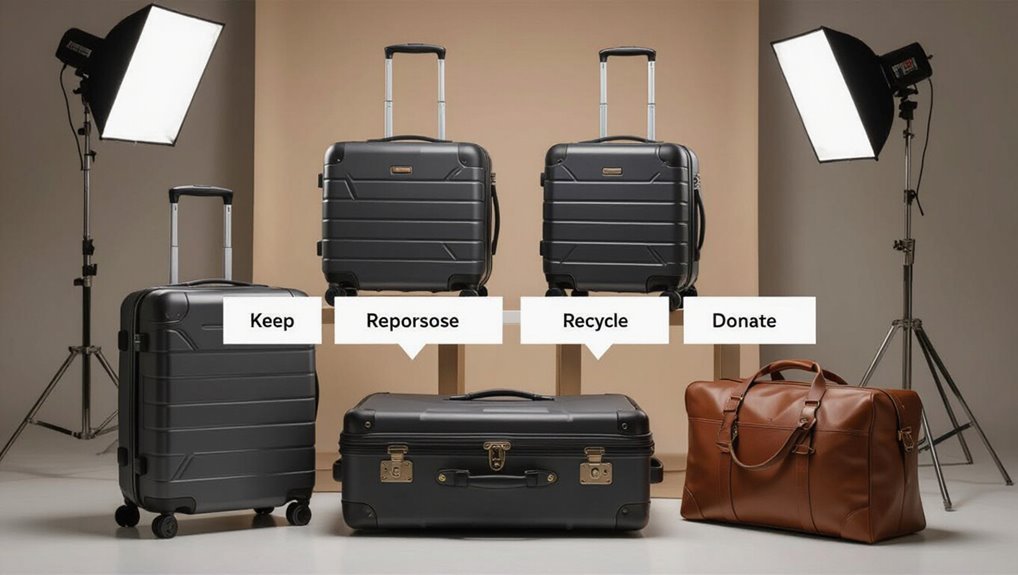
Decide whether your old Samsonite should stay in your life or start a new one: keep it for occasional travel, repurpose it into storage or furniture, recycle its components, or donate it to someone who’ll use it.
Assess durability, sentimental value, repair cost, and environmental impact.
Choose based on practical use, ease of refurbishment, or local donation/recycling options to maximize value and minimize waste.
Quick Condition Checklist for Samsonite
Start by checking the exterior for cracks, deep scratches, or broken seams that affect structure.
Next, look inside to see if the lining’s clean, dry, and free of mold or lingering smells.
Finish by testing zippers, wheels, handles, and locks to confirm they work smoothly.
Exterior Damage Check
Before you decide what to do with old Samsonite luggage, give the exterior a quick, systematic once-over: scan for cracks or deep scratches in the shell, check seams and welded joints for separation, run your hand along handles and wheels for stiffness or play, and inspect zippers and clasps for missing teeth or broken sliders.
- Note punctures or dents
- Test wheel spin and alignment
- Wiggle handles for looseness
- Check frame integrity
- Photograph damage for records
Interior Cleanliness Review
After you’ve checked the shell and hardware, move inside to assess the bag’s cleanliness and condition.
Open compartments, smell for mold or mildew, and scan for stains, tears, or loose lining.
Remove debris, vacuum seams, and note permanent odors or damage that affect reuse.
If the interior’s clean and intact, it’s suitable for donation or upcycling; otherwise consider recycling options.
Functional Hardware Test
Check each moving part to verify the suitcase still works: extend and retract the telescoping handle smoothly, roll the wheels on different surfaces to listen for grinding or wobble, zip and unzip every zipper to guarantee teeth align and sliders glide, and test locks and latches for secure engagement.
- Inspect wheel bearings and casters
- Check handle pins and locks
- Test zipper pull strength
- Verify combination or key locks
- Examine hinge and latch integrity
How Model and Shell Type Affect Repurposing
Because Samsonite made so many styles and used different shells, the model and its material will shape what you can realistically turn an old suitcase into.
Hard-shell cases suit furniture, pet beds, or planters; fabric or soft-sided bags work better for tote conversions, fabric panels, or padded storage.
Mini or vintage pieces become decor or wall shelves, while large, sturdy models handle heavier repurposes.
Signs a Samsonite Is Worth Keeping
Knowing the model and shell helps you imagine new uses, but you’ll want to decide which pieces are worth keeping before you repurpose them.
Check structural integrity, cosmetic condition, functionality, sentimental value, and adaptability. Keep pieces that are sturdy, dent-free, zippers intact, meaningful, or easily converted.
- Solid shell with no cracks
- Working wheels and handles
- Zippers and locks functional
- Minimal scratches or stains
- Good size for new projects
Simple Repairs to Make It Usable Again
Start by tackling the easy fixes that restore function: replace broken wheels and loose handles, lubricate squeaky telescoping pulls, and swap worn zipper sliders or add pull-tabs so the case opens smoothly.
Then clean and reattach interior linings, reseal small shell cracks with epoxy, tighten hinges and locks, and refresh foam or straps so your Samsonite serves reliably for more trips.
Fix Wheels, Handles, and Zippers Fast
Grab a screwdriver and a few replacement parts, and you can have most Samsonite wheels, handles, and zippers working again in under an hour.
You’ll inspect, tighten, swap broken wheels, replace telescoping handles, and repair zipper sliders quickly. Keep basic tools and spare parts handy to avoid trips to the shop.
- Inspect mounts and bearings
- Tighten loose screws
- Swap damaged wheels
- Replace handle assemblies
- Swap zipper sliders
Cleaning and Deodorizing an Old Samsonite
After you’ve fixed wheels, handles, and zippers, give the shell and interior a thorough cleaning to bring the bag back to life and remove odors. Wipe hard shells with mild soap, vacuum fabric, spot-treat stains, and air dry. Deodorize with baking soda or activated charcoal. Store with cedar sachets.
| Step | Product |
|---|---|
| Shell | Mild soap |
| Odor | Baking soda |
When a Samsonite Is Beyond Repair
If the shell is cracked through, the frame’s bent, or repairs keep failing, it’s time to accept that your Samsonite is beyond repair and move on; you’ll save money and hassle by retiring it rather than pouring more into a suitcase that won’t hold up.
Consider these next steps:
- Donate usable interior bits
- Recycle hard shell materials
- Repurpose as storage
- Sell for parts
- Dispose responsibly
How to Strip Down a Suitcase for Parts
Once you’ve decided the suitcase won’t be repaired, you can start reclaiming useful parts before recycling or disposal. Lay the case flat, remove fabric linings, unscrew interior panels, and separate foam and plastic. Keep fasteners and small hardware sorted in labeled bags for reuse or donation.
| Task | Tool | Outcome |
|---|---|---|
| Remove lining | Screwdriver | Clean fabric |
| Open shell | Pliers | Salvaged panels |
| Sort bits | Bags | Organized parts |
Salvage Wheels, Handles, and Zipper Hardware
Start by flipping the suitcase so you can clearly see the wheel housings, handle mounts, and zipper stops; these are the parts most worth salvaging and easiest to remove.
Flip the suitcase to expose wheel housings, handle mounts, and zipper stops—the easiest, most salvageable parts.
You’ll need basic tools—screwdriver, pliers, replacement screws—and patience. Remove, clean, and label parts for reuse or sale.
- Wheels
- Retractable handle
- Corner guards
- Zipper pulls
- Axles and bearings
Use Samsonite Foam and Padding for Crafts
Foam and padding from old Samsonite suitcases make great craft materials, and you can repurpose them into cushions, pet beds, or soundproofing panels with minimal tools.
Cut foam to size, wrap in durable fabric, and stitch or glue seams. Use softer layers for pet bedding and denser pieces for acoustic panels.
Seal edges to prevent shedding and test adhesives for durability.
Recycling Programs That Accept Samsonite
If you’re looking to recycle an old Samsonite, several programs will accept luggage either for curbside recycling, drop-off, or mail-in processing.
You can check local municipal recycling, specialty textile recyclers, community reuse centers, donation hubs that handle damaged gear, or mail-back services that repurpose plastics and metals.
Choose options that separate materials for proper processing.
- Municipal recycling centers
- Textile recyclers
- Community reuse hubs
- Donation centers accepting damaged luggage
- Mail-back repurpose services
Samsonite Manufacturer Take-Back Options
While Samsonite doesn’t run a universal take-back program in every country, they do offer manufacturer-supported options you can use in many regions—like repair services, parts replacement, and limited recycling partnerships—so check their local website or contact customer service to see what’s available where you live.
| Option | What it covers | How to access |
|---|---|---|
| Repair | Zippers, wheels | Service center |
| Parts | Handles, locks | Parts order |
| Recycle | Select items | Partner drop-off |
Local Recycling Rules for Mixed-Material Luggage
Because luggage combines plastics, metals, fabrics, and sometimes foam, your local recycling rules will usually treat it differently than single-material items—so check municipal guidelines before dropping a suitcase at a curbside bin.
Luggage blends plastics, metals, fabrics, and foam—check local recycling rules before tossing it in a curbside bin.
You should disassemble obvious parts, confirm drop-off locations, and avoid contaminating streams.
Consider these quick actions:
- Remove wheels and zippers
- Separate fabric liners
- Check bulky-item schedules
- Ask about mixed-material policies
- Use designated transfer stations
Donate Recyclable Parts to Repair Cafes
If your local repair cafe accepts donations, bring in usable parts from your Samsonite instead of tossing the whole case.
Useful items include wheels, zippers, handles, telescoping rods, and hardware—clean them and bundle small fasteners in labeled bags.
Check the cafe’s guidelines first so you know what they need and how to prepare items for reuse.
Local Repair Cafe Donations
When your Samsonite has reached the end of its travel life, consider donating usable parts—like wheels, handles, locks, and zippers—to a local repair cafe where volunteers can repurpose them for other luggage or community projects.
You can drop items off, offer sorting help, or suggest repair workshops to maximize reuse and keep materials circulating locally.
- Call ahead for acceptance rules
- Pack parts neatly
- Label any defects
- Offer to volunteer
- Share on community boards
Which Parts Are Useful
You’ve already got a head start by contacting or visiting a repair cafe; now focus on which Samsonite parts volunteers actually want.
Bring intact wheels, telescoping handle assemblies, zippers and zipper pulls, locks and combination mechanisms, hinges, and clasps. Small hardware like screws, rivets, and corner protectors helps repairs.
Clean, labeled parts speed reuse and increase the chance they’ll be kept out of landfill.
How To Prepare Items
Start by separating usable components from trash: remove wheels, the telescoping handle, intact zippers and pulls, locks, hinges, and any small hardware like screws or corner protectors.
Clean parts, label condition, and bag tiny pieces so volunteers can sort them quickly.
Contact local repair cafés to confirm needs and drop‑off rules.
- Clean parts
- Sort by condition
- Bag small hardware
- Label items
- Contact repair café
How to Prepare Samsonite for Donation
Gather your Samsonite, check its condition, and decide which pieces are donation-worthy.
Empty pockets, remove personal tags, and clean interiors with mild detergent and a soft brush.
Empty pockets, remove personal tags, and gently clean interiors with mild detergent and a soft brush before donating.
Wipe exterior shells, polish hardware, and repair minor zippers or handles if you can.
Securely close cases, note any defects on a tag, and pack accessories separately so recipients know what to expect.
Where to Donate Samsonite Near You
Looking for places that will gladly take your Samsonite? You can donate locally or to organizations that accept luggage in good condition.
Check policies, drop-off hours, and donation receipts before you go.
- Homeless shelters
- Domestic violence centers
- Community centers
- Donation drives
- Charity pick-up services
Best Thrift Stores and Consignment Options
If you want to get some cash or give your Samsonite a second life, local thrift stores and consignment shops are great options—especially those that specialize in luggage, travel gear, or higher-end brands. Visit, compare rates, and ask about seasonal demand. Use stores that repair or authenticate items for better returns.
| Store Type | Example | Tip |
|---|---|---|
| Thrift | Local Goodwill | Drop off hours |
| Consign | Boutique shop | Consignment fee |
| Specialty | Travel outlet | Repair service |
| Charity | Shelter shop | Tax receipt |
| Vintage | Retro store | Authenticity check |
Online Marketplaces to Sell or Give Samsonite
If you want to move your Samsonite quickly, check local buy/sell groups where you can list it for pickup and avoid shipping.
For higher-end or vintage pieces, specialty resale platforms cater to luggage collectors and often get better prices.
Compare fees, shipping policies, and audience to pick the best marketplace for your bag.
Local Buy/Sell Groups
When you want to move on from an old Samsonite without the hassle of shipping, local buy/sell groups on Facebook, Nextdoor, and Craigslist let you list, negotiate, and arrange quick pick-ups in your neighborhood.
You’ll set price, share clear photos, and choose meet-up spots that feel safe.
- Clean and photograph well
- Be honest about wear
- Price competitively
- Offer local pickup
- Use public meeting spots
Specialty Resale Platforms
Beyond neighborhood swap groups, you can reach buyers nationwide by listing your Samsonite on specialty resale platforms that cater to luggage, designer goods, or general secondhand gear. You’ll photograph clearly, list dimensions, condition, and any repairs, and set a fair price. Consider consignment if you want less hassle.
| Platform type | Example |
|---|---|
| Luggage marketplaces | eBay |
| Designer consignment | TheRealReal |
How to List Samsonite for Free Pickup
Start by snapping clear photos and writing a short, honest description that notes brand, condition, dimensions, and any defects—buyers and pickup volunteers want the basics upfront.
List on neighborhood apps, schedule a pickup window, mention if wheels or locks work, offer curbside pickup instructions, and confirm contact info.
- Use clear photos
- State dimensions
- Note defects
- Set pickup times
- Confirm contact method
How to Price a Used Samsonite for Resale
Start by inspecting the suitcase closely for scuffs, broken zippers, stains, and structural damage so you know what really affects its value.
Then check current listings for the same Samsonite model and similar condition to see what buyers are actually paying.
Finally, factor in brand reputation and model desirability—some vintage or premium lines command higher prices even with wear.
Inspect Condition Carefully
Condition matters more than model when pricing a used Samsonite, so you should do a careful, systematic inspection of the shell, hardware, wheels, zippers, interior lining, and any included accessories to gauge wear and functionality.
Check for cracks, dents, and discoloration. Test locks and handles. Roll the wheels. Zip and unzip smoothly. Note stains or odors.
- Shell integrity
- Hardware function
- Wheel wear
- Zipper smoothness
- Interior condition
Research Comparable Listings
How should you price your Samsonite? Check listings on eBay, Facebook Marketplace, and Poshmark for similar condition and age.
Note sold prices, not just listed ones. Adjust for dents, scuffs, missing parts, and any repairs you did.
Factor shipping or pickup logistics into your price. Set a competitive, realistic starting point to attract buyers quickly.
Factor Brand And Model
Once you’ve checked comparable listings and sold prices, factor in the specific Samsonite brand line and model—these often dictate buyer interest and value.
You’ll adjust price for rarity, age, materials, and condition, plus any included accessories. Consider market demand for that model before listing.
- Luggage line popularity
- Model collectors seek
- Material and build
- Cosmetic condition
- Extras/included parts
Refurbish Samsonite for Airbnb or Staging
Give your old Samsonite new life by turning it into stylish, functional decor for an Airbnb or home staging project. You can clean, repaint, add feet, and use it as a unique side table or welcome basket that tells a story and delights guests.
| Before | After |
|---|---|
| Scuffed shell | Chic coffee table |
| Broken handle | Decorative storage |
| Faded color | Fresh finish |
| Lost lining | Cozy display |
Cost and Time Estimates for Common Projects
Turning a refurbished Samsonite into a table or storage piece is rewarding, but you’ll want clear cost and time estimates before you start.
You’ll usually spend $10–$60 and 1–6 hours depending on complexity. Budget extra for tools or paint. Plan realistic timelines for drying and fittings so projects don’t stall.
- Basic clean and polish: $0–$10, 30–60 min
- Paint and seal: $10–$30, 2–4 hours
- New hardware: $5–$25, 30–90 min
- Padding or lining: $10–$40, 1–3 hours
- Wheels or legs install: $10–$60, 1–6 hours
Hard-Shell Samsonite Side-Table DIY
Take a clean hard-shell Samsonite and you’ll have the backbone for a sturdy, stylish side table that takes minimal tools and time. You’ll attach legs, add a sealant coat, and optionally line the interior for storage. Quick, modern, and durable—perfect for entryways or living rooms.
| Step | What to do |
|---|---|
| Prep | Clean and sand |
| Attach | Mount legs |
| Seal | Paint or varnish |
| Store | Add liner |
Soft-Sided Samsonite Pet Bed DIY
If your old Samsonite is soft-sided and still holds its shape, you can quickly convert it into a cozy pet bed with just a few cuts, some padding, and basic sewing or adhesive—no heavy tools required.
You’ll prep, pad, secure, and personalize it for comfort.
- Measure interior
- Add foam or batting
- Stitch or glue seams
- Create washable cover
- Add non-slip base
Vintage Samsonite Wall-Mounted Storage DIY
One sturdy vintage Samsonite case can become a striking wall-mounted shelf that’s both decorative and practical.
You’ll clean and reinforce the shell, add internal brackets or shelves, and secure heavy-duty wall anchors.
Use leather straps or metal brackets for character, paint or leave patina, and display books, plants, or small art.
Mount lower for easy access and balance weight carefully.
Build a Rolling Bar or Drinks Cart DIY
Turn an old Samsonite into a stylish rolling bar by reinforcing the case, adding a sturdy base with casters, and organizing the interior for bottles, glasses, and mixers.
You’ll mount racks, add non-slip liners, and secure a fold-out serving tray so it’s portable and chic.
- Choose strong casters
- Install bottle dividers
- Add glass holders
- Attach a locking latch
- Finish with sealant
Planter or Garden Box From Samsonite Shell
Give that shell new life as a planter by drilling drainage holes, sealing seams, and filling it with potting mix and your favorite plants.
Mount the shell on legs or place it on a sturdy stand, line it with landscape fabric to retain soil, and choose herbs, succulents, or trailing flowers.
Water appropriately and move it to catch light.
Sew Suitcase Covers Into Tote Bags and Pouches
Turn your Samsonite cover into a lasting tote by choosing durable fabrics that can handle weight and wear.
Measure and cut patterns carefully so seams line up and panels fit the bag shape.
Finish with sturdy straps and secure closures like zippers or buckles to make it practical for daily use.
Durable Fabric Selection
When you’re planning to sew suitcase covers into tote bags and pouches, pick fabrics that stand up to abrasion, moisture, and repeated stress—think ballistic nylon, canvas, waxed cotton, or heavy-duty polyester blends.
Choose linings and reinforcements that match weight and purpose. Consider waterproof coatings, abrasion-resistant weaves, and colorfast dyes for longevity.
- Ballistic nylon
- Heavy canvas
- Waxed cotton
- Polyester blend
- Coated nylon
Cutting And Patterning
Before you cut, lay the suitcase cover flat and inspect seams, hardware, and worn areas so you can place pattern pieces to avoid weak spots.
Trace templates for tote panels, pouch bodies, and lining directly onto fabric, allowing seam allowance and orientation for zipper placements.
Mark grain and reinforcement spots, then cut carefully with sharp shears.
Keep scraps for pockets or trim.
Adding Straps And Closures
Although it may feel fiddly at first, adding straps and closures is what transforms your cut suitcase covers into practical totes and pouches.
So plan attachment points and hardware before you sew. You’ll measure, reinforce, and pick closures that suit weight and style. Use sturdy stitching and test stress points.
- Choose strap length and width
- Reinforce with interfacing
- Pick buckles or snaps
- Topstitch edges
- Test load-bearing
Upcycle Samsonite Interiors Into Organizers
Pull out the interior compartments and panels and turn them into tidy organizers that fit your home life.
Use zippered pouches for cables, elastic loops for tools or makeup, and shallow panels as wall-mounted mail or key holders.
Trim fabric edges, add Velcro or snaps, and label sections.
You’ll create durable, space-saving storage from pieces that otherwise gather dust.
Kid-Friendly Crafts Using Samsonite Pieces
Turn worn Samsonite pieces into playful, durable craft materials your kids will love. You can cut foam liners, fabric panels, and shell pieces into shapes, then paint, stitch, or glue them for projects that last.
Supervise cutting and use kid-safe adhesives. Ideas to try:
- Foam puzzle tiles
- Fabric doll clothes
- Hard-shell mini playhouses
- Patchwork backpacks
- Sturdy art stencils
Troubleshooting Cracks, Rust, and Odor
After the fun of repurposing Samsonite pieces with your kids, you’ll likely face practical repairs on older luggage: cracks in shells, rusted hardware, and lingering odors can make a piece unusable unless you address them.
Patch small shell cracks with epoxy or plastic weld, sand and repaint.
Remove rust with vinegar or a rust remover, replace corroded hardware, and deodorize with baking soda and sunlight.
Safety Checklist for Food or Plant Use
Before you repurpose an old Samsonite for food or plants, check the interior materials for coatings, insulation, or residues that could leach chemicals.
If the lining looks compromised, you should remove it or seal the area with a food-safe barrier.
Then thoroughly cleanse and sanitize the shell to remove dirt, oils, and any lingering contaminants.
Inspect Interior Materials
When you’re considering using an old Samsonite for food storage or as a planter, carefully inspect the interior materials for coatings, odors, and residues that could leach into soil or food.
You should check labels, fabric breakdown, adhesive spots, mold, and chemical smells before repurposing. Consider avoiding treated linings or strong odors that suggest contamination.
- Check fabric tags
- Smell for chemicals
- Look for mold
- Inspect adhesives
- Test flaking finishes
Cleanse And Sanitize
Start by stripping out loose debris and vacuuming the interior. Then wipe all surfaces with a mild detergent to remove dirt and residues; this clears grime that can hide contaminants.
Then sanitize with a food-safe disinfectant or diluted bleach (follow label), rinse thoroughly, and air-dry.
If you’ll use the case for plants, make certain no chemical odor remains and test soil suitability before planting.
Eco-Friendly Paints, Sealants, and Textiles
If you’re refinishing an old Samsonite, choose low-VOC paints, natural sealants, and sustainable textiles to keep the project safe for you and the planet.
You’ll protect indoor air and extend lifespan while using eco-friendly glue, beeswax finishes, and organic fabrics for liners or straps.
- Low-VOC acrylics
- Water-based primers
- Natural oil sealants
- Recycled fabric liners
- Non-toxic adhesives
Styling Tips for Samsonite Home Decor
Think of old Samsonite pieces as versatile accents you can place around your home to add vintage charm and practical storage.
Use a suitcase as a coffee table or nightstand, stack hatboxes for sculptural shelving, and repurpose a cabin trunk as a media console.
Match hardware finishes, add felt feet, and style with books, plants, and textiles for cohesive, functional decor.
How to Choose the Best Path by Age and Value
Start by checking how old your Samsonite is—vintage pieces from the 60s–80s often have more collectible value than recent, heavily worn cases.
Next, assess resale potential by researching similar models, condition, and any unique features that boost price.
Use age and market value together to decide whether to sell, restore, or repurpose.
Age-Based Decision Making
When deciding what to do with your old Samsonite, consider its age and current condition first: newer models that still function and look good are worth selling or donating, while older, heavily worn pieces usually make better candidates for repurposing, parts, or recycling.
- Keep and use if recent and intact
- Donate if clean and functional
- Sell if desirable vintage
- Upcycle for home storage
- Recycle or salvage parts
Assessing Resale Value
Resale value depends on a few concrete factors you can check quickly: model, age, condition, and demand — newer Samsonite pieces in good shape fetch the best prices, while scratched, broken, or obsolete models drop to parts-or-recycle territory. Check market listings, set realistic prices, and decide: sell, trade, donate, or recycle based on effort versus return.
| Emotion | Choice |
|---|---|
| Pride | Sell |
| Relief | Donate |
| Frustration | Recycle |
| Hope | Trade |
| Acceptance | Parts |
Frequently Asked Questions
Can I Legally Sell a Samsonite With Counterfeit Brand Markings?
No, you can’t legally sell luggage bearing counterfeit Samsonite markings; you’d be committing trademark infringement and possibly fraud. You should remove false branding, disclose authenticity issues, or avoid selling to prevent legal and civil liability.
Will Airline Baggage Handlers Accept Repaired Wheels During Travel?
Yes — baggage handlers will accept repaired wheels, but airlines may inspect for safety and charge for oversized or damaged bags. Pack carefully, document repairs, and be ready to gate-check if staff deems the suitcase unsafe.
Are There Sanitation Rules for Donating Luggage Used to Transport Food?
Yes — you should sanitize luggage used for food before donating. You’ll clean thoroughly with soap, hot water, and disinfectant, remove odors, and disclose prior food use to charities so they can accept or advise appropriately.
Can Old Samsonite Foam Contain Hazardous Flame Retardants?
Yes — older Samsonite foam can contain hazardous flame retardants like PBDEs or other organohalogens. You should avoid prolonged contact, ventilate when cutting, and consider testing or professional disposal if you suspect harmful chemicals are present.
Do Homeowners’ Insurance Policies Cover DIY Suitcase Furniture Damage?
Usually your homeowners’ policy won’t cover DIY suitcase furniture damage unless you have specific endorsements or accidental damage add-ons; check your policy, document the project, and call your insurer before starting to confirm coverage and limits.
Conclusion
You’ve got options: keep, repurpose, recycle, or donate your old Samsonite. Check its condition, model, and shell type to decide quickly—small repairs can buy life, and sealed, clean shells work great for planters, storage, or stylish home decor. If it’s beyond use, recycle responsibly or donate if still functional. Choose based on age, value, and safety; when in doubt, prioritize reuse or recycling to cut waste and give your luggage a second life.
