What Size Luggage Should I Take to Europe
For most Europe trips you’ll want a 20–22″ carry‑on for short breaks and a 24–26″ checked bag for week‑long stays; use a 28″ only if you’re moving or need bulky gear. Pick spinner or two‑wheel depending on cobbles and trains, prioritize lightweight, durable materials, and check airline size/weight rules. Pack versatile layers, limit shoes, and leave room for souvenirs. Keep going and you’ll get practical tips to match size to itinerary and transit.
Best Luggage Size for Most Europe Trips?
Wondering what size suitcases work best across Europe? You’ll usually want a carry-on (20–22 inches) for shorter trips and light packers. It keeps you mobile on trains and avoids checked-bag fees.
Wondering what suitcase works best in Europe? Go with a 20–22 inch carry-on for mobility and no fees.
For weeklong trips with varied weather, choose a 24–26 inch checked suitcase—big enough for extras but still manageable on stairs and cobblestones.
If you’re touring multiple countries or need formal wear, a 28-inch checked bag fits more but can be cumbersome in tight stations.
Aim for durable, maneuverable luggage with spinner wheels and a roomy carry-on personal item to maximize flexibility. Additionally, be aware that customs clearance procedures may vary by airport, which could impact your travel experience.
How to Choose Luggage Size: 3 Quick Criteria
Because travel styles and routes vary, pick luggage by three simple criteria that cover most decisions: trip length/gear needs, transport and storage limits (planes, trains, stairs), and how much mobility you want day-to-day.
First, match size to duration and activities: short city breaks need compact carry-ons; week-long trips or gear-heavy plans justify larger checked bags.
Second, consider where you’ll store and carry it: cobbled streets, stairs, and small hotel rooms favor wheels and slimmer profiles.
Third, decide mobility versus packing freedom: lighter, smaller bags boost agility; bigger bags let you pack more but slow you down. Additionally, understanding airline carry-on size limits can prevent surprises at the airport.
How Airlines, Trains, and Buses Change Your Choice
You’ll need to pick luggage that fits both airline carry-on rules and the tighter limits some budget carriers enforce.
Consider how much space you can realistically store on trains and buses, where overhead bins and under-seat areas vary widely.
Balancing airline size limits with rail and bus storage will help you avoid fees and hassle. Additionally, being aware of customs rules can help you plan how much alcohol to pack if you’re traveling to Europe.
Airline Size Limits
How will airlines, trains, and buses shape the luggage you bring? Airlines set the strictest limits: carry-on dimensions and weight vary by carrier and fare class, and low-cost airlines often charge for larger or heavier bags. You’ll check size charts before booking to avoid fees. Measure your bag and weigh it packed; gates enforce rules.
Oversized bags get gate-checked or incur fines. If you plan connections with different carriers, follow the smallest allowance. Prioritize a carry-on meeting most airlines’ limits (often ~55x40x20 cm) and a lightweight design so you can adapt without surprises.
Rail And Bus Space
Where will your bag live once you leave the airport? You’ll transfer to trains, regional buses, or coaches that vary wildly in luggage space, so pack with access and size in mind. Choose a carry-on that fits overhead racks on high-speed trains and small luggage bays on local trains.
Buses often store large cases under the coach; regional buses may only allow backpacks. Consider mobility—wheels on cobbles and stairs matter.
- Compact carry-on for trains’ racks and crowded platforms
- Soft-sided bag for flexible fit in tight bays
- Backpack for regional buses and stairs
- Weekender for coach storage
When to Travel Carry-On Only?
If you’re taking a short trip, a carry-on can cover everything you need without the hassle of checked bags.
With minimal clothing needs and smart outfits, you’ll fit essentials into a single bag.
Use efficient packing techniques—like rolling and packing cubes—to make the most of the space. Additionally, be mindful of size limits to avoid potential issues at the gate.
Short Trip Duration
Want to skip checked bags and move faster through airports? If you’re gone for just a few days, stick to a carry-on and essentials that fit airline limits. You’ll save time, avoid baggage fees, and stay flexible between cities.
- Choose a 20–22-inch carry-on that fits overhead bins.
- Pack versatile outfits and layer for changing weather.
- Use packing cubes to compress items and stay organized.
- Bring travel-size toiletries and a compact charger or adapter.
Travel light for short trips, and you’ll enjoy quicker transfers, less stress, and more time exploring.
Minimal Clothing Needs
After you’ve pared down to a single 20–22-inch carry-on, decide which clothes will actually cover your trip’s needs so you don’t overpack. Choose versatile pieces: neutral tops, one smart outfit, layered outerwear, and quick-dry basics. Plan outfits by day and activity, account for laundry options, and pick shoes that match multiple looks. Limit extras like single-use accessories. If weather’s variable, favor lightweight layers over bulky coats. Below’s a quick checklist to visualize essentials:
| Item | Quantity | Notes |
|---|---|---|
| Tops | 3–5 | Mix long/short sleeves |
| Bottoms | 2–3 | One dressier |
| Outerwear | 1–2 | Layerable |
| Underwear/socks | 5–7 | Quick-dry |
Efficient Packing Techniques
When you limit yourself to a single 20–22-inch carry-on, packing becomes a focused exercise in priorities and problem-solving: pick multiuse items, compress thoughtfully, and plan for laundry so you don’t need backup layers. You’ll choose versatile fabrics, roll to save space, and stash essentials where you can reach them.
Think outfit formulas, not single pieces, and weigh comfort against compactness. Use packing cubes, a lightweight daybag, and small liquid containers to stay compliant and efficient. Traveling carry-on only saves time if you accept minimalism and routine laundry.
- Plan outfit formulas
- Use packing cubes
- Roll and compress
- Prioritize laundry options
Carry-On Sizes That Work Across Europe
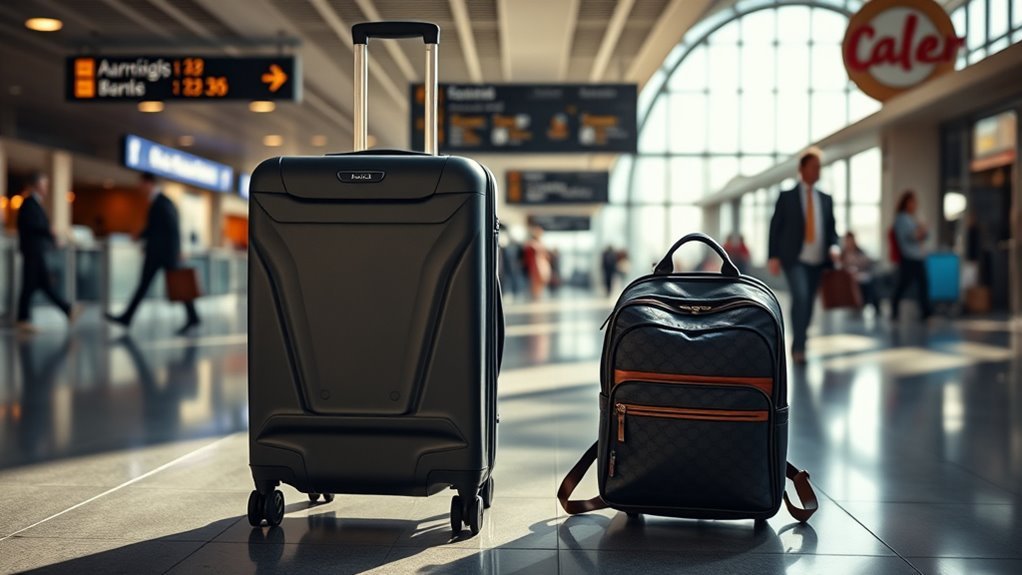
Which carry-on size should you pick to breeze through European travel? Choose a bag that fits most European airlines and trains: roughly 55 x 40 x 20 cm (22 x 16 x 8 in) for cabin compliance, or a slightly smaller personal bag if you need flexibility. Hard-shell wheeled carry-ons slip into overheads; soft-sided bags compress into crowded train racks. Check low-cost carriers for stricter limits. Balance capacity with maneuverability; you’ll move between cobblestones, buses, and stations. Use the table below for quick reference.
| Type | Typical Dimensions |
|---|---|
| Standard cabin | 55×40×20 cm |
| Personal / under-seat | 40×30×15 cm |
What to Pack to Keep a Carry-On Under Limits
If you want to keep your carry-on under size and weight limits, prioritize versatile clothing, compact toiletries, and a few smart packing techniques. You’ll pick items that layer, mix, and match so you need fewer pieces.
Use travel-sized liquids, solid toiletries, and one lightweight pair of shoes. Roll or bundle garments to save space and use compression cubes sparingly. Plan outfits by day and occasion, limiting extras.
Wear your bulkiest items on the plane.
- Pack neutral tops and bottoms that interchange.
- Bring one dressy and one casual outfit.
- Choose multiuse shoes.
- Use travel-size or solid toiletries.
Additionally, consider local travel patterns that might influence your packing needs.
How to Calculate Packed Weight Before You Go
Start by estimating the weight of the clothes you plan to pack—count outfits and use average weights (e.g., 200–400 g per top, 400–700 g per pair of pants).
Add the weight of shoes, toiletries, and any extras like adapters or a camera to get a realistic total.
That quick tally helps you choose the right bag and avoid surprises at the airport.
Estimate Your Clothing Weight
Wondering how much your clothes will add to your luggage? Start by listing each garment and estimating its weight—think light t-shirt (0.2 kg), sweater (0.5 kg), jeans (0.7 kg). Multiply by quantities, then add a small margin for wrinkles or travel laundry.
- Tally daily outfits and multiply by garment weights.
- Include layers separately (jackets, thermals) rather than averaging.
- Convert totals to pounds or kilograms to match your scale.
- Subtract planned laundry days to reduce packed items.
Use this clear subtotal to choose a suitcase size that keeps you within airline limits.
Add Shoes And Extras
Once you’ve tallied clothing, add shoes and extras to get a realistic packed weight—shoe pairs can range from 0.3 kg for sandals to 1.2 kg for hiking boots, and extras like toiletries, chargers, and a travel umbrella quickly add 0.5–1.5 kg. Add each shoe pair, then estimate extras as a single lump. Weigh items if possible or use listed averages. Aim for a buffer of 1–2 kg under airline limits. Adjust selection: swap bulky boots for lighter sneakers or pare toiletries. Use this quick reference:
| Item | Typical kg | Notes |
|---|---|---|
| Sandals | 0.3 | lightweight |
| Sneakers | 0.8 | everyday |
When to Check a Bag on Multi-Week Trips?
If you’re heading to Europe for several weeks, deciding whether to check a bag comes down to itinerary, transportation, and how often you want to haul your luggage.
You’ll check when staying in fewer places, needing more clothing, or carrying bulky items like dresswear or gear. Trains and cobblestones make wheels harder, so factor station transfers and apartment stairs.
If you prefer packing once and unpacking rarely, a checked suitcase simplifies life. Balance convenience against mobility: lighter carry means easier transfers; checked bags mean more packing space but occasional waits and handling.
- Few locations, long stays
- Bulky or specialized items
- Frequent transfers with stairs
- Preference for unpacking once
Checked-Bag Sizes and Weight Limits to Avoid Fees

You’ll want to know standard checked-bag dimensions so your suitcase fits airline size rules rather than getting flagged at the gate.
Check the typical weight allowance limits—usually 23–32 kg depending on class and carrier—to avoid surprise fees.
Also watch for airline fee exceptions (frequent-flier status, credit cards, or partner tickets) that can change what you can bring.
Standard Checked Dimensions
When planning checked luggage for Europe, know that airlines set two main limits—size (linear dimensions) and weight—and exceeding either usually triggers extra fees. Focus here on size: most carriers measure length + width + height.
Standard checked-bag dimensions commonly accepted are 62 linear inches (158 cm) maximum. Oversized bags beyond that often incur surcharges or require special handling. Measure your packed suitcase including wheels and handles.
Hard-shell cases can be bulky; soft-sided bags sometimes fit better. Confirm your airline’s specific policy before you fly to avoid surprises.
- Measure packed suitcase (wheels/handles included)
- Aim ≤62 inches/158 cm
- Check airline specs
- Avoid oversized fees
Weight Allowance Limits
Size limits matter, but weight often triggers the fees you’ll actually pay, so check both before you pack.
Most airlines set checked-bag weight at 23 kg (50 lb) for economy and 32 kg (70 lb) for premium cabins.
Exceeding those limits brings hefty overage charges or forces you to move items to carry-on.
Weigh your packed bag at home with a luggage scale and redistribute heavy items if needed.
Remember toiletries and souvenirs add up.
If you expect to shop, pack lighter initially or plan to ship purchases.
Confirm your airline’s specific weight rules before departure.
Airline Fee Exceptions
Curious which passengers dodge checked-bag fees? You can often avoid fees by meeting specific size and weight rules or by qualifying for exceptions. Know these common ways to skip charges and plan accordingly:
- Airline status: elite frequent flyers usually get one free checked bag within weight/size limits.
- Cabin class: business or first-class tickets typically include checked baggage allowance.
- Credit cards: co-branded cards often add a checked bag benefit for cardholders or companions.
- Special passengers: children, military, or passengers with disabilities may receive exemptions.
Always confirm your airline’s exact dimensions and weight caps before packing.
Best Luggage Sizes: Short City Breaks (2–5 Days)
For a short city break of 2–5 days, pick luggage that keeps you nimble: a carry-on suitcase (35–45 liters) or a large backpack (30–40 liters) will hold outfits, a pair of shoes, toiletries, and a compact day bag without slowing you down. You’ll want light, organized gear: compression cubes, a toiletry kit, and a charger pocket. Choose wheels for cobbles or a backpack for stairs. Pack versatile layers and one smart outfit. Travel lighter to move faster, stay flexible, and enjoy unexpected detours.
| Compact | Practical | Joyful |
|---|---|---|
| Efficient | Organized | Free |
| Fast | Secure | Curious |
Best Luggage Sizes: 1–2 Week Trips
You’ll want luggage that balances capacity with mobility: a 40–60 liter suitcase or a 35–50 liter backpack usually covers 1–2 week trips, holding outfits, shoes, toiletries, and a few extras without becoming cumbersome.
Choose based on transit style: cobbled streets and trains favor backpacks or compact roll-aboards; flights and longer transfers suit slightly larger checked bags.
Let transit decide: backpacks or compact roll-aboards for cobbles and trains; larger checked bags for flights and long transfers.
Pack versatile layers, limit shoes to two pairs, and use packing cubes to compress and organize.
Aim for durable, lightweight materials and easy access to essentials like chargers and a rain shell.
- Choose volume by transport and carry comfort
- Prioritize organization
- Limit footwear
- Pack versatile clothing
Best Luggage Sizes: Multi-Week & Moving-City Trips
When you’re moving between cities for several weeks, choose luggage that balances capacity with maneuverability: a 60–90 liter suitcase or a 45–65 liter backpack gives enough room for layered clothing, extra shoes, laundry supplies, and a few souvenirs without becoming a burden on trains or cobblestones.
Pick durable, lightweight gear with smooth wheels and comfortable straps so you can handle stairs and uneven streets.
Use packing cubes to compress outfits and keep essentials reachable.
Limit extras; plan laundry every 5–7 days. If you’ll buy items en route, leave room.
Test weight and dimensions before departure to avoid surprises.
Why a Backpack Can Beat a Suitcase
Why choose a backpack over a suitcase? You’ll move faster through cobblestone streets, stairs, and crowded trains when your hands are free. Backpacks keep weight close to your center, reducing strain and letting you navigate tight spaces without juggling wheels.
- Mobility: Carrying on trains and buses is simpler.
- Flexibility: Fit into hostels, tiny cabins, and overheads more easily.
- Comfort: Ergonomic straps and hip belts distribute load better.
- Security: Keep valuables on your person and access them quickly.
A backpack forces smarter packing, encourages lighter loads, and suits the unpredictable rhythm of European travel.
Choosing Backpack Volume by Trip
Because trip length, itinerary and personal style determine what you actually need, pick backpack volume to match days on the road and how often you can wash clothes.
For weekend city breaks, 20–30L fits essentials and a spare outfit.
Three to seven days with mixed activities calls for 30–40L so you can carry layers, a light daypack, and small extras.
For two weeks or more, 40–60L gives room for heavier items and souvenirs if you won’t launder often.
Choose toward the lower end if you prefer minimalist packing and plan regular laundry; size up if you want flexibility.
Why Pick a Wheeled Suitcase?
If you want to move through busy airports and train stations with less hassle, a wheeled suitcase makes maneuvering much easier.
It also offers firmer protection for fragile items than a soft backpack.
Best of all, it cuts down on physical strain so you can save energy for sightseeing.
Easier Airport Maneuvering
When you’re rushing through terminals or juggling a boarding pass and coffee, a wheeled suitcase lets you glide past crowds instead of dragging a heavy bag that slows you down. You’ll move faster between gates, through security lines, and across long concourses without tiring your shoulders.
Smooth wheels and a sturdy handle make tight corners and crowded jetways manageable, and you won’t need frequent pauses to re-adjust straps.
Choose spinner or two-wheel designs based on airport surfaces and how often you’ll lift luggage into overhead bins.
- Faster gate-to-gate transit
- Less physical strain
- Easier on cobblestones and ramps
- Quicker boarding and exits
Protects Belongings Better
Gliding through the airport is great, but a wheeled suitcase also safeguards what you pack—hard shells and reinforced corners absorb impacts that soft bags can’t.
Internal straps and molded compartments keep items from shifting and breaking. You’ll appreciate a structured case when fragile souvenirs, electronics, or toiletries face conveyor belts and overhead bins.
Lockable zippers and tamper-resistant designs deter opportunistic rifling during transfers.
Wheels and stable frames maintain balance, preventing sudden collapses that crush contents.
Choose quality padding and removable pouches so you can organize by fragility.
In short, a wheeled suitcase reduces damage risk and keeps belongings intact.
Reduces Physical Strain
Because you’ll be pushing or pulling your bag through airports, stations, and cobblestone streets, choosing a wheeled suitcase saves your back, shoulders, and wrists from constant lifting and carrying. You’ll move longer distances without fatigue, navigate crowded terminals with steadier posture, and avoid sore muscles after long travel days.
Wheels let you focus on directions, tickets, and sightseeing instead of straining to hoist weight. Pick smooth-rolling, durable wheels and a comfortable handle height so you won’t lean or twist awkwardly.
Consider lightly packed, balanced loading to prevent tipping and keep maneuvering effortless.
- Less shoulder strain
- Reduced back pain
- Easier long transfers
- Faster airport navigation
Spinner vs. Two-Wheelers for European Streets
Although spinners roll smoothly on flat, modern pavements, you’ll often prefer two-wheelers for narrow cobblestone streets, uneven sidewalks, and crowded transit platforms common across European cities.
You’ll find two-wheelers track straighter when pulling at an angle, handle curbs and gaps better, and give you more control on packed trains and buses.
Spinners shine in airports, wide promenades, and smooth hotel lobbies, where omnidirectional movement reduces shoulder strain.
Choose based on your itinerary: prioritize two-wheelers if you’ll navigate tight, busy urban areas frequently; pick spinners if you expect long stretches of smooth walking and frequent airport transfers.
How Cobblestones and Stairs Affect Bag Type
When you’ll be traversing cobblestones and stairs, the right bag type makes a noticeable difference in comfort and durability. You’ll want something sturdy, balanced, and easy to lift.
Wheeled spinners struggle on uneven stone; two-wheelers handle gaps better but still can snag.
Backpacks free your hands for handrails and narrow steps, while duffels with comfortable straps let you hoist onto stairs quickly.
Consider reinforced bottoms and grab handles on multiple sides for awkward lifts.
- Choose backpacks for mobility and balance.
- Prefer two-wheelers over spinners on cobbles.
- Look for padded, multiple grab handles.
- Avoid oversized, heavy cases on stair-heavy routes.
How Train and Bus Travel Changes Luggage Needs
Cobblestones and stairs change what bags survive the street; train and bus travel reshapes what makes them practical inside stations and vehicles. You’ll want a bag that’s easy to shoulder, tote, or roll short distances—not just one optimized for airplane aisles.
Choose something narrow enough for crowded platforms and overhead racks, yet sturdy for being lifted onto luggage racks and under seats. Quick-access pockets help when tickets or passports are needed on the move.
Avoid massive suitcases that block aisles or can’t fit in luggage bays. Prioritize maneuverability, balanced weight, and handles that won’t strain during frequent lifts.
How Budget Airline Baggage Rules Affect Your Choice
Because budget carriers nickel-and-dime every kilogram and inch, you’ll need to pick luggage with their strict size and weight limits in mind. You’ll avoid surprise fees by choosing lightweight, compact bags that still hold essentials.
Prioritize carry-on options if fares for checked bags are steep, and plan outfits to reduce bulk. Check specific airline rules before you book to match permitted dimensions and weight.
- Choose a lightweight hardside or softside carry-on.
- Use compression packing cubes to maximize space.
- Weigh packed luggage at home to avoid airport charges.
- Consider versatile clothing to cut overall volume.
How to Measure Luggage to Match Airline Limits
You’ll want to measure your bag’s length, width, and height to be sure it fits.
Include wheels and handles in those measurements, since airlines count them toward overall size.
Then compare your numbers to the carrier’s size limits before you book or pack.
Measure Luggage Dimensions
When planning trips, measure your luggage carefully so it fits airline size rules and avoids surprise fees at the gate. Use a tape measure to capture length, width, and height; include any external pockets but not internal dividers.
Measure from wheel to handle base only — don’t count extended handles.
Round up to the nearest centimeter or inch to match airline specs.
Weigh the packed bag on a scale and compare to the airline’s allowance.
- Measure length, width, height precisely.
- Include external features in measurements.
- Round measurements up.
- Weigh packed luggage before travel.
Include Wheels And Handles
Although handles and wheels may seem minor, they count toward airline size limits and you should include them when measuring. Lay the bag flat and extend any telescoping handle fully; measure from the back to the front including protrusions.
Add wheel housings and bumper feet to the height and depth measurements, since airlines judge total external dimensions.
For soft-sided bags, compress fabric gently but don’t tuck in rigid parts. Record length, width, and height with handles and wheels attached.
Use a reliable tape measure and double-check before travel to avoid surprises at check-in or gate.
Compare Airline Size Limits
Now that you’ve measured your bag with handles and wheels attached, compare those numbers to the airlines you’ll fly so you won’t face surprises at check-in or the gate. Check each carrier’s carry-on and checked baggage limits—dimensions and weight differ between legacy, low-cost, and regional airlines.
Note whether measurements include handles or wheels, and watch for strict low-cost rules. If you’ve booked multiple carriers, follow the most restrictive allowance. Consider paying for a slightly larger allowance in advance if needed; at the gate, fees and forced gate-checking are costlier and more time-consuming.
- Verify dimensions and weight
- Confirm measurement method
- Compare all carriers
- Prepay upgrades
How to Use Packing Cubes and Compression Effectively
If you want to pack smarter and fit more into a carry-on, packing cubes and compression bags are your best friends—use cubes to organize outfits by type or day, then compress bulky items like sweaters to reclaim volume.
Start by grouping tops, bottoms, underwear, and accessories in separate cubes so you can pull a complete outfit without unpacking. Fold or roll clothes tightly before cubing to minimize wrinkles.
Use a compression bag for jackets or bulky knitwear, removing excess air to save space.
Keep one small cube for dirty laundry to prevent odor transfer and simplify repacking.
What to Pack to Stay Under Size and Weight Limits
Because airlines strictly enforce both dimensions and weight, you’ll have to prioritize versatile, lightweight pieces and strategic organization to stay within limits. Pack mix-and-match clothing, layerable outerwear, and quick-dry fabrics. Roll garments, use packing cubes, and tuck shoes with socks to save space.
Wear your bulkiest items on the plane. Limit shoes to two pairs: walking and smarter option. Bring travel-size toiletries and refillable containers. Choose multipurpose accessories (scarf, belt). Keep electronics minimal and consolidate chargers.
Weigh your bag before leaving home and shift items to carry-on if needed.
- Clothing essentials
- Layering pieces
- Toiletries strategy
- Electronics minimalism
Materials and Construction for Light, Durable Luggage
When you pick luggage for Europe, pay attention to materials and construction so you don’t waste weight or risk breakage.
Look for lightweight hard shells and strong frame materials like aluminum or reinforced polycarbonate.
Choose water-resistant fabrics for soft-sided bags.
That combo keeps your bag light, durable, and ready for changing weather.
Lightweight Hard Shells
Though they look similar at a glance, lightweight hard-shell suitcases rely on specific materials and construction methods to balance weight, impact resistance, and longevity. You’ll want shells made from polycarbonate blends or advanced ABS that flex instead of cracking, seamless molding to avoid weak joints, and reinforced corners where drops happen most.
Look for tight tolerances in zippers and molded handles that reduce stress. Consider how interior frames and padding attach to the shell to prevent delamination.
- Polycarbonate blends for flex and rebound
- Advanced ABS for low cost, moderate weight
- Seamless molding to eliminate seams
- Reinforced corners and bonded interiors
Durable Frame Materials
If you want luggage that stays rigid under load without adding pounds, focus on the frame materials and how they’re joined to the shell. Look for aluminum or high-strength polymer frames: aluminum gives excellent rigidity for roll cages and perimeter frames, while polymer alloys cut weight and resist dents.
Check welded or bonded joints rather than simple rivets; continuous welds and reinforced corners distribute stress and prevent squeaks.
For soft-sided pieces, internal composite stays boost shape without bulk.
Also inspect handle housings and wheel mounts—metal reinforcements there prevent failure.
Prioritize tested construction over flashy finishes for long trips.
Water-Resistant Fabrics
Because rain, spills, and damp luggage compartments are inevitable, pick fabrics that shed water without adding bulk. You want materials that resist moisture, dry quickly, and stay light so you can pack efficiently and meet European carry-on limits. Look for coatings and weaves that balance durability with weight; sealed seams and water-resistant zippers matter too. Consider breathability to prevent odors and mildew on longer trips.
- Nylon with DWR coating — light, tough, affordable.
- Polyester blends — colorfast and water-shedding.
- TPU-laminated fabrics — fully waterproof, low bulk.
- Waxed canvas — stylish, heavier, needs care.
Security Features to Prioritize for Europe
When you travel through Europe, prioritize locks, tamper-resistant zippers, and RFID-blocking compartments to keep your belongings and data safe; these features deter opportunistic theft and make it easier to spot tampering during busy transfers. Choose TSA-approved locks for airport security, reinforced zipper tracks, hidden pockets for passports, and slash-resistant straps or panels. Use RFID-blocking sleeves for cards and a lockable carry-on compartment for laptops. Stay practical: don’t overpack security gear that slows you down.
| Feature | Benefit |
|---|---|
| TSA locks | Airport-friendly inspections |
| Tamper zippers | Visible interference |
| RFID block | Protects data |
| Slash-resistant | Stops grab-and-run |
How Family Travel Changes Luggage-Size Decisions
As you plan family travel, luggage-size choices shift from individual convenience to group practicality: you’ll need bags that balance capacity with maneuverability, accommodate shared items like diapers or snacks, and fit strollers or booster seats without slowing transfers.
- Choose a wheeled suitcase you can manage while holding a child or pushing a stroller.
- Bring a soft duffel that compresses into tight car trunks or crowded train racks.
- Use a backpack for hands-free daytime essentials and kid entertainment.
- Reserve one medium bag for laundry, extras, or splitting heavy items between adults for easier hauling.
Packing for Shopping, Souvenirs, and Returns
If you plan to shop or bring back souvenirs, leave room in your luggage and pick flexible bags so you can add purchases without struggling at transit points.
Pack a lightweight foldable duffel or an expandable suitcase as a dedicated spare; keep it packed flat until needed.
Reserve an inner compartment for fragile finds with bubble wrap or clothing protection.
Track customs limits and receipts for possible returns or VAT refunds.
Wear bulky shoes to save space.
Plan outfit mixes to avoid overpacking.
Leave 15–25% of capacity free for shopping, and distribute weight to avoid fees and awkward carrying.
Trial Pack Checklist to Test Your Luggage Choice
Before you commit to luggage for Europe, do a timed trial pack to make sure size, weight, and organization actually work for your trip. You’ll simulate real conditions: pack what you plan to bring, add likely purchases, and close the bag within a set time.
Before buying luggage, do a timed trial pack: include purchases, close it quickly, and test weight and fit.
Check carry limits, zipper strain, and balance. Roll, compress, and rearrange until it fits comfortably.
- Time yourself packing and unpacking.
- Weigh the packed bag with a scale.
- Stow items you’ll buy to test expansion.
- Carry it up stairs and on transit like trains and cobblestones.
Frequently Asked Questions
Can I Bring Liquids and Toiletries in Checked Luggage Across Different European Countries?
Yes — you can pack liquids and toiletries in checked luggage across European countries; rules are looser than cabin limits, but avoid large quantities of flammables or aerosols, declare restricted items, and check airline or customs rules before travel.
Are There Luggage Size Differences for Ferries and Car Rentals in Europe?
Yes — ferry and car rental limits vary, so check specific operators. You’ll often fit standard checked bags in cars, but ferries may restrict cabin baggage size or vehicle height; measure, confirm policies, and pack flexible, stackable luggage.
How Do Seasonal Clothing Layers Change Ideal Luggage Size?
Seasonal layers change ideal luggage size: you’ll need bigger bags for bulky winter coats and boots, medium for layered spring/fall, and compact carry-ons for summer; pack compressible items and plan laundry to keep size manageable.
What Luggage Is Best for Traveling With Medical Equipment or Prescriptions?
Choose a hard-sided carry-on plus a padded medical bag for prescriptions and equipment; you’ll pack meds in original containers, bring documentation, keep batteries and devices accessible, and use TSA-friendly locks and clear labels for quick screening.
Are There Restrictions for Sharp Items or Sports Gear in European Transport?
Yes — you’ll face restrictions: airports and trains ban or limit knives, scissors, and some sports gear; declare medical items, pack sharp objects in checked luggage, and check specific airline and country rules before traveling to avoid fines or confiscation.
Conclusion
For most Europe trips, choose a versatile carry-on (around 40–45L) unless you need longer clothing or gear. Pick luggage by trip length, transport modes, and how often you’ll move. Remember stricter carry-on sizes on budget airlines and small trains. Travel carry-on only for short, frequent-stop trips; bring checked for long stays or family travel. Prioritize TSA-approved locks, sturdy wheels, and a roomy outer pocket. Do a trial pack to confirm your choice.