What Size Luggage Is Best for International Travel
For most international trips you’ll want a 20–22″ carry-on for 3–7 days, a 24–26″ checked bag for 8–14 days, and a 28–30″ or expandable suitcase for 15+ days, families, or gear-heavy travel. Check airline size and weight rules, prefer lightweight shells or soft-sided bags for extra usable space, and use packing cubes or compression to maximize capacity. Follow these guidelines and you’ll pick the right size for your itinerary, with tips to optimize packing and transit.
Quick Luggage-Size Decision Checklist

If you want a fast way to pick the right bag, use this checklist.
Decide trip length: weekend, week, or longer.
Confirm activities: business, adventure, or mixed.
Choose carry-on for short stays and quick transfers; pick checked for bulky gear or long trips.
Factor packing style: minimalist roll vs. layered outfits.
Account for local laundries and shopping plans.
Prioritize mobility: wheels, weight, and handle comfort for frequent transfers.
Consider security: lockable zippers and durable fabrics.
Measure storage space at home and transport—will the chosen size fit car trunks and rail luggage racks?
Additionally, ensure your luggage adheres to customs clearance regulations to avoid complications during your travels.
Airline Size & Weight Limits for Luggage
Because airlines set both size and weight limits that vary widely by carrier and ticket type, you should check rules before you pack.
Airlines vary widely in size and weight rules—check your carrier and ticket limits before you pack.
Review carry-on and checked baggage dimensions and weight allowances for each airline and for connecting carriers.
Note excess, oversize, and overweight fees—these add up and can exceed the cost of a larger bag.
Weigh packed luggage at home to avoid surprises.
For budget fares, expect stricter limits and fewer included pieces.
Frequent flyer status and premium cabins often get higher allowances.
When in doubt, contact the airline directly and confirm limits for your specific itinerary. Additionally, be aware of airline rules to minimize stress and extra costs.
Packing Volume vs Exterior Size
Remember that a suitcase’s exterior dimensions don’t always match its true packing volume, so you’ll want to compare liters or cubic inches as well as length/width/height.
You’ve also got to balance that capacity with airline weight limits—bigger volume often tempts you to pack heavier.
Start by checking both the stated packing volume and your carrier’s weight rules to choose the right size. Additionally, consider the alcohol declaration requirements for your destination to avoid any legal issues with your packed items.
Packing Volume Vs Dimensions
When you’re choosing luggage for international travel, don’t confuse exterior dimensions with how much you’ll actually pack—the shell size tells you envelope limits for airlines and storage, while packing volume (usually in liters) tells you usable space inside after pockets, wheels, and linings take their share.
Look for manufacturers’ internal volume specs rather than assuming size categories. Soft-sided bags can yield more usable volume; hard-shell models list exterior dimensions that include protruding handles and wheels.
Measure packed items or use compression cubes to estimate needed liters. Match volume to trip length and packing style, and verify exterior measurements for airline compliance.
Weight Limits And Capacity
Although exterior dimensions tell you whether a bag fits airline size rules, its packing weight defines what you can actually bring, so you need to balance liters against limits. You’ll pick a suitcase by matching its internal liters to the airline’s weight allowance, not just its height or width.
Hard shells can waste volume with thick walls; soft-sided bags often offer more usable space. Use a luggage scale to avoid fees and distribute heavy items near wheels for stability.
If you frequently pack heavy, choose lighter luggage construction and prioritize capacity-to-weight ratio over maximum exterior size.
20–22 Inch Carry-On: When to Choose It
If you fly frequently or like to avoid checked-bag fees, a 22-inch carry-on gives you a sweet spot of capacity and airline compatibility; it fits most domestic and many international overhead bins while still being small enough to handle easily. You’ll choose it when you want enough room for a few outfits, shoes, and essentials without waiting at baggage claim. It’s ideal for short trips, multi-city itineraries, and avoiding airline weight hassles. Notably, adhering to size limits can prevent issues at the gate. Check airline dimension rules, pack smart, and use compression to maximize space.
| Benefit | Tip |
|---|---|
| Fits most bins | Measure before booking |
| Good capacity | Use packing cubes |
| Avoids fees | Know weight limits |
| Easy to maneuver | Pick lightweight design |
24–26 Inch Checked Bag: When It Makes Sense
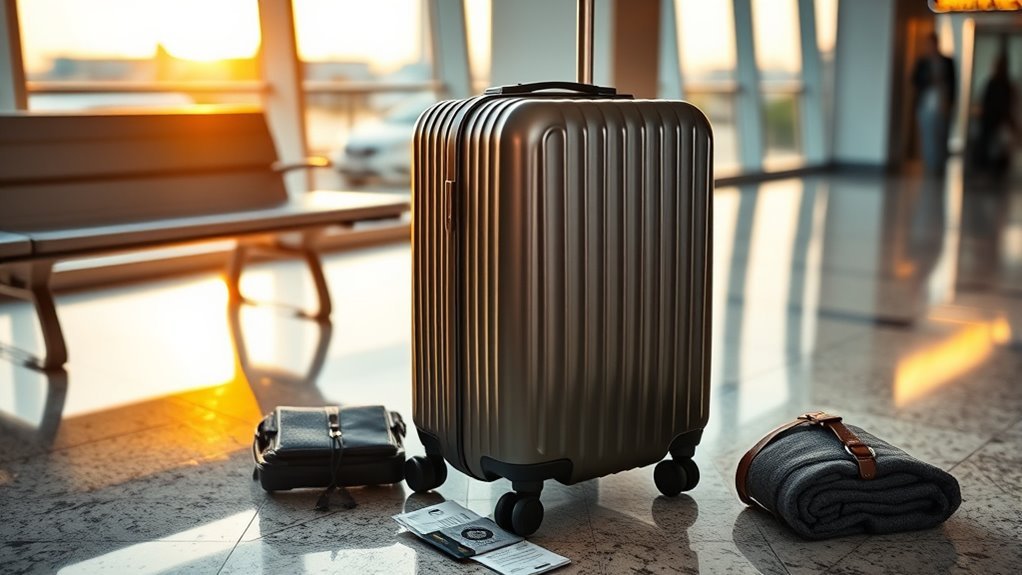
If you’re packing for a week or more, a 26 inch checked bag often makes the most sense because it holds more without going oversized.
Check your airline’s size and weight limits first so you won’t face fees or forced repacking at the gate.
Choose this size when your packing needs — outfits, shoes, and souvenirs — require clear extra capacity. Additionally, be mindful of baggage transfer policies to ensure a smooth travel experience.
Ideal Trip Length
When your trip runs longer than a week and you want to avoid constant laundry or packing light, a 26-inch checked bag usually makes sense. You’ll find it best for trips of roughly 8–21 days, where you need multiple outfits, shoes, toiletries, and maybe a jacket.
It accommodates mixed activities—city touring, beach days, a formal night—without overpacking. For two-week trips you can pack efficiently and still bring extras like souvenirs.
If you travel solo and like variety, it gives breathing room. For extended stays beyond three weeks, consider additional strategies like laundromats, wardrobe staples, or shipping.
Airline Size Limits
Because checked-bag size limits vary by airline and route, you should confirm dimensions before assuming a 26‑inch suitcase will fly without fees. A 26‑inch case often fits standard international allowance (62 linear inches including wheels), but some carriers enforce stricter length or weight rules.
Choose a 26‑inch when you want moderate capacity without the bulk of a 28–30 inch roller, and when your carrier permits it as standard checked. Measure height, width, depth with handles and wheels.
If your itinerary includes budget carriers, regional flights, or tight baggage policies, recheck limits to avoid surprise oversize charges.
Packing Capacity Needs
While you’ll find bigger rollers for long-term trips, a 26‑inch checked bag hits a sweet spot for many international travelers: it gives you enough room for a week to ten days of clothing, shoes, and toiletries without becoming unwieldy at airports or on transfers.
You’ll choose this size when you want balance—room for layered outfits, a pair of dress shoes, and souvenirs, yet still manageable weight and storage. It suits business trips, city breaks, and moderate adventure travel.
Pack efficiently with compression bags, modular cubes, and a toiletry kit to maximize capacity and avoid overpacking.
28–30 Inch Suitcase for Long Stays and Family Trips
If you’re packing for an extended trip or a family vacation, a 30-inch suitcase gives you the space to bring clothing, gear, and extras without constant reshuffling. It’s large enough for bulkier items yet still manageable for most car and hotel handling.
You’ll appreciate roomy compartments for shared essentials, bulkier coats, and souvenirs. Choose lightweight, durable shells and smooth wheels to ease transport.
Use compression bags and a dedicated laundry pouch to stay organized. Check weight limits before flying and plan for ground transfers.
- Capacity: multiple outfits and extras
- Durability: hard shell preferred
- Mobility: spinner wheels
- Organization: packing cubes
Match Luggage to Trip Length and Itinerary
Think about how long you’ll be gone—short trips call for carry-ons, longer stays need bigger checked bags.
Let your itinerary steer whether you want wheels for city streets, a backpack for hill towns, or a hard shell for flights with rough handling.
And match activities—beach gear, hiking boots, or formalwear—to the space and compartments you choose.
Duration Determines Bag Size
Because how long you’re gone and what you’ll be doing shape what you should pack, match your bag size to trip duration and itinerary before you buy or pack.
You’ll choose differently for a weekend city break, a two-week multi-stop trip, or a month abroad. Think realistically about laundry access, dress needs, and carry limits.
Opt for expandable carry-on for 3–7 days, a medium checked bag for 8–14, and a large suitcase only if you need gear or formalwear for longer stays.
Prioritize mobility if you’ll move often; prioritize capacity if you’ll stay put.
- Carry-on: 3–7 days
- Medium: 8–14 days
- Large: 15+ days or gear
- Expandable when unsure
Itinerary Shapes Carry Options
Once you’ve matched bag size to trip length, let your itinerary decide how you’ll carry it.
If you’ll hop between cities with stairs and cobblestones, pick a backpack or spinner with durable wheels and comfortable straps so you can shoulder or roll as needed.
For door-to-door transfers and flights, a wheeled suitcase with easy handles speeds movement.
If you’ll frequently use public transit, compact, quick-access bags keep essentials handy.
Multi-leg trips benefit from a carry-on plus a daypack to split weight.
Match carriage to terrain, transit type, and frequency of moves to keep travel efficient and comfortable.
Activities Affect Packing Needs
If your trip centers on outdoor adventures, formal events, or water-based activities, let those plans dictate what and how much you pack so your luggage works for the action. You’ll pick size and style based on activity gear, dress codes, and mobility needs. Think about weight limits, storage for wet or dirty items, and quick access to essentials.
Prioritize versatile layers and pack items that serve multiple purposes. Choose hard-shell for protection or soft duffel for flexibility when space is tight.
- Hiking: lightweight backpack or wheeled duffel
- Beach: roomy soft bag with wet pocket
- Formal: structured suitcase with garment section
- Multi-activity: medium carry-on with compression cubes
Choose Luggage by Trip Type: Business, Backpacking, Cruise, Family
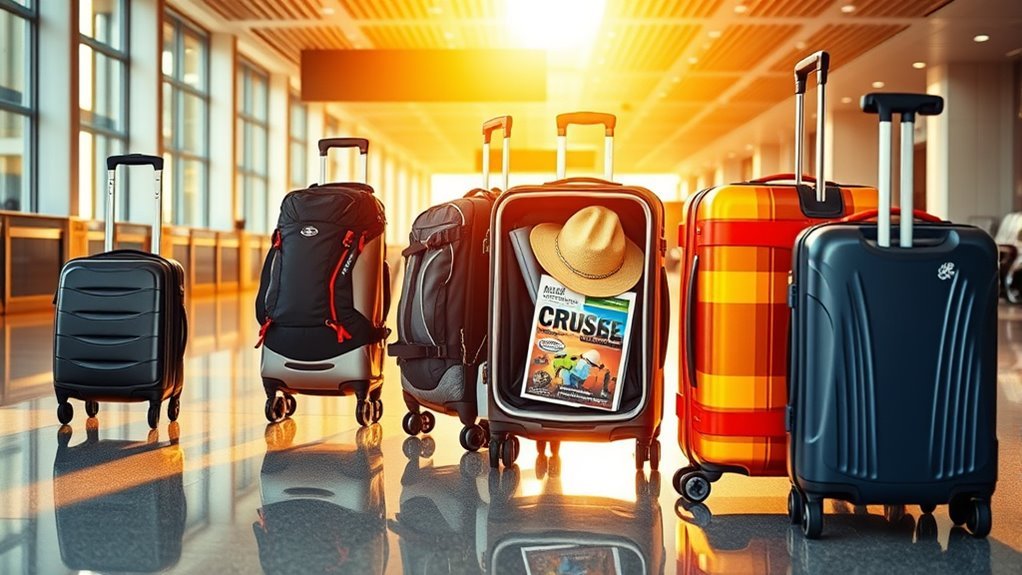
When you pick luggage for a specific trip type, matching gear to activities saves stress and space.
For business trips, choose a slim carry-on with a structured suit compartment and a padded laptop sleeve so you look sharp and move fast.
For backpacking, go with a lightweight, durable backpack under 40L that compresses and keeps essentials accessible.
For cruises, pick a medium rolling suitcase with easy-access pockets and soft sides for cabin storage.
For family travel, use a large checked bag for shared items plus individual carry-ons to organize clothes and keep kids’ necessities within reach.
Combine Carry-On + Personal Item to Avoid Checked Bags
Although packing only a carry-on and a personal item takes a little planning, you can skip checked baggage, save time at the airport, and avoid baggage fees. Choose a wheeled carry-on sized for your itinerary and a roomy personal item—think a tote or backpack that fits under the seat.
Pack smart with a wheeled carry-on and roomy personal item to skip fees, save time, and travel lighter.
Pack versatile clothing, toiletries in travel sizes, and compress with packing cubes. Keep essentials in your personal item for easy access. Be mindful of airline size and weight rules to prevent surprises at boarding.
- Prioritize multi-use items
- Roll clothes, use cubes
- Stash valuables in personal item
- Weigh bags before leaving
How to Test Fit on Planes, Trains, Taxis, and Storage
Once you’ve pared down to a carry-on and personal item, make sure they actually fit the places you’ll encounter on the road: overhead bins, under-seat spaces, train luggage racks, taxi trunks, and short-term storage.
Before travel, measure and weigh packed items to confirm airline limits. At the airport, test stowing the carry-on in a gate bin mockup or beneath a seat.
On trains, check rack height and strap positions; place the bag as you’d in service to verify balance.
For taxis, tilt and load into trunks or rear seats.
For storage, confirm door, shelf, and locker dimensions to avoid surprises.
Practical Tips to Downsize or Expand Luggage on the Road
If you need to downsize or expand on the road, think modular: swap out bulkier items for compressible versions, split heavy pieces between bags, or add a compact duffel that tucks into your carry-on when empty.
You’ll adapt quickly by prioritizing essentials, using packing cubes, and choosing garments that layer.
When you need space, offload laundry to local services or mail items home.
If you must shrink, wear your bulkiest items and stash shoes in external pockets.
Keep a checklist so you don’t forget chargers or documents when shifting items between bags.
- Use packing cubes
- Carry a foldable duffel
- Share weight with travel partner
- Mail nonessentials home
Frequently Asked Questions
How Do Luggage Materials Affect Durability and Repairability Abroad?
Materials affect durability and repairability: hard-shell ABS/ polycarbonate resist impacts but crack and’re harder to fix; ballistic nylon or canvas scuffs but patch, sew, or replace zippers easily; aluminum’s tough yet dents and needs specialized repairs.
Are There Insurance or Warranty Differences by Luggage Size?
Yes — insurers and warranties sometimes vary by size: you’ll find limits on coverage for oversized bags, different checked versus carry-on policies, and some warranties exclude large trunks, so check terms before you buy or travel.
What’s Best for Carrying Fragile Items Like Camera Gear Internationally?
Use a hard-shell carry-on or dedicated camera case with foam inserts; you’ll keep gear protected and with you. Add silica packs, lockable zippers, insurance, padded straps, and mark fragile to minimize handling and shock during transit.
How to Handle Customs or Duty Rules for Packed Items?
Declare high-value items and carry receipts; you’ll check prohibited lists for each country, separate dutiable goods, and use temporary import forms or ATA Carnet when needed. Keep copies of documents and be ready to pay duties if required.
Can Luggage Size Affect Airport Security Screening Times?
Yes — your luggage size can affect security screening times. Bigger, overstuffed bags take longer to X-ray and inspect; you’ll face more manual checks and delays, so pack efficiently and follow screening rules to speed things up.
Conclusion
You’ve got this: pick luggage based on trip length, transport, and airline limits, favor a 20–22″ carry-on plus a roomy personal item when possible, or a 24–26″ checked bag for longer stays. Consider packing volume vs exterior size, test fit before you go, and use compression, packing cubes, or collapsible bags to downsize or expand on the road. Choose by trip type and combine carry-on + personal item to avoid fees and speed your travel.