What Size Is Tsa Approved Carry on
You should plan on a carry-on about 22 x 14 x 9 inches (including wheels, handles, and protrusions) to meet TSA screening and fit most U.S. overhead bins, though TSA doesn’t formally “certify” sizes—airlines do. Measure your packed bag fully assembled, round to the nearest half inch if unsure, and expect gate agents to gate-check oversized items. Also pack a small personal item for essentials. Keep going to see tips for measuring, packing, and airline variations.
Quick Carry-On Size Answer for U.S. Flights
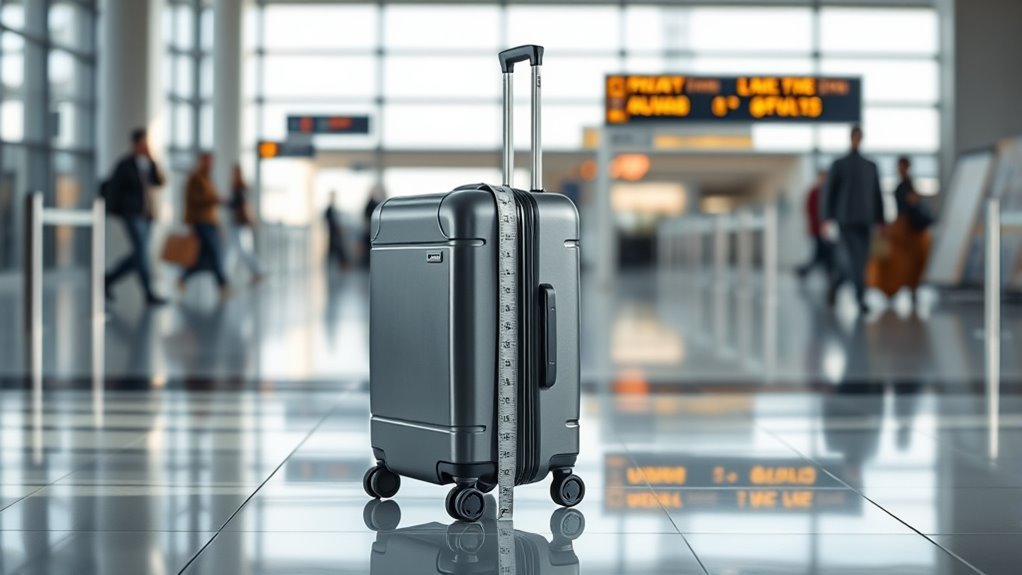
Although rules can vary by airline, the TSA itself doesn’t set a single carry-on size. Most U.S. carriers accept bags around 22 x 14 x 9 inches (including wheels and handles), so if your bag fits those dimensions you’ll be fine on the majority of flights.
You should check your airline’s specific limit before packing, since low-cost carriers and regional jets often use tighter dimensions. Measure your bag including wheels and handles, and factor in any bulky items you’ll attach.
If you’re close to the cutoff, opt for a slightly smaller bag to avoid gate check fees or hassles.
What “TSA-Approved Carry-On” Means
When you see “TSA-approved carry-on,” it means the bag meets Transportation Security Administration screening and safety standards for allowed items.
It doesn’t set a universal size, so you still need to follow your airline’s carry-on size limits.
Check both TSA guidelines and your carrier’s measurements before packing.
TSA-Approved Definition
What does “TSA-approved carry-on” actually mean? You’ll hear the phrase a lot, but it’s not a formal TSA certification. It means your bag complies with TSA screening and security policies so it won’t cause delays. Focus on three practical points:
- It fits screening procedures—easy to x-ray and access for inspection.
- It follows security rules—no prohibited items and liquids organized per rules.
- It’s manageable for checkpoints—can be opened quickly and handled by staff.
If your bag meets these, you’ll move through security smoother, though individual airlines still set size and gate-check policies.
Carry-On Size Limits
Now that you know what makes a bag TSA-friendly, size limits are the next practical concern: airlines set maximum dimensions for carry-ons, and if your bag exceeds them you may be forced to gate-check it or pay a fee.
You should check your carrier’s published limits—typically around 22 x 14 x 9 inches including wheels and handles for U.S. carriers—but low-cost or international airlines often differ.
Measure your packed bag, not empty case. Use a soft-sided bag if you need flexibility.
If you regularly fly different airlines, consider a compact, compliant bag to avoid surprises and extra costs.
Standard U.S. Carry-On Dimensions to Aim For
Although airlines vary slightly, you should aim for carry-on dimensions around 22 x 14 x 9 inches (including wheels and handles) to fit most U.S. overhead bins and meet TSA expectations. You’ll avoid gate check hassles if your bag stays within that envelope; measure height with wheels and handles extended.
Pay attention to depth since soft-sided cases can compress, and hard-shell models must truly fit. Check airline-specific rules before travel, but this standard works broadly.
Consider weight, organization, and exterior pockets when choosing a bag.
- Measure fully assembled bag
- Include wheels and handles
- Confirm airline policy
Common Carry-On Weight Limits in the U.S
Most U.S. airlines set carry-on weight limits between 15 and 40 pounds, but many don’t enforce a strict limit and focus instead on size; you’ll want to know both the airline’s published policy and typical gate practices so you won’t be surprised. You should check your carrier before packing since regional and low-cost airlines often list lower limits. When in doubt, distribute heavy items in your personal item or wear a jacket with pockets. Below is a quick reference table to compare typical practices.
| Airline Type | Typical Weight Guideline |
|---|---|
| Major carriers | 22–40 lbs (often not enforced) |
| Low-cost/regional | 15–22 lbs (more enforced) |
Why Airlines Set Different Carry-On Limits
You’ve seen how weight guidelines vary and why checking your carrier matters; airlines set different carry-on limits for practical, economic, and safety reasons. You should understand that those limits reflect aircraft size, boarding flow, and revenue strategies. They also manage cabin storage and balance.
- Safety: limits prevent overloaded overhead bins and ensure weight distribution for stability.
- Operations: smaller planes and faster turnarounds need stricter size rules to speed boarding.
- Revenue/control: airlines encourage checked bags or fee-based priority boarding by restricting free carry-ons.
Knowing these motives helps you pick flights and pack smarter.
Major U.S. Airline Carry-On Size Comparisons
Compare the major U.S. carriers side-by-side to see how their carry-on size rules differ and what that means for your packing. You’ll find most legacy airlines—American, United, Delta—allow roughly 22 x 14 x 9 inches including wheels, fitting standard overhead bins.
Southwest’s limit is similar but emphasizes personal item plus one carry-on.
JetBlue matches legacy dimensions for most fares.
Regional affiliates may enforce stricter interpretations at boarding.
If you fly frequently, measure your bag and confirm airline specifics before travel so you won’t gate-check items unexpectedly. Small differences can affect fit; packing smart avoids last-minute hassles.
Low-Cost Carriers: Stricter Carry-On Rules
When flying low-cost carriers, expect tighter carry-on limits and stricter enforcement than with legacy airlines, so measure your bag and plan ahead. You’ll often pay for larger bags, face gate checks, or have items rejected at boarding. Be precise: weigh and size before you leave, know fee thresholds, and pack essentials in a personal item that fits under the seat.
Flying budget? Measure and weigh your bag, prepay fees, and stash essentials in a true under-seat personal item.
- Check dimensions and weight limits on the airline site.
- Use a soft bag to squeeze into overhead bins when allowed.
- Pre-pay baggage fees or downsize to avoid last-minute charges.
Travel smart to avoid surprises.
International Airlines With Tighter Limits
When you fly internationally, remember some regional carriers set smaller size rules than major airlines.
You’ll also find low-cost airlines often limit carry-ons more strictly to cut costs.
Check alliance and partner standards too, since codeshares can inherit the tighter bag limits.
Regional Carrier Size Rules
Many international and regional carriers enforce tighter carry-on size limits than major U.S. airlines, so you’ll want to check each airline’s rules before you pack. Regional carriers often have smaller overhead bins and stricter gate checks, so you’ve got to be precise.
- Measure: confirm external dimensions including handles and wheels to avoid surprises.
- Weight: some regionals set strict weight caps; pack smart and weigh before you leave.
- Priority: know boarding tiers—even compliant bags can be gate-checked if bins fill.
Check each carrier’s website and airline policy alerts; that’ll save time and fees at the gate.
Low-Cost Airline Limits
Because low-cost international carriers aim to maximize seats, they often impose tighter carry-on size and weight limits than full-service airlines, so you should check each carrier’s exact measurements before you pack.
You’ll find stricter linear dimensions, lower weight caps, and fees for anything oversized. Some allow only a personal item; others permit a small cabin bag under specific dimensions.
Measure your bag, weigh it at home, and consider a lightweight, collapsible option.
If you travel multiple segments, verify each airline’s policy to avoid surprises and extra charges, and prepay baggage when it’s cheaper than airport fees.
Alliance And Partner Standards
Low-cost carriers aren’t the only ones tightening carry-on rules; alliance and partner airlines often adopt stricter, unified standards across their networks that can affect your international itinerary. You’ll need to check each carrier’s policy when booking codeshares or connecting on partner flights. Expect consistency across alliance members, but also occasional regional variances.
- Review the strictest partner policy before packing.
- Measure and weigh bags to avoid fees at transfer points.
- Prioritize essentials in a personal item if limits differ on segments.
Being proactive prevents surprises and keeps your travel smooth.
Carry-On Allowances on Long-Haul International Flights
Traveling long-haul? You’ll find airlines often allow one standard carry-on plus a personal item, but sizes and weight limits vary by carrier and cabin class. Check your ticket and airline website before packing: some international carriers enforce strict weight caps (7–10 kg) for economy, while premium cabins get larger or heavier allowances.
Duty-free purchases and infant items may be exempt. Gate agents measure dimensions; oversized bags can be checked at a fee. You should pack essentials in your personal item and distribute weight to avoid surprises.
Confirm transits’ rules too, since connecting carriers might apply different limits.
Regional Jets and Smaller Planes: What Changes?
On regional jets and smaller planes, you’ll notice much smaller overhead bins that won’t fit the same carry-ons you use on larger aircraft. That often means you’ll have to gate-check a bag at boarding, so be ready to remove valuables and essentials before you hand it over.
Check your airline’s specific policies before you travel so you can plan what to carry on vs. gate-check.
Reduced Overhead Bin Sizes
Because regional jets and smaller aircraft have slimmer fuselages and shorter cabins, overhead bins are often shallower and lower than on mainline planes, so you’ll need to plan which carry-on items really matter. Expect tighter fits and more standing-in-aisle maneuvers when stowing bags.
Prioritize compact, soft-sided luggage and place fragile items in a personal item under the seat.
- Measure bags before travel to avoid surprises.
- Use packing cubes and compressibles to maximize space.
- Keep essentials accessible in a small personal bag.
Packing smart reduces stress and speeds boarding, so choose size over quantity.
Gate-Checked Carry‑Ons
Ever wondered what happens when the cabin’s too tight for your roller bag? On regional jets and smaller planes, gate agents often require gate-checking. You’ll be asked to leave your bag at the jet bridge; it’s tagged and loaded into cargo.
You can typically retrieve it at the jetway or baggage claim, but sometimes it arrives on the carousel. Protect valuables by carrying essentials—meds, documents, electronics—in a personal item.
Use a durable tag and remove loose straps. Expect quick handling but occasional delays or scuffs; consider a soft, compressible bag that fits tighter overheads to avoid gate check.
How Connecting Flights Affect Carry-On Rules
When you have connecting flights, carry-on rules can change mid-journey, so check each airline’s size and carry allowance before you pack. You’ll face differing limits, transfer security, and gate size restrictions that affect what stays with you.
Plan for the most restrictive carrier and for transfers where carry-ons must be checked.
Always pack to the strictest airline rules and prepare for connections that may force carry-ons into checked baggage.
- Compare dimensions and weight limits for all carriers on your itinerary.
- Note if your connection requires rechecking luggage through security or baggage claim.
- Keep essentials and valuables in a small personal item you can always bring on board.
Confirm policies ahead to avoid surprises.
Business and Premium Cabins: Extra Allowances?
If you’re flying in business or another premium cabin, expect larger or additional carry-on allowances than in economy, though specifics vary by airline and fare class. You’ll often be allowed a second bag or a heavier carry-on, and some carriers let premium passengers board earlier so overhead space is available.
Check your ticket and airline website for exact dimensions, weight limits, and whether lounge or elite status adds allowances. Remember that aircraft type and international rules can override cabin perks.
Still, don’t assume unlimited size — oversized items may require gate checking or fees despite your premium seat.
Personal Item vs. Carry-On: Size and Placement
You’ll want to know the typical personal item dimensions (usually a small backpack, briefcase, or purse) versus the larger carry-on size limits airlines and TSA accept.
Keep your personal item stowed under the seat in front of you while the carry-on goes in the overhead bin to avoid boarding delays.
When you board, be prepared to reposition or gate-check oversized bags to meet cabin space rules.
Personal Item Dimensions
Although airlines vary, a personal item is generally smaller than a carry-on and must fit under the seat in front of you, so knowing exact dimensions matters when packing. You’ll usually choose a bag that holds essentials and slides neatly beneath your seat. Consider typical limits and how you arrange items.
- Measure: confirm airline limits (commonly around 16 x 12 x 8 inches) and measure your bag packed.
- Pack: prioritize flat items—laptop, documents, medication—so the bag compresses under the seat.
- Placement: place the bag wheels-first or flat to maximize space and comply with staff checks.
Carry-On Size Limits
1 key distinction to remember is that a personal item and a carry-on serve different purposes and have different size limits, so you should pack and place them accordingly.
For carry-ons, airlines typically allow bags up to about 22 x 14 x 9 inches including wheels and handles, but sizes vary—check your carrier before packing.
You should prioritize heavier or bulkier items for the carry-on and reserve essentials for the personal item.
Measure your suitcase and factor in external pockets.
If your bag exceeds limits, expect gate-checking or fees, so confirm dimensions to avoid surprises at the airport.
Placement And Boarding
When boarding, think strategically about where each bag will go so you don’t slow the line. You’ll want your personal item under the seat and your carry-on in the overhead, unless you’re blocking space for others. Prioritize easy access to essentials and distribute weight so lifting’s simple.
- Stow essentials (documents, meds, electronics) in the personal item for quick reach.
- Place heavier, bulkier items in the carry-on overhead to keep the aisle clear.
- If space’s tight, gate-check the larger bag and keep valuables with you.
Move deliberately, communicate with companions, and board prepared.
When Gate Agents May Require a Gate Check
If your carry-on won’t fit in the overhead bin or if the flight is full, gate agents can ask you to gate-check it to speed boarding and guarantee safety. They may also require gate checks when weight limits, balance concerns, or limited bin space arise, especially on smaller aircraft.
If a bag blocks the aisle or jetbridge, or if connecting flights need priority, agents will intervene. You’ll be told where to leave the bag and given a claim tag; fragile or valuable items should be removed first.
Follow instructions promptly to avoid delays and secure your bag is handled properly.
Gate-Check Impact on Your Packing Plan
If your bag gets gate-checked, you’ll need to know the airline’s size limits to avoid surprise fees or refused items.
Adjust your packing strategy by moving essentials and fragile items into a smaller personal item that stays with you.
Pack heavier or nonessential items lower in checked bags and secure valuables before handing anything over.
Gate-Check Size Limits
Because gate-check rules can change how you pack, you should know the size limits airlines set for items checked at the gate—usually larger strollers, car seats, or oversized carry-ons that don’t fit in the cabin. You’ll face differing linear size caps (length+width+height), weight limits, and shape restrictions; carriers post these on their sites. Before you arrive, confirm dimensions so you won’t be surprised at the gate.
Consider how gate-checking affects handling and potential fees. Typical considerations include:
- Linear dimensions and maximum inches/cm
- Weight thresholds per item
- Bulky or oddly shaped item policies
Packing Strategy Adjustments
Knowing gate-check size limits helps you reshape your packing plan before you reach the gate. You’ll prioritize essentials and shift bulky items into gate-checked bags to meet overhead bin rules.
Roll clothing, use compression cubes, and keep valuables, medications, and a change of clothes in a small personal item you’ll carry onboard. Weigh or measure your bag at home to avoid surprises, and place fragile items in carry-on.
If gate-checking is likely, pack a lightweight, collapsible tote for items you might reclaim quickly. This approach reduces stress, prevents last-minute repacking, and keeps important items accessible.
Sporting Gear: Carry-On vs. Checked Baggage
When you’re deciding whether to stow your sporting gear in the cabin or check it, think about size, fragility, and TSA and airline rules—small items like tennis rackets or swim fins often fit as carry-ons, but larger or special equipment such as skis, baseball bats, or surfboards usually must be checked and may incur extra fees.
You should:
- Measure gear to confirm it fits approved dimensions and fits overhead or underseat.
- Pack fragile or expensive items in protective cases and consider carry-on to reduce damage risk.
- Check airline policies and fees in advance to avoid surprises at the gate.
Common Global Weight Limits for Carry-On Bags
Although carry-on size rules vary by airline and region, many carriers also impose weight limits you should know before you pack.
Carry-on size rules differ by airline and region, and many carriers also enforce weight limits you should check before packing.
You’ll see common limits from 7 kg (15 lb) on low-cost European airlines to 10–12 kg (22–26 lb) on full-service carriers and some Asian airlines.
North American airlines often focus on dimensions rather than weight for personal carry-ons but may enforce limits for standard carry-ons during boarding.
Check your airline’s website: fines, gate-checking, or forced checked baggage can apply if you exceed limits.
Weigh your bag at home and redistribute items to avoid surprises.
Soft- vs Hard-Sided Carry-Ons: Space Trade-Offs
If you want flexibility, a soft-sided carry-on can compress or expand to fit a bit more into tight overhead bins.
You’ll trade that stretchiness for less impact protection compared with a hard-shell case.
Think about whether you value maximum packed volume or rugged protection when choosing.
Soft-Sided Expandability Benefits
Because soft-sided carry-ons can compress and expand, you’ll get more usable space for irregularly shaped items and last-minute extras than with a rigid case. You’ll appreciate flexible fabric and external pockets that adapt to odd shapes and souvenirs, making packing quicker and more efficient.
Consider practical benefits you’ll notice on travel days:
- Zipper expansion lets you add layers or bulky sweaters without overstuffing.
- Exterior pockets give instant access to documents, chargers, and small items.
- Compression straps or internal dividers help organize while maximizing volume.
You’ll trade some structure for adaptability, which often equals smarter use of limited cabin space.
Hard-Shell Protection Tradeoffs
Soft-sided bags give you flexibility, but hard-shell carry-ons protect your gear in ways fabric can’t. You’ll trade stretch for structure: rigid shells resist impact and keep electronics safe, yet they limit compressible packing and external pockets. Choose hard-shell if you value protection and predictable dimensions; pick soft-sided if you need expandability and easy access. Think about weight too—polycarbonate shells add heft but shield contents. Below is a simple visual to help you imagine choices:
| Protection | Flexibility | Access |
|---|---|---|
| High | Low | Moderate |
| Moderate | High | Easy |
How Wheel and Handle Protrusions Change Measurements
When you measure a carry-on, don’t forget wheels and handles—they add depth and can push a bag over an airline’s limit. You’ll need to include every protrusion when airlines check size, since manufacturers often quote body dimensions without hardware.
Measure from the outermost wheel to the handle tip to get an accurate total.
- Include wheels: measure with them attached and extended space they occupy.
- Include handles: count the retracted and extended lengths if stowed differently.
- Account for bumpers and feet: small parts can exceed tight limits.
Be precise—small inches make big differences at the gate.
How to Measure Your Bag at Home
Start by placing your empty bag on a flat surface and fully extend any handles and wheels so you measure its maximum size.
Use a tape measure or ruler to record height, width, and depth at the bag’s largest points, including pockets, bump-outs, and wheel housings.
Measure from outside edge to outside edge; round up to the nearest half inch if unsure.
Note soft-sided bags can compress, so measure when packed lightly and when empty to compare.
Write down dimensions and compare them to your airline’s carry-on limits.
If dimensions exceed limits, choose a smaller bag or remove bulky items.
Gate Measuring Hacks If You’re Unsure
If you’re unsure at the gate, don’t guess—use simple hacks to check your bag quickly and confidently. You can verify size without drama by using body measures, airline fixtures, and quick comparisons.
Try these fast checks before boarding so you avoid fees or gate delays:
- Use your carry-on against the boarding counter or gate shelf—if it fits flat within typical ledge length, it’s likely okay.
- Press it into the airplane overhead bin opening; if it slides in with room, you’re safe.
- Measure height by stacking it next to your knees or a seatback to approximate allowed dimensions.
Carry-On Rules for Low-Cost and Basic-Economy Fares
Gate checks can save you at boarding, but they won’t help once you’ve booked a low-cost or basic-economy fare—those tickets often limit or exclude full-size carry-ons altogether.
You’ll usually be allowed one personal item that fits under the seat; anything larger may be gate-checked or rejected. Airlines vary: some let you buy carry-on privilege during booking or at the gate, others only offer checked-bag upgrades.
Check the fare rules before you pack and consider adding a carry-on allowance if you need overhead space. Arrive early, measure your bag against airline dimensions, and know fees to avoid surprises.
Packing to Meet Carry-On Size Limits
When you pack to meet carry-on size limits, think in notions of volume and shape rather than just dimensions—zippered expansion, external pockets, and wheel housings all eat into your allowance.
You’ll prioritize essentials, place heavy items low and centered, and keep fragile items accessible. Use measured packing cubes or lightweight organizers to control bulking.
Check your airline’s stated external measurements and weigh bags before you leave.
Consider quick swaps: softer toiletry containers, wearable bulk, and transferring items into your personal item.
- Measure and test-fit.
- Balance weight distribution.
- Keep access points clear.
How to Compress Clothing Without Damage
Although you’ll want to save space, compress clothing without crushing fabrics or stressing seams by choosing the right method for each item. Rotate rolling, folding, and bundling: roll sturdy knits, fold shirts flat, and bundle delicate pieces with tissue. Use lightweight compression bags sparingly; release air gently to avoid overstretching seams. Pack heavier items at the bottom to stabilize shapes. Treat shoes as structure, not crushables. Check garments after compressing to smooth wrinkles or re-seat buttons. Maintain airflow for leather or down.
| Item type | Method | Tip |
|---|---|---|
| Knits | Roll | Avoid tight twists |
| Delicates | Bundle | Use tissue |
Smart Organization: What to Keep in Your Personal Item
Because you’ll need quick access to essentials, pack your personal item with items that keep you comfortable, productive, and prepared. Choose compact, high-use pieces: a clear toiletry bag with travel-size toiletries, a lightweight scarf or sweater, and any required travel documents.
Organize with slim pouches so you can grab things fast without rummaging. Prioritize items you’ll need during transit rather than in checked bags.
- Passport, ID, boarding pass, and reservation confirmations
- Wallet, medications, small snack, and hand sanitizer
- Pen, notebook, sunglasses, and a compact charger cable
Electronics and Batteries in Carry-On Luggage
You’ll want to keep your electronics and spare batteries in your carry-on since TSA and airlines require most lithium batteries and devices to travel in the cabin for safety and quick inspection.
Pack laptops, tablets, cameras, and e-readers where you can remove them easily for screening. Keep chargers organized and cables tidy to speed inspections.
Store spare lithium batteries in carry-on only, ideally in original packaging or insulated terminals with tape or battery sleeves to prevent short circuits. Check airline limits for battery capacity (Wh) and quantity before you fly, and declare any oversized batteries at check-in.
TSA Liquids Rule (3-1-1) for Carry-Ons
When packing liquids for your carry-on, follow the TSA’s 3-1-1 rule to avoid delays at security. You’ll need to limit containers and present them correctly to speed screening and prevent confiscation. Key points:
- Pack liquids, gels, and aerosols in containers of 3.4 ounces (100 milliliters) or less.
- Place all containers inside a single, clear, quart-size resealable bag; one bag per passenger.
- Remove the bag from your carry-on and place it in a bin for X-ray screening.
Keep toiletries consolidated, check airline policies for exceptions, and you’ll breeze through security.
Medications and Medical Devices in Carry-Ons
After packing your liquids in the 3-1-1 bag, make sure your medications and medical devices stay separate and easily accessible for screening and in-flight needs.
Pack prescription meds in original labeled containers when possible, and carry a copy of prescriptions or a doctor’s note for controlled substances or injectable meds.
Bring necessary devices—CPAP, insulin pumps, syringes, EpiPens—in your carry-on; notify TSA officers if you have medical devices that can’t be x-rayed.
Keep gel-like medications aside from the 3-1-1 bag but inform agents about them.
Store extra batteries and chargers separately and pack spares for longer trips.
When Security May Ask You to Open Items
Although screening aims to be quick, TSA officers may ask you to open items for inspection when a scan, alarm, or a visible irregularity raises questions. You’ll be polite, follow directions, and remove contents requested—liquids, electronics, or oddly shaped items. Explain if something is fragile or medically necessary.
- Comply quickly: access bags, unwrap packages, or power on devices when asked.
- Point out items: tell officers about medications, devices, or valuables before inspection.
- Ask questions: if you need privacy or a supervisor, request it calmly.
Refusal can delay you or lead to confiscation; cooperation speeds resolution.
How to Handle a Gate Agent Who Says Your Bag Is Too Big
If a gate agent tells you your carry-on is too big, stay calm and cooperative—argue later if needed—so boarding isn’t delayed for everyone. Hear their reason, check dimensions if asked, and respond politely.
Offer to gate-check the bag, remove items to fit a smaller personal item, or transfer valuables to a tote you can carry on.
If you disagree, request a manager or measurement tool calmly; don’t block the gate area.
Keep receipts and photos if you feel mistreated and follow up with the airline after the flight.
Being flexible usually keeps travel smooth and resolves disputes quickly.
Best Carry-On Sizes for Frequent Domestic Travelers
When you fly often on domestic routes, choosing a carry-on that fits most U.S. airlines’ sizer policies and your routine makes travel faster and less stressful. Pick a bag that slides into overhead bins without forcing you to gate-check, and prioritize lightweight, durable shells with easy-access pockets.
Consider these practical sizes and uses:
- 22 x 14 x 9 inches — reliable for major carriers and maximal packing.
- 21 x 13 x 8 inches — slightly smaller, fits older bins and tight overheads.
- 18 x 11 x 8 inches — personal or compact carry-on for minimalists and quick turns.
Rotate between sizes based on trip length and connection time.
Top Carry-On Sizes for International Travelers
Domestic sizing often guides your choices, but international travel brings different constraints—tighter overheads on regional jets, stricter airline limits, and varied carry-on definitions worldwide—so you’ll want slightly different dimensions.
Aim for 22 x 14 x 9 inches (56 x 36 x 23 cm) to satisfy many international carriers while keeping essentials accessible. Consider slightly smaller 21 x 13 x 8 inches if you fly European low-cost or regional services frequently.
Prioritize lightweight, compressible designs that expand if needed. Always check your specific airline and connection airports before packing to avoid gate checks and unexpected fees.
Recommended Carry-On Models That Meet Most Limits
You’ll want carry-ons that fit most airline limits without sacrificing function. Look for compact models that maximize interior space, plus durable lightweight options that won’t add extra pounds.
I’ll highlight specific picks that balance size, toughness, and ease of use.
Compact Carry-On Picks
Looking for a compact carry-on that actually fits most airline size rules? You want something slim, organized, and easy to lift into overhead bins. Choose models that balance internal organization with external dimensions, so you won’t gate-check unexpectedly.
- Flight-friendly spinner: four wheels, low-profile shell, and a packed depth under 9 inches for max cabin compliance.
- Cabin backpack: structured laptop sleeve, compression straps, and a square footprint to slide under seats or into overheads.
- Hybrid duffel-on-wheels: collapsible top for tight overhead spaces, reinforced handles, and simple external pockets for quick access.
Durable Lightweight Models
Because tough doesn’t have to mean heavy, pick a carry-on that blends strong materials with a featherweight frame so you can lift it into overhead bins without straining your back.
You’ll want polycarbonate or ballistic nylon for impact resistance and reinforced corners to prevent splits. Look for a durable telescoping handle, smooth spinner wheels, and sealed zippers or water-resistant coatings.
Confirm dimensions fit most airlines’ 22 x 14 x 9-inch guideline and pick models with organized interiors to maximize space. You’ll appreciate a lightweight shell that survives rough handling while keeping your load manageable and meeting common carry-on limits.
Frequently Asked Questions
Can I Bring Duty-Free Liquids in Addition to 3-1-1 Baggie Limits?
Yes — you can bring duty-free liquids beyond the 3-1-1 bag if they’re packed in a tamper-evident security bag with receipt, and you’ll carry them through security; keep proof and don’t open them before boarding.
Are Inflatable or Collapsible Bags Allowed as Carry-On?
Yes — you can bring inflatable or collapsible bags as carry-ons, as long as they meet airline size and weight limits and fit in overhead bins or under the seat; check your carrier’s rules, since policies can vary.
Do Children and Infants Get Separate Carry-On Allowances?
Yes — children and infants often get separate allowances: you’ll usually have one personal item for an infant on your lap plus a diaper bag, while airlines may let a child have their own small carry-on depending on age and fare.
How Do Airline Alliance Rules Affect Carry-On Limits?
Alliance rules usually don’t change carry-on size, but they can affect allowances and boarding priority between partner airlines; you’ll follow the operating carrier’s limits, so check each carrier’s policy to avoid surprises.
Are Medical Oxygen Concentrators Considered Carry-On or Checked?
They’re considered carry-on items; you’ll bring approved portable oxygen concentrators through security and onboard, notify the airline in advance, carry prescriptions and manufacturer documentation, and follow airline and TSA procedures for battery and power requirements.
Conclusion
You now know there’s no single “TSA-approved” carry-on size—TSA doesn’t set dimensions, airlines do—so aim for the common U.S. max (22 x 14 x 9 inches) or slightly smaller to avoid surprises. Check your airline’s rules before every trip, weigh your bag if needed, and choose a versatile carry-on that fits most domestic and international limits. If a gate agent objects, stay polite, be flexible, and have a backup plan ready.