
What Size Cosmetics Can I Carry on a Plane
You can carry cosmetics in containers of 3.4 ounces (100 ml) or less in your carry-on, and all those containers must fit together in one clear, quart-sized plastic bag that you’ll remove for screening; solids like bar soap and stick deodorant aren’t counted as liquids and won’t need to go in the bag, and exceptions (meds, baby formula, breast milk) can be inspected separately—keep items labeled or use travel-sized bottles to avoid estimates at security, and keep going to learn packing tips and nuances.
Who This Guide Is For
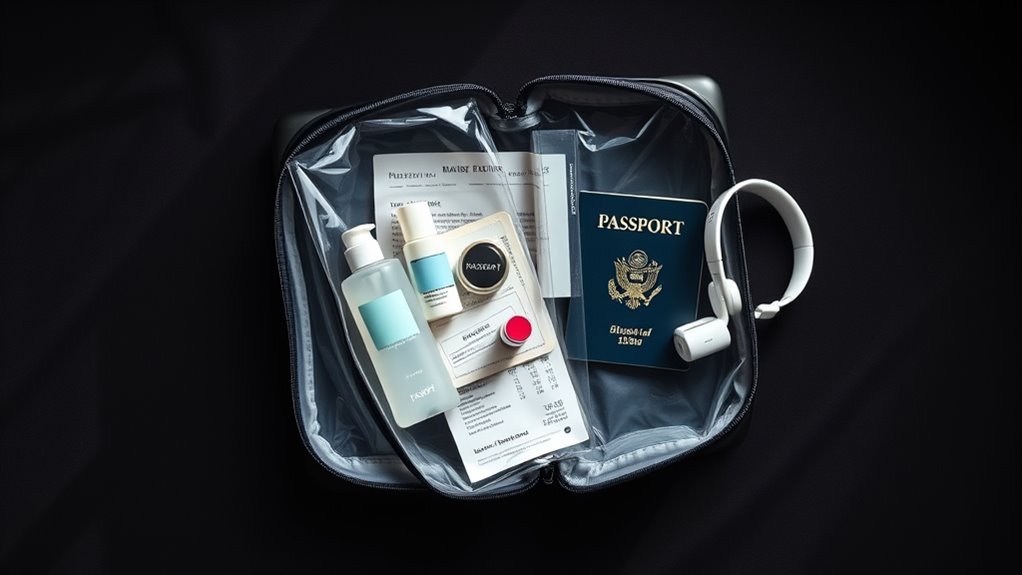
Whether you’re a frequent flyer, an infrequent traveler, or packing for a short trip, this guide helps you figure out what cosmetics you can bring in your carry-on. You’ll get clear, practical info whether you jet for work, vacation, or emergencies.
If you prioritize efficiency, you’ll learn how to streamline products and containers. If you travel with specific needs—medications, skincare routines, or makeup for events—you’ll see which items need special handling.
Families, business travelers, and minimalists will find tailored tips. You won’t get legalese or vague advice—only direct, usable guidance to prepare your carry-on cosmetics.
TSA Liquid Rule : Quick Answer
Curious what the TSA liquid rule means for your cosmetics? You can bring liquids, gels, creams and aerosols in carry-on bags, but they must fit a single clear quart-sized bag. Each container should be 3.4 ounces (100 milliliters) or less.
You’ll need to remove the quart bag from your carry-on for separate screening unless you use a clear, easily accessible pouch. Medications, baby formula, and breast milk are exceptions but may be inspected.
Pack full-size solid cosmetics (like bar soap, lipstick, and powder) without restriction. Follow these limits to speed security and avoid confiscation.
Carry-On Container Size Limit
Now that you know the 3.4-ounce/100-milliliter and quart-bag limits for liquids, let’s look at how container size is measured and enforced for cosmetics in carry-on bags.
Security staff check the labeled volume on packaging; if it’s unlabeled, they may estimate by sight or transfer contents.
Containers must be standalone items fitting comfortably in your quart bag—collapsed or travel-size tubes count by their total capacity, not current fill.
Solid cosmetics (powders, sticks) aren’t subject to liquid limits but can be inspected.
If an item exceeds limits, expect it to be confiscated or gate-checked.
How the 3-1-1 Rule Actually Works at Security
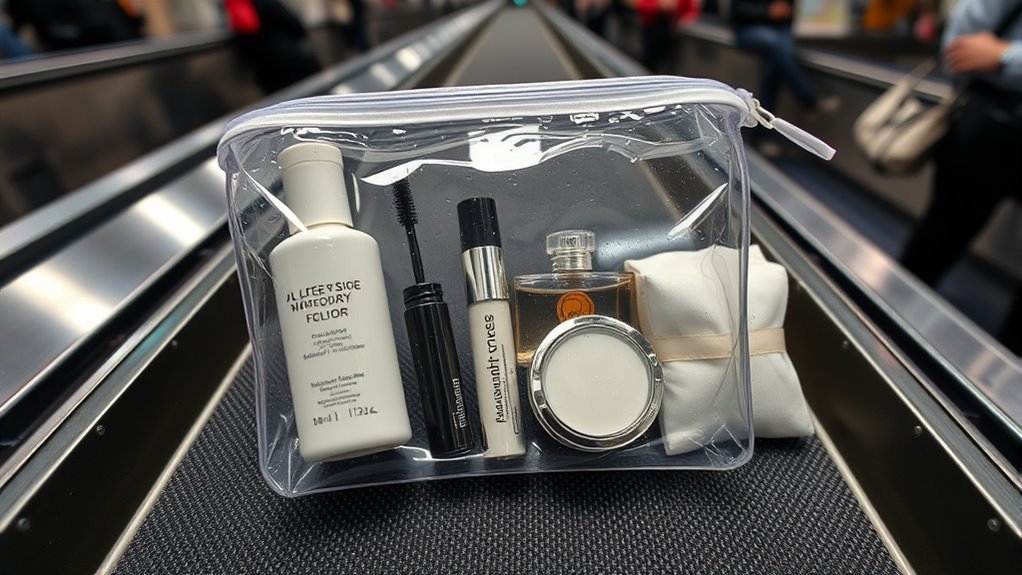
Because TSA and other aviation authorities balance safety with throughput, the 3-1-1 rule is enforced as a quick, standardized screening method you’ll encounter at every security checkpoint.
You must place all eligible toiletries in containers of 3.4 ounces (100 milliliters) or less, fit them into a single, clear quart-sized plastic bag, and limit one bag per passenger.
At screening, remove the bag from your carry-on and set it in a bin for X-ray inspection; agents may ask you to open containers or remove items for closer checks.
Violations mean removal, disposal, or placing items in checked luggage.
Which Cosmetics Count as Liquids, Gels, or Aerosols?
You’ll want to know which of your products count as liquids, gels, or aerosols so you can pack them correctly. Think liquid foundations, lotions, perfumes, gel mascaras, and spray sunscreens as subject to the 3-1-1 rule.
While solid items like bar soap, solid shampoo, and stick deodorant are generally exempt. I’ll explain clear examples and how to tell borderline products apart.
Liquid, Gel, Aerosol Examples
When you’re packing cosmetics, knowing which items count as liquids, gels, or aerosols helps you avoid delays at security checkpoints. Most creams, lotions, liquid foundations, nail polish, mascaras, and spray products fall into this category and must meet carry-on size rules.
Include travel-size shampoos, conditioners, liquid concealers, BB/CC creams, liquid bronzers, facial mists, makeup removers, and sunscreen.
Chapsticks with soft balm, lip gloss, and liquid lipsticks qualify too.
Aerosol hairsprays, dry shampoos, and shaving foams are included.
Place all containers of 3.4 ounces (100 milliliters) or less inside a single clear quart-sized bag for screening.
Solid Cosmetics Exemptions
Although many cosmetics seem liquidy, several solid forms are exempt from the 3.4-ounce/100-milliliter carry-on rule, so you can pack them outside the quart bag. You should know which items qualify so security checks go smoothly.
Solids like balms, sticks, and pressed powders are usually fine, but creams and pastes aren’t. When in doubt, carry the product in its original form and be ready to explain it to TSA.
Below are common solid exemptions to contemplate before you pack.
- Lipstick
- Solid deodorant
- Bar soap
- Shampoo bar
- Pressed powder compact
Which Cosmetics Count as Solids or Powders?
You’ll notice powders behave differently than creams — powders are dry and won’t count toward your 3.4 oz liquids limit, while cream-based products do.
Think loose face powder, pressed powder compacts, and powdered bronzer as solids you can stow without the liquid restrictions.
Check TSA rules for powder quantities and screening procedures before you pack.
Powder Vs. Cream Cosmetics
If you’re packing makeup for a flight, it’s helpful to know which items count as solids or powders versus liquids or gels, since that determines whether they go in your checked bag or the 3-1-1 carry-on bag.
You should treat true powders as solids—loose powder, pressed powder, and powder blush—while creams, mousse, and liquid foundations are considered gels/creams and fall under liquid rules. Check labels: “cream,” “gel,” or a pump usually means liquid.
When in doubt, pack creamier items in checked luggage or your quart-sized clear bag to avoid gate-side issues.
- Pressed powder
- Loose powder
- Cream blush
- Liquid foundation
- Powder bronzer
Solid Makeup Examples
Now that you know how powders differ from creams and gels for carry-on rules, let’s look at specific solid makeup items you’ll usually be able to bring without the 3-1-1 restrictions. You can pack many solids in your carry-on: they’re non-liquid, won’t leak, and are easy to screen. Bring these items in your bag or personal item, but keep them accessible for inspection.
| Category | Example | Notes |
|---|---|---|
| Face | Powder foundation | Compact or loose |
| Cheeks | Blush stick | Solid or pressed |
| Eyes | Eyeshadow pan | Single or palette |
| Lips | Lipstick | Bullet or balm |
| Tools | Solid deodorant? | Not makeup, but similar solids |
TSA Rules For Powders
When you pack powders, the TSA treats them differently than liquids, so it helps to know which cosmetics qualify as powders or solids and which may be subject to the 3-1-1 liquid rule.
You’ll usually be fine with dry items, but loose powders over 12 ounces (350 mL) can draw extra screening and might need to go in checked baggage.
Solid bars and stick products are treated like solids.
If a product’s consistency is ambiguous, pack it in carry-on compliant containers or check it.
Be prepared to separate powders during security checks.
- Loose face powder
- Powder blush
- Powder foundation
- Solid stick concealer
- Cream-to-powder hybrids
How to Measure Your Cosmetic Containers at Home
Before you pack anything, gather the tools you’ll need—a ruler or tape measure, a kitchen scale for weight if required, and a notepad or phone to record measurements. Measure height and diameter of bottles, jars, and tubes; note volume markings. Weigh containers if airline rules specify grams or ounces. Record whether caps are attached and if containers are full, since capacity matters. Compare your notes to airline and TSA limits before selecting what goes in carry-on. Use this simple table to track items and decide quickly which meet size and weight rules.
| Item | Measurement |
|---|---|
| Bottle | 50 mL, 10 cm |
| Jar | 30 g, 4 cm |
How to Pack Multiple Small Liquid Cosmetics in One Bag
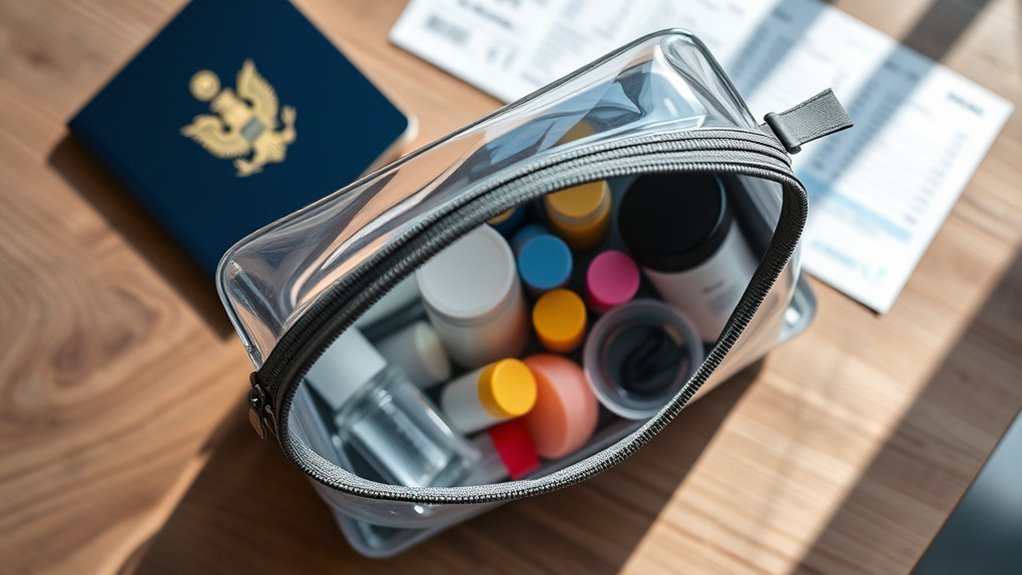
With your measurements recorded, you can sort which liquids will share a single clear bag and how to arrange them for quick screening. Group items by size and frequency of use, placing smallest and least used at the bottom. Lay labels outward so security reads them without rearranging. Use leakproof caps and wrap fragile tubes in a thin cloth. Compress air from soft pouches to maximize space.
Measure and group liquids by size and use, label outward, secure caps, and compress pouches for efficient, quick screening.
- Place daily essentials near the top
- Stack flat items to avoid gaps
- Seal each cap with tape if needed
- Keep similar viscosities together
- Reserve one corner for medication or creams
Which Cosmetics Must Go in Checked Baggage
If an item exceeds airline or TSA liquid limits, you’ll need to pack it in checked baggage rather than carry-on.
You should also check items that are sharp, oversized, or considered hazardous: aerosol hairsprays above permitted ounce limits, large bottles of liquid foundation, bulk skincare jars, and pressurized cans.
Nail polish removers with high acetone content, certain alcohol-based toners, and professional styling irons with fuel can be restricted.
Solid makeup in nonstandard containers usually’s fine, but when in doubt, move questionable products to checked bags to avoid delays, confiscation, or fines at security checkpoints.
Packing Glass Perfume for Checked Bags
When you pack glass perfume in checked baggage, wrap each bottle in bubble wrap or clothing and place it in a sturdy, cushioned container to minimize movement.
Use sealable plastic bags to protect against leaks and label the box or toiletry kit as fragile so handlers take extra care.
Also check airline rules and declare valuable or fragile items at check-in to avoid surprises if damage occurs.
Packing Glass Bottles Securely
Because glass bottles can shatter and leak under pressure, you’ll want to pack perfume in checked bags with deliberate protection. Wrap each bottle in soft material, place it upright, and isolate it from other items to limit movement and contain any spills. Use a hard-sided case or a padded compartment when possible, and seal bottles inside leakproof bags.
- wrap in bubble wrap or clothing
- place inside a zip-top plastic bag
- position upright amid soft textiles
- use a hard-sided toiletry case
- label contents for handlers
These steps help prevent spills and simplify inspection.
Protecting Against Breakage
You’ve taken smart steps for carry-on limits and initial packing; now focus on measures that stop glass perfume from breaking in checked baggage.
Wrap bottles individually in bubble wrap, securing with tape so cushioning won’t shift. Place each wrapped bottle inside a sturdy plastic container or heavy-duty zip bag to contain leaks.
Nest containers in the center of your suitcase, surrounded by soft clothing for shock absorption. Avoid overpacking nearby hard items that could press or impact glass.
Consider using commercial travel perfume cases or padded pouches rated for luggage. Label the area as fragile inside your bag for gentler handling.
Declaring Fragile Items
Wondering whether to declare fragile items like glass perfume in checked baggage? You should. Declaring alerts staff to handle your bag more carefully and may affect liability for damage.
Pack glass bottles in sealed plastic, cushion with clothing, and place them center‑fold away from seams. At check‑in, tell the agent you have fragile liquid cosmetics; request Fragile tags if available. Keep receipts or photos for claims.
- Wrap bottles individually in bubble wrap
- Use a hard case or padded pouch
- Place items among soft clothing
- Seal in leakproof bags
- Declare at check‑in for tagging
Airline Variations: When Rules Differ From TSA
While TSA sets federal limits for liquids in carry-ons, individual airlines can add their own size, weight, or container rules you’ll need to follow. Always check your carrier’s policy before packing since differences can affect whether a favorite product flies with you.
You should verify airline-specific allowances for carry-on volume, number of items, and permitted containers—some carriers limit total carry-on weight or ban aerosols and certain pressurized cosmetics. Frequent flyer tiers and codeshare flights may impose other rules.
If a product exceeds an airline’s policy, pack it in checked luggage or buy travel-sized replacements at your destination to avoid confiscation or delays.
International Differences: EU and UK Liquid Rules
Although the EU and UK both follow the familiar 100 ml container and 1-liter clear bag standard for carry-on liquids, there are practical differences you should know before flying. You’ll find similar baseline rules, but enforcement, declared exemptions, and Security Service interpretations can vary by country and airport. Check local airport websites and arrive early if unsure. Pack backups and keep prescription or baby items accessible. Know refund/leftover disposal options at departure.
EU and UK follow the 100 ml/1‑liter rule, but enforcement and exemptions vary—check airport guidance and keep prescriptions handy.
- Enforcement intensity differs between airports
- Some UK checkpoints allow slight flexibility
- EU member states may have varied signage
- Prescription items need documentation
- Duty-free rules vary on transfer flights
Carrying Cosmetics on Low-Cost or Regional Carriers
If you’re flying with a low-cost or regional carrier, expect stricter limits on carry-on size and sometimes tougher enforcement of liquid rules—these airlines often have smaller overhead bins and tighter weight policies. You’ll need to check the airline’s exact dimensions and weight allowances before packing.
Prioritize essentials: transfer liquids into compliant 100ml containers and use a clear resealable bag. Consider consolidating items into travel-size solid alternatives like balm sticks, powder bronzers, and solid shampoo.
Gate checks happen more often, so protect fragile compacts in a padded pouch. Plan for limited space and stricter staff inspections to avoid surprises.
Long-Haul and Connection Packing Tips
Smaller regional carriers teach you to pack tight, but long-haul trips and multi-leg itineraries ask you to think about comfort, accessibility, and backups.
You’ll want essentials in your carry-on: travel-sized moisturizer, lip balm, dry-shampoo, a basic makeup kit, and spare contact supplies.
Pack duplicates of anything critical in a checked bag when possible, and keep a toiletry pouch handy for overnight connections.
Consider solid versions to avoid liquid limits and seal items against leaks.
Check destination climate and flight amenities to adjust quantities, and label fragile containers so security screens and staff handle them carefully.
- Travel-sized hygiene essentials
- Overnight touch-up kit
- Solid alternative products
- Duplicate critical items in checked luggage
- Clearly labeled fragile containers
Exceptions: Medically Necessary Liquids and Creams
Because security rules recognize medical needs, you can bring liquids, gels, and creams over the usual limits when they’re medically necessary—just declare them at the checkpoint and be prepared to show documentation if asked. You should pack medications and medical creams accessibly, label containers, and carry prescriptions or a doctor’s note when possible. TSA and many international agencies allow reasonable quantities beyond 3.4 oz for health reasons. Officers may test substances, so keep originals and spare supplies. Communicate clearly at screening to speed inspection.
| Item | Tip |
|---|---|
| Medications | Label & carry script |
| Injectable meds | Notify & pack needles |
| Topical creams | Keep originals |
| Spare supply | Store accessibly |
Exceptions: Baby Formula, Breast Milk, and Baby Food
When you’re traveling with an infant, security lets you bring baby formula, breast milk, and baby food in quantities larger than the usual 3.4 oz limit—just declare them at the checkpoint for inspection. You’ll present items separately for X-ray or hand inspection; keep them accessible and labeled if possible.
When flying with an infant, declare and present formula, breast milk, and baby food for separate inspection—keep them accessible and labeled.
Inform the agent about frozen or warmed items and any ice packs. You aren’t confined to quart-size bags, but expect inspection delays.
Carry enough for the flight plus contingencies, and know local rules may vary at connecting airports.
- Declare items at screening
- Keep items reachable
- Label containers when possible
- Expect possible hand inspection
- Pack extra for delays
How to Travel With Prescription Liquid Medications
When you pack prescription liquid medications, follow TSA rules that usually exempt medically necessary liquids from the 3.4-ounce limit but require you to separate them for screening.
Bring a copy of your prescription or a doctor’s note and keep medicines in their original labeled containers to avoid delays.
If you’re carrying large quantities or injectable meds, notify TSA officers at the checkpoint.
Packing Liquid Medication Rules
If you need to bring prescription liquid medications, plan ahead so security screening goes smoothly and your meds stay accessible. Pack them in original containers when possible, keep doses needed for travel in your carry-on, and place bottles in a clear, resealable bag separate from other liquids. Declare large or unusual quantities at the checkpoint and be ready to open containers if requested.
Consider secondary spill-proof containers and absorbent material. Keep medication within reach during flight.
- Keep meds in carry-on, not checked baggage
- Use original or clearly labeled containers
- Separate from 3-1-1 liquids
- Declare if over standard limits
- Prevent spills with double-bagging
Documentation And Prescriptions
Need proof for your meds? Carry prescription labels, original packaging, or a doctor’s note stating medication name, dosage, and necessity.
Keep liquids in clear, accessible bags for screening and separate them from toiletries.
If you use syringes or controlled substances, bring supporting documentation and check airline and destination regulations in advance.
International travel may require translated prescriptions or a pharmacy printout.
Declare medications at security if asked; doing so speeds inspection and avoids confusion.
Store copies of prescriptions digitally and on paper in case you lose originals, and always pack extra medication in your carry-on.
How to Bring Aerosols Like Hairspray or Dry Shampoo
Although aerosols like hairspray and dry shampoo feel essential to your routine, TSA rules and airline policies limit how you can pack them in carry-on luggage. You’ll need travel-size cans (100 ml/3.4 oz or less) inside a clear quart bag, and the total number of liquids and aerosols must fit that bag.
Check airline limits for any additional restrictions and verify cans aren’t damaged or pressurized beyond safe limits. Larger aerosols belong in checked baggage if allowed. Label medicated sprays clearly and keep receipts for purchased travel sizes.
- Use 3.4 oz (100 ml) or smaller
- Place in a clear quart bag
- Inspect for dents or leaks
- Check airline policies before packing
- Move oversized cans to checked luggage
Rules for Carrying Sunscreen and SPF Products
When packing sunscreen and other SPF products for your carry-on, stick to the same 3.4 oz (100 ml) liquid rule and fit them inside your clear quart bag—sunscreen sprays count as aerosols, lotions and creams count as liquids, and sticks are usually treated as solids but can still be subject to inspection. You should:
| Type | Rule | Tip |
|---|---|---|
| Spray | Aerosol limit | Lock cap |
| Lotion | 3.4 oz max | Use travel tube |
| Stick | Often solid | Expect inspection |
Declare oversized or unusual SPF items at security, and pack backups in checked luggage to avoid delays.
What Size Makeup Removers and Micellar Water Can Be Carried
If you’re bringing makeup remover or micellar water in your carry-on, treat them like other liquids: each container must be 3.4 oz (100 ml) or less and fit inside your single clear quart-sized bag. You can carry multiple small bottles as long as they all fit.
Liquids in checked baggage follow airline rules, but remember sensitive items (oil-based removers) may leak—seal them. If you need more, buy travel-size at your destination.
Liquids in checked bags follow airline rules—seal oil-based removers to prevent leaks, or buy travel-size replacements at your destination.
- Use travel-sized bottles
- Seal caps with tape or a plastic wrap
- Keep them upright
- Pack duplicates in checked luggage
- Declare unusual formulas if asked
Foundation, BB Cream, and Tinted Moisturizer Rules
When packing foundation, BB cream, or tinted moisturizer for carry-on, you’ll need to follow the TSA liquid limits and pack bottles no larger than the allowed size.
Use travel-sized containers or decant into clear quart bags to keep security checks quick and hassle-free.
If you need more for medical reasons, declare it and bring documentation to qualify for exceptions.
Liquid Limits Explained
Curious what counts as a liquid in your carry-on and how foundation, BB cream, and tinted moisturizers fit the rules? You’ll usually treat them as liquids/creams.
Containers must be 100 ml (3.4 oz) or less and fit in a single clear quart-sized bag. If your product’s tube, pump, or jar is under that limit, you’re good to bring it through security.
- Check the container volume marked on the packaging
- Transfer into smaller approved bottles if needed
- Solid stick foundations are often exempt
- Pressure-sensitive pumps can be flagged
- Declare any unclear items to security staff
Carry-On Packaging Tips
Now that you know which products count as liquids and the 100 ml/quart-bag rule, let’s focus on how to pack foundation, BB cream, and tinted moisturizer so they sail through security. Use travel-size pumps or decant into labeled 100 ml bottles, seal caps with tape, and place them upright in the clear bag. Opt for solid foundation sticks when possible. Keep originals under 100 ml in checked luggage if unsure. Present the quart bag separately at screening for faster checks.
| Product | Tip |
|---|---|
| Liquid foundation | Pump bottle, taped cap |
| BB cream | 100 ml tube, labeled |
| Tinted moisturizer | Decant, upright |
Exceptions And Medicals
Although most cosmetic liquids follow the 100 ml/quart-bag rule, there are important exceptions—especially for medically necessary creams and foundations you’ll need during the flight.
You can carry medically required foundation, BB cream, or tinted moisturizer in quantities exceeding the 100 ml limit if you declare them at security and they’re clearly for medical use. Keep documentation or a doctor’s note handy, and separate these items from your quart bag for inspection.
Security officers may inspect or test them. Follow airline guidance for in-flight application to avoid messes.
- Declare items at security
- Carry documentation if possible
- Pack separately for inspection
- Inform airline staff if needed
- Use spill-proof containers
How to Travel With Mascara, Eyebrow Gel, and Liquid Eyeliner
When you’re packing mascara, eyebrow gel, and liquid eyeliner, think about security rules, spill protection, and quick touch-ups.
Put each tube in your clear quart-sized bag if they’re over 3.4 ounces; most are smaller, but check labels.
Seal caps tightly, wipe wands clean, and place items upright in a small padded pouch or travel makeup case to avoid leakage.
Carry a spare disposable wand and a cotton swab for fixes.
For the flight, avoid opening products during takeoff or turbulence.
Replace old mascara before travel to reduce infection risk and pack disposables for emergencies.
Travel Rules for Lip Gloss, Liquid Lipstick, and Balms
Because these lip products are usually liquid or gel-based, you’ll need to treat them like other carry-on liquids: keep containers 3.4 ounces (100 mL) or less, stash them in your clear quart-sized bag, and seal caps tightly to prevent leaks.
Treat liquid or gel lip products like other carry-on liquids: 3.4 oz (100 mL) max, in a clear quart bag.
You should also consolidate duplicates, label any homemade balms, and pack fragile tubes upright to avoid messes.
Solid stick lipsticks generally aren’t restricted, but check product consistency—some glossy formulas count as liquids.
At security, remove the quart bag for screening. If you need more than the limit, place extras in checked luggage.
- Consolidate duplicates
- Label homemade items
- Pack upright
- Remove quart bag
- Check consistency
Which Nail Products Are Allowed in Carry-On
You can bring liquid nail products like polish and remover in containers that meet the TSA liquids rule, but keep them in your quart-sized bag.
Powdered items such as acrylic powders or nail dust are generally restricted and might be flagged at security.
Pack bottles upright, seal caps or place them in a zip-top bag, and be ready to pull them out for inspection.
Allowed Liquid Nail Products
Wondering which nail items you can bring in your carry-on? You can carry small liquid nail products if each container is 3.4 ounces (100 ml) or less and they fit in a single clear quart-sized bag.
Place nail polish, remover, and glue together with other liquids for screening. Declare anything unusual to security. Keep backups in checked luggage if you need larger bottles. Follow airline and destination rules for transport.
- Nail polish (≤3.4 oz / 100 ml)
- Nail polish remover (≤3.4 oz / 100 ml)
- Liquid nail glue (≤3.4 oz / 100 ml)
- Cuticle oil (≤3.4 oz / 100 ml)
- Acrylic monomer (≤3.4 oz / 100 ml)
Prohibited Powdered Items
Liquids have limits, but powders face their own rules—so check what nail powders you pack in carry-on. You can’t bring large containers of powdered nail acrylics or pigments that might mimic hazardous powders. Small samples under airline or TSA size guidance are usually fine, but expect screening. Declare any unusual or professional kits if asked. Don’t assume all powdered nail items are allowed.
| Item | Typical Status | Tip |
|---|---|---|
| Acrylic powder (large) | Prohibited/checked | Put in checked luggage |
| Pigments (small) | Conditional | Keep original labels |
| Dip powder kits | May be flagged | Be ready to separate containers |
Packing And Security Tips
When packing nail products for carry-on, focus on size, labeling, and declaration so security screening goes smoothly. You’ll want to separate liquids, gels, and aerosols into a clear quart-sized bag and keep each container at or under 3.4 ounces (100 ml).
Solid items like nail files and clippers are fine, but declare sharp or unusual tools. Place polish remover or acetone in checked baggage when possible; if carried on, expect extra inspection.
Label containers clearly and pack receipts or ingredient lists for unfamiliar products to speed up officer questions.
- Keep liquids ≤3.4 oz (100 ml)
- Use a clear quart bag
- Pack solids separately
- Declare sharp tools
- Prefer acetone in checked luggage
How to Pack Solid Perfume and Perfume Samples
If you prefer solid perfume or collect samples, pack them in a way that keeps scents contained and easy to access. Place solid tins and balm sticks in a small, sealable pouch to stop leaks and rubbing.
For vial samples, cap them tightly and stand them upright in a padded case or a used contact lens case to prevent breakage and spills.
Keep all fragrance items within your carry-on so temperature changes won’t burst vials. Declare any unusually large or liquid perfume at security if asked.
Label sample containers so you can find and reuse favorites without unpacking everything.
Tips for Taking Powders and Loose Pigment On Board
Because powders can spill and stain quickly, pack them thoughtfully to avoid mess and delays. You’ll want secure, clearly labeled containers and a plan for use on board.
Pack powders carefully in secure, labeled containers to prevent spills, stains, and travel delays.
Choose hard-sided compacts or screw-top jars, wrap lids with tape, and place items upright in a separate pouch.
Keep pigments in resealable plastic bags to catch leaks, and store brushes inside protective sleeves to prevent powder transfer.
Bring a small brush or sponge for touch-ups and a damp wipe for quick cleanup.
Be ready to show powders during security screening and remove them if an agent asks.
- Use hard-sided compacts or screw-top jars
- Wrap lids with tape or film
- Place containers upright in a pouch
- Seal loose pigment in resealable bags
- Protect brushes with sleeves
How to Handle Powdered Cosmetics Over the 350 mL Rule
If your powdered makeup exceeds the 350 mL guideline, expect extra scrutiny at security and plan accordingly. You’ll need to separate larger jars and be ready to open or remove them for inspection.
Knowing the screening rules helps you avoid delays and keeps your routine products with you.
Powdered Makeup Limits
When you’re packing powdered cosmetics, remember they don’t count toward the 350 mL liquid rule, but security still expects sensible packing and occasional extra screening.
You can carry loose powders, compacts, and powdered blushes, but large quantities may prompt checks. Pack powders in clear, labeled containers and keep fragile compacts cushioned. Place them where officers can access them without unpacking everything.
- Use original packaging when possible
- Transfer to smaller, clearly labeled jars if needed
- Keep powders separate from liquids
- Avoid overly large bulk quantities
- Be ready to remove powders for inspection
Security Screening Tips
You’ve already seen how powders are treated differently from liquids, so here’s how to handle powdered cosmetics that exceed 350 mL at security.
Pack them in clear, labeled containers and place them in an easily reachable spot in your carry-on. Declare large quantities to the officer proactively and follow any tray requests. If asked, remove the container for separate screening; you may be asked to open it.
Consider transferring product to smaller containers under the limit or stowing the full size in checked baggage to avoid delay. Stay calm, cooperate, and know rules can vary by country and airport.
TSA Screening: What Officers Look for With Cosmetics
Although airport security treats cosmetics like other carry-on items, officers focus on a few specific concerns that affect how you pack and screen them. You’ll be assessed for liquid volume, suspicious residue, concealed objects, consistency versus packaging, and compliance with declared items.
Officers use X-ray images and sometimes swabs; they’ll ask you to remove items that obscure views or look unusual. Keep explanations concise if questioned. Expect additional inspection for powders over a certain size or for items that appear modified.
Understanding these priorities helps you avoid delays and ensures smoother screening.
- liquid limits and clear bags
- powder volume and visibility
- unusual shapes or modifications
- residue or odor on swabs
- declared versus undeclared items
How to Present Cosmetics at the Security Checkpoint
Because screening is quicker when items are organized and visible, lay out your cosmetics before you reach the belt so officers can scan them without delays. Take liquids out, cap jars, and place fragile compacts face-up. Tell officers if you have medical creams or breast milk; stay calm and cooperative. Use a single pouch for faster inspection and wipe spills before packing. If an item needs separate inspection, hand it over promptly. Respect directions and reclaim items quickly to keep the line moving.
| Calm | Clear | Quick |
|---|---|---|
| Soothed | Visible | Efficient |
| Confident | Orderly | Respectful |
| Prepared | Honest | Polite |
Best Clear Bag Types for 3-1-1 Compliance
When you pack liquids for carry-on, choosing the right clear bag makes security screening smoother. Clear vinyl zipper bags are sturdy, completely transparent, and meet TSA size rules so you can zip through checks faster.
If you prefer something lighter, reusable mesh pouches with a clear panel give structure and visibility while cutting down on single-use plastic.
Clear Vinyl Zipper Bags
If you want a durable, fully transparent option that meets TSA’s 3-1-1 rule, clear vinyl zipper bags are one of the best choices. You’ll see contents quickly, zip securely, and clean spills with a wipe.
They resist tearing better than thin plastic and won’t fog, so agents won’t delay you. Choose a bag sized for 1-quart capacity and check seals before flying.
Use smaller vinyl pouches inside for organization, but keep liquids visible and accessible. Vinyl stands up to repeated travel, making it a practical, low-maintenance choice for frequent flyers.
- Durable construction
- Fully transparent
- Easy to clean
- Reusable
- Secure zipper
Reusable Mesh Pouches
Though they’re not fully clear, reusable mesh pouches keep your liquids visible enough for quick TSA checks while offering breathability and flexibility you won’t get from vinyl. You’ll find them lightweight, compressible, and ideal for oddly shaped items that won’t fit in rigid clear bags.
Pick a pouch with a defined rectangular outline so agents can easily spot containers; contrast stitching or a clear window helps.
Washable materials prevent spills from staining other items.
Remember TSA still expects containers to be 3.4 ounces or less and fit in a single quart-sized bag, so plan pockets accordingly.
How to Downsize Full-Size Cosmetics Without Wasting Product
Because you want to travel light without tossing usable product, downsizing full-size cosmetics means transferring, decanting, and organizing with care so nothing goes to waste. You’ll prioritize essentials, check expiration dates, and decant leftovers into small, labeled containers so you use every bit.
Work over a clean surface, use spatulas or pumps to minimize residue, and seal jars tightly to prevent leaks. Keep caps and original boxes when possible for identification and reassembly at home.
Pack partially used sticks upright to avoid smudging, and plan to finish remaining product during your trip.
- Prioritize essentials
- Label contents
- Use clean tools
- Seal tightly
- Pack upright
Reusable Travel Containers: What Materials and Sizes to Buy
When you’re picking reusable travel containers, choose TSA-approved materials like clear plastic or silicone so security checks go smoothly.
Opt for leakproof sizes that match how much product you actually use to avoid spills and wasted space.
Label and fill each container clearly and tightly so you can find what you need and stay compliant.
Choose TSA-Approved Materials
Wondering which reusable travel containers will actually pass through airport security? You’ll want materials that screen clearly and resist damage. TSA prefers clear, solid containers that won’t be mistaken for liquids leaking or conceal prohibited items.
Choose durable, non-porous materials and avoid suspicious coatings or opaque finishes. Cleanliness matters—residue can trigger extra inspection. Label containers with contents and volumes to speed screening.
Consider certified travel bottles designed for air travel to reduce questions.
- Clear PET or Tritan plastic
- Soft silicone for collapsible tubes
- Metal tins for balms and solids
- Glass with protective sleeves
- BPA-free, food-grade plastics
Pick Leakproof Sizes
How much can you realistically carry without risking spills or slowdowns at security? Pick leakproof sizes that match both TSA rules and your routine: small bottles (1–3 ounces) for daily liquids, wider jars for balms, and roll-ons for deodorant.
Choose containers with screw caps, silicone seals, and locking lids to prevent pressure-driven leaks. Test them upright and upside down before packing.
Match capacity to product use—don’t overfill a 3 oz when you’ll finish it in a weekend.
Keep similar shapes to fit your clear bag efficiently, reducing movement that can open lids during transit.
Label And Fill Properly
Because TSA agents and TSA-scanners don’t read minds, label and fill your travel containers clearly: use waterproof labels or a fine-tip permanent marker to note product name, date opened, and any allergens or active ingredients. You’ll avoid delays and accidental mixes by filling containers to recommended levels, leaving slight headspace for pressure changes, and sealing caps tightly.
Pick durable materials—silicone, stainless steel, or BPA-free plastic—that won’t react with contents. Refill at home to control amounts and photograph labels for backups. Keep medicines separate and accessible.
- Product name
- Date opened
- Active ingredients
- Allergen warnings
- Volume/weight
Sanitizing and Refilling Travel Containers Safely
When you refill and sanitize travel-size containers, follow a simple routine to keep products effective and avoid contamination.
Empty containers completely, rinse with warm water, then wash with mild soap; use a small brush for crevices. Rinse thoroughly and air-dry upright on a clean towel.
Empty containers completely, rinse with warm water, wash with mild soap, scrub crevices, rinse again, and air-dry upright.
Sanitize with isopropyl alcohol (70%) for non-porous surfaces; let it evaporate fully.
Refill only with fresh product from the original packaging or a clean pump to avoid cross-contamination. Replace caps securely and store containers in a clean pouch.
Clean and inspect them between trips, and discard if you spot residue, odor, or discoloration.
Labeling Tips to Speed Up Security Checks
If you want to breeze through security, label your travel-size containers clearly and consistently so agents can spot contents at a glance. Use simple, legible labels that state the product and volume (e.g., “shampoo 100ml”). Waterproof stickers and permanent markers resist smudges.
Match label language to local regulations when traveling internationally. Place labels on flat surfaces facing outward for quick viewing inside the clear bag. Keep labels minimal to avoid clutter.
- Product name
- Volume (ml/oz)
- Date filled
- Allergy or ingredient note (optional)
- Matching toiletry list in your carry pouch
How to Avoid Spills and Leaks in Your Carry-On
To prevent messy surprises at security or on the plane, secure every liquid container before you pack it. Tighten caps, use tape over lids, and place bottles in sealable plastic bags. Choose travel-size, sturdy containers and inspect for cracks. Wrap fragile items in soft cloths and put leak-prone products upright. If a spill happens, you’ll contain it quickly with spare bags and wipes. Stay calm and check seals periodically during longer trips. Small precautions keep your bag clean and your makeup usable.
| Calm | Confident | Prepared |
|---|---|---|
| Secure | Seal | Protect |
| Ready | Safe | Smart |
Packing Order: Cosmetics Placement in Carry-On and Toiletry Bag
Place your toiletry bag in an easily reachable spot in your carry-on so you can pull it out at security or during the flight.
Layer liquids and fragile items in the middle with sturdier items on the outside to prevent crushing and leaks.
Keep everyday essentials on top for quick access without unpacking everything.
Strategic Toiletry Bag Placement
Wondering how to arrange your cosmetics so they’re reachable, secure, and compliant? Place clear toiletry bags at the top of your carry-on for quick security checks and easy access.
Keep fragile glass bottles cushioned between soft items and centered to avoid pressure.
Stow frequently used items near the opening so you don’t unpack everything mid-flight.
Use smaller pouches inside the main bag to separate makeup from skincare and prevent leaks from spreading.
Label or use transparent compartments to spot items fast.
- Top-access clear bag for TSA
- Center fragile items
- Frequently used near opening
- Separate pouches for categories
- Label or use transparent compartments
Layering Items For Access
When you pack your carry-on, think in layers so you can grab what you need without digging. Place daily essentials—face wash, moisturizer, lip balm—on top in a clear pouch for security checks and quick touch-ups. Reserve the middle for makeup you’ll use inflight: compact, concealer, mascara. Put backups and bulky items—sunscreen, shampoo—at the bottom. Keep a tiny pouch for tools and wipes near the zipper.
| Calm | Ready |
|---|---|
| Top: essentials | Middle: routine |
| Bottom: bulk | Zipper: tools |
What to Do If Your Cosmetics Are Confiscated
If an item’s taken at security, stay calm and ask the officer why it’s being confiscated so you know whether it’s a prohibited item or just over the size limit. You can sometimes avoid losing it permanently by asking about disposal, checked-bag options, or returning it to your vehicle.
Know your rights, accept the decision politely, and act quickly to limit loss. Document the item and officer details if needed.
- Ask if a supervisor can review the decision
- Request written clarification or a receipt
- Check if sealed or unused items are treated differently
- Move oversized liquids to checked luggage when possible
- Keep packaging and serial numbers for records
How to Claim Replacements or Refunds for Lost Products
Because airlines, TSA, and retailers each have different policies, start by gathering proof—receipts, photos, packaging, and any incident or baggage claim numbers—so you can file a clear claim for a replacement or refund. Next, contact the party responsible: airline for checked bags, TSA for security incidents, retailer for purchase issues. File online claims promptly, attach documentation, and note deadlines. Keep copies and follow up regularly. If denied, escalate to a supervisor or consumer protection agency. Use this quick checklist:
| Who to contact | What to include |
|---|---|
| Airline | Claim number, photos |
| TSA | Incident report, photos |
| Retailer | Receipt, order ID |
| Consumer agency | Complaint details |
Travel-Friendly Makeup Kits for Short Trips
Although you’re packing light, you can still bring a compact makeup kit that covers day-to-night looks without bulk. Choose multifunctional products: tinted moisturizer with SPF, a cream blush that doubles as lip color, a neutral eyeshadow stick, a small mascara, and a brow pencil.
Pack items in a clear, resealable pouch that meets carry-on liquid rules and keeps things visible. Prioritize solid or cream formats to avoid spills.
Replace full-size tools with travel brushes or dual-ended ones. With these choices you’ll streamline your bag, adapt to changing plans, and stay polished on short trips.
Minimalist Beauty Packing for Carry-On Only Travel
When you’re flying carry-on only, stick to essentials that cover skin prep, a concealer, mascara, and a lip product.
Choose multitaskers—tinted moisturizer with SPF, a cream blush that doubles as lip tint, and a brow pencil that shapes and fills.
Pack liquids in travel-size containers that meet TSA limits and keep them in a clear quart bag for easy screening.
Essentials Only Makeup
Want to travel light without sacrificing a polished look? Pack only what creates a quick, fresh face and fits carry-on limits. Choose compact, versatile items that streamline touch-ups and reduce weight. Stick to travel-size or decanted containers under 100 ml and keep liquids accessible in a clear bag.
- Tinted moisturizer or BB cream
- Concealer stick for spot coverage
- Mini mascara (waterproof for longevity)
- Neutral eyeshadow single or cream shadow
- Tinted balm or small lipstick
With these essentials, you’ll handle long days, humidity, and red-eye flights while staying effortlessly put together.
Multiuse Product Picks
Because you’re packing light, pick multiuse products that replace full kits without fuss. Choose a tinted moisturizer with SPF that evens skin, hydrates, and protects.
Swap separate cream blush and lipsticks for a balm-tint you can dab on cheeks and lips.
Use a dual-ended stick for contour and highlight to sculpt without extra brushes.
Carry a long-wear brow pencil that doubles as eyeliner in a pinch.
Opt for a compact palette combining lid, crease, and liner shades.
Include a clear mascara that tames brows and defines lashes.
These swaps cut volume and keep your carry-on streamlined.
TSA Liquid Limits
Pack smart: the TSA lets you bring liquids, gels, and aerosols in containers of 3.4 ounces (100 milliliters) or less, all fitting into a single clear quart-sized bag per passenger. So choose travel-sized essentials and decant favorites into compliant bottles to avoid delays at security.
You’ll streamline your carry-on by prioritizing multifunctional items, sealing liquids to prevent leaks, and keeping your bag accessible for inspection. Know exceptions—medications and baby formula—carry documentation. Check airport and airline rules for international flights. Pack confidently and don’t overpack.
- travel-sized cleanser
- tinted moisturizer
- dual-use balm
- mini mascara
- solid perfume
Beauty Tools and Brushes: What to Pack in Carry-On
When you’re choosing beauty tools and brushes for your carry-on, focus on essentials that’ll keep your routine intact without taking up space or triggering security concerns. Pack a slim brush roll or clear pouch with a few multi-purpose brushes: a tapered face brush, a small blending eyeshadow brush, and a dual-ended brow/liner brush.
Include a compact sponge and metal tweezers in a protective case. Skip bulky palettes and single-use items.
Bring travel-size manicure tools with blunt tips and a foldable hairbrush or wide-tooth comb. Keep everything organized for quick inspections and easy access during travel.
Battery Rules for Beauty Devices
You’ll need to check battery size limits for devices like electric brushes and trimmers before packing them in your carry-on.
Keep spare batteries in your carry-on too, with terminals taped or in protective cases to prevent shorting.
Airlines often restrict loose lithium batteries by mAh, so confirm limits with your carrier.
Battery Size Limits
Wondering which batteries you can bring for beauty devices? You’ll follow airline and TSA watt-hour (Wh) limits: most portable beauty tools with batteries under 100 Wh are allowed in carry-on.
Devices over 100 Wh generally need airline approval and are often prohibited in checked bags. Check device labels or calculate Wh (Wh = V × Ah). Keep devices powered off and protected from short circuits.
- Typical AA/AAA (alkaline) are fine in devices
- Built-in lithium-ion under 100 Wh allowed carry-on
- Removable lithium-ion under 100 Wh allowed carry-on
- Over 100 Wh requires airline approval
- Check manufacturer label for Wh
Spare Battery Handling
If you carry spare batteries for beauty devices, keep them in your carry-on and protected from short circuits: tape exposed terminals or use original packaging, place each cell in a separate plastic pouch or battery case, and never store loose batteries in checked luggage.
You should also check airline rules for capacity limits (mAh or Wh); most airlines allow up to 100 Wh without approval and 100–160 Wh with airline permission.
Carry devices with installed batteries in carry-on too. Declare any damaged or recalled batteries to airline staff.
Pack chargers and power banks properly, and avoid placing batteries where they can be crushed or punctured.
Managing Liquid Limits Across Borders
How do you juggle differing liquid allowances when traveling across borders? You check destination and transit rules, consolidate essentials into compliant bottles, and pack extras in checked luggage. Keep receipts for duty-free purchases separate, and use clear resealable bags for quick screening. Communicate with security if you have medical liquids.
- Verify both departure and arrival airport limits
- Repack samples into 100ml or smaller containers
- Use a single transparent bag per person
- Label prescriptions and medical liquids clearly
- Place noncompliant items in checked baggage or discard before security
How to Buy Duty-Free Cosmetics and Bring Them On Board
When you buy duty-free cosmetics, plan so they clear security and customs without hassle. Buy sealed items in the airport shop and ask for a tamper-evident bag and receipt—airlines and security often require both.
Keep receipts accessible and don’t remove products from their sealed bag until you’ve cleared connections requiring re-screening.
Keep receipts handy and leave duty-free items in their sealed bag until any re-screening is complete.
If you’re on an international-to-domestic itinerary, check the arrival country’s rules; some require declarations or limit quantities.
For carry-on, confirm airline restrictions on liquids and packaged goods. If uncertain, speak to shop staff or your carrier before boarding to avoid confiscation or fines.
How to Combine Duty-Free Purchases With 3-1-1 Rules
Because duty-free buys often come in sealed tamper-evident bags, you can usually carry them through security without counting against your 3-1-1 liquids—provided you keep the receipt visible and don’t open the bag before clearing any connecting screening.
You should still verify airport and carrier rules, especially on international itineraries. Pack duty-free items separately so agents can inspect them without disturbing your 3-1-1 bag.
If you have connecting flights, confirm transfer policies to avoid confiscation. Keep originals of receipts and boarding passes with the sealed bag until final arrival to prove purchase timing and compliance.
- Keep receipt visible
- Verify carrier rules
- Separate packing
- Confirm transfers
- Retain documents
Checklist to Audit Your Cosmetics Before You Leave
Now that you’ve sorted duty-free items and kept receipts handy, take a few minutes to audit your cosmetics so nothing gets left behind or barred at security. Check liquids: group bottles under 100ml into a clear quart bag and confirm seals.
Inspect aerosols and gels for size limits and secure caps. Pack palettes, powders, and tools in a separate pouch for quick inspection.
Remove prohibited items like sharp tools or large perfume bottles. Weigh or eyeball heavy items to avoid overweight fees.
Double-check chargers, batteries, and inflammables. Close and label bags so retrieval and security checks go smoothly.
Common Myths About Flying With Cosmetics, Debunked
Although airport rules can seem confusing, you don’t need to guess which cosmetic items are allowed—many “everyday” beliefs are just myths. You can’t rely on hearsay: solid makeup isn’t always exempt, travel-size packaging doesn’t guarantee allowance, and tinted moisturizers can count as liquids. Security focuses on liquid volume and packaging, not brand prestige.
Know that wipes and sticks often pass, and declared medical lotions get leniency with proof.
- Solids always bypass liquid rules
- Travel-sized equals automatically allowed
- Tinted creams are treated as non-liquids
- Makeup wipes require separate screening
- Medical creams need no documentation
Quick Reference Chart of Common Cosmetics and Allowed Sizes
When you’re packing, treat this quick reference as your go-to guide for what size and format of cosmetics you can bring in carry-on luggage; it lists typical products, how security classifies them, and the maximum container sizes allowed so you can pack confidently.
Lipstick and solid deodorant: solid—no liquid rules.
Mascara, liquid eyeliner, foundation, sunscreen, and liquid concealer: liquids/gels—containers 100 ml (3.4 oz) or less, all fit in a single quart-size clear bag.
Powder blush, compact powder, and dry shampoo: usually allowed without size limits but may be inspected.
Aerosol hairspray: permitted if under 100 ml and protected.
Frequently Asked Questions
Can I Bring Cosmetic Samples Received in Hotel Minibars on a Plane?
Yes — you can bring hotel minibar cosmetic samples on a plane, as long as liquids comply with TSA/airline carry-on rules (usually ≤100ml each, all fitting in a single quart-sized bag). Pack checked without that limit.
Are Solid Stick Sunscreens Treated Differently From Lotion Sunscreens?
Yes — you’ll see solid stick sunscreens treated differently: they’re usually allowed in carry-on without liquid limits, while lotions count toward your 3.4-ounce/100ml liquids. Pack solids separately for quick screening.
Do Airline Lounge Shops’ Product Sizes Count Toward My Carry-On Liquid Limit?
Yes — if you buy liquids in an airport lounge shop and they aren’t in secure, sealed duty-free tamper-evident bags, they count toward your carry-on liquid limit, so keep receipts and check packaging to avoid issues.
Can I Pack Opened Liquid Cosmetics That Are Older Than Travel Date?
You can pack opened liquid cosmetics older than your travel date, but carriers and security may reject spoiled, leaking, or oversized items; you should check TSA rules, container limits, and consider hygiene and airline-specific policies before flying.
Are Battery-Heated Makeup Tools Allowed in Checked Baggage?
Yes — you can usually pack battery-heated makeup tools in checked baggage, but airlines may restrict lithium batteries; you should remove batteries or carry them in cabin if required, and check airline and TSA rules before travel.
Conclusion
Now you know the TSA’s 3-1-1 rule and how it applies to cosmetics: each liquid, gel, cream, or aerosol must be in a container 3.4 ounces (100 milliliters) or less, all fit inside one clear quart-sized bag, and only one bag goes in your carry-on. Pack solids freely, keep duty-free sealed per airline rules, and double-check labels before you leave. Do a last-minute checklist to avoid delays at security and enjoy a smoother trip.
