What Should You Not Wear on Safari
Don’t wear bright colors, flashy patterns, or shiny accessories on safari — they’ll attract or spook wildlife and break natural camouflage. Skip neon, bold prints, reflective fabrics, loud jewelry, and brightly colored backpacks or camera straps. Avoid revealing clothes that might offend locals, earbuds that cut awareness, and anything that hinders trackers, like bulky patterns resembling official camouflage. Choose muted earth tones and non-reflective, comfortable gear for safety and better sightings; keep going to learn practical packing tips.
Avoid Bright Colors and Flashy Patterns That Spook Wildlife
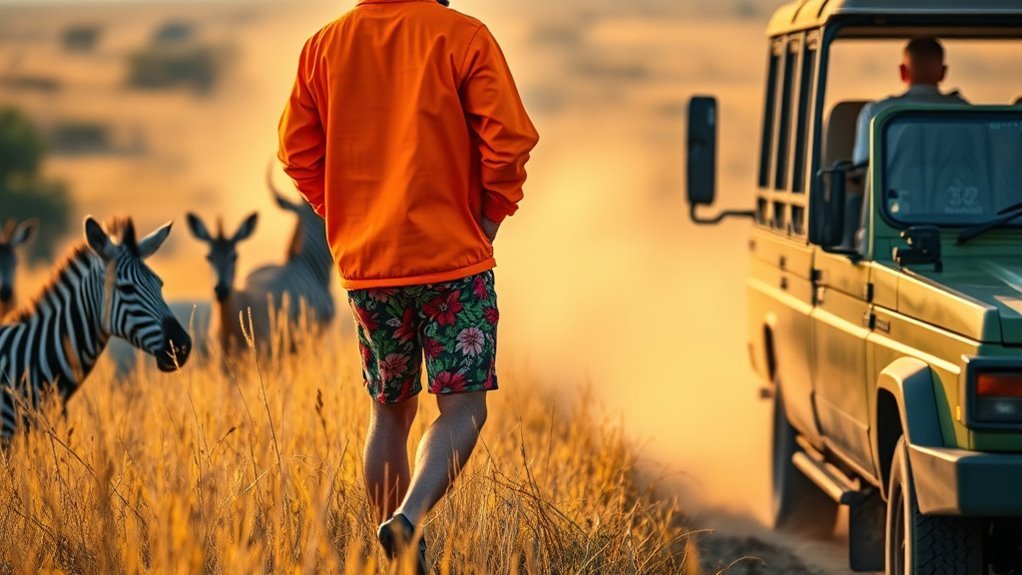
When you’re choosing safari clothes, skip bright colors and loud patterns—animals notice contrast and motion, and vivid hues can startle or attract unwanted attention. You’ll blend better with muted, earthy tones like khaki, olive, tan, and brown, which reduce visibility and help you observe behavior without disturbance.
Avoid shiny jewelry and reflective gear that catches sunlight or camera flashes. Stick to matte fabrics and low-contrast layers that won’t rustle or flash when you move.
Skip Camouflage Prints: Legal and Safety Issues on Safari
Because camouflage is designed to mimic military attire, many reserves and countries ban it or treat it as suspicious, so you should avoid wearing camo prints on safari. You’ll risk misunderstandings with rangers, checkpoints, or local communities, and you might draw unnecessary attention from poachers. Choose neutral, non-patterned clothing that blends with nature without suggesting authority. Below is a quick reference to help you decide:
| Issue | Risk | Action |
|---|---|---|
| Legal bans | Fines, denied entry | Wear plain neutrals |
| Safety confusion | Confrontations | Avoid camo entirely |
| Poacher association | Targeting | Pick non-military styles |
| Ranger clarity | Identification | Use tour-provided vests |
Avoid Bright Jewelry and Shiny Accessories on Safari
You should leave reflective surfaces and shiny accessories at home, since they can catch sunlight and attract unwanted attention from wildlife.
Skip dangling jewelry that can jingle or snag on branches during walks.
Instead, choose matte finishes and low-profile pieces that stay quiet and out of sight.
Avoid Reflective Surfaces
If you want animals to act naturally, leave flashy jewelry and shiny accessories at home — reflective surfaces catch sunlight and can startle or pique the curiosity of wildlife, drawing unwanted attention or changing their behavior.
You should also check clothing hardware, sunglasses, phone screens, and camera lenses for glare. Matte finishes and muted fabrics reduce visibility and help you blend into surroundings.
Wipe screens or cover reflective equipment when approaching animals, and choose non-reflective gear like canvas bags and rubberized straps.
Minimizing shine keeps animals calm and preserves authentic viewing and photography opportunities without disrupting their routines.
Skip Dangling Jewelry
Alongside reducing glare, leave dangling or brightly colored jewelry at home — movement and sparkle draw animals’ attention and can make them uneasy. You’ll want accessories that stay put and don’t clink. Dangling earrings, chains that sway, and bracelets that jingle can distract wildlife and other guests, and they can catch on branches or gear.
Opt for simple, unobtrusive pieces if you must wear any: studs, plain bands, or items tucked beneath clothing. Also consider safety—loose jewelry can snag during hikes or while entering vehicles.
Keep your kit quiet and low-profile to respect animals and stay safe.
Opt For Matte Finishes
When you’re packing for safari, choose matte finishes over glossy metals and bright stones so nothing catches sunlight or animal attention. You’ll want muted metals, matte leather, and fabric accessories that don’t reflect or jingle. Shiny jewelry can spook wildlife and draw heat; keep pieces flat, silent, and neutral. Opt for matte buckles, subdued watches, and matte sunglasses frames. Below is a simple guide to swap flashy items for safer options.
| Replace this | With this |
|---|---|
| Shiny necklace | Leather cord |
| Glittery ring | Matte band |
| Polished watch | Matte finish watch |
| Sparkly bag | Canvas tote |
| Metal buckle | Matte buckle |
Don’t Bring Bright Backpacks or Camera Straps That Spook Animals
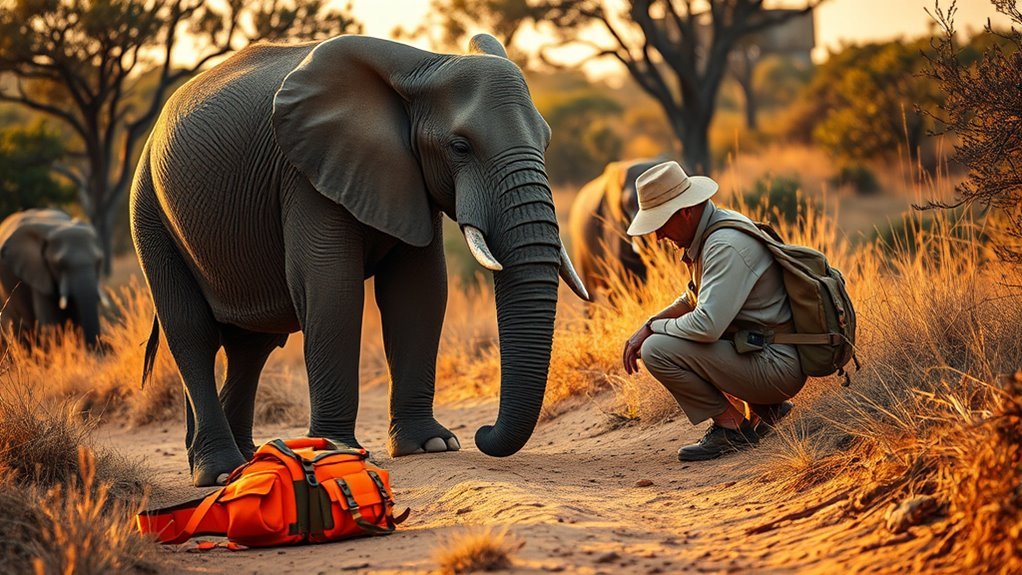
Don’t wear bright backpacks or camera straps that stand out against the landscape, since sudden flashes of color can startle wildlife. Pick muted, earth-toned gear and stow or cover any vivid patches.
Also make sure straps are secured and tucked so they don’t flap or catch an animal’s attention.
Avoid Bright Colors
Because animals notice color the way we notice movement, bright backpacks, camera straps, or neon clothing can draw unwanted attention and change behavior. You should pick muted, earth-toned gear so wildlife stays natural and calm.
Avoid flashy patterns or reflective materials that catch light and eyes. Stick to browns, greens, tans, and grays that blend with the environment. Choose matte finishes and rinse new clothing to reduce sheen.
Keep accessories low-contrast and simple so animals ignore you and you get authentic sightings.
- olive or tan clothing
- matte camera straps
- non-reflective zippers
- muted hats
- brown backpacks
Secure Loose Straps
You’ve already slimmed down colors and shine; now tighten up anything that can flap or flash. Secure straps and tuck dangling bits so they don’t catch wind or attention. Use muted, matte gear and fasten camera straps close to your body. Clip loose ends, stash carabiners, and choose low-profile packs. Animals react to movement and glint; you don’t want a startled herd or a curious predator.
| Issue | Fix | Why it matters |
|---|---|---|
| Flapping straps | Clip/tuck | Movement attracts |
| Shiny buckles | Matte covers | Glint startles |
| Long straps | Shorten | Less noise/motion |
Avoid Pale Green or Blue That Blend Oddly With Terrain
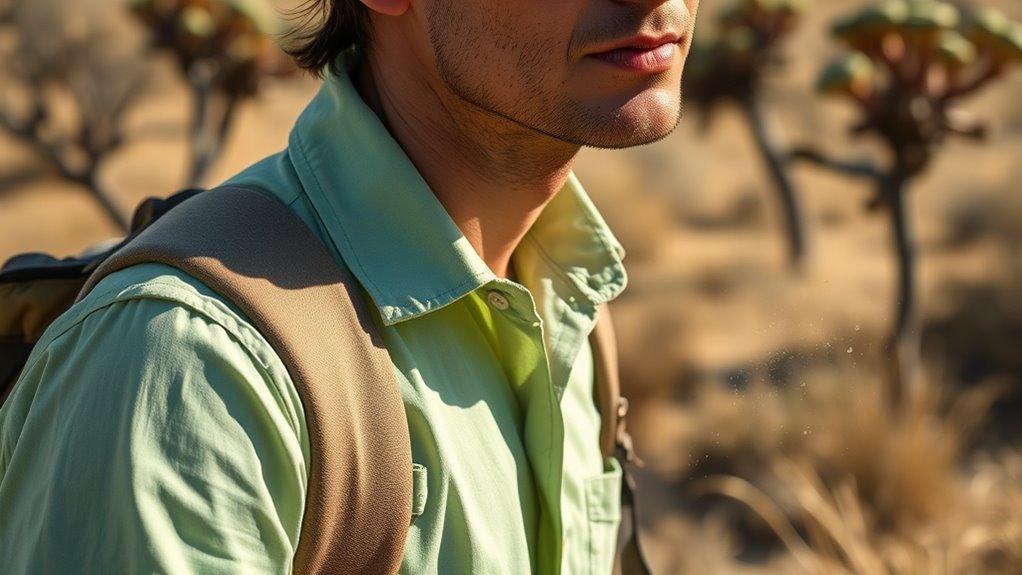
While neutral tones help you disappear into the landscape, pale greens and blues can actually make you stand out by blending with the wrong elements of the terrain; they mimic shadows, sky reflections, or certain vegetation patches and end up creating odd, high-contrast silhouettes that attract attention.
You should choose muted earth tones instead. Pale shades can trick an animal’s eye or a camera’s auto-focus, making you more noticeable. Stick to colors that match soil, dried grass, and bark.
Avoid glossy fabrics that catch light.
- Pale mint shirts
- Sky-blue jackets
- Light aqua hats
- Washed teal scarves
- Faded cyan tees
Don’t Wear Colors Associated With Hunting in Some Regions
Don’t wear bright orange or red that might be mistaken for a hunting target in some regions.
Skip camouflage patterns, since they can signal hunter affiliation or draw unwanted attention.
Also steer clear of hunter greens that blend with hunting gear and could cause confusion.
Avoid Bright Orange And Red
Because bright orange and red are often tied to hunting or danger signals in many safari regions, you should avoid wearing them on game drives. They can alarm animals, draw unwanted attention, and make you stand out against natural tones.
Choose muted, earthy hues instead to blend with grasses and trees, reduce stress on wildlife, and improve your photos. Practical choices keep you safer and more respectful of local protocols.
Pack neutrals, check guidelines from your operator, and swap bold accessories for subtle alternatives before you set out.
- Opt for khaki, olive, and tan
- Skip fluorescent caps and jackets
- Avoid red scarves
- Ditch bright backpacks
- Choose low-contrast shoes
Skip Camouflage Patterns
If you want to stay safe and respectful on safari, skip camouflage clothing—many regions associate those patterns with hunting and may alarm guides, locals, or wildlife. Choose neutral, solid colors instead so you blend naturally without mimicking hunting gear.
Camouflage can create confusion at checkpoints or stir negative reactions in communities that’ve experienced poaching. Guides might ask you to change or cover up, which is awkward and inconvenient.
Opt for breathable fabrics in tans, khakis, greys, or muted blues. That keeps you low-profile, comfortable, and considerate, letting wildlife viewing and cultural interactions remain relaxed and safe.
Steer Clear Of Hunter Greens
When you’re packing for safari, skip hunter greens and deep olive tones that can be mistaken for hunting attire or military fatigues. You’ll want colors that blend with nature without signaling hunting or blending dangerously into restricted uniforms.
Lighter neutrals, khaki, tan, and muted earth tones keep you visible to guides and respectful to local customs. Bright accents help you stand out for safety without disturbing wildlife.
Ask your operator about local color taboos before you leave.
- Choose khaki, beige, or taupe
- Avoid deep greens and olive
- Skip military-style garments
- Use bright scarf or hat accents
- Confirm rules with guides
Don’t Wear Strong Perfumes or Scented Lotions on Safari
Ever wondered why guides warn against strong perfumes on safari? You shouldn’t wear heavy scents because they can attract curious wildlife, confuse animals’ natural behavior, and mask alerts like warning scents from other creatures.
Strong fragrances also interfere with trackers’ ability to read scent trails and can upset fellow guests who prefer a neutral environment. Choose unscented lotions and personal care items instead; they keep you low-profile and respectful of the habitat.
If you need fragrance, opt for a mildly scented item applied sparingly after excursions. Staying scent-neutral helps protect animals, preserves safety, and maintains the wild experience.
Say No to Fragranced Hair Products and Heavy Makeup
Because scented hair sprays, oils, and heavy makeup can carry strong odors and shiny surfaces that disrupt animals and trackers, you should stick to unscented, matte products on safari.
You’ll want low-profile grooming that doesn’t attract bugs, mask natural scents, or reflect sunlight. Keep routines simple: a quick braid or hat, minimal water-based products, and gentle cleansing.
Avoid elaborate hairstyles that need constant touch-ups. Your choices help you blend in, keep wildlife comfortable, and make trackers’ jobs easier.
- Skip fragranced hair mists
- Avoid glossy lipsticks
- Say no to glittery highlighters
- Don’t use heavy oil treatments
- Limit perfume-laden styling creams
What Scent-Free Products to Use Instead?
If you want to stay scent-free on safari, choose products labeled “unscented” or “fragrance-free” and check ingredient lists for hidden perfumes like parfum, essential oils, or botanical extracts.
Pack a mild, fragrance-free soap or body wash, and a hypoallergenic shampoo and conditioner in travel sizes.
Use an aluminum-free, unscented deodorant to reduce skin irritation.
Bring a simple, fragrance-free moisturizer with SPF for sun protection and a gentle lip balm without flavoring.
Opt for fragrance-free detergent sheets or pods to wash small items.
Store products in airtight bags to prevent cross-contamination with scented items.
Avoid Attracting Insects: Skip Pure White Clothing
While bright whites can look crisp, they attract more insects than muted tones, so skip pure white clothing on safari. You’ll want breathable, neutral-colored shirts and pants that don’t draw bugs or glare. Choose fabrics that hide dust and don’t flap loudly; avoid satin or anything shiny.
Roll sleeves or use lightweight layers to balance comfort and protection. Keep clothes clean to reduce odors that attract insects.
- Wear khaki, olive, or tan
- Pick matte, natural fabrics
- Favor long sleeves and pants
- Avoid bright patterns and shiny trims
- Carry a light outer layer for evening
Don’t Rely on Light-Colored Clothing Alone for UV Protection
Although light colors can reflect some sunlight, they don’t provide reliable UV protection on their own. You shouldn’t assume pale shirts or khaki pants block harmful rays; fabric type, weave density, and fit matter more.
Light colors may reflect sunlight, but fabric type, weave and fit—more than color—determine UV protection.
Choose garments labeled with UPF ratings, wear long sleeves and a wide-brim hat, and use sunscreen on exposed skin.
Remember UV still penetrates through thin or stretched fabrics and reflects off sand or water, increasing exposure.
Layering with tightly woven pieces and carrying a lightweight cover-up gives consistent protection without overheating.
Don’t count color alone—plan for tested, purpose-built sun defense.
Avoid Thin Fabrics That Offer No Sun Protection
You might be tempted to pick thin, trendy shirts, but they won’t protect your skin from intense sun on safari.
Prioritize breathable fabrics with a good UPF rating so you stay cool without sacrificing protection.
Choose pieces that balance comfort and sun safety rather than style alone.
Skin Protection Over Style
Because the African sun can be relentless, pick garments that shield your skin instead of showing it off; thin, sheer fabrics may look stylish but offer almost no UV protection. You’ll want durable, tightly woven clothing that reduces sunburn risk and limits exposure.
Prioritize long sleeves, long pants, and a broad-brimmed hat, and layer when necessary for morning chills. Don’t rely on makeup or light scarves for sun defense; they won’t suffice for prolonged exposure.
Use sunscreen on exposed areas and reapply. Consider color and coverage over trends to stay safe and comfortable.
- Long sleeves
- Long pants
- Broad-brimmed hat
- Reapplying sunscreen
- Avoid sheer tops
Choose Breathable UV Fabrics
When the sun’s intense, pick breathable fabrics that block UV rays instead of thin, sheer materials that let harmful light through. They keep you cooler and protected without weighing you down.
You should choose shirts and pants labeled UPF or with tightly woven fibers—cotton blends, lightweight nylon, and performance polyester work well. Long sleeves and collars add coverage without trapping heat if the fabric breathes.
Avoid loosely knit or translucent garments that look light but fail at sun defense. Pack a wide-brim hat and a light UV-blocking layer for peak sun hours, and always prioritize protection over fashion.
Choose Sun-Protective Fabrics Rather Than Cotton-Only
Although cotton feels breathable, it doesn’t block UV rays well, so choose garments made from sun-protective fabrics that offer built-in UPF, quick-drying performance, and durable coverage for long days in harsh sun.
Cotton breathes, but won’t shield you — choose UPF-rated, quick-dry fabrics for durable sun protection and coverage.
You’ll want lightweight blends with certified UPF ratings, tight weaves, and moisture-wicking finishes that keep you cooler and safer. Look for long sleeves, collars, and wide-brim options in technical materials that resist fading and abrasion.
Avoid relying on color alone; UV protection comes from fabric construction. Pack layers you’ll actually wear, and prioritize tested, labeled pieces over cotton-only items that leave you exposed.
- UPF-rated shirts
- Moisture-wicking pants
- Quick-dry hats
- Lightweight sun sleeves
- Packable sun jackets
Skip Cotton-Only for Long Days in Heat and Humidity
If you’ve chosen UPF-rated, quick-dry pieces, don’t pack cotton-only items for days that will be hot and humid. Cotton soaks up sweat, stays damp, and chafes during long game drives or hikes. You’ll feel heavier, colder when a breeze hits, and more prone to irritation or rashes.
Instead, pick moisture-wicking blends or lightweight synthetics that dry fast and ventilate. Save cotton for short, low-activity moments back at camp.
Also consider garments treated for odor control so you stay comfortable on multi-day outings. Prioritize fabrics that manage moisture and movement to keep energy and focus on the safari.
Avoid Heavy, Non-Breathable Fabrics in Hot Climates
Don’t pack heavy, non-breathable fabrics for hot safari days, because they trap heat against your skin and make you overheat. They also hold moisture, increase chafing, and stay wet much longer when you sweat.
Choose lightweight, quick-drying materials instead to stay cooler and more comfortable.
Heavy Fabrics Trap Heat
When the sun’s baking you all day, heavy, non-breathable fabrics will make you hotter and sweatier—so skip thick cottons, wool blends, and heavy denim that trap heat and moisture against your skin. You want lightweight, airy clothing that lets air circulate and sweat evaporate so your body cools naturally.
Heavy fabrics create insulation, hold heat, and increase discomfort during long drives or walks. Choose garments that dry quickly and feel light against your skin to stay alert and comfortable while watching wildlife.
- Thick denim jeans
- Wool sweaters
- Heavy canvas jackets
- Lined pants
- Dense knit scarves
Promote Moisture And Chafing
Because hot, humid conditions make sweat stick around, heavy non-breathable fabrics will trap moisture against your skin and lead to chafing and irritation. You’ll notice friction where fabric rubs—underarms, inner thighs, bra lines—so pick lightweight, breathable materials that wick moisture away.
Avoid rough weaves and seams that dig in when damp. Choose garments with flat seams, smooth fabrics, and ventilation panels to reduce rubbing.
If you’ll be on long walks or in a vehicle for hours, layer thoughtfully so damp inner layers don’t rub against you. Prioritize comfort to prevent sore, inflamed skin on safari.
Slow Drying On Sweat
Hot, humid days will leave heavy, non-breathable fabrics soaking for long stretches, so you’ll want clothes that shed moisture fast. You’ll get chilled when breeze hits damp shirts, attract bugs to wet fabric, and suffer discomfort on long drives or hikes.
Choose lightweight synthetics or merino blends that wick and dry quickly. Avoid cotton, denim, and heavy knits; they trap sweat and stay wet.
Pack a quick-change shirt and a thin, breathable layer for mornings.
- Cotton T-shirts
- Denim jeans
- Heavy flannels
- Thick wool sweaters
- Non-vented rain jackets
Avoid Synthetic Fabrics That Trap Sweat and Cause Chafing
If you wear synthetic fabrics on safari, they’ll trap sweat against your skin and quickly lead to chafing and discomfort. Choose breathable, natural fibers instead—lightweight cotton, linen, or merino wick moisture and reduce friction.
Avoid tight, clingy polyester or nylon that rubs sensitive areas like underarms, inner thighs, and bra lines. Look for loose cuts, flat seams, and tagless designs to minimize irritation during long drives or hikes.
Bring anti-chafe balm and change into dry layers when you can. Prioritize comfort and skin health so you stay focused on wildlife, not rubbing, itchiness, or sore spots.
Don’t Wear Clothes That Dry Slowly in Rainy Seasons
When rain hits, you don’t want heavy fabrics clinging to you and weighing you down. Pick quick-dry materials that shed water and dry fast between showers.
That way you’ll stay comfortable and avoid chilling during wet drives or walks.
Avoid Heavy Fabrics
Because rain can come on fast and linger, avoid heavy fabrics that soak up water and take ages to dry. You’ll get cold, chafed, and weighed down if your clothes stay wet. Pick lightweight layers you can shed, and keep a waterproof shell handy.
Don’t rely on cotton, wool blends, or bulky denim when showers are possible. Wet gear also attracts insects and fosters odor, so manage moisture proactively. Pack a quick-change strategy and a small plastic sack for soggy items so the rest of your kit stays dry.
- Cotton tees
- Heavy denim
- Thick knit sweaters
- Fleece-lined pants
- Wool coats
Choose Quick-Dry Materials
Although sudden downpours are part of safari life, you’ll stay comfortable by choosing quick-dry fabrics that shed moisture fast. Pick synthetics or lightweight wool blends that wick, dry, and resist odor. Avoid cotton and heavy knits that stay damp and chill you when winds pick up. Pack a compact rain shell and quick-dry baselayers for layering. Quick-dry items save weight and keep you active during long game drives or walks.
| Fabric | Benefit |
|---|---|
| Polyester | Dries fast |
| Merino blend | Wicks, odor control |
| Nylon | Lightweight, durable |
| Avoid cotton | Retains water |
Avoid Fabrics That React Poorly to Insecticide Treatments
If you plan to apply or buy insecticide-treated clothing for a safari, check fabric labels and care instructions first so you don’t damage garments or reduce the treatment’s effectiveness.
Some fabrics absorb or shed insecticide, and washing methods can strip treatments. You’ll want durable weaves that hold finish and blends that tolerate heat and gentle detergents.
Fabrics vary in how they hold insecticide—choose durable weaves and blends that withstand heat, gentle detergents, and repeated washings
- Avoid delicate silks and chiffons
- Beware heavily dyed or printed fabrics
- Skip very stretchy synthetics that repel finish
- Don’t choose loosely woven knits that shed treatment
- Prefer tightly woven cotton or poly-cotton blends designed for treatment
Don’t Use Insect-Repellent Clothing Without Checking Local Rules
After you’ve checked fabrics and care labels, also confirm whether insecticide-treated clothing is allowed where you’re traveling. Rules vary by park, reserve, and country — some ban treated garments to protect wildlife, research, or sensitive habitats. Before you pack, contact your operator or park authority, and carry documentation if clothing is treated. If treatments aren’t allowed, choose physical barriers: long sleeves, permethrin-free nets, and topical repellents approved locally. Keep treated and untreated items separated in luggage to avoid contamination.
| Item | Action | Reason |
|---|---|---|
| Treated shirts | Verify permit | Wildlife safety |
| Socks | Label | Avoid cross‑contamination |
| Nets | Pack | Physical protection |
Avoid Flame‑Retardant or Heavily Treated Garments Unless Required
Because flame‑retardant and heavily chemically treated garments can off‑gas, shed residues, and harm sensitive ecosystems, don’t pack them unless a guide or park explicitly requires them for safety. You’ll want breathable, natural fibers that won’t leach chemicals into soil, water, or onto wildlife.
Treated fabrics can irritate your skin, trigger allergic reactions, and complicate laundry with other gear. If a treatment is mandatory, confirm exact specifications and bring only what’s needed. Otherwise, choose simple, untreated clothing and wash items separately after the trip.
- Check park rules before buying treated gear
- Prefer cotton, linen, or wool
- Avoid heavily dyed fabrics
- Wash treated garments separately
- Limit treated items to required pieces
Avoid Noisy Fabrics Like Rustling Nylon or Crinkly Windbreakers
While untreated, breathable fabrics are best for the environment and your skin, you should also think about sound. Noisy materials—rustling nylon, crinkly windbreakers, and some waterproof shells—announce your presence to wildlife and fellow guests.
You’ll startle animals, spoil quiet moments, and reduce photographic opportunities. Choose matte, soft fabrics that move quietly: lightweight cotton, soft microfibre, or soft-shell garments designed to minimize noise.
Test clothing with a few quick movements before trips. If weather demands waterproof layers, pick silent designs or pack a compact, quiet rain poncho.
Keep noises low to respect wildlife and preserve the safari experience.
Skip Flowing Scarves or Loose Garments That Catch on Brush
If you want to move easily through bushveld and stay safe, skip flowing scarves and oversized garments that snag on branches or thorny shrubs. You’ll want fitted, durable layers that won’t trail or catch as you walk, climb, or crouch. Loose fabric can rip, leave you stuck, or attract insects and burrs.
Choose close-cut sleeves, tapered pants, and secure closures. Keep accessories minimal and tucked away. Prepare to tuck scarves into collars or leave them behind.
Practical clothing keeps you agile and reduces risk during close encounters with wildlife or rough terrain.
- Fitted long-sleeve shirts
- Tapered cargo pants
- Secure zip pockets
- Low-profile hats
- Snug gaiters
Avoid Loose Hems and Frills That Snag on Vehicle Rails
Watch the hems on your clothes—loose fabric can catch on vehicle rails when you lean or step in and out.
Don’t wear frills or dangling trims near openings and handrails.
Choosing streamlined, close-fitting edges keeps you safer and less likely to tear clothing.
Loose Hems Risk Snagging
Because safari vehicles have lots of exposed rails and grips, loose hems, long frills, and dangling fabrics easily catch and tear when you climb in or reach out for a better view. You’ll want clothing that stays close to your body and won’t catch on metal or branches. Choose streamlined silhouettes and test movement before outings.
Secure any drawstrings or decorative ties and favor hems that won’t flap when the wind picks up. Think practical: ease of movement, no snags, and quick repairs if needed.
- Tapered pants
- Fitted jackets
- Short hems
- Snug sleeves
- Minimal adornments
Skip Frills Near Rails
You’ve already seen how loose hems and long frills can catch on rails; now focus specifically on skirts, scarves, and tunics that dangle near vehicle edges. When you sit or lean against a jeep rail, dangling fabric can snag, tear, or pull you off balance.
Choose fitted skirts, tucked scarves, and shorter tunics or secure long pieces with clips or knots. Avoid dangling tassels, lace edges, or decorative ribbons that catch on bolts and bars.
Practical choices keep you safe and let you move quickly for a better shot or steady footing. Pack alternatives you can fasten or stow.
Don’t Wear Hooded Jackets That Obscure Hearing and Sight on Drives
If you’re heading out on a game drive, skip hooded jackets—those hoods block your peripheral view and muffle sounds, making it harder to spot and hear wildlife. You want clear sightlines and sharp hearing; a hood creates blind spots and traps noise.
Choose slim, low-profile layers with collars you can fold down. Keep colors muted to avoid startling animals. If wind or drizzle worries you, pack a compact, collar-style rain shell that won’t flap or obscure your ears.
- Maintain unobstructed peripheral vision
- Preserve natural hearing ability
- Avoid fabric that rustles loudly
- Opt for low-profile collars
- Pack compact, non-hood rainwear
Don’t Wear Floppy Hats That Block Peripheral Sight
Don’t wear floppy hats that cut off your peripheral vision, because you need to see movement at the edges to spot wildlife and assess safety.
A wide brim can hide an approaching animal or distract you if the wind flips it up.
Pick a low-profile hat that won’t blow around or block your side view.
Impaired Peripheral Vision
Because safari environments demand constant awareness, avoid floppy hats that obscure your side vision; they can hide sudden animal movement, other vehicles, or guides signaling a hazard. You need clear peripheral sight to read terrain changes, spot distant motion, and notice companions’ gestures.
Choose low-profile caps or hats with stiff brims that keep your field of view open. Lightweight, structured headwear won’t flap into your eyes or cast deep side shadows.
Remember that compromised side vision delays reactions and increases risk. Prioritize designs that balance sun protection with unobstructed sight so you stay alert and responsive.
- Low-profile caps
- Stiff-brim hats
- Adjustable fit
- Neutral colors
- Lightweight materials
Safety Hazard For Spotting
One simple change—ditching floppy hats—can make spotting wildlife far easier and safer. When you’re in a vehicle or on foot, wide, floppy brims obscure side vision and create blind spots where movement goes unnoticed. That delay can mean missing a subtle twitch, a sneaking predator, or a warning signal from nearby animals.
Choose low-profile caps or brimmed hats with firm structure that keep your peripheral field open. You’ll react faster, communicate better with guides and companions, and reduce the risk of startling wildlife. Prioritize unobstructed sight so you don’t compromise safety for style.
Wind And Movement Issues
Floppy hats don’t just block side vision—they also billow and flap in windy conditions, creating movement that draws attention from nearby animals and distracts you and your group. You want gear that stays put and keeps your sightlines clear.
Choose snug hats or caps with chin straps, or skip wide brims when winds pick up. You’ll avoid startling wildlife and missing subtle movements.
Secure clothing and low-profile accessories help maintain a steady silhouette and improve safety for you and your companions.
- Use a structured cap with chin strap
- Avoid loose scarves and dangling jewelry
- Opt for fitted jackets
- Secure eyewear and binoculars
- Choose matte, non-reflective fabrics
Avoid Unlined Hats That Offer Poor Sun Protection
If you plan to spend long hours in the sun, skip unlined hats—the thin brims and single-layer crowns let harmful UV through and offer little sweat wicking or structure. You’ll want a hat with a firm brim, moisture-wicking sweatband, and UPF-rated lining to protect your face, neck, and scalp. Lightweight, breathable materials with a chin cord keep the hat on during bumpy rides. Inspect stitching and brim stiffness before buying. Replace floppy, faded hats that no longer block light. Below is a quick comparison to help you choose wisely:
| Feature | Unlined Hat | Lined/UPF Hat |
|---|---|---|
| Sunblock | Poor | Strong |
| Comfort | Low | High |
| Durability | Low | High |
Avoid Sunglasses That Reduce Your Field of Vision at Dusk
When light starts to fade, keep your sunglasses off so you don’t lose peripheral detail. At dusk your eyes need full input to spot movement. Bulky frames, mirrored lenses, or deep wraparounds can hide shadows and subtle motion.
Switch to clear or lightly tinted lenses, or remove shades entirely during twilight drives and walks. You’ll react faster to animals and obstacles, and your depth perception will improve.
Consider low-profile frames if you must wear glasses.
- Avoid thick rims
- Skip mirrored lenses at dusk
- Ditch deep wraparounds
- Choose light tints or clears
- Remove glasses in low light
Skip Open-Toed Shoes and Sandals on Safari Drives and Walks
Because safari terrain can be unpredictable, don’t wear open-toed shoes or sandals on drives or walks—you need closed, sturdy footwear to protect your feet from thorns, insects, hot ground, and sudden braking.
Choose low-cut hiking shoes or lightweight boots with good grip and ankle support; they’ll keep dirt, bites, and mud out while letting you move quietly.
Slip-ons and flimsy sandals offer no protection during quick disembarks or guided bush walks.
Clean, neutral-colored shoes reduce scent and don’t attract attention.
Pack moisture-wicking socks, break shoes in before travel, and check soles for durability so your feet stay safe and comfortable.
Don’t Wear High Heels or Formal Footwear in Lodges and Camps
Although lodges and camps can feel dressy, don’t pack high heels or formal footwear—you’ll find them impractical and unsafe on uneven paths, wooden walkways, and grassy areas. You’ll want shoes that let you move confidently between dining areas, verandas, and paths without risking twisted ankles or damaged heels.
Choose sturdy, comfortable footwear that’s easy to slip on after a day outdoors. Avoid anything fragile, slippery, or noisy. Consider practicality over fashion for evening events; you can still look neat without formal shoes.
- Stability over style
- Low-profile soles
- Easy to clean
- Quiet on wooden decks
- Comfortable for short walks
Avoid Worn-Out Shoes Lacking Ankle Support
You’ve chosen sensible, stable shoes for camp—now make sure they’re not past their prime. Old soles lose grip, stitching unravels, and cushioning compresses, increasing slip and fatigue on uneven trails.
You’ll want firm ankle support for rocky tracks, sudden turns, and stepping off game-view paths; low-cut, worn shoes can let your foot twist.
Inspect soles, heels, and lace integrity before travel, and replace shoes showing midsole cracks or severe tread wear.
Break in new, supportive boots on local walks to avoid blisters.
Proper footwear keeps you steady, comfortable, and ready for whatever the bush presents.
Don’t Wear Expensive Tech or Cameras Openly Where Theft Is a Concern
If you’re carrying high-end gadgets or a professional camera, keep them out of sight in areas where theft is a known risk. You’ll want discreet, secure storage—padded interior pockets, lockable compartments, or a concealed camera insert inside a rugged bag.
Don’t sling a visible camera strap; don’t leave phones on tables while you photograph; don’t parade expensive lenses at roadside stops. Stay aware of your surroundings and minimize flashy tech use in towns or crowded lodges.
When you do shoot, use quick-access pouches and gather gear back into secure storage immediately.
- Use a lockable camera bag
- Hide devices under clothing
- Avoid flashy straps
- Keep lenses stored
- Use quick-access pouches
Avoid Unprotected Jewelry That Can Get Lost on Walks
Don’t wear loose rings or bracelets on bush walks, since they can snag on branches or slip off during movement.
You’ll want to swap flashy pieces for pared-back, secure items that fasten with clasps or straps.
Consider wrist straps or zippered pouches for small valuables so they stay put.
Loose Jewelry Risks
While a simple bracelet or dangling earring can feel like a final touch, loose jewelry easily slips off during hikes, game drives, or when leaning over viewing rails—so leave unprotected pieces at camp.
You’ll risk losing sentimental or expensive items in tall grass, mud, or water, and retrieval can be impossible.
Dangling pieces can snag on branches or seat edges, creating safety hazards.
Lightweight rings slip in heat or when washing hands.
Keep accessories minimal and secure to avoid disappointment and danger.
- bracelets that slide off wrists
- long necklaces that catch
- dangling earrings
- thin stacking rings
- loose anklets
Secure With Straps
Because you’ll be moving through uneven terrain and tight viewing spaces, secure jewelry with straps or convertibles so pieces stay put on walks. You’ll want low-profile options: watch bands that lock, necklaces with safety clasps, and convertible bracelets that clip to bags. Fasten rings with silicone inserts if they’re loose. Avoid dangly pieces that catch on branches or binocular straps. Check closures before each walk and stash spare links or repair tape in your day pack. Small choices prevent loss and distraction so you can focus on wildlife.
| Item | Tip |
|---|---|
| Watch | Lock band |
| Necklace | Safety clasp |
| Bracelet | Clip-on |
| Ring | Silicone insert |
| Repair | Carry tape |
Don’t Wear Clothing With Exposed Pockets That Collect Ticks
Where will ticks hide if not in the little folds of your clothing? You should avoid exposed, baggy pockets that trap brush, seeds, and ticks.
Choose flush, zippered, or buttoned pockets and smooth fabrics that let you brush off debris.
Tuck pant cuffs into socks and keep sleeves snug to limit entry points.
Check pockets and seams each evening and run hands over gear after walking through tall grass.
- Choose zippered pockets
- Avoid flap pockets with gaps
- Use smooth, close-weave fabrics
- Tuck and secure cuffs
- Inspect seams and gear daily
Skip Pale/Black Extremes That Attract Insects or Absorb Heat
Don’t wear bright white, since it makes you stand out to insects and shows dirt fast.
You should also steer clear of black, which soaks up heat and can make you overheat on long drives or walks.
Choose mid-tone, muted colors instead to stay cooler and less noticeable.
Avoid Bright White
If you want to blend in and stay comfortable, skip bright white clothing on safari. White stands out against the landscape, reflects harsh light into your eyes, and shows dirt instantly.
You want hues that hide stains, reduce glare, and keep animals from noticing sudden contrasts.
- Choose muted earth tones like khaki, olive, or tan
- Prefer breathable fabrics with matte finishes
- Avoid white shirts, hats, or socks that catch attention
- Pack a few darker neutrals for cloudy days or dusk
- Test shirts for visible dust and sun reflection before the trip
Steer Clear Of Black
Because black soaks up heat and can draw insects, you’ll want to avoid dark extremes on safari. Don’t wear jet-black shirts, pants, or heavy jackets that make you overheat in direct sun and trap body warmth during midday drives.
Dark fabrics also attract tsetse flies and other biting insects more than muted colors. Choose neutral, earth-toned clothing in breathable fabrics—khaki, olive, tan—that reflect light and keep you cooler.
If you bring darker pieces for evening, pick lightweight layers and insect-repellent-treated fabrics. That way you stay comfortable, less noticeable to wildlife, and better protected from pests.
Avoid Black and Dark Shades That Hide Ticks and Absorb Heat
While you might think black and deep hues look smart and hide dirt, they actually make you hotter and conceal ticks against your skin or clothing. Choose lighter, muted colors instead so ticks stand out and heat absorption stays low.
You’ll find beiges, olive, and khaki reflect sun, reveal tiny insects, and blend with the landscape without attracting heat. Lighter tones also make it easier to spot blood or stains quickly.
Avoid glossy or saturated fabrics that trap heat. Pack breathable, moisture-wicking garments in pale shades and inspect seams and cuffs regularly for hitchhiking pests.
- Wear beige or khaki
- Choose olive or muted greens
- Avoid glossy finishes
- Pick breathable fabrics
- Inspect cuffs often
Don’t Bring Delicate Fabrics That Can’t Be Cleaned of Dust
Don’t pack silk, linen blends, or other fabrics that stain easily—you’ll be surrounded by dust, mud, and sweat.
If a material needs special care or can’t handle a good scrub, it won’t survive the trip.
Choose durable, washable pieces so you don’t end up with ruined clothes or high cleaning bills.
Fabrics That Stain Easily
If you’re heading out on safari, skip delicate fabrics like silk, lace, and rayon that stain easily and won’t stand up to dust, sweat, or on-the-trail washing. You’ll want materials that hide marks and clean up quickly, so avoid items that show water, blood, fruit, or oil stains.
Choose midweight cotton blends, treated synthetics, or wool blends that resist visible spots and can be hand-washed. Pack a small stain-removal stick and stain-proofing spray for emergencies.
Prioritize practicality over fashion — you’ll appreciate fabrics that keep you looking presentable after a long day in the bush.
- Cotton sateen
- White linen
- Silk scarves
- Delicate prints
- Sheer tops
Hard-To-Clean Materials
Because dust and grit are constant companions on safari, you should skip hard-to-clean materials like velvet, suede, heavy beading, and any fabric with deep pile that traps particles and grime. You’ll want breathable, smooth fabrics that shake off dust, dry quickly, and tolerate spot cleaning. Leave fragile embellishments and textured knits at home—they snag, absorb odors, and won’t survive dusty game drives. Pack lightweight cotton, linen blends, or technical synthetics instead. Quick washes and rinse-outs are lifesavers when water’s limited. Check labels for easy-care symbols so you won’t be stuck with garments you can’t realistically clean.
| Material | Problem |
|---|---|
| Velvet | Traps dust |
| Suede | Hard to clean |
| Heavy beading | Snags, fragile |
| Deep pile | Holds grit |
Avoid Fabrics That Can’t Be Mended in the Field
When you’re choosing safari clothing, pick fabrics you can repair on the trail—think simple stitches, duct tape fixes, or safety pins—so a small tear doesn’t end your trip. You’ll want durable, plain-weave materials that tolerate quick repairs and don’t fray into unusable messes.
Avoid delicate knits, bonded seams, glued-on trims, and specialty waterproof laminates that need machines. Pack a tiny repair kit and test fabric recovery before you leave.
Knowing you can patch shorts, sleeves, or a pack strap keeps you comfortable and focused on wildlife, not wardrobe failures.
- Lightweight nylon
- Canvas or duck cloth
- Cotton twill
- Ripstop blends
- Polyester blends
Don’t Wear Heavy Layers That Limit Mobility in Emergencies
Although bulky layers can feel reassuring in changing weather, they can seriously slow you down in an emergency. You need clothing that lets you move, climb, and react without snagging or restricting your range.
Thick parkas, heavy wool coats, or layered puffers add weight, trap heat, and make bending or sprinting awkward. Choose lightweight, breathable outerwear with articulated seams and stretch panels so you can crouch, scramble, or dash quickly.
Keep fastenings simple and avoid long trailing hems or excessive bulk around shoulders and hips. In the wild, agility and quick responses matter more than extra insulation.
Avoid Garments That Complicate Bathroom Breaks in Remote Camps
When you’re in a remote camp, clothes with hard-to-undo buttons can turn a quick bathroom stop into a frustrating ordeal.
Skip long, tight separates that make hopping over bushes or squatting awkward and slow.
Choose simple, easy-to-manage pieces so nature breaks stay quick and stress-free.
Hard-To-Undo Buttons
If you’re headed to a bush camp, skip clothes with tiny, fiddly buttons or layers of snaps—you’re likely to be squatting behind a bush with limited light and will want fast, foolproof closures. You’ll appreciate zippers, magnetic snaps, or simple toggles that open quickly with one hand. Test closures before you leave: practice in low light and with gloves if you plan to wear them. Avoid decorative buttons that look tricky. Choose garments designed for practicality over detail.
Comfort and speed make nighttime relief less stressful and more hygienic.
- Tiny shirt buttons
- Multiple snap plackets
- Delicate decorative closures
- Tight button cuffs
- Back-only button tops
Long, Tight Separates
Because you’ll often be squatting behind bushes or using basic pit latrines, skip long, tight skirts, skinny jeans, and form-fitting jumpsuits that make quick bathroom breaks impossible—choose looser, shorter, or easily adjustable pieces instead.
Prioritize practical bottoms like convertible pants, knee-length skirts with side slits, or relaxed shorts with secure pockets. Elastic waists, drawstrings, and simple fastenings save time and dignity when facilities are primitive.
Avoid fabrics that cling when damp or tear on brush. You’ll appreciate breathable, quick-dry materials and layers that you can remove or tie around the waist.
Comfort and accessibility trump fashion on safari.
Don’t Pack Single-Purpose Novelty Safari Outfits: Choose Versatile Pieces
Although that novelty pith helmet or zebra-print jumpsuit might get laughs at a party, don’t bring single-purpose safari outfits that you’ll wear once and toss aside. You want garments that work for game drives, lodge dinners, and unexpected hikes. Pick neutral colors, quick-dry fabrics, and layers that mix easily. Limit bulky specialty pieces; they eat space and won’t earn their keep.
Versatile items let you adapt to dust, heat, and mosquitos without fuss.
- Neutral long-sleeve shirts for sun and bugs
- Convertible pants (zip-off legs)
- Lightweight, packable jacket
- Multi-use scarf or buff
- Comfortable, quick-dry shoes
Avoid Clothing With Loud Logos or Political Slogans
When you’re packing for safari, skip shirts and hats plastered with big logos, political slogans, or provocative messages—they can distract guides, upset locals, and make you an unintended target.
You’ll want neutral, unobtrusive clothing that blends with the environment and minimizes attention. Bold branding or charged statements can complicate interactions, create awkward questions, or be misread in sensitive regions.
Opt for plain, earth-toned pieces that are functional and respectful. If you must wear branded items, choose small, understated logos.
Prioritize comfort, durability, and cultural sensitivity so your attire supports a smooth, safe wildlife experience.
Don’t Bring Unfamiliar Cultural Costumes Without Local Guidance
If you’re tempted to pack a traditional-looking costume for photos or parties, don’t—unless you’ve checked with local hosts or cultural experts first. You might unknowingly offend or misrepresent sacred items, symbols, or attire.
Respectful travel means asking before wearing anything tied to identity, ritual, or history. If locals invite you to participate, follow their guidance, wear what they provide, and learn the meaning.
When in doubt, choose neutral, modest clothing that blends with the environment and avoids cultural appropriation.
- Ask hosts or guides before wearing traditional garments
- Respect sacred symbols and rituals
- Accept local guidance and provided attire
- Avoid imitation of ceremonial dress
- Prioritize modest, neutral options
Avoid Bright Swimwear at Lodges Near Communities
Because bright swimwear can draw attention and feel out of place at lodges near local communities, pick subdued colors and simple patterns instead. You’ll blend better with muted surroundings and show respect for neighbors who may value modesty.
Choose navy, olive, tan or soft prints that don’t contrast sharply with natural tones. Keep logos and flashy embellishments minimal.
If pools are visible from nearby homes or shared spaces, consider a rash guard or lightweight coverup when moving around.
Neutral swimwear is practical, easier to wash, and less likely to spark curiosity or discomfort among residents and fellow guests.
Don’t Wear Revealing Clothing That Offends Local Customs
Although you’re on vacation, don’t assume local dress norms won’t matter—wearing revealing clothing can offend residents, make you a target for unwanted attention, or limit your access to certain sites. You should choose respectful, modest garments that match local expectations.
Lightweight layers, longer hemlines, and covered shoulders keep you comfortable without drawing criticism. Follow host guidance at villages, lodges, and cultural sites, and ask if you’re unsure.
Dressing thoughtfully shows respect, reduces conflict, and helps you blend in. Pack versatile pieces you can add or remove as situations require.
- Cover shoulders and knees
- Avoid sheer fabrics
- Skip low-cut tops
- Use scarves for quick coverage
- Follow local advice
Avoid Patterned Camouflage That Confuses Local Trackers
When you wear patterned camouflage, you can unintentionally hinder local trackers and guides who rely on clear animal and human signs. Such prints break up silhouettes and create visual noise that makes spoor harder to read.
Don’t wear disruptive camo patterns that mimic foliage or shadow—stick to solid, muted tones that blend without breaking edges. Guides need to distinguish your shape from animal tracks, nests, and droppings at a glance.
Bright or busy prints also spook wildlife or mask subtle movements. Choose plain khaki, olive, or tan clothing so trackers can read the landscape and keep your group safe and efficient.
Don’t Wear Earbuds or Headphones During Guided Walks
If you wear earbuds or headphones on a guided walk, you cut yourself off from the guide’s instructions and the subtle cues of nearby wildlife. You’ll miss whispered warnings, soft calls, and rustles that signal movement. Keep ears free to hear directions, safety alerts, and the ecosystem’s sounds.
Keep your ears free on guided walks — stay alert to the guide, wildlife sounds, and safety cues.
- Stay alert to verbal commands
- Hear animal vocalizations and warning cues
- Maintain group cohesion and safety
- Respect the guide’s real-time tracking
- Avoid startling wildlife with unexpected noises
Leave personal audio devices in your bag or vehicle. You’ll be safer, more present, and better able to experience the safari.
Avoid Sunglasses, Straps, or Gear That Obstruct Natural Awareness
Because your senses are your best tools on a safari, skip sunglasses, dangling straps, or bulky gear that block your view, catch on branches, or distract you from subtle sounds and movements. You need unobstructed sight and hearing to spot movement, read animal behavior, and follow your guide. Choose low-profile binoculars, secure pockets, and muted hats. Fasten straps close to your body and avoid shiny or jangly accessories. Stay light and deliberate so you won’t miss a rustle or a glance.
| Item | Why avoid |
|---|---|
| Sunglasses | Hide eye direction |
| Dangling straps | Catch on brush |
| Bulky packs | Limit movement |
| Jangly gear | Mask sounds |
Frequently Asked Questions
Can I Wear Bright Athletic Shoes on Game Drives?
You shouldn’t wear bright athletic shoes on game drives; they’ll draw attention, scare wildlife, and contrast with neutral surroundings. Stick to muted, sturdy shoes that won’t squeak, support walking, and blend into the bush for safety.
Are Moisture‑Wicking Base Layers Safe With Insecticide Treatments?
Yes — you can safely wear moisture‑wicking base layers treated with insecticide; they’ll help repel bugs while keeping you dry. Make sure treatments are certified, follow care instructions, and avoid direct skin contact if you’re unusually sensitive.
Is It Okay to Use Scented Sunscreen on Short Safaris?
You shouldn’t—scented sunscreen can attract insects and wildlife, so pick unscented, broad‑spectrum SPF instead. You’ll still protect your skin while reducing attention from bugs or curious animals on short safaris and in camp.
Can I Pack Dressy Eveningwear for Lodge Dinners?
Yes — you can pack dressy eveningwear for lodge dinners, but keep it modest, comfortable, and neutral-colored; lodges vary, so check dress codes, avoid bright or noisy fabrics, and bring adaptable layers for cool evenings and insect protection.
Should Toddlers Wear Patterned or Character Clothing on Safari?
You shouldn’t dress toddlers in bold patterns or character prints on safari; they’ll attract insects and attention from wildlife, and bright designs can disrupt camouflage. Stick to muted, solid neutrals that blend with the environment for safety.
Conclusion
On safari, you’ll want practical, respectful choices that keep you safe and sensitive to wildlife and local customs. Don’t wear bright colors, flashy patterns, camouflage, shiny jewelry, or loud gear that startles animals or causes legal trouble. Avoid revealing clothes, earbuds, and anything that blocks your awareness—sunglasses straps, flashy camera straps, or bright backpacks can all be problematic. Stick to muted, functional items so you’re comfortable, unseen, and fully present on every game drive and walk.