What Luggage to Take on Safari
Pick a soft-sided duffel under 20–25 kg with reinforced seams, sealed zippers and internal pouches so you can compress it into jeeps and light aircraft. Choose durable, water‑resistant fabrics and comfortable grab handles; use packing cubes and dry bags for organization and dust protection. Bring a small carry pack for daily game drives and pad camera gear separately. Follow charter weight limits and label everything—keep going to get gear-specific tips, fixes and packing layouts.
Quick Answer: Which Luggage to Pick for Your Safari
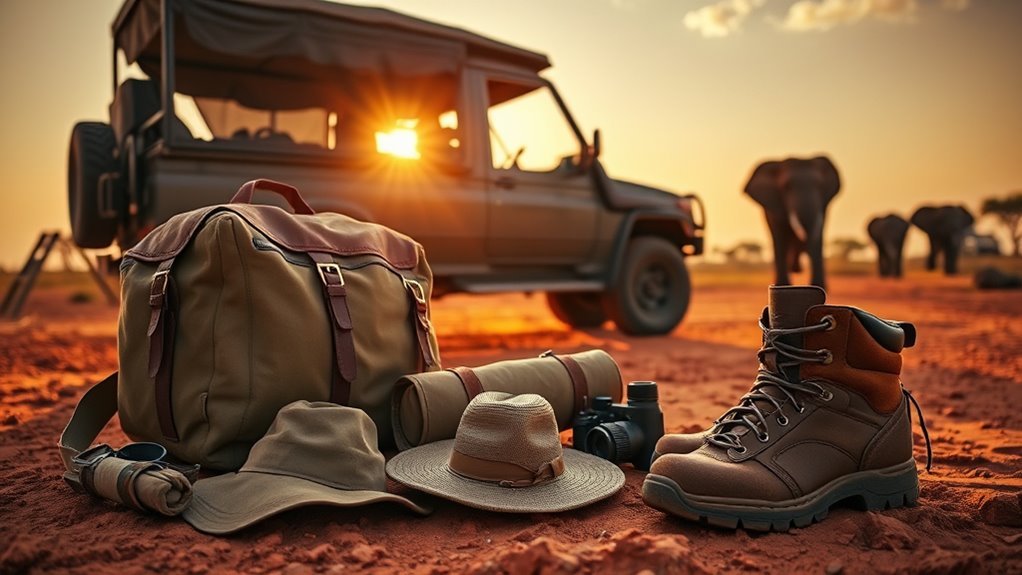
If you want a hassle-free safari, pick durable, compact luggage that’s easy to stow and handle on small planes and game drives. Choose a soft-sided duffel or a rugged carry-on spinner under airline and charter limits; they compress into vehicle compartments and won’t snag.
Use a medium-sized duffel for checked gear and a small daypack for excursions. Prioritize waterproof or water-resistant fabrics, reinforced handles, and secure zippers.
Pack cubes and a dry bag for organization and dust protection. Keep valuables and essentials in your daypack, and label all bags with your contact info for smooth transfers.
Why Safari Luggage Differs From Regular Travel Bags
You’ll want luggage built to keep out dust, shed rain, and survive rough conditions rather than the softer bags you use for city travel.
Think about size and shape that fit safari vehicles and let you move quickly at camps or checkpoints.
Also choose designs that minimize wildlife attraction and secure gear against curious animals.
Dust And Weather Protection
Because safaris throw dust, heat, and sudden storms at your gear, luggage designed for them seals out grit and sheds water where regular travel bags often fail. You’ll want sealed zippers, tarp-like fabrics, and reinforced seams so dust won’t creep into clothing or electronics. Waterproof rain covers and internal dry bags protect essentials during downpours. Choose muted colors to hide dust and UV-resistant materials to prevent sun damage. Regular bags can let grit abrade hardware and fabric. Invest in proactive protection so you’re packing less for repairs and more for the experience.
| Feature | Benefit |
|---|---|
| Sealed zippers | Keeps dust out |
| Waterproof fabric | Sheds rain |
| Reinforced seams | Prevents splits |
| Dry bags | Protects electronics |
| UV resistance | Stops fading |
Mobility And Vehicle Constraints
Dust- and weather-proofing only covers part of the challenge; how you move your gear on safari shapes the rest.
You’ll pack for tight vehicle storage, low roof racks, and limited trunk space, so choose soft-sided duffels that compress and tuck under seats. Keep essentials in an easily reachable daypack for game drives and quick stops.
Balance weight—vehicles have strict load limits and uneven terrain makes heavy bags awkward to lift. Use clear packing cubes so you can pull items fast without unpacking everything.
Secure straps and labeled bags speed transfers between vehicles or lodges.
Wildlife Safety Considerations
How should your luggage behave when wild animals are nearby? Your bags should be quiet, compact, and secured—no dangling straps, no loose zippers clapping in the wind. Choose muted colors and sturdy materials that won’t attract attention or scatter contents if tossed.
Keep food sealed and stored away from sleeping and vehicle areas to avoid curious noses. Use locks or clips to deter wildlife and local helpers from rummaging.
Pack essential scent-proof pouches for toiletries and laundry. Stow gear low in the vehicle and fasten everything before engine-off. These choices reduce risk and keep animals wild, not drawn to you.
Choose Luggage by Safari Type: Lodge, Mobile Camp, or Fly‑In
Think about the type of safari you’re booking before you pack. For lodge safaris, you can bring bulkier bags and creature comforts.
Mobile camps call for compact, easy-to-carry luggage.
On fly-in safaris, you’ll need to stick to strict weight and size limits.
Lodge Safaris: Packed Comfort
Because lodge safaris return you each evening to comfortable rooms and reliable services, you can travel lighter and focus on neat, organized luggage that protects gear and looks tidy in a hotel setting.
Choose a medium rolling suitcase or duffel with internal dividers plus a small daypack for drives and walks.
Pack clothing in packing cubes, include a lightweight waterproof jacket, and bring smart-casual outfits for dining.
Protect optics in a padded case and carry electronics in a shockproof organizer.
Leave bulky expedition gear behind; laundry services usually save space.
Keep valuables in a discreet, lockable bag.
Mobile Camps: Travel Light
Mobile camps move with the season and the terrain, so you’ll want the lightest, most compact luggage that still protects essentials. Choose a soft duffel or rollover bag under 20–25 kg, use packing cubes, and favor quick-dry clothing. Keep valuables in a small daypack and a waterproof pouch. Limit shoes to one sturdy pair and lightweight sandals. Pack garments that layer and compress.
| Item | Why |
|---|---|
| Soft duffel | Flexible, fits tents |
| Packing cubes | Organize, compress |
| Daypack | Daily game drives |
| Waterproof pouch | Protect documents |
Travel lean, prioritize durability and accessibility.
Fly‑In Safaris: Weight Limits
Fly‑in safaris usually impose strict luggage limits—often 15–20 kg (33–44 lb) per person—so you’ll need to choose compact, lightweight bags and pack only essentials. Prioritize a soft duffel or small wheeled bag under the carrier’s size and weight rules; hard suitcases get denied.
Weigh your packed bag at home and redistribute items into carry‑on if allowed. Bring versatile clothing, one warm layer for early drives, quick‑dry fabrics, toiletries in travel sizes, and minimal camera gear with padded protection.
Leave nonessentials and heavy books at home. Confirm airline allowances, fees, and strict prohibited items before departure.
Key Features to Look for in Safari Luggage
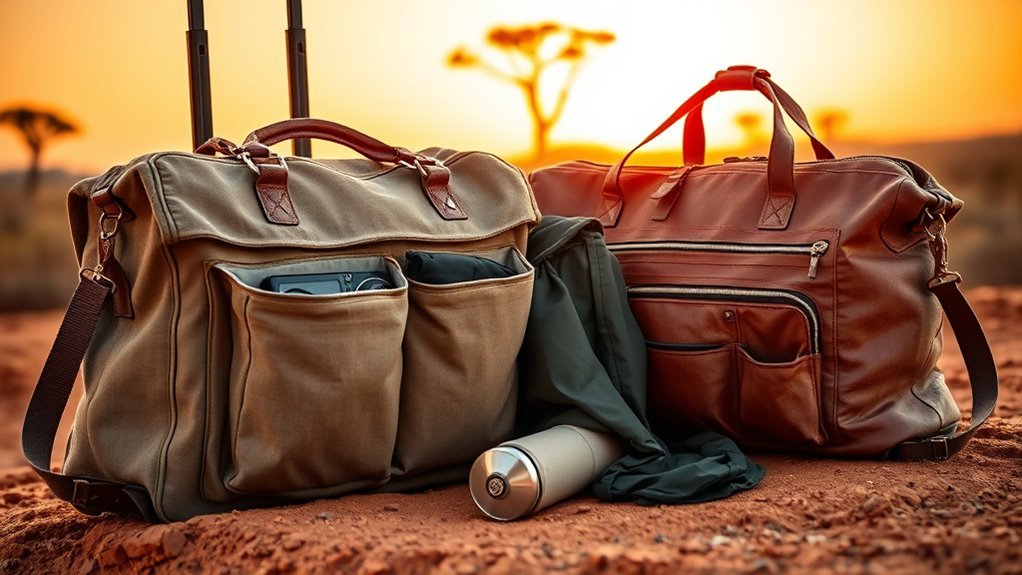
When you pick safari luggage, focus on durability, organization, and ease of handling so your gear stays protected and accessible in rough conditions. Choose tough materials, reinforced seams, and sturdy zippers or closures to withstand dust, bumps, and sun.
Look for practical organization: separate compartments, internal dividers, and external pockets for quick access to documents, sunscreen, and camera gear.
Seek practical organization—separate compartments, internal dividers, and external pockets for easy access to documents, sunscreen, and camera gear.
Prioritize comfortable carry options—padded straps, grab handles, and wheels suited to uneven surfaces.
Check for lockable features and water-resistant coatings to protect electronics and clothing.
Opt for a size that fits vehicle and airline constraints without overpacking.
Soft Duffel vs Hard Case : Which Is Best?
When you’re choosing between a soft duffel and a hard case, think about durability and protection—hard cases shield fragile gear better, while duffels resist crushing and tear differently.
Also weigh packability and weight: duffels compress to fit tight spaces and usually weigh less, but hard cases organize gear and withstand rough handling.
Decide which trade-offs match your safari gear and travel style.
Durability And Protection
Which should you trust to survive the bumps and dust of a safari: a soft duffel or a hard case? You’ll weigh abrasion, impact resistance, and weather sealing.
Hard cases resist crushing, shield fragile gear, and shrug off kicking rocks or rough vehicle loading. They often seal better against dust and sudden rain.
Soft duffels flex, absorb shocks differently, and can be patched; they tolerate tight fits and rough handling but offer less rigid protection for optics or electronics.
Choose based on your gear’s fragility: if you carry cameras or delicate items, pick a hard case; for rugged clothes, a duffel can suffice.
Packability And Weight
If you need to squeeze gear into tight vehicle trunks or carry it over uneven trails, a soft duffel usually wins on packability and weight. You’ll fit odd shapes, compress layers, and lift lighter loads; soft bags tuck under seats and into rooftops. Hard cases protect fragile items better but add bulk and heft, making transfers tougher. Choose based on transport type: frequent flights and bumpy roads favor soft duffels; if you pack optics or fragile gear and can handle weight, pick a hard case.
| Soft Duffel | Hard Case |
|---|---|
| Lightweight, compressible | Rigid, heavier |
| Easier to stow | Superior protection |
| Better for cramped vehicles | Best for fragile gear |
Why Convertible Duffels With Wheels Are So Popular
Because they blend flexibility with ease, convertible duffels with wheels have become a go-to for safari travelers who need gear that adapts to rough trails, small planes, and hotel transfers.
You’ll appreciate the roomy main compartment for clothes and binoculars, plus external pockets for quick access to documents and sunscreen.
When terrain gets tricky, you’ll switch to shoulder straps and carry hands-free.
Wheels spare your shoulders during long transfers, while sturdy materials resist dust and rough handling.
Choose one with a reinforced base, lockable zippers, and compression straps so your kit stays organized, protected, and ready for every outing.
When a Small Carry‑On Backpack Doubles as a Day Pack
Choose a small carry-on backpack that packs-it twice: roomy enough for your flight essentials but organized so it transforms into a slim day pack for game drives and walks.
Make sure the straps and back panel are comfortable for all-day wear, since you’ll be carrying it from lodge to lookout points.
With the right fit and compartments, you won’t need a separate bag for daytime outings.
Pack-It Twice Functionality
When you zip down the carry-on to hand over the checked bag and still have everything you need for game drives, that same small backpack becomes your go-anywhere day pack—light, organized, and ready for hikes, village visits, or an impromptu boat trip.
Pack-it twice means pre-plan compartments: toiletries, electronics, and a lightweight layer in main pocket; snacks, camera, and sunscreen in quick-access pockets. Use removable pouches for transferability so you can extract a day kit without unpacking the whole bag.
Keep weight balanced and essentials visible. You’ll move faster at checkpoints and enjoy hassle-free progressions between vehicles and excursions.
Comfort For All-Day
If you’ll be carrying your small carry‑on as a day pack from dawn game drives to late‑afternoon walks, prioritize ergonomic support. Choose a pack with padded, adjustable shoulder straps, a ventilated back panel, and a hip belt to transfer weight.
Keep load light: water, sunscreen, binoculars, a light jacket, and camera gear in organized compartments. Use compression straps and removable pouches to balance weight and access.
Test fit with typical contents before travel and tweak strap tension frequently during long days. Opt for durable, water‑resistant fabrics and smooth zippers so comfort doesn’t suffer from gear failure.
Picking Luggage Size for Scheduled Flights and Charters
Because airlines and charters set strict size and weight limits, you’ll need to match your luggage to the service you’ll use. Compare the published allowances for your scheduled carrier and any charter operator.
Scheduled flights often permit larger checked bags, while charters typically restrict both size and weight per piece.
Choose a durable, lightweight duffel or soft-sided bag that compresses if limits tighten. Keep essentials and fragile gear in carry-on compliance with the airline’s dimensions.
Weigh your packed bag at home to avoid fees, use simple packing cubes to control bulk, and label everything clearly for quick transfers.
Light‑Aircraft Baggage Limits You Must Know
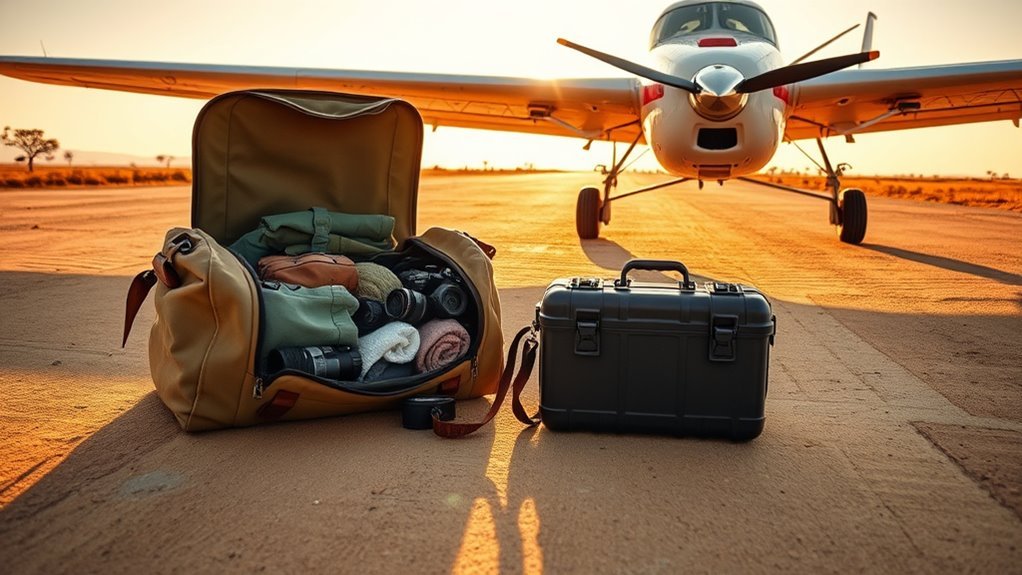
Scheduled carriers and charters set the baseline, but light‑aircraft operators impose different, often tighter baggage constraints you’ll need to follow. You’ll face strict weight, size, and carry‑on rules because small planes have limited cargo pods and balance limits.
Scheduled carriers set the baseline, but light‑aircraft operators enforce tighter baggage rules due to limited cargo and balance limits.
Pack compactly, distribute weight across passengers, and choose soft duffels that squeeze into compartments.
- Weight limits: often 15–20 kg (33–44 lb) per person — weigh your bag at home.
- Size and shape: rigid suitcases may be rejected; soft, flexible bags fit best.
- Prohibited items: batteries, pressurized containers, and oversized gear usually aren’t allowed.
What to Do If Your Bag Exceeds Small‑Plane Size Limits
If your bag’s too big for the small plane, call your safari operator right away to see what they recommend. They can often arrange to transfer oversized items by road, store them until you return, or recommend a local courier.
Don’t try to force extra luggage onto a light aircraft—make alternative transport plans in advance.
Contact Your Safari Operator
When your bag looks like it might exceed the small‑plane size limits, contact your safari operator right away so they can confirm rules and suggest options. They’ll tell you whether excess will be accepted, any fees, and how strict weight versus dimension rules are. Ask about packing tips to avoid surprises and whether they’ll accept soft duffels over rigid suitcases. Confirm timelines for airport check‑ins and any required documentation.
Use the checklist below to guide the call:
- Ask about exact size and weight limits and typical enforcement.
- Confirm fees, refunds, or waivers for oversized bags.
- Request recommended packing or repacking tips.
Arrange Alternative Transport
Wondering how to get your oversized bag to camp without risking a denied boarding? Contact your operator immediately and ask about approved cargo services or scheduled ground transfers.
You can arrange pickup to a nearby airstrip, overnight freight to the lodge, or a vehicle transfer if roads permit.
Pack essentials into a compliant soft duffel for the flight and label the oversized piece clearly for separate handling.
Confirm pickup/drop times, costs, insurance, and tracking. Get written confirmation and photos of your packed items.
That way you’ll avoid last‑minute scrambles and *guarantee* everything arrives safely at camp.
Why Internal‑Frame Backpacks Suit Mobile Tented Camps
Because mobile tented camps move you and your kit across rough tracks and short distances between vehicles and canvas, an internal-frame backpack fits the bill: it keeps weight close to your body, stabilizes loads on uneven ground, and slides easily into vehicle boots.
You’ll appreciate how it balances heavy gear, lets you step over obstacles, and frees your hands for tent pegs or a camera. Choose a pack with a snug hip belt, ventilated back, and compression straps.
Advantages include:
- Stable, body-hugging carry for bumpy transfers
- Easier scrambling and short hikes between sites
- Compact shape that fits vehicle storage compartments
Why Wheeled Bags Work Better for Lodge‑Based Safaris
When you’re staying in lodges, wheeled bags make airport transfers a lot easier—you can roll through terminals and pile them into vehicles without juggling straps.
They also slide neatly into room closets and luggage racks, so you’re not hunting for storage or wrangling gear.
That convenience saves time and keeps your kit accessible for short trips around the property.
Easy Airport Transfers
If you’re flying into a regional airstrip and then driven to a lodge, wheeled bags make those transfers noticeably smoother—drivers load and unload them faster, ramps and vehicle floors handle wheels better than awkward duffels, and you’re less likely to be left juggling gear while staff rearrange trunks.
You’ll appreciate fewer hands-on moments, quicker stowing under seat or in roof boxes, and less strain if walkways are gravel or uneven. Consider packing with access in mind and choosing compact wheeled bags that fit vehicle compartments.
- Pick a compact roller for tight cargo spaces
- Secure loose straps to avoid snags
- Keep essentials in a small carry-on
Smooth Lodge Storage
Although lodge rooms and storage areas vary, wheeled bags usually slide in and out much faster than duffels, so you’ll spend less time wrestling luggage and more time settling in. You’ll appreciate smooth wheels on uneven lodge floors and narrow vehicle boot access.
Upright cases stand neatly under beds or in closets, keeping outfits tidy and packed toiletries upright. Hard-sided rollers protect gear from bumps during transfers, while expandable designs handle souvenirs.
Lockable zippers or integrated TSA locks secure valuables. Choose durable wheels, a comfortable handle, and a size that fits porter limits—practical choices that simplify arrival and departure.
How Porter Service Changes What You Should Pack
Having porters handle your bags means you can rethink both what and how you pack, since weight limits and ease of transfer become more important than fitting everything into a single carry-on.
You’ll still want compact, balanced pieces that are easy to lift and label. Use soft duffels with sturdy handles and avoid rigid trunks that slow transfers. Pack in removable cubes so porters can move sections without unpacking your whole bag.
- Keep essentials and valuables in a small daypack you carry.
- Choose bags with clear name tags and external pockets.
- Distribute weight evenly to protect straps and seams.
Fabrics and Materials That Survive Dust and Branches
When you’re packing for a safari, choose fabrics that shrug off dust, resist abrasions from branches, and dry fast — synthetic blends like nylon ripstop and polyester canvases are your best bets. They’re lightweight, tough, and won’t shred when you brush past thorny shrubs.
Choose rugged, quick-drying synthetics—nylon ripstop and polyester canvas—to shrug off dust, resist snags, and dry fast.
Cordura and reinforced ballistic weaves add durability for duffels and daypacks. Soft-touch linings reduce internal abrasion to clothing and camera gear.
Avoid delicate leathers and untreated cottons that stain or hold grit. Choose meshes and quick-dry panels for ventilation.
Pick straps and handles with strong webbing and bar-tacked stitching to withstand constant hauling.
Pick Water‑ and Dust‑Resistant Zippers and Coatings
If you expect dust, mud, or sudden downpours, pick luggage with sealed or coated zippers and durable water-repellent (DWR) finishes so your clothes and camera gear stay dry and grit-free. You’ll want closures that shrug off spray and fabrics that bead water instead of soaking.
Look for taped seams around zippers and externally coated panels for extra protection without bulk. Test any bag by running a little water over it before you buy.
- Choose coated zippers to stop grit from jamming them.
- Prefer DWR over untreated nylon in rainy seasons.
- Check zipper pulls for easy operation with gloves.
Choosing Zippers, Buckles, and Seams That Last
Because zippers, buckles, and seams take the most abuse on safari gear, you should pick closures built to withstand grit, weight, and repeated use. Choose heavy-duty coil or molded-tooth zippers with reinforced tape and metal sliders that resist jamming.
Prefer buckles made from impact-resistant polymer or stainless steel for straps and compression points.
Inspect seam construction: double-stitched, bartacked stress points and taped or bound seam edges will stop fraying. Reinforced attachment patches under handles and straps prevent pull-through.
Test moving parts for smooth operation.
Prioritize replaceable components so you can repair rather than replace gear in the field.
How to Pick a Durable, Lightweight Luggage Brand
When you pick a safari-ready brand, check material durability ratings so you know how fabrics and shells hold up to rough conditions.
Balance weight versus strength by comparing grams per square meter and impact resistance to avoid overly heavy bags that still shred.
Finally, factor in warranty and support—good coverage tells you the maker stands behind their construction.
Material Durability Ratings
Although style matters, you’ll want to prioritize materials that balance toughness and weight when choosing safari luggage. Look for industry ratings—denier for fabric, impact scores for polycarbonate, and abrasion tests—to compare options. Check manufacturer warranties and real-world reviews for tear, zipper, and seam performance. Consider coatings that resist water and UV without adding bulk.
- 600–1000 denier nylon: strong, light, repairable.
- 100–200 gsm polycarbonate: rigid, impact-tested, scratch-prone.
- Reinforced seams and YKK zippers: proven longevity.
Use ratings to shortlist brands, then handle pieces to confirm feel and construction.
Weight Versus Strength
If you want luggage that survives rough handling without weighing you down, focus on tested material-to-weight ratios and construction details.
Compare shell materials: polycarbonate and ballistic nylon offer high strength per ounce; aluminum can be strong but heavier.
Check seam and zipper reinforcement—double stitching and water-resistant YKK zippers add durability without bulk.
Look for lightweight frame designs, like reinforced ABS ribs or composite cores that distribute stress.
Assess hardware: metal rivets and low-profile wheels resist damage more than plastic fittings.
Balance empty weight against payload capacity; choose the lightest bag that still meets your capacity and reinforcement needs.
Warranty And Support
Because even the toughest shell can fail, you should weigh a brand’s warranty and support as heavily as materials and design. You’ll want coverage that’s clear, fast, and practical so repairs or replacements don’t ruin your trip. Check exclusions, claim process, and service locations before buying.
- Look for multi-year, transferable warranties and easy online claims.
- Verify repair centers near your travel regions or rapid mail-in options.
- Prefer brands offering accidental damage coverage and responsive customer service.
Choosing luggage with solid support saves time and money, and gives you confidence to travel light without risking a spoiled safari.
Organize Smarter: Packing Cubes vs Compression Sacks
When you want to stay efficient on safari, choosing between packing cubes and compression sacks comes down to how you prioritize organization, access, and space savings.
You’ll pick packing cubes if you want neat, visible sections for outfits, quick retrieval, and soft compression that preserves fabrics. They’re great for daily changes and keeping dirty clothes separate.
Choose compression sacks when you need maximum volume reduction for bulky items like jackets or sleeping layers; they free up room but make retrieval slower and visibility lower.
Mix both: cubes for daily wear, sacks for bulky gear, so you balance order and space.
Essential Compartments for Clothes, Gear, and Electronics
Although space’s limited on safari, packing with clearly designated compartments keeps you efficient and protects essentials. You’ll separate clothing, daily gear, and electronics so you can grab what you need without rummaging.
Although space is tight on safari, organize with clear compartments to separate clothing, gear, and electronics for quick access.
Choose a main compartment for clothing, a smaller quick-access for layers and toiletries, and a padded pocket for fragile items.
- Clothing: roll shirts and use a breathable section for dirty laundry.
- Gear: reserve an easy-reach pocket for binoculars, sunscreen, and a compact first-aid kit.
- Electronics: keep chargers, batteries, and a power bank in a padded, waterproof sleeve for safety and organization.
How to Pack Camera Gear Safely on Safari
Packing camera gear safely on safari means outfitting your bag to protect fragile equipment while keeping lenses and batteries within easy reach. You’ll use padded dividers to prevent knocks, wrap lenses in soft cloth, and store bodies separately to avoid scratches.
Keep batteries and memory cards in labeled, waterproof pouches so swaps are fast and secure. Place silica gel packs to manage humidity and use zippered internal pockets for cables and cleaning supplies.
Carry one camera on a short strap for quick shots and stow backups inside the bag. Lock zippers and keep the bag with you during transfers and stops.
Specialized Camera, Lens, and Tripod Bag Options
You’ll want bags that balance rigid protection with easy access so your camera and lenses stay safe but ready for sudden shots. Consider padded, weatherproof cases and modular inserts that let you organize gear by size while keeping weight manageable.
Don’t forget tripod-carry options that won’t add bulk or slow you down on game drives and walks.
Gear Protection Strategies
When you’re choosing gear protection for a safari, think beyond a simple camera bag: specialized cases for bodies, lenses, and tripods give targeted protection against dust, bumps, and sudden weather.
You’ll want layered defense: padded inserts, weatherproof shells, and sealed pockets for memory cards and batteries.
Choose hard cases for transit, soft padded sling options for vehicle work, and quick-access pouches for essential lenses.
Consider straps and anchors to secure tripods inside the vehicle.
Maintain gear by cleaning ports and drying foam after wet conditions.
- Hard case for flights and rough handling
- Padded sling for in‑vehicle access
- Waterproof covers for sudden storms
Weight And Accessibility
After locking down protection—hard cases for flights, padded slings for vehicle work, and waterproof covers—you’ll next balance weight against quick access so your camera, lenses, and tripod actually get used.
Choose a compact, padded backpack with modular dividers so you can carry one body and two lenses comfortably, swapping gear without unpacking.
Use a lightweight carbon-fiber tripod with a pump-belly bag or strap mount to keep it handy yet off your shoulders.
For longer walks, shift heavier glass into a dedicated sling that rides on your strongest hip.
Prioritize ergonomics: you’ll shoot more when gear feels effortless to reach.
Clothing Organizers That Speed Up Safari Mornings
Because mornings on safari are short and often chilly, having a simple, organized system for your clothes saves time and stress. You’ll want lightweight packing cubes, a dedicated day-sack for morning layers, and a toiletry roll for essentials.
Use clear cubes so you can spot items fast and label them by outfit or activity. Keep a small hanging organizer in your lodge or tent for socks, hats, and gloves.
Lay out outfits the night before to avoid fumbling when it’s dark and cold.
- Packing cubes: outfit-by-outfit
- Hanging organizer: quick access
- Toiletry roll: essentials ready
Shoes: What to Pack and How to Store Them
If you’ll be on varied terrain, pack two reliable pairs—a sturdy, broken-in walking shoe or light hiking boot for game drives and trails, plus a breathable sandal or camp shoe for evenings—and store them so they stay dry and sand-free.
Stash shoes in individual dustproof bags or zip-top sacks; slip silica packs inside to absorb moisture. Keep muddy pairs isolated from clean items and fasten laces to prevent tangling.
For long trips, rotate footwear to extend comfort and let liners air when possible. Label bags and place them at the bottom of your main bag or in a ventilated shoe compartment.
Toiletry Bag Features for Dusty Safaris
When you’re heading into dusty safari country, choose a toiletry bag that seals out grit and stands up to rough handling. Pick a compact, wipeable design with sturdy zippers and a hanging hook so you can access items off the ground. Keep liquids secured and organized to avoid spills.
- Waterproof lining and sealed seams to block dust and moisture.
- Durable exterior (ballistic nylon or TPU) with easy-clean surfaces.
- Internal compartments and clear pockets for quick visibility and spill containment.
These features let you stay tidy on dusty drives, protect toiletries from grit, and simplify packing without extra bulk.
How to Protect Valuables and Travel Documents
Keep your passport, cash, and emergency papers in a secure document carrier that you wear close to your body, not tucked in an external pocket.
Stash jewelry and spare cards in a concealed valuables pouch inside your luggage or hidden clothing pocket.
Check those storage options each morning so you’re never scrambling if something goes missing.
Secure Document Carry
How will you protect your passport, cash, and other valuables while on safari? Keep originals safe and handy: carry essentials daily, store backups separately, and limit what you bring into camps.
- Use a slim neck wallet or money belt under clothing for passport and cash.
- Keep photocopies and digital scans encrypted in cloud storage and on a USB in your locked luggage.
- Use hotel safes or locked hard-sided bags for jewelry and extra cash; take only what you need each day.
Check locks and zippers before departures, and always note emergency contact numbers and local embassy info.
Concealed Valuables Pouch
After you’ve arranged backups and safes, put the day-to-day carry into a discreet, body-worn concealed valuables pouch so passports, cards, and a small amount of cash stay both accessible and out of sight.
Choose a slim, breathable design that sits against your torso under clothing and resists moisture. Use separate compartments for passport and cards to reduce fumbling.
Keep copies of key documents in a second pouch or cloud storage. Don’t overload it—limit contents to essentials for the day.
Check zippers and seams before departure. Wear it when traveling to and from camps, and keep it fastened at all times.
Luggage Color Choices: Visibility, Heat, and Photos
When you pick luggage for a safari, color matters for three practical reasons: visibility to guides and porters, how much heat the bag absorbs in the sun, and how it looks in photos. Choose colors that balance function and style. Bright or distinctive hues help staff spot your bag quickly; dark tones absorb heat and can make contents warm; natural, muted colors blend with landscapes for better photos.
Consider these quick tips:
- Pick a visible accent (strap, tag) so handlers find your bag fast.
- Avoid all-black if you’ll leave bags in heat.
- Neutral tones photograph well without distracting wildlife shots.
Labeling and Tagging for Remote Transfers
Because remote transfers often involve multiple handlers and tight schedules, label your luggage clearly and redundantly so it never gets misrouted. Use durable tags with your name, phone, camp name, and reservation number printed boldly.
Because remote transfers involve many handlers, label luggage clearly and redundantly—durable tags with name, phone, camp, and reservation.
Attach a waterproof exterior tag plus an internal luggage card in case the outer tag rips. Add a bright, distinctive ribbon or tape for quick visual ID on crowded tarmacs.
Include a digital copy of documents on your phone and email them to your camp or transfer operator.
If you check specialized gear, note contents on the tag for easier inspections and return.
Carry‑On Essentials You Should Never Check on Safari
If you’ll be moving between small planes, bush vehicles, and remote camps, pack a carry‑on with the items you’ll need immediately and can’t afford to lose. Keep valuables, paperwork, and essentials close so delays or lost bags don’t derail your trip.
Include items for comfort, navigation, and health that you’ll use en route and at arrival.
- Passport, travel documents, spare cash, and copies in a waterproof pouch
- Phone, charger, power bank, and any adapters for photos and communication
- Prescription meds, basic first‑aid, sunscreen, and insect repellent for immediate protection
Store everything in an easy‑access bag.
Packing for Bush Walks, Game Drives, and Sundowners
Though the gear you pack will vary by activity, you’ll want a small set of multipurpose items ready for bush walks, game drives, and sundowners so you’re comfortable, safe, and camera-ready at a moment’s notice.
Pack a compact kit of versatile essentials—ready for bush walks, game drives, and sunset moments at a moment’s notice
Pack neutral, layered clothing, a wide‑brim hat, and sturdy closed shoes for trails.
Bring a light waterproof, polarized sunglasses, and a compact binocular.
Carry a small daypack with water, snacks, insect repellent, sunscreen, and a basic first‑aid kit.
For drives and sundowners, include a thin fleece, a headlamp or torch, spare batteries, and your camera with spare memory and a fast lens for wildlife shots.
Managing Laundry and Re‑Packing on Long Safaris
When you’re on a long safari, keeping your kit clean and compact makes each move smoother and keeps you comfortable in changing conditions. You’ll plan laundry cycles, use quick-dry garments, and repack efficiently between camps. Pack a lightweight sink kit, label essentials, and rotate outfits so you always have fresh layers.
- Wash small items nightly to avoid bulk build-up.
- Use compression cubes to save space after cleaning.
- Keep a separate bag for dirty clothes to prevent odors.
Stay practical: prioritize versatile pieces, limit shoes, and schedule brief repacks to keep luggage manageable.
Travel With Kids: Choosing Luggage for Family Safaris
After you’ve got laundry rhythms and compact packing down, packing for a family safari brings different priorities: durability, easy access, and gear that keeps kids safe and comfortable. Choose rugged, lightweight bags with reinforced seams and easy-open zips.
Pack each child’s essentials in a small daypack: water bottle, snacks, sunscreen, hat, and a change of clothes.
Use clear packing cubes for quick checks and label everything.
Bring a soft, carry-on-sized bag for flights and game drives. Pick luggage with secure straps and lockable compartments, and plan for hand luggage with favorite comfort items to soothe travel stress.
Emergency Repairs: Straps, Zips, and Field Fixes
If a strap snaps or a zipper jams miles from a repair shop, you’ll want simple fixes that work fast: a length of nylon cord to lash broken handles, a few cable ties to replace split straps, and a sewing awl or heavy needle with waxed thread to stitch torn seams.
Carry a tiny repair kit so you can improvise and keep gear usable. Pack lightweight, multiuse tools and replaceables:
- small repair kit: needle, waxed thread, awl, spare zipper pulls
- fastening supplies: cable ties, safety pins, paracord
- adhesive options: fabric tape, superglue, zipper lubricant
Practice basic stitches before you go.
How to Plan for Multiple Light‑Aircraft Flights
Fixing gear in the field teaches you to think ahead, and the same mindset applies to planning multiple light‑aircraft flights: you’ll need compact packing, flexible timing, and careful weight distribution to meet small‑plane limits and remote-airstrip constraints.
Pack soft duffels under weight limits, consolidate items into clear bags for quick inspections, and keep essentials—documents, medication, electronics—in a small daypack you’ll carry aboard.
Expect strict weight checks and possible redistribution; label bags with weights. Allow extra transfer time, confirm baggage rules with operators ahead, and plan for weather delays.
Travel light, prioritize durability, and be ready to adapt on short notice.
What Specialized Items Airlines and Camps May Require
When you’re booking flights and reserving camps, know that operators often require specific gear—both for safety and to meet local regulations—so check lists carefully and pack accordingly.
You’ll likely need items beyond basics: think certified dry bags for small planes, specific insecticide-treated bedding or nets at some camps, and personal flotation devices if water transfers are part of your route.
Confirm weight and size limits, and whether batteries or fuel can go aboard.
Communicate with providers about medical gear or permits.
Pack certified items and copies of permits to avoid delays or denied boarding.
- Certified dry bag (size limits)
- Insecticide-treated net
- Permit/medical gear copies
Final Checklist: Luggage, Straps, Tags, and Quick Repairs
Before you head out, run through a concise final checklist that covers your luggage, straps, tags, and quick-repair items so nothing leaves you stranded on the trail.
Before you go, run a final gear check — luggage, straps, ID, and quick repairs so nothing strands you on the trail.
Check zippers, wheels, and seams; reinforce weak spots with packing tape or a luggage repair strip.
Secure straps and buckles; add spare cam straps and a small roll of webbing.
Attach durable ID tags with contact details and a copy of reservation info inside.
Pack a compact repair kit: needle, thread, duct tape, zip ties, multi-tool, spare buttons, and safety pins.
Stow a tiny flashlight and extra batteries for campsite fixes.
Frequently Asked Questions
Can I Bring Scuba or Snorkeling Gear on a Safari Trip?
Yes — you can bring scuba or snorkeling gear on a safari, though you’ll need to check charter and park rules; pack compact gear, confirm planes’ size limits, and be ready to rent locally if transporting equipment proves difficult.
Are Pet Carriers or Service-Animal Supplies Handled Differently on Safari Transfers?
Yes, they’re handled differently: you’ll need advance notice, documentation, and approved carriers; guides or transfer teams’ll follow specific rules for service-animal supplies, and extra fees or restrictions may apply depending on lodge and local regulations.
How Should I Transport Prescription Medications Requiring Refrigeration?
You should carry refrigerated prescriptions in an insulated cooler bag with ice packs, keep them in your carry-on, monitor temperature with a thermometer, carry a doctor’s note and pharmacy label, and ask your safari operator about available refrigeration.
Is It Safe to Ship Extra Luggage Ahead to a Lodge or Camp?
Yes — you can usually ship extra luggage ahead to a lodge or camp, but check their policy, label items clearly, insure valuables, confirm arrival timing, and avoid perishables or restricted items to prevent delays or refusal on receipt.
Do Visa, Vaccination Certificates, or Permits Need Waterproofing or Copies in Luggage?
Yes — you should waterproof originals and carry photocopies and digital scans. Keep originals sealed in a dry pouch, stash copies in separate bags and email scans to yourself and a trusted contact for backup.
Conclusion
When packing for safari, pick gear that’s practical, durable, and suited to your trip—soft duffels for mobile camps, small hard cases for lodge stays, and compact, strap-friendly bags for light-aircraft transfers. Prioritize muted colors, sturdy straps, ID tags, and a simple repair kit for zips and seams. Confirm airline and camp rules, distribute essentials across bags, and keep a daypack ready. With thoughtful luggage choices, you’ll stay organized and ready for anything.